A recent piece by Michael Bérubé highlights one of the invisible problems of higher education in America (and elsewhere) – namely, the rise of the adjunct as the hegemonic form of the modern day academic. This is in both a qualitative way (with flexibility and monetization becoming some of the prime measures for every academic), but also in a quantitative way (Bérubé cites data that shows more than 2 out of every 3 faculty members are now contingent workers).
While American political discourse often portrays academics as highly-paid, impossible-to-fire liberals, the data in fact shows virtually the opposite (though admittedly academics are likely disproportionately “liberals”). Increasingly the expectation of graduate students leaving university is that:
(a) an academic position will be incredibly difficult to find (I have numerous anecdotes of friends applying for hundreds of jobs and only getting 3-5 interviews, let alone job offers)
(b) when a job is found, it will be contract work
(c) when a job is found, it will involve the workload of a full professor
(d) when a job is found, it will pay 20-75% of a full professor’s salary
(e) in a year (perhaps longer depending on the contract), this process will be repeated
Apropos our earlier look at the rhetoric of anti-rape advocacy, Sarah again pointed me in an interesting direction. This time to Vancouver, where a familiar campaign was launched last year. Echoing a similar phraseology (We Are Man; My Strength Is Not For Hurting; Real Men Know The Difference), this one says: Don’t Be That Guy. As is the vogue, the focus is principally on intoxication, nights out and not taking advantage, accompanied by cod-parental instruction: Just because you help her home, doesn’t mean you get to help yourself; and Just because she isn’t saying no doesn’t mean she’s saying yes; and Just because she’s drinking doesn’t mean she wants sex.
The reversal in the trend related to sexual assaults reflected the impact of the new education program, better training for police officers and more effective investigation and enforcement, [Deputy Chief LePard] said.
The exact causal balance here is unclear, and there are no firmer details on this gendered accounting for us to work with. There still seem to be some good reasons for scepticism, but if anyone does know of more comprehensive studies on the impact of men-focused campaigns, do share. Particularly interested to hear of any research into the effects of similar behavioural marketing as part of mass anti-rape efforts in the midst of militarised-humanitarian intervention, whether in Congo or elsewhere.
“In his dreadful lassitude and objectless rage, Cobain seemed to give wearied voice to the despondency of the generation that had come after history, whose every move was anticipated, tracked, bought and sold before it had even happened. Cobain knew that he was just another piece of spectacle, that nothing runs better on MTV than a protest against MTV; knew that his every move was a cliché scripted in advance, knew that even realizing it is a cliche”. (p. 15)
This is as concise and accurate a summary of the dead-end of Nirvana’s nihilism as one could ask for – but as an illustration of the wider impotence of cultural and artistic expression to push beyond a dominant social vision of neo-liberal capitalism it’s not wholly convincing.
Fisher is right about Cobain, but his observation begs the obvious question: is Nirvana the wrong listening choice? If we turn to artistic expression for exemplars of how to begin anew, to think beyond our current moment, to escape the scripted thoughts, words and movements that structure our lives, this is actually a vital question.
Who should we be listening to?
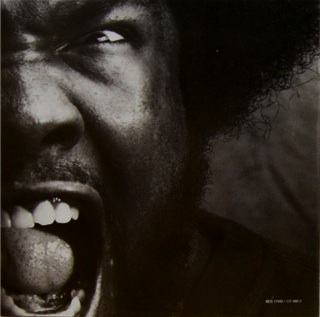
This is a question that overflows beautifully, but here I want to explore the significance of one group – The Roots. This is partly an expression of personal love, but it’s also borne out of two less subjective impulses: (1) The Roots are insufficiently appreciated as an artistic and intellectual resource – they are artists in need of critics and journalists equal to their own insight and intensity; and (2) while I appreciate the efforts of those studying politics in an academic setting to bring in cultural resources, I don’t identify with International Relations’ obsession with Science Fiction (even as I appreciate the significance genre fiction can achieve), nor do I get much out of Political Theory’s tendency to appeal to classicdramas, and themultidisciplinaryuseofcinema, while fascinating, rarely leaves me inspired – so, returning to what one knows and finds inspiring – I want to argue it’s well worth listening to The Roots (and hip hop music) to understand the world and find profound insights.
A simple proposition: The Roots are the most important artists in popular music today – not bigger than Jesus, or the only band that matters – but possibly the best hip-hop group ever and a creative and intellectual force the quality of which is rare in music, especially music that maintains a popular orientation. This proposition matters because understanding and appreciating The Roots’ work over the past thirteen years takes the listener into an artistic world that expresses a very particular experience of the first decade of the 21st century (black, urban and American) through profound musical originality and penetrating intelligence, this experience provides a very different vision that has the potential to disrupt the exhausted and nihilistic sense of inevitability that Fisher so rightly identifies.
“I’m kinda like W.E.B. Du Bois meets Heavy D and the Boyz”
– Dice Raw, “Get Busy”, Rising Down (2008)
W.E.B. Du Bois‘ idea of double-consciousness provides a way of appreciating the importance of The Roots. Double-consciousness is defined by a “sense of always looking at one’s self through the eyes of others, of measuring one’s soul by the tape of a world that looks on in amused contempt and pity.” While this burden threatens to overwhelm a positive sense of self-awareness and confidence, it also enables a second-sight in women and men systematically repressed and whose experiences are devalued, allowing a sharper vision of social violence and providing substantial resources for struggle and emancipation. The Roots carry over this sense of double-consciousness, but rendered more positive and confident by decades of growing black self-awareness, increasing social strength and important political victories in the US and more widely, such that they render the potential psychological weakness of double-consciousness into an incisive and positive vision, one wholly at odds with Cobain’s musical and cultural legacy of frustrated exhaustion.
Speaking of traditions of black music in America, Du Bois says,
“Little of beauty has America given the world save the rude grandeur God himself stamped on her bosom; the human spirit in this new world has expressed itself in vigor and ingenuity rather than in beauty. And so by fateful chance the Negro folk-song—the rhythmic cry of the slave—stands to-day not simply as the sole American music, but as the most beautiful expression of human experience born this side the seas. It has been neglected, it has been, and is, half despised, and above all it has been persistently mistaken and misunderstood; but notwithstanding, it still remains as the singular spiritual heritage of the nation and the greatest gift of the Negro people.”
Black culture in America provides an alternative reservoir of tradition (in the form of hip-hop culture, black musical traditions, political radicalism and distinctive forms of socially engaged religious practice) that not only nourishes the social imagination but is resistant to co-option. Hip-hop music is received by the dominant culture as a threat that must be commodified and tamed, but the refusal of a hip-hop artist to acquiesce to their own commodification need not reduce to an empty and ironic refusal nor solipsistic underground fetishism. The Roots, among others, maintain both a lucrative musical career and a challenging artistic output, at least in part, because of their capacity to occupy multiple subject positions – knowing that the music business is a business, intentionally challenging young, black, urban identities normally associated with hip hop, exploiting the fear of black assertiveness in mainstream culture in the US and working as “working musicians” who write, perform, produce, arrange for multiple artists, across generations and genres. But they are not simply polymaths too nimble to succumb to commodification – they are also self conscious creators of their own musical and intellectual space, shared in common, tied to tradition, and pushing relentlessly outward and forward. It is this quality, so essential to beginnings, that I focus on here.
Over a series of posts I want to consider the visions contained in The Roots music, with a particular focus on the political importance of their work – running from their groundbreaking 1999 album, Things Fall Apart, to their 2011 concept album, undun, I pull out a central theme from each album, which hardly defines the limits of their significance, but rather focuses on some of the insights they offer up with abundance.
Beginning are difficult – this is a simple truth that is particularly pertinent to anyone who feels pressed in by the world as it has been given, who struggles to find fractures in the world that might be expanded far enough to stand up to their full height. Partly this is a struggle to give expression to the discontent one feels – it’s not enough to know, as the early Roots’ records insistently documented, that one’s culture has been distorted, co-opted, defiled and weakened by its basest impulses – we need an analysis, an account of the dynamics that make’s our present condition combustible material for making new worlds.
I’ve just seen Martin McQuillan and Joanna Callaghan‘s ‘I Melt The Glass With My Forehead’: A Film About £9,000 Tuition Fees, How We Got Them, and What To Do About It.[1] It does pretty much what it says on the tin, charting the issues talking-heads style. Readers not already deeply involved in the UK higher education system and its various problems will find it particularly enlightening, and the parade of would-be-Ministers making promises soon to be broken is worth the anger-energy alone.
Two things struck me. The first was LSE Public Policy Professor Nick Barr, who, despite making a lonely case for some of the fee changes, nevertheless foregrounded a few crucial issues. Most obviously neglected by higher education activists, there’s the importance of pre-university education, which remains much more important in determining entry, ‘success’ and social mobility than any fee/loan/tax increase. Moreover, as we’ve seen before, there’s the uncomfortable truth that the Browne proposals were more redistributive than the old system, although the Government’s decision to cap fees removed this potential. Linking these dimensions is the fundamental tension of contemporary higher education, which is of matching mass participation with high quality. On Barr’s account, this cannot happen from general taxation alone without something giving. Of course, this only remains a challenge of public policy under certain comparatively narrow parameters, and, as Howard Hotson reminds us, the system being ‘reformed’ for its own good was actually the best in the world when viewed as the combination of overall quality and parity across institutions (and if you haven’t yet read Hotson on the Ivy League, do).
Second, and relatedly, the focus of our reflections seems already to have congealed around fees, and fees alone. Even on the narrow topic of student finances, the question of living costs is almost totally absent. A few voices from another age mention it, but there seems no place in our moral calculus for considering the differential between those who must support themselves and those who have the supporting done for them. But there’s also something evidently arbitrary in discussing fees without a whisper about the REF, or the impact agenda, or the generalised role of the university as a producer of public goods (and I don’t just mean Ancient Norse) in an age of austere retrenchment. Notwithstanding the manifold critiques of Browne and Willetts (charlatanism being primary among them, at least for McQuillan and Callaghan), all this misses the critical perspective provided by Andrew McGettigan, placing the fees SNAFU within a wider ecology of political economy and long-term transformation. We learn just this week of the next stage of this process at London Met, where all in-house admin is being offered for private bidding and where 229 ‘posts’ (read: jobs) are to be abolished across seven faculties (this coming after the closure of 70% of undergraduate courses).
This all matters because the publicdiscussion of the future university is increasing, even amidst our wholesale crisis of economy. In typical academic style, it’s coming too late for the bait-and-switch, but if the renewal of energy around the idea of a public university is to mean anything, it cannot be a mere retreat. Barr’s argument that teaching grant must be restored in the next Parliament seems both commonsensical and strangely unimaginable, but there are other stagnant pits of the old to avoid alongside the risks of the new.
[1] The title is borrowed from a banner at an anti-fees demo, quoting a 1915 poem by Vladimir Mayakovsky mentioned by Dan Hancox in the film. I borrowed ‘You, Decorous Bureaucrats Of Angelic Leagues’ from the same place. It seemed somehow more appropriate.
The idea promulgated by Bet 115 that racism can and will meet its demise in a few short decades is based on the assumption that humans are self-regulating creatures, capable of recognizing and assessing their beliefs in an objective way and making appropriate corrections as needed. In order to explore this assumption, we need to inquire into the relationship between the self as an individual entity, capable of navigating and responding to the external world in an objective, disinterested way, and the social sphere, which may so entirely constitute us that we are incapable of thinking beyond the ‘texts’ (or scripts) of our socio-cultural milieus. In simpler terms, the question is: do we create the world, or does the world create us?
In order to rightly consider this question, it is important to understand the implications of the answers one might be tempted to choose. It is also important to realise that each of us has a personal investment in the answer we might make. If we are individuals capable of willfully altering the world, then it makes sense to say that we can overcome racism (yet one is left with a lingering sense of bewilderment over why we have not done so). If we are fundamentally shaped and inextricably bound by the social sphere in which our ideas are formed, then we might lack the agency to escape the racism that seems to form a cornerstone of the institutions of our historico-political condition. Of course, there are few who would accept that our ability to self-regulate is an either/or proposition. Rather, it is probably better to understand it as a ‘both/and’ state of affairs. In short, we shape and are shaped by the worlds we occupy. How, exactly, this is so is difficult to pick apart and navigate despite all of social science’s failed attempts to sharpen the distinction between the self and the worlds the self occupies. It inevitably flattens the complexity of social relations, and often ignores the tensions and contradictions that animate people’s views and beliefs. By way of example, let us consider the question with which we began: are we, or are we not, self-regulating creatures? The very structure of the question assumes that one will make answer either one way or the other. It leaves little room to suggest that both propositions are true, but in different ways and with different implications.
The self-image of the discipline continues to shift within the American heartland, not least with respect to the Big Other of Realism. The 2009 TRIP Survey recorded the percentage of self-identified Realists among US respondents at 21%, with Liberals at 20% and Constructivists at 17%. Things have progressed some way since then, with only just over 16% now willing to call themselves Realist against a steady 20% of Liberals and a narrowly triumphant 20.4% of Constructivists (and given the rankings awarded to Wendt within the ‘top four scholars’ sections, the shorter TRIPS may be rendered more simply as: ALEXANDER WENDT MADE ME A CONSTRUCTIVIST). Agnostics and Refuseniks together continue to outnumber these main categories with 11.5% naming themselves ‘Other’ and a further 25.7% declining to name any paradigmatic preference (a slight increase, but essentially the same levels as in 2008).
For anyone who’s interested, there’s an interview with me over at the Figure/Ground Communication site. It touches on a few topics such as the changing nature of the university, the technological shifts in teaching, and some thoughts on the philosophical movement of speculative realism. Many thanks to Laureano Ralon for the generous opportunity as well.
Race is a structure of oppression. So long as the structure remains, so does race. However, while there is plenty of talk about ethnicity and social cohesion, pathological cultures, and broken communities, race is usually mentioned only in its disavowal. And racism? Few would profess to that habit; most would comfortably label racism as a reactionary attitude. But to what imaginary golden mean? It is a privilege to believe that racism is a reaction rather than a catalysing agent of oppression. Meanwhile, all of us are variously implicated in this structure of oppression called race.
Even on the left, race is seen to be somewhat passé, and happily so now that the next world crisis in capital accumulation has arrived and we can all finally re-focus on the real thing: class. But what is the difference between race and class? Is it the difference between superstructure and base? Race does involve identification, both in order to oppress and in order to redeem. Yet in this respect, it is no more or less an identity than class. With the exception of Black Marxism, what the left has historically been unable or unwilling to consider is that, as a structure of oppression, race runs deeper than class.
Marx’s masterful hermeneutic shift from contract to class involved leaving behind the realm of exchange – wherein all things were of equivalent value and all transactions were equitable – and entering into the realm of production – wherein value was consistently expropriated and relations were exploitative. Nevertheless, in the colonial world, Marxism was more often used as a weapon for struggle and less so as a faith to guide contemplation. One reason for this engagement is that class exploitation never quite explained the reality of oppression experienced under the colonial exigencies of the world market.
In truth, Marx did not shift his hermeneutic far enough from liberalism and its obsession with civil society. Continue reading →
The problem of the twentieth century is the problem of the color line; the relation of the darker to the lighter races of men in Asia and Africa, in America and the islands of the sea.
W.E.B. Du Bois’ lucid remark, published in The Atlantic in 1901 (and elsewhere), continues to unify and motivate thinking on race and racism in International Relations. ‘Colouring Lessons: Race, Colour, Nation and Colony in Contemporary IR Theory’, an upcoming BISA-ISA conference panel featuring Meera, Omar, Pablo, Robbie, and myself, will consider how the “problem of the color line” might lead us to think differently about the structure and processes of world politics today. There are many good questions to cover; so many, in fact, that we best start our discussions early. Here’s one: when will racism end?
Let us begin by locating the question in the wonderful world of popular online betting. Thanks to the internet it is now possible to make and take wagers on almost anything, including on the future of phenomena such as racism. Recorded in May 2003 by a certain Bill Moore under the title ‘Bet 115’, one such wager can be found on the Long Bets website (Long Bets is run by a California-based non-profit foundation specializing in public education, including “enjoyably competitive predictions, of interest to society, with philanthropic money at stake”). It goes like this: “By 2100 racism will no longer be a significant phenomenon in most countries of the world”. The author qualified his thinking thus:
This prediction simply puts a date to a trend that is well underway. Racism is a set of learned attitudes and behaviour, and as such it can be eliminated. There has been a great deal of movement toward the elimination of racism in the past century. Racism plays a much less significant role in access to employment, housing, education, in distribution of wealth, etc., than it did 100 years ago. Racist attitudes are no longer acceptable in any mainstream, political, social, religious, corporate, or other public figure.
At the time of this writing, Bet 115 goes unchallenged, but thirty or so comments posted by assorted visitors to the site provide us with an interesting repository of ordinary and extraordinary language definitions of race and racism. (A discussion of the boundary conditions of the prediction follows one on human nature, which in turns follows an exchange regarding the “semantics and scope”). Also interesting is that 68% of the registered users of Long Bets (N=249) have voted “against” the prediction, suggesting that the majority expects the global colour line to outlast the end of the twentieth first century, twohundred years after Du Bois wrote (voting has been “temporarily disabled” this fall).
So what would the recent philosophical and socio-historical research on the subject say about Bet 115?
A brief pre-holiday announcement of the next Millennium annual conference, to be convened on the theme of Materialism and World Politics. Full details below the fold. The range of suggested topics looks both fascinating and much-needed, and I am assured by well-placed sources that there will also be some stellar speakers, for those who are tempted by such things. As always, papers submitted in the wake of the conference which survive the rigours of peer review will be published in a resulting special issue (Vol. 41, No. 3). Also, don’t forget about the Northedge Essay Competition (deadline 30 January 2012).