What We Talked About At ISA: Cognitive Assemblages

HFT

What follows is the text of my presentation for a roundtable discussion on the use of assemblage thinking for International Relations at ISA in early April.


In this short presentation I want to try and demonstrate some of the qualities assemblage thinking brings with it, and I’ll attempt to do so by showing how it can develop the notion of epistemic communities. First, and most importantly, what I will call ‘cognitive assemblages’ builds on epistemic communities by emphasising the material means to produce, record, and distribute knowledge. I’ll focus on this aspect and try to show what this means for understanding knowledge production in world politics. From there, since this is a roundtable, I’ll try and raise some open questions that I think assemblage thinking highlights about the nature of agency. Third and finally, I want to raise another open question about how to develop assemblage theory and ask whether it remains parasitic on other discourses.

Throughout this, I’ll follow recent work on the concept and take ‘epistemic communities’ to mean more than simply a group of scientists.[1] Instead the term invokes any group that seeks to construct and transmit knowledge, and to influence politics (though not necessarily policy) via their expertise in knowledge. The value of this move is that it recognises the necessity of constructing knowledge in all areas of international politics – this process of producing knowledge isn’t limited solely to highly technical areas, but is instead utterly ubiquitous.

1 / Materiality

Constructivism has, of course, emphasised this more general process as well, highlighting the ways in which identities, norms, interests, and knowledge are a matter of psychological ideas and social forces. In Emanuel Adler’s exemplary words, knowledge for IR “means not only information that people carry in their heads, but also, and primarily, the intersubjective background or context of expectations, dispositions, and language that gives meaning to material reality”.[2] Knowledge here is both mental, inside the head, and social, distributed via communication. The problem with this formulation of what knowledge is, is that decades of research in science and technology studies, and in cognitive science, have shown this to be an impartial view of the nature of knowledge. Instead, knowledge is comprised of a heterogeneous set of materials, only a small portion of which are in fact identifiably ‘social’ or ‘in our heads’. It’s precisely this heterogeneity – and more specifically, the materiality of knowledge – that assemblage thinking focuses our attention on.

Knowledge is inseparable from measuring instruments, from data collection tools, from computer models and physical models, from archives, from databases and from all the material means we use to communicate research findings. In a rather persuasive article, Bruno Latour argues that what separates pre-scientific minds from scientific minds isn’t anything to do with a change inside of our heads.[3] There was no sudden advance in brainpower that made 17th century humans more scientific than 15th century humans, and as philosophy of science has shown, there’s no clear scientific method that we simply started to follow. Instead, Latour argues the shift was in the production and circulation of various new technologies which enabled our rather limited cognitive abilities to become more regimented and to see at a glance a much wider array of facts and theories. The printing press is the most obvious example here, but also the production of rationalised geometrical perspectives and new means of circulating knowledge – all of this contributed to the processes of standardisation, comparison, and categorisation that are essential to the scientific project. Therefore, what changed between the pre-scientific to the scientific was the materiality of knowledge, not our minds. And it’s assemblage thinking which focuses our attention on this aspect, emphasising that any social formation is always a collection of material and immaterial elements.

In this sense, questions about the divide between the material and the ideational can be recognised as false problems. The ideational is always material, and the constructivist is also a materialist.

Continue reading

If I Was Crooked Timber, I’d Demand A Recount…

Disordered Ducks

Despite our justified renunciation of audit culture and academic hierarchy, we cannot not acknowledge the receipt tonight of OAIS (Outstanding Achievement in International Studies Weblogging) awards for both categories in which we were entered: best individual blog post (for John Hobson’s guest post on race and Eurocentrism) and for best group blog. How we won out over Cohen, Green and Wood on sexual violence and the Human Security Report will remain one of the great mysteries of democracy (seriously, go read), but we’re grateful nevertheless. Shout-outs too to Wronging Rights and Justice In Conflict, unjustly neglected.

May the stale halls of established academia shake with the news of our collective arrival.

Bluster By The Bay, ISA 2013 Edition

Academic DuckNext week, the massed ranks of global IR will descend on San Francisco Bay. There will be congregation, dispute, commiseration, boorishness, ingratiation, laughter, inebriation and the occasional sparkling insight. There will also be the first ever International Studies Blogging Reception, co-constituted by Sage and Duck Of Minerva. It will be on the Thursday, in Yosemite A, at 7.30pm. There will be prizes (we were nominated for some) and some speechifying, and also drinks. So come to that, do.

We’ll also be doing various turns of our own. The list is a bit long (we’re clearly an over-active bunch), but we’re on panels with names like ‘Advancing Post-Colonial Approaches to World Politics’, ‘Inquiry as Invention: Bringing Stories to Tell’ and ‘Vulnerability and Ethics in Global Politics’. So Ctrl-F us in the programme and say hi afters. We’ll also be doing our usual ‘What We Talked About At ISA’ thing, so there’s really no danger of missing out on our assembled wit/wisdom. Hope to see some or many of you there, and don’t forget Megan MacKenzie’s ISA guide. The advice is pitched at grad students, but is pretty sound all round. That said, rules are also for the breaking, so don’t forget to enjoy it.

Swami Vivekananda: An Outsider’s Ramblings

swamiEarlier this month I visited New Delhi’s Ramakrishna Ashram for the first time.  What drew me there was the exhibition on the life of Swami Vivekananda (a.k.a., Narendra Dutta, 1863-1902). The exhibition, inaugurated a few months ago by the Dalai Lama, celebrates the 150th birth anniversary of the saffron-clad monk who is India’s Great Man -“second only to Ghandi,” as I was told more than once.  Compared to most other historical exhibitions I have seen in this country, “Vivekananda: A Prophet of Harmony” is tip-top, as measured by functioning A/C and lighting fixtures, savvy graphics panels, contemporary wallpaper posters, new dioramas, and an interactive exit quiz intended for schoolchildren.  Plus it’s relatively crowded. Over the course of an hour or two I spent there on a Saturday morning I counted a couple of university students (probably taking a short study break from the nearby library), a few senior citizens, half-dozen sadhus (among them, two Europeans and an Indonesian), and one large middle class family visiting the capital city from Tamil Nadu.  “You must see the film,” said the moustached paterfamilias to me.

His reference was to “9/11: The Awakening,” a 15-minute computer-animated piece on a speech Vivekananda gave on 11 September 1893 at the World Parliament of Religion in Chicago, which was held in conjunction with the World’s Columbian Exposition.  Starting with a scene straight out of The Titanic, the film depicts the monk’s transoceanic crossing, and how he bowed to Saraswati, the goddess of learning, before taking the podium.  “Sisters and brothers of America,” Vivekanada’s opening line, is known to every educated Indian person, but “the speech” in the short film appears to take from multiple speeches the monk gave in Chicago, including the second (“Why We Disagree,” September 15) and the third (“Paper on Hinduism,” September 19) are the richest.  By all accounts, Vivekananda’s discourses on religious tolerance and unity, mutual recognition, India, and Hinduism were a big hit (it suffices to consider the tumultuous applause he received multiple times from the audience of 4,000 – or 7,000 if you include the overflow halls of the Art Institute).  Chicago treasures these memories today.  A stretch of the Michigan Ave (at Adams St) is now the honorary Swami Vivekananda Way and a statue of the saint, taller than the one at Delhi’s RK Ashram metro station, adorns Chicagoland’s premier Hindu temple in Lemont.

According to the standard historical narrative, Vivekananda was the first Indian/Hindu thinker to introduce Hinduism and the Indian/Hindu understandings of tolerance, peace, and justice to Anglo-America and the European continent – ideas that would “conquer the world,” as he would put it (“It is my ambition to conquer the world by Hindu thought – to see Hindus from the North Pole to the South Pole”, 1897). The Chicago speeches and other overseas interventions carried by the swamiji established a number of inter-civilization bridges, both big (the global spread of Vedanta philosophy and yoga) and small (Nikola Tesla’s vegetarianism, celibacy, and a possible re-consideration of the mind-body problem). Vivekananda’s speeches and writings, the narrative goes, “awoke” India from its slumber (“For the next fifty years let Mother India be your God. Serve your country as you would serve God, and India will awaken”, 1897).  His “modernized” version of the Indian/Hindu thought inspired “social reform” at home, while helping raise awareness about India’s anti-colonial struggle abroad.  No less important, he founded the Ramakrishna Mission (now the main publisher of his writings) and the Vedanta Societies [1], which continue to spread his teachings to this day.

Continue reading

Reflections on Narrative Voice

The final post in our mini-forum on critical methodologies and narrative in IR. The series is closed by Himadeep Muppidi, who is Betty G.C. Cartwright Professor of International Studies and Political Science at Vassar College, New York. He is the author, most recently, of The Colonial Signs of International Relations (Hurst and Columbia University Press, 2012).


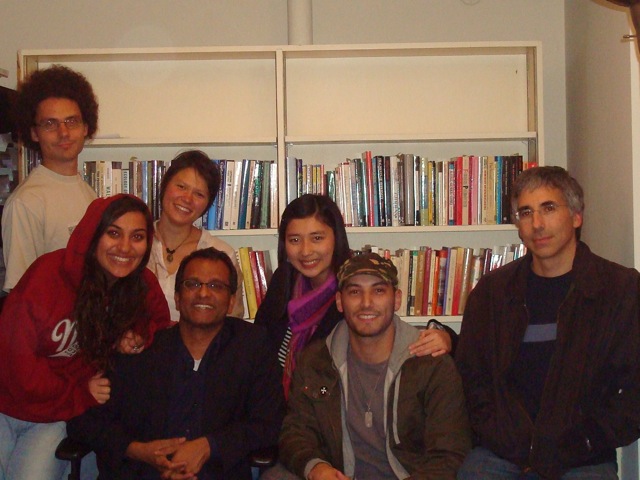
Himadeep Muppidi and Students

Himadeep (seated, fourth from left) with the ‘Vassar village’: students and faculty who were into story-telling.

I went to the York University workshop persuaded of the importance of the narrative turn in the field of international relations. I find literature in various forms useful in my teaching of international relations at Vassar, not least in opening my own provincial imagination to the worlds of others. Entering the international through narratives allows the class to engage political issues from the inside rather than pretending we were somewhere outside looking in or somehow beyond the concerns of those whose worlds we safely theorize. Narratives in different forms – novels, memoirs, short stories, and autobiographical essays – also allow for insightful translations of contemporary contexts. After soaking oneself in the nuance and complexity of narratives, conventional accounts of IR appear lifeless and boringly schematic in their attempts to straddle (our) humanity. They perish, unseen and unmourned, on the classroom floor.

But the discussions in the workshop helped me realize that narratives on their own are not enough. We need critical theories to go along with the current turn towards narratives. Colonialism too sustains itself on effective story-telling and not just brute force. It has a robust history of accumulating, systematizing and circulating its stories, not least to those citizen-subjects it narrates as its benevolent and heroic center. In IR, we often claw our way out of these archival dumps searching for fresher, more humane, worlds.

In the wasteland that is conventional IR, stories of any sort might appear, at first glance, to offer a welcome respite. But there is also, as some of our fellow disciplines can attest to, a politics of story telling: whose stories do we get to hear all the time; whose stories are generally inaudible; how do stories make us over; whose mansions do stories furnish with humanity in every remote room and whose huts do they deprive of life and dignity. Perhaps we need to explore these inequities of the political terrain more even as we take the narrative turn seriously. The question I left with from the all too brief workshop, one that is not a new one by any means, was: How can we, in IR, engage better the diverse worlds of the human international, as they come to us through narratives, without losing sight of the politics of inequity staging their appearances and disappearances?

And there I would have stopped but Naeem Inayatullah encourages me to say more. He wonders if what I am saying is: “No matter the turn, it will be dominated by Europe. So what can we do to give the narrative turn a chance at something else?” I am unsure if it is Europe’s renewed domination of the wasteland that bothers me as much as the prospect of another lost opportunity to plough newer terrain.

Maybe I should defer to the voice of a better storyteller. In a 2009 TED talk, Chimamanda Adichie speaks to what she calls the ‘The Danger of a Single Story’. In this short, approximately 20 minute presentation, Adichie draws our attention to a number of issues relevant to our thinking about stories and storytelling: to how “impressionable and vulnerable” we all are in the face of stories, to how the British and American stories she read as a child opened her imagination and at the same time shaped her childhood writing so much that the stories she wrote, even as she grew up in Nigeria, were of British and American worlds (filled with discussions of the weather and ginger beer). Reading stories by writers such as Chinua Achebe, she tells us, brought her to other worlds in which she could recognize characters like herself. Adichie is appreciative of the ways in which British and American stories opened up her world even as she highlights the dangers of knowing only those stories. This is not just an inter-country issue either.

Even the Nigerian context she imbibes as a child is not shaped by a single story though it takes her a while to realize this. There are subaltern worlds here (the world of the domestic help for instance) that she sees only in a thin and caricatured form at first since the story of “their” poverty dominates her imagination and occludes all their other ways of being human. Adichie insightfully connects stories and storytelling to questions of structural power and narrative homogeneity: our socially learned capacities to hear and tell diverse and plural stories of one’s own world while hearing and re-telling only single stories of the other. Adapting Adichie, I wonder if, given the social structures of teaching and learning IR that we currently inhabit, the narrative turn would only result in a renewed cycle of seemingly new stories about the diversity and humanity of Europe and single and simple stories about its Others.

But Naeem’s question continues to smile at me: “So what can we do to give the narrative turn a chance at something else?” It knows that I haven’t responded fully to it yet. I am tempted to say that I prefer to think with you all on that one. Maybe my partial response would be, in anticipation of a broader and longer conversation, that it is not writing alone but reading and teaching that we need to work further on. Maybe we need to begin by reading and teaching an international in which there are multiple other stories than the one or few we already know about IR’s others. Maybe that is the implicit promise of storytelling conceptualized, critically, as a politics of exile.


Suggestions for further reading: Sven Lindqvist, Eduardo Galeano, Assia Djebar, Amitav Ghosh

The Personal is Political, But Is It IR? On Writing as a Mother and Feminist

Annick WibbenThe penultimate post in our methodology and narrative mini-forum, written by Annick T.R. Wibben. Annick is Associate Professor of Politics and International Studies at the University of San Francisco. She’s been thinking about narrative for a long time, but rarely writes autoethnography. The piece featured here was originally written in 2006, but it’s taken her this long to find a suitable home for it…not to mention the courage to let it go out into the world. When she is not thinking about narrative (or tweeting about feminism, security and violence @ATRWibben), her research at the intersections of feminist theory, security studies, and continental philosophy, aims to radicalize security studies and to challenge the politics of security. In Feminist Security Studies: A Narrative Approach (Routledge, 2011), she examines meanings of security legitimized in existing practices and proposes an opening of the security studies agenda by drawing on narrative approaches. So, really, she’s never not thinking about narrative.


So here I am; it is 9:30am. I am sitting in a room with other women at our weekly Friday writing group. We call ourselves the Writing Warriors, as much to describe what we’re doing as also to encourage ourselves to continue doing it. Most of us are untenured still, which adds an extra dimension to the task of writing – must be productive, must publish! Many of us have small children and when the writing stops, that’s what we talk about: How do we deal with the challenges of combining motherhood and an academic career. We exchange recommendations for childcare and kid-friendly restaurants; we give advice on breastfeeding, potty-training, and where to buy healthy snacks (we certainly don’t have time to make them). Sometimes one or more of us have to miss the writing day (or part of it) when a child is home from school, a babysitter is ill, or we just cannot focus on our own research because we need to catch up on teaching or service commitments (of which we all have plenty, of course).

So here I am; I arrived late today. Only a few minutes late, but late enough to be occupied still with what I left behind in the rush to get here as close as possible to 9am when we meet, greet, talk about our writing plans for the day, and then start writing, promptly at 9:15am. I am wondering should I have left earlier. When? I could have skipped breakfast. I could have ignored my daughter’s requests to read her a story before leaving. Should I not have bothered to throw in the load of laundry? Or, to wipe off the food from the high-chair? I could have gotten here a few minutes earlier…

So here I am; writing IR. I am an international relations scholar, so this is what I do, I write IR. I need to convince myself that this is what I am doing, say it again: I write IR. I write IR. As I repeat these words, something else pops into my mind: Sam I am, I do not like that Sam I am. I do not like green eggs and ham. I do not like them Sam I am… just like the character in Dr. Seuss’ children’s book needs to be convinced to try green eggs and ham just like I need to convince myself, that I am writing IR.

So here I am; staring at the blank page. Continue reading

Indigenous Narrative Methods: A Hawaiian Perspective

Noelani Ka'opua

We’re now up to the ninth post in our consistently excellent methodology and narrative mini-forum, and this one was contributed by Noelani Goodyear-Kaʻōpua. Noelani is an Associate Professor of Political Science, with an emphasis in Indigenous Politics, at the University of Hawai’i at Mānoa. She has published on issues of identity, indigeneity and praxis in Hawai’i. Her first book, The Seeds We Planted: Portraits of a Native Hawaiian Charter School, was recently published by the University of Minnesota Press. Her second book, Ea: Hawaiian Movements for Life, Land and Sovereignty (Duke University Press, forthcoming), is a collection co-edited with Ikaika Hussey and Kahunawai Wright that explores late-20th and early 21st century Hawaiian organising for justice and self-determination. More recently, she has also become interested in the intersections of energy and food politics with Indigenous social and political health.


Ka'opua - Kaneohe Bay

Kāneʻohe Bay

Native novelist and scholar, Thomas King, reminds us that “stories are wondrous things. And they are dangerous.” In The Truth About Stories, he argues that’s all we are: stories. Empires are built on great stories. But on the other hand, anti-imperialist movements have also been motivated and sustained by narratives of personal and collective experience.

In my own home—Hawaiʻi—we lived for almost a century with the narrative that the US takeover was legitimate and that Kanaka Maoli (Indigenous Hawaiians) did not resist the US annexation of the islands. This story is even memorialized in a statue of US President William McKinley that fronts the public high school in Honolulu named after him. He is portrayed stately holding a document. If one were to climb up onto that eight-ton statue and peer over McKinley’s shoulder, she would see ‘Treaty of Annexation’ carved into the bronze. And this is one of the dangers of stories; sometimes they are completely false. In fact, an approved Treaty of Annexation never came to President McKinley’s desk for his signature.

The groundbreaking work of Noenoe K. Silva, in her book Aloha Betrayed, demonstrated that through a massive organized effort, Kanaka Maoli successfully defeated attempts to push a treaty through the US Congress in the mid-1890s. Over 38,000 Hawaiians defended their political sovereignty and recognized independence by signing petitions against the merging of the Hawaiian Kingdom and the United States. It was only when scholars began taking the narratives in Hawaiian language newspapers, Native oral histories and in Hawaiian songs and chants seriously that a century-long fiction was peeled back. The recovery of these stories has been incredibly generative for a new generation of scholars and activists who are now describing the relationship between the US and Hawai‘i as a prolonged, military occupation.

Narratives can be powerful because they have material consequences. Stories can be written on the lands that we inhabit. I grew up flanked by the consequences of the ways imperial narratives are made reality and Indigenous narratives dismissed as archaic. I grew up alongside the largest sheltered body of water in the Hawaiian Islands, Kāneʻohe Bay, approximately 12.7 kilometers from farthest northwest and southeast points and about 4.3 kilometers wide. Kāneʻohe Bay contains one of the only barrier reefs in the Hawaiian Islands and can be quite shallow in parts, filled as it is with coral reefheads and sandbars. As such, it was Pearl Harbor, rather than Kāneʻohe Bay, that became the US Navy’s center in Hawai‘i because of the Navy’s need for deep water portage for its massive warships. However, the south side of Kāneʻohe Bay is shielded by Mokapu peninsula and upon that headland, the US built a Marine Corps base complex that includes airfields, military housing, training and recreational facilities. For Native Hawaiians, the name Mokapu speaks to the significance of the place. “Mokapu” is a contraction of the words “moku kapu,” literally a “sacred and reserved land,” and it is known in Hawaiian mo‘olelo (narratives) as a site of godly creation and of human burial.

Continue reading

“Across Oceans To Hear”

Naeem InayatullahThe eighth post in our Methodology and Narrative mini-forum, this time from Naeem Inayatullah. Naeem teaches at Ithaca College. His research locates the Third World in international relations. He shows how the history and theory of international relations are formed against ideas about “Indians”. He demonstrates how classical theorists such as Smith, Hegel, and Marx construct their arguments via comparisons to non-European peoples. His conceptualization of political economy as a capitalist global division of labor aims to reveal how contemporary conditions of wealth and poverty emerge from historical capitalism. In addition, he works on the relationship between autobiography and theory construction as well as on how popular culture – especially music and television – expresses theoretical tensions. With David Blaney, he is the co-author of International Relations and the Problem of Difference (Routledge 2004), and Savage Economics: Wealth, Poverty, and the Temporal Walls of Capitalism (Routledge 2010). He is the editor of Autobiographical International Relations: I, IR (Routledge 2011). He is currently working on materials that consider the overlap between pedagogy, psychoanalysis, and writing.

Pablo adds: He is also an incisive and funny responder to student criticism.


Too often my eyes glaze over when I am reading the theory section of our professional papers. At conferences and workshops, my ears search for other frequencies when I hear theory speak. But not always. When “my theorists” are engaged, I can filter out and hone in. Otherwise, though, I glide away. When I do so, I discipline myself into attention by mocking my hubris. I don’t wish to take that posture here. Instead, I want to use this space to defend and substantiate my drift. I am not sure I will do so, however, with an explicit argument.

Our discipline is faddish, no? Product differentiation requires graduate students and established scholars to move from theorist to theorist – searching for profit from all the pores of the earth.[1] And yet, new debates seem like old debates. Things, times, and theorists change but our foundational questions probably remain less than a dozen. My favorite theorists – dead and alive – negotiate these questions. As do yours. I no longer have it in me to sift through the jargon and make the translations.

And yet, there is always something to be had in these workshops and conference papers. Something buried in the theory speak but which the author/speaker hides in plain view. She/he is speaking now. A mind/body configured uniquely by the particular path of this particular life. But structured by forces mundane, ubiquitous, and universal. Such bodies speak and write. They hide what they try to learn. But they also reveal bits of the real. I am trying to pay attention.

—–

Claire Turenne-Sjolander relates her husband’s sudden death. She conveys what forced her to write her grief and to rage against the medical profession. She describes her negotiation with the editor of a journal over what needs to be added. She marvels at the outpouring of responses she receives from readers. Her story contains a universal equivalent. It presses others to reveal their own particular grief and anger. She sketches the stakes in all this. Writing is grief work, a kind of mourning — I take her to imply.

Jennifer Riggan says, “I fell in love with a man from Eritrea.” My mind races. Continue reading

Rethinking Masculinity and Practices of Violence

The modified text of an introduction written with Marsha Henry for our special issue of International Feminist Journal of Politics on ‘Rethinking Masculinity and Practices of Violence in Conflict Settings’ (trailed here), which came out in December 2012. The full text of the issue is currently freely available. I don’t know for how long, so get to it!


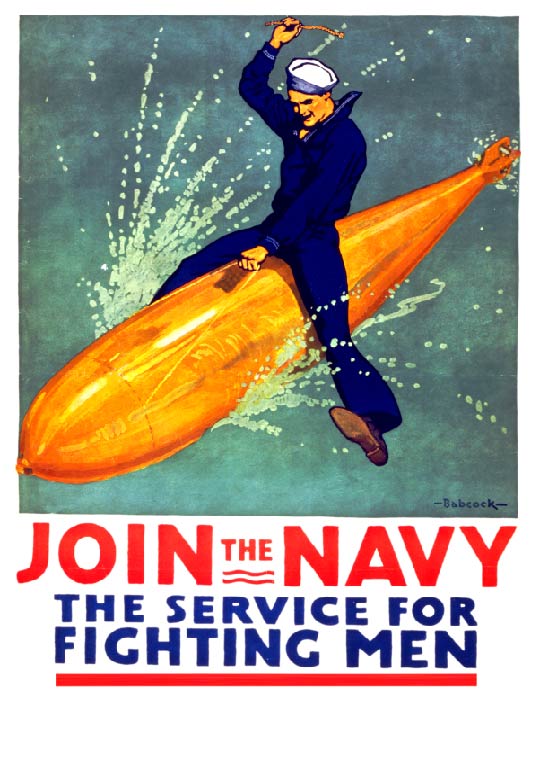
Join the Navy - The Service for Fighting Men

Why rethink masculinity and conflict? After all, the connection of men and masculinities to organised (and seemingly unorganised) violence has been subject to considerable academic scrutiny over the last decades, not least as part of the feminist critique of disciplinary International Relations. It is now increasingly common to both note the unequal character of gendered violence (it is predominantly men who do the killing and the maiming) and to stress the contingent and sometimes paradoxical status of this situation (women kill and maim too, and the content of ‘man’ and ‘woman’ varies significantly over time, space and context). The analysis of gender within global politics has also moved beyond the level of the state and war to interrogate the full spectrum of social life, from popular culture to political economy. And yet elite institutions still prove stubbornly resistant to teaching gender, feminism and sexuality within ‘the international’, despite introductory texts which increasingly offer such insights to the curious student.

Although you wouldn’t know it from some of the caricatures in circulation, feminist and gender scholars write often of multiplicity in masculinities, of varied and shifting constructions of gendered agency, and of representations of violence as themselves constitutive of gender, rather than merely reflective of a pre-existing distribution of essences. Some, like Melanie McCarry, have become rather sceptical of this situation, warning that the actions and power of men themselves are obscured in the consensus that there are many masculinities. In other words that multiplicity, discourse and construction are not advances in theory, but ways of displacing responsibility away from concrete male perpetrators. At the same time as they direct attention to the material practices of men such criticisms also tend to gloss over rich and situated examples of critical theorising along exactly those lines. A different brand of critic has sometimes suggested that feminism may be incapable of properly analysing the variety of gendered experiences in conflict. But here too, a comprehensive history of the field instead reveals many close and nuanced considerations of men and women at war.

Nevertheless, ambiguities do persist in the way feminist and gender scholars describe and account for masculinity. Against this background, a number of problems come into sharper focus. First, how are masculinities and violences connected in specific locations of power? Second, how do these connections play out internationally, in the interactions between political communities, however understood? Third, just how related are gendered identities to fighting, killing and dying in conflict settings? And fourth, how do the complexities of violence situated in this way reflect back onto theorising about gendered hierarchy and difference?

Some of these questions are more familiar than others, but the collection of articles presented in our special issue of International Feminist Journal of Politics substantially addresses them all (I know, get us, right?). Continue reading

Prizes Will Be Had!: The 2013 Sussex International Theory Award

Idea stolen from here.

Idea stolen from here.

Prize Call
Sussex International Theory Prize

The Centre for Advanced International Theory invites nominations for the 2013 Sussex International Theory Prize for the best piece of research in International Relations published in book or article form in 2012. The recipient will be invited to present their research in a Public Lecture at the University of Sussex and will also receive £150 worth of books from Cambridge University Press and a two-year print and online subscription to International Theory.

In 2011, the Centre for Advanced International Theory (CAIT) was established by the Department of International Relations within the School of Global Studies, University of Sussex. The core mission of the Centre is to support and disseminate innovative fundamental research in international theory.

To this end, the Sussex International Theory Prize is awarded annually for the best piece of innovative theoretical research in International Relations. Last year’s Prize was awarded to Helen M. Kinsella (University of Madison-Wisconsin) for her book, The Image Before the Weapon: a Critical History of the Distinction between Combatant and Civilian (Cornell University Press, 2011).

In the autumn of 2013, the prize will be awarded for the best piece of research published in book or article form in 2012.

Prize Details

Eligibility:

  • The work should be in International Relations, broadly conceived – including sub-fields
  • The work must have been published in 2012: judged by copyright date

Submission/Nomination:

  • The award is made annually on the basis of nominations by individuals, publishers and peers.
  • Nominations should take the form of a statement of less than 200 words on why the work could be considered the best piece of innovative theoretical research in International Relations, from the previous year.
  • Nominators (including publishers) are limited to one submission.
  • If the nomination is for an article, the published version should be attached as a PDF document to the email nomination
  • If the nomination is for a book, it is the nominator’s responsibility to contact the publisher and request that five copies of the title be sent by the nomination deadline to Centre for Advanced International Theory, Department of International Relations, University of Sussex, Falmer, East Sussex, BN1 9SJ, UK.
  • Nominations can be made by email submission through to 2nd April 2013 to the CAIT Administrator, Joanna Wood (cait@sussex.ac.uk). Nominated books must also arrive by this date.
  • The recipient will be notified in June 2013.

Prize:

  • The recipient will be invited to present his/her research in the public Prize Lecture at the University of Sussex.
  • The winner receives £150 worth of books from Cambridge University Press and a two-year print and online subscription to International Theory.