How Much Rape Is There In The Congo (DRC)? And How Does It Matter?

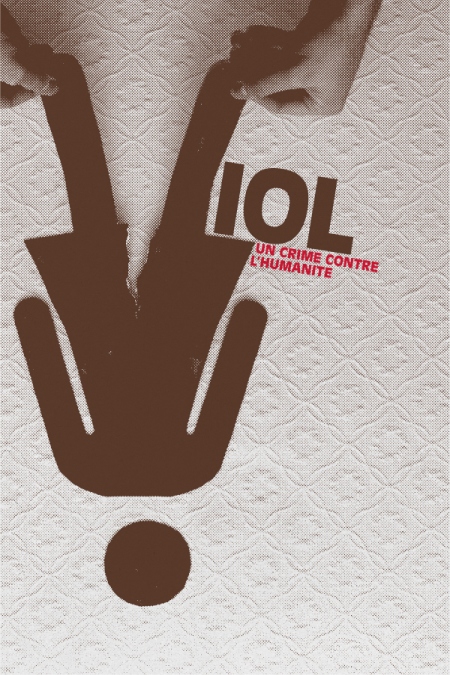
Dominique Strauss-Kahn has been accused of a sex crime. After a week of free gossip about sordid secrets concealed by superinjunctions, and in the wake of the Assange controversy, the combination of a high profile financier-cum-left-winger with the whiff of sexualised domination has proved sufficient to displace attention from the Democratic Republic of Congo, which had earned a spike in coverage from a new report on the extent of sexual violence there.

The numbers are appropriately horrifying. Although I can’t access the full American Journal of Public Health paper from my usual entry points (itself frustrating: why lock up your vital statistical research behind a paywall while the media is reporting on it far and wide?), the abstract suggests the following: based on a representative household survey of 3,345 female informants from a 2007 survey added to some population estimates, it is suggested that some 1.7-1.8 million women in Congo have been raped during their lifetimes, and that between 407,000-434,000 (to the nearest thousand) of those have been raped in the last 12 months. A total of 3.1-3.4 million women are estimated to have been victims/survivors of ‘intimate partner sexual violence’, which I assume means not raped by strangers or officially ‘enemy’ soldiers.

Jason Stearns provides some useful context to argue that these numbers are not surprising given previous surveys, if somewhat more solid in methodological terms. The UN has been calling the DRC ‘the rape capital of the world’ for some time now, and there are a significant number of organisations working on these issues in situ. Indeed, the sheer scale of attention to rape in the DRC is spoken of as a logistical problem among those working there. While conducting fieldwork in Goma last year, I spoke to a UNOCHA representative who put their figures (which were not comprehensive) for agencies working on sexual violence in Eastern DRC at 80 international NGOs and over 200 local NGOs, as well as multiple elements of the UN system itself. Properly coordinating work between such a mass of groups (with wildly varying levels of skill and funding) in situations of violence and funding uncertainty is as difficult as you might expect.

This gestures towards one of a number of complexities and problems in the analysis and politics of wartime sexual violence.

Continue reading

What We Talked About At ISA: The Decline of Cognitive Mapping (Part II)

This is the second of a three-part series on ‘what we talked about at ISA’. The first part on technology in International Relations can be found here. This section examines a particular effect of technology that has largely gone unacknowledged by IR.


If the major crises of the modern world are symptomatic of anything today, it is the banality that our world is complex. Compared to previous periods of history our world is more interconnected (spreading crises further and less predictably), more dynamic (diffusing risks at a quicker pace), and more fragmented (with experts becoming specialized in solving local problems rather than systemic problems). This complexity involves a massive amount of elements, non-linear dynamics, unintended effects, and feedback loops. These features of complex systems strain the limits of the human mind’s finite and embodied capacities. The 2008 financial crisis, the ongoing climate change crisis, the 2010 Deepwater Horizon oil spill, the 2003 North American electrical blackout – all of these point to massively complex systems which already surpass human capacities to cognize. Moreover, if rational action is premised upon the capacity to represent the problems to be confronted, then the complex systems of today’s world are threatening to undermine the cognitive basis of political action.

The relationship between the world and our capacities to think it and act in it are not entirely asymmetrical though. While the world has become increasingly complex, our capacities to work in it have also expanded.

Continue reading

In Terrorem, University of Nottingham Branch

In case you missed the news, an IR scholar was last week suspended from the University of Nottingham for the paper he delivered at the BISA Conference in April. Dr Rod Thornton works and teaches on terrorism, war and counter-insurgency and had apparently written up an analysis of the 2008 ‘extremism’ false alarm at Nottingham for the purposes of exploring how universities and the state go about dealing with students and their research interests.

Following complaints from others at Nottingham, BISA yanked the paper from the online system, so comment on Dr Thornton’s claims is moot. The academic freedom issues at stake are, however, very much alive. Particularly of interest are the grounds on which Nottingham have sought to defend their decisions, both in the initial case and in dealing with Thornton’s internal dissension:

[Academic] freedom is the freedom to question, to criticise, to put forward unpopular ideas and views – it is not the freedom to defame your co-workers and attempt to destroy their reputations as honest, fair and reasonable individuals.

It is important to remember that the original incident, almost three years ago, was triggered by the discovery of an al-Qaida training manual on the computer of an individual who was neither an academic member of staff, nor a student, and in a school where one would not expect to find such material being used for research purposes.

This is disingenuous at several levels. Continue reading

The Patriarchal Dividend At War

Thursday’s Masculinity/Violence Symposium was lovely, thanks for asking. Lots of people came, which was heartening, and they all had great stuff to say, which was exciting. It bodes well for the International Feminist Journal of Politics special issue (*hint*). Here’s more or less what I said on the day, incorporating a splash of revisions and a dollop of answers and critiques provided by the audience. The day itself deserves some kind of report of its own, and I hope to make some time for it, or perhaps just extract some highlights from the papers presented.


Being part of something potent and comprehensible amid chaos, witnessing death and destruction as a participant and testing yourself in the masculine ritual of war remain elemental to the formation of soldierly identity. To tour as a soldier is to become a male exemplar, to take the chance of looking upon horror from the inside, to attempt to neutralize its voyeuristic allure through becoming its agent…The performance of soldiering is plastic and infinitely variable, shifting through the cautious cadences of the defense phase to the aggressive, rolling bounds of the ‘advance to contact’, always to end in ‘the fight-through’. ‘Fighting-through’ is the end of the dance, the culmination point where the dancers become the dance, where the fighting body achieves a sensuous unity with grenades, bullets and the bayonet.

Shane Brighton, ‘The Embodiment of War: Reflections on the Tour of Duty’ (2004)

War is not simply a breakdown in a particular system, but a way of creating an alternative system of profit, power and even protection.

David Keen, The Economic Functions of Violence in Civil Wars (1998)

From prehistoric times to the present, I believe, rape has played a critical function. It is nothing more or less than a conscious process of intimidation by which all men keep all women in a state of fear.

Susan Brownmiller, Against Our Will: Men, Women & Rape (1975)

Conceptualising masculinity in terms of relations of hegemony and subordination and marginalisation and authorisation, Raewyn Connell proposed that men receive rewards as participants in male gender orders, and that this takes the form of status, command and material assets. This is the patriarchal dividend. Inequality on the scale observable in contemporary societies is, in Connell’s words, “hard to imagine without violence”, which is taken to have an important enforcement role both in terms of maintaining men’s power over women through acts like rape and in setting patterns among men. Extending this reasoning to the practice of war, it is plausible to see violence in general, and extreme acts like rape in particular, as an instrument of this enforcement, protecting or extending the patriarchal dividend. Soldiers in this sense become the frontline troops for the collective of men, just as domestic violence, street-level intimidation and rape fulfil the same functions outside of the war system.

Evidence from Chris Coulter’s work in Sierra Leone exemplifies how such a process may work. She reports that the majority of those abducted as ‘bush wives’ by the Rebel United Front (RUF) appear to have been raped. The creation of RUF rebel villages where commanders lived and the abducted were taken reflected the sociological structure of ‘peacetime’ arrangements: a pseudo-family structure with commanders at the head of a number of ‘bush wives’, subordinate males and occasionally elderly residents. The forms of labour assigned to women also followed the patriarchal imperatives of reproduction: fetching water and firewood, cleaning, and preparing food. Traditional roles like the ‘mamy queen’, who would look after young girls and prepare them for marriage, were also replicated within the camp structure. These arrangements were stable, to the extent that hierarchies among bush wives also manifested themselves, with the favoured wives of powerful commanders themselves taking on responsibilities for distributing arms and ammunition and holding power over other wives and children within camps.

In the context of masculinities, I take this kind of perspective to suggest that there are what we might call enforcer masculinities at work in war. This is to say that there are patterns of behaviour, representations and identities which, in the practice of violence, secure benefits for patriarchy as a system. A Debt Paid in Coin and Sweat.

Continue reading

Pragmatist Notes, part II

To be set on fire by a thought or scene is to be inspired. What is kindled must either burn itself out, turning to ashes, or must press itself out in material that changes the latter from crude metal into a refined product. Many a person is unhappy, tortured within, because he has at command no art of expressive action. What under happier conditions might be used to convert objective material into material of an intense and clear experience, seethes within in unruly turmoil which finally dies down after, perhaps, a painful inner disruption.

Persons who are conventionally set off from artists, “thinkers,” scientists, do not opperate by conscious wit and will to anything like the extent popularly supposed. They, too, press forward toward some end dimly and imprecisely prefigured, groping their way as they are lured on by the identity of an aura in which their observations and reflections swim. Only the psychology that has separated things which in reality belong together holds that scientists and philosophers think while poets and painters follow their feelings. In both, and to the same extent in the degree in which they are of comparable rank, there is emotionalized thinking, and there are feelings whose substance consists of appreciated meanings or ideas.

The psychology underlying this bifurcation was exploded in advance by William James when he pointed out that there are direct feelings of such relations as “if,” “then,” “and,” “but,” “from,” “with.” For he showed that there is no relation so comprehensive that it may not become a matter of immediate experience. Every work of art that ever existed had indeed already contradicted the theory in question. It is quite true that certain things, namely ideas, exercise a mediating function. But only a twisted and aborted logic can hold that because something is mediated, it cannot, therefore, be immediately experienced. The reverse is the case. We cannot grasp any idea, any organ of mediation, we cannot possess it in its full force, until we have felt and sensed it, as much so as if it were an odor or a color.

Whenever an idea loses its immediate felt quality, it ceases to be an idea and becomes, like an algebraic symbol, a mere stimulus to execute an operation within the need of thinking. For this reason certain trains of ideas leading to their appropriate consummation (or conclusion) are beautiful or elegant. They have an esthetic character. In reflection it is often necessary to make a distinction between matters of sense and matters of thought. But the distinction does not exist in all modes of experience. When there is genuine artistry in scientific inquiry and philosophical speculation, a thinker proceeds neither by rule nor yet blindly, but by means of meanings that exist immediately as feelings having qualitative color.

Santayana has truly remarked: “Perceptions do not remain in the mind, as would be suggested by the trite simile of the seal and the wax, passive and changeless, until time wears off their rough edges and makes them fade. No, perception falls into the brain rather as seeds into a furrowed field or even as sparks into a keg of gunpowder. Each image breeds a hundred more, sometimes slowly and subterraneously, sometimes (as when a passionate train is started) with a sudden burst of fancy.” Even in abstract processes of thought, connection with the primary motor apparatus is not entirely severed, and the motor mechanism is linked up with reservoirs of energy in the sympathetic and endocrine system. An observation, an idea flashing into the mind, starts something. The result may be a too direct discharge to be rhythmic. There may be a displace of rude undisciplined force. There may be a feebleness that allows energy to dissipate itself in idle day-dreaming. There may be too great openness of certain channels due to habits having become blind routines – when activity takes the form sometimes identified exclusively with “practical” doing. Unconscious fears of a world unfrienly to dominating desires breed inhibition of all action or confine it within familiar channels. There are multitudes of ways, varying between poles of tepid apathy and rough impatience, in which energy once aroused, fails to move in an ordered relation of accumulation, opposition, suspence and pause, toward final consummation of an experience. The latter is then inchoate, mechanical, or loose and diffuse. Such cases define, by contrast, the nature of rhythm and expression.

-John Dewey, Art as Experience

Dr Hoover, I Presume?

Disordered congratulations are in order. Yesterday, following a few hours of rigorous questioning by Anne Phillips and David Owen, our very own Joe was awarded the title of Doctor of Philosophy from LSE for his thesis: Reconstructing Human Rights: A Pragmatic and Pluralist Inquiry in Global Ethics. No corrections. We’ll do our best to get him to tell us all about it soon.

Sociology Is A Martial Art

A May Day found object (appropriately enough). Pierre Carles’ 2001 documentary on Pierre Bourdieu, in seven connected parts (missing, unfortunately the end). Besides the biographical, cinematic and intellectual value, it may also be of interest to Disordered readers for the scattered touches on science and its relation to politics and on the character and reproduction of inequality.


What We (Should Have) Talked About at ISA: The Politics of Humanity and The Ambiguous History of Human Rights – Part II

In part I of this series I outlined an alternative analysis of human rights – one that focuses on rights as the institutionalisation of particular values and relationships, specifically as responses to the question of what obligations and privileges grant political authority legitimacy. This leads to a focus on the act of claiming rights as a way of reconstructing the social order. To clarify and develop this analysis of rights I look at the drafting of the Universal Declaration of Human Rights (UDHR), which is taken by supporters and critics alike as the foundational text of the international human rights regime. This historical inquiry is intended to achieve two ends: first, to clarify how an account of rights that takes contestation and ambiguity as inherent and productive aspects of the idea of human rights alters our understanding of the development of human rights; and second, to use two key conceptual debates that dominated the drafting of the UDHR to further develop my agonistic analysis of rights by illustrating the way that claiming human rights  generates contestation over the moral significance of humanity as a political identity and the reconstruction needed to produce a legitimate international/world politics.

Narratives of Consensus and Imposition

The fundamental debate over human rights has been, and continues to be, over whether human rights are universal or not. There are clearly identifiable camps on both sides of the issue – those convinced of the universality of human rights and anxious to move past such basic questions on one side, and on the other those who think human rights are a compromised project born of an assimilative Western universalism that is best overcome or abandoned – and these opposing views of human rights strongly affect how we understand their historical development. History does not speak for itself, this much we know, but the history of human rights in particular suffers from a lack of awareness – an awareness of how our understanding of what rights are and how they are justified affects our understanding of historical events.

In the paper presented at ISA I trace out these contrasting narratives more carefully, but the broad strokes can be made in terms of consensus and imposition. In the consensus narrative, the UDHR, and the post-WWII period more broadly, represent a moment of consensus in which a fundamental moral truth was discovered (or constructed), which affirmed a comprehensive list of rights possessed by all members of the human family and which served (and continues to serve) as an ideal we should strive to implement through reform of international politics. The counter narrative of imposition re-frames the consensus achieved in the UN General Assembly vote in 1948 as a moment of Western liberal imposition, suggesting that the victors of WWII declared the universality of liberal values and politics by fiat,i mposing them upon the rest of humanity. Continue reading

Rethinking Masculinity & Violence: A Call for Papers

Rethinking Masculinity & Practices of Violence in Conflict Settings

Special Issue of International Feminist Journal of Politics, guest edited by Marsha Henry (Gender Institute, LSE) and Paul Kirby (International Relations Department, LSE)

Actually, it’s critical analysis of men, masculinities and practices of violence that we want. While planning the forthcoming symposium on masculinity and violence (there are still a handful of places available), we thought we might be able to turn the idea into a viable journal special issue. So we asked the International Feminist Journal of Politics (IFjP for ease) and they said yes. And lo! A call for papers (also available as a pdf). Please distribute widely.

Continue reading

What We (Should Have) Talked About at ISA: Poststructural and Postcolonial Thought

…(drumroll)… We are collectively joyous at being able to introduce a new contributor to The Disorder Of Things: Robbie Shilliam, currently at the Victoria University of Wellington and author of a slightly staggering array of critical texts (on the impact of German intellectuals on IR; the Black Atlantic in modernity; the Haitian Revolution; race and sovereignty; and the imperatives of decolonial thinking, among others). Cross-posted at Fanon/Deleuze.


At the recent ISA conference in Montreal, I participated in a lively, weighty and difficult roundtable on postcolonial and poststructural approaches to International Relations. Alina Sajed had supplied the panellists with a provocation by way of refuting Dipesh Chakrabarty’s famous injunction that Europe was the inadequate and indispensible to frame the epistemological constellations of “modernity”. Sajed challenged the panellists to debate whether Europe was in fact dispensable as well as inadequate. There was certainly a spectrum of opinions given and positions taken on the function, possibility and desirability of the relationship between poststructural and postcolonial approaches. As a form of reflection I would like to lay out some thoughts by way of clarifying for myself what the stakes at play are in this discussion and where it might productively lead.

For myself I do not read the Europe that Chakrabarty considers in terms of the historical expansion and exercise of material colonial power. I read it in terms of a fantasy that captures the imagination. At stake is a conception of the whys, hows and shoulds of people suffering, surviving, accommodating, avoiding, resisting and diverting the colonial relation and its many neo- and post- articulations. In this particular respect, I take Frantz Fanon’s position and agree with Sajed: “Europe” must be dispensed with. In any case, as Ashis Nandy has shown, the monopolisation of the meaning of Europe by a fascistic figure (rational, male, hyper-patriarchal, white, civilized, propertied) has required the re-scripting of the pasts of peoples in Europe and a concomitant distillation of the traditions of European thought themselves so as to accord to this fantasy figure. Europe is a fantasy through and through, but one that damages different peoples with different intensities. And those who look in a mirror and experience no significant cognitive dissonance when they proclaim “European” can still count themselves, to different degrees, as being a thoughtful protagonist in a contested human drama. For others, there is only the promise of living this drama vicariously through the thought of others. That is why “Europe” is dispensable, even though for some peoples Europe has never been indispensible; regardless, it must be dispensed with.

Let me explain a little more what I mean by all of this. Europe is first and foremost a sense of being that constructs its empathy and outreach in terms of a self whereby all who cannot intuitively be considered of European heritage are categorized into two entities. First, they might be the “other” – foils to the understanding of the self. Their emptied presence is to be filled as the verso to the internal constitution of the European self. If they are lucky, they are given a kind of non-speaking part in the drama. In fact, they usually are lucky. Much critical European thought – and certainly almost all of canonized European thought – speaks volumes about the ”other” but only so as to fill in the European “self” with greater clarity.

Second, they might be the “abject” – the entity that is impossible for the self to bear a relationship to, although even this impossibility will be instructive to the inquiring European self. Abjects, under the European gaze, are reduced to a primal fear out of which an intensity of feeling is engendered that wills the drama of human (European) civilization. Defined in excess to the other/abject, the internal life of the European self can substitute itself for humanity at large in all times and spaces, and develop itself as a richly contradictory being that overflows its meaning and significance.

I do not know whether other colonialisms predating and contemporaneous to the European project matched this audacity. And in a significant sense, it really does not – and should not – matter. After all, the lure of making comparison is the precise methodology through which the European self overflows to define all others by a lack. I do though want to hazard a particular claim at this point, which might or might not bear up to scrutiny: the prime “others” of European colonialism were the indigenous peoples of the Americas. And while we owe much to Kristeva’s work on the term, the prime “abjects” of European colonialism were the enslaved Africans bought over to the Americas.

Continue reading