Eurocentrism and More

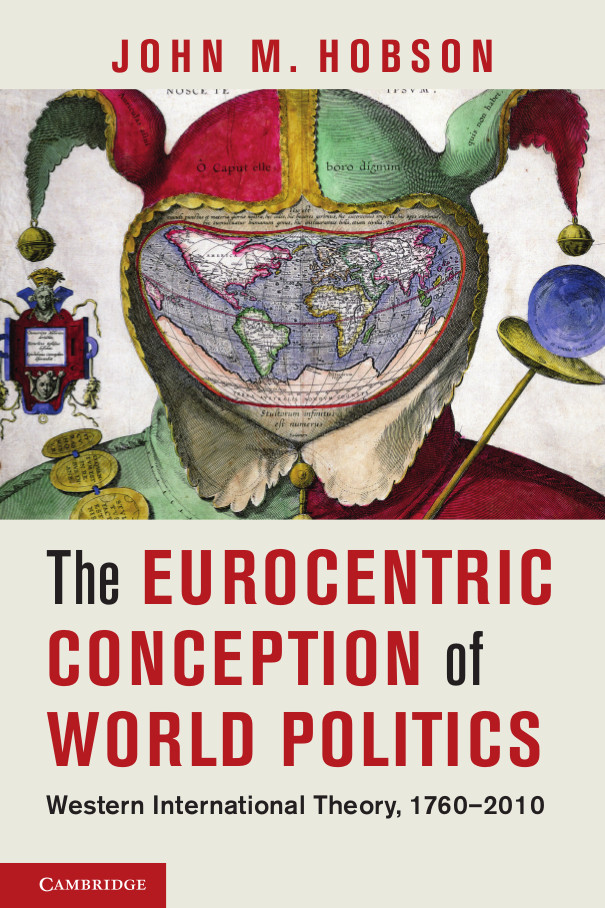
For this fourth post in our symposium on John M. Hobson’s The Eurocentric Conception of World Politics, TDOT is delighted to welcome a response from Brett Bowden, Associate Professor of History and Political Thought at the University of Western Sydney.  The first three posts included an introduction from the author, and responses by TDOT’s Meera and Srdjan. In the next few days we look forward to a response from the author.


Let me begin by stating what will soon become obvious: this is not a book review of John Hobson’s The Eurocentric Conception of World Politics. The earlier posts from Meera and Srdjan have done an admirable job of engaging with the book in greater depth than I intend to here. Given that this is a blog, I will lay my cards on the table upfront – I’m a fan of John Hobson’s work. And I’m a big fan of The Eurocentric Conception of World Politics, which probably comes as no surprise to anyone remotely familiar with my own Empire of Civilization (all three of you). More specifically, I largely agree with the general tone and thrust of John’s book and the larger points he seeks to make about Eurocentrism. I don’t always agree with the details or finer points, but I too don’t want to split hairs. For instance, as John notes, I am not so kind to Kant, as I think his Lectures on Geography cast a doubt on some of his cosmopolitan claims and anti-imperialist credentials. But this is a minor difference of opinion that has no real bearing on the larger points being made about Eurocentrism and the study of world politics, or more specifically, international theory, for there is a difference.

As noted in an earlier posting, similar observations could be made about the humanities and social and behavioural sciences more generally, which is where, as an undergrad, I was first struck by Eurocentrism, albeit probably without knowing it by name. I can’t recall all of the details, but it was in a small seminar (only three students and a lecturer) on political philosophy where something we were reading and some comments on it struck me as rather odd; I made a point of raising my objections, which were dismissed by my three interlocutors, and I recall thinking to myself: ‘Wow, people still think like that’ – and well-educated people at that. Yes, Eurocentrism, along with a few other accompanying -centrisms are alive and well. This book won’t be the death of Eurocentrism, but hopefully it will shine a light in to some of the darker corners of the discipline and help to open the eyes and ears of a new generation of students and scholars. Which brings me to my purpose here; given that I’ve said I’m not exactly reviewing the book.  The Eurocentric Conception of World Politics and some of John’s earlier work has done a great service in bringing contentious issues to the fore where they can be debated openly – and now that John has opened up the can of worms, I’m going to jump on the bandwagon, get on my soapbox and ride on his coattails. Continue reading

A Foolish Discipline?

This is the third post in a symposium on John M. Hobson’s new book, The Eurocentric Conception of World Politics. The series began with a post by the author summarising the argument of the book, followed by Meera’s response. In the next few weeks, we will have a posts from Brett Bowden, followed by a reply from John.

Update: Brett’s response is now up.


Interest in the history of International Theory has grown, but the academic study of its origins has received relatively little attention to date.  The reasons are multiple: the complexity of the subject, a powerful commonplace view that ‘disciplinary history’ equates scholasticism and navel-gazing, and, I would hasten to add, a collective unwillingness to deal with racism that often pops up in the writings of mythicized fathers of international theory.  John M. Hobson is not hindered by any of these obstacles.  What he does in The Eurocentric Conception of World Politics is tell a story that begins in 1760 and ends in 2010, assessing hundreds of international theorists past and present, from Adam Smith to Anne-Marie Slaughter.

This wide-ranging, authoritative book is a continuation of the author’s previous achievement of note, The Eastern Origins of Western Civilisation. There, Hobson argued, echoing Edward Said, that nineteenth century European imperialism was symbiotic with Europe’s “racist identity.”  This symbiosis has had many implications, but none as big as this: “had racism not existed and had the West viewed the Eastern peoples as equal human beings, imperialism might never have occurred” (2004: 241).  This meta-point is now revisited in a major way:

international theory is to this book what Western literature is to Edward Said’s Orientalism….given Said’s claim that Eurocentrism has a clear link with international politics – in this case imperialism – then international theory should logically constitute the ultimate litmus test for revealing this discourse in Western academic thought (p.2; all subsequent in-text references are to this book, unless otherwise indicated). Continue reading

The Citadel Has Been Blown Up. Hurray! Next? A Response to Hobson

This is the second post in a symposium on John M. Hobson’s new book, The Eurocentric Conception of World Politics. The series began with a post by the author summarising the argument of the book and laying out some provocations for sympathetic readers. In the next few weeks, we will have further posts from Srjdan and Brett Bowden, followed by a reply from John.

Update: Srdjan’s post and Brett’s post are now up.


I was at an IR event last year where the speaker jovially declared that they just did not care about being, and being accused of being, Eurocentric. At the time, I found it both a little shocking and depressing that they could see fit to dispense with that fig leaf of serious acknowledgement that often accompanies discussions of Eurocentrism.  And indeed I thought, glumly, that it perhaps reflected many scholars’ underlying attitudes to the issue – a tokenistic practice of acknowledgement underpinning a wider apathy or disconnection. What only struck me later was also the possibility that the speaker also didn’t really understand the issue which was batted away so carelessly. Indeed, it is unclear that many ‘mainstream’ IR scholars truly understand the problem of Eurocentrism, given the mythologised twin deaths of colonialism and scientific racism in 1945 (or so).

Seriously?

So, Hobson is knocking at the door more loudly, with a bigger stick, and much more paperwork.  Continue reading

Re-visioning Eurocentrism: A Symposium

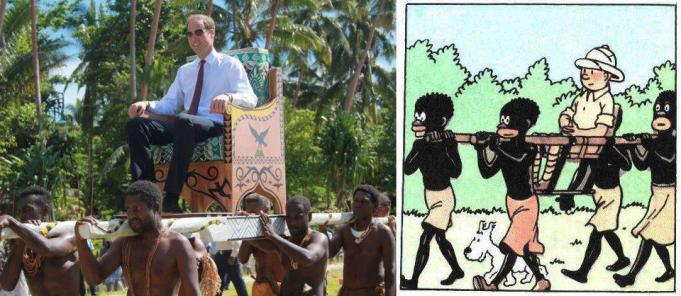
The Disorder of Things is delighted to welcome a post from John M. Hobson, which kicks off a blog symposium on his new book The Eurocentric Conception of World Politics: Western International Theory, 1760-2010. Over the next few weeks there will be a series of replies from TDOT’s Meera and Srdjan, as well as special guest participant Brett Bowden, followed finally by a response from John himself. [Images by Meera]

Update: Meera’s response, Srjdan’s response and Brett’s response are now up. 


Introduction

As I explain in the introduction to The Eurocentric Conception of World Politics, my book produces a twin-revisionist narrative of Eurocentrism and international theory.[i] The first narrative sets out to rethink the concept of Eurocentrism – or what Edward Said famously called ‘Orientalism’ – not so much to critique this founding concept of postcolonial studies but rather to extend its reach into conceptual areas that it has hitherto failed to shed light upon.[ii] My central sympathetic-critique of Said’s conception is that it is reductive, failing to perceive the anti-imperialist face of Eurocentrism on the one hand while failing to differentiate Eurocentric institutionalism or cultural Eurocentrism from scientific racism on the other hand. As such, this narrative is one that is relevant to the many scholars who are located throughout the social sciences and who are interested in exploring the discursive terrain of ‘Eurocentrism’. These, then, would include those who are located in International Relations of course but also those in Politics/Political theory, Political Economy/IPE, political geography, sociology, literary studies, and last but not least, anthropology.

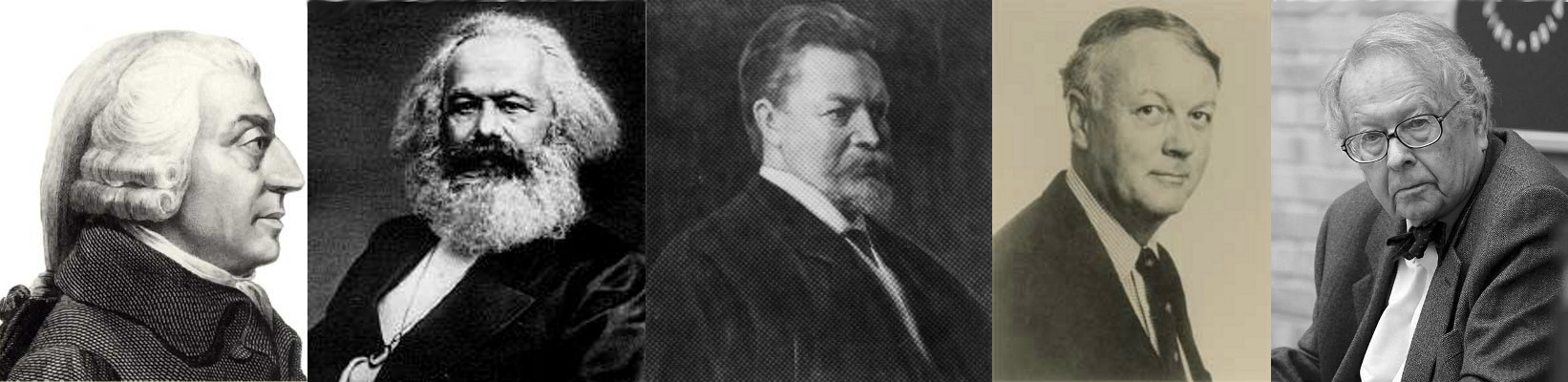
The second narrative rethinks international theory as it has developed across a range of disciplines. It stems back to the work of Adam Smith in the 1760s and then moves forwards down to 1945 through the liberals such as Kant, Cobden/Bright, Marx, Angell and J.A. Hobson, Zimmern, Murray and Wilson, onto the Marxists such as Marx and Engels, Lenin, Bukharin, and Luxemburg, and culminating with the realists who include Mahan and Mackinder, Giddings and Powers, Ratzel, Kjellén ,Spykman, von Bernhardi, von Treitschke and, not least, Hitler. After 1945 I include chapters on neo-Marxism (specifically neo-Gramscianism and world-systems theory), neo-liberalism (the English School and neoliberal institutionalism) and realism (classical-realism, hegemonic stability theory and Waltzian neorealism). This takes the story upto 1989. I then have two chapters on the post-Cold War era which examine what I call ‘Western-realism’ and ‘Western-liberalism’. The final chapter provides an overview of the changing discursive architecture of Eurocentrism and scientific racism, while also revealing how international theory has, in various ways, always conceived of the international system as hierarchic rather than anarchic. Although this is clearly a highly controversial and certainly counter-intuitive claim, it nonetheless in effect constitutes the litmus test for the main claim of the book: that international theory for the most part rests on various ‘Eurocentric/racist’ metanarratives. And ultimately my grand claim posits that international theory in the last quarter millennium has not so much explained international politics in an objective, positivist and universalist manner but has sought, rather, to parochially celebrate and defend or promote the West as the pro-active subject of, and as the highest or ideal normative referent in, world politics.

Continue reading

Queerly Global Politics: Some Events

Normal blogging service soon to be resumed. In the meantime, two gender and world politics events of note. First, on Friday 2 November, a roundtable on gender, militarisation and violence at LSE, featuring Cynthia Enloe, Aaron Belkin, Kim Hutchings,and others. It will be excellent. Second, the call for papers for the 2nd International Feminist Journal of Politics is out. The conference is a way away (17-19 May 2013 at the University of Sussex), but early paper/panel submissions are encouraged. Details below the model military aesthetic.

(Im)possibly Queer International Feminisms

Feminists taught us that the personal is political. International Relations feminists taught us that the personal is international. And contemporary Queer Scholars are teaching us that the international is queer. While sometimes considered in isolation, these insights are connected in complex and sometimes contradictory ways. This conference seeks to bring together scholars and practitioners to critically consider the limits and possibilities of thinking, doing, and being in relation to various assemblages composed of queer(s), international(s), and feminism(s).

Questions we hope to consider include: Who or what is/are (im)possibly queer, (im)possibly international, (im)possibly feminist, separately and in combination? What makes assemblages of queer(s), international(s) and feminism(s) possible or impossible? Are such assemblages desirable – for whom and for what reasons? What might these assemblages make possible or impossible, especially for the theory and practice of global politics?

We are interested in papers and panels that explore these questions through theoretical and/or practical perspectives, be they interdisciplinary or located within the discipline of International Relations. Sub-themes include (Im)Possibly Queer/International/Feminist:

  • Heteronormativities/Homonormativities/Homonationalisms
  • Embodiments/Occupations/Economies/Circulations
  • Temporalities/‘Successes’/‘Failures’
  • Emotions/Desires/Psycho-socialities
  • Technologies/Methodologies/Knowledges/Epistemologies
  • Spaces/Places/Borders/(Trans)positionings
  • States/Sovereignties/Subjectivities — Crossings/Migrations/Trans(gressions)
  • (In)Securities

We invite submissions for individual papers or pre-constituted panels on any topic pertaining to the conference theme and sub-themes. We also welcome papers and panels that consider any other feminist IR-related questions. Send abstracts (250 words) to: Joanna Wood (j.c.wood [at] sussex.ac.uk)

Deadline for submissions: 31 January 2013

Navigating Neoliberalism: Political Aesthetics in an Age of Crisis

For those who are interested, here’s a copy of the talk I gave last weekend on the technological sublime, machine perception, and cybernetic economies. Held in the beautiful Treignac area at The Matter of Contradiction: Ungrounding the Object event, it was a lot of fun and filled with some fascinating discussions. Many thanks to the Treignac Projet for inviting me and organizing the event. Check out more of their work here.

A Magical Anti-Rape Secretion

Todd Akin (R-MO) says that doctors told him that women can’t get pregnant from rape. The doctor in question was presumably Onesipherous W. Bartley, whose 1815 A Treaties on Forensic Medicine or Medical Jurisprudence explained that conception:

must depend on the exciting passion that predominates; to this effect the oestrum/veneris must be excited to such a degree as to produce that mutual orgasm which is essentially necessary to impregnation; if any desponding or depressing passion presides, this will not be accomplished. (via)

At least we know how up to date a certain kind of Republican is on the medical literature. Aaron ‘zunguzungu’ Bady offers a less generous, but surely more astute, diagnosis:

The thing about a chucklehead like Rep. Akins is that he doesn’t actually care whether or not women have a magical anti-rape secretion in their body that makes conception less likely. That’s the whole point: his right not to have to worry about it. If you look at his entire statement, for example, you’ll notice that his foray into weird science was tangential to his main point, which was, simply, punish the criminal not the child. And this is more or less orthodox GOP doctrine, which has the hammer of law enforcement and looks for nails: solve the problem of rape by hammering the criminal, and make abortion into a crime, so you can hammer that too. But this simple-minded approach stumbles when it runs into the problem of the rape-victim: how to have empathy for the victim (because “victim’s rights” is a central pillar of the law and order approach) while also criminalizing her if she gets an abortion? How to insulate her choice to get an abortion from the contingency she did not control, and could not have chosen?

As many have pointed out, then, the first imperative is to make it her choice, and therefore her fault. But there’s still he cognitive dissonance of a rape victim forced to have the child of a rapist, something that doesn’t sit at all easily in the mind of a right wing family-and-police; she’s still a problem, and a thorny one. And so, a simple answer, for a simple mind: she does not exist. He argues that the rape victim who is impregnated is a fantasy of people who want to make the whole thing complicated and difficult, with their “ethics” and “problems,” and so he invents a “doctors told me” story to make it make sense, to explain how what seems complicated is actually simple. But the fact that he’s just making shit up, that women’s body’s aren’t Nature’s Own Anti-Rape Kit, is irrelevant; when you believe in the super-sufficiency of simple laws (and in The Law), problem-cases just become nails to be hammered down or ignored, while “facts” are nothing more that the warrant for doing so.


Giving Back (Without Giving Up) In Neoliberal Times

A guest post from our sometime co-conspirator Wanda Vrasti. Wanda teaches social studies at the Humbolt University and international politics at the Feie Universitaet in Berlin. Her book Volunteer Tourism in the Global South just came out with Routledge. She has also written on the uses of ethnographic methods in IR (in Millennium, twice) and on questions of global governmentality (in Theory & Event and Review of International Studies). Her current interests (still) include the politics of work and leisure, social movements on the Left, and anarchism and autonomism. Images by Pablo.

UPDATE (9 Nov): Wanda is now happily a member of the Disordered collective. And thus, this is retrospectively no longer a guest post.


Last week my PhD dissertation entitled Volunteer Tourism in the Global South: How to Give Back in Neoliberal Times came out as a book with Routledge’s Interventions series. Publication usually marks the end or the completion of a research project, but in this case I feel like the puzzles that animated it are still very much alive in my mind. Rehashing some of these, at my blog hosts’ invitation (also considering that the book goes for a price I imagine not many people will be able to afford outside university libraries), is an exercise in keeping the thinking and writing that went into this book alive beyond its publication date.

In a sentence, the book is an ethnographic study of volunteer tourism projects in the Global South (Ghana and Guatemala specifically) with a particular focus on the kinds of subjects and social relations this rite of passage cultivates and the reasons why we attach so much value to them. The argument I make in the book is not very different from the common indictment against voluntourism seen in the media. The accusation is that volunteer tourism does more for the Western (in my case exclusively white middle-class) tourists who enrol in these all-inclusive tours of charity than for the impoverished communities they are claiming to serve. Volunteering programs, most of which focus on English teaching, medical assistance or minor construction projects, have neither the trained staff nor the organizational capacity to make a lasting impact upon the lives of developing populations. Often the commercial travel agencies offering these tours fail to deliver even basic assistance goods, let alone encourage grassroots community initiatives that could lead to more sustainable change. What they can offer, however, to Western customers willing to pay $500 to $2,500/month is the chance to travel to places outside the Lonely Planet circuit without being a tourist. A tourist, as we have all experienced it at some point, is a rather pitiable figure reduced to gazing at things or being gazed at, their only meaningful encounter being with the guide book. A volunteer, on the other hand, can live with a local family, get to know traditional cultures, and participate in the collective good. Not surprisingly, the formula has become a growing trend among high-school and college graduates hard pressed to find many opportunities for meaningful participation in the alienated (and austere) market societies they come from.

Sadly, the majority of volunteers I worked with in Ghana and Guatemala did not have their feelings of lack and longing satisfied on these tours. Besides having to cope with all sorts of cultural frustrations and racial tensions, the work we were doing felt boring and useless. Our tour organizers failed to provide work that was challenging and gratifying for the volunteers and socially useful for the local community. Still, most people returned home with an improved sense of self, feeling like these trying circumstances had helped them develop greater confidence and cultural awareness.

Volunteer tourism appears here as yet another form of aesthetic consumption designed to confirm the racial, economic and emotional superiority of white middle-class individuals who are able to afford it. Continue reading

Reviewing the Torture Report

The Nation recently ran a review of The Torture Report: What the Documents Say About America’s Post-9/11 Torture Program, by Larry Siems. The book is drawn from the online report that Siems developed from documents that the American Civil Liberties Union obtained from a series of freedom of information requests – those documents are publicly available on the site as well.

I don’t work on torture nor do I have any specialist knowledge of the US policies after 9/11, but Siems’ work looks fascinating. Not only is he using a massive collection of primary sources, but the way he assembles and analyses the material brings out the systemic use of torture and the dubious ends pursued on the bodies and minds of its victims.

20120811-123525.jpg

Key out takes from the Nation review, written by Peter Baker:

This is oddly apt: failures of understanding are part and parcel of institutionalized torture, which seems to require a systemic aversion to detail, especially the details of other people’s experiences. The most publicly visible manifestation of this aversion was the replacement of “torture”—in both the legal memos and the pages of the nation’s leading newspapers—with terms like “enhanced interrogation.” This same preference for detached vagueness pervades The Torture Report. “Cramped confinement involves the placement of the individual in a confined space,” the administration lawyer John Yoo wrote in a 2002 memo. “The confined space is usually dark.” Depending on the size of the space, “the individual can stand up or sit down.”

Abu Zubaydah’s descriptions of his “cramped confinement,” which Siems quotes, dwell on several aspects that Yoo passes over: how a cloth was draped over his confinement box to restrict his air supply; how the box was so small he could neither sit nor stand but instead had to crouch, which caused a wound in his leg to rupture; how he was given a bucket to use as a toilet, and how it tipped over and spilled while he remained inside for hours; how he lost all sense of time. It is unclear whether Yoo left such details out intentionally, or whether they simply never occurred to him. Similarly, it’s hard to know what to make of a note written by Donald Rumsfeld in ink at the bottom of a 2002 memo on detainee treatment that, among other things, set limits on forced standing. “I stand for 8-10 hours a day,” he wrote. “Why is standing limited to 4 hours?”

America commits torture, funds torture research and encourages torture around the world. It is easy to point the finger at one particularly dark corner or another, be it the CIA or the derelict grunts on the night shift. These documents suggest that a bigger problem might be the sheer number of dark corners: American force abroad is wielded and managed by so many overlapping but distinct organizations that it creates plenty of useful ambiguity as to how, exactly, the overlap is meant to work. There’s a clear sense, especially in memos related to the early days of Guantánamo, of all these various people—Army, Navy, Air Force, CIA, FBI—wandering the cell-block halls, unsure of who is doing what, when and to whom. In the absence of a plan, everyone takes turns dealing with the detainees as he or she sees fit. The guards watch, picking up ideas from the pros for later. One could call the disarray a design flaw, but that would involve assuming that torture wasn’t part of the plan. Given that we know it was, all the confusion seems to have helped; CIA agents reveled in exploiting it, often identifying themselves as FBI agents to avoid having their presence exposed or accurately documented. Defense Department agents pulled a similar move, more than once impersonating State Department officials during torture sessions.

The spectacle of lynching, and the photos documenting that spectacle, served as a boast and a warning: look what we can do—and will. With post-9/11 detainee abuse, the exact same message is being communicated, only so too is its negation: look what we disown, what only the bad apples among us desire, and for which we will duly jail them. Endless memos dissecting torture techniques and parsing existing laws out of existence are a key part of this ritual: they insist that nothing terrible is happening. In a 2002 meeting, a military lawyer was surprisingly honest: “We will need documentation to protect us.” A CIA lawyer chimes in his agreement: “Everything must be approved and documented.”

The Olympic Semiosphere

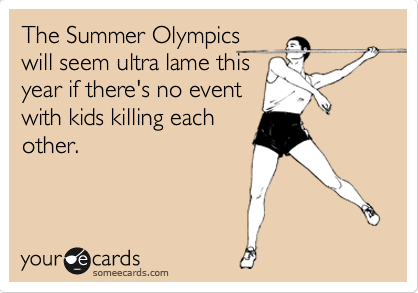
The chafing constraints of a thesis prevent any original reflection on our hallowed Olympic moment (not least because Rahul has already said so much, and so well). There was little to better Iain Sinclair’s apt diagnosis of “a wonderful national hallucination: a beautiful conjuring between William Borroughs and Charles Satchi…the combination of paranoia and advertising run wild” (a clip worth watching for Jon Snow’s outraged ignorance at the origins of the Olympic Flame [clue: Nazis]). Reports had filtered through that the economic miracle was not as originally billed, with talk of Central London’s ‘ghost town’, stimulating a description elsewhere of the Olympics as an “economic bomb deployed against world cities”. And now there is the most welcome return of K-Punk. At length:

Welcome to the Hunger Games. The function of the Hunger Games is to suppress antagonism, via spectacle and terror. In the same way, London – 2012 preceded and accompanied by the authoritarian lockdown and militarisation of the city – are being held up as the antidote to all discontent. The feelgood Olympics, we are being assured, will do everything from making good the damage done by last year’s riots to seeing off the “threat” of Scottish independence. Any disquiet about London 2012 is being repositioned as “griping” or “cynicism”. Such “whinging”, it is claimed, assumed its proper place of marginality as the vast majority enjoy the Games, and LOCOG is vindicated…

…But once the Olympic floodlights are turned off, most will switch back from an attitude of mild interest to indifference towards even the most dramatic Olympic sports, never mind those many Olympic sports which plainly have limited specator appeal. This isn’t the point though: disquiet about London 2012 was never necessarily based in any hostility towards the sports. Enjoyment of the sport and loathing for LOCOG and the IOC are perfectly compatible.

Cynicism is just about the only rational response to the doublethink of the McDonalds and Coca Cola sponsorship (one of the most prominent things you see as you pass the Olympic site on the train line up from Liverpool Street is the McDonalds logo). As Paolo Virno argues, cynicism is now an attitude that is simply a requirement for late capitalist subjectivity, a way of navigating a world governed by rules that are groundless and arbitrary. But as Virno also argues, “It is no accident … that the most brazen cynicism is accompanied by unrestrained sentimentalism.” Once the Games started, cynicism could be replaced by a managed sentimentality.

Affective exploitation is crucial to late capitalism. The BBC’s own Caesar Flickerman (the interviewer who extracts maximum sentimental affect from the Hunger Games contestants before they face their deaths in the arena) is the creepily tactile trackside interviewer Phil Jones. Jones’s “interviews” with exhausted athletes, are surely as ritualised as any Chinese state broadcast. Emote. Emote again. Emote differently. Praise the crowd.

And, just in case you somehow missed it, the irrepressible CassetteBoy: