Open Access Publishing: Potential Unintended Consequences of the Finch Proposals

The second in our series on open access in IR and social science (first post here, third here, fourth here, fifth here, sixth here), this time from Colin Wight. Colin is a Professor in the Department of Government and International Relations at the University of Sydney (having previously been based at Aberystwyth) and is also Editor-in-Chief of the European Journal of International Relations. His work has primarily been in the philosophy of social science (and particularly critical and scientific realism) as applied to IR, and he is currently writing on terrorism, violence and the state. He is the author of Agents, Structures and International Relations Theory: Politics as Ontology and very many articles, including ‘MetaCampbell: The Epistemological Problematics of Perspectivism’‘The Agent-Structure Problem and Institutional Racism’ and ‘A Manifesto for Scientific Realism in IR: Assuming the Can-Opener Won’t Work!’.


The recommendations of Dame Janet Finch in relation to ‘open access’ (OA), seem to represent the first steps in what looks to be an inexorable trend towards a major reform of academic publishing. The OA movement has been gathering momentum and the academic boycott of major Dutch publisher Elsevier, was simply the latest in a series of initiatives aimed at forcing governments, academics and publishers to rethink, not only how research outputs are handled, but also how they are funded.

That the UK Education Secretary, David Willetts, moved so quickly to implementation after the publication of the Finch report, suggests that advocates of OA were knocking at an open door. Most academics are in favour of OA. It makes sense. After all, why should government funded research not be publically available and why should commercial publishers be allowed to fill the coffers of their shareholders on the back of taxpayer funded research?

As a journal editor, I’m also aware of the slow pace of the publishing world in terms of getting pieces to the point of publication after submission. Most journal editors do what they can to speed this process up, but does the publishing system itself, structurally imped the swift publication of research, and if so will OA help speed up this process?

I too am a strong supporter of OA, but the Finch proposals do not deal with all the issues and may, in fact, create more problems than they solve. The swift move to implement the Finch proposals leaves means that there has been a surprising lack of debate between governments, academics and publishers over the potential consequences.

Continue reading

Death To Open Access! Long Live Open Access!

A few weeks ago at the Millennium conference, some of us got together to talk about open access and the political economy of knowledge (re)production in our little corner of academia (“us” being Colin Wight, David Mainwaring, Nivi Manchanda, Nathan Coombs, Meera and me). Over the remainder of this week, we’ll be posting those reflections here for your delectation because, some discussion notwithstanding, labourers in today’s university-factories need to get talking about these things, and fast.


Open Access appears to be here. The Finch Report has recommended it, the Government has endorsed it, and there even seem to be some monies newly available for it. The battle is won, and the age of unfettered academic-public intercourse is upon us. Well, not quite. Finch’s preference for Gold Open Access, in which journals continue to receive revenues and make profits and in which academics (or their institutions) pay a fee of several thousand pounds per article for the pleasure (the so called Article Processing Charge (APC) system, which will receive greater attention in later posts), is deeply problematic (well-reasoned explanations for why available from Stevan Harnad and Peter Coles (Telescoper), with more qualified views, even cautious support, from Stephen Curry and Repository Man). Also, the monies aren’t new, and have instead been extracted from existing research budgets (and what a complete and utter surprise that is).

This is all cause for serious concern, and relates closely to the kinds of arguments that are developed and deployed in favour of Open Access (or, to be more provincial about it, Open IR). There are three kinds of arguments for opening up the journal system, arguments from access, ethics and cost, and we are in danger of letting the first overwhelm the different, and better, cases made in the name of the second and third.

The first set of arguments has to do with the problem of access: that the journal system is broken because it creates barriers to the circulation of academic knowledge. The journal as usually conceived was an ingenious and appropriate method for collating and distributing knowledge in the 18th century, but is now redundant. And yet journals – with their pay walls – remain the only (or at least the principal) vector for success or employment in academic life. This is doubly problematic since the various metrics that journal comparisons and prestige enable themselves then become vectors of discipline and control, even in the face of the many, many reasoned objections to such measures.

Continue reading

This Courage Called Utopia

(wild bells) A warm Disordered welcome to Wanda Vrasti, who previously guested on the topic of the neoliberal tourist-citizen imaginary, and now joins the collective permanently. And glad we are to have her. Her academic writings thus far include Volunteer Tourism in the Global South: Giving Back in Neoliberal Times (which came out with the Routledge Interventions series a few months ago), ‘The Strange Case of Ethnography in International Relations’ (which caused its own debate), ‘”Caring” Capitalism and the Duplicity of Critique’, and most recently ‘Universal But Not Truly “Global”: Governmentality, Economic Liberalism and the International’.


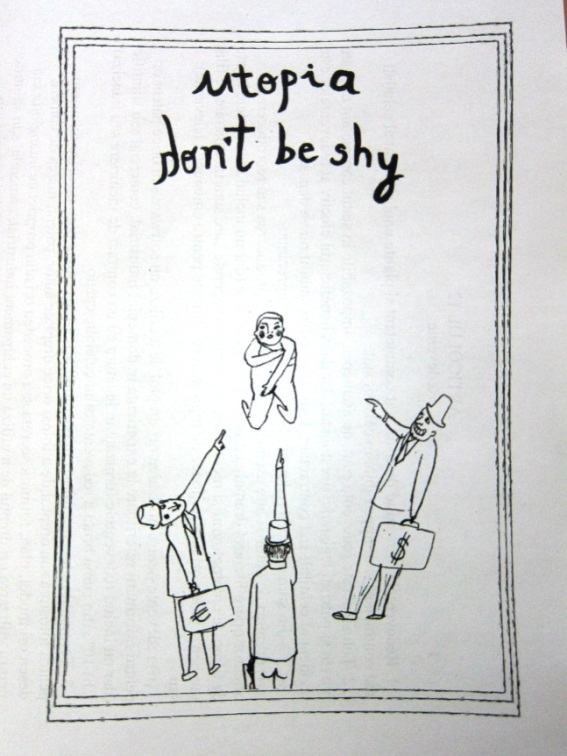
It’s often been said that this is not only a socio-economic crisis of systemic proportions, but also a crisis of the imagination. And how could this be otherwise? Decades of being told There Is No Alternative, that liberal capitalism is the only rational way of organizing society, has atrophied our ability to imagine social forms of life that defy the bottom line. Yet positive affirmations of another world do exist here and there, in neighbourhood assemblies, community organizations, art collectives and collective practices, the Occupy camps… It is only difficult to tell what exactly the notion of progress is that ties these disparate small-is-beautiful alternatives together: What type of utopias can we imagine today? And how do concrete representations or prefigurations of utopia incite transformative action?

Javier Lozano Jaén

First thing one has to notice about utopia is its paradoxical position: grave anxiety about having lost sight of utopia (see Jameson’s famous quote: “it has become easier to imagine the end of the world than the end of capitalism”) meets great scepticism about all efforts to represent utopia. The so-called “Jewish tradition of utopianism,” featuring Adorno, Bloch, and later on Jameson, for instance, welcomes utopianism as an immanent critique of the dominant order, but warns against the authoritarian tendencies inherent in concrete representations of utopia. Excessively detailed pictures of fulfilment or positive affirmations of radiance reek of “bourgeois comfort.” With one sweep, these luminaries rid utopianism of utopia, reducing it to a solipsistic exercise of wishing another world were possible without the faintest suggestion of what that world might look like.

But doing away with the positive dimension of utopia, treating utopia only as a negative impulse is to lose the specificity of utopia, namely, its distinctive affective value. The merit of concrete representations of utopia, no matter how imperfect or implausible, is to allow us to become emotionally and corporeally invested in the promise of a better future. As zones of sentience, utopias rouse the desire for another world that might seem ridiculous or illusory when set against the present, but which is indispensable for turning radical politics into something more than just a thought exercise. Even a classic like “Workers of the World Unite!” has an undeniable erotic (embodied) quality to it, which, if denied, banishes politics to the space of boredom and bureaucracy. It is one thing to tell people that another world is possible and another entirely to let them experience this, for however shortly.

Most concrete representations and prefigurations of utopia from the past half century or so have been of the anti-authoritarian sort. Continue reading

A Global Story of Psalms 68:31 | Against the Provinciality of the Twenty Years Crisis

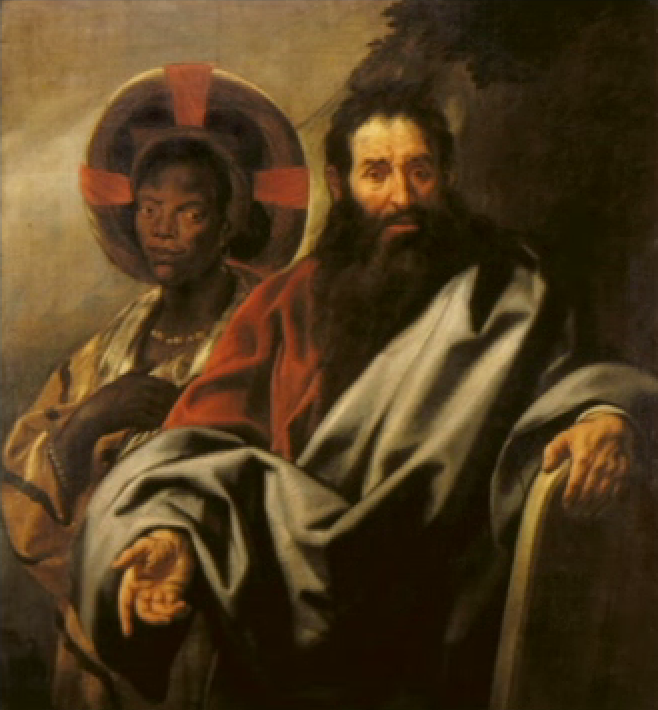
‘Moses and his Ethiopian Wife’, by Jacob Jordaens, c. 1650

Princes shall come out of Egypt; Ethiopia shall soon stretch out her hands unto God

Psalms 68:31 is part of the global story of colonialism, enslavement, the “civilizing mission” and self-liberation. It is a story that is central to the Twenty Years Crisis that constitutes the originating point of International Relations as a self-proclaimed discipline. But it is a story that is largely absent when this originating point is commemorated.

We can pick up the story of Psalms 68:31 with the King James version of the Bible, translated into the vernacular in 1611. At this time it is practice to denote things African through the name Aethiops. More than just a polity south of Egypt, Ethiopia also encompasses Black Africa as a whole. By 1773, catechisms are being developed around Psalm 68:31 that directly address African enslavement in the Americas and the prospects of abolition, emancipation and liberation.

There are two key interpretations. One, cultivated by white abolitionists and subsequently used by Europeans who embark upon an African “civilizing mission”, holds that it is they – white/Europeans – who are God’s children. Hence, it is white/Europeans to whom Ethiopia is stretching for her hands for deliverance from slavery and primitivism. The other, cultivated by the enslaved and their downpressed descendants, holds that the Bible is their story –  the “half never told“. Africans will therefore righteously deliver their own selves from bondage.

The first catechism appears as early as 1773 in the letters of Anthony Benezet, a French-born Quaker living in North America. Scouring through the Bible to find  divine authority for the abolitionist cause, Benezet notes: “beloved friend, the passage we are seeking for is Psalms 68, 31.”; and “the people called Ethiopians are definitely African negros due to Jeremiah 13,23 – “can the Ethiopian change his skin?”. Abolitionists – especially British ones – are most concerned that the enslavement practised by white and European “Christians” would denigrate their status as the most civilized amongst humanity. By Benezet’s time, it is already a belief amongst the intellectual caste of  white/Europeans that they are the people chosen by God to express his Providence, through commerce and colonisation.

Continue reading

Obama’s Ohio Report

My Ohioans did it again.  In every election since 1964 (and almost every time since 1904), the winner of this state ended up taking the presidency – hence the clichés “America’s bellwether” and “as Ohio goes, so goes America”.  Having spent six years of my life studying politics at The Ohio State University not so long ago, I can’t help but identify and sympathize with Buckeye voters, a group of people that every four years gets to decide the fate of the U.S. and, some might add, the world. This is a heavy burden for many reasons, including being exposed to the fanfare of presidential candidate fly-ins (82 of them this time), thousands of attack-counterattack TV ads (that typically target only “undecideds” and/or “independents”), as well as dozens of phone calls and door knocks reminding you to get out and vote for the right person (in the final week of the 2008 campaign, Team Obama said it knocked on a million Ohio doors per day).

The phrase “key battleground state” that every news outlet likes to attach to Ohio refers to its electoral-college vote clout (the 2010 Census reapportionment gives it 18 votes until 2020) as well as its recent record in presidential elections, which is marked by small margin-of-victory numbers (4.6 percentage points in 2008, 2 in 2004, etc.). The state has a remarkable red-blue balance overall; since 1998, the state voted for three Democratic and three Republican candidates each). Also remarkable were the results of pre-election state polling in October, which showed a tied (or at least tightening) race between President Barack Obama and his GOP challenger Mitt Romney (see, for example, the discussion of the RCP poll of polls from 30 October).

To be sure, electoral pathologists – those friends of yours obsessing about assorted ‘paths to presidency’ – had probably explained to you that each candidate could have won an electoral majority without Ohio (e.g. Obama would have had to grab one or two bigger states considered tossups plus all reliably blue states, and Romney would have had to hold onto all normally red states while pulling off multiple upsets elsewhere). This type of electoral math is both fun and fantastic, but reason tends to swiftly restore the status quo ante: it’s all about “Ohio, Ohio, Ohio!

Tuesday’s drama ended right after 11 pm Eastern Time, when the news organizations called Ohio for Obama; less than two hours later, Romney conceded the race.  To examine this outcome, let us begin with two issues identified by the media as key to this election: the auto and coal industries, and the thousands of jobs each of them provides to the state. (Compare, The Globe and Mail’s Ohio postcard of 25 October or The Economist of 27 October to the endorsement editorials in The Columbus Dispatch [Romney], The Cincinnati Enquirer [Romney], The Plain Dealer [Obama], or my favourite OH newspaper, The Blade [Obama]). In a nutshell, while some Ohioans liked what the president did with the former (that 2009 bailout of GM and Chrysler helped the manufacturing sector in the northern part of the state), others hated what he did with the latter. (Being viewed as too green on energy was expected to hobble Obama’s re-election chances in the coal-mining counties of the Appalachian part of the state).
Whatever the explanatory merits of simple storylines like these, unofficial returns bear this one out. The website of Ohio Secretary of State’s office has Obama winning by about 2 percentage points, which is lower than in 2008. The president indeed carried the populous Cuyahoga County (centered on Cleveland) plus a string of smaller counties in the northeast by sufficiently large margins, while Romney won large parts of the coal country.  What went on elsewhere in the state was more important, however. Though Romney ran strong in most traditionally Republican rural areas, he severely underperformed in the remaining half dozen big urban counties, which account for almost 40% of the statewide vote. Even Hamilton County (Cincinnati), historically a GOP bastion, went to Obama by about 20,000 votes again. (For the county-by-county comparisons over time, see Rich Exner’s page at The Plain Dealer; U.S. politics junkies might also consult a map of the 2008 precinct-by-precinct results provided by Stanford’s Spatial Social Science Lab).

Demographically, Obama probably carried the state in the same manner as he did four years ago.  How many Ohioans voted will not be known until late-arriving absentee ballots and provisional ballots are counted, but the turnout (about 68%) can safely be described as well above average. This surely helped the president: by getting its base to register and ballot (including via early in-person voting), the Obama campaign succeeded in maximizing Ohio’s Democratic potential once again (against a stream of ‘voter fraud’ legislation targeting qualified minority voters). What exit polls seem to be suggesting is that the president bested his challenger among female, young, college-educated as well as minority voters.  And what of Ohio’s white working class males (those without a university degree), who sit at the center of any “annoying, all-purpose pet theory” of U.S. presidential elections? Here, it appears that the president succeeded in avoiding a large margin of defeat, and it will be interesting to see why. The success in capitalizing on Romney’s casino capitalism sounds like a plausible hypothesis (and a nice extension of the auto bail-out storyline); but let’s recall that in 2008 Obama won 56% of votes from union households, which was lower than the national average.

What about the role played by ‘non-fundamentals’, specifically Obama’s race? Estimating this particular effect is challenging at any level of analysis, but both survey-based and non-survey-based studies have suggested that in 2008 Obama lost about 5 percentage points of the national popular vote due to racial intolerance on the part of some voters. A meaningful decline in this number would be my candidate for a feel-good story of the 2012 election.


Note: Cross-posted at the CIPS Blog, and meant to be read in conjunction with “Pre-Election Facebook Rants, #652

Pre-Election Facebook Rants, #652

Posted without comment; thanks James Sadri.

<rant> What I used to dislike about the Iranian elections is what I dislike about all national elections today: they’re all fake. There is a choice but it’s not a meaningful one. With the Iranian elections the argument would be: Ahmadinejad or Karroubi/Mousavi, it doesn’t matter, the real power is with Khamenei the Supreme Leader. So you can elect the Iranian President but you can’t elect the Supreme Leader. Well that’s the situation we’ve all got today, even in the US. There is a Supreme Leader casting a long shadow over every national ‘democratic’ process. You can vote for Obama/Romney, Cameron/Brown/Clegg – whoever – but those are all fake choices, where you’re always choosing between the lesser of two evils, never for the world you really want. You can’t vote to stop 20,000 kids dying today because of lack of access to clean water. You can’t vote to stop all war. You can’t vote for people to have the same freedom of movement regardless of where they’re born. You can’t vote to stop extreme disparities of wealth. You can’t vote to stop climate change. That’s because if you do any of these things at the national level you’re shooting yourself in the foot. Increase labour protection or environmental regulation and the factories and cash will go to our enemies. Increase foreign ‘aid’ and it means less for our struggling people. Try to cap carbon emissions and you’re killing business competitiveness. Our Supreme Leader is national competition. We sacrifice the societies we really want to build – peaceful, harmonious, more equal ones – for violent dysfunctional ones that are hopefully slightly richer than those across the map lines. Nobody seems to question the race to the bottom – we seem only to be focused on being the fastest zombies. The world has globalised yet our politics remains pitifully – pathetically – parochial. So while I’ll be hoping that Romney doesn’t win tomorrow, I’m going to remember that there’s a Supreme Leader out there who’s pissing on all your national elections. And he doesn’t have a beard. </rant>

Female Terrain Systems: Engagement Officers, Militarism, and Lady Flows

One of the more interesting interventions made at Friday’s Gender, Militarism and Violence roundtable came from Vron Ware on the topic of a photo exhibit about the British Army’s Female Engagement Officers. The exhibit is funded by the Poppy Appeal, which was itself subject to some debate as a sentimental memorialism allocating funds in the service of a imperial-nostalgic self-image. The pictures, collected by a female former RAF Sergeant, are presumably understood by military and civilian leaders to be a significant public relations resource in illustrating the flexibility, equity and decentness of Anglo-American-Western ‘involvement’ in Afghanistan. Manifestations of cultural sensitivity, postfeminist integration and armies as state-building reconciliation services. And yet someone decided, both on the Army website and Twitter account, that the best image to lead with was that of knickers on a washing line. A puerile social media engagement.

The rest of the images, and the media coverage of them, focus heavily on assorted ‘personal’ issues experienced by the women. Gaze on their beauty products! See how they control their lustrous hair! Peak in on their need for mementos of home! Marks of difference indeed, although none of the coverage I have seen broaches the possibility that men too might stash deodorant in their tents, or manage their body hair to maintain professional standards, or display reminders of loved ones waiting at home. Instead, as any gender-sensitive observer might expect, the specially femininity of these troops displaces all other dimensions of war/peace/development/security (an impression encouraged by some of the subjects themselves). The BBC even recently juxtaposed the death of a female army medic with an image of another woman coming out of the shower tent. A soft voyeurism on military women as leaky bodies and as somehow out of place. But not just that. The juvenilia comes packaged together with the idea of the Female Engagement Officers as crucial to a kind of military effectiveness:

Captain Crossly told the London Evening Standard that one of the highlights of the tour was ‘seeing the absolute fascination of women in the compound when I removed my helmet and protective glasses to speak to them in their own language’.

She added: ‘Women are known throughout the world to bring people together, to focus on family and community. Just by being female, even in military uniform, you are seen to promote such things and are therefore more accepted.’

Lieutenant French said: ‘The photographs demonstrate the more feminine traits of female soldiers can be used as a strength on operations.’

Continue reading

Fratriarchy, Homoeroticism and Military Culture

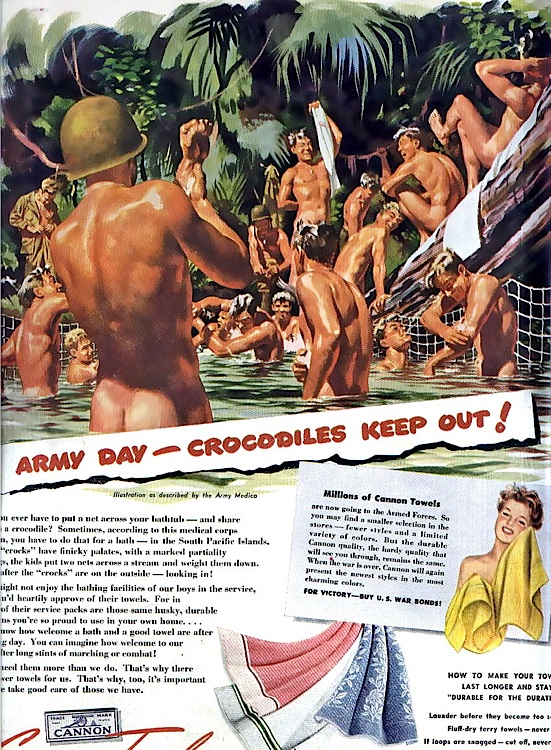
The ever-excellent Sociological Images offers up this 1940s advert, and others like it, as an example of how images previously taken to be innocent consumer bait for stereotypical homemakers now appear to us as dripping with homoeroticism. They may have added too that this half-ironic, half-nostalgic distance is what endears us to such images, which we then enjoy as vintage objects, for all that we know about the true historical context in which they were produced.

One common idea, which relates nicely to military bathing aesthetics (cannon towels? really?) is that many bonding behaviours in nominally heterosexual, male-dominated groups are in fact homosexual, but in a disavowed or repressed way. The scrum, the shared shower, the bunk-beds, the exclusion of women not only from the fields of play and war, but also from the various celebrations and carnivals that follow, all seem to indicate a desire for intimacy that cannot be named as such.

In the excellent Bring Me Men (which deserves its own dedicated review), Aaron Belkin identifies a more complex relation. In becoming military men, there is a need not only to disavow femininity, but also to become intimate with the ‘unmasculine’ and the ‘queer’. Rather than identifying a direct alignment of the masculine with the military, or seeing gender norms as accidental in their intersection with the military, there is instead a constitutive tension between the masculine and the unmasculine (or, we might say, between the strongly heteronormative and the homosexual). Basic training relies on a traumatic ambiguity, continually casting initiates as by turns masculine and unmasculine, so that no soldier can ever be sure that they were sufficiently on the ‘right side’ of the line. As one Marine put it: “The opposite of feminine? No. To me, what is masculine? I don’t know. [pause] And I’ve worked so hard at being it”. The continual ambiguity – what Belkin calls discipline as collapse – interacts with surveillance and punishment to produce the soldier-subject.

More brutally: Continue reading

The Cursory Pedant: War Rape, the Human Security Report and the Calculation of Violence

“Cursory and pedantic”. So says IntLawGrrls’ Fionnuala Ní Aoláin of the just released Human Security Report 2012 (hereafter HSR). You may recall the team behind the HSR from their last intervention, which upset the applecart over the estimate of 5.4 million excess deaths in Congo (DRC) since 1998 and which also claimed a six decade decline in global organised violence. The target this time round is a series of putative myths about wartime sexual violence (those myths being: that extreme sexual violence is the norm in conflict; that sexual violence in conflict is increasing; that strategic rape is the most common – and growing – form of sexual violence in conflict; that domestic sexual violence isn’t an issue; and that only males perpetrate rape and only females are raped), each of which the authors claim to overturn through a more rigorous approach to available evidence. Along the way an account is also given of the source of such myths, which is said to be NGO and international agency funding needs, which lead them to highlight the worst cases and so to perpetuate a commonsense view of war rape that is “both partial and misleading”.

Megan MacKenzie isn’t impressed either, especially by HSR’s take on those who currently study sexual violence:

[HSR’s view is] insulting because it assumes that those who work on sexual violence – like me – those who have sat in a room of women, where over 75% of the women have experienced rape – as I have – listening to story after story of rape, forced marriage, and raising children born as a result of rape, it assumes that we are thinking about what would make the best headline, not what are the facts, and not what would help the survivors of sexual violence.

Laura Shepherd (who like Ní Aoláin and Megan has written at some length on these issues) took a slightly different approach: “It makes not one jot of difference whether rates of [incidents of conflict-related sexual violence] are increasing, decreasing or holding entirely steady: as long as there are still incidents of war rape then the issue demands serious scholarly attention rather than soundbites”. Activists are concerned less by what the report says than by how it will be interpreted and the effects this will have on victims and survivors of rape (the danger, in Megan’s words, that “painting rape as random is another means to detach it from politics”). By contrast, Laura Seay (who has previously addressed similar issues in relation to Congo) is very supportive: “it’s hard to find grounds on which to dispute most of these claims. The evidence is solid”. Andrew Mack (who directs the HSR) similarly replied that the data supports HSR’s claims and that, despite criticisms, it had been checked rigorously.

So what is going on here?

Continue reading

Eurocentrism, Racism: What’s In A Word?: A Response to Bowden, Sabaratnam and Vucetic

The fifth and final post in our symposium on John M. Hobson’s The Eurocentric Conception of World Politics: a reply from John himself, responding to the commentaries from Meera, Srdjan and Brett. John’s original summary post is, of course, still available too.


Introduction: All for one and one for all?

I would like to begin by thanking most sincerely my three blog interlocutors for having gone to the trouble of reading my new book, never mind taking the time to write up their extremely thoughtful and interesting blog responses. Of course, the cynic reading all of this might be forgiven for thinking that such a blog forum is hardly a ‘testing environment’ for Hobson’s book, given that his interlocutors are either postcolonialists or at least influenced by postcolonialism and have presumably, therefore, been “cherry-picked” for their potentially sympathetic tendencies. Even the titles that they have chosen, so the cynic might think, would appear to be symptomatic of this, with Meera Sabaratnam’s piece proclaiming – extremely generously I must concede – that my book has succeeded in ‘blowing up the disciplinary citadel of International Relations’, while Srdjan Vucetic’s title projects even further the meaning of the front cover of my book to that which I had intended, suggesting that IR is a ‘foolish discipline’ given his resounding agreement that it suffers from a pervading Eurocentrism. In this vein it might be thought that Brett Bowden’s title – ‘Eurocentrism and More’ – chimes in with yet another wholehearted rendition of the now familiar chorus of ‘IR is a Eurocentric discipline’. So why the fuss about all this and is there much point in reading on? For it would seem that we’re all agreed and there’s nothing to debate, right?

Well no, not quite all for one and one for all. Continue reading