Let’s Talk About the “Ugly Briton”: Shashi Tharoor on Winston Churchill

October is always a good time to catch up on one’s correspondence from July.  “FYI,” noted a friend though FB’s messaging system, linking to this:

The video’s title, “Dr Shashi Tharoor MP – Britain Does Owe Reparations,” sums it up.  The other videos from the same debate event are worth watching, too, but Tharoor’s is quite simply a must-see for anyone interested in the British Empire.  Indeed, you have probably seen it already.  With 3 million views, 6000+ comments plus what seem to be hundreds of reactions by all kinds of people in all kinds of media of communication, this one 15-minute video alone can legitimate Oxford Union Society claim’s that it aims “to promote debate and discussion not just in Oxford University, but across the globe.”

Why is it that Oxford Union struck social media gold with this debate but not with some others (“socialism does (not) work,” anyone)?  Even if it is safe to assume that “many” people would be familiar the reparations argument in general and even that “some” would be familiar with Britain’s reparations to the Maori, the fact is that “no one” had given a fig about the case for Indian reparations [1].  My scare quotes are meant to signal that these quantifications are relative.  It was a century ago that Dadabhai Naoroji, known to some as the Grand Old Man of India, argued that “immediate” self-government, a.k.a. swaraj, would constitute Britain’s “reparation”.  But this is precisely the point: reparations-talk becomes itself only when subjected to a sufficient degree of metropolization or mainstreaming [2].  White academics like Boris Bittker started paying attention to the legal argument for “black reparations” only in 1969, after James Forman famously stood up in a New York City church to argue that white churches owed a lot of money to a lot of people.

Continue reading

More Notes for Discerning Travellers

A little while ago I wrote a blog, Notes on Europe and Europeans for the Discerning Traveller. It was a fictional travel guide, but with all points speaking to historical realities.

What is it about a certain “European” sensibility? Not all people who live in European countries have it, of course, but this sensibility seems to define in the main what it means to be essentially “European”). I want to ask: what is it about a sensibility that can never, ever, look at itself, for itself, and in relation to what it does to others?

We all know that the European enlightenment was supposed to be built upon the pillars of self-reflection and accountability in thought and politics. It is funny, then, that the “European” so rarely seemed to be able to hold him/herself to reflexive account especially over European colonial pasts.

It continues.

I swear, if I believed in such a cosmology called “Modernity” I’d be calling the “European” a backward, traditional native ensconced in his/her own culture, taking his/her particulars for mystical universals, and unable to look at him/herself in the mirror to start the process of socialization and “childhood development”.

But I don’t believe. So I’ll just have to call this sensibility by more mundane descriptions, such as un-reflexive, un-accountable, un-relational.

Example (twitter response to my Travel Notes blog): Continue reading

Confronting the Global Colour Line

Race and Racism in IR

Our edited volume Race and Racism in International Relations: Confronting the Global Colour Line has now been published. We asked some of the contributors to give us their thoughts on what has been (both deliberately and unwittingly) overlooked by the discipline of International Relations with regard to questions of race and racism; the challenges posed by (re)centring these vital questions; and how IR may atone for its implication in empire. At your service, Sankaran Krishna, Debra Thompson, Srdjan Vucetic and John Hobson.

What has been the least investigated aspect of race and racism in IR?

Sankaran Krishna

The question makes me want to laugh because to me mainstream IR is all about how not to talk about race and racism while constantly appearing to talk about the relations between different kinds of peoples and countries. I came to IR only at the PhD level. My masters in modern history had acquainted me with the history of colonialism, racism, genocide, man-made holocausts like the Great Bengal famine, the slave trade, and other such events, on a world-scale in the post-Columbian (ie; post-1492) era. In my first IR courses in the United States the focus seemed to be on how can we understand the social world through models that pretend humans are unthinking molecules or inanimate entities. Stuff like Bueno de Mesquita’s War Trap (I kept waiting for someone to tell me that was a joke, like they do on Candid Camera.) It was a few years later that I realized that the penchant for abstract theorization, distaste for historical specificity and woolly stuff like ideology, and fetish for numbers – all voiced in deep manly intonations about analytical rigor – were nothing but an assiduous refusal to face the world in all its racial violence and splendor. In other words it’s the absence of considerations of race and racism that coheres the discipline.

When you widen the frame beyond mainstream IR and include those at the margins – thinkers like DuBois immediately come to mind – and especially take into account writings over the last few decades, the picture is a lot better. From my point of view, there has been a tendency in self-proclaimed dissident literatures to be inadequately critical of the racial conditions of their own emergence: invocations of the Global South or postcoloniality or marginality or the colour line can themselves become fetishized and serve as screens preempting a closer inquiry into racial difference and the consequences of othering. Continually calling out the protean forms in which race and racism manifest themselves historically and contemporarily seems, to me at any rate, a worthwhile vocation.

What is the most important theoretical challenge to IR posed by an engagement with race and racism?

Debra Thompson Continue reading

Among the Atavists

If there is one especially lazy characterization among the many about Scotland’s independence referendum, it is the description of the Yes movement as motivated by ‘atavistic ethnic tribalism’ or the like. Toss a pebble at the UK commentariat and you will come across it soon enough: from the Guardian to the Financial Times, the argument is the same. Britain is the outward-looking future, an independent Scotland a reversion to the barbaric past.

Taken literally, the idea of reverting to a period before Scot and Englishman jointly exported the apparatus of colonial power and racial supremacy they forged in Ireland to the rest of the world does not seem at all regressive. One can scarcely imagine an Indian or Ghanaian, for example, objecting to the move on these grounds. In the same breath as condemning the Yes campaign’s alleged ethnic tribalism, Unionist commentators give as their prime reason for retaining the UK its 300 years of success. Of what, in large part, does that success consist? Why, expanding into other territories and enforcing a hierarchy by which the indigenous inhabitants were plundered of their resources and denied self-government on the grounds of their alleged genetic or cultural inferiority. A textbook case of ethnic nationalism, you might say. One might think that someone celebrating centuries of such behaviour would baulk at condemning the ‘tribalism’ of others.

There is no insincerity in such condemnations. We can have no doubt that when Sir Jeremy Greenstock says of the referendum:

in this ­complex, unpredictable and sometimes threatening environment, the instinct to return to the tribe is understandable. Yet it is creating momentum for global chaos.

he believes it. So profound a substratum is British nationalism that men such as these, its prime beneficiaries, cannot see that their tribe – easily identified by its common modes of dress, speech and rituals of adolescent sequestration – dominate all the institutions of the British state and therefore articulate their interests as universal. Were a Kenyan of Gikuyu heritage, or a Syrian of the Alawite faith to do the same, we can imagine what would be made of her.

Continue reading

Activism, Academia and Black Community Struggles

A little while ago Adam Elliot Cooper from Ceasefire Magazine interviewed Stafford Scott, along with myself, on Black community struggles, activism and academia in Britain. Stafford Scott was a co-founder of the Broadwater Farm Defence Campaign in 1985, and is now a consultant on racial equality and community engagement as well as co-ordinator of Tottenham Rights. The interview revolved around a one day workshop run by Dr Joy de Gruy in Tottenham last October, funded by Tottenham Rights and the Centre for Public Engagement, Queen Mary University of London.


Adam: Black community struggle has been an integral part of the way in which we understand the politics of race, class and empire in Britain today. Black communities and activists have led this struggle. But academics have played a role too. Stafford, in October 2013 you brought Dr Joy de Gruy over from the US to Tottenham to run a one day workshop on Post-Traumatic Slave Syndrome. Why Dr Joy, and why Tottenham?

ScreenHunter_18 Apr. 17 19.50Stafford: It’s relatively simple to be quite honest. Why Tottenham? Because in 2011 parts of Tottenham burned as a result of the shooting of a young black male called Mark Duggan. It hit the headlines. As a result of some of us going to the police station rioting broke out and then spread across the country. We saw the media and the government’s reactions to those riots and it really was to dismiss the youths as feral criminals looking to make money out of someone’s death. It was dismissed as an opportunity for people’s materialistic natures to come out. What I wanted to do was put a total different perspective to it – a historical perspective. So I wanted to look at why rioting broke out. I was there, and I don’t believe that it was simply about Mark Duggan’s killing and the way in which his family was treated. I believe that there was a history – a context – to it, that some people chose not to examine. Duggan’s killing was the straw that broke the camel’s back.

We had different events in 2013. One was about the uprising that took place on Broadwater Farm and the killing of Cynthia Jarrett, the killing of Joy GardnerRoger Sylvester and Mark Duggan – four people who died in Tottenham, with involvement of the police. So this was to help the community come to terms with recent traumatic events. We brought Dr Joy over to look at historic events that have caused us great trauma.

ScreenHunter_17 Apr. 17 19.50Adam: Dr Joy, a professor of social work, is famous for developing an analytical framework called Post-Traumatic Slave Syndrome and for developing practical programmes that address the challenges of Black communities in the United States. So Dr Joy’s work is not only based on scholarship in the traditional sense but also research that has come out of participating in the struggles that Black communities face in the United States. Robbie, do you see similar work happening in Britain?

Robbie: I think historically there certainly was, you could see that kind of thing happening. Today I think it’s far less the case and that’s to do with a number of significant transformations in British society and in academia. Continue reading

Living Knowledge Traditions and the Priestly Caste of the Western Academy

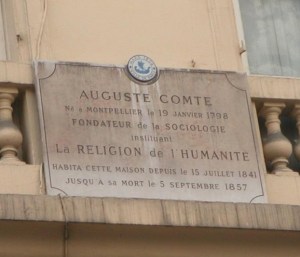
comte

The Western Academy, especially in its social science and humanities wings, incorporates as a priestly caste. Perhaps Kant is the first high priest of this caste when he argues for the Aufklärer to become a corporate entity equivalent to the hierocracy and nobility but exceptional in its duty to provide a truly public service of reasoning. The psalm of this priestly caste is “have the courage to use your own understanding”, its catechism: to singularly possess and hold aloft the flame of revelation, known as science, or, nowadays, the modern episteme. Even Marx holds the flame aloft when he takes Hegel’s Philosopher, who breathes world spirit, and makes him inhabit the skin of the Communist.

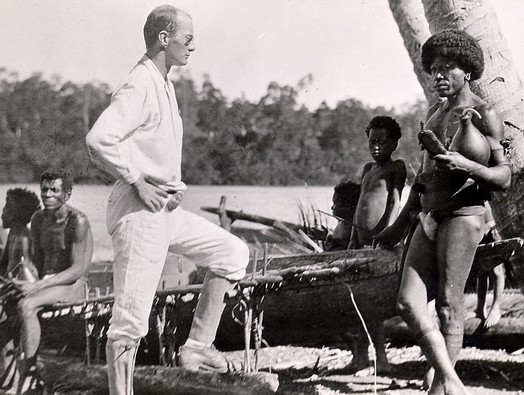
This priestly caste, as it founds the church of modernity, is instantly and integrally involved in founding a broader colonial division of labour.  These new priests conjure up the traditional/modern divide by the use of history –  differentiating old and new European Western societies – and by the use of anthropology (later, sociology too), by differentiating the colonized from the colonized. The living knowledge traditions of the colonized are pronounced dead on arrival in the present. And their cosmologies, philosophies, social practices – are entombed into opaque “cultures” the contents of which can only be clearly illuminated by the keepers of the flame. 

19_malinowski

Ultimately this mapping of difference works through race, gender and class coordinates so that even the “poor” living in the West, as well as un-mastered women and single mothers intersect with (post-)colonized subjects to become part of this opacity. The episteme of the Western Academy thus differentiates between the knowers and the known.

In this respect, the modern episteme is as seminal as gunboats to the maintenance of colonial difference. Key to this difference is not just the attribution of extra-ordinary exploitation, oppression and dispossession to colonized peoples but also their epistemic erasure, i.e., the outlawing of the possibility and desirability of intentional self-determining community amongst the colonized and their post-colonized descendents. It is in the colonial world and not Europe where Europeans develop the art of objectifying peoples into populations such that the basic competency of the colonized to self-define is deemed absent by the instruments and mores of European sanctioned international law. Postcolonial populations have only been able to become peoples under very specific conditionalities; and many who make the transition become the new police of colonial difference. Those who fall between or prefer a third way become the ungoverned, or ungovernable.

Continue reading

Pacific Redemption Songs

Te Hau

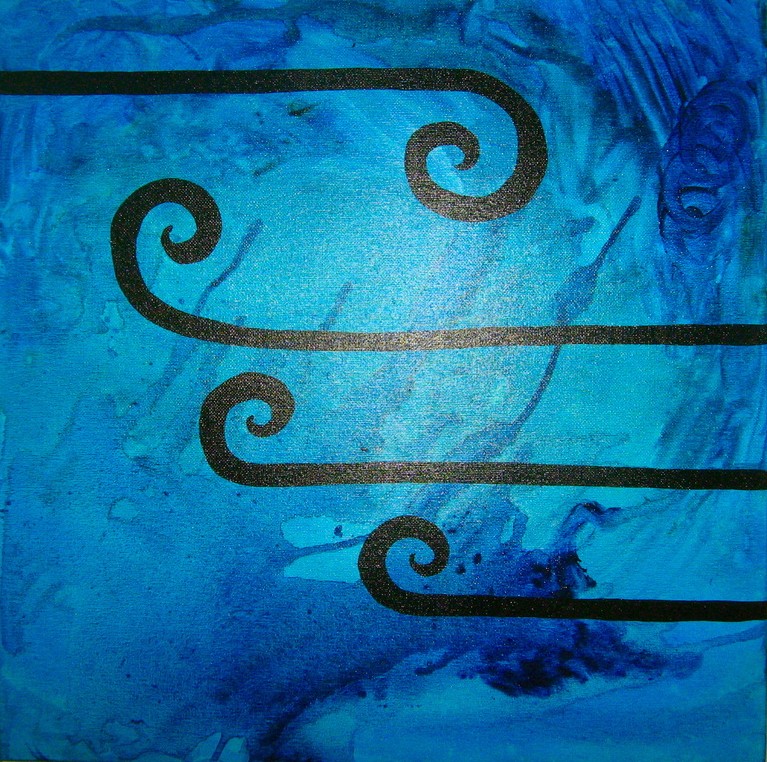
“Te Hau” by Abby Wendy

A few years ago I was reasoning with members of Ras Messengers, a reggae-jazz band who had in 1979 toured Aotearoa New Zealand. The Rastafari musicians recollected their experiences with various Māori communities. Occasionally female Māori elders (kuia), in introducing themselves to the band, would connect their genealogies back to Africa. The kuia did this as part of an indigenous practice called whakapapa, which literally means to “make ground”. It is a practice that allows diverse peoples who might never have met to find a genealogical route through which they are already personally related.

Chauncey Huntley from Ras Messengers showing the Rakau (traditional sticks) that he was gifted thirty years previously

Rastafari also have a practice called “grounding”, which is to collectively reason on the meaning and challenges of contemporary life. Over– or inner- standing (instead of under- standing) is cultivated through the guidance of natural laws and – often with the help of drums, fire and holy herb – the intuition provided by spiritual agencies (Irits) that allows ones to pierce the veil of deathly inequality, oppression and dehumanization so as to redeem living energies and relationships that might help with healing in the present. When I think of Irits I also think of a key concept of Māori cosmology called hau. Overstood by Māori Marsdenhau is the breath or wind of spirit which is infused into the process of birth to animate life and associated with the intention to bind peoples together in righteous living.

A key stone of the Rastafari faith is that adherents collectively redeem their African genealogy so as to breathe life back into their suffering condition and leave behind the death of enslavement and its contemporary legacies. So when I heard of this story of the kuia and Ras Messengers, I imagined how this practice might have given strength to the Ras. After all, in those days (and perhaps still today), peoples of various African heritages were often forced (directly or indirectly) to disavow those connections themselves.

Whakapapa is an art practised collectively. Yet it is not free play, nor is it the manufacturing of fiction. It is a creative retrieval. It could even be a redemptive act.

Keskidee 13

Keskidee perform in New Zealand

This was certainly the intention of those who organized the tour of Ras Messengers alongisde the Black British theatre group, Keskidee (the name of a Guianese bird known for its resilience). The organizers were a group of New Zealand activists that came together under the banner Keskidee Aroha (Aroha being the Māori word for love, sympathy, nurturing affection etc). Their intention was to learn from and work with the artistic tropes of Black Power and Rastafari so as to catalyse a cultural revolution and renaissance amongst young Māori and Pasifika peoples thereby strengthening them in their confrontation with a racist post-settler society.

Continue reading

Gender Trouble, Racial Salvation and the Tragedy of Political Community in ‘Game Of Thrones’ (2012-2013)

A shamefully-delayed commentary on Game Of Thrones, Seasons the Second and Third, since the first one went so well. As before, *great clunking mega spoiler alert*. You have been forewarned.


Recall three justifications for an analysis of pop culture politics. First, for all their superficial escapism, cultural products represent political ideas and ideologies, and do so in ways that may matter more than what we receive through the news. They are full of desires and fantasies that refract and reflect (and to some extent are themselves) real politics. Second, you can criticise the thematics of the show without hating the show. In fact you can do it while loving the show (and finding the fact of that love interesting in itself). In other words, look, I really like Game of Thrones. Moreover, that as great as comparisons with the source text can be, a TV series is a different kind of beast and is entitled to judgement on its own merits. Third, objections that “it’s just a show” don’t wash. If you’re reading this it’s because you have some sense that there are ways of understanding and being embodied in even the lowest of cultural objects (paging Dr Adorno!). That doesn’t mean that the substance of the relationship between media and politics is simple or settled, but it’s there.

Let’s start where we left off last time. It was claimed in some quarters that the plot subverts – even refutes – certain standard typical ideas about the feminine, and critiques feudal social relations along the way. So, rather than being a “racist rape-culture Disneyland with Dragons”, the many strong, complicated, agentic female roles in fact set Game of Thrones as a critique of patriarchy. But only the most one-dimensional of sexisms regards women as utterly abject. The mere presence of intelligent, or emotionally-rounded, or sympathetic female characters is not enough (and that it might be taken as inherently ‘progressive’ probably tells us a lot about contemporary gender politics). No, the issue is how a cultural product deploys some common tropes of masculinity and femininity and, with appropriate caveats about not reading every plot twist as an allegory, how those celebrate or reinforce certain orderings of gender. So a narrative which makes the family the primary unit, and which does so in a conventionally heteronormative register (twincest notwithstanding), is selling a particular idea of gender (and of community and nation and legitimate violence and…).

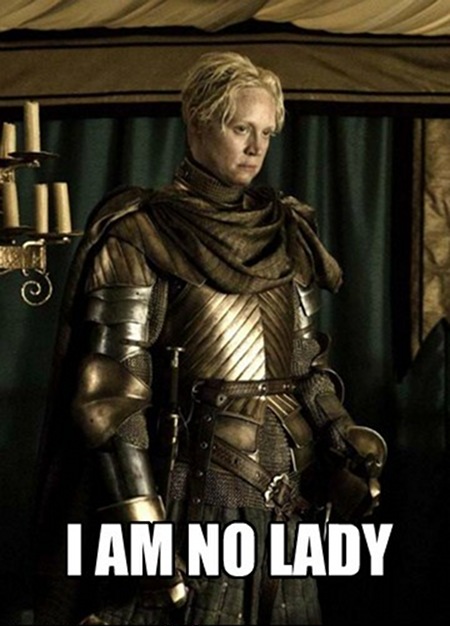
In Seasons 2 and 3, a few female figures threaten to upset the patriarchal framework. As before, there is Arya, astute, principled, fierce, and eager to promise death to her enemies. Brienne of Tarth, giant, loyal, lethal, dismissive. Ygritte, rugged, capable, sexually dominant, a hardened killer with no respect for rank (“If you ripped my silk dress, I’d blacken your eye”).[1] And yet in each case the threat is contained and wrapped in some familiar gender constraints.

Continue reading

Ten Reasons Not To Write Your Master’s Dissertation on Sexual Violence in War

Marsha Henry

A guest post, following on from some previous reflections on gender and teaching and the politics of pedagogy, from Marsha Henry. Marsha is Lecturer in Gender, Development and Globalisation at the LSE Gender Institute, where she teaches, amongst other things, a course on gender and militarism. Her most recent research is into sexual exploitation in peacekeeping missions and peacekeeper labour hierarchies, and she is also, with Paul Higate, author of Insecure Spaces: Peacekeeping, Power and Performance in Haiti, Kosovo and Liberia (Zed, 2009). With Pablo, she recently co-edited a special issue of International Feminist Journal of Politics on ‘Rethinking Masculinity and Practices of Violence’. This post is based on a presentation given in San Francisco at the International Studies Association in April 2013.


It’s the first day of Lent term and the students are nervously gathered in a small stuffy classroom.  When I walk in and head towards the front of the room, the group falls silent. I introduce myself and we start a round of introductions and I ask students to speak briefly about their interest in the course. The first student tells me, and the class, that she’s in IR (International Relations), and is keen to take the course because she’s interested in studying sexual violence in war.  Another student turns to her, incredulous because she too is interested in that exact subject, and that furthermore she has worked for 3 months in the Democratic Republic of Congo (DRC) and has ‘seen a lot’. A few more students echo similar interests and I’m trying hard not to stereotype these students. But it’s difficult. A mythical figure is beginning to crystallise in my head and I can’t stop it. This figure is young, female and possibly middle-class, sometimes Scandinavian. She’s studying IR, Human Rights or Gender Studies. A few male students also indicate an interest. Some indicate interest in other topics, but there is a numbers problem from the outset. I feel uncomfortable as this is the third year that I’ve taught this course, each time allotting only one lecture week to the subject of sexual violence in war, and subsuming it under the larger heading of ‘gender, sexualised violence and work in militarised contexts’. Each year students have asked for more time to be devoted to the subject, for the lecture week to be moved up, and for their to be less focus on diversity in the armed forces. When students come to me during office hours to discuss the scope of their dissertations on the subject I fidget. After a few conversations with colleagues, I decide I need to start compiling a list – of compelling reasons why students should not write on the subject of sexual violence in war. But what would I do with this list? Can it be shared? And what of my responsibility not to teach on the subject?

10: Writing About ‘It’ Narrows The Political Focus

As a committed feminist, I’m all for drawing significant attention to the ways in which women experience conflict in distinctive ways. But the concentration of interest on sexual violence in wartime often leads to a neglect of the ways in which women experience violence (labelled as sexual or not) in peacetime. This noticeable singular focus on the topic also narrows the possibility of dislodging categories and subject positions. It is often assumed in class conversations, essays and subsequently dissertations that women are the victims and men are the perpetrators of this form of violence. This assumption appears in written work in a way that both masks the possibility of other positionings within the perpetrator-victim continuum, as well as the structurally embedded way in which sexualised violence occurs and is experienced by individuals and communities. This failure to explain the pervasiveness of sexualised violence against women tends to reinforce the binaries and provides a rather fixed aperture for analysing sexual violence in war and its consequences.

9: Researching The Topic Inspires Voyeurism

I’m squirming in my seat as one of the students smiles widely while she explains her interest in working on the topic of sexual violence as a weapon of war. She could be nervous explaining herself in front of her peers and her professor. She could be feeling awkward about the subject matter. She could be conforming to gendered expectations of women in the classroom where female students who express themselves confidently or through feminist rhetoric are categorised as aggressive. If feminist critique is pleasurable, how do we ‘do’ our analysis of sexual violence in wartime, paying attention to experience, trauma, and moral responsibility? There is a tendency, in making visible the ‘horror’ of it all, that students sensationalise the subject by focussing on the minutiae, the details and the thick descriptions. Honing in on the bodily experience of rape, for example, can remove rape in war from the wider social, cultural, economic and political context in which it always takes place. It can be an abstraction of the total experience. The affective impact is that readers of these dissertations distance themselves from subjects in the studies. Those who are victims and/or survivors and end up consciously or unconsciously performing what Donna Haraway referred to as a god-trick.

Continue reading

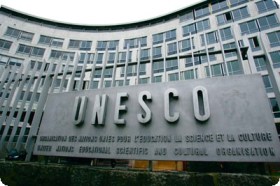
UNESCO and Research Agendas Concerning Race

Antigua was settled by human rubbish from Europe, who used enslaved but noble and exalted human beings from Africa (all masters of every stripe are rubbish, and all slaves of every stripe are noble and exalted; there can be no question about this) to satisfy their desire for wealth and power, to feel better about their own miserable existence, so that they could be less lonely and empty – a European disease … Of course, the whole thing is, once you cease to be a master … you are no longer human rubbish, you are just a human being, and all the things that adds up to. So, too, with the slaves. Once they are no longer slaves, once they are free, they are no longer noble and exalted; they are just human beings.

Jamaica Kincaid suggests that abolition and emancipation are bitter-sweet affairs. For the enslaved, freedom furnishes them with a human being that nevertheless awaits a meaningful personhood. Out of slavery the master fares better, redeeming his human being from being human rubbish. Kincaid’s suggestion is insightful. After all, abolition had a vibrant nineteenth century afterlife. White abolitionists enthusiastically allowed their humanitarianism to colonize Africa so that God’s chosen could sanctify themselves through the act of saving the natives from their selves. Meanwhile, William Wilberforce et al, convinced that slaves were human biologically yet lacked the social and cultural competencies of humanity, looked on fascinated at the experiment of self-government in Haiti. From this point onwards all future failings would be attributed to the epidermis, not the colonial relation. Presently, argues Kincaid, the landscapes of the old Caribbean plantations have been consumed by a white tourist gaze that has once again disavowed the living legacies of enslavement and colonization and denied meaningful personhood to its peoples. What remains of these places and peoples is only an “unreal”, picture-book beauty.

What are our narratives of race and racism? Whom do we follow in order to tell the tale: the masters or the enslaved – the humanitarians or the “sufferers”? Which tale confesses the episteme –the scientifically valid study – of race?

The 1950-51 UNESCO “statements on race” answered such questions in favour of the master’s narrative. Announcing a new era in human understanding after the terrors of war and irrationalities of genocide, the main purpose of the statements was to separate the “biological fact” of race from its “social myth”. The biological fact in and of itself was rendered harmless, pertaining only to “physical and physiological” classifications. Thus genetic inheritance, it was affirmed, could have no bearing on mental or cultural competencies and capabilities. Conversely, the social myth of race was considered extremely dangerous in that it rendered cultural difference as biological thus sundering the “unity of mankind”. This myth had to be dispensed with; hence ethnicity – as a social/cultural classifier – was proposed as a preferable classificatory regime to that of race. Ethnicity, after all, had not been tainted with supremacist hierarchy and could signify instead non-hierarchical diversity.

Although the scientists who collectively produced the statements on race were by no means all white, the majority hailed from Western academies. And the particular kind of anti-racism evident in UNESCO’s statements had already been formulated by famous Western anthropologists such as Franz Boas. They had sought to undermine scientific racism on its own grounds, i.e. by proving the un-scientific nature of the social myth of race. And this endeavour required debunking racialized identity – that which confessed their legal and natural inequality – as myth not fact. However, as part of this manoeuvre these identities had to be subsumed under a harmless social science of ethnic categorization. While this move redeemed white identities, it de-politicized the meanings of the sufferers’ cultural complexes and complexions, extricated them from inherited hierarchies of power, and thus segregated them from the inherited and living struggles against (post-/neo-)masters. In short, as Alana Lentin puts it, the effect of the statements was to separate race from politics.

Continue reading