Inequality
Allow his prophetic voice to be heard…
I was thinking of writing on Dr King’s legacy (again) to mark MLK Day this past Monday, but it turns out that Dr Cornel West has already said what needs to be said.
The Citadel Has Been Blown Up. Hurray! Next? A Response to Hobson
This is the second post in a symposium on John M. Hobson’s new book, The Eurocentric Conception of World Politics. The series began with a post by the author summarising the argument of the book and laying out some provocations for sympathetic readers. In the next few weeks, we will have further posts from Srjdan and Brett Bowden, followed by a reply from John.
Update: Srdjan’s post and Brett’s post are now up.
I was at an IR event last year where the speaker jovially declared that they just did not care about being, and being accused of being, Eurocentric. At the time, I found it both a little shocking and depressing that they could see fit to dispense with that fig leaf of serious acknowledgement that often accompanies discussions of Eurocentrism. And indeed I thought, glumly, that it perhaps reflected many scholars’ underlying attitudes to the issue – a tokenistic practice of acknowledgement underpinning a wider apathy or disconnection. What only struck me later was also the possibility that the speaker also didn’t really understand the issue which was batted away so carelessly. Indeed, it is unclear that many ‘mainstream’ IR scholars truly understand the problem of Eurocentrism, given the mythologised twin deaths of colonialism and scientific racism in 1945 (or so).

Seriously?
So, Hobson is knocking at the door more loudly, with a bigger stick, and much more paperwork. Continue reading
Giving Back (Without Giving Up) In Neoliberal Times
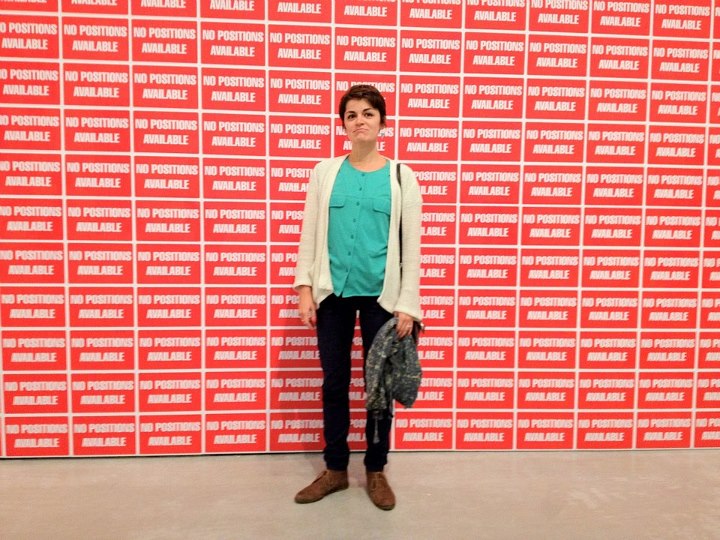 A guest post from our sometime co-conspirator Wanda Vrasti. Wanda teaches social studies at the Humbolt University and international politics at the Feie Universitaet in Berlin. Her book Volunteer Tourism in the Global South just came out with Routledge. She has also written on the uses of ethnographic methods in IR (in Millennium, twice) and on questions of global governmentality (in Theory & Event and Review of International Studies). Her current interests (still) include the politics of work and leisure, social movements on the Left, and anarchism and autonomism. Images by Pablo.
UPDATE (9 Nov): Wanda is now happily a member of the Disordered collective. And thus, this is retrospectively no longer a guest post.
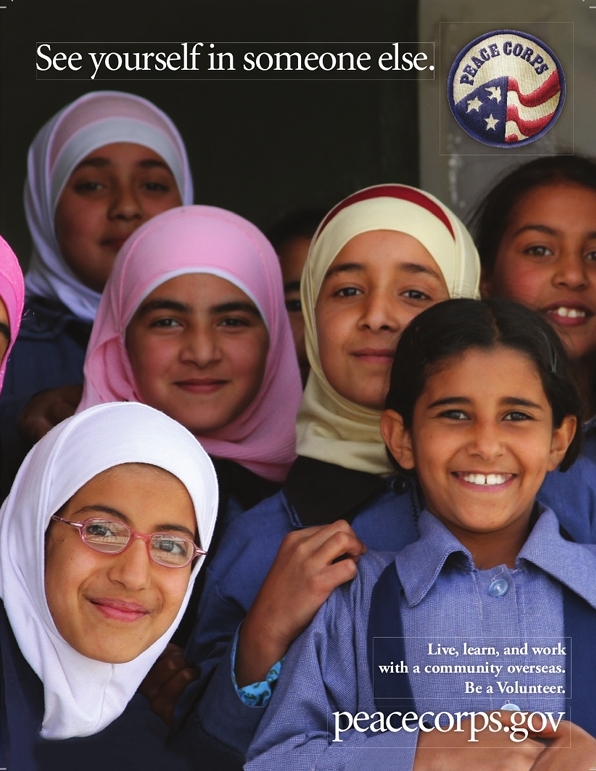 Last week my PhD dissertation entitled Volunteer Tourism in the Global South: How to Give Back in Neoliberal Times came out as a book with Routledge’s Interventions series. Publication usually marks the end or the completion of a research project, but in this case I feel like the puzzles that animated it are still very much alive in my mind. Rehashing some of these, at my blog hosts’ invitation (also considering that the book goes for a price I imagine not many people will be able to afford outside university libraries), is an exercise in keeping the thinking and writing that went into this book alive beyond its publication date.
In a sentence, the book is an ethnographic study of volunteer tourism projects in the Global South (Ghana and Guatemala specifically) with a particular focus on the kinds of subjects and social relations this rite of passage cultivates and the reasons why we attach so much value to them. The argument I make in the book is not very different from the common indictment against voluntourism seen in the media. The accusation is that volunteer tourism does more for the Western (in my case exclusively white middle-class) tourists who enrol in these all-inclusive tours of charity than for the impoverished communities they are claiming to serve. Volunteering programs, most of which focus on English teaching, medical assistance or minor construction projects, have neither the trained staff nor the organizational capacity to make a lasting impact upon the lives of developing populations. Often the commercial travel agencies offering these tours fail to deliver even basic assistance goods, let alone encourage grassroots community initiatives that could lead to more sustainable change. What they can offer, however, to Western customers willing to pay $500 to $2,500/month is the chance to travel to places outside the Lonely Planet circuit without being a tourist. A tourist, as we have all experienced it at some point, is a rather pitiable figure reduced to gazing at things or being gazed at, their only meaningful encounter being with the guide book. A volunteer, on the other hand, can live with a local family, get to know traditional cultures, and participate in the collective good. Not surprisingly, the formula has become a growing trend among high-school and college graduates hard pressed to find many opportunities for meaningful participation in the alienated (and austere) market societies they come from.
Sadly, the majority of volunteers I worked with in Ghana and Guatemala did not have their feelings of lack and longing satisfied on these tours. Besides having to cope with all sorts of cultural frustrations and racial tensions, the work we were doing felt boring and useless. Our tour organizers failed to provide work that was challenging and gratifying for the volunteers and socially useful for the local community. Still, most people returned home with an improved sense of self, feeling like these trying circumstances had helped them develop greater confidence and cultural awareness.
Volunteer tourism appears here as yet another form of aesthetic consumption designed to confirm the racial, economic and emotional superiority of white middle-class individuals who are able to afford it. Continue reading
Flag-waving And Drowning: On The New Branding Policy Of UKaid
They say that discretion is the better part of valour. But DfID, or at least its boss, has decided otherwise. It was announced last month that “Aid from Britain will now be badged with a Union Flag when it is sent overseas, as a clear symbol that it comes from the United Kingdom.” In these times of urgently, relentlessly celebrating Britishness in all possible ways, this little ‘tweak’ to development policy may have slipped under the radar.
The ministerial statement in the press release is worth quoting in full, because it is both strange and revealing of a particular – and, I think, regressive – political turn in international development policy:
“For too long, Britain has not received the credit it deserves for the amazing results we achieve in tackling global poverty. Some in the development community have been reluctant to ‘badge’ our aid with the Union Flag.
“I disagree: I believe it is important that aid funded by the British people should be easily and clearly identified as coming from the UK. It is right that people in villages, towns and cities around the world can see by whom aid is provided.
“British aid is achieving results of which everyone in the United Kingdom can be proud. And I am determined that, from now on, Britain will not shy away from celebrating and taking credit for them.” Continue reading
Feminist Notes, part I
By including what violates women under civil and human rights law, the meaning of “citizen” and “human” begins to have a woman’s face. As women’s actual conditions are recognized as inhuman, those conditions are being changed by requiring that they meet a standard of citizenship and humanity that previously did not apply because they were women. In other words, women both change the standard as we come under it and change the reality it governs by having it applied to us. This democratic process describes not only the common law when it works but also a cardinal tenet of feminist analysis: women are entitled to access to things as they are and also to change them into something worth our having.
Thus women are transforming the definition of equality not by making ourselves the same as men, entitled to violate and silence, or by reifying women’s so-called differences, but by insisting that equal citizenship must encompass what women need to be human, including a right not be sexually violated and silenced. This was done in the Bosnian case by recognizing ethnic particularity, not by denying it. Adapting the words of the philosopher Richard Rorty, we are making the word “woman” a “name of a way of being human.” We are challenging and changing the process of knowing and the practice of power at the same time.
-Catharine MacKinnon, “Postmodernism and Human Rights,” Are Women Human?
Call for Contributions: The Global Political Economy of the 1%

Tim Di Muzio (Wollongong) is putting together an edited volume on The Global Political Economy of the 1% which Disordered readers might be interested in contributing to. The full call is here. Abstracts of 250 words or less are due by 30 April 2012 with first full drafts by 1 November 2012. Tim can be emailed with submissions or for more details here.
While the internationalized Occupy Wall Street movement faces many strategic and organizational challenges, one of its major accomplishments has been its ability to draw global attention to the massive disparity of income, wealth and privilege held by 1% of the population. Such attention comes amidst a relatively synchronized global financial crisis, a mounting first world debt crisis in parts of Europe and the United States and the intensification of neoliberal policies. While political science and sociological study has shed light on elites and the wealthy in the past, with some recent popular exceptions, there has been a dearth of research on the culture, politics, built environments and psychology of the global rich in the new gilded age.
To redress this gap in the literature, this edited volume calls for a more focused and engaged study on what could be called the global political economy of the 1%. Such a project could help shed light on the massive chasm between this elite class of wealth holders and the rest of the global working class – the majority of whom subsist on less than US$2 a day and increasingly live in informal settlements as the dialectic of dispossession and urbanization continues its historical dance. Of course, it should be emphasized that a global political economy of the 1% does not preclude (and nor should it) the unavoidable social relations between the 1% and the 99%. However, recent literature has already enriched our understanding of how poverty, unprotected workers, and the everyday life practices of the seemingly mundane impact upon the wider global political economy. So a keen, yet nonrestrictive, focus on the political economy of 1% and the global income/wealth hierarchy is welcome.
All abstracts will be accepted and reviewed with sincerity. Selections for inclusion in the volume will be evaluated on the basis of original content, coherence and consistency with the general theme as well as the necessity of creating coherent sub-themes. Sub-themes are suggested here to organize research questions but are not necessarily the themes of the volume (contingent upon contributions).
Topics and questions that could be addressed in such a volume include but are not limited to the following: The Usual Suspects: Identifying the 1%; The Social Reproduction of the 1%; Culture, Consumption and the 1%; and Power, Resistance and the 1%.
Reading Inequality
In lieu of a substantive post, some bits worth reading on the broad theme of inequality.
Andrew Hacker, “We’re More Unequal Than You Think”
China Miéville, “Oh, London, You Drama Queen”
Ari Berman, “The 0.000063% Election”
John Bingham, “Upper Classes More Likely to Cheat”
David Wong, “6 Things Rich People Need to Stop Saying”
The Onion, “Cost of Living Now Outweighs Benefits“
Human Rights Contested – Part II
This is a continuation of my previous post…
Who Are Human Rights For?
All of the authors take account of the ambiguous history of human rights, in which they can be said to have inspired the Haitian, American and French revolutions, while also justifying the counterrevolutionary post-Cold War order dominated by the United States. Yet recognising this ambiguity without also acknowledging the distinctive reconstruction of contemporary human rights that makes them part of a neo-liberal international order and the unequal power that makes such a quasi-imperial order possible would be irresponsible. A primary contribution made collectively by these texts is that they clearly diagnose the way human rights have been used to consolidate a particular form of political and economic order while undercutting the need for, much less justification of, revolutionary violence. Williams says of Amnesty International’s prisoners of conscience, who serve as archetypal victims of human rights abuse,
the prisoner of conscience, through its restrictive conditions, performs a critical diminution of what constitutes “the political.” The concept not only works to banish from recognition those who resort to or advocate violence, but at the same time it works to efface the very historical conditions that might come to serve as justifications – political and moral – for the taking up of arms.
Human rights, then, are for the civilised victims of the world, those abused by excessive state power, by anomalous states that have not been liberalised – they are not for dangerous radicals seeking to upset the social order.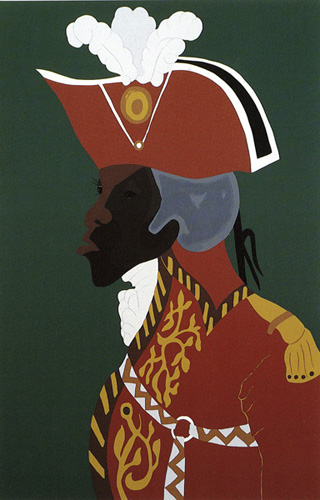
Colouring Lessons: Reflections On The Self-Regulation Of Racism
 A guest post, following Srdjan’s and Robbie’s contributions on the meaning and structure of contemporary racism, by Elizabeth Dauphinee. Elizabeth is Associate Professor in the Department of Political Science at York University in Toronto. She is the author of The Ethics of Researching War: Looking for Bosnia and co-editor of The Logics of Biopower and the War on Terror: Living, Dying, Surviving. Her work has appeared in Security Dialogue, Dialectical Anthropology, Review of International Studies and Millennium. Her current research interests involve autoethnographic and narrative approaches to international relations, Levinasian ethics and international relations theory, and the philosophy of religion.
The idea promulgated by Bet 115 that racism can and will meet its demise in a few short decades is based on the assumption that humans are self-regulating creatures, capable of recognizing and assessing their beliefs in an objective way and making appropriate corrections as needed. In order to explore this assumption, we need to inquire into the relationship between the self as an individual entity, capable of navigating and responding to the external world in an objective, disinterested way, and the social sphere, which may so entirely constitute us that we are incapable of thinking beyond the ‘texts’ (or scripts) of our socio-cultural milieus. In simpler terms, the question is: do we create the world, or does the world create us?
In order to rightly consider this question, it is important to understand the implications of the answers one might be tempted to choose. It is also important to realise that each of us has a personal investment in the answer we might make. If we are individuals capable of willfully altering the world, then it makes sense to say that we can overcome racism (yet one is left with a lingering sense of bewilderment over why we have not done so). If we are fundamentally shaped and inextricably bound by the social sphere in which our ideas are formed, then we might lack the agency to escape the racism that seems to form a cornerstone of the institutions of our historico-political condition. Of course, there are few who would accept that our ability to self-regulate is an either/or proposition. Rather, it is probably better to understand it as a ‘both/and’ state of affairs. In short, we shape and are shaped by the worlds we occupy. How, exactly, this is so is difficult to pick apart and navigate despite all of social science’s failed attempts to sharpen the distinction between the self and the worlds the self occupies. It inevitably flattens the complexity of social relations, and often ignores the tensions and contradictions that animate people’s views and beliefs. By way of example, let us consider the question with which we began: are we, or are we not, self-regulating creatures? The very structure of the question assumes that one will make answer either one way or the other. It leaves little room to suggest that both propositions are true, but in different ways and with different implications.
 The Disorder Of Things