Looking Beyond Spring for the Season: An African Perspective on the World Order after the Arab Revolt

The first of a series of posts by Siba Grovogui, Professor of International Relations and Political Theory at John Hopkins University (followed by a second, third, fourth and fifth installment). He is the author of Sovereigns, Quasi-Sovereigns and Africans: Race and Self-Determination in International Law and of Beyond Eurocentrism and Anarchy: Memories of International Orders and Institutions, as well as a number of articles on race, sovereignty, postcoloniality and human rights and what the history of slavery tells us about the contemporary discourse of international politics. Reposted from The Contemporary Condition. Images by Pablo.


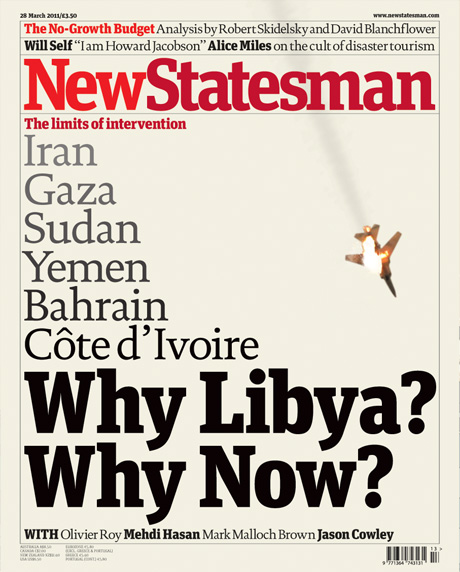
There is much misunderstanding today about the decision of African Union (AU) to not endorse the military intervention in Libya undertaken by France, Great Britain, and the United States in conjunction with a few Arab States. Speculations abound as to whether the uniform decision coming out of Africa indicates that the African Union is out of step with the spirit of freedom sweeping across North Africa and the Arab World; or whether the absence of Africa in the battlefield of Libya merely suggest military ineptitude and political bankruptcy. In fact, it is not accurate that the African Union has been indifferent to the conflict in Libya. The AU opted for mediation and negotiated constitutional compact, with the aim of fostering a different kind of politics. The uniform refusal of the AU to endorse Western intervention has two main explanations. The first is the practice of consensus in decision-making which has long history within Africa. The other is profound unease on the continent about the form and foundation of the intervention itself.

I suggest that there is continent-wide scepticism in Africa about Western leadership in the eras of global governance, the rule of (international) law, the status of international morality, and the future of global democracy. This development is the result of continental experiences with the modes of enactment and execution interventions in Africa. The African position arises therefore from doubt that the coalition of Western powers leading the military effort in Libya today can be trusted to not abuse legitimate anti-Gaddafi sentiments; to not instrumentalize international law and morality; and to not subvert UN procedures and the mechanisms of global governance in order to advance hegemonic agendas and parochial ‘strategic’ interests. In short, underlying the African objection to military intervention is a long-standing tension between international organizations that represent Africa and the self-identified ‘West’ around the representations of the will of the international community, the resulting global democratic deficit in times of intervention, and their effects on international morality, including the principles of humanitarianism.
In relating this conflict, I do not wish to speak for a uniformly-defined ‘Africa’ and/or for all African entities. Continue reading
A Kind Of Blank Spot

[M]y wife and I realized you cannot pay attention to everything, so I said to myself “one continent that I am going to leave aside is Africa.” I preferred to concentrate on Europe and China. I did a pretty good deal of work on China because I saw it ripe to become one of the most important parts of the world of which I knew nothing. So, I proceeded to do a lot of work on China in order to know something about it. But Africa is kind of a blank spot for me, apart from casual observation. Even though, I would say that the whole notion of anarchy applies very well to Africa.

In fact, a criticism people used to make to me was that Africa was clearly an anarchic arena, and yet African states did not fight much among themselves. How, then, would a Realist like myself explain that? Well, I did by invoking Turney-High’s book in anthropology, which was published—I believe—in the 1920s. There, he made the very valid point that countries have to obtain a certain level of self-consciousness as being a political entity, and a certain level of competence before they are able to fight one another. Turney-High’s illustration was very clear with his study of the peoples he referred to as the “Californians,” who were such a primitive people that they did not have the ability to form groups or fight as a group. A consciousness and competence at a certain level is needed before a group is able to systematically impose on another group—whether in the form of warfare or in other ways. I think that, for a long time, Africa was in that condition, and that, as it proceeds away from that condition, African countries will be able to fight wars against one another. In a historical sense, though, that is an implication of advancement.

Kenneth N. Waltz, ‘Theory Talks #40: The Physiocrat Of International Politics’, 3 June 2011

What We (Should Have) Talked About at ISA: Poststructural and Postcolonial Thought

…(drumroll)… We are collectively joyous at being able to introduce a new contributor to The Disorder Of Things: Robbie Shilliam, currently at the Victoria University of Wellington and author of a slightly staggering array of critical texts (on the impact of German intellectuals on IR; the Black Atlantic in modernity; the Haitian Revolution; race and sovereignty; and the imperatives of decolonial thinking, among others). Cross-posted at Fanon/Deleuze.


At the recent ISA conference in Montreal, I participated in a lively, weighty and difficult roundtable on postcolonial and poststructural approaches to International Relations. Alina Sajed had supplied the panellists with a provocation by way of refuting Dipesh Chakrabarty’s famous injunction that Europe was the inadequate and indispensible to frame the epistemological constellations of “modernity”. Sajed challenged the panellists to debate whether Europe was in fact dispensable as well as inadequate. There was certainly a spectrum of opinions given and positions taken on the function, possibility and desirability of the relationship between poststructural and postcolonial approaches. As a form of reflection I would like to lay out some thoughts by way of clarifying for myself what the stakes at play are in this discussion and where it might productively lead.

For myself I do not read the Europe that Chakrabarty considers in terms of the historical expansion and exercise of material colonial power. I read it in terms of a fantasy that captures the imagination. At stake is a conception of the whys, hows and shoulds of people suffering, surviving, accommodating, avoiding, resisting and diverting the colonial relation and its many neo- and post- articulations. In this particular respect, I take Frantz Fanon’s position and agree with Sajed: “Europe” must be dispensed with. In any case, as Ashis Nandy has shown, the monopolisation of the meaning of Europe by a fascistic figure (rational, male, hyper-patriarchal, white, civilized, propertied) has required the re-scripting of the pasts of peoples in Europe and a concomitant distillation of the traditions of European thought themselves so as to accord to this fantasy figure. Europe is a fantasy through and through, but one that damages different peoples with different intensities. And those who look in a mirror and experience no significant cognitive dissonance when they proclaim “European” can still count themselves, to different degrees, as being a thoughtful protagonist in a contested human drama. For others, there is only the promise of living this drama vicariously through the thought of others. That is why “Europe” is dispensable, even though for some peoples Europe has never been indispensible; regardless, it must be dispensed with.

Let me explain a little more what I mean by all of this. Europe is first and foremost a sense of being that constructs its empathy and outreach in terms of a self whereby all who cannot intuitively be considered of European heritage are categorized into two entities. First, they might be the “other” – foils to the understanding of the self. Their emptied presence is to be filled as the verso to the internal constitution of the European self. If they are lucky, they are given a kind of non-speaking part in the drama. In fact, they usually are lucky. Much critical European thought – and certainly almost all of canonized European thought – speaks volumes about the ”other” but only so as to fill in the European “self” with greater clarity.

Second, they might be the “abject” – the entity that is impossible for the self to bear a relationship to, although even this impossibility will be instructive to the inquiring European self. Abjects, under the European gaze, are reduced to a primal fear out of which an intensity of feeling is engendered that wills the drama of human (European) civilization. Defined in excess to the other/abject, the internal life of the European self can substitute itself for humanity at large in all times and spaces, and develop itself as a richly contradictory being that overflows its meaning and significance.

I do not know whether other colonialisms predating and contemporaneous to the European project matched this audacity. And in a significant sense, it really does not – and should not – matter. After all, the lure of making comparison is the precise methodology through which the European self overflows to define all others by a lack. I do though want to hazard a particular claim at this point, which might or might not bear up to scrutiny: the prime “others” of European colonialism were the indigenous peoples of the Americas. And while we owe much to Kristeva’s work on the term, the prime “abjects” of European colonialism were the enslaved Africans bought over to the Americas.

Continue reading

What We Talked About At ISA: Critique in Anti-Colonial Thought: Fanon and Cabral as Philosophers of Being, knowledge and ethics

I saw folk die of hunger in Cape Verde and I saw folk die from flogging in Guiné (with beatings, kicks, forced labour), you understand? This is the entire reason for my revolt.”.[1]


I sincerely believe that a subjective experience can be understood by others; and it would give me no pleasure to announce that the black problem is my problem and mine alone and that it is up to me to study it…Physically and affectively. I have not wished to be objective. Besides, that would be dishonest: It is not possible for me to be objective.”.[2]

For some time, I have been preoccupied by the connections between the ways in which we see, analyse and interpret the world, and the forms of political action to which this gives rise. In general, for critical social theory, the challenge is how to think about the world such as to understand and overcome structures of injustice or violence in it.  As a particular instance of this, the anti-colonial movement of the middle part of the twentieth century provides much food for thought, not least when so many point to patterns of colonialism and imperialism in world politics today.

In the paper I presented to the International Studies Association conference a few weeks ago, I offer a particular reading of Frantz Fanon and Amílcar Cabral as philosophers of being, knowledge and ethics.  Commonly, but not exclusively, these two figures are understood as having important things to say about revolt and resistance – Cabral is portrayed as the arch-pragmatist who emphasises the need for political unity and realistic objectives, whereas Fanon is frequently engaged for his affirmative treatment of violence in an anti-colonial context.  In this sense, they are largely approached as political thinkers and activists rather than philosophers per se.

Yet, their systems of thought stem from distinctive, and in important ways shared, philosophical commitments on the nature of being (ontology), ways of constructing knowledge (epistemology) and the ethical foundations of engagement (um, ethics). These foundations are strong, coherent and compelling points of departure and important in terms of understanding what kind of future order they envisaged.  What are these, and how do they support an anti-colonial political programme? What is the relevance of this intellectual legacy today? Continue reading

Martin Luther King as an international thinker?

Monday 17 January marked the official US holiday honoring Martin Luther King, Jr. While watching Monday’s Democracy Now! program, featuring substantive excerpts from King’s speeches,  the clarity with which he connected the domestic fight for equality to international politics, in particular poverty and war, struck me. The international aspects of King’s thinking, I believe, are important for two reasons.

King’s Radicalism

First, it challenges the interpretation of King as an insufficiently radical leader offered by some critics, and the co-option of King’s legacy not only by “moderate” liberals but also by conservative political figures in the US. King has become a symbol in the public consciousness of a safe reformism and a favorite icon for the type of liberal who abhors radicalism above any other political sin. As Michael Eric Dyson says, “Thus King becomes a convenient icon shaped in our own distorted political images. He is fashioned to deflect our fears and fulfill our fantasies. King has been made into a metaphor of our hunger for heroes who cheer us up more than they challenge or change us.”

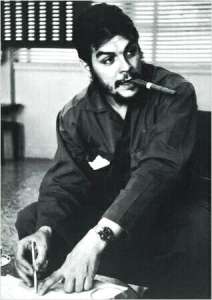
A personal anecdote to illustrate the point: a couple of years ago while handing over the editorship of Millennium to the incoming editorial team, one of the new editors commented on the large poster of Che Guevara that hangs on the Millennium office door. The Che poster, so far as I know, predates most of us currently associated with the journal, therefore I suggested it should stay. I then asked why Che should go. My colleague suggested that Che’s participation in revolutionary violence made him an inappropriate icon – in many academic disciplines this might be a rather devastating point, but International Relations is full of characters far more violent and less admirable than Comrade Che – see Paul’s post on Kissinger, for example.

When asked who might better grace the walls of the office my colleague suggested Martin King or Mohandas Gandhi (a political figure subject to a similar post-hoc liberal deification), with their key qualification as acceptable iconography being that they had not participated in political violence. While I have a great deal of sympathy for non-violence, my own introduction to both King and Gandhi came through the study of non-violence political strategy, the liberal (and I think my colleague would gladly accept that identification) embrace of King or Gandhi, paired with the repudiation of Che, is (unintentionally?) disingenuous.

It’s a disingenuous embrace because it insists that the first rule of acceptable political action is a renunciation of physical violence, while at the same time turning a blind eye to the violence institutionalized in the state through everyday police brutality and legalized/legitimized imperial warfare, as well as the structural violence inherent to global capitalism. This misses the radical content of non-violence as practiced by King and obscures the link that exists between non-violent agitation and armed resistance. The political commitments and motivations of King and Che are remarkably similar, even as their fundamental orientations (Marxism vs. Christianity) and tactics (non-violent direct action vs. guerrilla insurgency) diverged. Continue reading

The Racial Empire of International Relations

Primarily, our action is based on national self-interest. In other words, it is patriotic. A certain limited number of persons are fond of decrying patriotism as a selfish virtue, and strive with all their feeble might to inculcate in its place a kind of milk-and-water cosmopolitanism. These good people are never men of robust character or imposing personality, and the plea itself is not worth considering. Some reformers may urge that in the ages’ distant future patriotism, like the habit of monogamous marriage, will become a needless and obsolete virtue; but just at present the man who loves other countries as much as he does his own is quite as noxious a member of society as the man who loves other women as much as he loves his wife. Love of country is an elemental virtue, like love of home, or like honesty or courage. No country will accomplish very much for the world at large unless it elevates itself. The useful member of a community is the man who first and foremost attends to his own rights and his own duties, and who therefore becomes better fitted to do his share in the common duties of all. The useful member of the brotherhood of nations is that nation which is most thoroughly saturated with the national idea, and which realizes most fully its rights as a nation and its duties to its own citizens.

Theodore Roosevelt, The Monroe Doctrine (1896)

Roosevelt’s imperial condescension is but one of the historical anecdotes mobilised in a recent paper by Robert Vitalis to trace the legacy of empire and race in the development of International Relations as a discipline. Although eschewing a direct critique of the contemporary field (since “the likelihood is small that self-identified specialists in international relations will seek out an account of the discipline’s past in a journal that has no standing in the field”), he nevertheless provides a wealth of historical detail on the complicity of scholarly ancestors in ‘colonial administration’ and its attendant euphemisms.

Take A. Lawrence Lowell, a political ‘scientist’ who went on become President of Harvard and used that lofty perch to impose a  dormitory colour bar for freshman in 1915 (and a man now also revealed as the convener of homophobic secret trials). A proponent of professionalised training for colonial administrators, Lowell also set legal arguments before Congress explaining that the requirements of the Constitution need not be upheld in those violently-acquired territories where the racial capacities of the indigenes fell short of proper statehood. And, like a rather more recent over-flattered Harvard globetrotter, he was particularly interested in the wisdom to be gleaned for such bold endeavours from British experiments

Or take the institutional delivery rooms of International Relations itself. At the first ever APSA conference in 1904, ‘Colonial Administration’ was designated one of the five fundamental branches of Politics. One prominent speaker that September was William Frank Willoughby, an APSA founder, its 10th President, and the author of Territories and Dependencies of the United States (1905). He crafted this work in a particularly applied setting (pay heed ye  assembled bridgers of theory and practice), serving as both Treasurer and Secretary of Puerto Rico from 1901-1907. It seems reasonable to assume that auto-ethnographic reflexivity did not feature heavily in his work. A decade later he became director of a new research body, soon re-christened as The Brookings Institution.

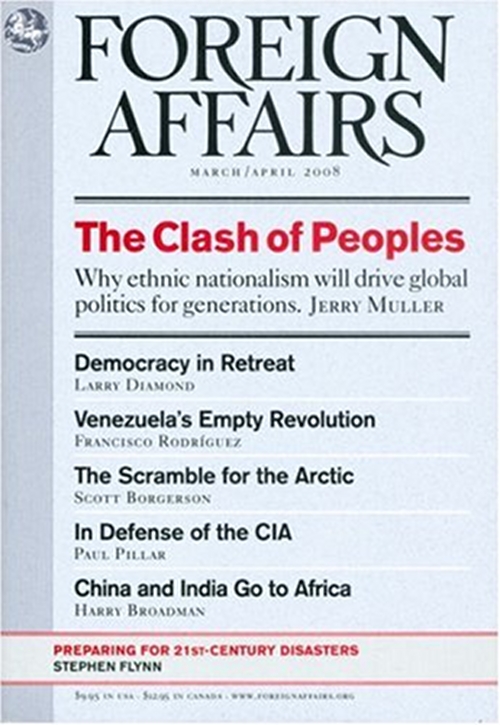
And what of our learned fora? Perhaps most symbolically of all, the debates over the proper governing of lesser peoples were carried out in the discipline’s first publication, The Journal of Race Development. It was founded in 1910 by G. Stanley Hall, who headed up a centre on the psychology of the races at Clark University, and who also pioneered the idea that the developmental stages of individual humans mirror the hierarchies of race, with children being to adults as savages are to the civilized. The twist being that in 1922 The Journal of Race Development became Foreign Affairs, still the go-to publication on global ‘administration’ (although this particular legacy is mysteriously absent from its current autobiography).

Several general themes emerge from the detail. First, far from positing states as the central actors of global politics, the comprador intellectuals of the early 20th century saw race, both within and without the United States, as the salient frontier. The earliest IR scholars all included American racial relations (to wit, the Southern ‘Negro problem’) within their disciplinary remit. In a racial supremacist twist on W.E.B. Du Bois’ ‘colour line’ “the world’s biological boundaries mattered much more to theory-building than did territorial boundaries”.

Second, the centrality of race as a category was not a mere function of scientific ignorance. Continue reading

Brothers in Arms: ‘Outside The Law’ (2010) & ‘Of Gods And Men’ (2010)

Strange country that gives the man it nourishes both his splendour and his misery!

Albert Camus, Summer in Algiers (1936)

Many presumed his macabre tone would bring back some much-needed edge to the increasingly commercial sensibilities of the Cannes Film Festival this year, but with Ridley Scott’s revamped Robin Hood picked to open the festival hopes were quickly dampened. Tim Burton, the tousle-haired American director, may have a singular visual imagination and be a favourite amongst cinephiles, but as jury president he failed to appreciate the struggle to build a habitable multicultural Europe that was taking place both on and off screen.

A Screaming Man, by French-Chadian Mahamat-Saleh Haroun, is set during the current civil war in Chad, and tells the story of a former central African swimming champion who sends his son to war so as to regain his position as a security guard at the swimming pool of an expensive European hotel. Taking its title from Aimé Césaire’s collection of poems Return to My Native Land, Haroun’s fragile look into post-colonial conflict captures the bewitching impact of a symbol of Europe’s lasting legacy in Africa. Rachid Bouchareb, the celebrated French-Algerian filmmaker, presented Outside The Law; the latest in a new wave of French-North African films aimed at simultaneously curing France’s colonial amnesia and rupturing the borders of contemporary French culture. The film takes place between 1945 and 1961, and focuses on the contrasting fate of three Algerian brothers who have fled for France in the aftermath of the Sétif massacre. It poignantly ends with the credits anticipating the October 1961 Paris Massacre in which over 200 pro-FLN demonstrators were killed by being beaten unconscious and thrown into the River Seine or tortured in the courtyards of Paris police headquarters. Bouchareb has strategically chosen to set his narrative between two of France’s most notorious – but still officially contested – state-sanctioned crimes. Following on from his previous film, Days of Glory, which deals with the discriminatory treatment of indigènes recruited into the Free French Forces formed to liberate France of Nazi occupation in World War II, Outside The Law continues the prescient struggle over representations of France’s colonial history.

'Algerians Drowned Here'

Although Rachid Bouchareb was considered by most to be the favourite to scoop the Moroccan leather encased prize, the man who recently chose to indulge Alice’s imperial ambitions in 3D, decided to award the Palme d’Or to Of Gods And Men. Xavier Beauvois’ drama is set in the Cistercian monastery in Algeria, whose resident monks are confronted by your archetypal Islamic fundamentalists. Saturated with Christian faith, the film squares the noble patience, love and belief of the monks against the intolerance of Islamic fundamentalists and their apparently regressive, intolerant and bloodthirsty worldview. Despite most of the notable tastemakers – from Philip French, Peter Bradshaw, and even the usually astute Mark Kermode – falling for the film’s quaint charms, Of Gods And Men remains a film that enjoys flirting with both audiences’ assumed prejudices and the intolerably stubborn idea of a clash of civilisations. Dare I say Beauvois’ reverential and holier-than-thou tone could have done with some of Roberto Benigni’s light-hearted but equally annoying flamboyancy.

With the likes of Homi Bhabha and Gayatri Spivak now comfortably donning the robes of academic superstardom, cultural studies no longer holds its former position as rebellious younger child of academia. Having breeched the stuffy walls of Ivy League and redbrick institutions, it has becoming increasingly safe in its approaches to contemporary culture, and thus been unable to find an adequate balance between aesthetic concerns and pressing socio-political contexts. Continue reading