Grayling’s Eminence; Or, For That Kind Of Money, I Would Demand A Team Of Live-In, Round-The-Clock Tutors, Ready To Fill Me In About Renaissance Art Or Logical Positivism At The Snap Of A Finger.


I do feel somewhat sorry for A.C. Grayling. Following his sudden exit from the Birkbeck scene, former colleagues sent a short but apt letter to The Guardian, expressing appropriate levels of dismay and resistance to the innovation of the New College of the Humanities. They raised basically two objections. First, that the New College is for-profit, substituting the business of teaching in place of the vocation of research. And second, that it is in the ‘vanguard’ of efforts to link education to wealth, partly via a leaching of public resources.

Although many prominent names were used to unveil New College, few seem in sight now that it is under sustained attack (Peter Singer, where are you?). And Grayling, somewhat to his credit, keeps replying to the antiquated nay-sayers desperately clinging to the sinking ship of public provision. Perhaps the fullest public defence has come in response to the Birkbeck letter. Although garlanded by academic niceties (“with respect”; “I would be very grateful”), the ultimate conclusion is that his critics lack some basic faculties of reason: “I have seen only an emotional case for scapegoating our project”.

Surely, then, there are firm responses to the proliferating critiques? Grayling’s fuller case for New College turns primarily on the idea that students are being under-charged rather than over-charged. The relevant comparisons? That an MSc in Finance at LSE for an overseas student costs almost £26,000 (with many other programmes charging in the £15-21,000 range) and that a DPhil in cardiovascular medicine at Oxford will set you back nearly £27,000 if you’re not from the EU. The point being that high fees for some already subsidise lower fees for others. Now, you’ll notice what has been done here: £18,000 for an undergraduate degree for all students is being justified on the grounds that you can find a handful of prominent programmes elsewhere that charge more than this for masters programmes for non-EU students.

As an argument for justice it has some merits (Why the disparity here? What are the ‘real’ costs of educating a doctor or financial specialist?). But as a defence of New College as prosaic rather than parasitic it doesn’t stand up to much. And I’m sure there’s a latin term for this kind of fallacy. A direct comparison with liberal arts funding in the US would have offered us more, but that would have required admitting that there is something new about the New College in the UK setting. You’ll recall that, before people starting off letting flares at Grayling’s talks, this was very much the selling point of New College. Its online welcome still announces: “New College of the Humanities is a new concept in university-level education”.

Lots of the new then, which makes it worth thinking through some of the older ideas of the university, as Steve Fuller did so wonderfully back in February. But there is something yet more damning in Grayling’s reply. He says that his project can’t be vanguardist. In a repeat of the AHRC debacle, apparently bright people conclude that you can’t be complicit if the Minister didn’t call you directly and tell you to do something. Grayling clarifies that he is under no compulsion of Government and has no love for the current reconstitution of UK higher education, as if that matters. Moreover, “we cannot be in the vanguard of what has long been happening”. This is the crux of a claim made before: that New College is simultaneously following an economic pathway outside of its control and that it will have no detrimental impact outside of its own halls.

Other engaged in privatised education do happen to think that the New College will accelerate some market openings. But notice that Grayling can’t have it both ways. His argument against allegations of vanguardism is that New College is too small and insignificant for anyone to follow its lead. But his argument for an £18,000 fee compares New College to comparatively small and unrepresentative courses which charge more than he intends to (about 80 people take that MSc in Finance at LSE). An accidentally immanent critique, this mode of argument illustrates exactly how a vanguardist framing works, and has worked over the last years. Find an institution that charges more than you do and has a good reputation. Point out that you could do more, and do it better, if you had their money. Campaign for that outcome while ignoring or dismissing arguments for higher levels of public investment. Repeat. Change the discursive and economic landscape in a series of comparative expansions.

Grayling suggests high fees elsewhere as justification for his high fees, but then expects us to believe that his high fees (which are much more clearly comparable with undergraduate provision than are the courses he cites) won’t be used by anyone anywhere to militate for a further uncapping or greater move to student debt and ‘consumer-led’ education over equal access and public goods. It is hard to see the logic in such a position, not least when it already provides indications of how such an appeal by others would run:

Note one thing: the deafening silence of the vice-chancellors in the controversy over our college project. Why? Because as the individuals most acutely involved in battling with impossible arithmetic, they understand the realities.

Please.

Andrew McGettigan’s excellent and much circulated analysis points out that marketisation requires the softening up of older providers via the introduction of one or more exemplars of new learning: 1) independent, non-profit providers like the University of Buckingham; 2) private, for-profit providers like BPP and now NCH (perhaps owned by people like Apollo); 3) Edexcel in relation with colleges; 4) Cameron’s planned ‘Big Society University’; and 5) globalised multi-nationals. New College has to be viewed in this context and not, as Grayling wants, as some minor footnote. Here’s McGettigan:

The new market conditions must first be created. A significant amount of intervention is required to bring about a ‘level playing field’ in which new, more commercial, operations can compete successfully to drive down costs. The first steps here have already been achieved. First, the complete removal of central funding to arts, humanities and social science degrees exposes the established provision to potential competition in a manner that gives the lie to Willetts’s claim that the cuts have been ‘scrupulously neutral’. (No new provider is currently planning to offer STEM degrees, which are expensive to run and require large overhead and start-up costs.) Second, students at private establishments have already been granted access to the student loans and grants…Third, when viewed in conjunction with the new visa restrictions on overseas students (a political decision affecting an otherwise independent and substantial income stream) and the cuts just announced from HEFCE for the 2011/12 budget, we can conclude that universities are being softened up. Prior to a major reorganization of higher education these cuts are punitive and part of a concerted effort to destabilize the sector for the entry of new agents… What is proposed does not simply benefit small, niche operations but creates the conditions for ‘creative chaos’ similar to that to be unleashed on the National Health Service.
On Objecting to the New College of the Humanities; Or, Who Would Pay £18,000 a Year to Listen to this Outdated Victorian Rationalism When They Could Buy Themselves a Second-Hand Copy of John Stuart Mill?

Yes, this is more comment on the New College, a.k.a. Grayling Hall, a.k.a. Grayling’s Folly, a.k.a. North Oxford in Bedford Square (NOBS), a.k.a. The Ultimate Scab University.

It won’t have escaped your notice that there has been a flurry of disgust, disbelief, protest and rage at the announcement of the New College of the Humanities (an aside: ‘of the’ Humanities? Why not ‘for the’ Humanities?). There have also been a number of responses that pretty much add up to ‘meh’: to wit, there are some bad things, but also some good things about Grayling’s Folly. And then there has been some welcoming of this project, and its ‘chutzpah’. Since we are in a downward vortex of vanishing funding and academic status, why not expand where we can? And why damn the entrepreneurial? As Brian Leiter puts it:

NCH is just the natural continuation of the elimination of 75% of government funding for higher education and 800% increases in tuition in the space of a few years. If the Brits can’t even keep the Tories out of office, and if their party of the Left is now in bed with the Neoliberals, it’s really hard to see why one should think “petitioning” the government for more government funding for higher ed will produce any results. The battle to be won is at the polls, and NCH is just a symptom of the battle already lost.

All this makes me think it’s worth clarifying the case against, and the potential mitigating factors. Continue reading

The New School for Privatised Inquiry

UPDATE (5 June): Now crossposted at Campaign for the Public University and at Critical Legal Thinking. The New College of the Humanities has already been called The Ultimate Scab University. I should have titled the post that.

Nina Power also has a call for boycott up and a running info post exposing, amongst other things, that many of the Professors involved have bought shares in the New College. A strange kind of workers’ management, but one apparently meant to incentivise its intellectual labourers through the lure of profits on thought. See also the expanding discussion at Leiter Reports and A.C. Grayling’s defence (in reply to the Birkbeck Student Union Chair).


In 1919, John Dewey and others founded The New School for Social Research, intended to offer a democratic and general education for those excluded by existing structures. On the faculty side, this meant a staunch defence of academic freedom in the face of increasing censorship and a climate of intellectual fear. For students, it meant evening classes, an open structure of instruction and the ability to engage in inquiry despite exclusion from the other universities of the time. A fascinating legacy even before it became a refuge for forces of critique fleeing Fascist Europe.

Now there is a new New School. A New College in fact. A.C. Grayling, Richard Dawkins, Ronald Dworkin and Peter Singer (yes, Peter Singer), amongst others, have inaugurated this new space for privatised inquiry. Tuition fees will be £18,000 a year. While the original New School aimed for “an unbiased understanding of the existing order, its genesis, growth and present working”, the New College gives you the skills “needed for success in this complex and competitive world”. There will be courses in how to do slick presentations and on effective working-with-others. Ironically enough, there will also be instruction in ‘applied ethics’ and ‘critical thinking’ (will education and the public good be topics of study I wonder?). The TV-friendly, rent-a-theory Professoriate glistens, although it seems unlikely that many classes will actually be taken by Niall Ferguson and Steven Pinker (visiting Professors only). Many other stars already hold other posts. And a closer look indeed reveals that ‘conveners and other teaching staff’ might bear somewhat more of the teaching load than advertised.

Four heads of major private schools sit on the Advisory Board. Intriguingly, the formal academic entry requirements seem rather low. Some funds are available for those from more deprived backgrounds (news reports suggest around 20% of entrants will get some kind of ‘assisted place’), but otherwise there is just some loose talk about ‘using a tuition fee loan’, although I assume this won’t be on the preferential rates and deferral plans available through the more antiquated public institutions. As Martin McQuillan intimated, it also seems that Grayling et al. have some inside info on the forthcoming White Paper, at least enough to calculate that their fees-and-hand-outs combination will not be penalised by standards on access and equality for degree-granting institutions (since it also seems that qualifications from the New College will count as endorsed by the University of London).

This is the hour for the experiment; and London is the place…

Which is all by way of saying that New College represents a new stage in business ontology. Today the public provision of humanities is framed again and again as unsustainable, unproductive and antiquated. London Met, which educates more black and ethnic minority students than the whole Russell Group combined, is facing the closure of 70% of its undergraduate courses, predominantly drawn from its humanities and arts provision, all overseen by a political elite who received their free educations in cognate subjects. UK higher education is systematically and chronically under-funded thanks to a governing class that has been spending less on schooling and free inquiry than any of its ‘competitors’ for several decades now. There is nothing natural about the emergence of a market which will bear the dubious pricing of Grayling’s project, and no objective need for the fresh sources of private investment that he cites as somewhere in support of the endeavour. We do indeed need ‘a new model’, but not this one.

The Offshore World

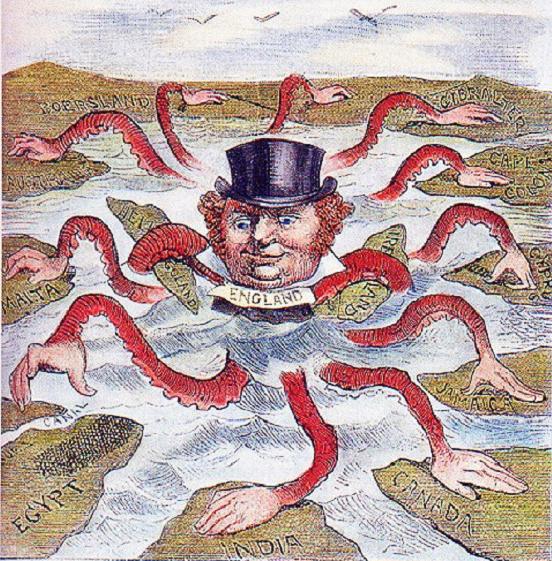
In amongst a typically judicious review of Treasure Islands and Winner-Take-All Politics, David Runciman draws a suggestive comparison between the contemporary politics of financial ‘mobility’ and the legacy of colonialism.

Shaxson’s book explains how and why London became the centre of what he calls a ‘spider’s web’ of offshore activities (and in the process such a comfortable home for the likes of Saif Gaddafi). It is because offshore is the offshoot of an empire in decline. It perfectly suited a country with the appearance of grandeur and traditionally high standards, but underneath it all a reek of desperation and the pressing need for more cash.

As Shaxson shows, many of the world’s most successful tax havens are former or current British imperial outposts…What such places offer are limited or non-existent tax regimes, extremely lax regulation, weak local politics, but plenty of the trappings of respectability and democratic accountability. Depositors are happiest putting their money in locations that have the feel of a major jurisdiction like Britain without actually being subject to British rules and regulations (or British tax rates)…

…The other thing most of these places have in common is that they are islands. Islands make good tax havens, and not simply because they can cut themselves off from the demands of mainland politics. It is also because they are often tight-knit communities, in which everyone knows what’s going on but no one wants to speak out for fear of ostracism. These ‘goldfish bowls’, as Shaxson calls them, suit the offshore mindset, because they are seemingly transparent: you can see all the way through – it’s just that when you look there’s nothing there.

In some senses this confirms an established story. Imperialism 101. For others, it will unsettle the idea of globalisation and inter-dependence as essentially the negation of great power politics.

Continue reading

The Qaddafi Controversy

Saif Gaddafi (PhD, LSE, 2008) has lost a lot of friends recently. Even Mariah Carey is embarrassed by him now. The institution to which I have some personal and professional attachment is implicated in a number of intellectual crimes and misdemeanours, as may be a swathe of research on democracy itself. Investigations are under way, by bodies both official and unofficial. All of this now feels faintly old-hat (how much has happened in the last month?), even rather distasteful given the high politics and national destinies currently in the balance. So let the defence be pre-emptive: the academy has political uses, and those with some stake in it need feel no shame in discussing that. If crises are to be opportunities, let us at least attempt to respond to them with clarity and coherence. After all, our efforts are much more likely to matter here than in self-serving postures as the shapers of global destiny.

Saif’s academic predicament is both a substantive issue in its own right and a symptom. As substance, there is now a conversation of sorts around complicity and blame. Over the last weeks, David Held has appealed for calm and attempted a fuller justification of his mentorship (Held was not the thesis supervisor and Saif was not even a research student in his Department at the time, although he, um, “met with him every two or three months, sometimes more frequently, as I would with any PhD student who came to me for advice”). Most fundamentally, it was not naivety but a cautious realism based on material evidence that led a pre-eminent theorist of democracy to enter into what we could not unreasonably call ‘constructive engagement’. [1]

Held characterises the resistance of Fred Halliday to all this as reflecting his view that “in essence, [Saif] was always just a Gaddafi”, which of course makes him sound like someone in thrall to a geneticist theory of dictatorship. The actual objection was somewhat more measured, and, if only ‘in retrospect’, entirely astute:

Continue reading

The AHRC Writes Back (Kind Of)

Today the Arts & Humanities Research Council responded to yesterday’s piece in The Observer claiming that the government had readjusted the rules (specifically The Haldane Principle) to increase their control over the direction of research in the UK within the state’s ‘national priorities’. Shorter version: the Tories didn’t pressure us, we’re completely independent and the funding to ‘The Big Society’ is coincedental.

Iain Pears is on the case. As he notes, it’s simply not convincing that the approved language suddenly appeared in the relevant documents unconnected with the political agenda of the governing party. The pressure may have been implicit, and the relationship might have been more informal and complicit than hierarchical, but the consequences for research are much the same.

But the AHRC not only wants to defend itself from these specific charges but also to maintain the legitimacy of the government setting overall priorities. Once again, the exact mechanics are expected to be taken on trust. Indeed, in 2009 a Commons Select Committee (Innovation,  Universities, Science and Skills, since you asked) addressed this exact point. While agreeing ‘in theory’ that the government had a role in setting overarching strategy, the relevant MPs (hardly a selection of Parliamentary rebels) put their collective figure on the aspects of policy that still concern us most:

Continue reading

The Meaning of David Willetts: The Future University Between State & Market

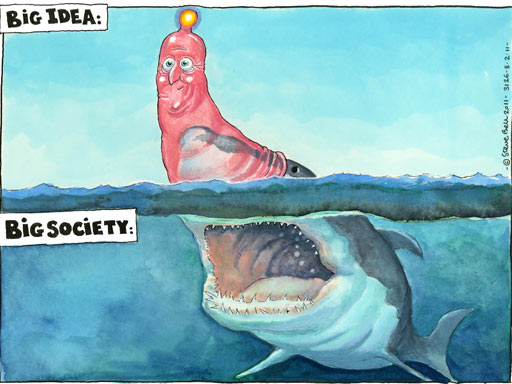
One of the principle battle-cries of the education movement has been that the coalition’s plans amount to a privatisation of the university system. This conclusion is arrived at by a focus on the withdrawal of teaching funding and the increased role given to ‘good relations’ with the private sector. These criticisms stand, but they repeat a common misunderstanding of the neo-liberal project as merely removing the state (call it the laissez-faire fallacy), rather than reorientating the state in a particular way to benefit certain sections and classes of society. The government is obviously complicit in promoting such tropes, which reinforce its narrative of supporting the grassroots and entrepreneurs and civil society and volunteers and champagne and candy for everyone. Hence their frankly playgroup standards of messaging. The Big Society is yellow and smiley-face! The Big Government is red and angry-sad-face!

But we now learn that the government has settled on a rather interventionist approach to all the lovely knowledge we are tasked to produce. ‘Two-minds’ Willetts has decided that the Arts & Humanities Research Council will be allowed to distribute £100 million in research monies each year, but only on condition that it accepts a ‘revision’ of the Haldane Principle (“that decisions on individual research proposals are best taken by researchers themselves through peer review”) and so spends a ‘significant’ amount of that money on research into the Big Society. Under the new ‘understanding’, the government continues to ‘value’ and ‘recognise’ the importance of academic independence, but wishes only to propose the merest of commonsensical adjustments:

At the other end of the spectrum there are decisions that ultimately must be for Ministers, albeit informed by external advice; these include the overall size of the funding for science and research and its distribution between the Research Councils, the National Academies and Higher Education research funding. In addition, every Government will have some key national strategic priorities such as addressing the challenges of an ageing population, energy supply or climate change. The research base has an important role to play in addressing such priorities and the Research Councils, with the support of independent advice, have proposed research programmes to tackle them. It is also appropriate for Ministers to ask Research Councils to consider how best they can contribute to these priorities, without crowding out other areas of their missions. But it is for the Research Councils to decide on the specific projects and people to fund within these priorities, free from Ministerial interference. Similarly, Ministers have a legitimate role in decisions that involve long term and large scale commitments of national significance.

The overall mood is civil-service vague, but elements of the language are importantly precise. Continue reading

Austerity, USA

I’ve just returned from the “motherland” and bring tidings from a strange and far away place: Austerity, USA.

Gin and Tacos gave me a special gift just in time for Christmas. It seems the matriculating class of House Republicans have big plans for the country. The austerity fear mongering has reached new heights of hyperbolic cynicism as Republicans try to make it possible for states to declare bankruptcy. You can find details, with extra rage, here. The key points are that bankruptcy proceedings would allow states to renege on contracts with public sector unions and contract out public services, walk away from public sector pension obligations, and sell off public land, parks and buildings. A refutation of this obviously stupid and destructive policy, with the appropriate amount of anger and vulgarity, can also be found on Gin and Tacos, here. Finally, here’s the plan from the ideologues themselves, in case you thought we were making this shit up.

As if that were not enough to get the blood boiling, the incoming House Republicans have re-written the rules for the federal budget. The new rules will alter the current pay as you go scheme, which requires offsetting entitlement increases or tax cuts with tax increases or benefit cuts – which they did before in 2000, before the Democrats reinstate the rule in 2006. Geniuses that they are, the incoming Republican majority plans to eliminate the necessity of offsetting tax cuts – details here, and the actual new rules here. For the time being it seems that, at least in the US House of Representatives, we’ll be pretending that tax cuts do not cost money and are an effective way to cut the deficit and boost economic growth, all evidence to the contrary. When I add this to the pre-Christmas compromise on the Bush Tax Cuts, which not only extended an expensive and unwarranted tax cut to the wealthiest 2% of US taxpayers but also added an extra cut to inheritance tax as well, there is enough bad news here to push any angry leftist from thundering rage to child-like weeping. Continue reading

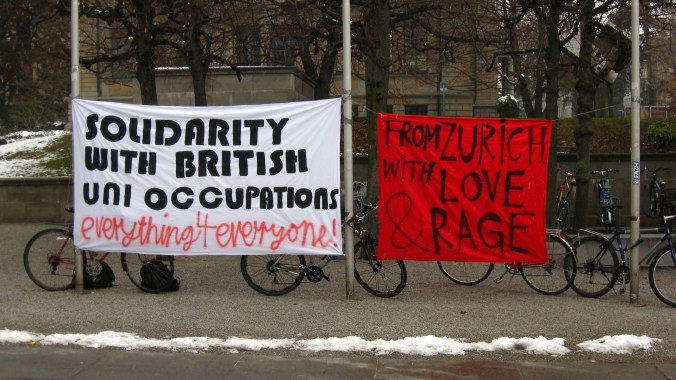
LSE Occupied!

More breaking news. Today LSE students occupied in protest at education cuts, demanding that LSE management produce at least some murmurs of opposition before the Parliamentary vote next Thursday.

Follow here, with updates here. Petition of support here.