We are Illafifth Dynamite!

The Roots

In Capitalist Realism, Mark “K-Punk” Fisher writes of Kurt Cobain:

“In his dreadful lassitude and objectless rage, Cobain seemed to give wearied voice to the despondency of the generation that had come after history, whose every move was anticipated, tracked, bought and sold before it had even happened. Cobain knew that he was just another piece of spectacle, that nothing runs better on MTV than a protest against MTV; knew that his every move was a cliché scripted in advance, knew that even realizing it is a cliche”. (p. 15)

This is as concise and accurate a summary of the dead-end of Nirvana’s nihilism as one could ask for – but as an illustration of the wider impotence of cultural and artistic expression to push beyond a dominant social vision of neo-liberal capitalism it’s not wholly convincing.

Fisher is right about Cobain, but his observation begs the obvious question: is Nirvana the wrong listening choice? If we turn to artistic expression for exemplars of how to begin anew, to think beyond our current moment, to escape the scripted thoughts, words and movements that structure our lives, this is actually a vital question.

Who should we be listening to?

This is a question that overflows beautifully, but here I want to explore the significance of one group – The Roots. This is partly an expression of personal love, but it’s also borne out of two less subjective impulses: (1) The Roots are insufficiently appreciated as an artistic and intellectual resource – they are artists in need of critics and journalists equal to their own insight and intensity; and (2) while I appreciate the efforts of those studying politics in an academic setting to bring in cultural resources, I don’t identify with International Relations’ obsession with Science Fiction (even as I appreciate the significance genre fiction can achieve), nor do I get much out of Political Theory’s tendency to appeal to classic dramas, and the multidisciplinary use of cinema, while fascinating, rarely leaves me inspired – so, returning to what one knows and finds inspiring – I want to argue it’s well worth listening to The Roots (and hip hop music) to understand the world and find profound insights.

A simple proposition: The Roots are the most important artists in popular music today – not bigger than Jesus, or the only band that matters – but possibly the best hip-hop group ever and a creative and intellectual force the quality of which is rare in music, especially music that maintains a popular orientation. This proposition matters because understanding and appreciating The Roots’ work over the past thirteen years takes the listener into an artistic world that expresses a very particular experience of the first decade of the 21st century (black, urban and American) through profound musical originality and penetrating intelligence, this experience provides a very different vision that has the potential to disrupt the exhausted and nihilistic sense of inevitability that Fisher so rightly identifies.

“I’m kinda like W.E.B. Du Bois meets Heavy D and the Boyz”

– Dice Raw, “Get Busy”, Rising Down (2008)

W.E.B. Du Boisidea of double-consciousness provides a way of appreciating the importance of The Roots. Double-consciousness is defined by a “sense of always looking at one’s self through the eyes of others, of measuring one’s soul by the tape of a world that looks on in amused contempt and pity.” While this burden threatens to overwhelm a positive sense of self-awareness and confidence, it also enables a second-sight in women and men systematically repressed and whose experiences are devalued, allowing a sharper vision of social violence and providing substantial resources for struggle and emancipation. The Roots carry over this sense of double-consciousness, but rendered more positive and confident by decades of growing black self-awareness, increasing social strength and important political victories in the US and more widely, such that they render the potential psychological weakness of double-consciousness into an incisive and positive vision, one wholly at odds with Cobain’s musical and cultural legacy of frustrated exhaustion.

Speaking of traditions of black music in America, Du Bois says,

“Little of beauty has America given the world save the rude grandeur God himself stamped on her bosom; the human spirit in this new world has expressed itself in vigor and ingenuity rather than in beauty. And so by fateful chance the Negro folk-song—the rhythmic cry of the slave—stands to-day not simply as the sole American music, but as the most beautiful expression of human experience born this side the seas. It has been neglected, it has been, and is, half despised, and above all it has been persistently mistaken and misunderstood; but notwithstanding, it still remains as the singular spiritual heritage of the nation and the greatest gift of the Negro people.”

Black culture in America provides an alternative reservoir of tradition (in the form of hip-hop culture, black musical traditions, political radicalism and distinctive forms of socially engaged religious practice) that not only nourishes the social imagination but is resistant to co-option. Hip-hop music is received by the dominant culture as a threat that must be commodified and tamed, but the refusal of a hip-hop artist to acquiesce to their own commodification need not reduce to an empty and ironic refusal nor solipsistic underground fetishism. The Roots, among others, maintain both a lucrative musical career and a challenging artistic output, at least in part, because of their capacity to occupy multiple subject positions – knowing that the music business is a business, intentionally challenging young, black, urban identities normally associated with hip hop, exploiting the fear of black assertiveness in mainstream culture in the US and working as “working musicians” who write, perform, produce, arrange for multiple artists, across generations and genres. But they are not simply polymaths too nimble to succumb to commodification – they are also self conscious creators of their own musical and intellectual space, shared in common, tied to tradition, and pushing relentlessly outward and forward. It is this quality, so essential to beginnings, that I focus on here.

Over a series of posts I want to consider the visions contained in The Roots music, with a particular focus on the political importance of their work – running from their groundbreaking 1999 album, Things Fall Apart, to their 2011 concept album, undun, I pull out a central theme from each album, which hardly defines the limits of their significance, but rather focuses on some of the insights they offer up with abundance.

Things Fall Apart (1999) 

We are illafifth dynamite

“I am no man, I am dynamite.”

Friedrich Nietzsche, Ecce Homo

On Beginnings

“Listen close to my poetry, I examine this like an analyst, to see if you can handle this”

– Black Thought, “Next Movement

Beginning are difficult – this is a simple truth that is particularly pertinent to anyone who feels pressed in by the world as it has been given, who struggles to find fractures in the world that might be expanded far enough to stand up to their full height. Partly this is a struggle to give expression to the discontent one feels – it’s not enough to know, as the early Roots’ records insistently documented, that one’s culture has been distorted, co-opted, defiled and weakened by its basest impulses – we need an analysis, an account of the dynamics that make’s our present condition combustible material for making new worlds.

Continue reading

Colouring Lessons: Reflections On The Self-Regulation Of Racism

A guest post, following Srdjan’s and Robbie’s contributions on the meaning and structure of contemporary racism, by Elizabeth Dauphinee. Elizabeth is Associate Professor in the Department of Political Science at York University in Toronto. She is the author of The Ethics of Researching War: Looking for Bosnia and co-editor of The Logics of Biopower and the War on Terror: Living, Dying, Surviving. Her work has appeared in Security Dialogue, Dialectical Anthropology, Review of International Studies and Millennium. Her current research interests involve autoethnographic and narrative approaches to international relations, Levinasian ethics and international relations theory, and the philosophy of religion.


The idea promulgated by Bet 115 that racism can and will meet its demise in a few short decades is based on the assumption that humans are self-regulating creatures, capable of recognizing and assessing their beliefs in an objective way and making appropriate corrections as needed. In order to explore this assumption, we need to inquire into the relationship between the self as an individual entity, capable of navigating and responding to the external world in an objective, disinterested way, and the social sphere, which may so entirely constitute us that we are incapable of thinking beyond the ‘texts’ (or scripts) of our socio-cultural milieus. In simpler terms, the question is: do we create the world, or does the world create us? 

In order to rightly consider this question, it is important to understand the implications of the answers one might be tempted to choose. It is also important to realise that each of us has a personal investment in the answer we might make. If we are individuals capable of willfully altering the world, then it makes sense to say that we can overcome racism (yet one is left with a lingering sense of bewilderment over why we have not done so). If we are fundamentally shaped and inextricably bound by the social sphere in which our ideas are formed, then we might lack the agency to escape the racism that seems to form a cornerstone of the institutions of our historico-political condition. Of course, there are few who would accept that our ability to self-regulate is an either/or proposition.  Rather, it is probably better to understand it as a ‘both/and’ state of affairs. In short, we shape and are shaped by the worlds we occupy. How, exactly, this is so is difficult to pick apart and navigate despite all of social science’s failed attempts to sharpen the distinction between the self and the worlds the self occupies. It inevitably flattens the complexity of social relations, and often ignores the tensions and contradictions that animate people’s views and beliefs. By way of example, let us consider the question with which we began: are we, or are we not, self-regulating creatures? The very structure of the question assumes that one will make answer either one way or the other. It leaves little room to suggest that both propositions are true, but in different ways and with different implications.

Continue reading

Body Politics: Corporeal Suffering, Memes and Power/Resistance, with Special Reference to #Occupy, Tahrir Square, ‘Hunger’ (2008) and Rage Against The Machine

*some extremely disturbing images ahead* (and some humorous deployments of Impressionism and Leonardo DiCaprio).


Two weeks ago, Karin Fierke presented a paper at our theory workshop on self-immolation as speech act (part of a forthcoming book entitled The Warden’s Dilemma: Self-Sacrifice, Agency and Emotion in Global Politics with Cambridge University Press). She focused principally on Thich Quang Duc, the South Vietnamese Buddhist monk who set himself alight and burned to death, silent and still, in Saigon in June of 1963, and on Norman Morrison, an American Quaker who copied Duc’s example in November 1965 by combusting his own flesh outside the Pentagon office of Robert McNamara, then the United States Secretary of Defence implementing Operation Rolling Thunder, the rain of fire which infamously unleashed a greater tonnage of bombs on Vietnams North and South than the total dispatched during the entirety of the Second World War.

This mimesis, an affinity not only of form but also of sacrificial politics, was cited as a mechanism for rupturing the symbolic order. Both Duc and Morrison engaged in a corporeal self-violence so forceful that it not only offended senses, but in fact extended a certain community. An act, substituting for speech, argument or manifesto, which forced itself on high politics and forged an international sensibility until that point lacking. One more contemporary dimension of that imitation and repetition is that many must have encountered the image the same way I did, which was via the front cover of Rage Against The Machine’s pugnacious, convulsively political eponymous debut in 1992. And not just the image, but a vague sense of the story imparted by sleeve notes (and lyrics today associated both with opposition to the media grip of Simon Cowell and with visions of the riotous encounter).

Self-immolation persists in a certain tradition of struggle, but the relevance of these themes – the body, sacrifice, the edifice of politics and protest, the circulation of images – has coalesced potently in the wake of recent events (on which more in a moment). Continue reading

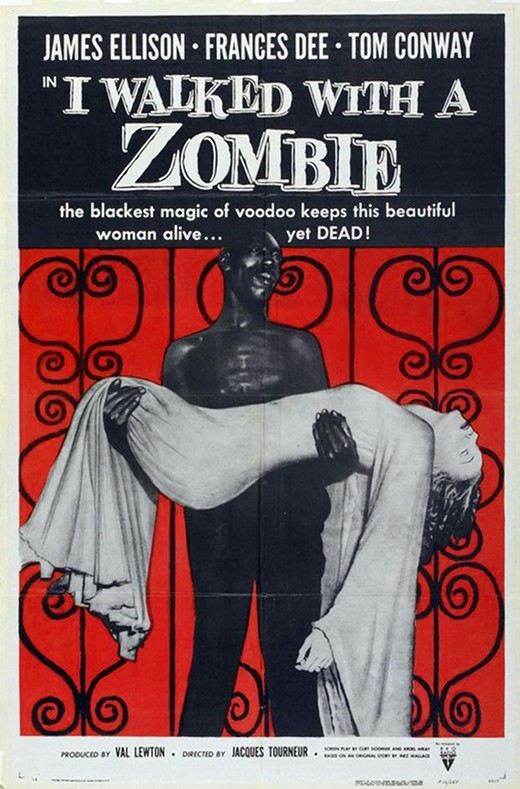
The Living Dead: On the Strange Persistence of Zombie International Relations

A guest post by George Lawson, Lecturer in International Relations at the London School of Economics & Political Science. He is the author of Negotiated Revolutions: The Czech Republic, South Africa and Chile, Co-Editor of The Global 1989: Continuity and Change in World Politics and has written a number of articles on historical sociology, revolution and world order. He is currently a Co-Editor of Review of International Studies and a Convener of the BISA Working Group on Historical Sociology and International Relations. He is currently working on a monograph on the anatomy of revolutions. Images by Pablo.


Daniel Drezner is no fool. This is a scholar who produces major publications, who teaches at a major institution, and who contributes to a major International Relations blog. So you have to wonder why he wrote Theories of International Politics and Zombies. Because this is, by any criteria I can come up with, a very foolish book.

Every now and again, I come across films, music or books and wonder how, in a world where so many talented people fail to make the grade, it can be possible to create, develop, sanction and, ultimately, sell products that are so banal. Often, the answer is simple – money. Perhaps that is the case here too. But I have a feeling that something else is involved in this book as well – Drezner, and plenty of others, seem to think that the connection between zombies and IR theory is uproariously, hilariously, side-splittingly funny. Judging by much of the commentary on the book – and listening via podcast to the guffaws of the audience at a panel devoted to the book at the 2011 International Studies Association Convention – many people clearly share Drezner’s sense of humour. So perhaps I am the curmudgeon here. Because I found this book diverting only in a way popularised by a recent headline in The Onion: ‘Time Between Thing Being Amusing, Extremely Irritating Down To 4 Minutes’. I lasted about half that long with Theories of International Politics and Zombies.

Why is it that so much hoo-hah has been made about this book (10,000 copies sold within six months of publication)?

Continue reading

Atrocity Porn, the Resource Curse and Badvocacy in ‘Unwatchable’ (2011)

Lest it need saying, *trigger warning*.


Unwatchable lasts just over 6 minutes, but is intended to linger far longer. A project of Save The Congo, it was apparently turned down by larger charities on the grounds that it was too extreme. Deploying liberal doses of slo-mo and orchestral overture, it shows an armed assault on a whiter-than-white (and blonder-than-blonde) family somewhere in rural England. The teenage daughter is gang-raped on the kitchen table while her father is forced to watch, and her parents are eventually mutilated and killed on their front lawn while the soldiers laugh and film them on mobile phones. At one point we see a soldier cowering to avoid the scenes wrought by his comrades. The youngest daughter is killed trying to escape. In other words, a BBFC 18-rated piece of atrocity porn doubling as a viral advocacy campaign.

A small clickable box sits screen top-right throughout. It reads: ‘Make It Stop’. The tagline: ‘Warning: this film contains sexualised violence you and your mobile phone manufacturer may find disturbing’. The pay off being that this is really about the DRC, but that it will take this happening to white people for you to notice. Yes, this is another campaign about the resource curse and another entry in the catalogue of rape atrocity ratcheting, now with the obligatory twitter hashtag (#bloodminerals) and a petition demanding: a) that EU companies be forced into transparent supply chains for coltan and the like; and b) that ‘swift and severe’ action be taken against any party responsible for violence.

Kate at Wronging Rights picks up on the incoherence of Save the Congo’s accompanying claims:

W…T…F…? Rape is cheaper and much more effective than guns or bullets??? No.  Rape is not a “cheap” coercive strategy.  It’s time-consuming and it exposes the perpetrators to injury and potential STD infection. Armed groups absolutely use it anyway, but not because it’s cheaper than bullets.

And, [i]f armed groups were to raid a village and force the population to leave by shooting at them, NGOs could be alerted and the UN would have to react??  This is surely news to the scores of NGOs, both local and international, who have worked tirelessly to document and publicize the use of rape as a weapon of war throughout the last decade and a half of conflict in the region.

Look, I realize that grassroots activism often plays a fundamental role in political change, and has been particularly important to the history of the human rights movement, but seriously, this “the news made me sad / I can haz NGO?” nonsense has got to stop.  Time to invoke Amanda’s “Love Actually Test” on a wider scale, I think.

Bizarre and untenable as such ideas may be (say what?), the key points of Save the Congo’s analysis are ones now commonly repeated as part of the general ‘weapon of war’ narrative. Continue reading

Seduction, Asphyxiation and the Postal Circulation of Military Masculinities

In the spirit of Sociological Images, some postcards recently acquired in Amsterdam. Principally produced to profit the French Red Cross and general effort in World War I, there’s also a more domesticated military masculinity apparent in the ‘Neerland’s Weermacht’ (Dutch Army) card posted in 1939. The artist for the middle set of four (the letter, the gas, the cemetery-orphanage, the seduction) is Louis Raemaekers.

Continue reading

Nothing Is Authentic Anymore: Disavowed Selves and the Lure of Realpolitik in ‘Tinker, Tailor, Soldier, Spy’ (2011) and ‘In The Loop’ (2009)

Know this: *great clunking spoilers ahead*.


The critical praise heaped on Tomas Alfredson’s version of Tinker, Tailor, Soldier, Spy reflects more than the hunger of intelligent audiences for post-Inception thrillers. Nor can it be explained merely by the excessive parade of grand thesps (Benedict Cumberbatch and the under-rated Stephen Graham both wasted, the former with a sub-Sherlock performance and the latter with a paper-thin bit-part, given historical fidelity by bad hair alone). Its visual and affective qualities are seductive and occasionally beautiful, but then so is its submerged vision of espionage and realpolitik.

The antithesis of Bond and Bourne, Tinker, Tailor offers up the almost forgotten Cold War as the stage for its intrigues. Although the voices are softer and the principals older, there is a more deadly game afoot. As Kermode comments, there will be large swathes of the audience who don’t know the political context at all. Not that it matters, since the detail (Hungary, the parallels with Guy Burgess, Anthony Blunt et al.) are but window-dressing for the appeal of George Smiley (silent, menacing, magnificent Gary Oldman). Contra the brashness of post-9/11 global political allegory-fictions, we are gently ushered into an epic game of chess, played by men. Men whose tools are wit, logic and cunning. Men from an analog age who use little pieces of card to alert them to potential break-ins.

Our contemporary operatives, even those of clear intellect and cunning are, like Bob Barnes in Syriana, always eventually compelled to revert to Hollywood expectations (explosions, gun fights, fisticuffs) to bring matters to their appropriate climax. Not in Tinker, Tailor. At one stage Smiley and co. require small handguns but, although drawn, they are never used. Barring the quasi-orgasmic final exchange between Bill Haydon and Jim Prideaux, our other vivid encounters with slaughter and disembowelment are after the fact, still, frozen scenes, crowned by flies. As if painted by Goya. We gulp and turn away, but what beautiful mutilations!

Continue reading

Housekeeping

UPDATE (6 September): Also, you can now read us simply by going to http://thedisorderofthings.com, although the old address will also work just fine. Pass it on. Pay it forward.


Inordinate excitement at Disorder HQ over some minor tweaks to our shiny façade. Regulars (we know you exist) will notice that the banner is now clickable and takes you back to the front page, that the posts are slightly wider (allowing us to back even more juicy intellectual content into your field of vision), and that a random dance of chance now determines the banner image.

The images, obviously bursting with detail and meaning on several levels, have been cropped and borrowed from: Diego Rivera (Man At The Crossroads/Man, Controller Of The Universe, 1933-1934), Gerard ter Borch (The Ratification Of The Treaty Of Münster, 1648), Jean-Michel Basquiat (Native Carrying Some Guns, Bibles, Amorites On Safari, 1982), Kent Monkman (The Triumph Of Mischief, 2007) (hat-tip to Propagandhi), Pieter Bruegel (The Triumph Of Death, 1562-ish), Emmanuel Leutze (The Storming Of The Teocalli, 1848), Ron English (Graveyard Guernica, 2011), MacDonald ‘Max’ Gill (Highways Of Empire, 1927) and Jack Kirby (Captain America Comics #1, 1941, with Joe Simon). More may follow.

We trust this will all work perfectly, but let us know if not.

Primitive Accumulation; Or, A Virtual Read-In on the London Riots

The blogosphere has a million corners, countless nooks and several large echo-chambers, complete with their own centres of self-congratulatory gravity. All have been aflame over the last week, saturating events, riots and insurgencies with the weight of historical expectation, the political memory of past iteration and the awesome condescension of easy interpretation. Gaps persist: gender and the dynamics of formally opposed masculinities have escaped all but the most cursory attention. It is one paradox of all this profuse commentary that decrying the statements and manifestos of others is the most satisfying and patronising manifesto of all. At its worst, it engages in the fullest of narcissisms (let’s make this about us and the quality of our analysis) whilst proudly displaying its contempt for thought (now is not the time for theory!). And of course, the problems and challenges are real. Much more real than we can face, too real for the sordid postures of moralising (I denounce Satan and all his works!) and liable to stay as real once we paper over them and return to our default settings.

Oh, and I find myself in unsurprising agreement with Joe and Meera (although I think Ken Livingstone’s attempts to make the link to cuts and social marginalisation is more ham-fisted than shameful). Which is all by way of introduction. There are reams to be written on the way the punditocracy and assorted commentariat are deploying (and misapplying) categories of cause, the unstable and multiple uses made of ‘politics’, the questions of historical precedent and historical return, and on and on. Exhaustion at the war of position prevents any such post. Instead, a mix-tape of diagnosis and critique, with both the smooth joins and the subtle dissonances that implies. More useful than a 1,000 faux-fresh words.

—————–

These looters are doing what they’re supposed to; grabbing the goods they see in the shops and can’t buy in a recession. They loot the bling – the sports shoes, gold watches, mobile phones and plasma TVs; and you can recognize the very poor when you see a woman looting potatoes from a corner shop. These acquisitive looters are certainly copying the gold standard of a social contract eroded by and evaporating with the money. These are riots in the cause of consumer goods. Burning and robbing other people’s things is one thing, but soon enough, and with no social cause or justice worth the name, people too become indistinguishable from things: witness the widely-circulated photo of the woman leaping for her life from a burning building; such potential deaths still threaten to bring the house down on top of us. This whole distressing episode began with the police shooting dead a black man in north London they said was a gunman; no evidence he fired a shot, we’re told, but the man was already indistinguishable from his gun.

Gabriel Gbadamosi, ‘The Blazing Light In August’

Continue reading

Damage, Unincorporated*, Part Two: War Studies in the Shadow of the Information Bomb

I’m thinking about something much more important than bombs.
I am thinking about computers.

John von Neumann, 1946 (via The Scientific Way of Warfare)

Modern war has become too complex to be entrusted to the intuition of even our most trusted commander. Only our giant brains can calculate all the possibilities.

John Kemeny, 1961 (ditto)

‘Extreme science’ – the science which runs the incalculable risk of the disappearance of all science. As the tragic phenomenon of a knowledge which has suddenly become cybernetic, this techno-science becomes, then, as mass techno-culture, the agent not, as in the past, of the acceleration of history, but of the dizzying whirl of the acceleration of reality – and that to the detriment of all verisimilitude.

Paul Virilio, The Information Bomb (1998)

Non-Consensual Hallucinations

A recent spate of cyber-attacks, and the civilian-military responses to them, have pushed questions of collective violence, technological complexity and the very relation between war and peace into a more mainstream arena. Alongside diagnoses of the political impact of Web 2.0, the analysis of contemporary technoscience and its militarised uses seems less neophiliac marginalia than urgently-required research program. As previously indicated in Part One of this review, a number of recent works have broached this subject, and in the process have addressed themselves to the very relation between bios and technos, sometimes with the implication that the latter is on the verge of overwhelming the former. Skynet gone live!

Critical engagement with the boundaries and possibilities of Network-Centric Warfare (NCW) thus opens a range of complex problems relating to the co-constitution of war and society, the place of ethics in military analysis (and military practice) and the adequacy of standard categories of social science to world-changing inventions. To expect answers to such broad questions is perhaps to overburden with expectation. Yet it is interesting to find that both Guha and (Antoine) Bousquet, who are most concerned with the radical newness of contemporary war, implicitly operate within a rather traditional understanding of its boundaries. For both, ‘war’ means the restricted arena of battlespace, and in particular that battlespace as viewed by the soldiers and generals of the United States of America.

James Der Derian is intrigued by many of the same questions, but his view is more expansive, and his diagnosis of the connection between NCW and international politics generally more comprehensive. Continue reading