Call for Papers: Subjects and Practices of Resistance

french-resistance-1944

For two inter-linked, consecutive workshops under the theme of Subjects and Practices of Resistance to be held 9-11 September 2013 at University of Sussex.

The first workshop (9-10 Sept) is on Discipline(s), Dissent and Dispossession and the second on Counter-Conduct in Global Politics (10-11 Sept).  The workshop convenors encourage attendance at both workshops.  However, paper proposals should specify the intended workshop and which days participants would be able to attend.

The workshops are generously sponsored and supported by the BISA Poststructuralist Politics Working Group (PPWG) and the Centre for Advanced International Theory (CAIT) at the University of Sussex  Continue reading

What We Talked About At ISA: Critical Pedagogies?

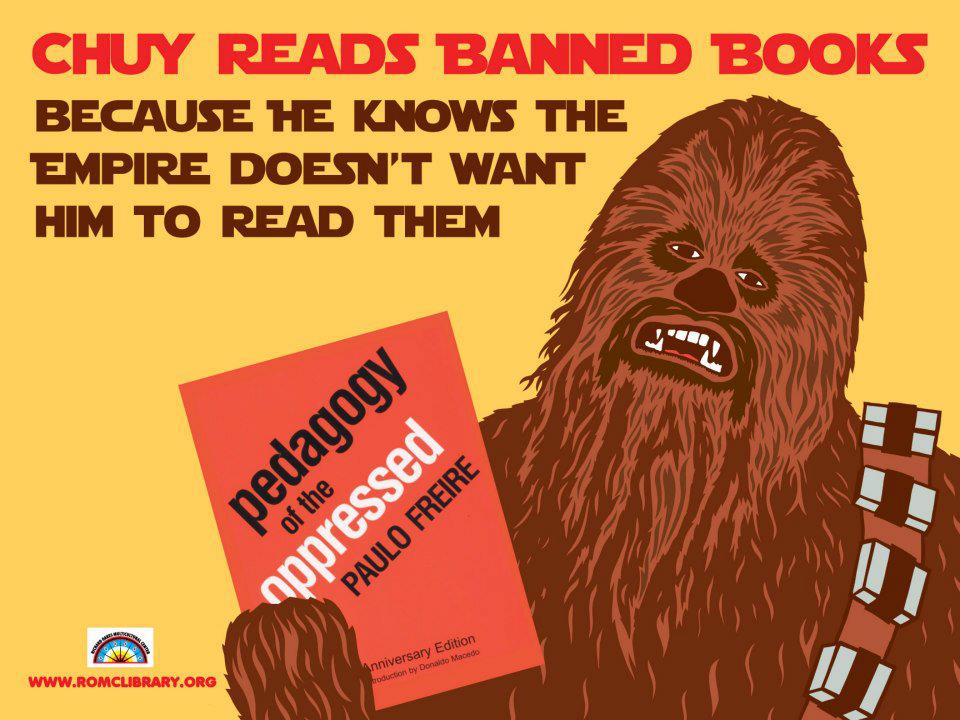
Chuy Pedagogy Of The Oppressed

There is something seductive about the idea of critical pedagogies. In an age where the figure of academic is beset on all sides by voracious spectres – the Taxpayer, the Minister, the Entrepreneur, the Curious Public, the Student-Consumer, the Management Consultant – it offers the idea that what happens in the classroom may still matter. More than matter: might in some way emancipate. This promise is perhaps particularly strong in academic International Relations, where those of various ‘marginal’ persuasions might argue that teaching against the grain undoes the destructive commonsense of global politics. That critical pedagogies help us bring back in the human, the ethical, the powerful, those daily experiences shot through with international politics, although our students don’t always see it. Even the titles hint at grand transformation: Pedagogy of the Oppressed!

Don’t get me wrong. I want to be seduced. More than that, I am all too ready to concur with many who also sat on the panel (‘What Do We Teach? How Do We Teach It?: Critical Pedagogies and World Politics’) convened by Meera in San Francisco (they were: Naeem Inayatullah, Laura J. Shepherd, David Blaney, Andrea Paras, Daniel Bendix and Chandra Danielzik). To agree that, since so much mainstream International Relations speaks the discourse of power, it is necessary to reveal its fictions and silences. To agree that narratives and memoirs have their place, alongside such ‘political’ terms as racism, patriarchy and class. To agree that it is better to start with Todorov and The Conquest of  America than it is to begin from a world of ahistorical self-help states. To agree with programmes for interventionist anti-racist education.

But I am also somewhat cautious. Some of that might be read as a spur to critical pedagogy by another name, and some as a delineating of criticality’s limit, at least insofar as that term is often discussed. Call these somewhat speculative micro-interventions the unapologetic curriculum, marginal resistance and real academic politics (always with the rule of three).

Continue reading

What We Talked About At ISA: Teaching Gender and War: Some Reflections on Negotiating the Five Stages of Feminist Consciousness/Grief in Undergraduate Students

Victoria BashamA guest post in our current series on ISA presentations from Victoria Basham, who is Senior Lecturer in Politics at the University of Exeter. Victoria’s research draws on feminist and sociological theory to explore militaries, militarism and militarization. In War, Identity and the Liberal State (Routledge, 2013), she draws on original fieldwork research with members of the British Armed Forces to offer insights into how their everyday experiences are shaped by, and shape, a politics of gender, race and sexuality that not only underpins power relations in the military, but the geopolitics of wars waged by liberal states. Victoria is also a working towards the launch of a new interdisciplinary and global journal called Critical Military Studies which seeks to provide a space for dialogue among scholars questioning the very idea of military organisation and armed force, and seeking to offer new insights into organised and state-sanctioned violence by exploring its wider significance and effects.


Despite the burgeoning literature highlighting the significance of gender to global politics, research into international studies curricula suggests that gender is rarely dealt with extensively or even adequately by ‘top ranking’ UK Politics and International Relations (IR) departments. A cursory glance at popular, introductory undergraduate textbooks in Politics and International Relations also reveals that whilst feminism may be included as an approach, accounts of power as institutionally situated remain dominant. As such, many undergraduates only experience brief introductions to feminism, gender, and issues of sexual identity, if anything at all. So when I was given the chance to design and teach two research-led undergraduate courses in 2009, I saw it as an important opportunity: both to provide students with insights into how gender animates global politics, and to engage in a form of ‘feminist pedagogy’ by encouraging students to look at themselves and the world around them critically and analytically, through the interlocking lenses of gender, race, class and sexuality.

My experience of delivering these courses over the past few years has been largely positive. On more than one occasion students have commented that engaging with feminist theories and praxis had ‘opened their eyes’. However, in other students the experience of studying the global through gendered and postcolonial lenses elicited confusion, anger and pain on their part, at least initially. Indeed, as I have continued to teach these courses, I have often thought of student reactions as akin to Kübler-Ross and Kessler’s five stages of grief or what Patti Lather has aptly called ‘stages of feminist consciousness’.

One possible reason for this is that for feminists, the question of ‘What is Politics?’ necessarily includes accounts of power that are personal, emotional, and everyday. Given that trying to account for how power shapes and is shaped by people’s daily lives is not always readily accessible through a focus on institutions and the like – the usual stuff of politics and IR analysis – many feminist teachers are likely to encourage their students to think through how ‘the personal is political’ in their experiences and to re-personalise an often depersonalised and sanitised set of issues including war. Many of my students (though not all, and rarely, it should be said, in a linear fashion) experience moments of denial, anger, bargaining, depression and acceptance when taking my courses. Moreover, in reacting to their comments and in trying to anticipate their turmoil I often find myself angry, disbelieving, in negotiating mode, saddened and sometimes having to accept, and very grudgingly I’ll admit, that not all of them believe that gender is as significant to war as I do.

Continue reading

If I Was Crooked Timber, I’d Demand A Recount…

Disordered Ducks

Despite our justified renunciation of audit culture and academic hierarchy, we cannot not acknowledge the receipt tonight of OAIS (Outstanding Achievement in International Studies Weblogging) awards for both categories in which we were entered: best individual blog post (for John Hobson’s guest post on race and Eurocentrism) and for best group blog. How we won out over Cohen, Green and Wood on sexual violence and the Human Security Report will remain one of the great mysteries of democracy (seriously, go read), but we’re grateful nevertheless. Shout-outs too to Wronging Rights and Justice In Conflict, unjustly neglected.

May the stale halls of established academia shake with the news of our collective arrival.

Bluster By The Bay, ISA 2013 Edition

Academic DuckNext week, the massed ranks of global IR will descend on San Francisco Bay. There will be congregation, dispute, commiseration, boorishness, ingratiation, laughter, inebriation and the occasional sparkling insight. There will also be the first ever International Studies Blogging Reception, co-constituted by Sage and Duck Of Minerva. It will be on the Thursday, in Yosemite A, at 7.30pm. There will be prizes (we were nominated for some) and some speechifying, and also drinks. So come to that, do.

We’ll also be doing various turns of our own. The list is a bit long (we’re clearly an over-active bunch), but we’re on panels with names like ‘Advancing Post-Colonial Approaches to World Politics’, ‘Inquiry as Invention: Bringing Stories to Tell’ and ‘Vulnerability and Ethics in Global Politics’. So Ctrl-F us in the programme and say hi afters. We’ll also be doing our usual ‘What We Talked About At ISA’ thing, so there’s really no danger of missing out on our assembled wit/wisdom. Hope to see some or many of you there, and don’t forget Megan MacKenzie’s ISA guide. The advice is pitched at grad students, but is pretty sound all round. That said, rules are also for the breaking, so don’t forget to enjoy it.

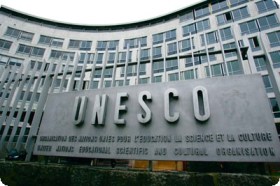
UNESCO and Research Agendas Concerning Race

Antigua was settled by human rubbish from Europe, who used enslaved but noble and exalted human beings from Africa (all masters of every stripe are rubbish, and all slaves of every stripe are noble and exalted; there can be no question about this) to satisfy their desire for wealth and power, to feel better about their own miserable existence, so that they could be less lonely and empty – a European disease … Of course, the whole thing is, once you cease to be a master … you are no longer human rubbish, you are just a human being, and all the things that adds up to. So, too, with the slaves. Once they are no longer slaves, once they are free, they are no longer noble and exalted; they are just human beings.

Jamaica Kincaid suggests that abolition and emancipation are bitter-sweet affairs. For the enslaved, freedom furnishes them with a human being that nevertheless awaits a meaningful personhood. Out of slavery the master fares better, redeeming his human being from being human rubbish. Kincaid’s suggestion is insightful. After all, abolition had a vibrant nineteenth century afterlife. White abolitionists enthusiastically allowed their humanitarianism to colonize Africa so that God’s chosen could sanctify themselves through the act of saving the natives from their selves. Meanwhile, William Wilberforce et al, convinced that slaves were human biologically yet lacked the social and cultural competencies of humanity, looked on fascinated at the experiment of self-government in Haiti. From this point onwards all future failings would be attributed to the epidermis, not the colonial relation. Presently, argues Kincaid, the landscapes of the old Caribbean plantations have been consumed by a white tourist gaze that has once again disavowed the living legacies of enslavement and colonization and denied meaningful personhood to its peoples. What remains of these places and peoples is only an “unreal”, picture-book beauty.

What are our narratives of race and racism? Whom do we follow in order to tell the tale: the masters or the enslaved – the humanitarians or the “sufferers”? Which tale confesses the episteme –the scientifically valid study – of race?

The 1950-51 UNESCO “statements on race” answered such questions in favour of the master’s narrative. Announcing a new era in human understanding after the terrors of war and irrationalities of genocide, the main purpose of the statements was to separate the “biological fact” of race from its “social myth”. The biological fact in and of itself was rendered harmless, pertaining only to “physical and physiological” classifications. Thus genetic inheritance, it was affirmed, could have no bearing on mental or cultural competencies and capabilities. Conversely, the social myth of race was considered extremely dangerous in that it rendered cultural difference as biological thus sundering the “unity of mankind”. This myth had to be dispensed with; hence ethnicity – as a social/cultural classifier – was proposed as a preferable classificatory regime to that of race. Ethnicity, after all, had not been tainted with supremacist hierarchy and could signify instead non-hierarchical diversity.

Although the scientists who collectively produced the statements on race were by no means all white, the majority hailed from Western academies. And the particular kind of anti-racism evident in UNESCO’s statements had already been formulated by famous Western anthropologists such as Franz Boas. They had sought to undermine scientific racism on its own grounds, i.e. by proving the un-scientific nature of the social myth of race. And this endeavour required debunking racialized identity – that which confessed their legal and natural inequality – as myth not fact. However, as part of this manoeuvre these identities had to be subsumed under a harmless social science of ethnic categorization. While this move redeemed white identities, it de-politicized the meanings of the sufferers’ cultural complexes and complexions, extricated them from inherited hierarchies of power, and thus segregated them from the inherited and living struggles against (post-/neo-)masters. In short, as Alana Lentin puts it, the effect of the statements was to separate race from politics.

Continue reading

Reflections on Narrative Voice

The final post in our mini-forum on critical methodologies and narrative in IR. The series is closed by Himadeep Muppidi, who is Betty G.C. Cartwright Professor of International Studies and Political Science at Vassar College, New York. He is the author, most recently, of The Colonial Signs of International Relations (Hurst and Columbia University Press, 2012).


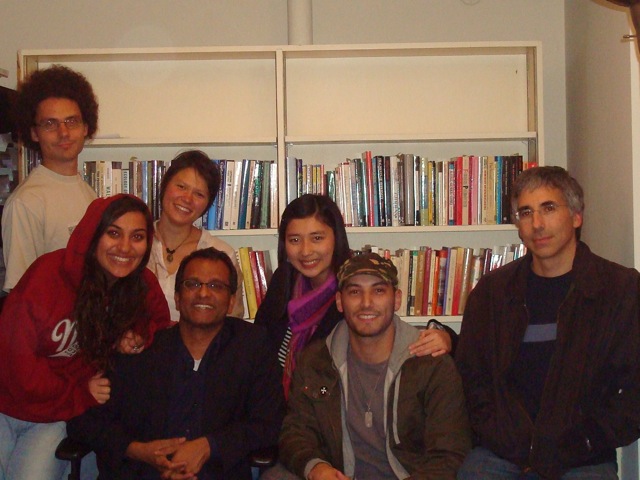
Himadeep Muppidi and Students

Himadeep (seated, fourth from left) with the ‘Vassar village’: students and faculty who were into story-telling.

I went to the York University workshop persuaded of the importance of the narrative turn in the field of international relations. I find literature in various forms useful in my teaching of international relations at Vassar, not least in opening my own provincial imagination to the worlds of others. Entering the international through narratives allows the class to engage political issues from the inside rather than pretending we were somewhere outside looking in or somehow beyond the concerns of those whose worlds we safely theorize. Narratives in different forms – novels, memoirs, short stories, and autobiographical essays – also allow for insightful translations of contemporary contexts. After soaking oneself in the nuance and complexity of narratives, conventional accounts of IR appear lifeless and boringly schematic in their attempts to straddle (our) humanity. They perish, unseen and unmourned, on the classroom floor.

But the discussions in the workshop helped me realize that narratives on their own are not enough. We need critical theories to go along with the current turn towards narratives. Colonialism too sustains itself on effective story-telling and not just brute force. It has a robust history of accumulating, systematizing and circulating its stories, not least to those citizen-subjects it narrates as its benevolent and heroic center. In IR, we often claw our way out of these archival dumps searching for fresher, more humane, worlds.

In the wasteland that is conventional IR, stories of any sort might appear, at first glance, to offer a welcome respite. But there is also, as some of our fellow disciplines can attest to, a politics of story telling: whose stories do we get to hear all the time; whose stories are generally inaudible; how do stories make us over; whose mansions do stories furnish with humanity in every remote room and whose huts do they deprive of life and dignity. Perhaps we need to explore these inequities of the political terrain more even as we take the narrative turn seriously. The question I left with from the all too brief workshop, one that is not a new one by any means, was: How can we, in IR, engage better the diverse worlds of the human international, as they come to us through narratives, without losing sight of the politics of inequity staging their appearances and disappearances?

And there I would have stopped but Naeem Inayatullah encourages me to say more. He wonders if what I am saying is: “No matter the turn, it will be dominated by Europe. So what can we do to give the narrative turn a chance at something else?” I am unsure if it is Europe’s renewed domination of the wasteland that bothers me as much as the prospect of another lost opportunity to plough newer terrain.

Maybe I should defer to the voice of a better storyteller. In a 2009 TED talk, Chimamanda Adichie speaks to what she calls the ‘The Danger of a Single Story’. In this short, approximately 20 minute presentation, Adichie draws our attention to a number of issues relevant to our thinking about stories and storytelling: to how “impressionable and vulnerable” we all are in the face of stories, to how the British and American stories she read as a child opened her imagination and at the same time shaped her childhood writing so much that the stories she wrote, even as she grew up in Nigeria, were of British and American worlds (filled with discussions of the weather and ginger beer). Reading stories by writers such as Chinua Achebe, she tells us, brought her to other worlds in which she could recognize characters like herself. Adichie is appreciative of the ways in which British and American stories opened up her world even as she highlights the dangers of knowing only those stories. This is not just an inter-country issue either.

Even the Nigerian context she imbibes as a child is not shaped by a single story though it takes her a while to realize this. There are subaltern worlds here (the world of the domestic help for instance) that she sees only in a thin and caricatured form at first since the story of “their” poverty dominates her imagination and occludes all their other ways of being human. Adichie insightfully connects stories and storytelling to questions of structural power and narrative homogeneity: our socially learned capacities to hear and tell diverse and plural stories of one’s own world while hearing and re-telling only single stories of the other. Adapting Adichie, I wonder if, given the social structures of teaching and learning IR that we currently inhabit, the narrative turn would only result in a renewed cycle of seemingly new stories about the diversity and humanity of Europe and single and simple stories about its Others.

But Naeem’s question continues to smile at me: “So what can we do to give the narrative turn a chance at something else?” It knows that I haven’t responded fully to it yet. I am tempted to say that I prefer to think with you all on that one. Maybe my partial response would be, in anticipation of a broader and longer conversation, that it is not writing alone but reading and teaching that we need to work further on. Maybe we need to begin by reading and teaching an international in which there are multiple other stories than the one or few we already know about IR’s others. Maybe that is the implicit promise of storytelling conceptualized, critically, as a politics of exile.


Suggestions for further reading: Sven Lindqvist, Eduardo Galeano, Assia Djebar, Amitav Ghosh

The Personal is Political, But Is It IR? On Writing as a Mother and Feminist

Annick WibbenThe penultimate post in our methodology and narrative mini-forum, written by Annick T.R. Wibben. Annick is Associate Professor of Politics and International Studies at the University of San Francisco. She’s been thinking about narrative for a long time, but rarely writes autoethnography. The piece featured here was originally written in 2006, but it’s taken her this long to find a suitable home for it…not to mention the courage to let it go out into the world. When she is not thinking about narrative (or tweeting about feminism, security and violence @ATRWibben), her research at the intersections of feminist theory, security studies, and continental philosophy, aims to radicalize security studies and to challenge the politics of security. In Feminist Security Studies: A Narrative Approach (Routledge, 2011), she examines meanings of security legitimized in existing practices and proposes an opening of the security studies agenda by drawing on narrative approaches. So, really, she’s never not thinking about narrative.


So here I am; it is 9:30am. I am sitting in a room with other women at our weekly Friday writing group. We call ourselves the Writing Warriors, as much to describe what we’re doing as also to encourage ourselves to continue doing it. Most of us are untenured still, which adds an extra dimension to the task of writing – must be productive, must publish! Many of us have small children and when the writing stops, that’s what we talk about: How do we deal with the challenges of combining motherhood and an academic career. We exchange recommendations for childcare and kid-friendly restaurants; we give advice on breastfeeding, potty-training, and where to buy healthy snacks (we certainly don’t have time to make them). Sometimes one or more of us have to miss the writing day (or part of it) when a child is home from school, a babysitter is ill, or we just cannot focus on our own research because we need to catch up on teaching or service commitments (of which we all have plenty, of course).

So here I am; I arrived late today. Only a few minutes late, but late enough to be occupied still with what I left behind in the rush to get here as close as possible to 9am when we meet, greet, talk about our writing plans for the day, and then start writing, promptly at 9:15am. I am wondering should I have left earlier. When? I could have skipped breakfast. I could have ignored my daughter’s requests to read her a story before leaving. Should I not have bothered to throw in the load of laundry? Or, to wipe off the food from the high-chair? I could have gotten here a few minutes earlier…

So here I am; writing IR. I am an international relations scholar, so this is what I do, I write IR. I need to convince myself that this is what I am doing, say it again: I write IR. I write IR. As I repeat these words, something else pops into my mind: Sam I am, I do not like that Sam I am. I do not like green eggs and ham. I do not like them Sam I am… just like the character in Dr. Seuss’ children’s book needs to be convinced to try green eggs and ham just like I need to convince myself, that I am writing IR.

So here I am; staring at the blank page. Continue reading

Indigenous Narrative Methods: A Hawaiian Perspective

Noelani Ka'opua

We’re now up to the ninth post in our consistently excellent methodology and narrative mini-forum, and this one was contributed by Noelani Goodyear-Kaʻōpua. Noelani is an Associate Professor of Political Science, with an emphasis in Indigenous Politics, at the University of Hawai’i at Mānoa. She has published on issues of identity, indigeneity and praxis in Hawai’i. Her first book, The Seeds We Planted: Portraits of a Native Hawaiian Charter School, was recently published by the University of Minnesota Press. Her second book, Ea: Hawaiian Movements for Life, Land and Sovereignty (Duke University Press, forthcoming), is a collection co-edited with Ikaika Hussey and Kahunawai Wright that explores late-20th and early 21st century Hawaiian organising for justice and self-determination. More recently, she has also become interested in the intersections of energy and food politics with Indigenous social and political health.


Ka'opua - Kaneohe Bay

Kāneʻohe Bay

Native novelist and scholar, Thomas King, reminds us that “stories are wondrous things. And they are dangerous.” In The Truth About Stories, he argues that’s all we are: stories. Empires are built on great stories. But on the other hand, anti-imperialist movements have also been motivated and sustained by narratives of personal and collective experience.

In my own home—Hawaiʻi—we lived for almost a century with the narrative that the US takeover was legitimate and that Kanaka Maoli (Indigenous Hawaiians) did not resist the US annexation of the islands. This story is even memorialized in a statue of US President William McKinley that fronts the public high school in Honolulu named after him. He is portrayed stately holding a document. If one were to climb up onto that eight-ton statue and peer over McKinley’s shoulder, she would see ‘Treaty of Annexation’ carved into the bronze. And this is one of the dangers of stories; sometimes they are completely false. In fact, an approved Treaty of Annexation never came to President McKinley’s desk for his signature.

The groundbreaking work of Noenoe K. Silva, in her book Aloha Betrayed, demonstrated that through a massive organized effort, Kanaka Maoli successfully defeated attempts to push a treaty through the US Congress in the mid-1890s. Over 38,000 Hawaiians defended their political sovereignty and recognized independence by signing petitions against the merging of the Hawaiian Kingdom and the United States. It was only when scholars began taking the narratives in Hawaiian language newspapers, Native oral histories and in Hawaiian songs and chants seriously that a century-long fiction was peeled back. The recovery of these stories has been incredibly generative for a new generation of scholars and activists who are now describing the relationship between the US and Hawai‘i as a prolonged, military occupation.

Narratives can be powerful because they have material consequences. Stories can be written on the lands that we inhabit. I grew up flanked by the consequences of the ways imperial narratives are made reality and Indigenous narratives dismissed as archaic. I grew up alongside the largest sheltered body of water in the Hawaiian Islands, Kāneʻohe Bay, approximately 12.7 kilometers from farthest northwest and southeast points and about 4.3 kilometers wide. Kāneʻohe Bay contains one of the only barrier reefs in the Hawaiian Islands and can be quite shallow in parts, filled as it is with coral reefheads and sandbars. As such, it was Pearl Harbor, rather than Kāneʻohe Bay, that became the US Navy’s center in Hawai‘i because of the Navy’s need for deep water portage for its massive warships. However, the south side of Kāneʻohe Bay is shielded by Mokapu peninsula and upon that headland, the US built a Marine Corps base complex that includes airfields, military housing, training and recreational facilities. For Native Hawaiians, the name Mokapu speaks to the significance of the place. “Mokapu” is a contraction of the words “moku kapu,” literally a “sacred and reserved land,” and it is known in Hawaiian mo‘olelo (narratives) as a site of godly creation and of human burial.

Continue reading

“Across Oceans To Hear”

Naeem InayatullahThe eighth post in our Methodology and Narrative mini-forum, this time from Naeem Inayatullah. Naeem teaches at Ithaca College. His research locates the Third World in international relations. He shows how the history and theory of international relations are formed against ideas about “Indians”. He demonstrates how classical theorists such as Smith, Hegel, and Marx construct their arguments via comparisons to non-European peoples. His conceptualization of political economy as a capitalist global division of labor aims to reveal how contemporary conditions of wealth and poverty emerge from historical capitalism. In addition, he works on the relationship between autobiography and theory construction as well as on how popular culture – especially music and television – expresses theoretical tensions. With David Blaney, he is the co-author of International Relations and the Problem of Difference (Routledge 2004), and Savage Economics: Wealth, Poverty, and the Temporal Walls of Capitalism (Routledge 2010). He is the editor of Autobiographical International Relations: I, IR (Routledge 2011). He is currently working on materials that consider the overlap between pedagogy, psychoanalysis, and writing.

Pablo adds: He is also an incisive and funny responder to student criticism.


Too often my eyes glaze over when I am reading the theory section of our professional papers. At conferences and workshops, my ears search for other frequencies when I hear theory speak. But not always. When “my theorists” are engaged, I can filter out and hone in. Otherwise, though, I glide away. When I do so, I discipline myself into attention by mocking my hubris. I don’t wish to take that posture here. Instead, I want to use this space to defend and substantiate my drift. I am not sure I will do so, however, with an explicit argument.

Our discipline is faddish, no? Product differentiation requires graduate students and established scholars to move from theorist to theorist – searching for profit from all the pores of the earth.[1] And yet, new debates seem like old debates. Things, times, and theorists change but our foundational questions probably remain less than a dozen. My favorite theorists – dead and alive – negotiate these questions. As do yours. I no longer have it in me to sift through the jargon and make the translations.

And yet, there is always something to be had in these workshops and conference papers. Something buried in the theory speak but which the author/speaker hides in plain view. She/he is speaking now. A mind/body configured uniquely by the particular path of this particular life. But structured by forces mundane, ubiquitous, and universal. Such bodies speak and write. They hide what they try to learn. But they also reveal bits of the real. I am trying to pay attention.

—–

Claire Turenne-Sjolander relates her husband’s sudden death. She conveys what forced her to write her grief and to rage against the medical profession. She describes her negotiation with the editor of a journal over what needs to be added. She marvels at the outpouring of responses she receives from readers. Her story contains a universal equivalent. It presses others to reveal their own particular grief and anger. She sketches the stakes in all this. Writing is grief work, a kind of mourning — I take her to imply.

Jennifer Riggan says, “I fell in love with a man from Eritrea.” My mind races. Continue reading