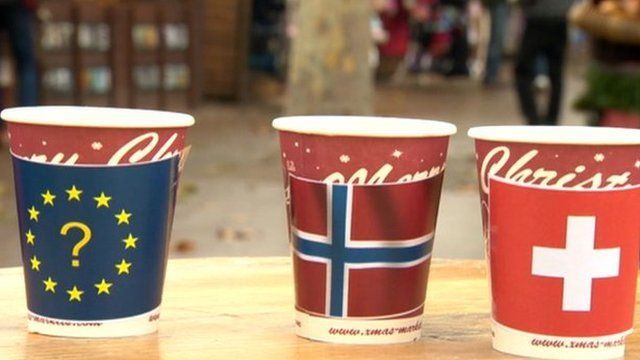
The EU Referendum: Taking over democracy on the right side? The implicit nationalism of the left case for Brexit

This is a post in our EU referendum forum. Click here for the introduction with links to all the contributions.

Our final contributor is Catherine Goetze, Senior Lecturer in Global Studies at the University of Sussex. Catherine is fluent in three languages and has lived and worked in various countries in Europe, America and Asia. Her research focuses on the sociology of global and transnational politics. Catherine’s book, The Distinction of Peace, on the sociology of peacebuilding is forthcoming this summer with the University of Michigan Press. Her publications can be found on her academia.edu page and she blogs occasionally at www.catherinegoetze.org/blog.


Reinvigorating’ sounds like spring, youth, detox and fun… so, who would not want to participate in ‘reinvigorating democracy’? And yet… the problem with the left-wing case for Brexit is that it remains utterly unclear why such a their proposed renaissance of democracy is predicated on Brexit. Contrary to Lee Jones I believe that of all political crucial moments the referendum of 23 June seems the most unlikely opportunity to re-invent democracy. Whether they like it or not, left-wing Brexiters are in the same boat as nationalists across Europe, and for two reasons. Brexit already bears the enormous risk of strengthening the UK’s and Europe’s nationalist and right-wing forces simply by setting a precedent. More importantly, however, left-wing Brexiters will only reinvigorate nationalism and not democracy because they are unable to identify the acting subject of their political project.

The rise of right-wing nationalism in Europe is real

Left-wing Brexiters haughtily dismiss the risk of Europe’s fascism as betrayal and ‘fear mongering’. Yet, the danger is real: In the Austrian presidential elections the right-wing candidate missed victory by 0.6%. If last year’s regional elections in France had been the first round of presidential elections, Marine Le Pen would have been one of the ‘dual’ candidates of the second round. In Germany, where right-wing nationalist discourses have long been taboo, the ‘Alliance for Germany’ has made a spectacular entry into several federal state parliaments; currently, the same party would receive 11% in federal parliamentary elections, hence becoming ‘king maker’ in parliament. The situation is the same in almost every single European country, from Sweden (13% for Sweden Democrats) and Denmark (21% for Danish People Party) in the North to Hungary (21% for Jobbik) in the East and Greece (7% for Golden Dawn) in the South. Although they didn’t win any seats, UKIP won 12.9% of votes in last year’s parliamentary elections.

The rise of right-wing nationalist parties cannot be easily explained away with conspiracy theories that this all is elite manipulation of masses; on the contrary, it is one response to the same crisis of politics that also generated the loss of confidence in the EU. Such crisis moments are nothing new so a look at historical experience might help explain what is at stake now.

Tragedy and farce of history: Democracy’s unravelling in Weimar

History does not repeat itself, that’s true, yet it is timely to remind democrats in Europe just how much this situation looks like the final years of the Weimar Republic. In the November 1932 elections, the NSDAP became the strongest party with 33.1% yet this alone did not assure Hitler’s appointment as chancellor. Crucially, all those political groupings whose first objective was to disavow established parties and Weimar’s democracy were complicit in his appointment; and that includes, indeed, everyone, even left-wing parties and public intellectuals (Carl von Ossietzky, Karl Kraus, Kurt Tucholsky, Bertolt Brecht, etc). Of course, they were horrified by the Nazis and many were subsequently killed or exiled; nevertheless, it needs to be remembered that in the early 1930s they did little to save the Weimar Republic which they found insufficient in too many ways: inegalitarian, bourgeois and capitalist, too removed from people’s real concerns, corrupt and ridiculously bureaucratic. “Germany is the only country where the lack of political competence is rewarded with the highest offices,” commented Carl von Ossietzky with dismay on elections in the 1920s.

The NSDAP’s rise to power was the final stage of popular disaffection with the Weimar Republic which was mainly due to the dissociation of representative institutions and Germany’s social structures. After the disaster of the First World War, the end of monarchy and the economic turmoil of the 1920s, political parties and social classes did not divide up neatly along party lines. Both sides of the fundamental political question, ‘who gets what?’, were disputed as Germans were desperately seeking Weimar’s demos. Communists asked whether workers were Germans or universal proletarians. Inversely, was the bourgeoisie part of the people or its (international and/or Jewish) enemy? Anti-Semites asked if Jews could be part of ‘us’, and liberal Jews rejected the idea that East-European orthodox Stedtl Jewry would be part of the civilized German nation. ‘Völkisch’ nationalists and historians argued about whether Romanian-speaking Suabians belonged to Germany and if, indeed, language and culture was the decisive criteria, then what about Austrians and Alsatians? Rhinelander Catholics had serious doubts that Protestant Prussian Junkers were really part of the German nation; and the Junkers themselves contended that they were the same kind of Germans as their land labourers…

The end of the Weimar Republic is not a tale of nationalism as external evil force; Nazism was home grown. Yet it was in no way specific to Germany. The Weimar Republic died because those who should have been its subject refused to recognize this democracy as theirs, and everyone did so for their own good reason.

The crisis of politics is not a matter of spatial distance

The contemporary lack (or loss) of confidence in the European Union is symptomatic of a crisis of politics that resembles the Weimar experience. If the EU is singled out as ‘undemocratic’, then not because of its institutions. In fact, constitutionally, the EU offers more opportunities to participate in legislative processes than the UK. What is questioned is the EU’s capacity to ‘truly’ represent the European demos. Brexiters deny this and reclaim their own: ‘we’, ‘I’ or ‘us’ want to decide and make politics, tackle the challenges ahead. They demand to reduce the ‘scale’ and to bring politics close to home (particularly well expressed in the juxtaposed movement words of the leave campaign: ‘Leave! Take back!’). This is Lee Jones’ plea. Its emotiveness, however, eludes the question of who the ‘we’ are. And yet, this is a crucial question: Who is the subject of that reinvigorated democracy?

Lee’s proposal, the national scale, is conveniently agentless. He explains that the national scale ‘is far smaller than the regional scale, local actors have a greater sense of mutual identification, and the structures of representative democracy, however flawed, do exist’. Who local actors are and who they represent, and if this representation is warranted remains obscure. The underlying assumption is that the crisis of representative democracy is simply a matter of spatial distance.

Yet, the crisis of representative democracy is a matter of socio-political, cultural and ideational-identitary distance. The causes for the dissociation of citizens and representation are manifold and by no means reducible to neoliberal governance. Enormous social transformations have dissolved those collective identities and social hierarchies which have shaped the party political structure of European democracies. These social transformations do not only involve the neoliberal dismantling and financialisation of the welfare state and public services, but also the accompanying shift from manufacturing, mining and agriculture to service industries, the introduction of new forms of production and organization, the participation of women in the workforce and the resulting changes in gender roles and families, the rise of ‘alter’ politics like queer or post-colonial politics, changes in education, the heightened mobility of Europe’s and global populations, the inversed age pyramid, the rising awareness and urgency of global environmental problems, and the changed nature of knowledge and communication.

Consequently, nations and social classes are not the ‘self-identifying collectivities marked by a common purpose and some sort of ethos’ anymore (Tormey 2015, 73). Societies have become infinitely more differentiated and ‘intelligible only as the result of aggregation and the overlapping of particularities’ (Rosanvallon 2012, 222). For the nation state the consequence is, as Tormey says, that ‘[…] we are left with an increasingly random assortment of individuals sharing territory, not community’ (op.cit.).

The crisis of representative democracy is, indeed, a crisis of representation in its double sense of delegation of decision-making power and of the interpretation of the citizen’s persona. Citizens more and more often do not wish to delegate their participation but want to act themselves; the tides of large social movements like Attack, the World Social Forums, Occupy or the current Nuit Debout movement in Paris clearly show that complexification, social individualization and political pluralisation have not resulted in apathy.

In the sense of impersonating the citizen, most people find it increasingly difficult to identify with any of the established political parties, politicians and other political organizations like labour unions, whether on local, national or European level. Political identities are not anymore those IKEA flat packs of class politics; rather political identities have become more fluid, diverse, multidimensional and, also, more globalized. Political identities often transcend predefined geographical spaces with citizens engaging in acts of political solidarity with communities in far-away places or addressing problems of transnational scale.

The missing democratic subject of the national scale

Given this complexity, fluidity and globality, who is comprised in the left-wing Brexiters’ ‘national scale’? Is the subject of national scale democracy the ethnic Briton (and then the English, Welsh, Scottish, Irish, too? And only the Protestant Irish or alos the Catholic Irish?), the people who live in Great-Britain no matter their original national belonging, only those people who think they belong (how will we know?), or those people who are affected by the political decisions taken whether they reside in Great-Britain or not, those who contribute constructively to the politics of national scale (and then what does that mean)?

The left-wing project of national rescaling needs to answer these questions beyond simply rejecting the EU representational mechanisms. The default option is the UKIP one: the white, English, male, straight, authoritarian tabloid reader (if he reads at all). Not only exactly the kind of citizen who is most unlikely to support a left-wing experiment in reinvigorating democracy.

As Rosanvallon so concisely says: “One of the most important transformations in our societies reside in the fact that the ’mode of production’ of generality has been transformed. Traditional regimes of generality were conceived in a unitary and aggregate sense […] while present-day generality more often has to be understood as rooted in the partial parallelism of singularities” (Rosanvallon 2012, 222). People’s political and social choices are not made in two-dimensional hierarchies anymore but in three-dimensional, variable, movable and multiple spaces that might or might not include the national scale. This makes politics so much more disorderly, erratic, singularized, glocalized and multifaceted. The attractiveness of right-wing parties resides in their capacity to seemingly reduce this multiplicity by replacing it with a simple binary: in or out. They, indeed, rescale complexity to linear two-dimensionality: White vs. Brown, Christian vs. Muslim, Occident vs. Orient, Native vs. Immigrant, and National vs. European. Being defined in opposition to the transnational and globalizing political project of European integration, Lee Jones’ ‘rescaling’ does not look any different.

There is, certainly, much wrong with the EU. Without doubt, there are still many emancipatory struggles to fight in Europe. Clearly, the project of European federalism is ill designed to respond to the crisis of politics. Yet, although the geometrics of politics have changed, these changes do not follow the linear patterns of the old nation-state’s socio-political structures. Although the identity crisis of the EU shows that recalibration of identity and politics is in order, it is not national rescaling that will reinvigorate democracy; particularly not if the rescalers are not able to positively identify the democratic subject. National rescaling can only reinvigorate nationalism, that’s all. So, if we want to re-create spaces for democratic innovation, it is not by ‘rescaling’ the horizon of possible participation(s) that this will happen.

The EU Referendum: “We will burn it all down” – War, Blackmail and the Case for the European Union

This is a post in our EU referendum forum. Click here for the introduction with links to all the contributions.


Our next guest contributor to the EU forum is Philip Cunliffe. Philip is Senior Lecturer in International Conflict at the University of Kent and editor-in-chief of the journal International Peacekeeping. He is co-editor, with Chris Bickerton and Alex Gourevitch, of Politics Without Sovereignty (UCL Press, 2007), and author of Legions of Peace: UN Peacekeepers from the Global South (Hurst, 2014).  His most recent book, co-edited with Kai Michael Kenkel, is Brazil as a Rising Power: Intervention Norms and the Contestation of Global Order (Routledge, 2016).
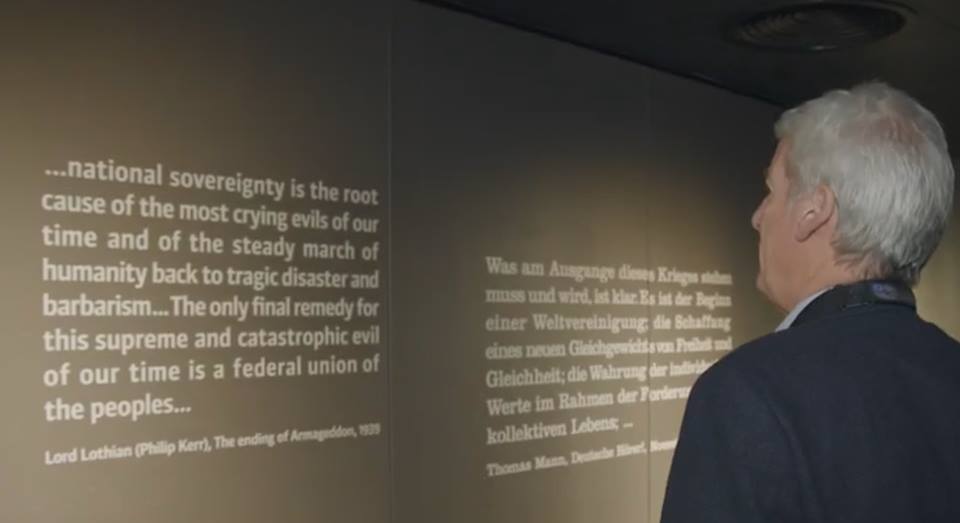

It’s often heard that the European Union (EU) is a peace project – an institution engineered to bring peace, prosperity and stability to a war-torn continent that was at the core of global conflict over the last century. This was the animus behind UK Prime Minister David Cameron’s speech on 9 May 2016, in which he claimed that Britain leaving the EU could lead to renewed rivalries, geopolitical tension and ultimately war in Europe. It is one of the most powerful, popular and enduring claims given in defence of the EU and one that drastically raises the political stakes in the debate over Brexit.

Given that this claim comes from our political leaders, it is a remarkably menacing way of eliciting popular support: Vote for us, they seem to be saying, vote for the European Union, or war will be the result ... That political elites could threaten voters so brazenly while implying their own powerlessness to control the course of events at the same time speaks to the strength of popular (mis)conceptions about the origins of conflict in Europe.

A screenshot from "Paxman in Brussels" (BBC), shot in the EU visitors' centre (h/t Ben Pile)

A screenshot from “Paxman in Brussels” (BBC), shot in the EU visitors’ centre (h/t Ben Pile)

Continue reading

EU Referendum: Brexit and its Impact on European Security – the ins and outs

This post is part of a Disorder forum on the EU referendum. Click here for the forum introduction with the links to the other posts.


Our next guest authors are Ana E. Juncos and Gilberto Algar-Faria, both from the University of Bristol.

s200_ana_e..juncosAna is the co-ordinator and team leader of EU-CIVCAP, a project on improving EU capabilities for peacebuilding funded by the EU’s Horizon 2020 programme. She is also Lecturer in European Politics at Bristol’s School of Sociology, Politics and International Studies (SPAIS). Her research focuses on European foreign and security policy, particularly the EU’s role in conflict prevention and resolution and crisis management. She is author of EU Foreign and Security Policy in Bosnia (Manchester University Press, 2013) and co-editor, with Eva Gross, of EU Conflict Prevention and Crisis Management (Routledge, 2011).

gilberto-portrait (1)Gilberto is the Project Officer and Senior Research Associate for EU-CIVCAP, where he is also a PhD Candidate in SPAIS. His doctoral research, which combines fieldwork in Sri Lanka with critical theory, centres around the liberal peace project, society and the state. Gilberto holds BA and MSc degrees from the University of Leeds and Durham University, respectively. He has held visiting appointments at the University of Sydney (2014), the University of Auckland (2015) and Harvard University (2016). His latest publication is a chapter entitled “Terrorism and Ethics” in the edited textbook Terrorism and Political Violence (SAGE, 2015).


Debates between the Bremain and Brexit campaigners have primarily focused on issues of immigration. However, most of these discussions tend to forget that the UK’s ability to manage refugee flows is inextricably linked to its ability to deal with international conflicts. The obsession on both sides of this argument with the UK’s ability to treat the symptom rather than the cause of migrant flows obscures the need to understand and address the conflicts creating these migrant flows. On this point, the jury is still out on whether Brexit might undermine the UK’s role in security affairs or, by extension, that of the EU. But this point is vitally important to consider if we are to ever locate long-term sustainable solutions to these challenges.

A Belgian ship on the EU’s Operation Triton intercepts a migrant vessel

Continue reading

The EU Referendum: Brexit’s Imperial Delusions

This is a post in our EU referendum forum. Click here for the introduction with links to all the contributions.


haastrupOur next guest contributor is Toni Haastrup. Toni is Lecturer in International Security and a Deputy Director of the Global Europe Centre at the University of Kent. Her current research focuses on: the gendered dynamics of institutional transformation within regional security institutions especially in Europe and Africa; feminist approaches to IR; and the politics of knowledge production about the subaltern. She is author of Charting Transformation through Security: Contemporary EU-Africa Relations (Palgrave Macmillan, 2013) and coeditor, with Yong-Soo Eun, of Regionalizing Global Crises (Palgrave Macmillan, 2014).


One key aspect of the EU referendum debate has been the rise of competing narratives about Britain’s role in the world inside and outside of the EU. On the Brexit side, campaigners argue that escaping the EU would revive Britain’s standing, allowing it to reconfigure relations with Europe, strengthen existing non-European partnerships, and forge new ones. These claims rest on a series of self-delusions about Britain’s capacity to unilaterally set the terms of its international partnerships. Brexiteers willfully ignore those prospective partners who say that a post-Brexit UK would be a less attractive partner. Their narrative seems to rest more on imperial delusions than solid ground – and it is hardly a narrative appropriate for a truly democratic, internationalist country.

A Part of Europe, Apart from the EU: What is Possible?

Pro-Brexit campaigners often suggest that if the UK were to leave the EU, it could fashion a new kind of relationship with Europe similar to the one Norway enjoys. Norway is viewed as a country that has maintained its sovereignty while remaining a close partner of the EU.

But of course, Norway is different. It is a thriving smaller country that is dependent on oil reserves that are much larger than the UK’s. Further, Norway negotiated a very specific entry into the European Economic Association (EEA) and the European Free Trade Association (EFTA). If the UK was to depart, a relationship with the rest of western Europe especially in the context of EFTA is possible, but it is not automatic. Further, a relationship between the UK and other countries that currently exists only in the context of a regional EU relationship will have to be renegotiated, with no guarantee that the UK will indeed be better off outside the EU.

Those in favour of staying within the EU, or Bremain, thus rightly question this narrative as one that is based on uncertainty and the UK’s self-imagining, rather than the realities of the international environment. The idea that Britain would regain its sovereignty way from the EU is a myth whose consequence even the Norwegians warn against.

Continue reading

The EU Referendum: The EU Mirage

This is the first post in a Disorder forum on the EU referendum. Click here for the forum introduction with the links to the other posts.

Chris BickertonOur first guest author is Christopher J. Bickerton. Chris is University Lecturer in politics at POLIS and an Official Fellow at Queens’ College, Cambridge. He has taught at Oxford, the University of Amsterdam and Sciences Po in Paris. He is author of European Union Foreign Policy: From Effectiveness to Functionality (Palgrave Macmillan, 2011), European Integration: From Nation-States to Member States (Oxford University Press, 2012) and, most recently, The European Union: A Citizen’s Guide (Penguin, 2016). Chris is a regular contributor to Le Monde Diplomatique and The Wall Street Journal, and has written for the Financial Times, New York Times and Foreign Affairs.


 When I am asked to describe the EU, I often say that it is a bit like a mirage. We all know how a mirage works. From far away, the image is clear and strong. As you get closer, it starts to wobble and shimmer until eventually, it disappears.

The EU is like that. Seen from national capitals, from London, Paris, Berlin, Rome, Bratislava or Madrid, it looks clear and distinct. It has its own institutions, its own buildings, even its own legal order. It can punish national governments for over-spending and close national banks. But as you get closer to Brussels, this image begins to wobble. Finally, when you are really up close, it disappears altogether.

What is left are our own national leaders – Merkel, Hollande, Renzi, Cameron – taking decisions between themselves in meetings closed to the general public. We also find our own civil servants and fonctionnaires filling the Thalys trains, the TGVs and the Eurostar, travelling from their own capitals to Brussels to take part in working group meetings that craft and shape EU legislation. Some power is delegated to EU institutions but it is closely policed by member states.

Traditional EU institutions, like the European Commission, have lost much of their power in recent decades, with a leading role played by the European Council which is made up of heads of state and government. Even an institution like the European Central Bank, with its shiny new headquarters in Frankfurt, is far weaker than many think. Its new powers were foisted onto it by national governments keen to distance themselves from the responsibility of solving the Eurozone’s economic and financial crisis.

Looking at the EU as a whole, we cannot say that it stands above its member states, dominating them and issuing orders that national governments must comply with. In fact, the EU is these member states. But why doesn’t it look that way? Continue reading

Bernie Sanders For Commander-In-Chief

Jesse headshotA timely guest post from Jesse Crane-Seeber. Jesse  grew up in the woods of Ithaca, New York where he graduated from a democratically run public alternative high school. After a BA in “Resisting Hegemony” (a major of his own design) at Ithaca College, he earned a Ph.D. in International Relations at American University.  His dissertation ‘Making War’ analyzed the occupation of Iraq in terms of how U.S. soldiers’  negotiated and made sense of their surroundings, their missions, and the people they tried to help and/or harm. His research involved participant observation, living with military families, analyzing official documents, and sifting through hundreds of hours of soldier-uploaded video content. He teaches at North Carolina State University, and is currently finishing Fifty Shades of Militarism, a study of the fetishization of all things military in the contemporary United States. The views in the post are those of Jesse Crane-Seeber as a private citizen and do not reflect those of North Carolina State University. Obviously.


“coming of age during the plague
of reagan and bush
watching capitalism gun down democracy
it had this funny effect on me
i guess”

– Ani DiFranco, Your Next Bold Move

In recent months, the United States has seen a substantial rebellion against Hillary Clinton’s status as heir-apparent of the Democratic Party. Combined with the contemporary Republican Party’s confusion about whether to embrace regime change, free-trade, or multilateral institutions (even those like NATO that secure US hegemony in the world), the current election cycle offers US voters an unusual set of choices that may not be fully appreciated by those caught in the horse race and name calling of an expensive election.

It is normal to be cynical about what any individual nation can do, never mind a particular leader. Technological change, ecological collapse, international regime complexes, not to mention economic activity, all help explain the limits of what any nation can do. But the President of the United States is not a generic national leader. As the chief architect of the post-World War II political and economic order, the US retains outsized influence, even as we reach peer-peer levels of economic output with the EU and China.

While Secretary Clinton and Senator Sanders voted alike 93% of the time they were both in the Senate, the contrast in how they might impact global politics is much, much larger. One oft-repeated critique of Sanders has been his lack of foreign policy experience, knowledge, or, well, policy. As Ignatius put it, “Foreign policy is the hole in Sanders’s political doughnut.” Several enterprising writers reached out to foreign policy and IR scholars sympathetic to Sanders’ campaign for comment, while a few political scientists have directly addressed the nature of a future Sanders Administration’s foreign policy.

As a critic of the Washington/New York policy expert class and the ways that US Political Science reproduces and authorizes it, what I find troubling is not what ‘experts’ have been saying, but what they haven’t. With the exception of Charli Carpenter’s embrace of Sanders’ willingness to acknowledge what he doesn’t know about foreign policy, all of these commentators seem to reduce US foreign policy to positions on which countries to bomb, (and maybe relations with Israel). More than once, he has been characterized as a ‘realist’ against Clinton’s hawkish liberal interventionist instincts. While that is basically fair and correct, even if the meaning of ‘realist’ in policy debates has little resemblance to the theories I teach under that name, this discussion has been far too narrow. Just this week, an open letter by 20 ‘foreign policy experts’ has explicitly endorsed Sanders’ approach to foreign policy. Going beyond the standard arguments (which I detail below), they draw attention to a wider range of issues that Sanders can lead on. While their arguments and my own line up fairly neatly, it’s important to have a bit more of an extended discussion of the issues involved than their short statement allowed.

Yielding to the dominant view, if only for a moment, I turn first to the Democratic candidates’  approaches to national security and armed force.

Continue reading

Comforting Discomfort of Rebel Music: Some Diaspora Legba/Pākehā Reflections on Robbie Shilliam’s ‘The Black Pacific’

author pic RutazibwaOur fourth commentary on The Black Pacific. Olivia U. Rutazibwa is Lecturer in European and International Development Studies at the University of Portsmouth, UK. Currently she is a Postdoctoral Fellow at the Käte Hamburg Kolleg/ Centre for Global Cooperation Research, Duisburg in Germany where she looks into ways to decolonise the scholarship on sovereignty and self-determination, drawing from philosophies and practices of autonomous recovery in Somaliland, Agaciro in Rwanda and Black Power in the US. She is the former Africa desk editor and journalist at the Brussels based quarterly MO* Magazine and continues to write monthly op-eds for them.


When I first started reading Robbie Shilliam’s The Black Pacific last April, I was only a couple of pages in when I shot him the following email: “Sitting on a sunny terras [sic] by the waterfront in Antwerp and reading your book. It is not often that I feel deeply comforted, healing, cared for and utterly inspired reading an academic text… At some point I’ll hopefully have more eloquent ways to share my thoughts with you on your book, for now it’s just feelings…J

Today, more than half a year later, the point of ‘more eloquence’ has supposedly arrived, but I doubt that I will ever truly reach it when it comes to this remarkable book.

In what follows I will share some preliminary thoughts on The Black Pacific, rather than venture into a full on book review. The book challenges our traditional (read: colonial) ways of doing research so convincingly and profoundly, that a conventional review would not do it justice. Too many of our research ways continue to be concerned with the generalizable and the linear. Divisive categorisations still play an important role and we end up with consumable knowledge at the service of the (oppressive) control of reality and peoples. Too often then, academic conversations, ideally conceived as open spaces for dialogue, exchange and creation, ossify into zones of judgementality, oxygenised by a misguided belief that there are indeed some absolute truths out there. The Black Pacific speaks a radically different language.

To me, it sang like Rebel Music at the heart of the (IR) academy and as such, it was a source of comforting discomfort. More on that later.

Continue reading

‘We Nah Want No Devil Philosophy’: A Note on the Decolonial Science of ‘The Black Pacific’

The third commentary in our forum on Robbie’s The Black Pacific, this time from Ajay Parasram. Ajay is a lecturer and Doctoral Candidate at Carleton University in Ottawa, unceded Algonquin Territory. His dissertation considers the gradual de-politicization of the colonial norm of “total territorial rule” emerging out of the collision of local and European ontologies of territory in mid-19th century Ceylon (Sri Lanka). One or two more posts to come before Robbie’s rejoinder.


I read The Black Pacific while walking through Coast Salish territories on Turtle Island, known in colonial vernacular as Washington State, USA, and the Lower Mainland of British Columbia, Canada. Attesting to the wide reaching applicability of the ideas advanced within this book, I engage it by drawing examples from Turtle Island, where I live.

The Black Pacific asks readers to reconnect with our shared humanity through cultivating a decolonial science of “deep relation.” This starkly contrasts with the prevailing “colonial science” of categorical separation and developmental hierarchy that is essential to ‘uni-versal’ modernity. To understand the distinction between “deep relation” and “categorical separation,” Shilliam says “We must start by acknowledging that the manifest world is a broadly (post)colonial one, structured through imperial hierarchies that encourage the one-way transmission of political authority, social relations and knowledge from the centres outwards” (20). Colonial science depends on the rigid separation of manifest and spiritual domains, as well as the separation of people into categories such as “enslaved, indentured, native, free, poor and masters. None can relate sideways to each other. They are fixated by the gaze of Britannica, the master” (23).

The Black Pacific is a nuanced, multifaceted call to abandon the science of separation that renders “profane” the myriad knowledges that people cultivate globally. The distinction offered between knowledge production/consumption vs. knowledge cultivation makes a valuable methodological contribution to decolonial research by treating the past (as opposed to History) as something in need of oxygenation:

Unlike knowledge production/consumption (a subaltern under-taking), knowledge cultivation turns matter around and folds it back on itself so as to rebind and encourage growth. This circulatory process of oxygenation necessarily interacts with a wider biotope, enfolding matter from diverse cultivations. (128-129)

Continue reading

Of Uncolonized, Spiritual Hinterlands

The second commentary in our forum on Robbie Shilliam’s The Black Pacific. Sankaran Krishna teaches politics at the University of Hawai`i at Manoa and can be reached at this email. He would like to thank Jairus Grove, Jonathan Goldberg-Hiller and Akta Kaushal for their comments; the usual disclaimers apply.


Robbie Shilliam’s The Black Pacific: Anti-Colonial Struggles and Oceanic Connections is an unusual work in many ways. Not too many, if any at all, in the field of international relations have a sentence like this one as their impetus: “Let the hungry be fed, the naked clothed, the sick nourished, the ancients protected and the infants cared for” (p. 185). Shilliam centers colonialism – the legacy of Columbus and Cook- as the event that broke the world. In a sentence of startling brevity and insight, he demolishes the self-contained history of European rise to dominance as he notes, “The whakapapa (a Maori word which can be glossed here as ‘genealogy’- SK) of global capital starts with colonialism – a plantation on expropriated land next to a provision ground – and not in a factory next to an enclosure” (p. 185). The making of the west, of industrialization, capitalism, modernity, science and rationality, is coeval with – or more accurately, is preceded and produced by- the unmaking of the rest of the world through colonial conquest: Africa and Oceania, Natives and Negroes, Shem and Ham, Maui (a god within Hawaiian and Oceanic mythic history) and Legba (from West African Fon cosmologies).

This fractured and alienated world of ours is produced and reproduced through what Shilliam describes as a ‘colonial science’ that cuts, divides, opposes and exploits. It’s a world in which the modal being is one who runs for cover when it begins to rain without sparing a thought for others who may be getting drenched. To this epistemology of colonial science, Shilliam posits an alternative, ‘decolonial science’ that emerges from the deep solidarities that always have and continue to bind together those who were colonized, and the many victims of the rapacious drive of global capital.

Continue reading

Anti-Colonial Struggles and Oceanic Connections

The first commentary in our forum on Robbie’s The Black Pacific. Heloise Weber is Senior Lecturer in International Relations and Development Studies at the University of Queensland. Her main research interests are in the Global Politics of Development/Critical Development Studies and Global/International Political Economy (GPE/IPE), and relations of inequality. Heloise is the author most recently of Rethinking the Third World: International Development and World Politics, with Mark T. Berger (Palgrave, 2014) and ‘Reproducing Inequalities through Development: The MDGs and the Politics of Method’ in Globalizations.


The prophet therefore channels the binding skills of Tāne/Māui and Legba so that colonized History can give way to decolonial pasts. And key among these skills is the use of voice. (p. 135)

Robbie Shilliam presents more than a beautiful and inspiring account of how through ‘grounding’ with the world we can cultivate deep relations that heal colonial wounds and further a ‘project of restitutive justice’. The Black Pacific is itself a whakapapa (a groundation of deep relation) for mana motuhake (self-determination) with the project of restitutive justice at its core.

As the sub-title suggests The Black Pacific is about rendering anticolonial struggles and/through oceanic connections. In this sense, it is a decolonial project that

seeks to bind the manifest colonized world back to uncolonized spiritual hinterlands, the colonized present back to decolonial pasts, (post) colonized peoples to other (post)colonized peoples, and the children of Legba to the children of Tāne/Māui. (p. 30)

More specifically, it is about how through deep relations – spiritual and material– indigenous peoples of Aotearoa NZ have been connecting – with ‘more multiple and diverse peoples than European Settlers’ (p.31).  Shilliam retrieves

the deep relation between the descendants of Africa  and Oceania as part of the broader politics and narrative of the pan-Maori anti-colonial struggle for mana motuhake, a struggle that must involve tātou tātou– I and I. (p. 31)

Continue reading