Nothing Is Authentic Anymore: Disavowed Selves and the Lure of Realpolitik in ‘Tinker, Tailor, Soldier, Spy’ (2011) and ‘In The Loop’ (2009)

Know this: *great clunking spoilers ahead*.
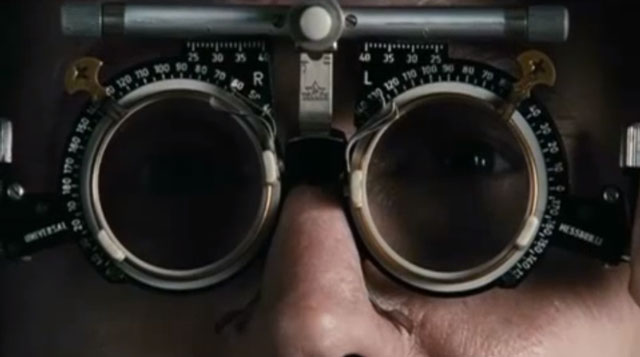

The critical praise heaped on Tomas Alfredson’s version of Tinker, Tailor, Soldier, Spy reflects more than the hunger of intelligent audiences for post-Inception thrillers. Nor can it be explained merely by the excessive parade of grand thesps (Benedict Cumberbatch and the under-rated Stephen Graham both wasted, the former with a sub-Sherlock performance and the latter with a paper-thin bit-part, given historical fidelity by bad hair alone). Its visual and affective qualities are seductive and occasionally beautiful, but then so is its submerged vision of espionage and realpolitik.

The antithesis of Bond and Bourne, Tinker, Tailor offers up the almost forgotten Cold War as the stage for its intrigues. Although the voices are softer and the principals older, there is a more deadly game afoot. As Kermode comments, there will be large swathes of the audience who don’t know the political context at all. Not that it matters, since the detail (Hungary, the parallels with Guy Burgess, Anthony Blunt et al.) are but window-dressing for the appeal of George Smiley (silent, menacing, magnificent Gary Oldman). Contra the brashness of post-9/11 global political allegory-fictions, we are gently ushered into an epic game of chess, played by men. Men whose tools are wit, logic and cunning. Men from an analog age who use little pieces of card to alert them to potential break-ins.

Our contemporary operatives, even those of clear intellect and cunning are, like Bob Barnes in Syriana, always eventually compelled to revert to Hollywood expectations (explosions, gun fights, fisticuffs) to bring matters to their appropriate climax. Not in Tinker, Tailor. At one stage Smiley and co. require small handguns but, although drawn, they are never used. Barring the quasi-orgasmic final exchange between Bill Haydon and Jim Prideaux, our other vivid encounters with slaughter and disembowelment are after the fact, still, frozen scenes, crowned by flies. As if painted by Goya. We gulp and turn away, but what beautiful mutilations!
Continue reading

Commodification, the Academic Journal Racket and the Digital Commons

David, my erstwhile ‘parasitic overlord’ from when I was co-editing Millennium, points me to some posts by Kent Anderson of the Society for Scholarly Publishing, who defends the industry on a number of grounds from Monbiot’s polemic against the journal racket. The comments threads on both pieces are populated by academics who agree with Monbiot and by publishing industry colleagues who agree with Anderson (and who alternate between dismissing and being personally offended by the original Monbiot column). The core counter-argument is that this anti-corporate, out of touch, ‘wannabe-academic’ day dreaming is old hat, and stands up no better now than it did when it was demolished at some unspecified point in the past.

Most crucially, Monbiot’s central exhibit (that companies consistently make 30-40% margins on the distribution of work already paid for by the public purse) is almost entirely passed over. Anderson coyly suggests that maybe publisher margins are that high, but maybe they’re not. Despite working rather closer to the heart of matters financial than do the rest of us, he provides no settling of accounts either way. In any case, however much it costs, and however much publishers make, it’s good value, apparently by definitional fiat. Since libraries keep paying the money, and since academics keep submitting papers, it is ‘idealism’ (remember that?) to complain about the current balance of power.

This is the familiar circular logic of neoliberal reason: privatised arrangements are beneficial because they will make the system more efficient and less costly. But if the rate of profit does not fall in line with the expectations of open competition, then it must mean that the rates charged are true equilibrium prices. Nevertheless, complainants citing high margins are referred to the benefits of privatised arrangements and assured that competition will bring prices down. Even though £200 million each year, or 10% of all research funding distributed by HEFCE (the academic funding council for England), ends up being spent on journal and database access by academic libraries. [1]

Continue reading

On the Abstraction of Contemporary Crisis

On the Abstraction of Contemporary Crisis
Or, Why Today Feels Different From the 1930s

One of the oddities of the ongoing economic crisis is its apparent separation from everyday life.[1] Consumers still consume, luxury items are still produced. Starbucks is still filled with coffee drinkers, and Apple still sells its overpriced goods. Scanning the media, one finds its coverage devoid of lengthy soup lines or surges in tent cities. While most have had to cut back on their indebtedness, there hasn’t been a collapse on the scale of the Great Depression. This is in spite of some measures suggesting the current crisis is as deep in some ways.


Continue reading

Understanding Peacekeeper Sexual Violence

Why do soldiers rape? When footage of peacekeepers from MINUSTAH, the UN mission in Haiti, gang-raping an 18-year old boy surfaced earlier this month, that question resurfaced with it. Official declarations have predictably stressed how unfortunate it is that the actions of ‘a few’ should taint the efforts of ‘the many’, although 108 Sri Lankan peacekeepers were expelled from Haiti for sexual exploitation in 2007, and another Uruguayan soldier was recently discharged for sexual relations with a Haitian minor. Certainly, patterns of similar abuse are not restricted to the Haitian mission. One of the more disturbing points in my brief fieldwork in the Democratic Republic of Congo was when an international human rights official told me, with an almost confessional seriousness, that they had feared more for their sexual integrity while travelling with UN peacekeepers than when interviewing Congolese soldiers.

When discussing rapacious African warriors, it is common to interpret sexual violence as part of a drive to accumulate resources or as the reflection of communal hatred in war. Peacekeeper sexual violence constitutes something of a control case in such debates, since it is much harder to link rape to these dynamics. There is no genocidal project for which peacekeepers are the foot soldiers, and they cannot really be said to be frustrated by poor pay and conditions. Certainly there have been links between sexual exploitation by UN peacekeepers and a kind of trade, although in the opposite direction than usually posited. In the case of UN missions, it has been peacekeepers who have exchanged goods for sex with locals, rather than using rape as a means of accessing additional resources for themselves (although they have also been implicated in other criminal networks for financial gain). Peacekeeper practices of sexual abuse are thus closer to sex trafficking and prostitution on a continuum of gendered exploitation than to models of rape as a tool of terror to facilitate resource capture.

Continue reading

The Obscure Object That Is Violence

A recurrent trope in the abundant commentary of the recent London riots was the “senselessness” and the “meaninglessness” of the violence witnessed, with the apparent lack of any clear or systematic political demands from rioters and the arson or vandalism of property that did not even seem to carry the symbolic charge that such acts might otherwise be seen to hold had the targets been obvious governmental or corporate institutions. In that respect, looting was much less discomforting in that it at least appeared to obey a discernable intent and acquisitive rationale and could be readily interpreted as the actions of “defective and disqualified consumers.” Perhaps the most common response by commentators has been to recognise the senselessness of some of the violence while simultaneously viewing such meaninglessness as rich with meaning. Žižek thus identified the riots as “zero-degree protest, a violent action demanding nothing” but which by its very nature had the effect of revealing to us that under our current predicament “the only form protest can take is meaningless violence.” Such a hermeneutics of the event has by no means been the preserve of any particular political persuasion, even if that which has been read into the violence varies wildly. In the days and weeks that followed the riots, moral collapsefamily breakdown,  materialism and rap music were, among other things, all blamed for the events, including by those who had initially refused to hear anything else than condemnation. What all seemed to be able to agree on however was the significance of the riots, that this unfocused outburst of violence had torn the veil behind which unpalatable truths about our society lay. One is left with the apparent paradox that a more orderly and articulate protest would likely have been endowed with much less meaning than the “senseless violence” of early August.

Continue reading

Beneath The University, The (Digital) Commons

UPDATE (8 September): In the comments, Lee Jones reminds me of the Directory of Open Access Journals, which gives some more info on existing outlets. Monbiot also tweeted details of a petition to make all publicly-funded research available for free within a year of publication, which you should sign (yes, I know it’s just a petition, but start somewhere OK?)


1. Any time someone puts a lock on something that belongs to you, and doesn’t give you a key, the lock is not there for your benefit;

2. It’s hard to monetise fame, but it’s impossible to monetise obscurity;

3. Information doesn’t want to be free. People do.

Despite the focus on the artist and her output, Cory Doctorow’s three propositions for understanding copyright against creativity also speak to the products of the university (and both videos are worth watching). In short, the addition of copyright ‘protection’ to your work acts to restrict it, doesn’t actually drive higher resources to artists, and can’t really work in practice, thus requiring extending circles of criminalisation and monitoring. Contemporary copyright is a way of creating an obstacle course, one where the people who put in the work of limiting access are also the ones who you pay down the line for the access. In short, “they have created a problem that they know how to solve, and it works for them”.

In July, Aaron Swartz was charged under US federal hacking laws for downloading more than a few academic articles via MIT. It was about 4.8 million papers, since you ask. Wired reports that the penalty for this may amount to 35 years in prison and a $1 million fine. Worse, there is some evidence that the prosecution is being driven by the state rather than JSTOR alone. He’s due in court this Thursday. After some germination, both George Monbiot and Ben Goldacre have entered the fray with astute and biting pieces on the profitable stupidity of these arrangements and their detrimental impact on the free exchange of knowledge, scientific progress, the public good, etcetera.

The problems of intellectual property and who gets to profit from it are general, but the scandal is in the specificity of different productive spheres. After all, an artist is not like a university lecturer.

Continue reading

Housekeeping

UPDATE (6 September): Also, you can now read us simply by going to http://thedisorderofthings.com, although the old address will also work just fine. Pass it on. Pay it forward.


Inordinate excitement at Disorder HQ over some minor tweaks to our shiny façade. Regulars (we know you exist) will notice that the banner is now clickable and takes you back to the front page, that the posts are slightly wider (allowing us to back even more juicy intellectual content into your field of vision), and that a random dance of chance now determines the banner image.

The images, obviously bursting with detail and meaning on several levels, have been cropped and borrowed from: Diego Rivera (Man At The Crossroads/Man, Controller Of The Universe, 1933-1934), Gerard ter Borch (The Ratification Of The Treaty Of Münster, 1648), Jean-Michel Basquiat (Native Carrying Some Guns, Bibles, Amorites On Safari, 1982), Kent Monkman (The Triumph Of Mischief, 2007) (hat-tip to Propagandhi), Pieter Bruegel (The Triumph Of Death, 1562-ish), Emmanuel Leutze (The Storming Of The Teocalli, 1848), Ron English (Graveyard Guernica, 2011), MacDonald ‘Max’ Gill (Highways Of Empire, 1927) and Jack Kirby (Captain America Comics #1, 1941, with Joe Simon). More may follow.

We trust this will all work perfectly, but let us know if not.

And there will be the most beautiful silence never heard

Dinosauria, We

Born like this
Into this
As the chalk faces smile
As Mrs. Death laughs
As the elevators break
As political landscapes dissolve
As the supermarket bag boy holds a college degree
As the oily fish spit out their oily prey
As the sun is masked
We are
Born like this
Into this
Into these carefully mad wars
Into the sight of broken factory windows of emptiness
Into bars where people no longer speak to each other
Into fist fights that end as shootings and knifings
Continue reading

Human Rights as Crisis Morality – a reply

If Anthony will forgive my presumptuousness, it seems that the crisis of human rights that worries him is that while critics have much to offer by highlighting the limitations, paradoxes, silences and aporias of human rights, they fail to offer a moral vision that can inspire or a practical politics that might make the world better. This concern goes beyond the practiced rejection of philosophising as an indulgence in the face of human misery. Anthony is concerned with the deeper problem faced by those critics who identify human rights with the global exertion of Western authority and a depoliticised vision of the individual and society under the conditions of contemporary neo-liberal capitalism. And that problem is that the process of critique itself risks overwhelming the possibility of political action for moral ends – to do good on behalf of, and in solidarity with, the “poor, downtrodden and despised”.

There’s a crude version of this critique that suggests human rights naysayers are obscurantist intellectuals, whose evasive politics demonstrate the bankrupt quietism of the contemporary left – or, as they would say back home, that they are “all hat and no cattle”. In his post Anthony is getting at something more substantive and, I think, very important, which is the difficulty of finding a critical ground for moral action in political life. If one admits the limitations and pernicious aspects of human rights as a broad set of political practices, what alternative justification can be offered for political action?

While supportive of human rights, Anthony is quite clear that the

difficulty here for human rights is that the very rhetoric of the movement, with its built in moralism and boosterism, makes it hard to consider that “human rights might be a bad thing”, or that they may not be the best – and certainly not the only – framework for considering serious problems and issues within the international system.

For this reason he respects the important role that critiques of human rights play in recognising the tendency for moral claims to be co-opted by political power, deconstructing the essentialised account of humanity, tracing the violence done to difference through universal claims and acknowledging the politics inherent in any account of justice. The key question, then, is what happens in the wake of our critical interrogation of human rights? Continue reading

Dalston: A Worm’s Eye View

(…cheers…) Please welcome, in your traditional way, the latest in the expanding list of Disorder-ed contributors. Rahul Rao, currently Lecturer in International Security at SOAS, author most recently of the fascinating Third World Protest: Between Home and the World, as well as a number of articles on cosmopolitanism, world order and empire. He is currently working on projects aimed at provincialising Westphalia and introducing queer theory to IR.


There is a great deal that I don’t understand about the world, but I do know a little about that part of it where the Kingsland Road becomes Stoke Newington Road (London N16/E8, if that’s how you work). As the dust clears from what BBC Panorama recently called The August Riots – as if to distinguish them from those to come in September, October, November and December – it is difficult to walk around without wondering whether everyone is judging everyone else on the basis of age, race, class and sartorial preference. Multiculturalism in Dalston can sometimes feel like a polite version of separate-but-equal with the hipsters (mostly white, but equal opportunity for those with the right facial hair, skinny jeans, loafers with no socks, university education, fixie bikes and Apple accoutrements) patronising hipster cafés, the Turks hanging out in members-only social clubs, the Caribbeans in venues such as Open the Gate. Everyone goes to the Turkish restaurants, but gastronomy has always been the least challenging site for racial mixing. As gentrification has proceeded apace – a phenomenon driven by middle class professionals like myself – I cannot help but notice that Dalston Superstore is always full and the Caribbean restaurant in Centerprise (East London’s oldest and most famous black bookshop) often empty. (Oddly, the spell check on this blog thinks that the word ‘gentrifying’ does not exist and suggests replacing it with ‘petrifying’. There might be something to that.)

On August 8 when the riots reached Hackney, Dalston hit the headlines as the place where the riots caused little damage, its Turkish and Kurdish business owners much feted for their role in beating back the rioters. I have to confess to an immediate reaction (always a betrayal of one’s class identification) of gratitude to a local community of people who trusted and knew each other well enough to work together at a moment’s notice – a community to which I do not belong, but on whose efforts I was able to free-ride (like Zoe Williams, I watched these events on a live feed, it never having occurred to me that I could have gone on to my high street to defend anything). In the cold light of dawn, second thoughts: when the facade of the Leviathan had cracked, security had become a function of ethnic solidarity. Welcome to Sarajevo.

The reaction of the local business owners in Dalston poses two questions. Continue reading