How is Rape a Weapon of War?

This post summarises a piece for the European Journal of International Relations just published online. An inconsequentially different pre-publication version is also available for anyone unable to breach the pay wall.

UPDATE (8 March): Sage have kindly made the full EJIR paper open access until early April, so you can now get it directly that way too.


I’m sure you have reasons
A rational defence
Weapons and motives
Bloody fingerprints
But I can’t help thinking
It’s still all disease.

Fugazi, ‘Argument’ (2001)

‘Weapon of War’ could be many explanations and I’m not sure of any of them.

UNHCR official, Goma, Democratic Republic of Congo, June 2010

1. War Rape in the Feminist Imaginary

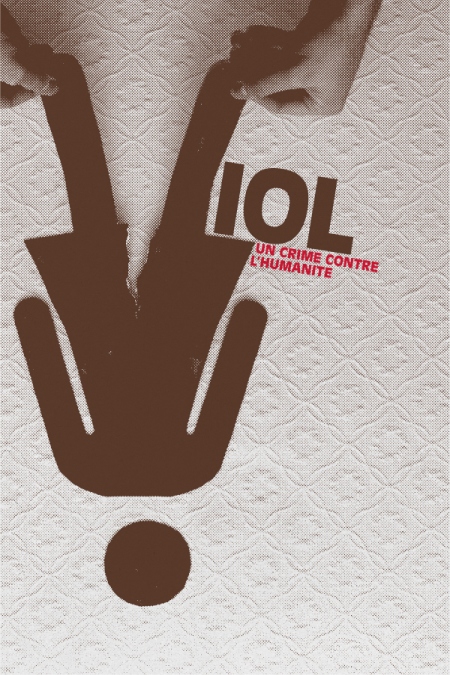
Rape is a weapon of war. Such is the refrain of practically all contemporary academic research, political advocacy and media reporting on wartime sexual violence. Once considered firmly outside the remit of foreign policy, rape is today labelled as a ‘tactic of war’ by US Secretaries of State who pledge to eradicate it and acknowledged as a war crime and constituent act of genocide at the highest levels of international law and global governance, a development which for some amounts to the ‘international criminalization of rape’. This idea of rape as a weapon of war has a distinctly feminist heritage. Opposed to the historical placement of gendered violence within the hidden realm of the private, feminist scholarship was the first to draw out the connections between sexual violence and the history of war, just as feminists fought to make rape in times of nominal peace a matter for public concern. Feminist academics have, then, pioneered a view of sexual violence as a form of social power characterised by the operations and dynamics of gender. Sexual violence under feminist inquiry is thus politicised, and forced into the public sphere.

But the consensus that rape is a weapon of war obscures important, and frequently unacknowledged, differences in our ways of understanding and explaining it. Continue reading

Real Men Don’t Rape: A Postscript

Apropos our earlier look at the rhetoric of anti-rape advocacy, Sarah again pointed me in an interesting direction. This time to Vancouver, where a familiar campaign was launched last year. Echoing a similar phraseology (We Are Man; My Strength Is Not For Hurting; Real Men Know The Difference), this one says: Don’t Be That Guy. As is the vogue, the focus is principally on intoxication, nights out and not taking advantage, accompanied by cod-parental instruction: Just because you help her home, doesn’t mean you get to help yourself; and Just because she isn’t saying no doesn’t mean she’s saying yes; and Just because she’s drinking doesn’t mean she wants sex.

What’s interesting is that this exercise in ‘behavioural marketing’ is now seen as a success, and being given significant credit for an apparent 10% drop in rape rates since 2010. To wit:

The reversal in the trend related to sexual assaults reflected the impact of the new education program, better training for police officers and more effective investigation and enforcement, [Deputy Chief LePard] said.

The exact causal balance here is unclear, and there are no firmer details on this gendered accounting for us to work with. There still seem to be some good reasons for scepticism, but if anyone does know of more comprehensive studies on the impact of men-focused campaigns, do share. Particularly interested to hear of any research into the effects of similar behavioural marketing as part of mass anti-rape efforts in the midst of militarised-humanitarian intervention, whether in Congo or elsewhere.

Atrocity Porn, the Resource Curse and Badvocacy in ‘Unwatchable’ (2011)

Lest it need saying, *trigger warning*.


Unwatchable lasts just over 6 minutes, but is intended to linger far longer. A project of Save The Congo, it was apparently turned down by larger charities on the grounds that it was too extreme. Deploying liberal doses of slo-mo and orchestral overture, it shows an armed assault on a whiter-than-white (and blonder-than-blonde) family somewhere in rural England. The teenage daughter is gang-raped on the kitchen table while her father is forced to watch, and her parents are eventually mutilated and killed on their front lawn while the soldiers laugh and film them on mobile phones. At one point we see a soldier cowering to avoid the scenes wrought by his comrades. The youngest daughter is killed trying to escape. In other words, a BBFC 18-rated piece of atrocity porn doubling as a viral advocacy campaign.

A small clickable box sits screen top-right throughout. It reads: ‘Make It Stop’. The tagline: ‘Warning: this film contains sexualised violence you and your mobile phone manufacturer may find disturbing’. The pay off being that this is really about the DRC, but that it will take this happening to white people for you to notice. Yes, this is another campaign about the resource curse and another entry in the catalogue of rape atrocity ratcheting, now with the obligatory twitter hashtag (#bloodminerals) and a petition demanding: a) that EU companies be forced into transparent supply chains for coltan and the like; and b) that ‘swift and severe’ action be taken against any party responsible for violence.

Kate at Wronging Rights picks up on the incoherence of Save the Congo’s accompanying claims:

W…T…F…? Rape is cheaper and much more effective than guns or bullets??? No.  Rape is not a “cheap” coercive strategy.  It’s time-consuming and it exposes the perpetrators to injury and potential STD infection. Armed groups absolutely use it anyway, but not because it’s cheaper than bullets.

And, [i]f armed groups were to raid a village and force the population to leave by shooting at them, NGOs could be alerted and the UN would have to react??  This is surely news to the scores of NGOs, both local and international, who have worked tirelessly to document and publicize the use of rape as a weapon of war throughout the last decade and a half of conflict in the region.

Look, I realize that grassroots activism often plays a fundamental role in political change, and has been particularly important to the history of the human rights movement, but seriously, this “the news made me sad / I can haz NGO?” nonsense has got to stop.  Time to invoke Amanda’s “Love Actually Test” on a wider scale, I think.

Bizarre and untenable as such ideas may be (say what?), the key points of Save the Congo’s analysis are ones now commonly repeated as part of the general ‘weapon of war’ narrative. Continue reading

Understanding Peacekeeper Sexual Violence

Why do soldiers rape? When footage of peacekeepers from MINUSTAH, the UN mission in Haiti, gang-raping an 18-year old boy surfaced earlier this month, that question resurfaced with it. Official declarations have predictably stressed how unfortunate it is that the actions of ‘a few’ should taint the efforts of ‘the many’, although 108 Sri Lankan peacekeepers were expelled from Haiti for sexual exploitation in 2007, and another Uruguayan soldier was recently discharged for sexual relations with a Haitian minor. Certainly, patterns of similar abuse are not restricted to the Haitian mission. One of the more disturbing points in my brief fieldwork in the Democratic Republic of Congo was when an international human rights official told me, with an almost confessional seriousness, that they had feared more for their sexual integrity while travelling with UN peacekeepers than when interviewing Congolese soldiers.

When discussing rapacious African warriors, it is common to interpret sexual violence as part of a drive to accumulate resources or as the reflection of communal hatred in war. Peacekeeper sexual violence constitutes something of a control case in such debates, since it is much harder to link rape to these dynamics. There is no genocidal project for which peacekeepers are the foot soldiers, and they cannot really be said to be frustrated by poor pay and conditions. Certainly there have been links between sexual exploitation by UN peacekeepers and a kind of trade, although in the opposite direction than usually posited. In the case of UN missions, it has been peacekeepers who have exchanged goods for sex with locals, rather than using rape as a means of accessing additional resources for themselves (although they have also been implicated in other criminal networks for financial gain). Peacekeeper practices of sexual abuse are thus closer to sex trafficking and prostitution on a continuum of gendered exploitation than to models of rape as a tool of terror to facilitate resource capture.

Continue reading

We Are The Genuine Hegemonic Masculine!: A Note On Anti-Rape Politics

Friend, former Liberty colleague and Bad Reputation scriber Sarah Jackson drew my attention to a new campaign by End Violence Against Women aimed at men. That was their video. Thus far 188 people (hopefully mainly men) ‘agree’ on Facebook (as the campaign asks them to) that ‘Enough Is Enough’. As Sarah notes, this is the latest in a series of campaigns addressing men directly. They seem a direct response to that most common of feminist points about rape, namely that victims/survivors are not to blame and the focus should not be on them for what they wear, what they drink or how they express themselves but on the men who rape.

Obviously, consciousness-raising for men is necessary in all kinds of ways, and will be for at least as long as supposedly intelligent discussions continue to be dominated by pernicious cop-outs and questionable analysis. Any funding and attention to rape prevention is to be encouraged and supported. Let’s take that as read. But these campaigns are intended to be tools for advancing rape awareness and anti-rape politics, which makes it worth asking what kinds of awareness and politics they promote. How is it that they seek to recast ideas of appropriate manliness?

Continue reading

Race, Gender and Nation in ‘Game Of Thrones’ (2011)

Mostly garlanded by images poached from Winter Is Coming, Bitches. Also, *spoiler alert*. And now subject to discussion in a critical post by Charli Carpenter over at Duck Of Minerva.


At first sight, Game Of Thrones offers something rather different to the standard fantasy fare. Where Lord Of The Rings and its ilk deal in arch dialogue and grand quests, it provides a more gritty and twisted landscape, peopled with dwarves, bastards, spoilt brats, noblewomen who still breast-feed their near-pubescent sons, eunuchs, exiled criminals and incestuous twins. In one conversation, Baelish and Varys even discuss a Lord who enjoys sex with beautiful cadavers (fresh ones only). A fantasy not only of palaces and mystical objects, but also of the gutter.

There is a near-scandalous thrill to this aesthetic realism, especially when measured alongside the allegoral formality of The Chronicles Of Narnia or the cinematic marathons derived from Tolkien’s high Toryism. Where those source materials and corporate cinema required that sexuality be wrapped in chaste folds and circumvented as the higher union of pure love, Game Of Thrones can indulge lust, rutting and the explicit mention of rape. There’s even talk of homosexuality (although not for any of the linchpin characters with whom we are expected to identify). Bared breasts are the order of the day. Childhood tales filtered by HBO.

But this apparent radicality doesn’t go very deep, and in significant ways covers for a narrative saturated with race-thought and misogyny. Continue reading

‘Like A Machete’: Is Viagra A Weapon Of War Rape In Libya?

My friend and colleague Mark Kersten has been drawing my attention over the last weeks to a spate of stories about Libya in which it is claimed Gaddafi has been distributing Viagra as an inducement to sexual violence against ‘enemy’ civilian populations. Colum Lynch reported in late April that Ambassador Susan Rice had cited the use of Viagra and evidence of sexual violence during a meeting of the UN Security Council (although this itself is at least third hand – Lynch seems to have picked up the details from Reuters who were passed the information by a UN diplomat who was in the room). The story seems to have originated, or first surfaced, at The Daily Mail, which claimed “numerous reports” of Viagra use.

The testimony of Suleiman Refadi, an Ajdabiya surgeon, in this Al Jazeera piece is the closest thing to a direct claim that Viagra has been distributed to troops. But, as Lynch points out, Human Rights Watch followed up his allegations and say that Refadi had “no direct evidence”, which I assume means either that he himself hadn’t seen the Viagra and condoms, or that some had been found, but not in any pattern that would associate them with a strategy of war rape. Human Rights Watch have a number of reports and commentaries addressing rape in Libya, but do not seem to have found the Viagra claims credible enough to include. Now the International Criminal Court is investigating. Luis Moreno-Ocampo intimates that he has solid evidence for the claims and declares: “It’s like a machete…It’s new. Viagra is a tool of massive rape.”

That kind of blanket statement makes me suspicious. Reports are so far conflating (or not sufficiently distinguishing) two different claims: 1) that government forces are engaged in rape in Libya; and 2) that Viagra (and sometimes condoms) are handed out as an incentive or aid for that. Claim 1 is entirely plausible and there is already good evidence for it in the case of Libya. Elisabeth Jean Wood has done some important early work on the question of variation in wartime sexual violence and her early conclusions are that there are some contexts in which rape doesn’t occur in war. But the number of such cases is very small. Rape in war is overwhelmingly the norm. This should lead us to a number of questions about type, degree, form, causes and the exact sense in which we mean ‘tool’, ‘weapon’ and ‘strategy’. But reports of rape by soldiers are not in themselves at all surprising.

What is new is the second claim. Continue reading

How Much Rape Is There In The Congo (DRC)? And How Does It Matter?

Dominique Strauss-Kahn has been accused of a sex crime. After a week of free gossip about sordid secrets concealed by superinjunctions, and in the wake of the Assange controversy, the combination of a high profile financier-cum-left-winger with the whiff of sexualised domination has proved sufficient to displace attention from the Democratic Republic of Congo, which had earned a spike in coverage from a new report on the extent of sexual violence there.

The numbers are appropriately horrifying. Although I can’t access the full American Journal of Public Health paper from my usual entry points (itself frustrating: why lock up your vital statistical research behind a paywall while the media is reporting on it far and wide?), the abstract suggests the following: based on a representative household survey of 3,345 female informants from a 2007 survey added to some population estimates, it is suggested that some 1.7-1.8 million women in Congo have been raped during their lifetimes, and that between 407,000-434,000 (to the nearest thousand) of those have been raped in the last 12 months. A total of 3.1-3.4 million women are estimated to have been victims/survivors of ‘intimate partner sexual violence’, which I assume means not raped by strangers or officially ‘enemy’ soldiers.

Jason Stearns provides some useful context to argue that these numbers are not surprising given previous surveys, if somewhat more solid in methodological terms. The UN has been calling the DRC ‘the rape capital of the world’ for some time now, and there are a significant number of organisations working on these issues in situ. Indeed, the sheer scale of attention to rape in the DRC is spoken of as a logistical problem among those working there. While conducting fieldwork in Goma last year, I spoke to a UNOCHA representative who put their figures (which were not comprehensive) for agencies working on sexual violence in Eastern DRC at 80 international NGOs and over 200 local NGOs, as well as multiple elements of the UN system itself. Properly coordinating work between such a mass of groups (with wildly varying levels of skill and funding) in situations of violence and funding uncertainty is as difficult as you might expect.

This gestures towards one of a number of complexities and problems in the analysis and politics of wartime sexual violence.

Continue reading

The Patriarchal Dividend At War

Thursday’s Masculinity/Violence Symposium was lovely, thanks for asking. Lots of people came, which was heartening, and they all had great stuff to say, which was exciting. It bodes well for the International Feminist Journal of Politics special issue (*hint*). Here’s more or less what I said on the day, incorporating a splash of revisions and a dollop of answers and critiques provided by the audience. The day itself deserves some kind of report of its own, and I hope to make some time for it, or perhaps just extract some highlights from the papers presented.


Being part of something potent and comprehensible amid chaos, witnessing death and destruction as a participant and testing yourself in the masculine ritual of war remain elemental to the formation of soldierly identity. To tour as a soldier is to become a male exemplar, to take the chance of looking upon horror from the inside, to attempt to neutralize its voyeuristic allure through becoming its agent…The performance of soldiering is plastic and infinitely variable, shifting through the cautious cadences of the defense phase to the aggressive, rolling bounds of the ‘advance to contact’, always to end in ‘the fight-through’. ‘Fighting-through’ is the end of the dance, the culmination point where the dancers become the dance, where the fighting body achieves a sensuous unity with grenades, bullets and the bayonet.

Shane Brighton, ‘The Embodiment of War: Reflections on the Tour of Duty’ (2004)

War is not simply a breakdown in a particular system, but a way of creating an alternative system of profit, power and even protection.

David Keen, The Economic Functions of Violence in Civil Wars (1998)

From prehistoric times to the present, I believe, rape has played a critical function. It is nothing more or less than a conscious process of intimidation by which all men keep all women in a state of fear.

Susan Brownmiller, Against Our Will: Men, Women & Rape (1975)
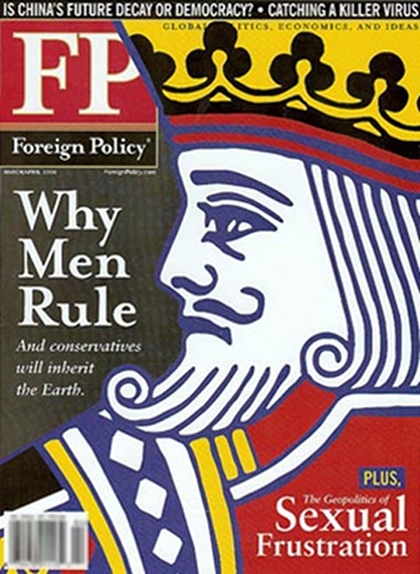
Conceptualising masculinity in terms of relations of hegemony and subordination and marginalisation and authorisation, Raewyn Connell proposed that men receive rewards as participants in male gender orders, and that this takes the form of status, command and material assets. This is the patriarchal dividend. Inequality on the scale observable in contemporary societies is, in Connell’s words, “hard to imagine without violence”, which is taken to have an important enforcement role both in terms of maintaining men’s power over women through acts like rape and in setting patterns among men. Extending this reasoning to the practice of war, it is plausible to see violence in general, and extreme acts like rape in particular, as an instrument of this enforcement, protecting or extending the patriarchal dividend. Soldiers in this sense become the frontline troops for the collective of men, just as domestic violence, street-level intimidation and rape fulfil the same functions outside of the war system.

Evidence from Chris Coulter’s work in Sierra Leone exemplifies how such a process may work. She reports that the majority of those abducted as ‘bush wives’ by the Rebel United Front (RUF) appear to have been raped. The creation of RUF rebel villages where commanders lived and the abducted were taken reflected the sociological structure of ‘peacetime’ arrangements: a pseudo-family structure with commanders at the head of a number of ‘bush wives’, subordinate males and occasionally elderly residents. The forms of labour assigned to women also followed the patriarchal imperatives of reproduction: fetching water and firewood, cleaning, and preparing food. Traditional roles like the ‘mamy queen’, who would look after young girls and prepare them for marriage, were also replicated within the camp structure. These arrangements were stable, to the extent that hierarchies among bush wives also manifested themselves, with the favoured wives of powerful commanders themselves taking on responsibilities for distributing arms and ammunition and holding power over other wives and children within camps.

In the context of masculinities, I take this kind of perspective to suggest that there are what we might call enforcer masculinities at work in war. This is to say that there are patterns of behaviour, representations and identities which, in the practice of violence, secure benefits for patriarchy as a system. A Debt Paid in Coin and Sweat.

Continue reading

Rethinking Masculinity & Violence: A Call for Papers

Rethinking Masculinity & Practices of Violence in Conflict Settings

Special Issue of International Feminist Journal of Politics, guest edited by Marsha Henry (Gender Institute, LSE) and Paul Kirby (International Relations Department, LSE)

Actually, it’s critical analysis of men, masculinities and practices of violence that we want. While planning the forthcoming symposium on masculinity and violence (there are still a handful of places available), we thought we might be able to turn the idea into a viable journal special issue. So we asked the International Feminist Journal of Politics (IFjP for ease) and they said yes. And lo! A call for papers (also available as a pdf). Please distribute widely.

Continue reading