Notes on Ex-Yu Justice, Part II

Following Part I, and in advance of Part III.


The court is political  

The smartass response goes something likes this: “Of course it’s political; what’s not political? Haven’t you read the ICTY’s website? It says clearly that the tribunal was established for explicitly political reasons, too, by the UNSC, which is political by definition.” But the smartass response is a rude interruption. The above assertive prefaces monologue, not dialogue. The monologue is a story about world politics as a dog-eat-dog contest in which the strong always devour the weak with a focus on the origins of the ICTY. “Of course an international judicial institution cannot be created on the basis of an UNSC resolution alone. Of course Chapter VII of the UN Charter does not specify the conditions under which war crimes tribunals can be set up. Of course the ICTY quickly discovered that it could not bother with the question of own legality. But when have great powers ever cared about law and institutions? Might makes right, right? The ICTY is based on the consent of states – big states, not our banana republics.”

This story varies in terms of breadth and depth, but its modal conclusion is that the tribunal cannot represent anything but “victor’s justice” and/or Western and specifically American oppression of those living on the periphery. As for the motive, the supposedly aggressive prosecution of Bosno-Serbo-Croat baddies practiced by the ICTY is a function of the desire for retribution for every case of ex-Yu insolence in recent history, starting with the Trieste crisis of 1945. As discipline and punishment at once, trials are also meant to serve as a warning to the rest of the peripheral and semi-peripheral world. This type of theorizing could be described as a cross between pop-realism and pop-Marxism with a whiff of the crudest forms of pop-anti-Americanism and some other, far less respectable prejudices. While it is not exactly a closed loop, for every new newstory indexing Western and specifically American double standards and double visions in international law, the theory gains strength. Who in the former Yugoslavia doesn’t have an informed opinion on the “Hague Invasion Act”?
imgfrontisThe two accounts of the origins of the ICTY that I have on my shelf make something of an opposite case. Pierre Hazan’s book, subtitled ‘The True Story Behind the ICTY’, suggests that the weak (international justice activists) outfoxed the strong (realist diplomats and state-centric lawyers) and, against all odds, managed to turn the tribunal into such a revolutionary achievement (more on this below). Hazan is no theorist of norms and transnational advocacy networks, but there are more than a few parallels with this literature. The second account is Rachel Kerr’s 2004 book, which begins and ends with the thorny issue of “politicization,” including the issue of “prosecutorial discretion” as its special subset. Kerr has the ICTY walking on a tightrope. Sidle up too closely to justice, and you alienate those who rule the world; let politics in, even to manipulate it for judicial ends, and you lose credibility. While infinitely more nuanced than Hazan’s, Kerr’s framework for analyzing politics (it, too, chimes with 1990s IR theory, namely the “bringing international law back in” literature) follows the same binary – let me personify it a little as a contest between “realists” versus “legalists” – and it reaches the same conclusion. And judging by both the quotidian operation of the court as well as its key decisions up to 2002-3, Kerr finds, “legalists” had the upper hand.

I am not sure what stock-taking exercises based on the realist vs. legalist framework look like today (again, this post is my attempt to reconnect with the literature I stopped following years ago), but what struck me in my conversations is how adamant my interlocutors were in rejecting even the most carefully drawn legalist claims. It’s simple, the typical response goes, the ICTY is subject to constant political pressures and it shouldn’t be surprising to see so much judicial malpractice. Lest one is keen to dismiss this as “typical” ex-communist (and transitionalist) disdain for the notion that law serves to ensure that valuable social goods are distributed in ways that protect equal respect for everyone, note that some of the most critical arguments about the “hopelessly political court” are drawn from the texts left behind by bona fide ICTY insiders like Antonio Cassese (he of  those great international law textbooks), Gabrielle Kirk McDonald, Louise Arbour, Graham Blewitt, Carla Del Ponte, Serge Brammerz, and Florence Hartmann (more below). Anyone can cherry-pick a few memorable lines from a few memoirs and journalistic accounts (Hartmann, if I recall correctly: “the ICTY was formed so that war criminals could negotiate on the level of their innocence”), but what I find interesting is that these types of arguments have gained more and more adherents over the years.
Continue reading

Gender Trouble, Racial Salvation and the Tragedy of Political Community in ‘Game Of Thrones’ (2012-2013)

A shamefully-delayed commentary on Game Of Thrones, Seasons the Second and Third, since the first one went so well. As before, *great clunking mega spoiler alert*. You have been forewarned.


Recall three justifications for an analysis of pop culture politics. First, for all their superficial escapism, cultural products represent political ideas and ideologies, and do so in ways that may matter more than what we receive through the news. They are full of desires and fantasies that refract and reflect (and to some extent are themselves) real politics. Second, you can criticise the thematics of the show without hating the show. In fact you can do it while loving the show (and finding the fact of that love interesting in itself). In other words, look, I really like Game of Thrones. Moreover, that as great as comparisons with the source text can be, a TV series is a different kind of beast and is entitled to judgement on its own merits. Third, objections that “it’s just a show” don’t wash. If you’re reading this it’s because you have some sense that there are ways of understanding and being embodied in even the lowest of cultural objects (paging Dr Adorno!). That doesn’t mean that the substance of the relationship between media and politics is simple or settled, but it’s there.

Let’s start where we left off last time. It was claimed in some quarters that the plot subverts – even refutes – certain standard typical ideas about the feminine, and critiques feudal social relations along the way. So, rather than being a “racist rape-culture Disneyland with Dragons”, the many strong, complicated, agentic female roles in fact set Game of Thrones as a critique of patriarchy. But only the most one-dimensional of sexisms regards women as utterly abject. The mere presence of intelligent, or emotionally-rounded, or sympathetic female characters is not enough (and that it might be taken as inherently ‘progressive’ probably tells us a lot about contemporary gender politics). No, the issue is how a cultural product deploys some common tropes of masculinity and femininity and, with appropriate caveats about not reading every plot twist as an allegory, how those celebrate or reinforce certain orderings of gender. So a narrative which makes the family the primary unit, and which does so in a conventionally heteronormative register (twincest notwithstanding), is selling a particular idea of gender (and of community and nation and legitimate violence and…).

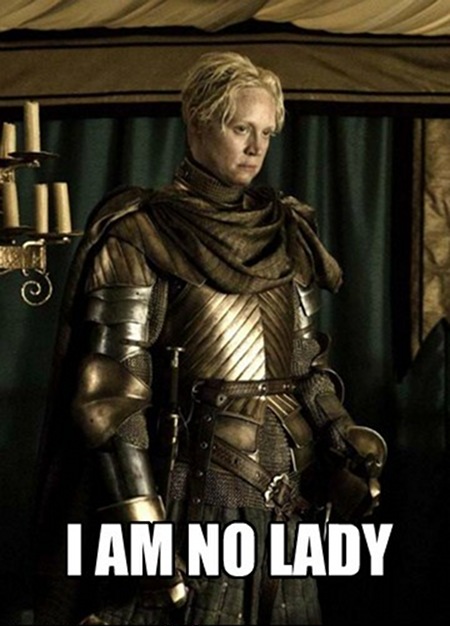
In Seasons 2 and 3, a few female figures threaten to upset the patriarchal framework. As before, there is Arya, astute, principled, fierce, and eager to promise death to her enemies. Brienne of Tarth, giant, loyal, lethal, dismissive. Ygritte, rugged, capable, sexually dominant, a hardened killer with no respect for rank (“If you ripped my silk dress, I’d blacken your eye”).[1] And yet in each case the threat is contained and wrapped in some familiar gender constraints.

Continue reading

Ten Reasons Not To Write Your Master’s Dissertation on Sexual Violence in War

Marsha Henry

A guest post, following on from some previous reflections on gender and teaching and the politics of pedagogy, from Marsha Henry. Marsha is Lecturer in Gender, Development and Globalisation at the LSE Gender Institute, where she teaches, amongst other things, a course on gender and militarism. Her most recent research is into sexual exploitation in peacekeeping missions and peacekeeper labour hierarchies, and she is also, with Paul Higate, author of Insecure Spaces: Peacekeeping, Power and Performance in Haiti, Kosovo and Liberia (Zed, 2009). With Pablo, she recently co-edited a special issue of International Feminist Journal of Politics on ‘Rethinking Masculinity and Practices of Violence’. This post is based on a presentation given in San Francisco at the International Studies Association in April 2013.


It’s the first day of Lent term and the students are nervously gathered in a small stuffy classroom.  When I walk in and head towards the front of the room, the group falls silent. I introduce myself and we start a round of introductions and I ask students to speak briefly about their interest in the course. The first student tells me, and the class, that she’s in IR (International Relations), and is keen to take the course because she’s interested in studying sexual violence in war.  Another student turns to her, incredulous because she too is interested in that exact subject, and that furthermore she has worked for 3 months in the Democratic Republic of Congo (DRC) and has ‘seen a lot’. A few more students echo similar interests and I’m trying hard not to stereotype these students. But it’s difficult. A mythical figure is beginning to crystallise in my head and I can’t stop it. This figure is young, female and possibly middle-class, sometimes Scandinavian. She’s studying IR, Human Rights or Gender Studies. A few male students also indicate an interest. Some indicate interest in other topics, but there is a numbers problem from the outset. I feel uncomfortable as this is the third year that I’ve taught this course, each time allotting only one lecture week to the subject of sexual violence in war, and subsuming it under the larger heading of ‘gender, sexualised violence and work in militarised contexts’. Each year students have asked for more time to be devoted to the subject, for the lecture week to be moved up, and for their to be less focus on diversity in the armed forces. When students come to me during office hours to discuss the scope of their dissertations on the subject I fidget. After a few conversations with colleagues, I decide I need to start compiling a list – of compelling reasons why students should not write on the subject of sexual violence in war. But what would I do with this list? Can it be shared? And what of my responsibility not to teach on the subject?

10: Writing About ‘It’ Narrows The Political Focus

As a committed feminist, I’m all for drawing significant attention to the ways in which women experience conflict in distinctive ways. But the concentration of interest on sexual violence in wartime often leads to a neglect of the ways in which women experience violence (labelled as sexual or not) in peacetime. This noticeable singular focus on the topic also narrows the possibility of dislodging categories and subject positions. It is often assumed in class conversations, essays and subsequently dissertations that women are the victims and men are the perpetrators of this form of violence. This assumption appears in written work in a way that both masks the possibility of other positionings within the perpetrator-victim continuum, as well as the structurally embedded way in which sexualised violence occurs and is experienced by individuals and communities. This failure to explain the pervasiveness of sexualised violence against women tends to reinforce the binaries and provides a rather fixed aperture for analysing sexual violence in war and its consequences.

9: Researching The Topic Inspires Voyeurism

I’m squirming in my seat as one of the students smiles widely while she explains her interest in working on the topic of sexual violence as a weapon of war. She could be nervous explaining herself in front of her peers and her professor. She could be feeling awkward about the subject matter. She could be conforming to gendered expectations of women in the classroom where female students who express themselves confidently or through feminist rhetoric are categorised as aggressive. If feminist critique is pleasurable, how do we ‘do’ our analysis of sexual violence in wartime, paying attention to experience, trauma, and moral responsibility? There is a tendency, in making visible the ‘horror’ of it all, that students sensationalise the subject by focussing on the minutiae, the details and the thick descriptions. Honing in on the bodily experience of rape, for example, can remove rape in war from the wider social, cultural, economic and political context in which it always takes place. It can be an abstraction of the total experience. The affective impact is that readers of these dissertations distance themselves from subjects in the studies. Those who are victims and/or survivors and end up consciously or unconsciously performing what Donna Haraway referred to as a god-trick.

Continue reading

What We Talked About At ISA: ‘Afghan Masculinities’: The Construction of the Taliban as Sexually Deviant

Taliban 1

The paper I presented earlier this month at the International Studies Annual Conference held in San Francisco looks at how Afghan masculinities have been represented in and by Anglo-American media. The words ‘Afghan man’ conjure up a certain image, a pathologised figure that is now associated with most males in Afghanistan. The paper analyses this figure of the ‘militant’ Afghan man, most strikingly captured by descriptions of the Taliban and juxtaposes it with the less popular, though still familiar trope of the ‘damned’ Afghan man, embodied in the figure of the Afghan President, Hamid Karzai. But here I focus on a particular construction of the Taliban as sexually deviant, (improperly) homosexual men.

Jasbir Puar, in her trenchant appraisal of today’s war machine and the politics of knowledge that sustains it argues that the depictions of masculinity most widely disseminated in the post 9/11 world are terrorist masculinities:

failed and perverse, these emasculated bodies always have femininity as their reference point of malfunction and are metonymically tied to all sorts of pathologies of the mind and the body – homosexuality, incest, pedophilia, madness and disease.

Whilst representations of al-­Qaeda as pathologically perverse have permeated the Western mainstream, the Taliban because of its historically low international profile has escaped that level of media frenzy. The attention it does get, however, is almost always mired in Orientalist fantasies of Eastern men as pathologically disturbed sodomisers. The ‘high jack this fags’ scrawled on a bomb attached to the wing of an attack plane bound for Afghanistan by a USS Enterprise Navy officer, while in no way ubiquitous, is certainly an edifying example of our image of the Taliban as perverse and not quite “normal”.

This perversity of the Taliban has been largely attributed to their madrassa upbringing, an all-­male environment and their concomitant attitude towards women. Continue reading

UNESCO and Research Agendas Concerning Race

Antigua was settled by human rubbish from Europe, who used enslaved but noble and exalted human beings from Africa (all masters of every stripe are rubbish, and all slaves of every stripe are noble and exalted; there can be no question about this) to satisfy their desire for wealth and power, to feel better about their own miserable existence, so that they could be less lonely and empty – a European disease … Of course, the whole thing is, once you cease to be a master … you are no longer human rubbish, you are just a human being, and all the things that adds up to. So, too, with the slaves. Once they are no longer slaves, once they are free, they are no longer noble and exalted; they are just human beings.

Jamaica Kincaid suggests that abolition and emancipation are bitter-sweet affairs. For the enslaved, freedom furnishes them with a human being that nevertheless awaits a meaningful personhood. Out of slavery the master fares better, redeeming his human being from being human rubbish. Kincaid’s suggestion is insightful. After all, abolition had a vibrant nineteenth century afterlife. White abolitionists enthusiastically allowed their humanitarianism to colonize Africa so that God’s chosen could sanctify themselves through the act of saving the natives from their selves. Meanwhile, William Wilberforce et al, convinced that slaves were human biologically yet lacked the social and cultural competencies of humanity, looked on fascinated at the experiment of self-government in Haiti. From this point onwards all future failings would be attributed to the epidermis, not the colonial relation. Presently, argues Kincaid, the landscapes of the old Caribbean plantations have been consumed by a white tourist gaze that has once again disavowed the living legacies of enslavement and colonization and denied meaningful personhood to its peoples. What remains of these places and peoples is only an “unreal”, picture-book beauty.

What are our narratives of race and racism? Whom do we follow in order to tell the tale: the masters or the enslaved – the humanitarians or the “sufferers”? Which tale confesses the episteme –the scientifically valid study – of race?

The 1950-51 UNESCO “statements on race” answered such questions in favour of the master’s narrative. Announcing a new era in human understanding after the terrors of war and irrationalities of genocide, the main purpose of the statements was to separate the “biological fact” of race from its “social myth”. The biological fact in and of itself was rendered harmless, pertaining only to “physical and physiological” classifications. Thus genetic inheritance, it was affirmed, could have no bearing on mental or cultural competencies and capabilities. Conversely, the social myth of race was considered extremely dangerous in that it rendered cultural difference as biological thus sundering the “unity of mankind”. This myth had to be dispensed with; hence ethnicity – as a social/cultural classifier – was proposed as a preferable classificatory regime to that of race. Ethnicity, after all, had not been tainted with supremacist hierarchy and could signify instead non-hierarchical diversity.

Although the scientists who collectively produced the statements on race were by no means all white, the majority hailed from Western academies. And the particular kind of anti-racism evident in UNESCO’s statements had already been formulated by famous Western anthropologists such as Franz Boas. They had sought to undermine scientific racism on its own grounds, i.e. by proving the un-scientific nature of the social myth of race. And this endeavour required debunking racialized identity – that which confessed their legal and natural inequality – as myth not fact. However, as part of this manoeuvre these identities had to be subsumed under a harmless social science of ethnic categorization. While this move redeemed white identities, it de-politicized the meanings of the sufferers’ cultural complexes and complexions, extricated them from inherited hierarchies of power, and thus segregated them from the inherited and living struggles against (post-/neo-)masters. In short, as Alana Lentin puts it, the effect of the statements was to separate race from politics.

Continue reading

Swami Vivekananda: An Outsider’s Ramblings

swamiEarlier this month I visited New Delhi’s Ramakrishna Ashram for the first time.  What drew me there was the exhibition on the life of Swami Vivekananda (a.k.a., Narendra Dutta, 1863-1902). The exhibition, inaugurated a few months ago by the Dalai Lama, celebrates the 150th birth anniversary of the saffron-clad monk who is India’s Great Man -“second only to Ghandi,” as I was told more than once.  Compared to most other historical exhibitions I have seen in this country, “Vivekananda: A Prophet of Harmony” is tip-top, as measured by functioning A/C and lighting fixtures, savvy graphics panels, contemporary wallpaper posters, new dioramas, and an interactive exit quiz intended for schoolchildren.  Plus it’s relatively crowded. Over the course of an hour or two I spent there on a Saturday morning I counted a couple of university students (probably taking a short study break from the nearby library), a few senior citizens, half-dozen sadhus (among them, two Europeans and an Indonesian), and one large middle class family visiting the capital city from Tamil Nadu.  “You must see the film,” said the moustached paterfamilias to me.

His reference was to “9/11: The Awakening,” a 15-minute computer-animated piece on a speech Vivekananda gave on 11 September 1893 at the World Parliament of Religion in Chicago, which was held in conjunction with the World’s Columbian Exposition.  Starting with a scene straight out of The Titanic, the film depicts the monk’s transoceanic crossing, and how he bowed to Saraswati, the goddess of learning, before taking the podium.  “Sisters and brothers of America,” Vivekanada’s opening line, is known to every educated Indian person, but “the speech” in the short film appears to take from multiple speeches the monk gave in Chicago, including the second (“Why We Disagree,” September 15) and the third (“Paper on Hinduism,” September 19) are the richest.  By all accounts, Vivekananda’s discourses on religious tolerance and unity, mutual recognition, India, and Hinduism were a big hit (it suffices to consider the tumultuous applause he received multiple times from the audience of 4,000 – or 7,000 if you include the overflow halls of the Art Institute).  Chicago treasures these memories today.  A stretch of the Michigan Ave (at Adams St) is now the honorary Swami Vivekananda Way and a statue of the saint, taller than the one at Delhi’s RK Ashram metro station, adorns Chicagoland’s premier Hindu temple in Lemont.

According to the standard historical narrative, Vivekananda was the first Indian/Hindu thinker to introduce Hinduism and the Indian/Hindu understandings of tolerance, peace, and justice to Anglo-America and the European continent – ideas that would “conquer the world,” as he would put it (“It is my ambition to conquer the world by Hindu thought – to see Hindus from the North Pole to the South Pole”, 1897). The Chicago speeches and other overseas interventions carried by the swamiji established a number of inter-civilization bridges, both big (the global spread of Vedanta philosophy and yoga) and small (Nikola Tesla’s vegetarianism, celibacy, and a possible re-consideration of the mind-body problem). Vivekananda’s speeches and writings, the narrative goes, “awoke” India from its slumber (“For the next fifty years let Mother India be your God. Serve your country as you would serve God, and India will awaken”, 1897).  His “modernized” version of the Indian/Hindu thought inspired “social reform” at home, while helping raise awareness about India’s anti-colonial struggle abroad.  No less important, he founded the Ramakrishna Mission (now the main publisher of his writings) and the Vedanta Societies [1], which continue to spread his teachings to this day.

Continue reading

Love, Sex, Money and Meaning

UPDATE (8 September 2014): Megan originally wrote this as a guest post, but is now with us more permanently.

This post is based on stories about sex, love, tourism and identity relayed in Cuba in 2010, and is (loosely) based on, and at times excerpted from, an article of the same name just published in Alternatives: Global, Local, Political. All names, many locations, and some additional identifying details have been changed in accordance with the interviewees’ wishes.


Havana's Malecón, or seawall, close to Calle 23 and not far from where I interviewed Yakelín.

Havana’s Malecón, or seawall, close to Calle 23 and not far from where I interviewed Yakelín.

Yakelín comes to the Hotel St. John nearly every day around two o’clock in the afternoon. Most days, Jean-Claude is already there, ensconced on the terrace with a glass of dark rum, chatting amiably with the staff, or pensively smoking a cigar as he waits. When she arrives, she kisses him discreetly before settling down for a drink on the terrace. The hotel is rather unassuming, but it sits just steps from the busy east end of Calle 23, known as La Rampa, and blocks from the historic University of Havana, and as such Hotel St. John has become a haven for tourists and foreign students who come here for strong coffee and cold beer. After an hour or so, Yakelín and Jean-Claude walk away together, hand in hand.

This same routine has been going on for more than two years now, since the day that Yakelín first met Jean-Claude, walking along Calle 23 with a friend. She was 21 years old, living in a small flat with her mother, father, brother, two sisters, aunt, uncle, two cousins and her grandmother. After spending her teenage years at a boarding school in the countryside, she had elected not to continue to university and was back in Havana with her family. Like so many others, her family worked hard to make ends meet, and Yakelín was looking for ways to lighten the burden. Not long after they met, Jean-Claude made her a proposition.

He suggested that, since I was en la lucha [struggling to get by], you know, he suggested that I no longer be in the streets [looking for leads on work, food, clothes] and that he was going to help me resolver mis problemas [solve my problems]. And since then, he’s my boyfriend.

Jean-Claude is married, but Yakelín says that in spite of that they have a “formal relationship” – she lives in a comfortable casa particular, for which he pays, and they spend every afternoon together. As a retiree, Claude lives more or less permanently in Cuba, leaving only to attend to his affairs in France and returning laden with gifts including clothing, jewellery, and even a television. He provides her with spending money and helps to support her family as well. She says she loves the independence he has given her, even though she readily acknowledges the implied contradiction – she has found her freedom in total dependence on him. Yakelín has no official work at present, because she feels that the meagre salary is simply not worth the trouble.

Continue reading

Something in the Way of Things

Hip-Hop Head

When you look at it head on, from just the right distance, the world seems solid. The order of things presents itself as impenetrable. Yet a change in the angle of vision reveals fissures, fusions, flukes – a world of pieces shifting ceaselessly. One vision of the world promises stability and order, the other freedom and creativity. Which of these is more attractive depends on where one finds oneself: pressed upon by the weight of the world, or abraded by the shifting fragments.

Which of these worlds is real? This is the metaphysician’s diagnosis: “If you want to calm your nerves, then find the arrangement of the world as it really is.” But the physician can only prescribe convalescence or catharsis: “Accept the reality of the given world or realise the subliminal essence of the immanent world.” This regiment exhausts us rather than making us well. It lacks the vigour of creative activity. We don’t need to know; we need to make.

William Connolly suggests that the political condition of late-modernity is to experience this impasse without means to bridge the gap.

In our times we can neither endure our thoughts nor the task of rethinking them. We think restlessly within familiar frameworks to avoid thought about how our thinking is framed. Perhaps that is the ground of modern thoughtlessness.

Creativity requires us to leave the metaphysician behind – the making of the world requires dreams, contradictions, promises, lies, empty space, messy abundance. Turning away from knowing does not force us to apologise for the durable architecture of the world – this is the vice of Richard Rorty’s ironic liberalism. He calls on poets of the self to write their lines on the walls of the world as if they were solid, so not to upset things too much – a consolation of the comfortable, irony in the face of human disaster.

The condition of the world impels those caught between the monuments of the given to return to the fissures, fusions and flukes, in hopes of exercising our creativity on the social architecture. We need world makers. We need lovers.

It is with these thoughts in mind that I return to The Roots. Phrenology, the follow-up to Things Fall Apart, explores the creative challenge the band faced after producing an album that reconstructed hip-hop – trying to avoid becoming a parody of themselves or reducing their message to braying didactic verses. The difficulty of achieving real creativity is political as well as artistic and it demands not knowledge but love, desire and risk; it is the Roots’ exploration of how to make worlds anew that offers up lessons of wider import.

Continue reading

A Global Story of Psalms 68:31 | Against the Provinciality of the Twenty Years Crisis

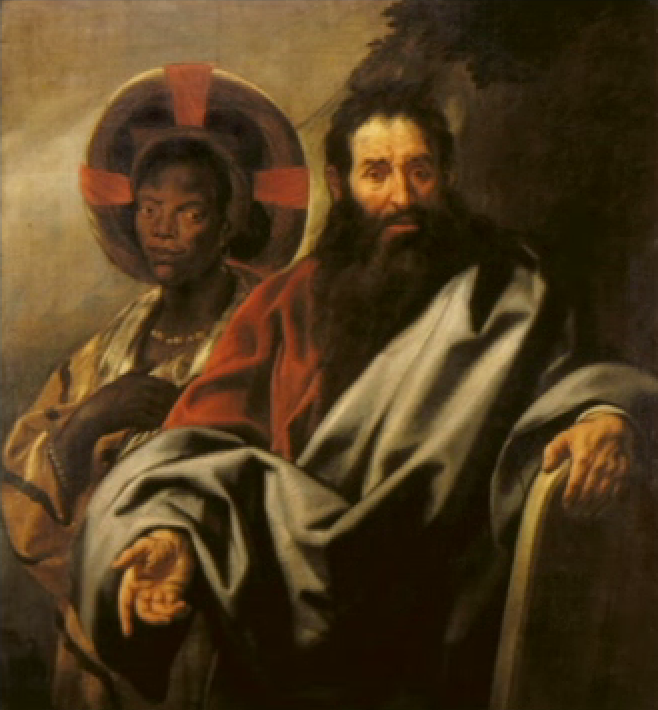
‘Moses and his Ethiopian Wife’, by Jacob Jordaens, c. 1650

Princes shall come out of Egypt; Ethiopia shall soon stretch out her hands unto God

Psalms 68:31 is part of the global story of colonialism, enslavement, the “civilizing mission” and self-liberation. It is a story that is central to the Twenty Years Crisis that constitutes the originating point of International Relations as a self-proclaimed discipline. But it is a story that is largely absent when this originating point is commemorated.

We can pick up the story of Psalms 68:31 with the King James version of the Bible, translated into the vernacular in 1611. At this time it is practice to denote things African through the name Aethiops. More than just a polity south of Egypt, Ethiopia also encompasses Black Africa as a whole. By 1773, catechisms are being developed around Psalm 68:31 that directly address African enslavement in the Americas and the prospects of abolition, emancipation and liberation.

There are two key interpretations. One, cultivated by white abolitionists and subsequently used by Europeans who embark upon an African “civilizing mission”, holds that it is they – white/Europeans – who are God’s children. Hence, it is white/Europeans to whom Ethiopia is stretching for her hands for deliverance from slavery and primitivism. The other, cultivated by the enslaved and their downpressed descendants, holds that the Bible is their story –  the “half never told“. Africans will therefore righteously deliver their own selves from bondage.

The first catechism appears as early as 1773 in the letters of Anthony Benezet, a French-born Quaker living in North America. Scouring through the Bible to find  divine authority for the abolitionist cause, Benezet notes: “beloved friend, the passage we are seeking for is Psalms 68, 31.”; and “the people called Ethiopians are definitely African negros due to Jeremiah 13,23 – “can the Ethiopian change his skin?”. Abolitionists – especially British ones – are most concerned that the enslavement practised by white and European “Christians” would denigrate their status as the most civilized amongst humanity. By Benezet’s time, it is already a belief amongst the intellectual caste of  white/Europeans that they are the people chosen by God to express his Providence, through commerce and colonisation.

Continue reading