Bodies of Violence: Theorizing Embodied Subjects in International Relations

photo copyThis opening post by Lauren Wilcox kicks off the symposium dedicated to her new book Bodies of Violence: Theorizing Embodied Subjects in International Relations (Oxford University Press, 2015) with a series of follow-up posts coming over the next few days. Lauren is University Lecturer in Gender Studies and Deputy Director of the Centre for Gender Studies at the University of Cambridge. She was previously a Scarf postdoc in the Department of Political Science at Johns Hopkins University and did her PhD in Political Science at the University of Minnesota.


Bodies of Violence

The impetus for “Bodies of Violence” (which is based on my PhD dissertation) is that there is, or was, no theory of the body in International Relations, or general study of the role of bodies on IR; and this is a problem for the study of political violence as well as for the political implications that a lack of attention to bodies has in the field. The work begins by noting a deep irony in war/security studies, that while war is actually inflicted on bodies, or bodies are explicitly protected, there is a lack of attention to the embodied dynamics of war and security. This seeming ‘disembodiment’ of theory stands in stark contrast to the political dynamics of violence, especially in the particular practices or modes of violence that I discuss in this book.  Drones make it possible to both watch people and bomb them, often killing dozens of civilians as well, while the pilots operating these machines remain thousands of miles away, immune from bodily harm. Suicide bombers seek certain death by turning their bodies into weapons that seem to attack at random. Images of tortured bodies from Guantánamo Bay and Abu Ghraib provoke shock and outrage, and prisoners on hunger-strikes to protest their treatment are force-fed. Meanwhile, the management of violence increasingly entails scrutiny of persons as bodies through biometric technologies and ‘body scanners’.

I: Argument and Main Contributions

While bodies and embodiment are an ‘absent presence’ in studies of war and security, feminist theory has been at the forefront of considering the relationship between subjects, bodies and violence in recent decades. In this work I draw on work in feminist theory that offers a challenge to the policing of boundaries between human bodies and the broader political context. It is here that feminist theory is most incisive, for feminists have struggled with the problems of how to theorize embodiment as a necessary but not exclusive aspect of subjectivity in their own terms, terms which can help us to ‘think the body’ in IR in such a way as to provide new purchase on central concepts such as power, security, vulnerability and violence. For example, violence can be re-thought as something that is productive and not only destructive; vulnerability is not just a condition to be overcome but also a constitutive feature of the embodied subject. I focus on Judith Butler’s work, in conversation with other theorists such as Julia Kristeva, Donna Haraway and Katherine Hayles. I argue, as have others, that there is continuity between her works on “Gender” from Gender Trouble and Bodies that Matter and her more explicitly ethical and political works such as Precarious Life and Frames of War. A central feature of Butler’s concept of bodily precarity is that our bodies are formed in and through violence. The implication of feminist theory’s emphasis on the co-constitution of bodies and political structures is to give IR a new starting point, as theorists can no longer begin with political communities populated by actors whose bodies are undifferentiated and can be transcended.

Continue reading

Ethical Encounters – Encountering Ethics

kimhutchings

Our final post reflecting on the forum itself is from Professor Kimberly Hutchings, she is Professor of Politics and International Relations at Queen Mary University of London. She is a leading scholar in international relations theory. She has extensively researched and published on international political theory in respect to Kantian and Hegelian philosophy, international and global ethics, Feminist theory and philosophy, and politics and violence. Her work is influenced by the scholarly tradition that produced the Frankfurt School and Critical Theory. Previous posts can be found here: Myriam, Joe, Elke, Jillian and Diego.  *Note: all images provided by Joe – Kim bears no responsibility for the cheap visual gags!


Ethics as a term encompasses every-day and more specialised meanings. It is used to refer to existing moral commitments, standards and values embedded in actual contexts and influencing or governing practice. It is also used to refer to philosophical justifications of moral standards and values. One encounters ethics in both senses in reflecting on the contributions to ‘Ethical Encounters’. All of these encounters seek to speak to dimensions of practice: war, development, migration, rights claims in the name of humanity. All of them also seek to shift the philosophical assumptions and implications of predominant approaches to international ethics. In summary, they all ask ethical questions about doing ethics in theory and practice. For all of the contributors encountering ethics is itself an ethical encounter. Of course they do not all say the same thing, and in what follows I want to pick out some of the commonalities and some of the differences between them. This will not be in order to resolve or transcend differences, or to develop a synthesis of the views expressed, but rather to bear further witness to what Elke calls the ‘ethicality of ethics’, which I want to suggest is intimately related to unresolvable but also unavoidable questions of authority and judgment.

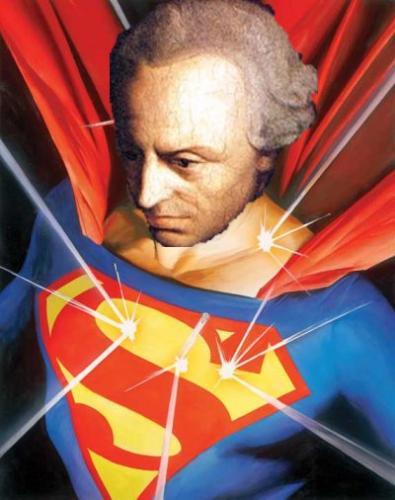
Myriam, Joe, Elke, Jillian and Diego are all against a certain kind of international ethics, which they see as globally dominant in theory and practice in the worlds of the western academy and liberal international policy. They are against ethics understood ultimately as a matter of universal truths, which can be translated into the terms of binding prescriptive rules, laws and codes of practice. It is pretty clear, although he is not necessarily named, that Public Enemy Number One is Kant, with Bentham a close second, followed of course by the recent deontological, contractarian and utilitarian inspired generation of cosmopolitan moral and political theorists and their allies in law and policy.

kant_superman Continue reading

Ethical Encounters – Parsing the Pluriverse: empathy and deliberation in a post-MDG ethics of international development

DSC00921

Our fifth post in the forum is a guest post from Diego de Merich. Diego got his PhD from LSE and is now an LSE 100 Fellow and a research associate at the Institute for Intersectionality Research and Policy at Simon Fraser University. His work focuses on human empathy and the ethics of care in service of alternative frameworks for International Development (post-Millennium Development Goals). For earlier posts in the forum do look for Myriam’s here, Joe’s here, Elke’s here and Jillian’s here. Kim’s discussion post can be found here.


With the Millennium Development Goals (MDGs) set to expire in 2015, focus has turned to a new framework which might replace them. Heavily influenced by the Human Capabilities Approach (HCA), the MDGs and the recently-proposed ‘Golden Thread’ frameworks posit a relatively monolithic, liberal understanding of what ‘development’ is meant to signify. As such, each new iteration of an international agreement on development seems destined to miss the potential for more creative and context-appropriate political action in response to the shortcomings of the approaches which preceded them. Using as a starting point Arturo Escobar’s Encountering Development, I suggest that his notion of the pluriverse – which stands in opposition to the ‘universal and homolingual thrust of modernity’ – both challenges the post-2015 discourse and implies the need for different ethical practices upon which ‘development’ might instead be re-cast. Realisation of the pluriverse and notions of care, responsibility, democracy and pluralism would require that closer attention be paid to narrative voice and to the role that empathic processes should play in the deliberation surrounding development.

The ‘promise’ of empathy in pursuit of a post-MDG development practice can be understood by contrasting two approaches to deliberative democracy – one which would hold the HCA as its guiding ethical impulse and one which suggests that an ethics of care and responsibility in international development requires a better appreciation for the role that empathy and narrative play in understanding the development possibilities and realities of the constituent elements of Escobar’s pluriverse. Here, the focus of ethical enquiry is shifted from a more abstract notion of social justice to a recognition of shared/lived vulnerability, alternatively-imagined ways of being and thus, to an ‘international development’ which is differently understood and practiced.

Untitled Continue reading

Ethical Encounters – Taming of the Infinite: Applying Ethics for Political Violence – A Brief Critique

This is the third post in a series reflecting on contemporary global ethics that was originally organised as the Ethical Encounters in a Changing World panel for the 2015 ISA convention in New Orleans. Myriam’s post can be found here, Joe’s is here, Jillian’s here and Diego’s here. Kim’s discussion post is here.


The relationship between ethics and politics is complex; in theory, as in practice. Against a contemporary background where hitherto morally prohibited acts, such as assassinations by drones strikes in non-military zones, are instituted as legitimate and justifiable practices, it becomes vital to understand anew the relationship between politics, violence and ethics, and its limits, particularly when such acts are underwritten by innovative military technologies that open new horizons for ethical considerations in international politics.

Ethics, in the context of politics – including international politics – is presently predominantly conceived in terms of applied ethics and chiefly concerned with the search for an ethical theory that can be arrived at through abstraction and applied to real world ethical dilemmas. While burgeoning poststructuralist scholarship in the late 1990s sought to address ethics in terms that consider aspects of contingency, alterity and potentiality, the events unfolding in the aftermath of 9/11 appear to have given way to a more practically oriented approach to thinking about ethics in international politics, giving priority to the application of ethical principles of warring. Such practical approaches often mirror scientific processes, or algorithmic logics in trying to find ‘correct’ outcomes.

While just war traditions of ethics in war have always had a close relationship with the analytical procedures and structures of international law, the practical turn in contemporary political ethics means that concerns addressed in the international and global context are primarily framed in terms of finding and applying appropriate principles, codes and rules in trying to resolve ‘real moral problems’. Problem solving through rational procedures, and scientific rationales thus stands at the heart of practical considerations of the ethics of political violence and war. This is exemplified in the IF/THEN logic of current discourses on the ethics of war or in the structures of target selections for lethal drone strikes. Among others, Seth Lazar’s recent work on the morality of war, presented at a philosophy workshop at the LSE in 2013 for example, considers approaches to moral decision making in uncertainty in the following terms: “one plausible approach to decision-making under uncertainty is to determine the expected moral value (EV) of the outcomes available to me, and to choose the best one. So, I am permitted to ƒ if and only if EV(ƒ) ³ EV(¬ƒ)”. Similarly, Bradley Strawser’s defence of the ethical obligation to use drones as a weapon of choice relies on a selection of variables (X, Y, G) and principles (principle of unnecessary risk – PUR) that, combined, serve to confirm the hypothesis, namely that using drones is an ethical obligation. This procedural algorithmic logic speaks to a technoscientific-subjectivity with which ethical outcomes are ascertained, problems solved. Ethics becomes a technical matter that can be solved through procedures and thus has natural limits. It is only able to assess, whether an outcome was achieved through the correct logical theoretical trajectory, not through the particularities of the moment.

Stuart Kinlough/Getty Images

Stuart Kinlough/Getty Images

Continue reading

Ethical Encounters – The Special Ambiguity of Humanity

This is the second post in a series reflecting on contemporary global ethics that was originally organised as the Ethical Encounters in a Changing World panel for the 2015 ISA convention in New Orleans. Myriam Fotou’s original post can be accessed here, Elke’s is here, and Jillian’s here. Kim’s discussion post is here.


Encountering Humanity

Humanity is special. This sounds like a very conventional claim. We are used to hearing appeals to our common humanity. The appeal works on the presumption that there is something in human beings that we not only share as humans but which also calls us to respond in particular ways when we encounter each other. We are said to have human rights that exceed any of our particular belongings to states, faiths or ethnicities. We intervene to protect human beings beset by violence and catastrophe, disregarding the norms of sovereignty that prevent outside interference. We appeal to our common humanity to solicit resources for distant strangers, often depicted in their suffering as vulnerable human bodies to shake us from our everyday disregard. Humanity is appealed to as a matter of routine, but what does our humanity consist in?

Reflection on the meaning of humanity is less common than our appeals to it, yet this deeper rumination also comes with practiced ease. Knowing what our humanity is has long been a matter of divining what is distinctive about human beings and then moving to grant our distinctively human capacities an exalted status, claiming it as our essential nature. Humanity, as something to which we appeal, is conventionally a judgment on what is prized in human nature, marking out what is elevated amongst all the contradictions of our all too human nature.

Huge Manatee

Humanity then works not only as an appeal – “for the love of humanity!” – but also as a standard to which we should be held. Knowing what is properly human provides a guide to our interactions. What do we owe each other? To be treated in accordance with our essential nature. In a typically modern and Western formulation: to be treated as rational beings, to have our individual freedom respected. These sorts of claims have long echoes and many sources. They also have dissonant reverberations because the standard of humanity not only marks off the human from the animal or the divine, but also differences between those human beings recognised as fully and properly human and those denied recognition, and in their denial degraded as sub-human, primitive and savage. This exclusion from full humanity of the non-human negates the appeal and standard of humanity, opening up the non-human to forms of violence, degradation and abuse. Women, savages, barbarians, Jews, Muslims, Asians, Africans, queers, lunatics, cripples; a brutal list of exceptions to the defining standard, such that even its partial enumeration raises questions about humanity as a standard. Nearly as insidious is the way the self-appointed arbiters of humanity use such distinctions to exculpate themselves. Those who fight for humanity against savagery are always noble in their own eyes. Continue reading

Ethical Encounters – Border Ethics: Autoimmunity as Ethics of Hospitality

s200_myriam.fotouThis guest post, by Myriam Fotou, is the first in a series of posts reflecting on contemporary global ethics that was originally organised as the Ethical Encounters in a Changing World panel for the 2015 ISA convention in New Orleans. Myriam is a PhD candidate in the Department of International Relations at LSE, she is also a visiting lecturer at Royal Holloway and City University London. Joe’s post can be found here, Elke’s is here, Jillian’s here and Diego’s here. Kim’s discussion post is here.


Let us consider this negative sentence: “death has no border”
J. Derrida, Aporias

Framing the problem

In mid-January 2014, approximately five nautical miles off the coast of Turkey and near the Greek islet of Farmakonisi, eleven non-Europeans, including babies and children, were drowned. Amid adverse weather conditions, their boat had capsized during an attempt by the Greek coastguard to tow the old smuggling boat. Accounts of what happened are contradictory: survivors argue that they were being pushed back to Turkey, shouted at and threatened, and that the drowned were not inadvertently killed; Greek authorities, on the other hand, argue that they were towing the boat to Greek waters and safety, that the conditions did not allow for the people on the old, adrift vessel to be taken aboard the coastguard’s vessel, that the “illegal” immigrants coming from Asia did not know anything about the sea and navigating, how to swim or orient themselves. By gathering on one side of the boat after one of them fell overboard, they caused the vessel to capsize themselves. These contradictory stories, which although might not make much of a difference in the end result (almost half of the people on board were drowned), in essence symbolise the contradiction between the law and its application, the inherent violence in both, and in European states’ backpedalling on their hospitality obligations.

Farmakonisi

Continue reading

What We Talked About At ISA2015: A Debate Around John Hobson’s ‘The Eurocentric Conception of World Politics’

Below is the text of my intervention at a roundtable organized by Alina Sajed entitled ‘Race and International Relations—A Debate Around John Hobson’s The Eurocentric Conception of World Politics‘. TDoT has hosted a symposium on the book: you can read an initial post by John, commentaries from Meera, Srdjan and Brett, and a reply from John. I’ve tried not to cover the same ground.

While race and racism have recently become topics of increasing interest in the rather parochial world of IR scholarship, few books have ranged so widely across time and thinkers as John Hobson’s The Eurocentric Conception of World Politics. This is a monumental work of scholarship that accumulates a staggering amount of evidence, were further proof necessary, of the white supremacist and/or Eurocentric foundations of IR as a discipline (I use the ‘and/or’ advisedly, because much of the debate that the book has generated and some of my own critique focuses on the complex relationship between the formations that Hobson identifies as ‘scientific racism’ and ‘Eurocentric institutionalism’, about which more in due course). So whatever my problems with the book, I want to endorse it as a deeply necessary intervention in the IR academy. Nonetheless, I find myself in sharp disagreement with some of its central claims in ways that have not been fully addressed in earlier discussions. I will focus here on two areas of disagreement: first, the book’s treatment of Marx, Lenin and Marxism in general; and second, its crucial distinction between ‘scientific racism’ and ‘Eurocentric institutionalism’.

Why focus on a critique of Marxism as Eurocentric and/or imperialist? (Again the ‘and/or’ seems necessary because Hobson’s careful mapping of European thought finds conjunctions of racism and/or Eurocentrism with both imperialist and anti-imperialist sensibilities). Partly this comes out of my own intellectual investment in denying what I believe to be the false choice that is often presented between Marxism and postcolonialism. As such, I find myself troubled as much by Marxist work that repudiates postcolonialism as I am by the opposite tendency (which I think is at work in this book). But partly this also comes out of a sense that if Marxism were in fact as Eurocentric and/or imperialist as Hobson suggests, this would leave inexplicable its enormous appeal in the Third World both in the heyday and aftermath of the great decolonization and liberation movements that it informed. More prosaically, I think Hobson’s readings of Marx and Lenin are temporally truncated and therefore somewhat misleading.

Continue reading

Want to Deprovincialize Your Political Theory Syllabus a Little? What I Learned at APSA

ibn_khaldoun_timbr

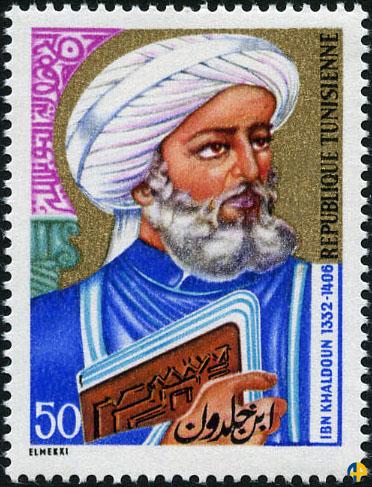
American Political Science Association (APSA) annual conventions typically offer a rich selection of pre-conference short courses. This time I went to “Deparochializing Political Theory.” Sponsored by Steven Johnston and Michaele Ferguson and organized by Emily Beausoleil, this course offered two excellent sessions on how to enrich your political theory syllabus with ‘non-western’ content. Loubna El-Amin spoke about Chinese political thought, and Michaelle Browers on Arab and Islamic political thought. These are my course notes from last week, in a Q&A form. My gratitude goes to Michaelle and Loubna for letting me copy/paste from their course materials.

Continue reading

Bad Infinity?: Hans J. Morgenthau’s Double Critique of Depoliticisation

VassiliosA guest post from Vassilios Paipais, Lecturer in International Relations at the University of St. Andrews, Scotland. Vassilios holds a PhD in International Relations from the LSE and has published in Review of International Studies, International Politics and Millennium, and held various teaching posts at the LSE, SOAS, UCL and the University of Edinburgh. His work focuses on International Relations theory and international political theology. He is also co-founder of Euro Crisis in the Press and Associate to the LSE IDEAS Southern Europe International Affairs programme. You can read his Euro Crisis posts here, as well as follow him on Twitter.

This post is based on a recently published article in Millennium where he explores the implications of post-foundational political ontology for IR via a reading of Martin Heidegger and Oliver Marchart.


Hans Morgenthau

Post-foundational political thought offers the conceptual tools to theorise the experience of dislocation in politics signified by the difference as such between politics and the political. According to Žižek, the political designates the “moment of openness, of undecidability when the very structuring principle of society, the fundamental form of the social pact is called into question” whereas politics describes the positively determined outcome of that process, a “subsystem of social relations in interaction with other sub-systems”. The difference as such between politics and the political implies that any effort to cancel this gap or gloss it over by using ethical, political, juridical or economic arguments is nothing else but an attempt to hegemonise the social by ideologically displacing politics. The political signifies the moment of grounding/de-grounding of the social that is suppressed or forgotten by the operation of politics but can be reactivated at any time through dislocation and antagonism. Politics is incessantly trying to colonise the political but we are each time painfully reminded that an unbridgeable chasm separates the two. It is exactly the irresolvability of this gap that makes politics the name for a paradoxical enterprise which is both impossible and inevitable – which is why none has ever witnessed ‘pure politics’ either. The political cannot be brought about voluntaristically but, whenever we act, it is as if we always activate it or, better, we are always enacted by it. Both gestures of eliminating the force of the political (post-politics) or of introducing it unmediated into politics (total war, revolutionary terror) end up abolishing the political difference and ultimately result in an ideological displacement of politics.

Against this backdrop, I read the sophisticated realism of Hans Morgenthau as a promising but inconclusive attempt at a post-foundationalism political ontology. In fact, I argue that by equally shunning a facile surrender either to the immanence of power (ultra-politics) or to the technologisation of politics (post-politics), Morgenthau’s theory of the political strove to maintain a reflexive fidelity to the logic of political difference as such. At this point, the question naturally arises: why Morgenthau? Isn’t he the archetypical exponent of a tradition that prioritises a static view of international relations and the adoration of power politics? Well, for those who have been following the recent revisionist literature on classical realism, not really; Morgenthau, in contrast, emerges as an apparent candidate to discuss the crisis of foundationalism in (international) political thought and the paradox of its necessity and impossibility, not least because he is one of those rare thinkers that offers no facile solution to, or redemption from, the existential anxiety caused by the interrogation of ultimate foundations in late modernity.

Such an exercise highlights the strong affinities between Morgenthau and critical historicist currents in social and political theory, but this would come as a surprise only to those who equate Morgenthau’s realism with stasis and conservatism and are ignorant of his debt to the thought of Dilthey, Mannheim and Nietzsche. And yet, why inconclusive? Short answer: because of his failure to be radical enough in his Kantian antinomism or, to put it reversely, in his Nietzschean skepticism. And yet, my intention is not to award or withhold credentials of criticality, nor to indict Morgenthau for failing to live up to standards that he never set for himself. On the contrary, in an authentic act of immanent criticism, one does not seek to oppose the other(s) but, instead, to bring out a certain ‘internal contradiction’ to them, in a sense repeat all that they are saying but for an entirely different reason. The purpose of this critique is not to identify shortcomings in Morgenthau’s arguments but to interrogate the ‘transcendental’ conditions of his discourse: that which is in it more than itself. My thoughts on Morgenthau’s unfinished project then should be seen as a propaedeutic towards an investigation of the conditions and challenges involved in practicing international theory as a constant critique of depoliticisation.

Continue reading

Between Fetishization and Thrift? A Response to Dave Eden’s Autonomy: Capitalism, Class and Politics.

Nick faceAhoi, Disorders! We’re thrilled to host a guest post by Nicholas J. Kiersey, Assistant Professor at Ohio University, indefatigable student of Foucault, Italian Autonomism and Deleuze and Guattari, plus a die-hard fan of Battlestar Galactica. Nick is the author of papers on governmentality in Global Society, the biopolitics of the war on terror in New Political Science, everyday neoliberalism in the Journal of Critical Globalisation Studies, and is due to be published on the occupy movement and affective labour in the financial crisis in Global Discourse and Global Society respectively. Oh, and he’s also Irish. That’s also important. Below is Nick’s review of Dave Eden’s new book on Autonomist thought, which one can only hope has not gone entirely unnoticed because it’s one of the finest on the subject!

All quotes in the below are to Eden’s text, unless otherwise stated.


Eden Autonomy

No doubt, a return to the commodity is a risky venture. As Dave Eden puts it in his exceptional new book, certain framings of the power of the commodity can lead to an embrace of austerity, a “romanticization of poverty” or, worse, “a reactionary anti-capitalism”. Nevertheless, he asserts, a return to the commodity may ultimately be required. Currently popular framings of social movements, such as those of Hardt and Negri, he notes (citing Franco Berardi), offer very bright and “jolly” interpretations of the possibilities of the age, pretty much ignoring the need for a critique of the commodity form altogether. As such, they appear to have little sense of what it is that keeps capitalism going, or what it is that might finally send it on its way! However, while Eden wishes to convince us that we cannot do without the critique of the commodity, it is unclear if he ultimately achieves this goal. For his argument stands or falls on his ability to convince us that it is possible both to embrace this critique and remain faithful to an internal theory of capitalist power. This is a difficult circle to square and, by the end of the book, Eden seems to have done little to address it – an irony given that this is actually one of the areas where the targets of his critique are especially strong.

At the heart of Eden’s explanation of Autonomism, its virtues and its flaws, is the “Copernican inversion” of Marxism in which Mario Tronti asserts that the true dynamic force behind capitalism’s development is the workers rather than capital. Starting from this core observation, Eden proceeds to offer a survey and critque of Tronti’s heirs, particularly Antonio Negri. For Negri, the current order in world power is defined most completely by the antagonism between ‘Empire’ and the ‘multitude,’ where the latter term endeavors to expand the definition of the proletariat in order to capture not only the vitality of “labour as a whole” but to encompass the full diversity of the identities which compose it, and Empire is the power which dominates the multitude. Breaking with traditional Marxism, however, Empire is not capitalism. Rather, it is a multi-valent regime which proscribes democracy in order to bolster a global order of things which is capitalist, statist, racist, and gendered, among other things. Challenging this power, however, the Multitude realises the creative possibilities of today’s intellectual and affectively efficacious labour, and incorporates them in its struggle for self-actualisation.

Continue reading