On Rejecting Journals

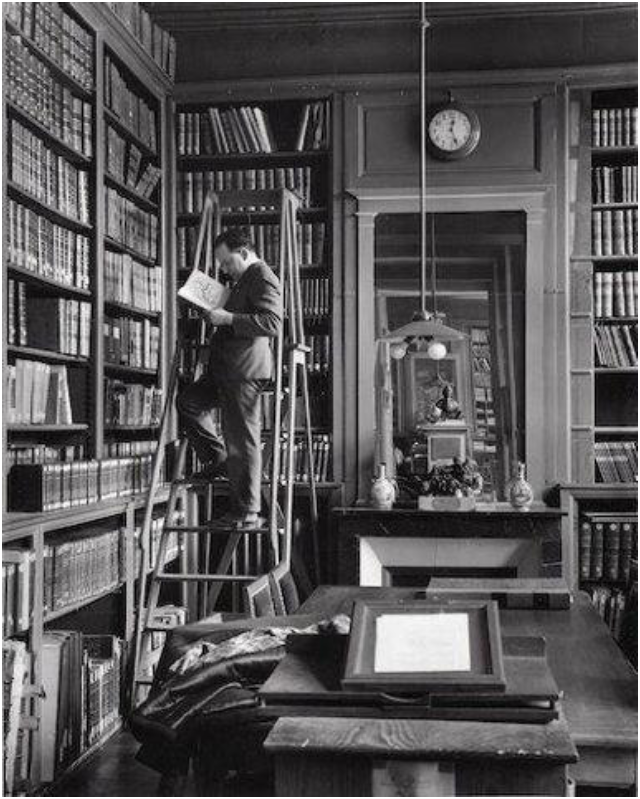
Kertesz - Man and Abandoned Books

Any excuse for an André Kertész image.

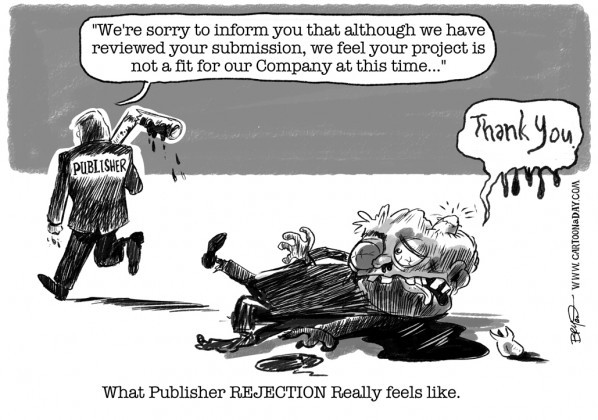
Yesterday, in an act of minimal defiance, I declined a request for peer review on the grounds that the journal was owned by Taylor and Francis, and therefore charges authors £1,788 per piece for open access, or imposes an 18 month restriction on repository versions. In the wake of the OA debate, this situation seems increasingly ludicrous: for the short term at least, an increase in journal profit streams, made possible by the sanctity of unpaid academic input. The principle (saying no to closed journal peer review) is not inviolable, but a reluctance to subsidise shareholders with free labour seemed an appropriate response to the current balance of forces.

So far so good, you might think, but there is a lingering issue of ethics. It was suggested, following a previous act of review rejection, that some hypocrisy might be at work. Am I not proposing the withdrawal of a service that others would perform for me without complaint? Since the infrastructure of the academy rests on the provision of reviews, and since academics benefit from having their published work certified, submission to any closed journal, without providing reviews to the same, is tantamount to parasitism. A use of colleagues’ labour without returning the favour, all easily accomplished in an accounting system that positively celebrates the anonymity of authors and reviewers.

The most forceful of open access advocates would point out at this stage that the answer to this dilemma is pretty straightforward: don’t review for closes access journals and don’t publish in them. Simply move your labour – writing, reviewing, editorial board-ing – as quickly as possible to the more open journals. The more of us who do that, the quicker the transition to proper open access will be. This is true, but it won’t quite do. For two reasons.

First, whatever is to be wished for, the Arts, Humanities and Social Sciences currently lack open access journals prestigious enough to make submission to them a low cost option in the economy of reputation. This is a corollary of the market dominance enjoyed by closed journals: scholars are penalised if they step outside of this reputational system. This point that has been raised before, and clearly depends considerably on the exact field, and the national context. On the UK scene, even where academics stress that they themselves would never pre-judge a piece by publication venue, they usually hold that someone else (the Big Other of the REF, policy makers, ranking systems, managers) will, and so they are driven to conform in any case, thus becoming entangled in a chronic game of second-guessing. More clearly still, this disproportionately affects junior and precarious scholars, who have most to lose by moving outside a system still primarily functioning according to logics that precede them.

Second, and more crucially, journals are not just empty vessels, and are not interchangeable in content, editorial policy or audience. Continue reading

Open Access: A Submission to the Lords Committee

A Royal Commission

Two weeks ago the House of Lords Science and Technology Committee announced that it was to hold a short inquiry into the government’s open access policy (a policy which we have previously critiqued at some length). The deadline for submissions to that inquiry is…well, it was last Friday actually. Despite the very short window, we managed to put together a submission on lines that will be familiar to readers of our previous work, but which also elaborates on some of the detail that has emerged since. That submission is available here. In the meantime, the House of Commons Business, Innovation and Skills Committee has said it will follow suit (but curiously banning repeat evidence). We’ll follow up on the contents and plausible effects of the Committee’s inquiry when they publish.

Open Access: HEFCE, REF2020 and the Threat to Academic Freedom

This is the text of a document prepared by Meera and me on Article Processing Charges as currently understood and the serious risks we think they pose to academic freedom and funding, broadly understood (previous discussed by several contributors to our open access series). It is also available as a pdf, and we encourage academics to think carefully about the issues foregrounded, and to act accordingly.


Applegarth Press

Summary

  • The Government is pushing academic publishing to a ‘pay-to-say’ model in order to achieve open access to publicly funded research
  • This ‘gold’ route to open access, which levies Article Processing Charges (as proposed in the Finch Report and taken up by RCUK and HEFCE) poses a major problem for academics in the UK:
    • It threatens academic freedom through pressures on institutions to distribute scarce APC resources and to judge work by standards other than peer review
    • It threatens research funding by diverting existing funds into paying for publications (and private journal profits) rather than into research
    • It increases academic inequality both across and within institutions, by linking prestige in research and publishing to the capacity to pay APCs, rather than to academic qualities
    • It threatens academic control of research outputs by allowing for commercial uses without author consent
  • In response, academics should:
    • Practice and lobby for ‘green’ open access of all post-peer reviewed work within journals and institutions
    • Lobby against proposed restrictions on REF2020 and against compliance pressure for ‘gold’ open access
    • Demand clear policies from Universities around open access funds
    • Ensure institutional resources are not unnecessarily spent on APCs
    • Protect the integrity of scholarly journals by rejecting the pressure for ‘pay-to-say’ publishing

Open Access: Rushing Implementation

Many academics have been ardent supporters of the open access principle (that peer-reviewed academic work should be freely available and easily accessible to anyone), and were excited when the Government made steps to advance it. However, it has become clear that the implementation of this policy via REF2020 will have very serious negative consequences for all academic authors and institutions, unless authors and institutions themselves start to take action and make their voices heard. It is critical that academics understand what is happening and lobby our pro-VCs of Research, our VCs and Universities UK to defend both academic freedom and open access.

The timescale for action and decision-making is now incredibly short. Several policies, including that of the Government and of RCUK were declared immediately with the release of the Finch Report, totally accepting its views without wider consultation. HEFCE is going to open and close a very quick consultation period early in 2013 in order to issue guidance ahead of REF2020. Some universities have been given until March 2013 to determine what to do with open access funds that they were given in November. And it was only on 29 November 2012 that the first indications from HEFCE were given as to their intentions, at the Academy of Social Sciences (ACSS) conference on Implementing Finch. The timetable for finalising the details of this complex policy is thus extremely short and does not allow for adequate discussion of its serious consequences. Despite this, academics can still play an important role in resisting the threats posed.

So, What is Happening?

In summary, academic journals are being moved from a ‘pay-to-read’ model to a ‘pay-to-say’ model.

Continue reading

Open Access: News and Reflections from the ACSS Conference

Last week, the first big public event discussing the Open Access policy announced in July was held at the Royal Statistical Society by the Academy of Social Sciences. If you are interested, many of the presentations from the event are already available online, with more write-ups to follow, as well as a promised YouTube video of the entire event. The programme promised and delivered a good range of speakers, and not least Dame Janet Finch herself.  I went along for the first day, thinking that this might be an open space to learn about the issues and have discussions about the policy, involving a wide range of affected parties.

Janet Finch

I did learn a lot, although what I mainly learned was that no one was really prepared to take any real responsibility for a policy to which a lot of eminent and well-informed people had very serious objections. Finch insisted that she had to stick to a brief which did not involve ‘destabilising’ the publishing system. No one was there to answer from either BIS or RCUK, who both adopted the policy immediately upon the publication of the report in July. HEFCE, who have not formally announced a position yet, however indicated at the conference that they are very likely to adopt the RCUK model for REF2020. Continue reading

Open Access: Time for Action

This is the last in our recent series of posts this week on open access. Pablo covered the big questions and rationales for open access; Colin explored the potential consequences of the current policy direction; David raised serious questions about its fit for social sciences; Nivi highlighted the implications for early career academics and Nathan extended the discussion to the broader problems of academic precarity.


What do we do now? I will not labour over diagnostic points made eloquently and at length elsewhere on this blog (and also in the comments sections). In part, because there just isn’t time. At least in the UK, right now, we are facing a critical juncture where open access policy is being solidified by the Finch ‘Implementation Groups’, and solidified in the wrong direction. Indeed, there is a Academy of Social Sciences Conference in London on 29th and 30th November on the implementation of OA policy, which will likely further reinforce the direction of travel laid out by the Finch Report. Dame Janet Finch is the keynote on the first day, and the second day is ‘aimed at’ publishers, learned societies and their representatives. I am also somewhat concerned at the speed of travel on this, which suggests that Government have not taken the time to seriously reflect on it, and that most wider academic ‘stakeholders’ are being left behind on discussions and decisions which seriously affect all of our futures.

Briefly, though, my concerns around an endorsement of Article Processing Charges mirror questions raised by Colin. Having said that, I am rather more certain/pessimistic than him that these pose a very substantial threat to academic freedom and the overall integrity of the journal system. I am also concerned that they will increase the costs of research without increasing its quality, and waste a lot of academic time as Universities and Departments try to administer them (as will have to happen for most Arts/Humanities/Social Science research which is not funded by grant-money). Finally, I am highly disappointed that nowhere does the Finch Report seriously reflect on possible Government action to further protect copyright over the Version of Record.

So, what is to be done?  Continue reading

The Best Things In Life Are Free?: Open Access Publishing and Academic Precarity

The fifth post this week on open access and its impact on IR (amongst other social sciences) from previous guest poster Nathan Coombs (follow the blue underlines for the first, second, thirdfourth and sixth posts). Nathan is completing a PhD in politics and philosophy in the Department of Politics and International Relations, Royal Holloway, University of London. He is co-founder and co-editor of the transdisciplinary, open-access journal, the Journal of Critical Globalisation Studies. He has a book forthcoming in 2013: The British Ideology. Images by Pablo.


When my colleagues and I established the open-access journal, the Journal of Critical Globalisation Studies in 2009, to us open-access publishing meant placing an academic journal online which would be free for both our contributors and our readers. We took inspiration from open-access journals in critical philosophy such as Parrhesia and Cosmos and History, the efforts of the Open Humanities Press, and the Australian book publisher Re.Press, who make PDFs of their releases available online simultaneously with their distribution to bookstores.

Since this time, however, the term open-access seems to have become increasingly polyvalent. As discussed in contributions to this series of reflections by Pablo, Colin Wight and David Mainwaring, open-access publishing is now endorsed by government and publishers. Yet the price of this move into the mainstream has unfortunately been a watering down of the term. In the ‘gold’ open-access publishing scheme proposed by the Finch report, for instance, universal access to academic publications is secured, but only by preserving the existing journal subscription system and by introducing Article Processing Charges (APCs) for authors.

Whether these pseudo open-access schemes will prove to be unstable transitional forms or lasting models only time will tell. In any event, for my contribution I want to focus on open-access in its fully fledged form: ‘full open-access’ we will call it. The model of full open-access, as operated by the JCGS, does not permit any persistent role for the private (profit motivated) sector within academic journal publishing. Full open-access journals are housed on independent or University affiliated websites, freely available to everyone in the world within an internet connection, and provide a free anonymous peer-review service for contributors.

Let us imagine a world where academic journal publishing turned over completely to this approach. Journal subscription fees would be swept away. Academics would take control over their publishing arrangements. The profits of corporate publishers would dwindle to zero. An enticing scenario for anyone exasperated with the current status quo.

As with all things that sound too good to be true, though, caution is required. Continue reading

Open Access: Is It Really “Open”?

Our fourth post this week on open access, IR and the ambiguities of the future, from Nivi Manchanda (following Pablo, Colin Wight and David Mainwaring and followed by Nathan Coombs and Meera). Nivi is a PhD student in Politics and International Studies at the University of Cambridge and also currently Editor-in-Chief of the Cambridge Review of International Affairs, one of the very few student-run IR journals that consistently hosts material worth reading (apart from Millennium of course!). When not running the Cambridge Review, she studies Anglo-American representations of Afghanistan.

UPDATE (27 January): Nivi has now joined the Disordered collective on a more permanent basis and you can read more from her by clicking on her face in the sidebar.


The open access movement for academic journals is excellent in theory; not merely because of the need for an alternative to the clearly out-dated journal system that we currently have in place, but also to reclaim the internet as it were. In an ideal world, the internet would be the space for the unbridled circulation and dissemination for knowledge that the World Wide Web’s original architect had imagined it to be. In practice, however, ‘open’ access the way it is conceived in the Finch report (which is the the catalyst of, if not reason for, this conversation) is hardly ‘freely available’ and ‘non-proprietary’ research in the way the slightly misleading ‘open’ here might suggest.

For a student-run journal some of the many problems (delineated nicely by Pablo and Colin) with the ‘Gold’ OA system embodied in the Finch proposals become particularly acute. In the first instance, with regard to the benefits of the present system, in a field governed by citation indices and impact factors, there is something to be said about the legitimacy and credibility that a set-up with a renowned academic publisher provides. The other big advantage of having a publisher who is invested in the journal, especially for the Cambridge Review of International Affairs (hereafter CRIA) and other student-run publications I would imagine, is the discipline they demand. Having a set publication schedule has been crucial for CRIA, not only for associate editors who are copy-editing in the middle of term but also for peer reviewers and authors who get nagging automated reminders every week from ScholarOne’s Manuscript Central, the web-based submission and peer review tool used by Taylor & Francis (Routledge). Finally, although an equivalent open source software exists, merely getting some training in the workings of Manuscript Central and of indeed access to it, has been a great asset for CRIA.

This is not to say, in any way, that the current journal system of pay walls and enormous publisher profits is not deeply flawed. It is, but so is the solution proposed: high Author Processing Charges (APCs) that would hit students and early career researchers disproportionately, to say nothing about those who are not affiliated with an academic institution. Academics are however, thinking about ways around this with mixed success. A great example would be the initiative taken by Timothy Gowers, a mathematician at the University of Cambridge who has managed to persuade Cambridge University Press to launch a gold open access electronic journal – The Forum of Mathematics – with a print on demand option. To keep a check on what is being sent in, authors need to send in a reasonably long justification of why they are interested in publishing in the journal and what ‘cluster’ they want to submit their paper to. A ‘cluster’ is like a stream, for instance a theory or anthropology stream in IR – schematically speaking. There are of course nuances and overlaps that Gowers has meticulously devised a system for dealing with, and which could potentially be looked at as a model for a social science/IR journal. Each cluster has one editor and a few managing editors working on it who are experts in that particular field.

Continue reading

One Size Fits All?: Social Science and Open Access

The third post in our small series on open access, publication shifts on the horizon and how it all matters to IR and social science, this time by David Mainwaring  (Pablo’s post was firstthen Colin Wight’s, and following David came Nivi Manchanda, Nathan Coombs and our own Meera). David is a Senior Editor at SAGE with responsibility for journals in politics and international studies. So he oversees journals like Millennium and European Journal of International Relations amongst others (which is how we know him), and can thus offer a close reading of movements within the academic publishing industry. Images by Pablo.


Open Access is the talk of the academic town. The removal of barriers to the online access and re-use of scholarly research is being driven by a cluster of technological, financial, moral and commercial imperatives, and the message from governments and funding agencies is clear: the future is open. What is much less clear is exactly what sort of open future social scientists would benefit from, let alone what steps need to be taken in order to transition away from the existing arrangements of scholarly communication and validation. Here the conversation is in its relative infancy, characterised at this point by a great deal of curiosity, anticipation, confusion, and the shock of the new. What it needs to move towards is a recognition and coordinated response to the fact that although social science may share the same open access goal as the STEM disciplines, the motivations for travelling down that path are not identical, and the context – especially in terms of research funding – is significantly different. The roundtable discussion at the Millennium conference at the LSE on 20th October was an attempt to explore these issues specifically from an IR perspective; further such events (such as those being run by the AcSS and LSE this autumn) are to be warmly welcomed as a means of building broader understanding of the issues among social scientists and facilitating strategic thinking.

Social Science and the Open Access Debate

The long-running debate about how scholarly research communication should be funded and transmitted has been, and remains, a discussion conducted primarily by those working in STEM. Most of the blogosphere’s best-known voices on open access, the likes of Mike Taylor, Michael Eisen, Peter Murray-Rust, Björn Brembs, Cameron Neylon, Kent Anderson, Stephen Curry and Tim Gowers, have backgrounds in STEM research or publishing. (Notable exceptions are the philosopher Peter Suber, who heads the Harvard Open Access Project, and self-archiving advocate Stevan Harnad, a cognitive scientist). To dip into the often heated debates on open access can leave you with the strong impression that, despite the occasional nod to social science and the humanities, the frame of reference is proper, rigorous, natural scientific research, the kind carried out in a laboratory that leads to medical advances and the development of new technologies.

By and large social scientists – and arts and humanities scholars, to whom many of the points raised in this piece apply equally – have had a back seat in this conversation, and the development of open access awareness and capabilities has been slow. Many leading social science journals continue to be distributed in print form due to subscriber demand well over a decade after the launch of their online editions. The American Political Science Association’s 2009 book Publishing Political Science devotes just two out of over 250 pages to open access, and fewer than 10% of the nearly 13,000 signatories of the ‘Cost of Knowledge‘ boycott of Elsevier were social scientists, despite the company’s position as one of the world’s leading publishers of social science journals. That’s not to say that there is nothing going on: the Social Science Research Network has acted as a site for open paper sharing since 1994; there are active ‘open’ movements in disciplines including IR and economics; and the Directory of Open Access Journals lists more than 1,600 social science titles. To date, however, very few of the latter have been able to break into the higher echelons of profile or reputation within their fields.

Social Science and Open Access Mandates

Over the last eighteen months a series of events, including George Monbiot’s polemic in The Guardian and the defeat in the US of the Research Works Act, stirred for the first time a significant consciousness among social scientists about open access. This awareness increased dramatically – in the UK at least – with the publication in June 2012 of the final report of a committee set up by the Government to examine access to published research findings. Continue reading

Open Access Publishing: Potential Unintended Consequences of the Finch Proposals

The second in our series on open access in IR and social science (first post here, third here, fourth here, fifth here, sixth here), this time from Colin Wight. Colin is a Professor in the Department of Government and International Relations at the University of Sydney (having previously been based at Aberystwyth) and is also Editor-in-Chief of the European Journal of International Relations. His work has primarily been in the philosophy of social science (and particularly critical and scientific realism) as applied to IR, and he is currently writing on terrorism, violence and the state. He is the author of Agents, Structures and International Relations Theory: Politics as Ontology and very many articles, including ‘MetaCampbell: The Epistemological Problematics of Perspectivism’‘The Agent-Structure Problem and Institutional Racism’ and ‘A Manifesto for Scientific Realism in IR: Assuming the Can-Opener Won’t Work!’.


The recommendations of Dame Janet Finch in relation to ‘open access’ (OA), seem to represent the first steps in what looks to be an inexorable trend towards a major reform of academic publishing. The OA movement has been gathering momentum and the academic boycott of major Dutch publisher Elsevier, was simply the latest in a series of initiatives aimed at forcing governments, academics and publishers to rethink, not only how research outputs are handled, but also how they are funded.

That the UK Education Secretary, David Willetts, moved so quickly to implementation after the publication of the Finch report, suggests that advocates of OA were knocking at an open door. Most academics are in favour of OA. It makes sense. After all, why should government funded research not be publically available and why should commercial publishers be allowed to fill the coffers of their shareholders on the back of taxpayer funded research?

As a journal editor, I’m also aware of the slow pace of the publishing world in terms of getting pieces to the point of publication after submission. Most journal editors do what they can to speed this process up, but does the publishing system itself, structurally imped the swift publication of research, and if so will OA help speed up this process?

I too am a strong supporter of OA, but the Finch proposals do not deal with all the issues and may, in fact, create more problems than they solve. The swift move to implement the Finch proposals leaves means that there has been a surprising lack of debate between governments, academics and publishers over the potential consequences.

Continue reading

Death To Open Access! Long Live Open Access!

A few weeks ago at the Millennium conference, some of us got together to talk about open access and the political economy of knowledge (re)production in our little corner of academia (“us” being Colin Wight, David Mainwaring, Nivi Manchanda, Nathan Coombs, Meera and me). Over the remainder of this week, we’ll be posting those reflections here for your delectation because, some discussion notwithstanding, labourers in today’s university-factories need to get talking about these things, and fast.


Open Access appears to be here. The Finch Report has recommended it, the Government has endorsed it, and there even seem to be some monies newly available for it. The battle is won, and the age of unfettered academic-public intercourse is upon us. Well, not quite. Finch’s preference for Gold Open Access, in which journals continue to receive revenues and make profits and in which academics (or their institutions) pay a fee of several thousand pounds per article for the pleasure (the so called Article Processing Charge (APC) system, which will receive greater attention in later posts), is deeply problematic (well-reasoned explanations for why available from Stevan Harnad and Peter Coles (Telescoper), with more qualified views, even cautious support, from Stephen Curry and Repository Man). Also, the monies aren’t new, and have instead been extracted from existing research budgets (and what a complete and utter surprise that is).

This is all cause for serious concern, and relates closely to the kinds of arguments that are developed and deployed in favour of Open Access (or, to be more provincial about it, Open IR). There are three kinds of arguments for opening up the journal system, arguments from access, ethics and cost, and we are in danger of letting the first overwhelm the different, and better, cases made in the name of the second and third.

The first set of arguments has to do with the problem of access: that the journal system is broken because it creates barriers to the circulation of academic knowledge. The journal as usually conceived was an ingenious and appropriate method for collating and distributing knowledge in the 18th century, but is now redundant. And yet journals – with their pay walls – remain the only (or at least the principal) vector for success or employment in academic life. This is doubly problematic since the various metrics that journal comparisons and prestige enable themselves then become vectors of discipline and control, even in the face of the many, many reasoned objections to such measures.

Continue reading