What We Talked About At ISA: The U.S. Military-Industrial Complex, Part I

Earlier this year, the U.S. government set out to reduce its vast defence budget. On 5 January, Barack Obama became the first U.S. president to hold a press conference at the Pentagon. What prompted it was the release of Sustaining U.S. Global Leadership: Priorities for 21st Century Defence, a “strategic guidance” document outlining the national blueprint for “deterring and defeating aggression,” while reducing record budget deficits “through a lower level of defence spending.” (The document also attracted much media attention because it offered a rare glimpse into the strategic thinking of a president who seems to refuse to be associated with a “doctrine.”) In his State of the Union address three weeks later, Obama reinstated his belief that paring defence sending could help “pay down our debt.” The Pentagon’s FY2013 budget projection followed on 13 February, with a request for $614 billion in funding: $525 billion for the base budget and $88 billion for the so-called overseas contingency operations. FY2012 budget request, the Pentagon noted, was bigger.

Pundits in the US have been debating the meaning of the coming defence cuts, starting with the question of whether there will, in fact, be any cuts in the first place. This debate will probably intensify as the election date approaches, although, indicatively, Obama’s strategic guidance contains no “East of Suez” moments, and his Pentagon speech was a candid expression about the need to stay the course: “Over the next 10 years, the growth in the defence budget will slow, but the fact of the matter is this: It will still grow, because we have global responsibilities that demand our leadership… I firmly believe, and I think the American people understand, that we can keep our military strong and our nation secure with a defence budget that continues to be larger than roughly the next 10 countries combined” (emphasis mine; also, “10” appears to be way too low).

Much remains to be said about the type, magnitude, and sequence of the coming changes to America’s defence, and the electoral 2012 will be too short to say it all. The first round of projected budget cuts (“$487 billion”) takes into consideration the provisions of the self-flagellating Budget Control Act from August 2011. The second round of cuts (“$500 billion”) refers the so-called automatic sequestration cuts, also specified in the Act, which will take effect in January 2013 if Congress does find “alternative” ways to control the budget. U.S. Secretary of Defense Leon Panetta described these automatic cuts as the “doomsday scenario,” a label that Congress’s bipartisan supercommittee will no doubt keep in mind as it looks for those alternatives (such as, for example, legislation to reverse the Act). In the end, what will change is the ordering of America’s military priorities, but not the militarization of America’s “global responsibilities” (to use Obama’s own label) as such. Behind it, after all, are multiple and reinforcing structural factors that make real cuts difficult. One of them is “defence industry,” which some pundits and watchdog organizations like to call, somewhat retrospectively, the “military-industrial complex” (MIC).

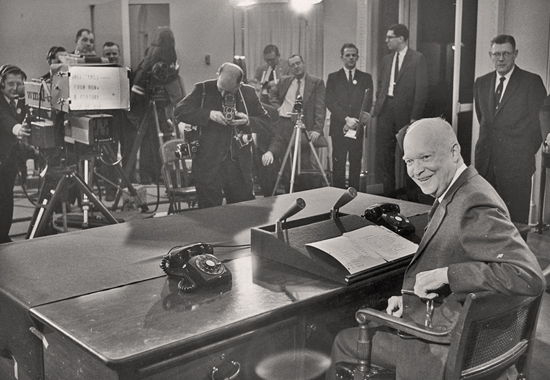
As a conceit, the MIC goes back at least to World War I, but it is popularly dated to Eisenhower’s ‘Farewell Address’ in 1961. As far as US presidential speeches/speechwriting goes, Eisenhower’s was a tour de force in every respect, but the reason why we read it today – or, rather, search for it on YouTube – is for the parts where the president urges the American citizens to pay attention to the “conjunction of an immense military establishment and a large arms industry [that is] new in the American experience,” while advising the American government to “guard against the acquisition of unwarranted influence, whether sought or unsought, by the military-industrial complex.”

Continue reading

How is Rape a Weapon of War?

This post summarises a piece for the European Journal of International Relations just published online. An inconsequentially different pre-publication version is also available for anyone unable to breach the pay wall.

UPDATE (8 March): Sage have kindly made the full EJIR paper open access until early April, so you can now get it directly that way too.


I’m sure you have reasons
A rational defence
Weapons and motives
Bloody fingerprints
But I can’t help thinking
It’s still all disease.

Fugazi, ‘Argument’ (2001)

‘Weapon of War’ could be many explanations and I’m not sure of any of them.

UNHCR official, Goma, Democratic Republic of Congo, June 2010

1. War Rape in the Feminist Imaginary

Rape is a weapon of war. Such is the refrain of practically all contemporary academic research, political advocacy and media reporting on wartime sexual violence. Once considered firmly outside the remit of foreign policy, rape is today labelled as a ‘tactic of war’ by US Secretaries of State who pledge to eradicate it and acknowledged as a war crime and constituent act of genocide at the highest levels of international law and global governance, a development which for some amounts to the ‘international criminalization of rape’. This idea of rape as a weapon of war has a distinctly feminist heritage. Opposed to the historical placement of gendered violence within the hidden realm of the private, feminist scholarship was the first to draw out the connections between sexual violence and the history of war, just as feminists fought to make rape in times of nominal peace a matter for public concern. Feminist academics have, then, pioneered a view of sexual violence as a form of social power characterised by the operations and dynamics of gender. Sexual violence under feminist inquiry is thus politicised, and forced into the public sphere.

But the consensus that rape is a weapon of war obscures important, and frequently unacknowledged, differences in our ways of understanding and explaining it. Continue reading

Real Men Don’t Rape: A Postscript

Apropos our earlier look at the rhetoric of anti-rape advocacy, Sarah again pointed me in an interesting direction. This time to Vancouver, where a familiar campaign was launched last year. Echoing a similar phraseology (We Are Man; My Strength Is Not For Hurting; Real Men Know The Difference), this one says: Don’t Be That Guy. As is the vogue, the focus is principally on intoxication, nights out and not taking advantage, accompanied by cod-parental instruction: Just because you help her home, doesn’t mean you get to help yourself; and Just because she isn’t saying no doesn’t mean she’s saying yes; and Just because she’s drinking doesn’t mean she wants sex.

What’s interesting is that this exercise in ‘behavioural marketing’ is now seen as a success, and being given significant credit for an apparent 10% drop in rape rates since 2010. To wit:

The reversal in the trend related to sexual assaults reflected the impact of the new education program, better training for police officers and more effective investigation and enforcement, [Deputy Chief LePard] said.

The exact causal balance here is unclear, and there are no firmer details on this gendered accounting for us to work with. There still seem to be some good reasons for scepticism, but if anyone does know of more comprehensive studies on the impact of men-focused campaigns, do share. Particularly interested to hear of any research into the effects of similar behavioural marketing as part of mass anti-rape efforts in the midst of militarised-humanitarian intervention, whether in Congo or elsewhere.

Seduction, Asphyxiation and the Postal Circulation of Military Masculinities

In the spirit of Sociological Images, some postcards recently acquired in Amsterdam. Principally produced to profit the French Red Cross and general effort in World War I, there’s also a more domesticated military masculinity apparent in the ‘Neerland’s Weermacht’ (Dutch Army) card posted in 1939. The artist for the middle set of four (the letter, the gas, the cemetery-orphanage, the seduction) is Louis Raemaekers.

Continue reading

Nothing Is Authentic Anymore: Disavowed Selves and the Lure of Realpolitik in ‘Tinker, Tailor, Soldier, Spy’ (2011) and ‘In The Loop’ (2009)

Know this: *great clunking spoilers ahead*.


The critical praise heaped on Tomas Alfredson’s version of Tinker, Tailor, Soldier, Spy reflects more than the hunger of intelligent audiences for post-Inception thrillers. Nor can it be explained merely by the excessive parade of grand thesps (Benedict Cumberbatch and the under-rated Stephen Graham both wasted, the former with a sub-Sherlock performance and the latter with a paper-thin bit-part, given historical fidelity by bad hair alone). Its visual and affective qualities are seductive and occasionally beautiful, but then so is its submerged vision of espionage and realpolitik.

The antithesis of Bond and Bourne, Tinker, Tailor offers up the almost forgotten Cold War as the stage for its intrigues. Although the voices are softer and the principals older, there is a more deadly game afoot. As Kermode comments, there will be large swathes of the audience who don’t know the political context at all. Not that it matters, since the detail (Hungary, the parallels with Guy Burgess, Anthony Blunt et al.) are but window-dressing for the appeal of George Smiley (silent, menacing, magnificent Gary Oldman). Contra the brashness of post-9/11 global political allegory-fictions, we are gently ushered into an epic game of chess, played by men. Men whose tools are wit, logic and cunning. Men from an analog age who use little pieces of card to alert them to potential break-ins.

Our contemporary operatives, even those of clear intellect and cunning are, like Bob Barnes in Syriana, always eventually compelled to revert to Hollywood expectations (explosions, gun fights, fisticuffs) to bring matters to their appropriate climax. Not in Tinker, Tailor. At one stage Smiley and co. require small handguns but, although drawn, they are never used. Barring the quasi-orgasmic final exchange between Bill Haydon and Jim Prideaux, our other vivid encounters with slaughter and disembowelment are after the fact, still, frozen scenes, crowned by flies. As if painted by Goya. We gulp and turn away, but what beautiful mutilations!

Continue reading

Understanding Peacekeeper Sexual Violence

Why do soldiers rape? When footage of peacekeepers from MINUSTAH, the UN mission in Haiti, gang-raping an 18-year old boy surfaced earlier this month, that question resurfaced with it. Official declarations have predictably stressed how unfortunate it is that the actions of ‘a few’ should taint the efforts of ‘the many’, although 108 Sri Lankan peacekeepers were expelled from Haiti for sexual exploitation in 2007, and another Uruguayan soldier was recently discharged for sexual relations with a Haitian minor. Certainly, patterns of similar abuse are not restricted to the Haitian mission. One of the more disturbing points in my brief fieldwork in the Democratic Republic of Congo was when an international human rights official told me, with an almost confessional seriousness, that they had feared more for their sexual integrity while travelling with UN peacekeepers than when interviewing Congolese soldiers.

When discussing rapacious African warriors, it is common to interpret sexual violence as part of a drive to accumulate resources or as the reflection of communal hatred in war. Peacekeeper sexual violence constitutes something of a control case in such debates, since it is much harder to link rape to these dynamics. There is no genocidal project for which peacekeepers are the foot soldiers, and they cannot really be said to be frustrated by poor pay and conditions. Certainly there have been links between sexual exploitation by UN peacekeepers and a kind of trade, although in the opposite direction than usually posited. In the case of UN missions, it has been peacekeepers who have exchanged goods for sex with locals, rather than using rape as a means of accessing additional resources for themselves (although they have also been implicated in other criminal networks for financial gain). Peacekeeper practices of sexual abuse are thus closer to sex trafficking and prostitution on a continuum of gendered exploitation than to models of rape as a tool of terror to facilitate resource capture.

Continue reading

We Are The Genuine Hegemonic Masculine!: A Note On Anti-Rape Politics

Friend, former Liberty colleague and Bad Reputation scriber Sarah Jackson drew my attention to a new campaign by End Violence Against Women aimed at men. That was their video. Thus far 188 people (hopefully mainly men) ‘agree’ on Facebook (as the campaign asks them to) that ‘Enough Is Enough’. As Sarah notes, this is the latest in a series of campaigns addressing men directly. They seem a direct response to that most common of feminist points about rape, namely that victims/survivors are not to blame and the focus should not be on them for what they wear, what they drink or how they express themselves but on the men who rape.

Obviously, consciousness-raising for men is necessary in all kinds of ways, and will be for at least as long as supposedly intelligent discussions continue to be dominated by pernicious cop-outs and questionable analysis. Any funding and attention to rape prevention is to be encouraged and supported. Let’s take that as read. But these campaigns are intended to be tools for advancing rape awareness and anti-rape politics, which makes it worth asking what kinds of awareness and politics they promote. How is it that they seek to recast ideas of appropriate manliness?

Continue reading

Race, Gender and Nation in ‘Game Of Thrones’ (2011)

Mostly garlanded by images poached from Winter Is Coming, Bitches. Also, *spoiler alert*. And now subject to discussion in a critical post by Charli Carpenter over at Duck Of Minerva.


At first sight, Game Of Thrones offers something rather different to the standard fantasy fare. Where Lord Of The Rings and its ilk deal in arch dialogue and grand quests, it provides a more gritty and twisted landscape, peopled with dwarves, bastards, spoilt brats, noblewomen who still breast-feed their near-pubescent sons, eunuchs, exiled criminals and incestuous twins. In one conversation, Baelish and Varys even discuss a Lord who enjoys sex with beautiful cadavers (fresh ones only). A fantasy not only of palaces and mystical objects, but also of the gutter.

There is a near-scandalous thrill to this aesthetic realism, especially when measured alongside the allegoral formality of The Chronicles Of Narnia or the cinematic marathons derived from Tolkien’s high Toryism. Where those source materials and corporate cinema required that sexuality be wrapped in chaste folds and circumvented as the higher union of pure love, Game Of Thrones can indulge lust, rutting and the explicit mention of rape. There’s even talk of homosexuality (although not for any of the linchpin characters with whom we are expected to identify). Bared breasts are the order of the day. Childhood tales filtered by HBO.

But this apparent radicality doesn’t go very deep, and in significant ways covers for a narrative saturated with race-thought and misogyny. Continue reading

‘Like A Machete’: Is Viagra A Weapon Of War Rape In Libya?

My friend and colleague Mark Kersten has been drawing my attention over the last weeks to a spate of stories about Libya in which it is claimed Gaddafi has been distributing Viagra as an inducement to sexual violence against ‘enemy’ civilian populations. Colum Lynch reported in late April that Ambassador Susan Rice had cited the use of Viagra and evidence of sexual violence during a meeting of the UN Security Council (although this itself is at least third hand – Lynch seems to have picked up the details from Reuters who were passed the information by a UN diplomat who was in the room). The story seems to have originated, or first surfaced, at The Daily Mail, which claimed “numerous reports” of Viagra use.

The testimony of Suleiman Refadi, an Ajdabiya surgeon, in this Al Jazeera piece is the closest thing to a direct claim that Viagra has been distributed to troops. But, as Lynch points out, Human Rights Watch followed up his allegations and say that Refadi had “no direct evidence”, which I assume means either that he himself hadn’t seen the Viagra and condoms, or that some had been found, but not in any pattern that would associate them with a strategy of war rape. Human Rights Watch have a number of reports and commentaries addressing rape in Libya, but do not seem to have found the Viagra claims credible enough to include. Now the International Criminal Court is investigating. Luis Moreno-Ocampo intimates that he has solid evidence for the claims and declares: “It’s like a machete…It’s new. Viagra is a tool of massive rape.”

That kind of blanket statement makes me suspicious. Reports are so far conflating (or not sufficiently distinguishing) two different claims: 1) that government forces are engaged in rape in Libya; and 2) that Viagra (and sometimes condoms) are handed out as an incentive or aid for that. Claim 1 is entirely plausible and there is already good evidence for it in the case of Libya. Elisabeth Jean Wood has done some important early work on the question of variation in wartime sexual violence and her early conclusions are that there are some contexts in which rape doesn’t occur in war. But the number of such cases is very small. Rape in war is overwhelmingly the norm. This should lead us to a number of questions about type, degree, form, causes and the exact sense in which we mean ‘tool’, ‘weapon’ and ‘strategy’. But reports of rape by soldiers are not in themselves at all surprising.

What is new is the second claim. Continue reading

How Much Rape Is There In The Congo (DRC)? And How Does It Matter?

Dominique Strauss-Kahn has been accused of a sex crime. After a week of free gossip about sordid secrets concealed by superinjunctions, and in the wake of the Assange controversy, the combination of a high profile financier-cum-left-winger with the whiff of sexualised domination has proved sufficient to displace attention from the Democratic Republic of Congo, which had earned a spike in coverage from a new report on the extent of sexual violence there.

The numbers are appropriately horrifying. Although I can’t access the full American Journal of Public Health paper from my usual entry points (itself frustrating: why lock up your vital statistical research behind a paywall while the media is reporting on it far and wide?), the abstract suggests the following: based on a representative household survey of 3,345 female informants from a 2007 survey added to some population estimates, it is suggested that some 1.7-1.8 million women in Congo have been raped during their lifetimes, and that between 407,000-434,000 (to the nearest thousand) of those have been raped in the last 12 months. A total of 3.1-3.4 million women are estimated to have been victims/survivors of ‘intimate partner sexual violence’, which I assume means not raped by strangers or officially ‘enemy’ soldiers.

Jason Stearns provides some useful context to argue that these numbers are not surprising given previous surveys, if somewhat more solid in methodological terms. The UN has been calling the DRC ‘the rape capital of the world’ for some time now, and there are a significant number of organisations working on these issues in situ. Indeed, the sheer scale of attention to rape in the DRC is spoken of as a logistical problem among those working there. While conducting fieldwork in Goma last year, I spoke to a UNOCHA representative who put their figures (which were not comprehensive) for agencies working on sexual violence in Eastern DRC at 80 international NGOs and over 200 local NGOs, as well as multiple elements of the UN system itself. Properly coordinating work between such a mass of groups (with wildly varying levels of skill and funding) in situations of violence and funding uncertainty is as difficult as you might expect.

This gestures towards one of a number of complexities and problems in the analysis and politics of wartime sexual violence.

Continue reading