(Dis)Embodied Methodology in International Political Economy

Nicki Smith

Following some previous discussion on similar themes, a guest post by Nicola Smith. Nicki is Senior Lecturer in Political Science at the University of Birmingham and has published on a diversity of issues surrounding globalisation and social justice. She is currently writing a monograph on Queer Sexual Economies for Palgrave and has published articles in Sexualities, Third World Quarterly and the British Journal of Politics and International Relations. Other related publications include Body/State and Queer Sex Work. The following piece has been developed as part of a book project on methods in critical International Political Economy, edited by Johnna Montgomerie, and a version of it was recently presented at the semi-plenary session on ‘The body in/and international relations’ at the 8th Pan-European Conference on International Relations in Warsaw.
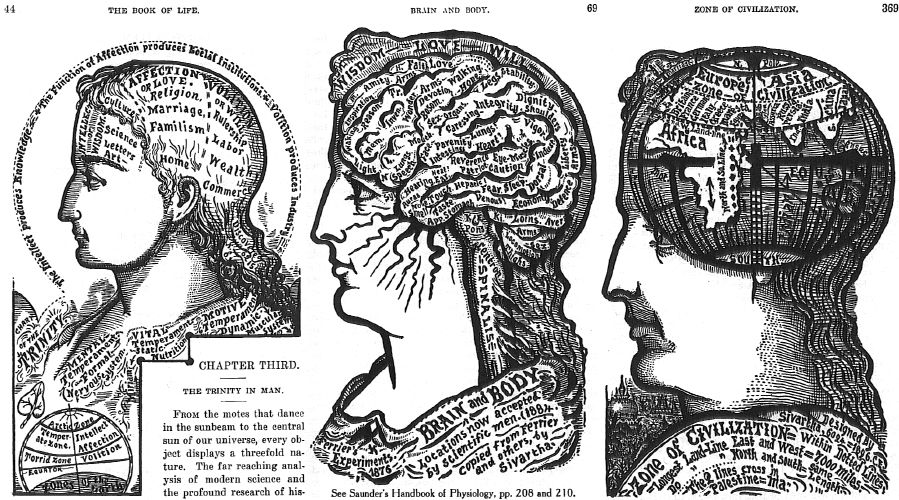

The Book of Life - Brain and Body - Zone of Civilization

There was a time when I understood International Political Economy (IPE) to mean ‘bodies of thought’ (realism, liberalism, Marxism, etc.) and so, not knowing which body to have, I tried each of them on for size. Realism didn’t fit (too tight); liberalism felt wrong (unethically-sourced materials); Marxism looked good (but I lacked the discipline to maintain it). Social constructivism suited my friends and felt pretty comfortable, so this was the body I decided to have. As a social constructivist, I did a lot of work on ideas (‘discourse’) and thought a lot about other bodies of thought. But what I didn’t do was to engage in thought about bodies. Bodies didn’t seem to happen in IPE; they appeared to exist somewhere else entirely, to be accessed only via metaphor (as in the above description) but always somewhere ‘over there’, never as the living, breathing stuff of the discipline. Bodies – or so I assumed – were off the cards.

In other contexts, though, I was thinking a lot about bodies: from the personal (‘will my body be able to produce another body, a child?’) to the professional (‘do I under-perform in job interviews because I gesticulate wildly when nervous?’) and the political, too (‘the government should de-criminalise the sale of sexual services’). Indeed, while I was writing a PhD and then monograph about states and markets – globalisation, economic development and social justice in the Irish Republic – it was bodies that I loved talking, reading, arguing about. I just didn’t see them as ‘IPE’.

In fact, bodies had been there all along; I hadn’t seen them because I hadn’t been looking.

Continue reading

The Office Of Blood; Or, ‘The Act Of Killing’ (2012)

The images and scenes we discuss below are not those of a conventional film plot. Nevertheless, *spoiler warning*.


Act Of Killing Anwar Screen

It’s hard to know how to write about The Act Of Killing, the unsettling, surreal, humanising, nauseating portrait of an Indonesian death squad that is generating such interest. Joshua Oppenheimer, Christine Cynn and the mainly anonymous Indonesian crew (anonymous for fear of retribution) have conjured something quite extraordinary into the world. Laced with caustic insights into atrocity, empathy, memory, commodification, artifice, power, solidarity, fear, self-deception and play.

One million people were killed in Indonesia in the mid-60s following a military coup. The massacres which aimed at obliterating “communists” (along with ethnic Chinese and intellectuals) have been largely undocumented, with many of the perpetrators occupying prominent positions in the Indonesian government. Without wishing to give too much away or to channel and pre-empt the multiple, contradictory emotions that it is bound to elicit, the main conceit is a film within a film where the murderers re-enact their murders, all the while debating whether to recreate this method, or whether that victim would have cried out in that way, and sometimes whether they might just be showing us too much truth in their performances of the past. At one point there is the satisfied declaration that these scenes of re-articulated horror will be seen as far away as London! Part voyeurs, part students, we are thus implicated in their narratives, viscerally. Aghast, covering our eyes, retching when they retch, laughing guiltily at moments of shared humanity.

The Act Of Killing is a deliberate move from the ‘theatre of the oppressed’ to the ‘theatre of the oppressor’, a move that is challenging not simply because we – those ostensibly passive spectators – are made to face deeply uncomfortable ‘truths’ but also because it is above all a movie that painstakingly documents what Hannah Arendt, in a different context, called the ‘banality of evil’. Whilst there is nothing anodyne or sanitised about these gruesome renactments, they are almost flippantly juxtaposed with the mundane rituals, pedestrian encounters, and even moments of compassion and kindness that make these men all too human. The result is an audience suspended between empathy and disgust, between acceptance and incredulity, and between the absurd and the quotidian.

The Act Of Killing, for us at least, is a gut-twisting manifestation of sometimes nebulous socio-political insights. Insights such as Agamben’s ‘camp’ or Foucauldian ‘state racism’: concepts that suddenly unfold themselves before us on film, embedded as they are in a context otherwise deeply unfamiliar to us. But although seemingly focused, somewhat narrowly, on Medan, Indonesia the ambit of The Act is far greater: it offers a compelling commentary on the connate imbrication of capitalism, commodification, legality, sexual discrimination, racism, and their inescapably violent manifestations. It is less a document-ary about Indonesian history than a meditation on violence, memory and subjectivity themselves, a provocation made universal precisely because of its lingering gaze on these few aged torturers.

Continue reading

Russia’s Anti-Gay Laws: The Politics and Consequences of a Moral Panic

A guest post from Cai Wilkinson on recent LGBTQ developments in Russia. Cai is a Lecturer in International Relations in the School of Humanities and Social Sciences at Deakin University, Australia. Her research interests include critical approaches to security, fieldwork-based securitization studies, norm contestation and resistance, and genders and sexualities in International Relations. Her geographic focus is on the former Soviet Union, and she is currently working on projects about LGBT rights and human rights norms in Kyrgyzstan and Russia. She received her PhD from the University of Birmingham, UK, in 2009 for a thesis entitled Interpreting Security: Grounding the Copenhagen School in Kyrgyzstan, which drew upon seven months of fieldwork conducted in Bishkek and Osh in the aftermath of the 2005 overthrow of the Akaev regime. Her work has been published in Security Dialogue, Central Asian Survey and Europe-Asia Studies, and she has contributed chapters to volumes on securitization theory, statehood in Central Asia, and fieldwork-based research methods. Cai is also Chair of the International Studies Association LGBTQA Caucus.


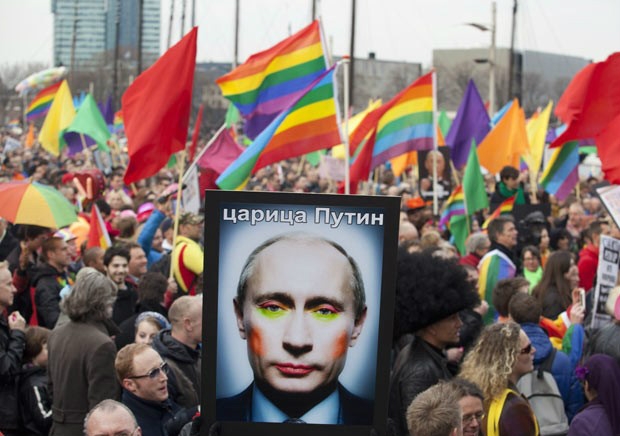
Russia Gay Pride Putin

The issue of LGBT rights in Russia first properly came to mainstream international attention in March 2012, when the St Petersburg Duma passed a law prohibiting “public acts aimed at the propaganda of sodomy, lesbianism, bisexualism and transgenderism amongst minors“. The law provoked an international outcry, including calls for tourists to boycott St Petersburg, sister-cities to consider cut off ties with Russia’s “window on Europe”, and condemnation from the EU, with the European Parliament passing a resolution noting that it was “gravely concerned by developments which restrict freedom of expression and assembly on the basis of misconceptions about homosexuality and transgenderism” and calling on Russia and other countries considering the adoption of similar legislation to “demonstrate, and ensure respect for, the principle of non-discrimination”.

In actual fact, this was not the first “anti-gay” law to be passed in Russia; Ryazan Oblast’s Duma adopted an amendment to local legislation to outlaw the “propaganda of homosexualism” in May 2006, and Arkhangelsk and Kostroma Oblasts followed suit in 2011. Yet the passing of the St Petersburg law proved to be a catalyst for other administrations to introduce similar laws, with a further six subsequently adopting similar legislation and others considering it (so far only the Moscow Regional Duma has rejected legislation). Most significantly, these laws paved the way for consideration of a federal bill outlawing the “propaganda of non-traditional sexual relations to minors”, which the Russian Duma passed on June 11 despite continuing international condemnation and the fierce opposition of local LGBTQ activists and their supporters, who frequently endured physical attacks and arrests while protesting against the law.

Despite being a long-time Russia-watcher, the swiftness at which anti-gay laws have spread and at the ferocity of both popular and state homophobia has been striking. This is not, I should add, simply the result of not paying close enough attention. As a queer undergraduate student studying Russian with a compulsory year abroad to plan for, I was extremely conscious of attitudes towards homosexuality and queerness and the stigma and dangers that local LGBTQ people faced (Laurie Essig’s Queer in Russia was an essential primer), and was extremely careful not to out myself to anyone who wasn’t definitely queer-friendly while living with families first in Krasnoyarsk and then Voronezh in 2001-2002.

At the same time, it appeared until the mid-2000s that slowly but surely Russia was becoming more tolerant. Homosexuality was decriminalised in 1993 without any notable opposition, declassified as a mental illness in 1999, and the percentage of survey respondents advocating for the “liquidation” of homosexuals fell from 31% in 1989 to 22% in 1994 and all of 5% in 2013 (although inevitably survey results are heavily contingent on the phrasing of questions and, as Alexander Kondakov demonstrates, attitudes to homosexuality are no exception). Attempts to recriminalise homosexual relationships between men failed in 2002, 2003 and 2004.

Popular culture in the first half of the 2000s appeared to offer further evidence of the trend: Continue reading

Gender Trouble, Racial Salvation and the Tragedy of Political Community in ‘Game Of Thrones’ (2012-2013)

A shamefully-delayed commentary on Game Of Thrones, Seasons the Second and Third, since the first one went so well. As before, *great clunking mega spoiler alert*. You have been forewarned.


Recall three justifications for an analysis of pop culture politics. First, for all their superficial escapism, cultural products represent political ideas and ideologies, and do so in ways that may matter more than what we receive through the news. They are full of desires and fantasies that refract and reflect (and to some extent are themselves) real politics. Second, you can criticise the thematics of the show without hating the show. In fact you can do it while loving the show (and finding the fact of that love interesting in itself). In other words, look, I really like Game of Thrones. Moreover, that as great as comparisons with the source text can be, a TV series is a different kind of beast and is entitled to judgement on its own merits. Third, objections that “it’s just a show” don’t wash. If you’re reading this it’s because you have some sense that there are ways of understanding and being embodied in even the lowest of cultural objects (paging Dr Adorno!). That doesn’t mean that the substance of the relationship between media and politics is simple or settled, but it’s there.

Let’s start where we left off last time. It was claimed in some quarters that the plot subverts – even refutes – certain standard typical ideas about the feminine, and critiques feudal social relations along the way. So, rather than being a “racist rape-culture Disneyland with Dragons”, the many strong, complicated, agentic female roles in fact set Game of Thrones as a critique of patriarchy. But only the most one-dimensional of sexisms regards women as utterly abject. The mere presence of intelligent, or emotionally-rounded, or sympathetic female characters is not enough (and that it might be taken as inherently ‘progressive’ probably tells us a lot about contemporary gender politics). No, the issue is how a cultural product deploys some common tropes of masculinity and femininity and, with appropriate caveats about not reading every plot twist as an allegory, how those celebrate or reinforce certain orderings of gender. So a narrative which makes the family the primary unit, and which does so in a conventionally heteronormative register (twincest notwithstanding), is selling a particular idea of gender (and of community and nation and legitimate violence and…).

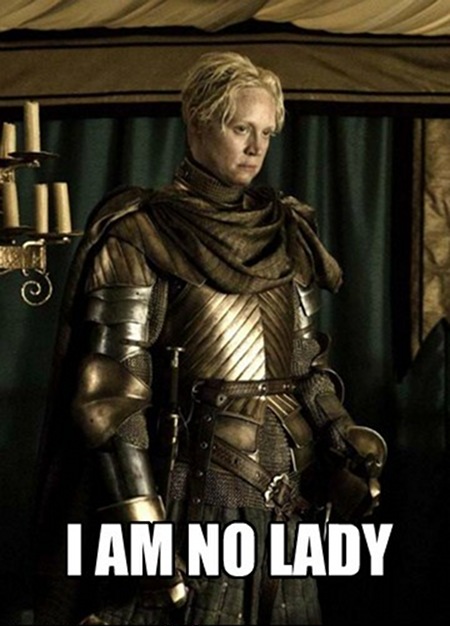
In Seasons 2 and 3, a few female figures threaten to upset the patriarchal framework. As before, there is Arya, astute, principled, fierce, and eager to promise death to her enemies. Brienne of Tarth, giant, loyal, lethal, dismissive. Ygritte, rugged, capable, sexually dominant, a hardened killer with no respect for rank (“If you ripped my silk dress, I’d blacken your eye”).[1] And yet in each case the threat is contained and wrapped in some familiar gender constraints.

Continue reading

Ten Reasons Not To Write Your Master’s Dissertation on Sexual Violence in War

Marsha Henry

A guest post, following on from some previous reflections on gender and teaching and the politics of pedagogy, from Marsha Henry. Marsha is Lecturer in Gender, Development and Globalisation at the LSE Gender Institute, where she teaches, amongst other things, a course on gender and militarism. Her most recent research is into sexual exploitation in peacekeeping missions and peacekeeper labour hierarchies, and she is also, with Paul Higate, author of Insecure Spaces: Peacekeeping, Power and Performance in Haiti, Kosovo and Liberia (Zed, 2009). With Pablo, she recently co-edited a special issue of International Feminist Journal of Politics on ‘Rethinking Masculinity and Practices of Violence’. This post is based on a presentation given in San Francisco at the International Studies Association in April 2013.


It’s the first day of Lent term and the students are nervously gathered in a small stuffy classroom.  When I walk in and head towards the front of the room, the group falls silent. I introduce myself and we start a round of introductions and I ask students to speak briefly about their interest in the course. The first student tells me, and the class, that she’s in IR (International Relations), and is keen to take the course because she’s interested in studying sexual violence in war.  Another student turns to her, incredulous because she too is interested in that exact subject, and that furthermore she has worked for 3 months in the Democratic Republic of Congo (DRC) and has ‘seen a lot’. A few more students echo similar interests and I’m trying hard not to stereotype these students. But it’s difficult. A mythical figure is beginning to crystallise in my head and I can’t stop it. This figure is young, female and possibly middle-class, sometimes Scandinavian. She’s studying IR, Human Rights or Gender Studies. A few male students also indicate an interest. Some indicate interest in other topics, but there is a numbers problem from the outset. I feel uncomfortable as this is the third year that I’ve taught this course, each time allotting only one lecture week to the subject of sexual violence in war, and subsuming it under the larger heading of ‘gender, sexualised violence and work in militarised contexts’. Each year students have asked for more time to be devoted to the subject, for the lecture week to be moved up, and for their to be less focus on diversity in the armed forces. When students come to me during office hours to discuss the scope of their dissertations on the subject I fidget. After a few conversations with colleagues, I decide I need to start compiling a list – of compelling reasons why students should not write on the subject of sexual violence in war. But what would I do with this list? Can it be shared? And what of my responsibility not to teach on the subject?

10: Writing About ‘It’ Narrows The Political Focus

As a committed feminist, I’m all for drawing significant attention to the ways in which women experience conflict in distinctive ways. But the concentration of interest on sexual violence in wartime often leads to a neglect of the ways in which women experience violence (labelled as sexual or not) in peacetime. This noticeable singular focus on the topic also narrows the possibility of dislodging categories and subject positions. It is often assumed in class conversations, essays and subsequently dissertations that women are the victims and men are the perpetrators of this form of violence. This assumption appears in written work in a way that both masks the possibility of other positionings within the perpetrator-victim continuum, as well as the structurally embedded way in which sexualised violence occurs and is experienced by individuals and communities. This failure to explain the pervasiveness of sexualised violence against women tends to reinforce the binaries and provides a rather fixed aperture for analysing sexual violence in war and its consequences.

9: Researching The Topic Inspires Voyeurism

I’m squirming in my seat as one of the students smiles widely while she explains her interest in working on the topic of sexual violence as a weapon of war. She could be nervous explaining herself in front of her peers and her professor. She could be feeling awkward about the subject matter. She could be conforming to gendered expectations of women in the classroom where female students who express themselves confidently or through feminist rhetoric are categorised as aggressive. If feminist critique is pleasurable, how do we ‘do’ our analysis of sexual violence in wartime, paying attention to experience, trauma, and moral responsibility? There is a tendency, in making visible the ‘horror’ of it all, that students sensationalise the subject by focussing on the minutiae, the details and the thick descriptions. Honing in on the bodily experience of rape, for example, can remove rape in war from the wider social, cultural, economic and political context in which it always takes place. It can be an abstraction of the total experience. The affective impact is that readers of these dissertations distance themselves from subjects in the studies. Those who are victims and/or survivors and end up consciously or unconsciously performing what Donna Haraway referred to as a god-trick.

Continue reading

What We Talked About At ISA: Teaching Gender and War: Some Reflections on Negotiating the Five Stages of Feminist Consciousness/Grief in Undergraduate Students

Victoria BashamA guest post in our current series on ISA presentations from Victoria Basham, who is Senior Lecturer in Politics at the University of Exeter. Victoria’s research draws on feminist and sociological theory to explore militaries, militarism and militarization. In War, Identity and the Liberal State (Routledge, 2013), she draws on original fieldwork research with members of the British Armed Forces to offer insights into how their everyday experiences are shaped by, and shape, a politics of gender, race and sexuality that not only underpins power relations in the military, but the geopolitics of wars waged by liberal states. Victoria is also a working towards the launch of a new interdisciplinary and global journal called Critical Military Studies which seeks to provide a space for dialogue among scholars questioning the very idea of military organisation and armed force, and seeking to offer new insights into organised and state-sanctioned violence by exploring its wider significance and effects.


Despite the burgeoning literature highlighting the significance of gender to global politics, research into international studies curricula suggests that gender is rarely dealt with extensively or even adequately by ‘top ranking’ UK Politics and International Relations (IR) departments. A cursory glance at popular, introductory undergraduate textbooks in Politics and International Relations also reveals that whilst feminism may be included as an approach, accounts of power as institutionally situated remain dominant. As such, many undergraduates only experience brief introductions to feminism, gender, and issues of sexual identity, if anything at all. So when I was given the chance to design and teach two research-led undergraduate courses in 2009, I saw it as an important opportunity: both to provide students with insights into how gender animates global politics, and to engage in a form of ‘feminist pedagogy’ by encouraging students to look at themselves and the world around them critically and analytically, through the interlocking lenses of gender, race, class and sexuality.

My experience of delivering these courses over the past few years has been largely positive. On more than one occasion students have commented that engaging with feminist theories and praxis had ‘opened their eyes’. However, in other students the experience of studying the global through gendered and postcolonial lenses elicited confusion, anger and pain on their part, at least initially. Indeed, as I have continued to teach these courses, I have often thought of student reactions as akin to Kübler-Ross and Kessler’s five stages of grief or what Patti Lather has aptly called ‘stages of feminist consciousness’.

One possible reason for this is that for feminists, the question of ‘What is Politics?’ necessarily includes accounts of power that are personal, emotional, and everyday. Given that trying to account for how power shapes and is shaped by people’s daily lives is not always readily accessible through a focus on institutions and the like – the usual stuff of politics and IR analysis – many feminist teachers are likely to encourage their students to think through how ‘the personal is political’ in their experiences and to re-personalise an often depersonalised and sanitised set of issues including war. Many of my students (though not all, and rarely, it should be said, in a linear fashion) experience moments of denial, anger, bargaining, depression and acceptance when taking my courses. Moreover, in reacting to their comments and in trying to anticipate their turmoil I often find myself angry, disbelieving, in negotiating mode, saddened and sometimes having to accept, and very grudgingly I’ll admit, that not all of them believe that gender is as significant to war as I do.

Continue reading

What We Talked About At ISA: ‘Afghan Masculinities’: The Construction of the Taliban as Sexually Deviant

Taliban 1

The paper I presented earlier this month at the International Studies Annual Conference held in San Francisco looks at how Afghan masculinities have been represented in and by Anglo-American media. The words ‘Afghan man’ conjure up a certain image, a pathologised figure that is now associated with most males in Afghanistan. The paper analyses this figure of the ‘militant’ Afghan man, most strikingly captured by descriptions of the Taliban and juxtaposes it with the less popular, though still familiar trope of the ‘damned’ Afghan man, embodied in the figure of the Afghan President, Hamid Karzai. But here I focus on a particular construction of the Taliban as sexually deviant, (improperly) homosexual men.

Jasbir Puar, in her trenchant appraisal of today’s war machine and the politics of knowledge that sustains it argues that the depictions of masculinity most widely disseminated in the post 9/11 world are terrorist masculinities:

failed and perverse, these emasculated bodies always have femininity as their reference point of malfunction and are metonymically tied to all sorts of pathologies of the mind and the body – homosexuality, incest, pedophilia, madness and disease.

Whilst representations of al-­Qaeda as pathologically perverse have permeated the Western mainstream, the Taliban because of its historically low international profile has escaped that level of media frenzy. The attention it does get, however, is almost always mired in Orientalist fantasies of Eastern men as pathologically disturbed sodomisers. The ‘high jack this fags’ scrawled on a bomb attached to the wing of an attack plane bound for Afghanistan by a USS Enterprise Navy officer, while in no way ubiquitous, is certainly an edifying example of our image of the Taliban as perverse and not quite “normal”.

This perversity of the Taliban has been largely attributed to their madrassa upbringing, an all-­male environment and their concomitant attitude towards women. Continue reading

The Personal is Political, But Is It IR? On Writing as a Mother and Feminist

Annick WibbenThe penultimate post in our methodology and narrative mini-forum, written by Annick T.R. Wibben. Annick is Associate Professor of Politics and International Studies at the University of San Francisco. She’s been thinking about narrative for a long time, but rarely writes autoethnography. The piece featured here was originally written in 2006, but it’s taken her this long to find a suitable home for it…not to mention the courage to let it go out into the world. When she is not thinking about narrative (or tweeting about feminism, security and violence @ATRWibben), her research at the intersections of feminist theory, security studies, and continental philosophy, aims to radicalize security studies and to challenge the politics of security. In Feminist Security Studies: A Narrative Approach (Routledge, 2011), she examines meanings of security legitimized in existing practices and proposes an opening of the security studies agenda by drawing on narrative approaches. So, really, she’s never not thinking about narrative.


So here I am; it is 9:30am. I am sitting in a room with other women at our weekly Friday writing group. We call ourselves the Writing Warriors, as much to describe what we’re doing as also to encourage ourselves to continue doing it. Most of us are untenured still, which adds an extra dimension to the task of writing – must be productive, must publish! Many of us have small children and when the writing stops, that’s what we talk about: How do we deal with the challenges of combining motherhood and an academic career. We exchange recommendations for childcare and kid-friendly restaurants; we give advice on breastfeeding, potty-training, and where to buy healthy snacks (we certainly don’t have time to make them). Sometimes one or more of us have to miss the writing day (or part of it) when a child is home from school, a babysitter is ill, or we just cannot focus on our own research because we need to catch up on teaching or service commitments (of which we all have plenty, of course).

So here I am; I arrived late today. Only a few minutes late, but late enough to be occupied still with what I left behind in the rush to get here as close as possible to 9am when we meet, greet, talk about our writing plans for the day, and then start writing, promptly at 9:15am. I am wondering should I have left earlier. When? I could have skipped breakfast. I could have ignored my daughter’s requests to read her a story before leaving. Should I not have bothered to throw in the load of laundry? Or, to wipe off the food from the high-chair? I could have gotten here a few minutes earlier…

So here I am; writing IR. I am an international relations scholar, so this is what I do, I write IR. I need to convince myself that this is what I am doing, say it again: I write IR. I write IR. As I repeat these words, something else pops into my mind: Sam I am, I do not like that Sam I am. I do not like green eggs and ham. I do not like them Sam I am… just like the character in Dr. Seuss’ children’s book needs to be convinced to try green eggs and ham just like I need to convince myself, that I am writing IR.

So here I am; staring at the blank page. Continue reading

Rethinking Masculinity and Practices of Violence

The modified text of an introduction written with Marsha Henry for our special issue of International Feminist Journal of Politics on ‘Rethinking Masculinity and Practices of Violence in Conflict Settings’ (trailed here), which came out in December 2012. The full text of the issue is currently freely available. I don’t know for how long, so get to it!


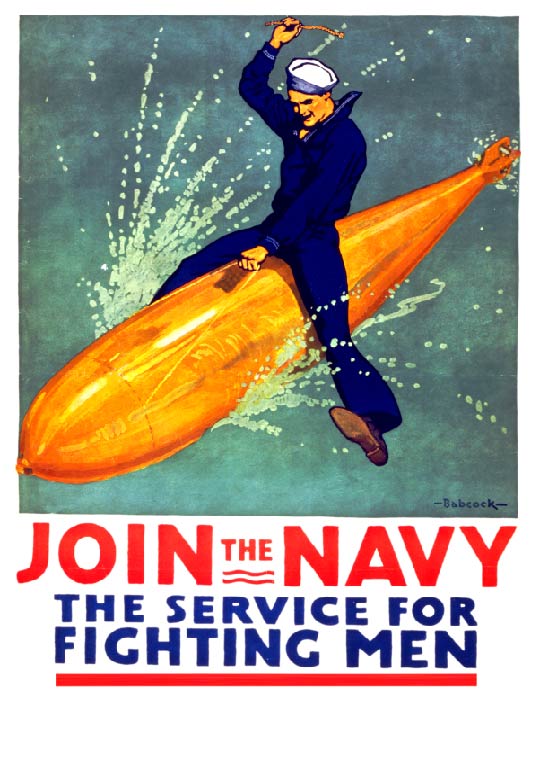
Join the Navy - The Service for Fighting Men

Why rethink masculinity and conflict? After all, the connection of men and masculinities to organised (and seemingly unorganised) violence has been subject to considerable academic scrutiny over the last decades, not least as part of the feminist critique of disciplinary International Relations. It is now increasingly common to both note the unequal character of gendered violence (it is predominantly men who do the killing and the maiming) and to stress the contingent and sometimes paradoxical status of this situation (women kill and maim too, and the content of ‘man’ and ‘woman’ varies significantly over time, space and context). The analysis of gender within global politics has also moved beyond the level of the state and war to interrogate the full spectrum of social life, from popular culture to political economy. And yet elite institutions still prove stubbornly resistant to teaching gender, feminism and sexuality within ‘the international’, despite introductory texts which increasingly offer such insights to the curious student.

Although you wouldn’t know it from some of the caricatures in circulation, feminist and gender scholars write often of multiplicity in masculinities, of varied and shifting constructions of gendered agency, and of representations of violence as themselves constitutive of gender, rather than merely reflective of a pre-existing distribution of essences. Some, like Melanie McCarry, have become rather sceptical of this situation, warning that the actions and power of men themselves are obscured in the consensus that there are many masculinities. In other words that multiplicity, discourse and construction are not advances in theory, but ways of displacing responsibility away from concrete male perpetrators. At the same time as they direct attention to the material practices of men such criticisms also tend to gloss over rich and situated examples of critical theorising along exactly those lines. A different brand of critic has sometimes suggested that feminism may be incapable of properly analysing the variety of gendered experiences in conflict. But here too, a comprehensive history of the field instead reveals many close and nuanced considerations of men and women at war.

Nevertheless, ambiguities do persist in the way feminist and gender scholars describe and account for masculinity. Against this background, a number of problems come into sharper focus. First, how are masculinities and violences connected in specific locations of power? Second, how do these connections play out internationally, in the interactions between political communities, however understood? Third, just how related are gendered identities to fighting, killing and dying in conflict settings? And fourth, how do the complexities of violence situated in this way reflect back onto theorising about gendered hierarchy and difference?

Some of these questions are more familiar than others, but the collection of articles presented in our special issue of International Feminist Journal of Politics substantially addresses them all (I know, get us, right?). Continue reading

Sour Lips: A Review

Anyone who followed the controversy over the fictitious Gay Girl in Damascus blog, created by Edinburgh-based US graduate student Tom MacMaster writing as Amina Arraf, might have despaired of the prospects of subalterns speaking for themselves. Female, lesbian, Arab, and an anti-Assad protester, MacMaster’s Amina quickly became a posterchild of the Arab Spring for a wide swath of the liberal media and activist blogosphere. For those cognizant of contemporary critiques of homonationalism against the backdrop of pervasive homophobia, Amina’s dispatches from the frontline seemed a perfect embodiment of left liberal fantasies about the possibilities for progressive sexual politics in a time of revolution. Yet if critics such as Joseph Massad have been accused of dismissing subjects who don’t conform to their theoretical predilections, the Amina hoax gestured at an opposite, if no less insidious, temptation: that of desperately seeking subjects who confirmed theoretical utopia.

Continue reading