The Offshore World

In amongst a typically judicious review of Treasure Islands and Winner-Take-All Politics, David Runciman draws a suggestive comparison between the contemporary politics of financial ‘mobility’ and the legacy of colonialism.

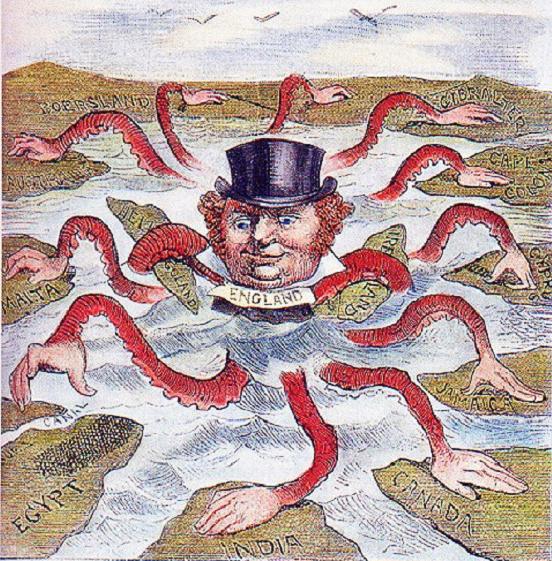
Shaxson’s book explains how and why London became the centre of what he calls a ‘spider’s web’ of offshore activities (and in the process such a comfortable home for the likes of Saif Gaddafi). It is because offshore is the offshoot of an empire in decline. It perfectly suited a country with the appearance of grandeur and traditionally high standards, but underneath it all a reek of desperation and the pressing need for more cash.

As Shaxson shows, many of the world’s most successful tax havens are former or current British imperial outposts…What such places offer are limited or non-existent tax regimes, extremely lax regulation, weak local politics, but plenty of the trappings of respectability and democratic accountability. Depositors are happiest putting their money in locations that have the feel of a major jurisdiction like Britain without actually being subject to British rules and regulations (or British tax rates)…

…The other thing most of these places have in common is that they are islands. Islands make good tax havens, and not simply because they can cut themselves off from the demands of mainland politics. It is also because they are often tight-knit communities, in which everyone knows what’s going on but no one wants to speak out for fear of ostracism. These ‘goldfish bowls’, as Shaxson calls them, suit the offshore mindset, because they are seemingly transparent: you can see all the way through – it’s just that when you look there’s nothing there.

In some senses this confirms an established story. Imperialism 101. For others, it will unsettle the idea of globalisation and inter-dependence as essentially the negation of great power politics.

Continue reading

Martin Luther King as an international thinker?

Monday 17 January marked the official US holiday honoring Martin Luther King, Jr. While watching Monday’s Democracy Now! program, featuring substantive excerpts from King’s speeches,  the clarity with which he connected the domestic fight for equality to international politics, in particular poverty and war, struck me. The international aspects of King’s thinking, I believe, are important for two reasons.

King’s Radicalism

First, it challenges the interpretation of King as an insufficiently radical leader offered by some critics, and the co-option of King’s legacy not only by “moderate” liberals but also by conservative political figures in the US. King has become a symbol in the public consciousness of a safe reformism and a favorite icon for the type of liberal who abhors radicalism above any other political sin. As Michael Eric Dyson says, “Thus King becomes a convenient icon shaped in our own distorted political images. He is fashioned to deflect our fears and fulfill our fantasies. King has been made into a metaphor of our hunger for heroes who cheer us up more than they challenge or change us.”

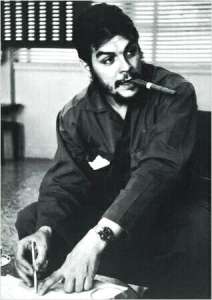
A personal anecdote to illustrate the point: a couple of years ago while handing over the editorship of Millennium to the incoming editorial team, one of the new editors commented on the large poster of Che Guevara that hangs on the Millennium office door. The Che poster, so far as I know, predates most of us currently associated with the journal, therefore I suggested it should stay. I then asked why Che should go. My colleague suggested that Che’s participation in revolutionary violence made him an inappropriate icon – in many academic disciplines this might be a rather devastating point, but International Relations is full of characters far more violent and less admirable than Comrade Che – see Paul’s post on Kissinger, for example.

When asked who might better grace the walls of the office my colleague suggested Martin King or Mohandas Gandhi (a political figure subject to a similar post-hoc liberal deification), with their key qualification as acceptable iconography being that they had not participated in political violence. While I have a great deal of sympathy for non-violence, my own introduction to both King and Gandhi came through the study of non-violence political strategy, the liberal (and I think my colleague would gladly accept that identification) embrace of King or Gandhi, paired with the repudiation of Che, is (unintentionally?) disingenuous.

It’s a disingenuous embrace because it insists that the first rule of acceptable political action is a renunciation of physical violence, while at the same time turning a blind eye to the violence institutionalized in the state through everyday police brutality and legalized/legitimized imperial warfare, as well as the structural violence inherent to global capitalism. This misses the radical content of non-violence as practiced by King and obscures the link that exists between non-violent agitation and armed resistance. The political commitments and motivations of King and Che are remarkably similar, even as their fundamental orientations (Marxism vs. Christianity) and tactics (non-violent direct action vs. guerrilla insurgency) diverged. Continue reading

Austerity, USA

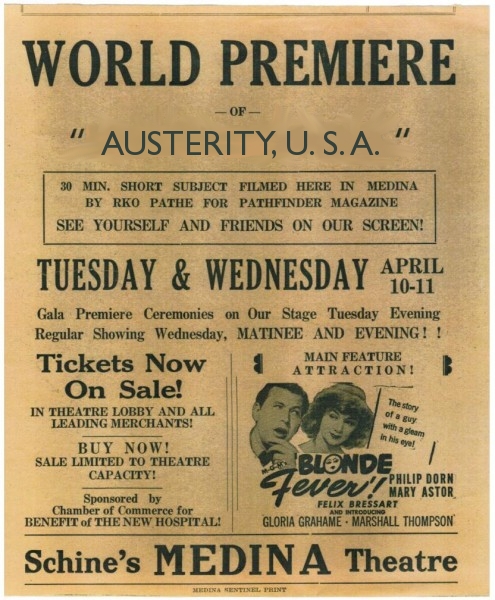
I’ve just returned from the “motherland” and bring tidings from a strange and far away place: Austerity, USA.

Gin and Tacos gave me a special gift just in time for Christmas. It seems the matriculating class of House Republicans have big plans for the country. The austerity fear mongering has reached new heights of hyperbolic cynicism as Republicans try to make it possible for states to declare bankruptcy. You can find details, with extra rage, here. The key points are that bankruptcy proceedings would allow states to renege on contracts with public sector unions and contract out public services, walk away from public sector pension obligations, and sell off public land, parks and buildings. A refutation of this obviously stupid and destructive policy, with the appropriate amount of anger and vulgarity, can also be found on Gin and Tacos, here. Finally, here’s the plan from the ideologues themselves, in case you thought we were making this shit up.

As if that were not enough to get the blood boiling, the incoming House Republicans have re-written the rules for the federal budget. The new rules will alter the current pay as you go scheme, which requires offsetting entitlement increases or tax cuts with tax increases or benefit cuts – which they did before in 2000, before the Democrats reinstate the rule in 2006. Geniuses that they are, the incoming Republican majority plans to eliminate the necessity of offsetting tax cuts – details here, and the actual new rules here. For the time being it seems that, at least in the US House of Representatives, we’ll be pretending that tax cuts do not cost money and are an effective way to cut the deficit and boost economic growth, all evidence to the contrary. When I add this to the pre-Christmas compromise on the Bush Tax Cuts, which not only extended an expensive and unwarranted tax cut to the wealthiest 2% of US taxpayers but also added an extra cut to inheritance tax as well, there is enough bad news here to push any angry leftist from thundering rage to child-like weeping. Continue reading

Ethics of Austerity 3: Cynicism, Sincerity and Fear

“You ain’t never been no virgin, kid, you were fucked from the start.”

-Titus Andronicus, “A Pot in Which to Piss

Police Vodafone protesters oxford street

Police protect Vodafone store from the threat of public exposure of truth.

And you have to wonder what it will take for serious people to realize that punishing the populace for the bankers’ sins is worse than a crime; it’s a mistake.

Paul Krugman

Of obedience, faith, adhesiveness;

As I stand aloof and look there is to me something profoundly

affecting in large masses of men following the lead of those who

do not believe in men.

-Walt Whitman, “Thought”

Hypothesis

The winter air has turned cold enough, has pressed in with its full weight, so that there is no more space for lies. The truth of crisis is that the powerful and the wealthy do not take responsibility, they assign it; they do not suffer their follies or their sins, they pay their penance in the currency of our lives.

We’ve spent the last few years living with the anxiety of impending doom, spurred on by hustlers of panic, addled prophets of economic Reformation, and Janus-faced managers of public interest.

Yet, despite the prolonged disaster-foreplay, the consummation of this crisis was always going to be “us against them” and never “we’re all in it together.” Continue reading

The fallacious reasoning of Theresa May

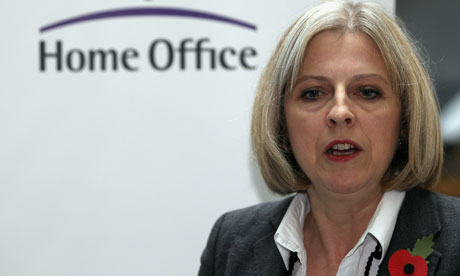
Last week’s speech by Home Secretary Theresa May on the government’s intention to repeal some recent equality legislation was ironically and comprehensively overshadowed by the media frenzy about the impending lavish nuptials of the future King of the Realm to a Lowly Commoner. This may help to explain a little why the vacuous, fallacious and bizarre reasoning at the heart of it has been largely unremarked upon.

Overall, the speech sought to justify the repeal of the clause of the 2010 Equality Act which required public bodies to consider how they might address relevant socioeconomic disadvantages when making strategic decisions.  My interest in this post is not to make the political case for this clause or not – rather it is to explore the reasoning offered by May in the speech that seeks to banish it into a category unrelated to inequalities of gender, race, religion, physical ability and so on.

The core tension emerges because throughout the speech May is desperate to present herself as a champion for gender-, age-, race- and sexual-orientation-based equality (ps nice U-turn, T), whilst trying to deny any place to socioeconomic aspects of equality. This is right at the heart of the New Conservative ideology that Cameron wants to promote – a socially enlightened politics of ‘fairness’ in a Big Society of ‘individuals’, that hugs hoodies whilst denying that socioeconomic disadvantage should be something that the government seeks to address. Continue reading

Ethics of Austerity 2: Interlude of Broken Glass

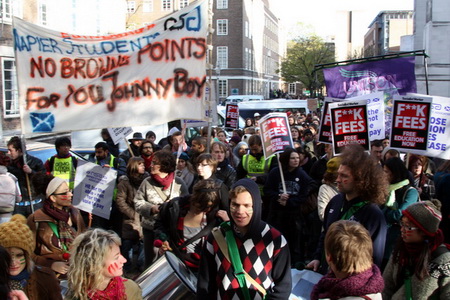
There’s always a surprising disconnect between experience and public reality when you attend an event that goes on to become an “event.” On such occasions, I find myself wondering how my experience can run so counter to the public narratives that emerge. Yesterday’s (10 Nov.) protest march in London is no different.

Here are some media images that reflect the protest I attended:

But the images that defined the “event” were slightly different. We’ve all seen them on the TV, in the papers, and on the web.

What I don’t want to do is engage in hand wringing over a protest hijacked by violent fringe elements, or tut at those smashing up the office building or gathered outside to watch. Instead, I want to do the opposite, I want to imagine myself as the one who failed, failed to fully grasp that it wasn’t just a sunny afternoon of political play acting. Continue reading

Inequality and the Human(e) Development Index

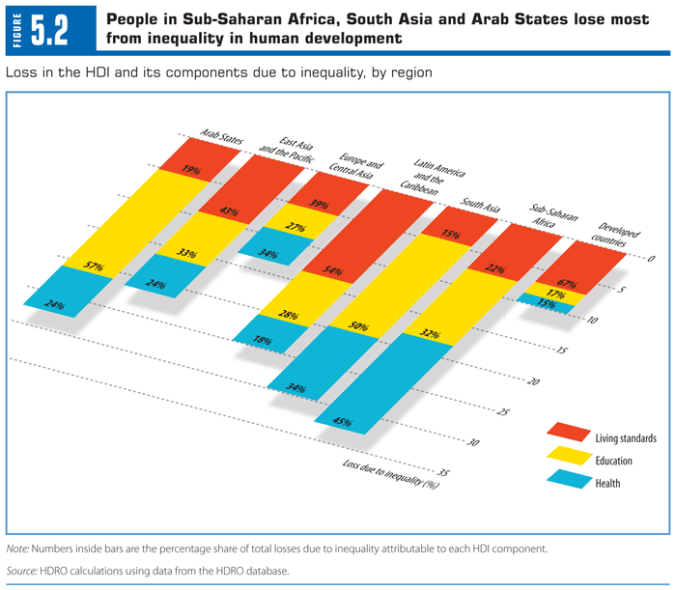
The UN Development Programme (UNDP) has for the last 20 years pioneered seemingly innovative approaches to development that have substantially redefined the terms on which development aid is conceived, offered and spent. The publishing of the first Human Development Report in 1990 was a bold move which made a case for measuring and judging countries’ developmental status in a way which focused on quality of life indicators as well as macro-economic statistics – an idea now which is completely mainstream and commonplace amongst donor governments and development practitioners.  It also proposed the notion of ‘human security‘ in 1994; a subversive response to the ‘securitisation’ agenda emerging in the wake of the Cold War which sought to broaden both the referent of security and the range of relevant concerns.  It was absolutely instrumental in pushing the Millennium Development Goals agenda – an incredibly ambitious and detailed set of targets for international development practice that served to underpin widespread agreement for the expansion of development funding across donor governments.

Its recent decision to measure inequality as a constituent part of development through its apparent role in determining the quality of life is, in this context, really interesting. On one level, it is indicative of the development community’s constant reflexivity – a term often used by David Williams – which recalibrates the tenor of its activities according to whatever the relevant crisis is supposed to be. Having been roundly critiqued and lambasted for the MDGs’ complicity with impoverishing neoliberal economic structures, we can read this ‘equality turn’ as the UNDP’s attempt to once more place itself on the vanguard of a more humane and responsive development agenda, moving itself away from the territory that the IFIs are starting to encroach upon.

It will be interesting to see whether and how the donors follow down this particular road. To a certain extent, the UNDP’s previous ‘innovations’ on human development, particularly with regard to adjusting for gender inequality, levels of absolute poverty and service provision, have all found various champions amongst western development agencies, all of whom have incorporated these issues seemingly deeply into their approaches to development, albeit perhaps through substantially de-radicalising the most substantive aspects of critique.

Inequality as an issue however poses a much more substantive threat to the international development agenda when pushed too far – not only does it cast doubt on the shining beaconof the self-made rich in the global South, but specifically, it starts to push against the foundational myth that ‘development abroad’ can be achieved with no corresponding change in the fortunes of ‘developed’ countries, a key threat to donor sanguinity and compliance with the UNDP’s more radical agendas. After all, if it is true within countries that vast inequalities impact on quality of life through skewing access to the goods that constitute human well-being, why would this also not be true between countries? The nonsense and yet widespread idea that some countries merely have to ‘catch up’ with others is belied by the inequality point but poses the much harder question for western countries and populaces to deal with: do I support international development enough to sacrifice any aspect of my own well-being?

As argued on an earlier post, the failure of highly-moralising development and anti-poverty agendas to deal at all with the central problem of inequality, both international and domestic, has been egregious and pervasive over the last 20 years, and looks to remain so in the future. The UNDP’s intervention is no doubt a timely one, although given the history of its more radical proposals, one which will probably be so watered down in practice as to be meaningless. Furthermore, by bringing this question within the competence of the ‘development’ policy specialists rather than engaging it as a public political question in ‘developing’ and ‘developed’ countries, the potential for getting to grips with the depth of this challenge seem remote.
The University, Limited.

The double assault of the Browne Report and Wednesday’s Comprehensive Spending Review have understandably led to despair and anger among academics in the humanities and social sciences. The reasons are manifold: the apparent belief by Cable and Willetts that only science matters, an insidious privatisation of public institutions, further debt for those least able to pay, massive cuts in teaching budgets, and education as a source of funds for bank bail-outs, not to mention rank hypocrisy from men educated for free and now pulling up the ladder while telling the rest of us that their schemes are not only fair, but progressive too.

This knot of anxiety deserves some dissection. The necessity, in the midst of a storm, for calm and sober reflection. Such is my rhetorical mode today. The main strand of existing critique centres on the implications for inequality. Higher fees, under such an account, can only increase the unwillingness of the poorest to attend universities, and so transform them into bastions of privilege.

But this isn’t quite right. Continue reading

The Ethics of Austerity

Today, the Con-Lib Coalition announces their full plan for spending cuts. Although many bits have been leaked, this will be the first chance we have to take the full measure of what is to come. Much has been and will be written about how these cuts are necessary, and even that they don’t go far enough.

And while much has been said about the economic arguments for and against the cuts proposed by Mr. Osborne, what is not talked about enough, or with sufficient care, is the ethics of austerity. By this I mean the ethical claims that have been made to prepare the ground for the austerity measures announced today. To borrow a phrase from the political theorist Bonnie Honig, we are seeing the culmination of a discourse of emergency politics.

Emergency Politics

While Honig uses the idea of emergency politics to get at how the threat of emergency is deployed to reassert the sovereignty of the state over the democratic sovereignty of the people as the source of law and legitimate political power, I want to suggest that the financial crises has resulted in a similar discourse, which claims we are in a state of emergency economics.

What the claim of emergency economics does, by framing our current experience in terms of emergency, is reaffirm the sovereignty of the capitalist markets over democratic society by presenting us with a catastrophic choice. We must accept the radical restructuring of public life out of necessity; there is no alternative but catastrophe. To discuss solutions is to waste time; to insist on the imperative of democratic values is to court disaster; to oppose the hasty reform of fundamental elements of the social order is to be a dangerous ideologue. Emergency economics are hardly unique to the UK, but today we are witnessing a clear expression of its consequences.

Continue reading