Churchill’s Westminster College audience, March 5, 1946 (Life/Getty Images)
This year is the seventieth anniversary of Winston Churchill’s “Iron Curtain” speech, a.k.a. “Sinews of Peace,” a.k.a., the Fulton address, which means that we will soon be hearing all about it once again. The speech is central to the iconography of the Cold War, of anti-communism, and of Anglo-American specialness. Countless historians, biographers and rhetoreticians have examined almost every aspect of it: when and where it was written, whether it was pre-approved by others, including President Truman, and, indeed, how it was received. On the last point, we know that the speech was met with a mixture of cheers and boos. The reactions tended to be politically and ideologically determined. Conservative politicians and the media praised the speech for its realism about the nature of the postwar settlement: at last someone had the courage to publicly say that the victor nations could not forever be friends. In contrast, most liberals, socialists, and communists condemned the speech as inflammatory. With so many hopes pinned to the newly created United Nations Organization (UNO), the last thing the world needed was geopolitical tension between the Western powers and the Soviet Union, they argued. But that was not all. Some leftists went further still. Churchill’s notion the Anglo-American “special relationship” and “fraternal association” constituted the ultimate sinew of world peace smacked of racial supremacism, they said.
October is always a good time to catch up on one’s correspondence from July. “FYI,” noted a friend though FB’s messaging system, linking to this:
The video’s title, “Dr Shashi Tharoor MP – Britain Does Owe Reparations,” sums it up. The other videos from the same debate event are worth watching, too, but Tharoor’s is quite simply a must-see for anyone interested in the British Empire. Indeed, you have probably seen it already. With 3 million views, 6000+ comments plus what seem to be hundreds of reactions by all kinds of people in all kinds of media of communication, this one 15-minute video alone can legitimate Oxford Union Society claim’s that it aims “to promote debate and discussion not just in Oxford University, but across the globe.”
Why is it that Oxford Union struck social media gold with this debate but not with some others (“socialism does (not) work,” anyone)? Even if it is safe to assume that “many” people would be familiar the reparations argument in general and even that “some” would be familiar with Britain’s reparations to the Maori, the fact is that “no one” had given a fig about the case for Indian reparations [1]. My scare quotes are meant to signal that these quantifications are relative. It was a century ago that Dadabhai Naoroji, known to some as the Grand Old Man of India, argued that “immediate” self-government, a.k.a. swaraj, would constitute Britain’s “reparation”. But this is precisely the point: reparations-talk becomes itself only when subjected to a sufficient degree of metropolization or mainstreaming [2]. White academics like Boris Bittker started paying attention to the legal argument for “black reparations” only in 1969, after James Forman famously stood up in a New York City church to argue that white churches owed a lot of money to a lot of people.
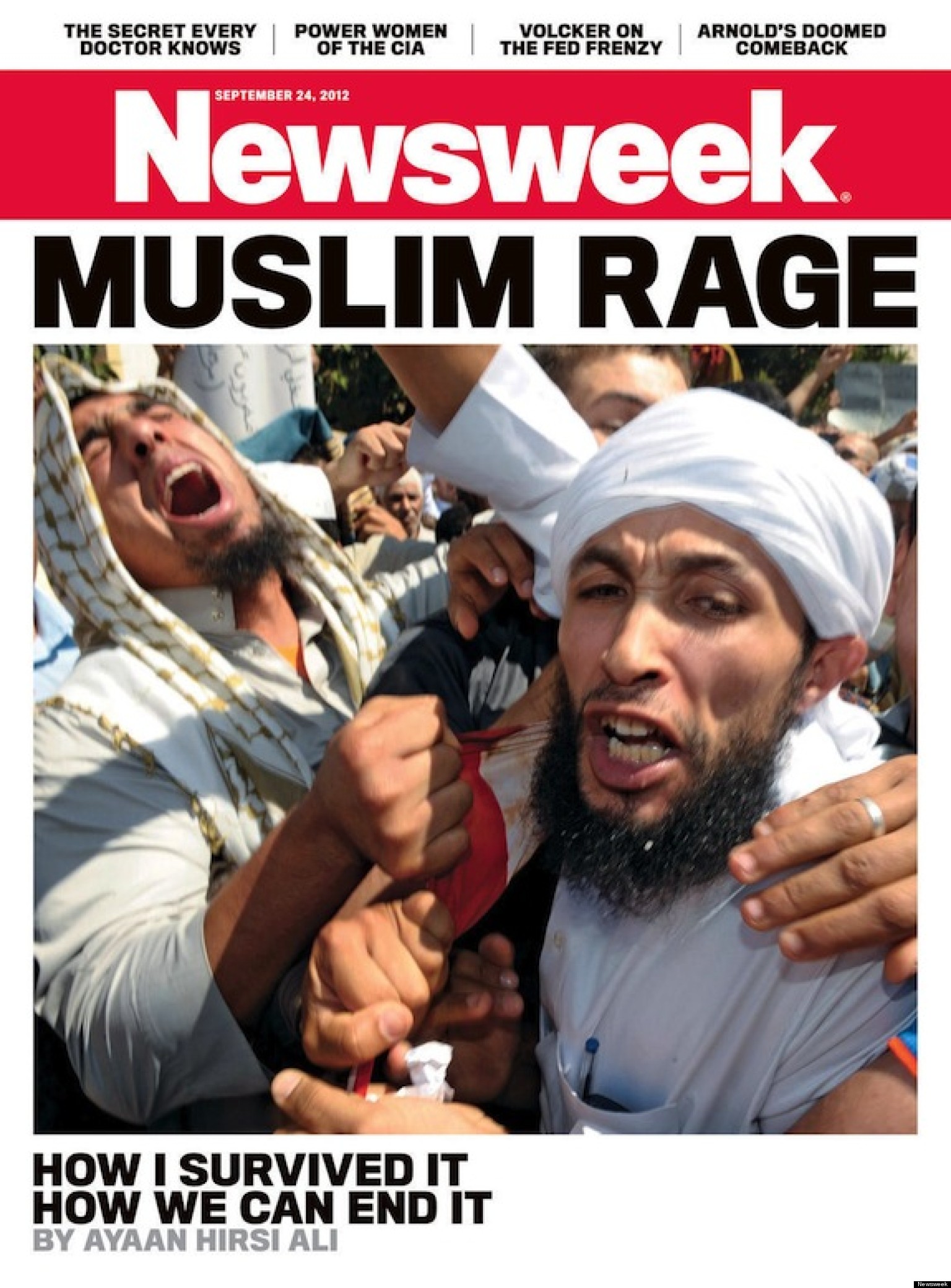
The ruthless brutality of the Islamic State in Iraq and Syria (ISIS or ISIL) unfolds before our eyes on the screens. As commentators struggle to explain and understand it, it becomes convenient to revive old Orientalist tropes. Beyond the spectacular brutality, the reason that ISIS invites attention (both fascination and fear) is that it seems easy to fit in confrontational narratives of Islam (us v. them, anti-American, etc.). Muslims are clearly angry at something. In his infamous article “The Roots of Muslim Outrage”, Bernard Lewis simplistically explained that Muslims are envious of, and angry at, Western modernity and secularism. The U.S. magazine Newsweek illustrated this knee jerk reaction, and recourse to run of the mill thinking patterns, in a Muslim Rage cover in September 2012.
In his book “Covering Islam” (1981) Edward Said has effectively critiqued these binary simplifications that dominate not only journalistic discourse about “Islam”, but also expert-talk about Islam. For Said, all attempts to conceptualise other cultures are a value-laden interpretive exercise. He showed the deficiencies of orthodox writings on—and views of—Islam, and called for “antithetical knowledge” to challenge the orthodoxy’s claims of value-free objectivity.
It seems little has changed, however, since Said wrote his book in the wake of the Iranian revolution. In this brief commentary I want to examine three attempts to understand ISIS. These are long treatments in respected liberal media outlets. To use Said’s phrase, these are treatments that fit in different “communities of interpretation.” These three essays are all aware of the need to provide “context” for ISIS. However, their contextualisation differs. The success of this contextualisation in shedding a light on ISIS varies. Let me call these interpretive techniques: universalization; Millenarian confrontation; and intellectual bewilderment. These three attempts operate mostly on the ideational/ cultural domain.
Jeppe Mulich brings us the third post in our forum on The Global Transformation by Buzan and Lawson. Jeppe is a doctoral candidate at the Department of History at New York University. He works on comparative empires, global history, and colonialism in world politics. His research on regionalism, law, and intercolonial networks in the eighteenth and nineteenth centuries has been published in the Journal of Global History and in the anthology The Uses of Space in Early Modern History (Palgrave Macmillan, 2015).
Let me start off by stressing that The Global Transformation is a fantastic book. Buzan and Lawson manage to pack a host of information and analysis into a relatively short and very readable book, while at the same time keeping their fundamental argument sharp and coherent. It is one of those works that leave you wondering why it has not already been written, particularly in a discipline so intent on retelling the wrong stories over and over again.[1] It is also, incidentally, a book that strongly argues in favor of the relevance of my own field, something that any aspiring scholar should welcome with open arms. With this in mind, my comments and critiques in the following piece might come off as nitpicky, but if they do this is only because I agree with so very much of Buzan and Lawson’s core argument. I am not trying to offer a counterargument or even a corrective to their account, but rather a few friendly jabs and perhaps an opening for further research into and discussion of some of the wider themes and implications of this important book.
I will primarily provide comments on the book from the perspective of a historian, with the theoretical underpinnings which that classification implies. My comments are divided into three broad sections. The first section will deal with issues of thinking in time, in particular how to date the type of global shifts that Buzan and Lawson are interested it and, related to this, how to disentangle the historical forces of change and continuity. The second section will delve more into the specific substance of the global transformation – namely the notion of modernity and the potential problems and benefits of using this nebulous concept. The third section will focus more on a particular part of the puzzle of the nineteenth century – that of colonial configurations and the multitude of state-forms emerging at this time – and consider this phenomenon vis-à-vis Buzan and Lawson’s treatment of rational state-building.
Periodization and Eurocentric Narratives
While Hobsbawm (1962) introduced the idea of a long nineteenth century more than half a century ago, in the first of his three books covering the period from 1789 to 1914, the past decade and a half has witnessed a resurgence of interest among historians and historical sociologists. Unlike Hobsbawm’s work, which focused almost entirely on events and developments within Europe, many of these new accounts are in various ways attempting to grapple with the inherent Eurocentrism of earlier histories. Such projects are often accomplished by telling decidedly global stories of the nineteenth century, with the most widely read example being C. A. Bayly’s The Birth of the Modern World, joined in the past year by Jürgen Osterhammel’s 1000-page behemoth The Transformation of the World.[2]
What the works of Bayly, Osterhammel, and Buzan and Lawson have in common is their focus on the transformative nature of the nineteenth century, apparent with just a cursory glance at their titles. While these authors might be interested in a certain kind of big history, their work focuses on shifts, breaks, origins, and turning points – not on continuities and long trajectories. This is in many ways true for most academic history, which often ends up as an exhausting chase to find the origins of specific phenomena or practices or, when coupled with the peculiar obsession with modernity, an endless argument over when and where the first example of a truly modern state/revolution/economy/philosophy/society/ideology/science/war should be found. Increasingly relegated to the sidelines are the crotchety old contrarians who insist that nothing much ever changed anyhow.[3]Continue reading →
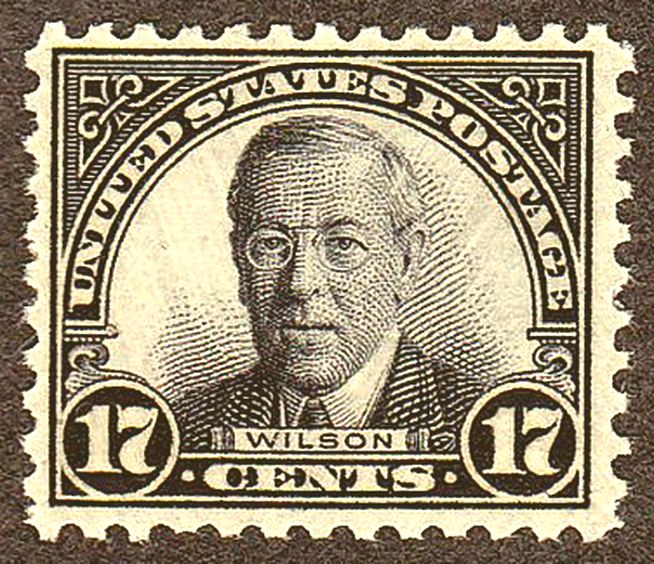
It brings me great pleasure to be invited to respond to such thoughtful and challenging critiques of my book Capital, the State, and War (CSW). On the (meta-)theoretical front, Mark Rupert and Kamran Matin question my use of uneven and combined development (UCD) as a transhistorical ‘general abstraction’ to be incorporated into a historical materialist framework. On the more historical/historiographical front, Campbell Craig challenges my interpretation of Woodrow Wilson’s foreign policies during and after the First World War, arguing that I rely too heavily on the extant historiographical literature, specifically N. Gordon Levin’s 1968 New Left ‘revisionist’ critique Woodrow Wilson and World Politics. Craig further criticizes my theoretical approach for being overly structuralist and consequently ‘devoid of agency or praexeology’, while pushing me to consider the relevance of UCD to contemporary world politics.
While disagreeing with some of my interlocutors interpretations of what I was trying to do in CSW, it is a breath of fresh air that they have all offered substantive engagements with my work in ways dealing with genuine theoretical disagreements; though, as I hope to demonstrate, in the case of Matin and possibly Rupert, these theoretical disagreements may be less serious than they first appear. So I would be remiss not to express my deep gratitude to Rupert, Matin and Craig for their highly stimulating critiques. In what follows, I engage with the precise standing of UCD and ‘general abstractions’ in filling out of a distinctly historical materialist theory of ‘the international’ before turning to the more specific historical-theoretical issues raised by Craig.
I. Method, Abstraction and Historicity in Marxist Theory
While being ‘largely convinced’ by the ‘relational, historical, and dialectical conceptual apparatus’ I deploy in explaining the interstate conflicts of the Thirty Years’ Crisis of 1914-1945, Rupert remains sceptical of my conceptualization of UCD as a ‘general abstraction’. He raises the question: “In a world where a great deal of epistemological and actual violence is done by universalizing abstractions, why create another as the basis for a theory whose basic impulse is de-reification, re-contextualization, and re-historicization in the interest of opening potentially emancipatory horizons?”. As such, Rupert is ‘unpersuaded’ by my argument that UCD is best understood as a transhistorical phenomenon which can be employed as a ‘general abstraction’.
Kamran Matin, by contrast, argues that I have not realized the full potentials of deploying UCD as a transhistorical abstraction, Continue reading →
In 1959 Kenneth Waltz published Man, the State and War, a study of three different levels of analysing international relations and their attempts to answer the question why war recurs. Waltz tackled his subject by demonstrating how the two most common levels of analysis – human nature, and regime type – ran into insuperable logical obstacles, and especially the problem of reductionism that social theorists such as Durkheim and Lakatos identified. His solution was to posit a third level – anarchy, or, as his title suggested, war – that could explain the recurrence of war without succumbing to the reductionist fallacy. The result was a study that has shaped the field of modern international relations more than any other single volume.
Anievas, as the title suggests, seeks to build upon Waltz’s ambition in his new book. He argues that the Marxian theory of uneven and combined development (UCD), a concept invented by Trotsky which explains international conflict by pointing to the uneven economic competition among more and less developed states whose economies are intertwined, can be used to theorise contemporary IR. This is a project being undertaken by other scholars, most notably Justin Rosenberg, but Anievas’s book is the most ambitious and thorough attempt yet to deploy Trotsky’s idea in a systematic way. However, Anievas’s method is quite different from the one used by Waltz (and Rosenberg). Rather than developing a logical or epistemological case for UCD, Anievas tries to use it as a means of shaping a detailed historical explanation of the two world wars of the twentieth century. What he is trying to do, as far as I can see, is to use UCD as a tool to explain and revise a key historical problem, as theorists in other schools of IR have done, rather than put forward an abstract case for the theory in the first place—a necessary move, for Anievas, because extant work on UCD suffers from “unsustainably high levels of analytical abstraction” (57). He concludes that the pressures of UCD upon capitalist states (particularly Germany, Great Britain, and the US) effectively explain the two world wars, and that they paved the way for a ‘proto-Cold War’ between the West and the USSR that began basically with the formation of the Soviet state in 1917.
In many ways the book is an impressive work. The narrative chapters on German, British, and American foreign relations are rich with historical detail and focused, often polemical argumentation. The engagement with competing theories is intensive and Anievas’s mastery of the debates among the neo-Marxian left is evident. Yet I was in the end not convinced by some of the main historical claims of the book nor by the method Anievas has deployed. In the spirit of Anievas’s blend of historical and theoretical inquiry, I will now present two critiques of the work from the respective points of view of the historian and the IR theorist.
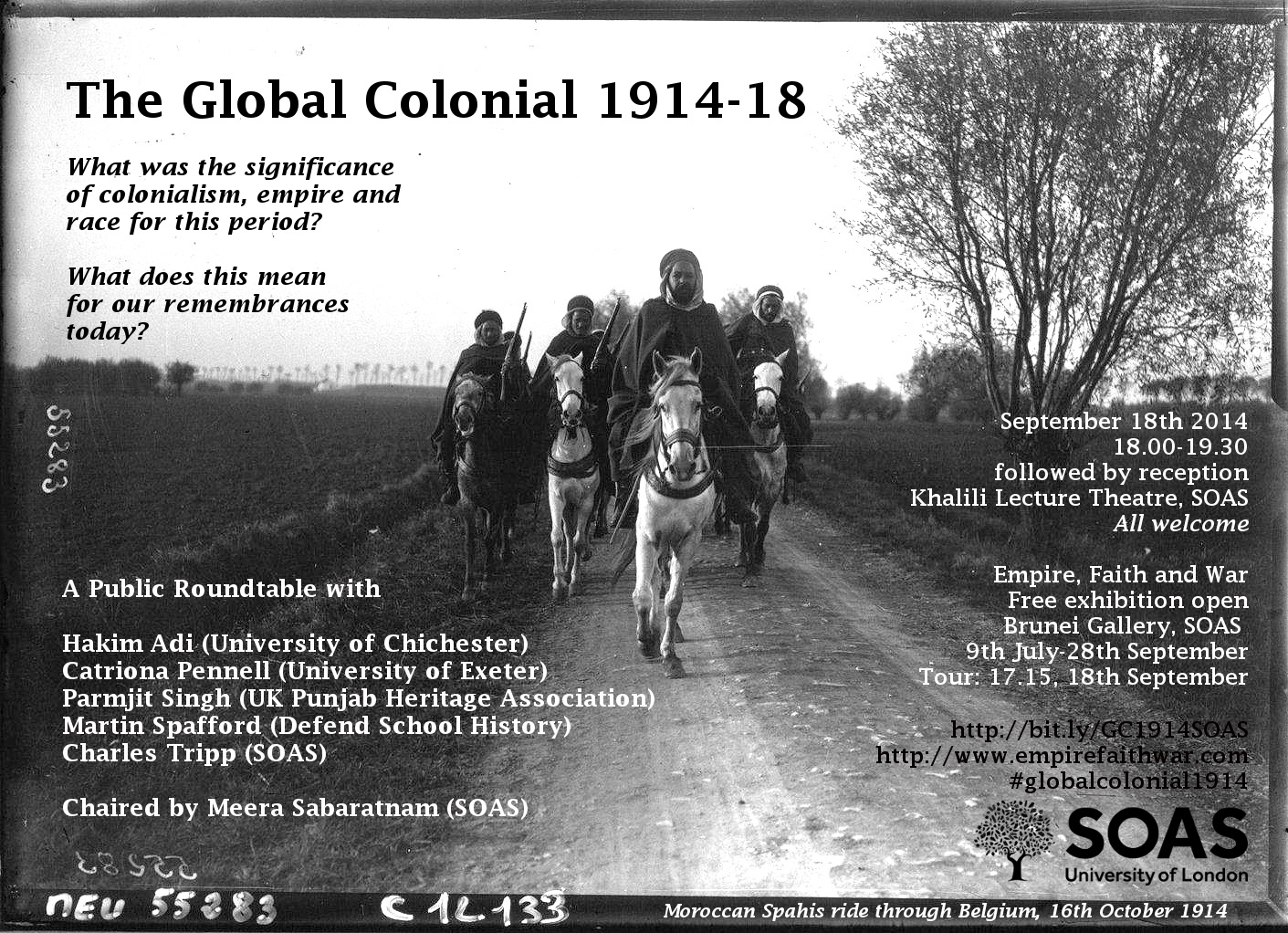
M: Okay. Hello, everybody and welcome. Thanks very much for coming. My name is Meera Sabaratnam, I’m a lecturer here at SOAS in international relations. And tonight we’re delighted to host a roundtable on the Global Colonial 1914-18. So obviously this is triggered by a number of contemporary events, not least the centenary of World War One, which you’ll have seen all over the news. But one of the stories I suppose, that gets told less often is the role of the wider world in the way that the war unravelled but also as a theatre of war. And in the place of where the war stood as part of the global context. So what else was going on, multiple revolutions, uprisings. So this is a moment in which the war is an important part of a global order which is undergoing substantial amounts of change. I should say this event is also sponsored…has been organised through the British International Studies Association and their working group on colonial, post-colonial and de-colonial research questions.
And this particular group tries to look at the elements of coloniality and colonialism in how the modern world came to be and what that means for when we understand globalisation and global history. I’m delighted to have a roster of speakers here tonight covering not just all of the sort of main areas, the regions that we’re studying in SOAS, namely Asia, Africa and Middle East. But also researchers and teachers who have been involved in how World War One is remembered in the classroom as a form of public cultural memory. Each of our speakers is going to speak for about 10 minutes. And then after that we’ll open it up for questions. Please do be forthcoming with your questions and we hope to have a good discussion afterwards, okay. I’d first like to welcome Professor Charles Tripp who is professor of Middle East here at SOAS. Thanks.
C: Thank you very much, Meera. It sounds rather grand, I’m not the professor of Middle East, I’m professor of politics in the Middle East. But why not, grander? I was asked to talk today about the relationship between what was happening in the Middle East and what happened to the Middle East in and around the First World War. And I must admit straight off, I’m not a historian, so I don’t work on the first war particularly but clearly anybody who works in the politics of the Middle East is well aware of the fact that legacies of the First World War and what happened to the region are still very much there and indeed are being revived in the press in one form or another as they talk about Syria and Iraq at the moment. But what I wanted to really try and do is to pick out two themes if I can, in the time allotted. One is the notion that as with many other parts of the world, much was happening before the First World War that the First World War changed the course of, if you like. So in a sense one of the dangers of looking, which of course happens now to some extent in the press and elsewhere, is to see the Middle East purely as the Middle East as a political entity, whatever that is, as a kind of creation of European intervention, the First World War.
But what I’m trying to argue is that actually there were processes long before that that had been going on and that in some ways the European intervention set back in various significant ways that had an effect for the future as well. So the first part is really to think about what had been happening in the 50 years or so before the First World War in the region, we now think of as the Middle East, the Ottoman Empire, Qajar, Iran, North Africa. And I want to look at two themes which are intertwined but really revolve around the same emerging idea and notion which is the idea of the autonomous citizen, which again was quite a novel, a radical idea with hugely radical implications for the dispensations of power. But the two themes that they were intertwined with was, one, the struggle against despotism and the other, struggle against colonialism, both of these seemed to be deeply repressive of the idea of the autonomous citizen. And in some senses therefore what you’re looking at in the long…well, the period before the First World War in the 40 or 50 years, whether it’s in the Ottoman Empire, the Qajar Empire, Iran, in Egypt, you have a struggle against local despotism for constitutionalism. A precarious constitutionalism which is often of course therefore sabotaged by those who would rather not see it. But nevertheless very powerful in the mobilisation of the politics of these regions. Continue reading →
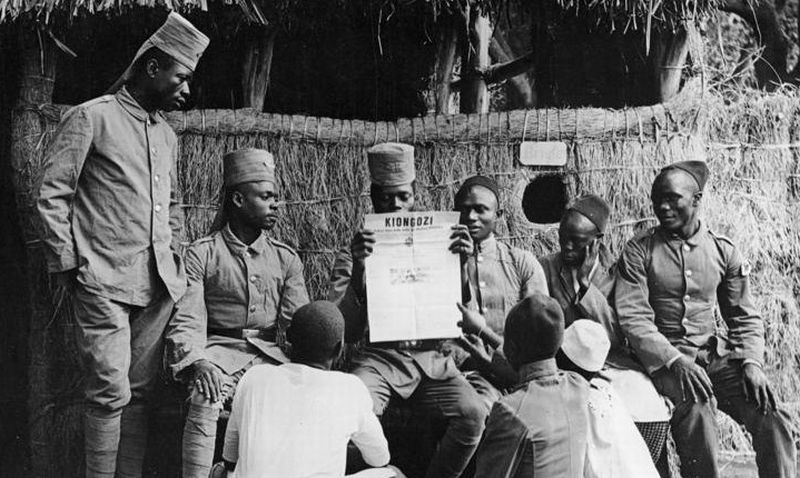
A man was looking for something he had lost under the street lights; another man, the joke goes, approached and asked him what he was looking for. “I am looking for my lost keys,” “Did you lose them here?” “No,” the first man responded, “I lost them on the dark side of the street.” “But, why are you looking here?” “Because this is where the light is.” This joke illustrates well the paradox of the national paradigm in European historiography of the Great War. The assumption that the European sovereign nation is the sole agent of modern history naturally motivates European historiography to frame the Great War within a national paradigm and foreclose its colonial dimension. A related trope to the above joke pertains to race and its relation to the national histories of Europe; the black face of a slave, according to Frantz Fanon, can be seen during the night only under the porch light of the master, but when the slave goes into the dark his face becomes invisible. The deployment of colonial soldiers in the Great War as “warrior races” or, “martial races” to fight on behalf of their masters, and the absence of the Black history of slavery from the history of the Great War is in fact the history written from the master’s porch. While the invisibility of the black face foreclosed Black history from the national paradigm of the Great War, it was nonetheless useful as a racial weapon in the war.
By deploying almost a million non-white troops in the European theater of war—France’s 500,000 Africans and Asians, Britain’s 200,000 Indians and Africans, America 200,000 black soldiers, Germany’s 11,000 Africans (only in East Africa)—race was used as a “weapon of war” to advance an unprecedented slaughter among the white nations. [2] R. J. Vincent socked it to the revisionist historians when he wrote, “not only were the whites laying to rest the notion of their instinctive comity by butchering each other in such unprecedented numbers, but they were also showing their neglect of race in favour of nation in using non-white troops to advance the slaughter.”[3] Those historians committed to the national paradigm acknowledge the contribution of colonial solders in the Great War only as an auxillary force rather than as the point of the return of race as the constitutive violence of European Modernity. Many of the former slaves forcefully recruited and disciplined as racial instruments of forced labour, punishment and extermination became the site of colonial violence and operated as a microcosm for the War. The colonial soldier was the cause and the consequence of the Great War. Continue reading →
At the same time, it is interesting that amongst all these debates about the causes and nature of the war few scholars have seen fit to examine one form of evidence: the writings of international experts before the war. This gap is even more surprising in International Relations (IR), as these pre-war writers are IR’s forebears. What is interesting about studying these pre-war international writers is that they were well aware of the imperialist nature of their global society (and of the role played by colonial control), but it was not this imperialism that was seen as the source of instability. Rather, a more complex story emerges of a two-tier global system, and the coming of the war is seen as a threat to, not a result of, imperialism.
The first point about the pre-1914 world is that this was a thoroughly recent system, and that for many of those writing on international affairs it was novel because for the first time in history there was a truly global order. Whether it was W. T. Stead writing about the movement away from states to a Europe united by transnational links, Paul Reinsch’s examination of the new ‘public international unions’, or Norman Angell’s wonder at the development of the global economy in trade and finance, the common feature was the recognition that the world from the late nineteenth century was global in a way that was thoroughly unprecedented.[2]
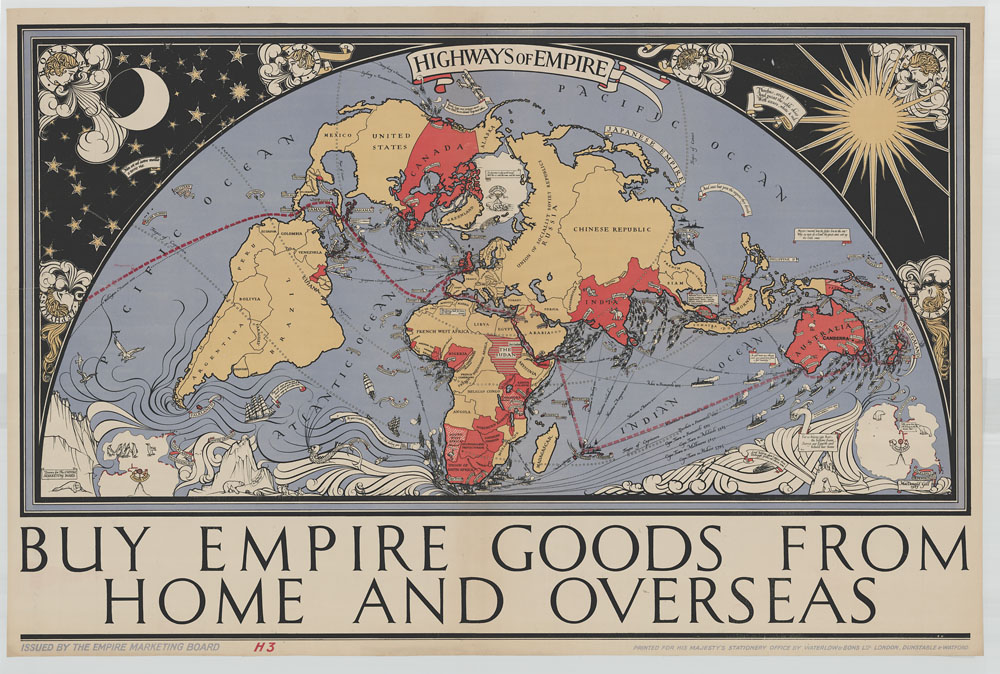
Much of this new politico-economic order was built on one product: coal. Timothy Mitchell has outlined how the growing dependence on coal as a concentrated source of energy radically changed society into an industrial ‘hydrocarbon civilisation’. The combination of coal, steel and steam powered railways allowed for the easy extraction, transportation and use of coal in industry.[3] This rapid industrialisation made the new industrialising societies vulnerable in a way they had never been before. The loss of self-sufficiency in food and the requirements of industry for a growing list of raw materials not often available in north-western Europe or eastern North America meant that these societies were dependent on trade with often distant societies. Yet, trade alone was not sufficient to extract these raw materials, so European powers increasingly turned to direct control and the deliberate imperial restructuring of the non-European economies.[4] This creation of a two-tier fully global economy was well-known to the political economists of the time.[5]
Two very different writers who captured the nature of this new global order were the American admiral Alfred Thayer Mahan, and the British journalist and political activist Henry Noel Brailsford. Mahan was an advocate of a higher level of armaments and a notorious racist. Brailsford, by contrast advocated stronger representative international organisations. Despite the wide divergence in their political opinions, both came to not incompatible conclusions about the nature of the global order before the First World War, and both understood the two-tier nature of the global political economy. The major difference in approach was that Mahan supported the imperial status-quo, while Brailsford opposed it. Continue reading →
Our fourth and final post contains a transcript and video of the public roundtable which took place at the end of the day, featuring Hakim Adi, Catriona Pennell, Parmjit Singh, Martin Spafford and Charles Tripp, in which the colonial dimensions of the war are discussed, as well as their implications for teaching and commemorating the period today.
This post serves as a permanent link for the series.






 The Disorder Of Things