Deciphering ‘The International’ in History and Theory

The final post in our symposium in our symposium on Alex Anievas’ Capital, the State, and War: Class Conflict and Geopolitics in Thirty Years’ Crisis, 1914-1945, in which Alex himself replies to his critics and interlocutors.


It brings me great pleasure to be invited to respond to such thoughtful and challenging critiques of my book Capital, the State, and War (CSW). On the (meta-)theoretical front, Mark Rupert and Kamran Matin question my use of uneven and combined development (UCD) as a transhistorical ‘general abstraction’ to be incorporated into a historical materialist framework. On the more historical/historiographical front, Campbell Craig challenges my interpretation of Woodrow Wilson’s foreign policies during and after the First World War, arguing that I rely too heavily on the extant historiographical literature, specifically N. Gordon Levin’s 1968 New Left ‘revisionist’ critique Woodrow Wilson and World Politics. Craig further criticizes my theoretical approach for being overly structuralist and consequently ‘devoid of agency or praexeology’, while pushing me to consider the relevance of UCD to contemporary world politics.

While disagreeing with some of my interlocutors interpretations of what I was trying to do in CSW, it is a breath of fresh air that they have all offered substantive engagements with my work in ways dealing with genuine theoretical disagreements; though, as I hope to demonstrate, in the case of Matin and possibly Rupert, these theoretical disagreements may be less serious than they first appear. So I would be remiss not to express my deep gratitude to Rupert, Matin and Craig for their highly stimulating critiques. In what follows, I engage with the precise standing of UCD and ‘general abstractions’ in filling out of a distinctly historical materialist theory of ‘the international’ before turning to the more specific historical-theoretical issues raised by Craig.

I. Method, Abstraction and Historicity in Marxist Theory

While being ‘largely convinced’ by the ‘relational, historical, and dialectical conceptual apparatus’ I deploy in explaining the interstate conflicts of the Thirty Years’ Crisis of 1914-1945, Rupert remains sceptical of my conceptualization of UCD as a ‘general abstraction’. He raises the question: “In a world where a great deal of epistemological and actual violence is done by universalizing abstractions, why create another as the basis for a theory whose basic impulse is de-reification, re-contextualization, and re-historicization in the interest of opening potentially emancipatory horizons?”. As such, Rupert is ‘unpersuaded’ by my argument that UCD is best understood as a transhistorical phenomenon which can be employed as a ‘general abstraction’.

Kamran Matin, by contrast, argues that I have not realized the full potentials of deploying UCD as a transhistorical abstraction, Continue reading

Capital, The State and War: Rethinking the Geopolitics of Capitalist Modernity in the Era of the Two World Wars

A guest post from Alex Anievas to inaugurate a brief symposium on his book anievasCapital, the State, and War: Class Conflict and Geopolitics in Thirty Years’ Crisis, 1914-1945 (Michigan University Press, 2014), which will unfold over the next few days. Alex is a Leverhume Early Career Researcher at the Department of Politics and International Studies at the University of Cambridge. He is editor or co-editor of numerous books (including Race and Racism in International Relations and The Longue Durée of the Far-Right, both of which have previously previewed at The Disorder). His work has also appeared in the European Journal of International Relations, the Cambridge Review of International Affairs, Millennium and the Review of International Studies.

The manuscript that would become Capital, the State, and War: Class Conflicts and Geopolitics in the Thirty Years’ Crisis, 1914-1945 developed, like so many first books, out of my PhD thesis[1] In its final form, Capital, the State, and War endeavours to offer nothing less than a systematic and radical reinterpretation and historical sociological reconceptualisation of some of the main geopolitical and socioeconomic fault-lines of the 1914-1945 period. It does so through the theoretical prism of uneven and combined development, demonstrating in the process the various problems with extant historiographical interpretations and IR theorisations of this crucial epoch in the development and remaking of modern world politics. But given the rather substantial differences between what I had originally envisioned the PhD thesis to be and what it became, it’s worth briefly discussing the origins of the project and how it changed in the process of researching and writing it.

I. Origins

My PhD project was originally conceived as an intervention into the contemporary debates on the ‘resurgence’ of US imperialism in the wake of the wars in Afghanistan and Iraq – very much a radicalising moment in my own intellectual and political trajectory – and the concomitant return to Marxist theories of imperialism and empire. My aim then was to essentially rethink and ‘update’ the classical Marxist theories of imperialism and, in particular, Lenin and Bukharin’s theory of inter-imperial rivalry which, whatever its faults, still captured an essential aspect of contemporary imperialism. I was then heavily influenced by a number recent Marxist works on imperialism, particularly David Harvey’s 2003 The New Imperialism (along with his earlier, more theoretically sophisticated The Limits to Capital) and Alex Callinicos’ The New Mandarins of American Power.

Both studies, in their different ways, sought to retain the fundamental insights of the classical Marxist theories of imperialism (e.g. the persistence of historically-differentiated forms of inter-imperial rivalries rooted within the inherently competitive dynamics of capital accumulation), whilst dispensing with their more economically determinist and instrumentalist features. They did so, in particular, by reconceptualising imperialism as the intersection of two analytically distinct, but historically interconnected, ‘capitalist’ and ‘territorial’ logics of economic and geopolitical competition. While critical of certain aspects of this kind of approach – particularly, Harvey and Callinicos’ relatively undigested incorporation of a ‘proto-realist’ conception of ‘the international’ – my initial thought was that, if rooted in a stronger conception of the spatio-temporal dynamics of capitalist development and expansion that produced the somewhat porous but nonetheless identifiable ‘territorial logic of power’ – regionality – inherently arising out of the processes of capital accumulation in space and time, this perspective could provide a more adequate historical materialist theory of geopolitics.[2] At this stage in the development of the project, this is how I originally envisaged the role of Trotsky’s concept of ‘uneven and combined development’ – a kind of supplementary theory that could be employed in capturing the spatio-temporal dynamics of capitalist development in reconstructing a modified Marxist theory of imperialism. Add in a more attentive focus to the relations between capitalists and state managers and the role of ideology in structuring foreign policymaking processes and I thought this would do.

Continue reading

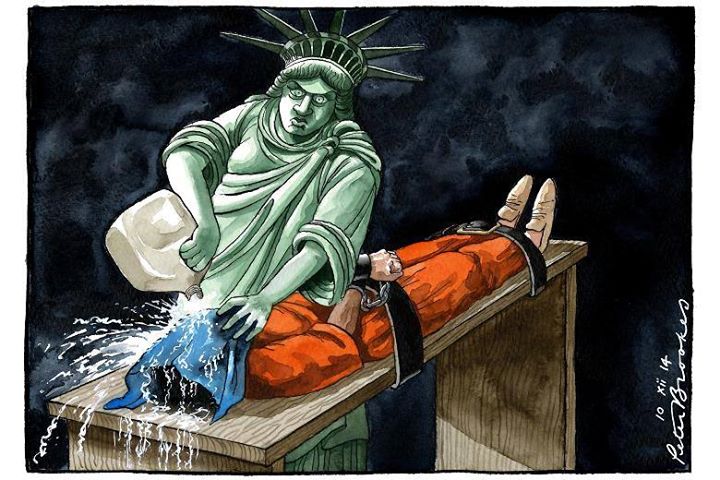
Why Torture When Torture Does Not Work? Orientalism, Anti-Blackness and the Persistence of White Terror

A guest post from Melanie Richter-Montpetit, responding to the disclosure of the Senate Torture Report in December. Melanie is currently lecturer in international security at the University of Sussex, having recently gained her PhD from York University in Toronto. Her work on issues of subjectivity, belonging and political violence has also been published in Security Dialogue and the International Feminist Journal of Politics.


a land on which no slave can breathe.

– Frederick Douglass (1846)[i]

I had to leave; I needed to be in a place where I could breathe and not feel someone’s hand on my throat.

– James Baldwin (1977)[ii]

I can’t breathe.

– Eric Garner (2014)

 America Waterboards

No, bin Laden was not found because of CIA torture.[iii] In fact, the US Senate’s official investigation into the CIA’s post-9/11 Detention and Interrogation program concludes that torture yielded not a single documented case of “actionable intelligence.” If anything, the Senate Torture Report[iv] – based on the review of more than six million pages of CIA material, including operational cables, intelligence reports, internal memoranda and emails, briefing materials, interview transcripts, contracts, and other records – shows that the administration of torture has led to blowbacks due to false intelligence and disrupted relationships with prisoners who cooperated. What went “wrong”? How is it possible that despite the enormous efforts and resources invested in the CIA-led global torture regime, including the careful guidance and support by psychologists[v] and medical doctors, that the post-9/11 detention and interrogation program failed to produce a single case of actionable data? Well, contrary to the commonsense understanding of torture as a form of information-gathering, confessions made under the influence of torture produce notoriously unreliable data, and the overwhelming majority of interrogation experts and studies oppose the collection of intelligence via the use of torture. This is because most people are willing to say anything to stop the pain or to avoid getting killed and/or are simply unable to remember accurate information owing to exhaustion and trauma.[vi]

So if torture is known not work, how come, then, that in the wake of 9/11 the U.S. at the highest levels of government ran the risk of setting up a torture regime in violation of international and domestic law? Why alienate international support and exacerbate resentments against “America” with the public display of controversial incarceration practices, as in Guantánamo Bay, instead of simply relying on the existing system of secret renditions? Furthermore, in the words of a former head of interrogations at Guantánamo Bay, most of the tortured and indefinitely detained are “Mickey Mouse” prisoners,[vii] reportedly known not to be involved in or not to have any information on criminal or terrorist activity against the U.S. and its allies. Drawing on previously published work, I will explore this puzzle by addressing two key questions: What is the value of these carceral practices when they do not produce actionable intelligence? And, what are some of the affective and material economies involved in making these absurd and seemingly counterproductive carceral practices possible and desirable as technologies of security in the post-9/11 Counterterrorism efforts?

Against the exceptionalism[viii] of conceiving of these violences as “cruel and unusual,” “abuse” or “human rights violations”[ix] that indicate a return to “medieval” methods of punishment, the post-9/11 US torture regime speaks to the constitutive role of certain racial-sexual violences in the production of the US social formation. Contrary to understandings of 9/11 and the authorization of the torture regime as a watershed moment in U.S. history “destroying the soul of America,”[x] the carceral security or pacification practices documented in the Senate Torture Report and their underpinning racial-sexual grammars of legitimate violence and suffering have played a fundamental role in the making of the US state and nation since the early days of settlement.[xi] The CIA Detention and Interrogation program[xii] targeting Muslimified subjects and populations was not only shaped by the gendered racial-sexual grammars of Orientalism, but – as has been less explored in IR[xiii]is informed also by grammars of anti-Blackness, the capture and enslavement of Africans and the concomitant production of the figure of the Black body as the site of enslaveability and openness to gratuitous violence.[xiv]

Continue reading

Kobani: What’s In A Name?

Kamran MatinA guest post from Kamran Matin. Kamran is a senior lecturer in International Relations at the University of Sussex, where he teaches modern history of the Middle East and international theory. He is the author of Recasting Iranian Modernity: International Relations and Social Change (Routledge, 2013), and recently of ‘Redeeming the Universal: Postcolonialism and the Inner-Life of Eurocentrism’ in the European Journal of International Relations (2013). Kamran is also the incoming co-convenor of the BISA Historical Sociology Working Group, and a management committee member at Sussex’s Centre for Advanced International Theory. He is currently working on a paper on the origins of the current crisis in the Middle East, and a larger project on the international history of the Kurdish national liberation movement.


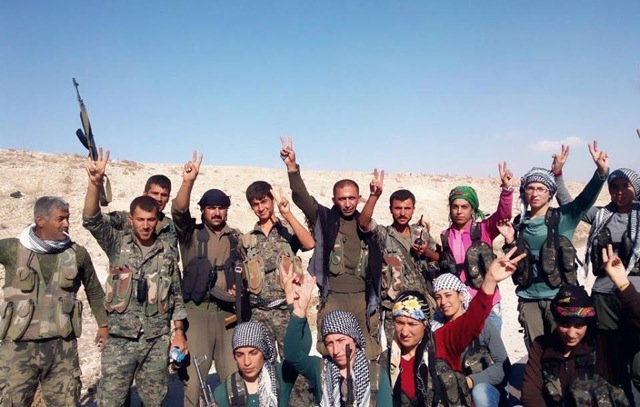
Kobani Fighters

The city of Kobani’s epic resistance against the genocidal assault of the Islamic State (IS) has entered its thirtieth day. So far the response of the western left has been generally one of solidarity. However, the left seems divided on the best way to support Kobani. Invoking anti-imperialist and anti-war principles a considerable part of the left has been shying away from demanding military and logistical support for the main defending force of the city, i.e. People’s Protection Units (YPG) and Women Protection Unites (YPJ), the armed wings of Democratic Union Party (PYD), by the US led anti-IS coalition. Moreover, with some exceptions such as David Graeber, many western leftists have neglected the historical significance and transformative political potentials of the success of Kobani’s resistance.

In what follows I argue that pressuring western powers to provide arms and logistical support to YPG/YPJ is legitimate and justifiable, and that in the battle for Kobani the left has a unique opportunity to contribute to an important shift in the regional balance of power in favour of a radical democratic and egalitarian project with transformative ramifications for the entire Middle East.

Kobani, the Kurds, and the West

With regards to the discomfort of the left with the idea of western military support for YPG/YPJ the important preliminary point to be made is that the Kurds have repeatedly claimed that they do not want or need direct military intervention by either coalition forces or Turkey. They’ve repeatedly said that they only need anti-tank weapons, ammunition and the opening of a corridor for fighters, food and medicine to reach Kobani. This request has been echoed by the UN Special Envoy for Syria, Staffan de Mistura, who warned of a repetition of the fate of Srebrenica in Kobani if such a humanitarian corridor is not established.

In its demand for a limited tactical western military support for YPG/YPJ the left by no means loses sight of the fact that at its root Islamic State is the fascistic faeces of western imperial metabolism, a direct product of the American conquest of Iraq, the deliberate manipulation of sectarian differences, and the destruction of the social fabric of Iraqi society. But surely, none of these should obviate the recognition of the vital significance of protecting an actually existing and functioning radical left experience at the heart of the Middle East from eradication, notwithstanding its unavoidable flaws and limitations.

Continue reading

Four Things the Left Should Learn from Kobane

The Kurdish town of Kobanê has recently become the centre of a geopolitical conflagration that may well change the course of Middle Eastern politics. After months of silence over the threat faced by Kurds from ISIS, the world is now finally watching, even if the ‘international community’ remains conspicuously quiet. However, many Western responses, be it from scholars, journos or activists, have somewhat predictably retracted into recycled critiques of US and UK imperialism, often at the expense of missing what is truly exceptional and noteworthy in recent developments. So, in the style of contemporary leftist listicles, here are four things we can and should learn from events in and around Kobanê.

1. It’s Time to Question the West’s Fixation on ISIS

If Barack Obama, David Cameron and Recep Tayyip Erdogan are to be believed, the ‘savagery’ of ‘fundamentalism’ is the primary focus of NATO involvement in Syria. Notably, many left critics have reproduced this very same fixation on ISIS when discussing Western interests. However, for an almighty imperialist organisation supposedly hell bent on stopping ‘Islamic extremism’, NATO have been curiously ineffective. In fact, the US has been indirectly responsible for arming ISIS and altogether incompetent and/or reluctant in arming the decidedly secular Kurdish resistance. US and UK air strikes have been fleeting, and at best symbolic, making little impact on the advance of ISIS. Moreover, Turkey has repeatedly turned a blind eye to ISIS’s use of its territories and borders for training activities and supply lines, respectively. More recently, as Kobanê teetered on the edge of conquest, Turkey insisted any military assistance was dependent on the Kurdish PYD abandoning self-determination and self-governing cantons, and agreeing to Turkish buffer zone in Kurdish controlled areas in Northern Syria (which amounts to little more than a colonial land grab). Now, considering the US and UK were keen to intervene long before ISIS was seen as a threat, and considering Turkey long-standing hostility to the PKK/PYD, we should be more demanding of any analysis of intervention that begins and ends with ISIS. In short, it is becoming increasingly clear that ISIS is little more than a pretext for NATO to pursue other geopolitical aims – namely removing Assad and destroying Kurdish autonomy.

Continue reading

Clinton’s World

As part of the Canada 2020 conference, Hillary Clinton will be giving a lunch-time talk at the Ottawa Convention Center on Oct. 6. The subject of her speech is yet to be announced, but I imagine due attention to “Canada-U.S. relations in a changing world” will be given. I also imagine the event will be sold out despite high ticket prices (495 Canadian dollars per person + sales tax).  The main reason is that the former U.S. Secretary of State—former front-runner for the 2008 Democratic presidential nomination, former U.S. Senator, and former First Lady—is also the most likely person to succeed Barack Obama as POTUS (according to the American and British bookies at least).

By my count, this will be her fourth visit to Canada’s national capital region, and the first since 2010, when she swung by to attend important meetings in nearby Wakefield, Quebec. But where exactly is my city in Clinton’s world?

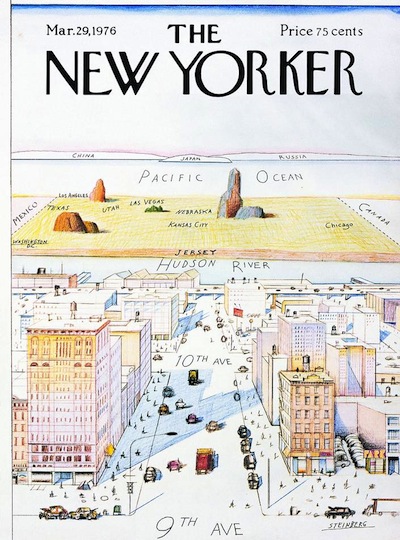
To answer this question, I turned to Hard Choices, her second memoir published earlier this year, and I read it through the lens of Saul Steinberg’s 1976 New Yorker cover, “View of the World from Ninth Avenue,” a famous Manhattanite mappa mundi from the era when the Vietnam War was a fresh trauma and Jimmy Carter was making an unexpected splash in the Democratic presidential primaries.

steinbergnewyorker1976


Continue reading

Rendition and Exception in the Carceral Archipelago

Given half the chance
They danced around the truth
For most of my youth
Like you’re really going to jump off that roof
You lived your life
In a perfect paradise
The sun always shone
On your beaches with lies

– Leatherface, ‘Diego Garcia’ (2010)

Diego Garcia US Navy SeaBees

In October 2005, then Foreign Office Minister Kim Howells stood before Parliament and reported that the UK government had granted no requests for extraordinary rendition in any part of British territory or airspace, and was aware of no such use. Critics – who suspected that the UK was indeed complicit in rendition for torture – pressed the point. So in December Jack Straw, who was Foreign Secretary, explained that “careful research” within government had turned up no evidence of renditions since 9/11 in UK spaces (land, air, or sea) and, again, no requests. The very next day Straw was giving evidence to the Foreign Affairs Select Committee, and was asked about the possibility of an investigation along similar lines as other EU states. Came the forceful reply:

I do not think that there is any case whatsoever for such an investigation here…I did what it is my duty to do, which is to provide a thorough comprehensive answer. That has been done. It has produced a nil return. Unless we all start to believe in conspiracy theories and that the officials are lying, that I am lying, that behind this there is some kind of secret state which is in league with some dark forces in the United States, and also let me say, we believe that Secretary Rice is lying, there simply is no truth in the claims that the United Kingdom has been involved in rendition full stop, because we have not been, and so what on earth a judicial inquiry would start to do I have no idea.

Conspiracies! Dark forces. Lies and secret states, no less. By January 2006, Howells was again reporting to MPs that all relevant Foreign Office records and recollections had been checked, implying that no proof of rendition had been discovered. Two years later David Miliband, who replaced Straw, was forced to admit that two renditions in fact did pass through the island of Diego Garcia in 2002 (Blair, pathetically: “We have just been informed by the United States of America about what has actually happened”). Suspicions were somewhat confirmed, but it was all a long time ago, and there was a change of Prime Minister, and then of government. While rendition-torture didn’t exactly go away, it faded from view. But it has resurfaced. Last month we discovered that some crucial records are incomplete due to ‘water damage’. Because if you have files pertinent to a major foreign policy controversy, why not store them that badly? Never mind that Ministers had previously argued that they wouldn’t be keeping notes anyway, and had to rely on assurances from the Americans (an “error” in US records was the culprit). Kettle logic, again.

Continue reading

Acting Time; Or, Ending Sexual Violence in Conflict

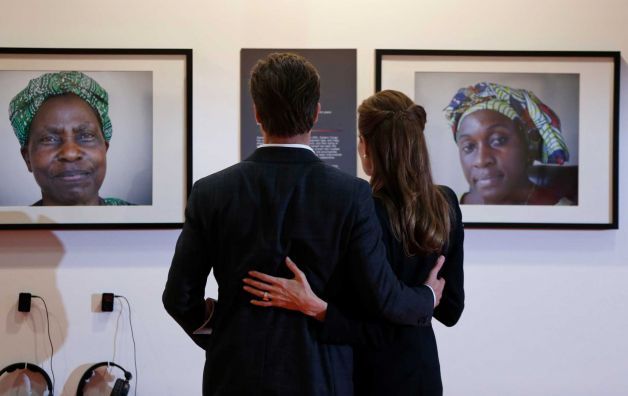
Pitt Jolie ESVC Pictures

The attention lavished on sexual violence in conflict last week was in many ways unprecedented. As well as convening the largest ever gathering of officials, NGOs and other experts for the Global Summit on Ending Sexual Violence in Conflict, co-chairs William Hague (Foreign Secretary of the United Kingdom of Great Britain and Northern Ireland) and Angelina Jolie (Special Envoy of the United Nations High Commissioner on Refugees) also generated very many pages – both print and digital – of commentary. In some myopic quarters, that achievement was in itself a distraction from the really important politics of blossoming conflict in Iraq. Such views should remind us that there are still those who insist on seeing gender violence as marginal to international peace and security. Worthy, yes, “no doubt important”, obviously a cause for concern, and so on, but naturally not the real deal.

Since the Summit’s close on Friday, there have also been criticisms of a different sort. A protest on the first day drew attention to the asylum and refugee policies of Her Majesty’s Government, and the ways in which survivors of sexual violence were being mistreated on the British mainland. The Foreign Office raised awareness in part through one-dimensional stories of crazy monsters in the hinterlands of barbarism. The “weapon of war” framework was ubiquitous, but no less problematic for that (see also). Although the Summit made space for youth delegates, UN entities, amateur hackers, foreign ministers, survivors, doctors, lawyers, celebrities, military officers and the odd NGO, academics (and our directly relevant research) were barely at the table. Some myths were therefore recycled. Delegates insisted on using rape survivors as props for their own journeys of self-discovery. I met a women in Panzi Hospital and what she told me broke my heart, etcetera. Some national representatives seemed only just to have discovered the existence of United Nations Security Council Resolution 1325, which urged the participation of women in military and political settings at all levels. That was, um, 14 years ago. John Kerry, amongst others, appeared to believe that rape in war was not yet illegal, but that we could make it so if we really put our minds to it.

The Fringe events were themselves a source of considerable disappointment. Angelina opened proceedings by assuring us that “our” institutions protected us from rape, and prosecuted it ably when it did occur, whilst “they” (we all know who) need our help because they are confined to refugee camps. There was a staged ‘trial’ of the afore-mentioned Resolution 1325, in which an all-white panel of lawyers and faux-judges, including Cherie Booth QC, took the testimony of African witnesses. You could buy various goods made by (or meant to help) rape survivors in the “bustling” Fringe marketplace, and the official programme recommended that you “treat yourself” by doing so. All of this (including the less appalling and more considered exhibits) seemed removed from the set piece debates upstairs. If the Foreign Secretary really did refuse to meet with four Nobel Laureates – some of whom are themselves survivors of political rape – then clearly civil society (that vague but essential category) was being neglected.

https://www.youtube.com/watch?v=1QFUD2Q6D8k

Those accumulated complaints can be dismissed as relatively trivial if the Summit gets even some way to achieving its stated aim of ending sexual violence in conflict.[1]  Continue reading

Aircraft Stories: The F-35 Joint Strike Fighter (Part II)

This is the second part of a single post about the F-35 as actor-network. The first part is here 

wbbuca 013

Strike

This word is meant to convey the F-35’s identity as a proper multirole fighter, a machine rigged to conduct both air superiority and strike missions, the latter defined as tactical attacks on a ground or naval target with a particular focus on “initial blow” or “first day of attack” operations.  All three variants of the F-35 fighter family hold this capability: the conventional A version designed for use by the U.S. Air Force and allied air forces; the Short Take-Off, Vertical Landing (STOVL) or B variant for the U.S. Marines Corps as well as the UK’s Royal Navy, as well as the conventional carrier-based edition for the U.S. Navy, the F-35C.

Airstrike, or strike for short, shapes, and is shaped by, the evolving structure of international politics in important ways.  Pax Americana, defined in terms of successive hegemonic or hierarchical international and regional orders centered on Washington, D.C., can be regarded as an assemblage made possible by the so-called global strike, among other smaller assemblages.  Since the middle years of the twentieth century warplanes have transformed themselves into multirole, fighter-bomber machines capable of ever-greater lethality and survivability.  What makes U.S. strike aircraft especially formidable is the surrounding stuff—assets like ballistic and cruise missiles plus countless “force enablers” such as ground bases, aircraft carrier groups, logistics depots, a large tanker force and aerial refueling know-how, interlinked information and communication systems, the ability to generate and sustain the use-of-airspace deals on relatively short notice and so on.

Continue reading

Aircraft Stories: The F-35 Joint Strike Fighter (Part I)

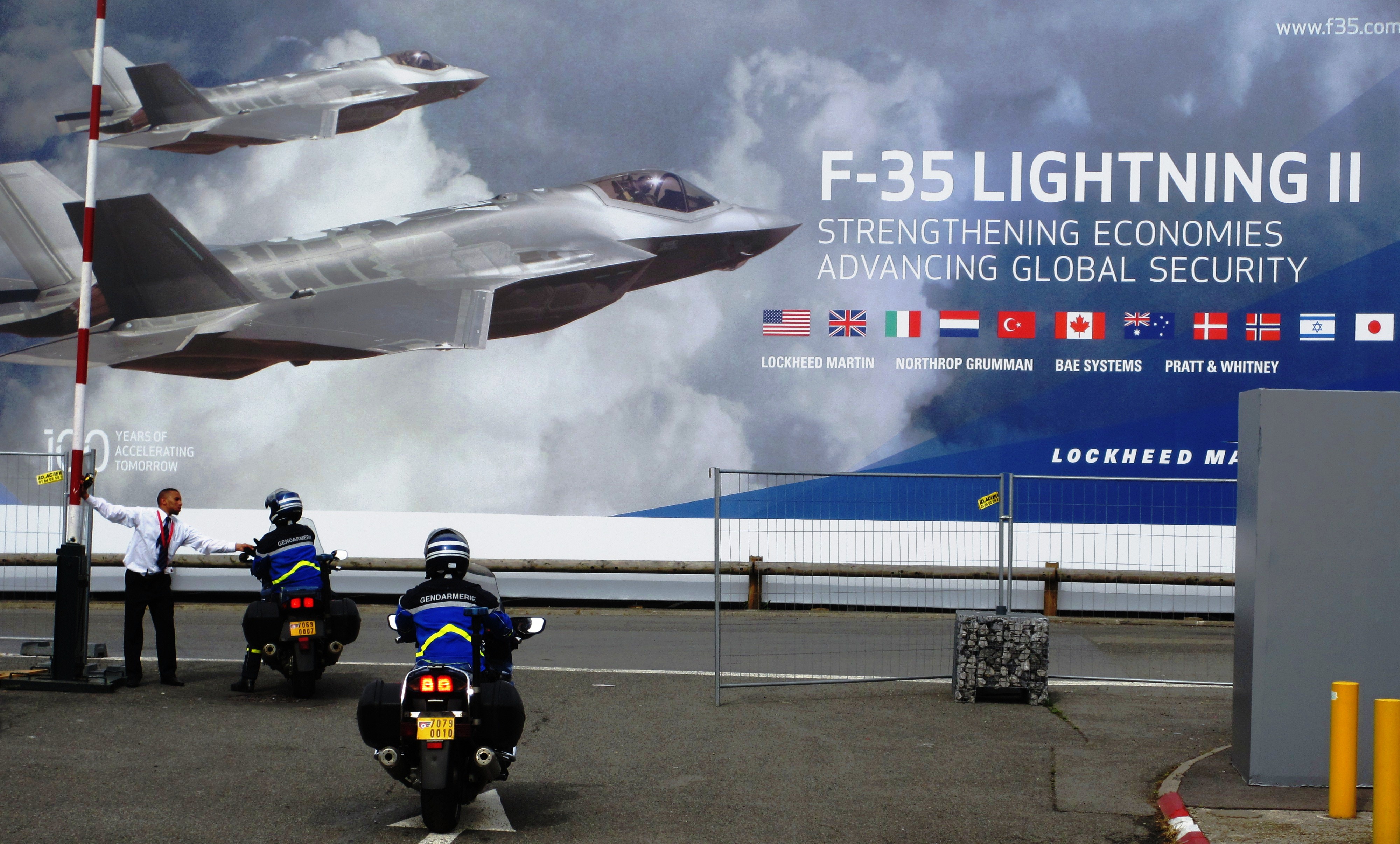
bourget

How big is the F-35 Joint Strike Fighter? By one set of measures, it is three times bigger than the Eisenhower Interstate Highway System, ten times bigger than either the Apollo Project or the International Space Station or Hurricane Katrina, or one hundred times bigger than the Panama Canal. These comparisons are only moderately outlandish. US$1.45 trillion is the Pentagon’s own December 2010 estimate of lifetime operating and supporting costs for the 2,443 copies of the F-35 currently on order by the United States government, which we can then compare to the known price tags, in 2007 dollars, of these five projects.[i] Costs—also variously prefaced as procurement, actual, sunk, fly-away, upgrade, true and so on—and their contestations are central to a discourse of accountancy that surrounds all projects that require large-scale mobilization of public power. But enormous as they are, these numbers still cannot capture the size of this particular weapons program. To understand just how big the F-35 is, I wish to suggest in this two-part post, we ought to conceive it as a proper assemblage—a heterogeneous association of human and nonhuman elements that is at once split, processual, emergent, and, most importantly, constitutive of the modern international.

Continue reading