What We Talked About At ISA: Rhythm, Time and History

With thanks to Elisabetta Brighi and Xavier Guillaume for putting together the Rhythms of the International roundtable and their inspiring contributions, to Robbie Shilliam for his song, and Kyle Grayson for his spirited and thoughtful engagement. And by no means least, to the pleasingly sizeable and lively crowd who gave the last panel of the last day such a buzz.

Below is a write-up of my contribution to the roundtable, in which I reflected on the relationship of rhythm and history, and drew out some of the potential disruptions that a different rhythmic sensibility might have on our conception of history.


What is rhythm?

To my shame, colleagues, and partly out of curiosity, I looked it up in the dictionary. Shame, because if you are looking something up in a dictionary before giving a talk on it, you probably shouldn’t be giving a talk on it. Curiosity, because I wanted to know how they would define ‘rhythm’ in words rather than in noises.

The dictionary answers were not particularly edifying. One definition spoke of ‘repeated, regular beats’, another of a ‘regulated succession’ of beats. Thud, thud, thud. Boom, boom, boom. Boom, thud, boom, thud. These definitions felt flat, and rather forbidding. But I suppose this is because they were the generic definitions of all kinds of ‘rhythm’, and not just the samba playing in my head.

Using some thinking developed earlier in some work on music and politics, I started again, with a different question:

What is the relationship of rhythm and time?

This yielded a much more direct answer: it is the production of rhythm that makes time itself knowable. In the making of music, rhythm generates movement and flow, and makes it possible for sounds to synchronise and arrange themselves. Continue reading

The Causes of the Great War: An Autobiographic Take

The assassination of Franz Ferdinand and his wife Sophia on June 28, 1914 set of a chain of events that a few weeks later led to an all-out war involving virtually all key European powers and their enormous overseas empires at the time.   How did this happen?

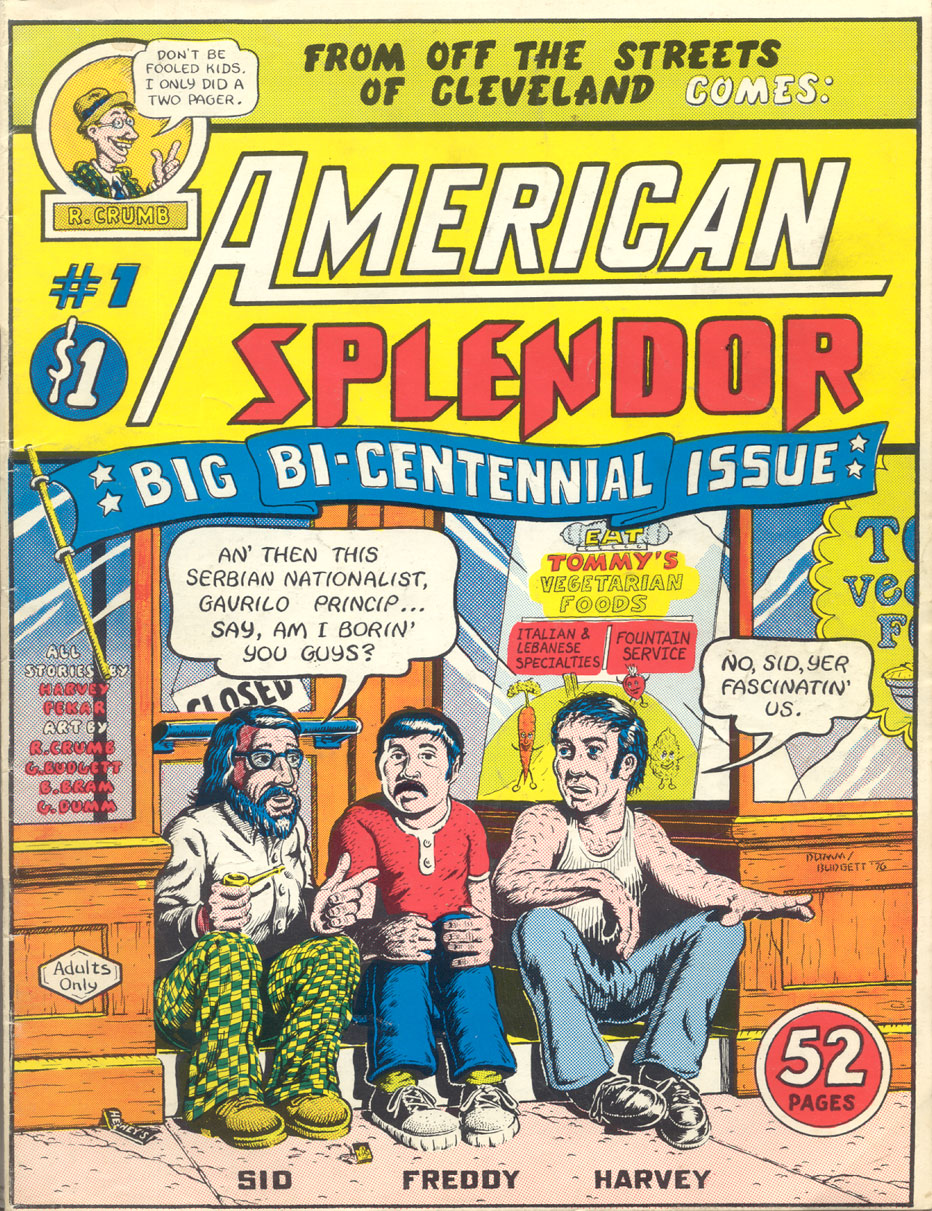
AmericanSplendor01-1

As a born and raised Sarajevan, I was socialized from an early age to think about the causes of the Great War – a question that happens to be one of the most studied in all of human history.  I vividly recall my first primary school trip to “Princip’s footsteps” – markings embedded into the sidewalk signifying the spot from where the assassin, Gavrilo Princip, fired at the Viennese couple.  We boys took turns to stand in the footprints and re-enacted the killing; the girls giggled.  There was no doubt that this behaviour was desirable:  with our teachers we read out the message on a nearby plaque that explained, in solemn Cyrillic script and even more solemn Aorist, how the assassin’s shots expressed the will of “our people” to be free of foreign tyranny.  Is it true that Sophia was pregnant?, a classmate asked.   Yes, said one teacher, but this was an accident. Princip’s bullet hit her only after it ricocheted off the car.  It was intended for General Potiorek, Austria’s military governor.

Continue reading

Ah, Ça Ira, Ça Ira! Iconographies of the French Revolution

Last month, Stanford University and the Bibliothèque Nationale de France jointly released a vast online collection of documents and images from the French Revolution via the French Revolution Digital Archive. With around 14,000 high-resolution images, it is an overwhelmingly large collection but the website is thankfully very user-friendly with content tagged in multiple ways and organised according to various themes. This is undoubtedly a fantastic resource for not only historians but also a wider audience interested in the tumultuous events of the late eighteenth century considered by many to mark the start of political modernity.

Drawn into the archive, I spent quite some time trawling through it with a particular eye for caricatures, satirical illustrations, and other allegorical depictions of the revolution. I have compiled here a selection of those images I found most striking or noteworthy along with translations and contextual information where necessary. Hopefully these will be of some interest to readers of this blog. As I have no academic specialism in this period of history, I am very much approaching the material as a layman. I therefore more than welcome any corrections or additions to my readings of these images that I’ll gladly include in updates.

Chasse patriotique à la grosse bête (1789)

Patriotic Hunt of the Great Beast (1789) [link]

“Posterity will tell us that in 1789 on the 12th July around four o’clock in the evening, several people claimed to have seen in the vicinity of Paris, on the road to Versailles, a Beast of an enormous size and a shape so extraordinary as to have never before seen the like. The news spread universal alarm in the city and put its people in a state of violent agitation. Cries of “to arms, to arms” were heard everywhere without any being found; it seemed that the Beast had swallowed them all along with their munitions. New weapons as extraordinary as the animal that had to be combated were immediately forged. On the 13th, people continued to agitate themselves, arming themselves and running after the Beast without being able to encounter it. On the the following day of the 14th, forever memorable for the France that suffers, a hundred thousand individuals ran to the Hotel des Invalides from which they carried away canons and sixty thousand rifles, such that there were two hundred thousand armed men who tracked down the Beast everywhere. Suspecting that it had retreated to the Bastille, the people flew to it with heroic courage and this lair of Despotism, despite its hundred bronze mouths vomiting fire, was taken by assault in two hours. With this victory appeared the monster with a hundred heads; its hideous form revealed that it was of an aristocratic kind; suddenly our bravest hunters seized upon her from all sides and it was to whom would cut the most heads. This monster that dragged behind it desolation, famine and death disappeared instantly under a hundred different forms and fled languidly abroad, taking with it the despair and shame of its defeat.”

Continue reading

A Right To The World: On Syria and an Idea of International Public Order

P1 aniang

A guest post from Amy Niang on the contours of ‘international community’, following previous interventions from Siba Grovogui in relation to Libya, Robbie on provinciality in International Relations and John M. Hobson et al. on Eurocentrism in international political theory. Amy teaches international relations at the University of the Witwatersrand and she is affiliated with the Centre of Africa’s International Relations (CAIR). She gained her PhD from the University of Edinburgh in 2011. She has taught International Relations, political theory and African history in South Africa, Scotland and Japan. Her research interests are in the history of state formation, political theory and Africa’s international relations, and she has commented regularly on democracy, civil society and Western intervention in Africa.


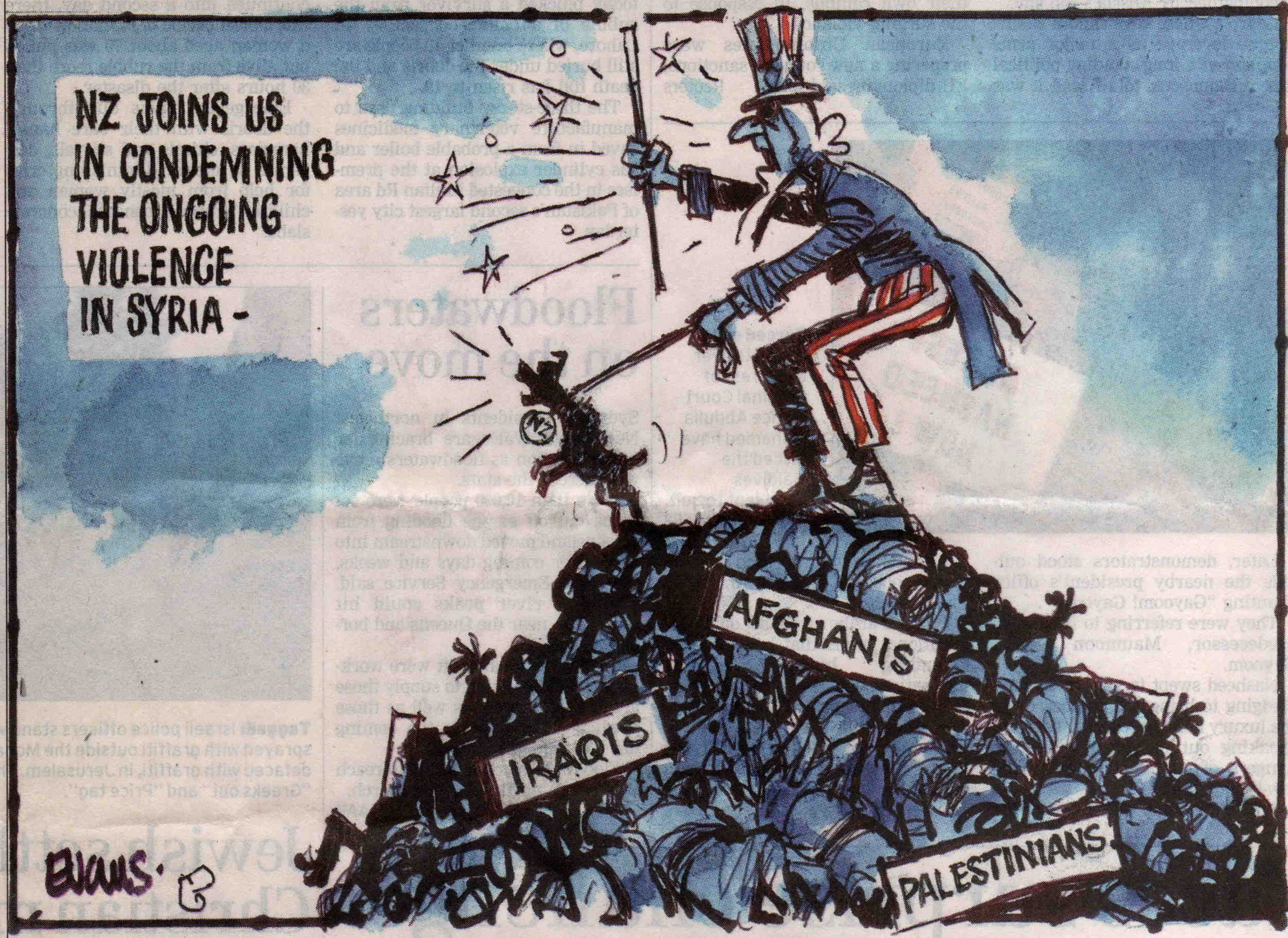
The Syria crisis has sparked many debates in scholarly and media circles, not least around the way in which the ‘international community’ should exercise its responsibility to Syrians and to the protection of human rights, particularly in the aftermath of the alleged use of chemical weapons on Syrian civilians. The lack of consensus on the most appropriate response, within the limits of international law, raised a number of questions.

There were times when we were told that a military attack was imminent, others when cautious voices against a military campaign seemed to have the moral upper hand. In the days following the discovery of the use of chemical weapons, the U.S. made public its position on the question, based on the conviction that the Syrian government was responsible. In the general uproar that that ensued, the recent examples of Afghanistan and Iraq guided many deliberations on the wisdom of another humanitarian intervention. Like Barack Obama, many commentators believe in the existence of a red line that delineates the contours of a hypothetical morality, its alleged violation by Syria warranted punishment if the red line was to be pushed back. Many others however warned against acting on an impulse of outrage, Libya is a vivid example of how an ill-conceived intervention can be more damaging than the situation it originally sought to fix.

P3 Hypocrisy-Irony

From the polarized debates, two declarations in particular piqued my interest. The first one was Barack Obama’s Address to the Nation of September 10th, 2013. The second one was the Declaration of the Forum for Former African Heads of State and Government (the Africa Forum) on September 5th, 2013. The first one was as usual widely followed in America and beyond. The second went unnoticed partly because it was of little news worthiness for commentators of world affairs, partly because no one expected Africans to formulate any coherent view on the Syrian question. The first was delivered as an authoritative pronouncement on how a putative ‘we’ (i.e. the international community) should interpret international law and what shape its moral responsibility – here merely one embodiment of the West – should be engaged. Continue reading

Living Knowledge Traditions and the Priestly Caste of the Western Academy

comte

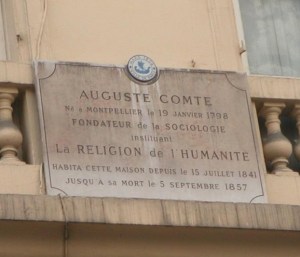
The Western Academy, especially in its social science and humanities wings, incorporates as a priestly caste. Perhaps Kant is the first high priest of this caste when he argues for the Aufklärer to become a corporate entity equivalent to the hierocracy and nobility but exceptional in its duty to provide a truly public service of reasoning. The psalm of this priestly caste is “have the courage to use your own understanding”, its catechism: to singularly possess and hold aloft the flame of revelation, known as science, or, nowadays, the modern episteme. Even Marx holds the flame aloft when he takes Hegel’s Philosopher, who breathes world spirit, and makes him inhabit the skin of the Communist.

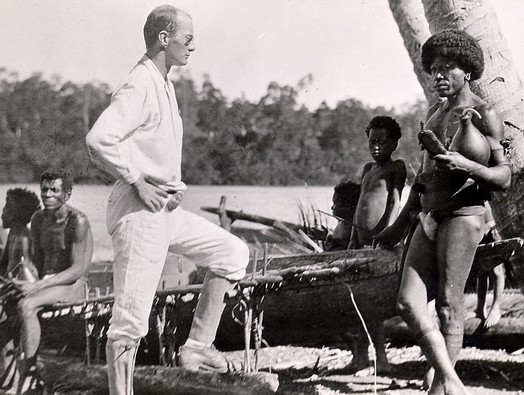
This priestly caste, as it founds the church of modernity, is instantly and integrally involved in founding a broader colonial division of labour.  These new priests conjure up the traditional/modern divide by the use of history –  differentiating old and new European Western societies – and by the use of anthropology (later, sociology too), by differentiating the colonized from the colonized. The living knowledge traditions of the colonized are pronounced dead on arrival in the present. And their cosmologies, philosophies, social practices – are entombed into opaque “cultures” the contents of which can only be clearly illuminated by the keepers of the flame. 

19_malinowski

Ultimately this mapping of difference works through race, gender and class coordinates so that even the “poor” living in the West, as well as un-mastered women and single mothers intersect with (post-)colonized subjects to become part of this opacity. The episteme of the Western Academy thus differentiates between the knowers and the known.

In this respect, the modern episteme is as seminal as gunboats to the maintenance of colonial difference. Key to this difference is not just the attribution of extra-ordinary exploitation, oppression and dispossession to colonized peoples but also their epistemic erasure, i.e., the outlawing of the possibility and desirability of intentional self-determining community amongst the colonized and their post-colonized descendents. It is in the colonial world and not Europe where Europeans develop the art of objectifying peoples into populations such that the basic competency of the colonized to self-define is deemed absent by the instruments and mores of European sanctioned international law. Postcolonial populations have only been able to become peoples under very specific conditionalities; and many who make the transition become the new police of colonial difference. Those who fall between or prefer a third way become the ungoverned, or ungovernable.

Continue reading

Pacific Redemption Songs

Te Hau

“Te Hau” by Abby Wendy

A few years ago I was reasoning with members of Ras Messengers, a reggae-jazz band who had in 1979 toured Aotearoa New Zealand. The Rastafari musicians recollected their experiences with various Māori communities. Occasionally female Māori elders (kuia), in introducing themselves to the band, would connect their genealogies back to Africa. The kuia did this as part of an indigenous practice called whakapapa, which literally means to “make ground”. It is a practice that allows diverse peoples who might never have met to find a genealogical route through which they are already personally related.

Chauncey Huntley from Ras Messengers showing the Rakau (traditional sticks) that he was gifted thirty years previously

Rastafari also have a practice called “grounding”, which is to collectively reason on the meaning and challenges of contemporary life. Over– or inner- standing (instead of under- standing) is cultivated through the guidance of natural laws and – often with the help of drums, fire and holy herb – the intuition provided by spiritual agencies (Irits) that allows ones to pierce the veil of deathly inequality, oppression and dehumanization so as to redeem living energies and relationships that might help with healing in the present. When I think of Irits I also think of a key concept of Māori cosmology called hau. Overstood by Māori Marsdenhau is the breath or wind of spirit which is infused into the process of birth to animate life and associated with the intention to bind peoples together in righteous living.

A key stone of the Rastafari faith is that adherents collectively redeem their African genealogy so as to breathe life back into their suffering condition and leave behind the death of enslavement and its contemporary legacies. So when I heard of this story of the kuia and Ras Messengers, I imagined how this practice might have given strength to the Ras. After all, in those days (and perhaps still today), peoples of various African heritages were often forced (directly or indirectly) to disavow those connections themselves.

Whakapapa is an art practised collectively. Yet it is not free play, nor is it the manufacturing of fiction. It is a creative retrieval. It could even be a redemptive act.

Keskidee 13

Keskidee perform in New Zealand

This was certainly the intention of those who organized the tour of Ras Messengers alongisde the Black British theatre group, Keskidee (the name of a Guianese bird known for its resilience). The organizers were a group of New Zealand activists that came together under the banner Keskidee Aroha (Aroha being the Māori word for love, sympathy, nurturing affection etc). Their intention was to learn from and work with the artistic tropes of Black Power and Rastafari so as to catalyse a cultural revolution and renaissance amongst young Māori and Pasifika peoples thereby strengthening them in their confrontation with a racist post-settler society.

Continue reading

Notes on Ex-Yu Justice, Part II

Following Part I, and in advance of Part III.


The court is political  

The smartass response goes something likes this: “Of course it’s political; what’s not political? Haven’t you read the ICTY’s website? It says clearly that the tribunal was established for explicitly political reasons, too, by the UNSC, which is political by definition.” But the smartass response is a rude interruption. The above assertive prefaces monologue, not dialogue. The monologue is a story about world politics as a dog-eat-dog contest in which the strong always devour the weak with a focus on the origins of the ICTY. “Of course an international judicial institution cannot be created on the basis of an UNSC resolution alone. Of course Chapter VII of the UN Charter does not specify the conditions under which war crimes tribunals can be set up. Of course the ICTY quickly discovered that it could not bother with the question of own legality. But when have great powers ever cared about law and institutions? Might makes right, right? The ICTY is based on the consent of states – big states, not our banana republics.”

This story varies in terms of breadth and depth, but its modal conclusion is that the tribunal cannot represent anything but “victor’s justice” and/or Western and specifically American oppression of those living on the periphery. As for the motive, the supposedly aggressive prosecution of Bosno-Serbo-Croat baddies practiced by the ICTY is a function of the desire for retribution for every case of ex-Yu insolence in recent history, starting with the Trieste crisis of 1945. As discipline and punishment at once, trials are also meant to serve as a warning to the rest of the peripheral and semi-peripheral world. This type of theorizing could be described as a cross between pop-realism and pop-Marxism with a whiff of the crudest forms of pop-anti-Americanism and some other, far less respectable prejudices. While it is not exactly a closed loop, for every new newstory indexing Western and specifically American double standards and double visions in international law, the theory gains strength. Who in the former Yugoslavia doesn’t have an informed opinion on the “Hague Invasion Act”?

imgfrontisThe two accounts of the origins of the ICTY that I have on my shelf make something of an opposite case. Pierre Hazan’s book, subtitled ‘The True Story Behind the ICTY’, suggests that the weak (international justice activists) outfoxed the strong (realist diplomats and state-centric lawyers) and, against all odds, managed to turn the tribunal into such a revolutionary achievement (more on this below). Hazan is no theorist of norms and transnational advocacy networks, but there are more than a few parallels with this literature. The second account is Rachel Kerr’s 2004 book, which begins and ends with the thorny issue of “politicization,” including the issue of “prosecutorial discretion” as its special subset. Kerr has the ICTY walking on a tightrope. Sidle up too closely to justice, and you alienate those who rule the world; let politics in, even to manipulate it for judicial ends, and you lose credibility. While infinitely more nuanced than Hazan’s, Kerr’s framework for analyzing politics (it, too, chimes with 1990s IR theory, namely the “bringing international law back in” literature) follows the same binary – let me personify it a little as a contest between “realists” versus “legalists” – and it reaches the same conclusion. And judging by both the quotidian operation of the court as well as its key decisions up to 2002-3, Kerr finds, “legalists” had the upper hand.

I am not sure what stock-taking exercises based on the realist vs. legalist framework look like today (again, this post is my attempt to reconnect with the literature I stopped following years ago), but what struck me in my conversations is how adamant my interlocutors were in rejecting even the most carefully drawn legalist claims. It’s simple, the typical response goes, the ICTY is subject to constant political pressures and it shouldn’t be surprising to see so much judicial malpractice. Lest one is keen to dismiss this as “typical” ex-communist (and transitionalist) disdain for the notion that law serves to ensure that valuable social goods are distributed in ways that protect equal respect for everyone, note that some of the most critical arguments about the “hopelessly political court” are drawn from the texts left behind by bona fide ICTY insiders like Antonio Cassese (he of  those great international law textbooks), Gabrielle Kirk McDonald, Louise Arbour, Graham Blewitt, Carla Del Ponte, Serge Brammerz, and Florence Hartmann (more below). Anyone can cherry-pick a few memorable lines from a few memoirs and journalistic accounts (Hartmann, if I recall correctly: “the ICTY was formed so that war criminals could negotiate on the level of their innocence”), but what I find interesting is that these types of arguments have gained more and more adherents over the years.

Continue reading

What We Talked About At ISA: ‘Afghan Masculinities’: The Construction of the Taliban as Sexually Deviant

Taliban 1

The paper I presented earlier this month at the International Studies Annual Conference held in San Francisco looks at how Afghan masculinities have been represented in and by Anglo-American media. The words ‘Afghan man’ conjure up a certain image, a pathologised figure that is now associated with most males in Afghanistan. The paper analyses this figure of the ‘militant’ Afghan man, most strikingly captured by descriptions of the Taliban and juxtaposes it with the less popular, though still familiar trope of the ‘damned’ Afghan man, embodied in the figure of the Afghan President, Hamid Karzai. But here I focus on a particular construction of the Taliban as sexually deviant, (improperly) homosexual men.

Jasbir Puar, in her trenchant appraisal of today’s war machine and the politics of knowledge that sustains it argues that the depictions of masculinity most widely disseminated in the post 9/11 world are terrorist masculinities:

failed and perverse, these emasculated bodies always have femininity as their reference point of malfunction and are metonymically tied to all sorts of pathologies of the mind and the body – homosexuality, incest, pedophilia, madness and disease.

Whilst representations of al-­Qaeda as pathologically perverse have permeated the Western mainstream, the Taliban because of its historically low international profile has escaped that level of media frenzy. The attention it does get, however, is almost always mired in Orientalist fantasies of Eastern men as pathologically disturbed sodomisers. The ‘high jack this fags’ scrawled on a bomb attached to the wing of an attack plane bound for Afghanistan by a USS Enterprise Navy officer, while in no way ubiquitous, is certainly an edifying example of our image of the Taliban as perverse and not quite “normal”.

This perversity of the Taliban has been largely attributed to their madrassa upbringing, an all-­male environment and their concomitant attitude towards women. Continue reading

UNESCO and Research Agendas Concerning Race

Antigua was settled by human rubbish from Europe, who used enslaved but noble and exalted human beings from Africa (all masters of every stripe are rubbish, and all slaves of every stripe are noble and exalted; there can be no question about this) to satisfy their desire for wealth and power, to feel better about their own miserable existence, so that they could be less lonely and empty – a European disease … Of course, the whole thing is, once you cease to be a master … you are no longer human rubbish, you are just a human being, and all the things that adds up to. So, too, with the slaves. Once they are no longer slaves, once they are free, they are no longer noble and exalted; they are just human beings.

Jamaica Kincaid suggests that abolition and emancipation are bitter-sweet affairs. For the enslaved, freedom furnishes them with a human being that nevertheless awaits a meaningful personhood. Out of slavery the master fares better, redeeming his human being from being human rubbish. Kincaid’s suggestion is insightful. After all, abolition had a vibrant nineteenth century afterlife. White abolitionists enthusiastically allowed their humanitarianism to colonize Africa so that God’s chosen could sanctify themselves through the act of saving the natives from their selves. Meanwhile, William Wilberforce et al, convinced that slaves were human biologically yet lacked the social and cultural competencies of humanity, looked on fascinated at the experiment of self-government in Haiti. From this point onwards all future failings would be attributed to the epidermis, not the colonial relation. Presently, argues Kincaid, the landscapes of the old Caribbean plantations have been consumed by a white tourist gaze that has once again disavowed the living legacies of enslavement and colonization and denied meaningful personhood to its peoples. What remains of these places and peoples is only an “unreal”, picture-book beauty.

What are our narratives of race and racism? Whom do we follow in order to tell the tale: the masters or the enslaved – the humanitarians or the “sufferers”? Which tale confesses the episteme –the scientifically valid study – of race?

The 1950-51 UNESCO “statements on race” answered such questions in favour of the master’s narrative. Announcing a new era in human understanding after the terrors of war and irrationalities of genocide, the main purpose of the statements was to separate the “biological fact” of race from its “social myth”. The biological fact in and of itself was rendered harmless, pertaining only to “physical and physiological” classifications. Thus genetic inheritance, it was affirmed, could have no bearing on mental or cultural competencies and capabilities. Conversely, the social myth of race was considered extremely dangerous in that it rendered cultural difference as biological thus sundering the “unity of mankind”. This myth had to be dispensed with; hence ethnicity – as a social/cultural classifier – was proposed as a preferable classificatory regime to that of race. Ethnicity, after all, had not been tainted with supremacist hierarchy and could signify instead non-hierarchical diversity.

Although the scientists who collectively produced the statements on race were by no means all white, the majority hailed from Western academies. And the particular kind of anti-racism evident in UNESCO’s statements had already been formulated by famous Western anthropologists such as Franz Boas. They had sought to undermine scientific racism on its own grounds, i.e. by proving the un-scientific nature of the social myth of race. And this endeavour required debunking racialized identity – that which confessed their legal and natural inequality – as myth not fact. However, as part of this manoeuvre these identities had to be subsumed under a harmless social science of ethnic categorization. While this move redeemed white identities, it de-politicized the meanings of the sufferers’ cultural complexes and complexions, extricated them from inherited hierarchies of power, and thus segregated them from the inherited and living struggles against (post-/neo-)masters. In short, as Alana Lentin puts it, the effect of the statements was to separate race from politics.

Continue reading

Reflections on Narrative Voice

The final post in our mini-forum on critical methodologies and narrative in IR. The series is closed by Himadeep Muppidi, who is Betty G.C. Cartwright Professor of International Studies and Political Science at Vassar College, New York. He is the author, most recently, of The Colonial Signs of International Relations (Hurst and Columbia University Press, 2012).


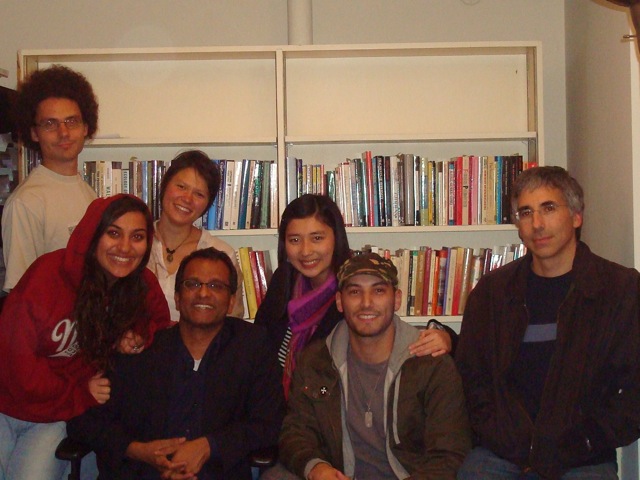
Himadeep Muppidi and Students

Himadeep (seated, fourth from left) with the ‘Vassar village’: students and faculty who were into story-telling.

I went to the York University workshop persuaded of the importance of the narrative turn in the field of international relations. I find literature in various forms useful in my teaching of international relations at Vassar, not least in opening my own provincial imagination to the worlds of others. Entering the international through narratives allows the class to engage political issues from the inside rather than pretending we were somewhere outside looking in or somehow beyond the concerns of those whose worlds we safely theorize. Narratives in different forms – novels, memoirs, short stories, and autobiographical essays – also allow for insightful translations of contemporary contexts. After soaking oneself in the nuance and complexity of narratives, conventional accounts of IR appear lifeless and boringly schematic in their attempts to straddle (our) humanity. They perish, unseen and unmourned, on the classroom floor.

But the discussions in the workshop helped me realize that narratives on their own are not enough. We need critical theories to go along with the current turn towards narratives. Colonialism too sustains itself on effective story-telling and not just brute force. It has a robust history of accumulating, systematizing and circulating its stories, not least to those citizen-subjects it narrates as its benevolent and heroic center. In IR, we often claw our way out of these archival dumps searching for fresher, more humane, worlds.

In the wasteland that is conventional IR, stories of any sort might appear, at first glance, to offer a welcome respite. But there is also, as some of our fellow disciplines can attest to, a politics of story telling: whose stories do we get to hear all the time; whose stories are generally inaudible; how do stories make us over; whose mansions do stories furnish with humanity in every remote room and whose huts do they deprive of life and dignity. Perhaps we need to explore these inequities of the political terrain more even as we take the narrative turn seriously. The question I left with from the all too brief workshop, one that is not a new one by any means, was: How can we, in IR, engage better the diverse worlds of the human international, as they come to us through narratives, without losing sight of the politics of inequity staging their appearances and disappearances?

And there I would have stopped but Naeem Inayatullah encourages me to say more. He wonders if what I am saying is: “No matter the turn, it will be dominated by Europe. So what can we do to give the narrative turn a chance at something else?” I am unsure if it is Europe’s renewed domination of the wasteland that bothers me as much as the prospect of another lost opportunity to plough newer terrain.

Maybe I should defer to the voice of a better storyteller. In a 2009 TED talk, Chimamanda Adichie speaks to what she calls the ‘The Danger of a Single Story’. In this short, approximately 20 minute presentation, Adichie draws our attention to a number of issues relevant to our thinking about stories and storytelling: to how “impressionable and vulnerable” we all are in the face of stories, to how the British and American stories she read as a child opened her imagination and at the same time shaped her childhood writing so much that the stories she wrote, even as she grew up in Nigeria, were of British and American worlds (filled with discussions of the weather and ginger beer). Reading stories by writers such as Chinua Achebe, she tells us, brought her to other worlds in which she could recognize characters like herself. Adichie is appreciative of the ways in which British and American stories opened up her world even as she highlights the dangers of knowing only those stories. This is not just an inter-country issue either.

Even the Nigerian context she imbibes as a child is not shaped by a single story though it takes her a while to realize this. There are subaltern worlds here (the world of the domestic help for instance) that she sees only in a thin and caricatured form at first since the story of “their” poverty dominates her imagination and occludes all their other ways of being human. Adichie insightfully connects stories and storytelling to questions of structural power and narrative homogeneity: our socially learned capacities to hear and tell diverse and plural stories of one’s own world while hearing and re-telling only single stories of the other. Adapting Adichie, I wonder if, given the social structures of teaching and learning IR that we currently inhabit, the narrative turn would only result in a renewed cycle of seemingly new stories about the diversity and humanity of Europe and single and simple stories about its Others.

But Naeem’s question continues to smile at me: “So what can we do to give the narrative turn a chance at something else?” It knows that I haven’t responded fully to it yet. I am tempted to say that I prefer to think with you all on that one. Maybe my partial response would be, in anticipation of a broader and longer conversation, that it is not writing alone but reading and teaching that we need to work further on. Maybe we need to begin by reading and teaching an international in which there are multiple other stories than the one or few we already know about IR’s others. Maybe that is the implicit promise of storytelling conceptualized, critically, as a politics of exile.


Suggestions for further reading: Sven Lindqvist, Eduardo Galeano, Assia Djebar, Amitav Ghosh