Four Things the Left Should Learn from Kobane

The Kurdish town of Kobanê has recently become the centre of a geopolitical conflagration that may well change the course of Middle Eastern politics. After months of silence over the threat faced by Kurds from ISIS, the world is now finally watching, even if the ‘international community’ remains conspicuously quiet. However, many Western responses, be it from scholars, journos or activists, have somewhat predictably retracted into recycled critiques of US and UK imperialism, often at the expense of missing what is truly exceptional and noteworthy in recent developments. So, in the style of contemporary leftist listicles, here are four things we can and should learn from events in and around Kobanê.

1. It’s Time to Question the West’s Fixation on ISIS

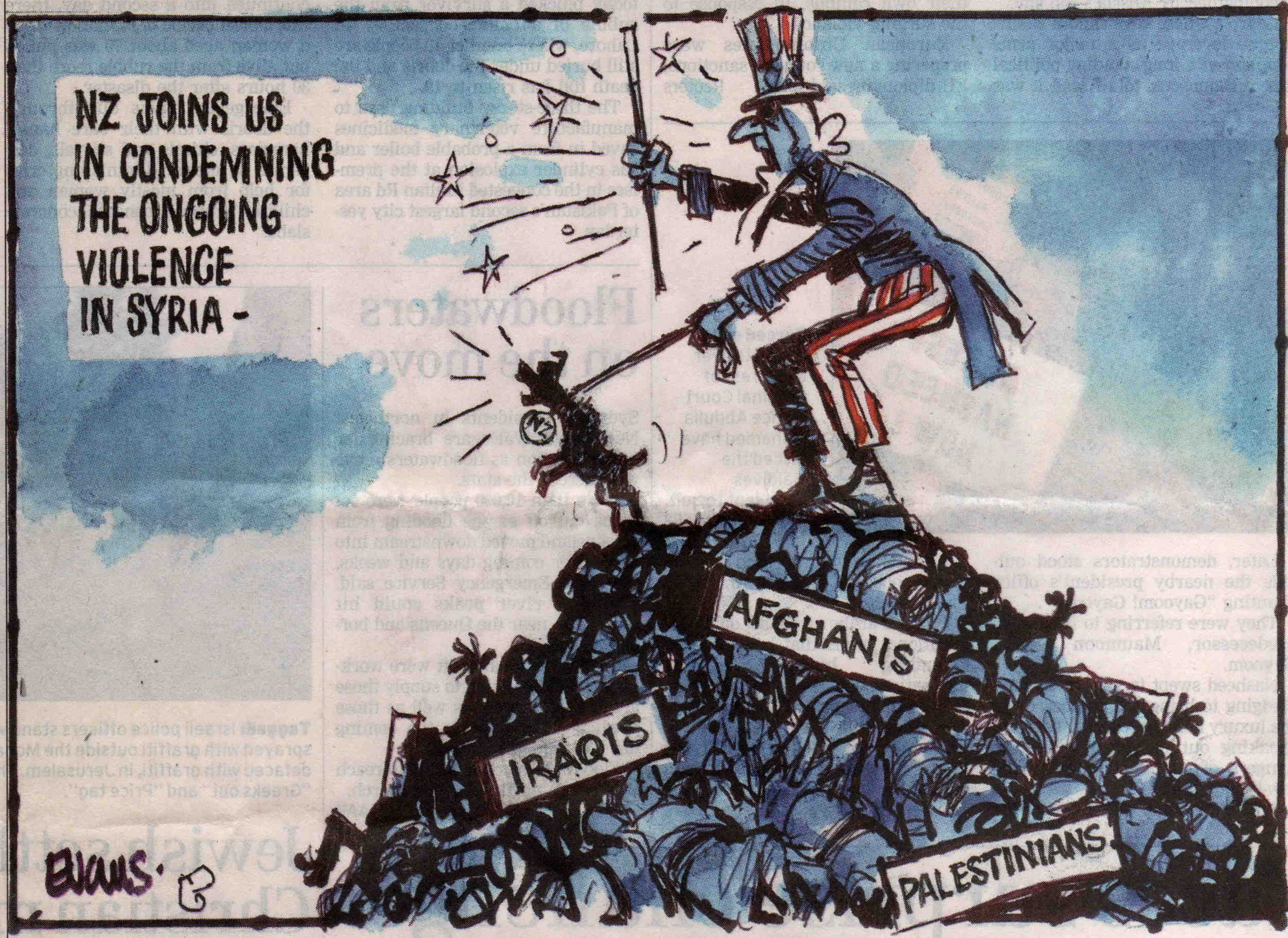
If Barack Obama, David Cameron and Recep Tayyip Erdogan are to be believed, the ‘savagery’ of ‘fundamentalism’ is the primary focus of NATO involvement in Syria. Notably, many left critics have reproduced this very same fixation on ISIS when discussing Western interests. However, for an almighty imperialist organisation supposedly hell bent on stopping ‘Islamic extremism’, NATO have been curiously ineffective. In fact, the US has been indirectly responsible for arming ISIS and altogether incompetent and/or reluctant in arming the decidedly secular Kurdish resistance. US and UK air strikes have been fleeting, and at best symbolic, making little impact on the advance of ISIS. Moreover, Turkey has repeatedly turned a blind eye to ISIS’s use of its territories and borders for training activities and supply lines, respectively. More recently, as Kobanê teetered on the edge of conquest, Turkey insisted any military assistance was dependent on the Kurdish PYD abandoning self-determination and self-governing cantons, and agreeing to Turkish buffer zone in Kurdish controlled areas in Northern Syria (which amounts to little more than a colonial land grab). Now, considering the US and UK were keen to intervene long before ISIS was seen as a threat, and considering Turkey long-standing hostility to the PKK/PYD, we should be more demanding of any analysis of intervention that begins and ends with ISIS. In short, it is becoming increasingly clear that ISIS is little more than a pretext for NATO to pursue other geopolitical aims – namely removing Assad and destroying Kurdish autonomy.

Continue reading

Decolonising the Anglosphere

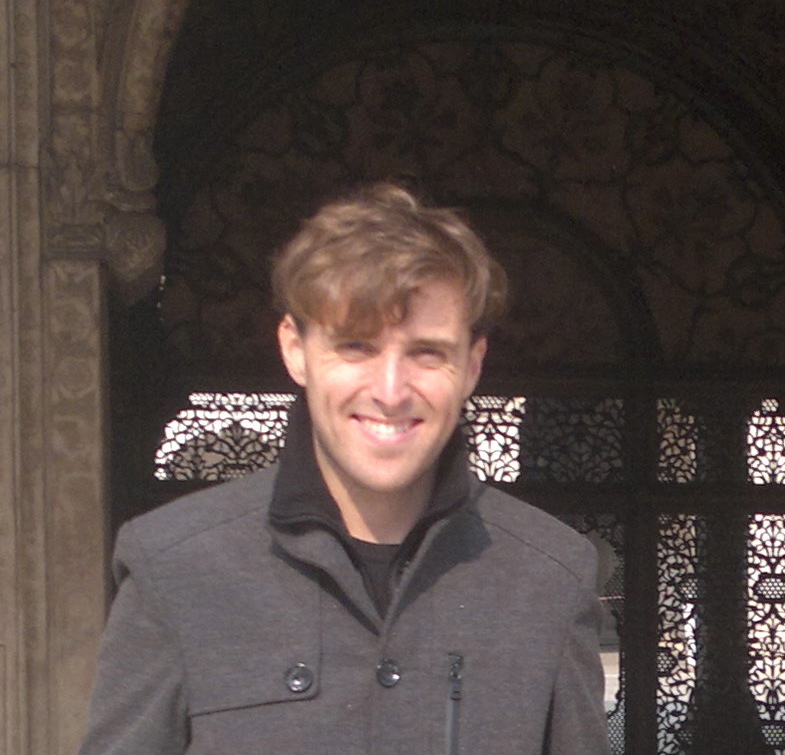
Alex at Red Fort

A guest post from Alexander Davis, who is a PhD candidate in international relations at the University of Adelaide, Australia. Alex holds a research MA on India’s international colonial history from the University of Tasmania and his PhD dissertation is a postcolonial examination of India’s relationship with the Anglosphere, supervised by Priya Chacko, Kaniskha Jayasuriya and Carol Johnson. This post provides an outline of his critique of the ‘Anglosphere’, which follows from previous discussion on The Disorder of Things by our own Srdjan Vucetic, and acts as an introduction to the themes of his forthcoming dissertation. Alex can also be found over at Twitter.[1]


Why India? Why the Anglosphere?

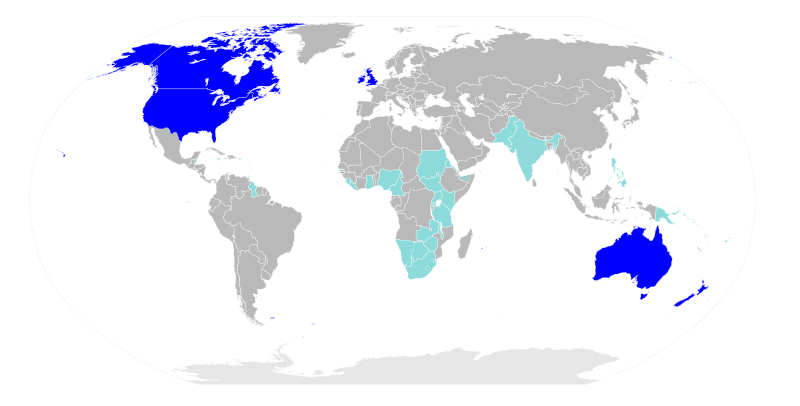
The term ‘Anglosphere’ refers to a distinctly murky combination of states, peoples or cultures with an implication of both cultural superiority and closer international relationships on the basis of a shared identity. Even dictionary definitions of the term illustrate the difficult. For some, Anglosphere is based simply on the English language, for others it includes the ‘cultural values’ associated with the political development of Great Britain. Srdjan’s recent book on the Anglosphere shows excellently how the idea of the Anglosphere is rooted in its colonial history and is an expression of Anglo-western superiority. Because of my previous research and teaching interest in India’s colonial history, the idea of the ‘Anglosphere’ struck me as an assertion of cultural superiority and dominance, suspiciously similar to colonial justifications for imperial rule. Once we realize this, India, just as it was central to the British empire, becomes central to understanding contemporary discourse on ‘Anglosphere’. The first question I asked, sensibly enough I thought, was ‘is India in the Anglopshere?’ I have since realized deep inadequacies of this question, which in turn has led me towards to believe in need for a decolonisation of the Anglosphere subject.

800px-Anglospeak_svg

Thinking the Anglosphere through India

In order to understand contemporary Anglosphere discourse, and the position in which India fits within the concept, we first need to understand its historical context. An early form of contemporary Anglosphere debates on India can be in England on the future of the British empire at the turn of the 20th century which turned into a discussion on the concept of ‘Greater Britain’. This idea was to be federation between Britain and her colonies might look like. Some thinkers at this time saw India as central to the empire, and therefore central to any ‘Greater Britain’. Sir Charles Dilke originally began to use ‘Greater Britain’ as shorthand for the British empire as a whole, but later argued it should only be the ‘English-speaking, white-inhabited, and self-governed lands’. Others, such as historian John Seeley, took up the idea, initially including India on the inside as a territory of the Crown. However, later, in the same book, he argued Greater-Britain needed to be racially homogenous, declaring India to be ‘…all past and, I may almost say, has no future’.

Winston Churchill’s work on the ‘English-Speaking Peoples’, itself an echo of Alfred Taylor’s ‘English Speaking Races’, emphasizes the supposed superiority and unity of these peoples. Conservative historian Andrew Roberts has recently taken it upon himself to follow up on Churchill’s work. Roberts cuts down the magnitude of his chosen topic by ignoring English-speakers outside the geographical centers of the Anglosphere. His approach to India and colonial history is revealed by his depiction, and ultimate defense, of General Dyer’s massacre at Amritsar. This is the worst example of ‘imperial’ history I can think of. Roberts goes so far as to defend Dyer from the propaganda of the nasty Indian nationalists. Even the British government no longer defends this event, though on a recent trip to India, David Cameron declined to apologize for it. Roberts defends the massacre even though many of Dyer’s victims were English-speaking. Leaving the victims out of the ‘English-Speaking peoples’ is a final act of humiliation and dehumanization.

Just as the debaters over ‘Greater Britain’ were unsure of where India might fit with the concept, contemporary Anglospherists are unsure of what to do with India. Continue reading

Activism, Academia and Black Community Struggles

A little while ago Adam Elliot Cooper from Ceasefire Magazine interviewed Stafford Scott, along with myself, on Black community struggles, activism and academia in Britain. Stafford Scott was a co-founder of the Broadwater Farm Defence Campaign in 1985, and is now a consultant on racial equality and community engagement as well as co-ordinator of Tottenham Rights. The interview revolved around a one day workshop run by Dr Joy de Gruy in Tottenham last October, funded by Tottenham Rights and the Centre for Public Engagement, Queen Mary University of London.


Adam: Black community struggle has been an integral part of the way in which we understand the politics of race, class and empire in Britain today. Black communities and activists have led this struggle. But academics have played a role too. Stafford, in October 2013 you brought Dr Joy de Gruy over from the US to Tottenham to run a one day workshop on Post-Traumatic Slave Syndrome. Why Dr Joy, and why Tottenham?

ScreenHunter_18 Apr. 17 19.50Stafford: It’s relatively simple to be quite honest. Why Tottenham? Because in 2011 parts of Tottenham burned as a result of the shooting of a young black male called Mark Duggan. It hit the headlines. As a result of some of us going to the police station rioting broke out and then spread across the country. We saw the media and the government’s reactions to those riots and it really was to dismiss the youths as feral criminals looking to make money out of someone’s death. It was dismissed as an opportunity for people’s materialistic natures to come out. What I wanted to do was put a total different perspective to it – a historical perspective. So I wanted to look at why rioting broke out. I was there, and I don’t believe that it was simply about Mark Duggan’s killing and the way in which his family was treated. I believe that there was a history – a context – to it, that some people chose not to examine. Duggan’s killing was the straw that broke the camel’s back.

We had different events in 2013. One was about the uprising that took place on Broadwater Farm and the killing of Cynthia Jarrett, the killing of Joy GardnerRoger Sylvester and Mark Duggan – four people who died in Tottenham, with involvement of the police. So this was to help the community come to terms with recent traumatic events. We brought Dr Joy over to look at historic events that have caused us great trauma.

ScreenHunter_17 Apr. 17 19.50Adam: Dr Joy, a professor of social work, is famous for developing an analytical framework called Post-Traumatic Slave Syndrome and for developing practical programmes that address the challenges of Black communities in the United States. So Dr Joy’s work is not only based on scholarship in the traditional sense but also research that has come out of participating in the struggles that Black communities face in the United States. Robbie, do you see similar work happening in Britain?

Robbie: I think historically there certainly was, you could see that kind of thing happening. Today I think it’s far less the case and that’s to do with a number of significant transformations in British society and in academia. Continue reading

The Causes of the Great War: An Autobiographic Take

The assassination of Franz Ferdinand and his wife Sophia on June 28, 1914 set of a chain of events that a few weeks later led to an all-out war involving virtually all key European powers and their enormous overseas empires at the time.   How did this happen?

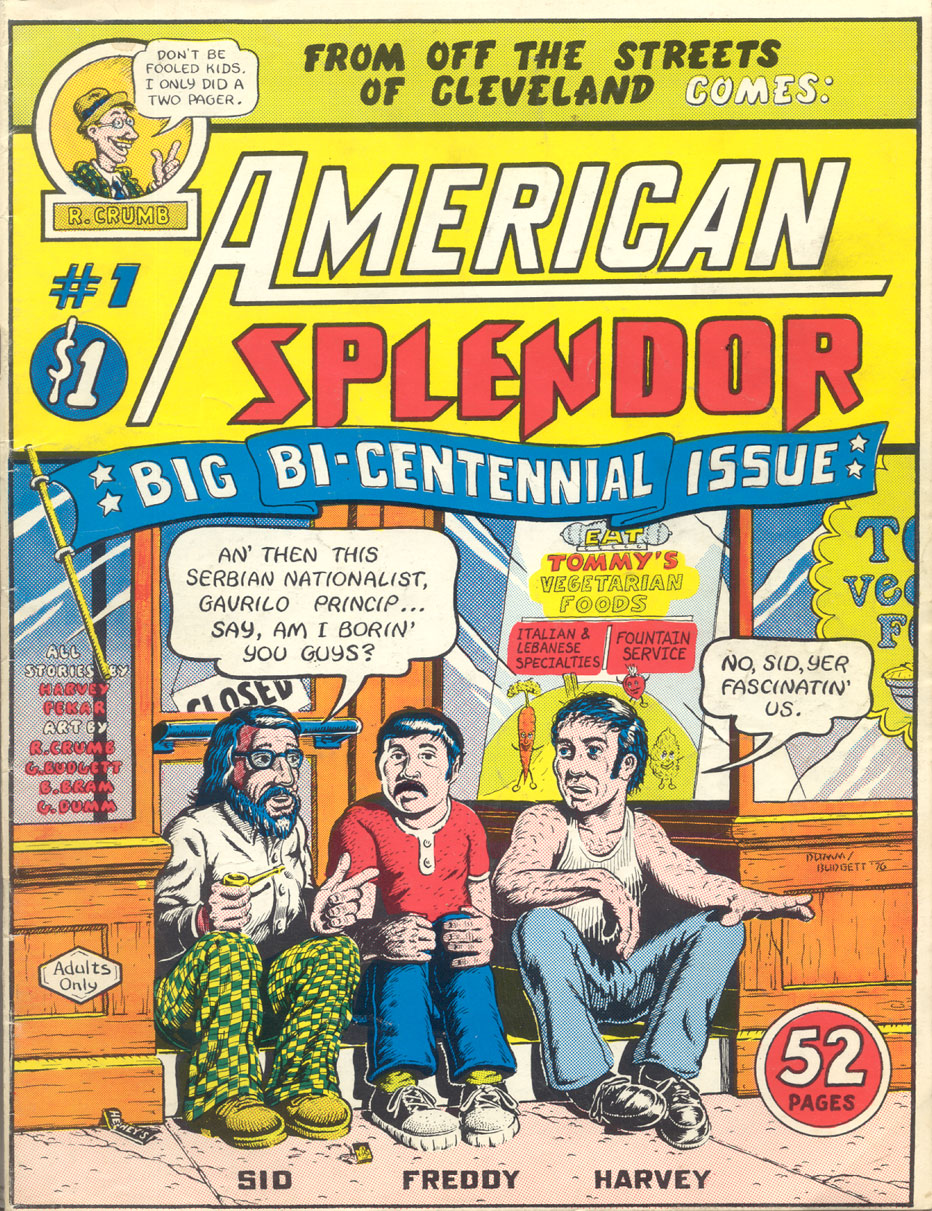
AmericanSplendor01-1

As a born and raised Sarajevan, I was socialized from an early age to think about the causes of the Great War – a question that happens to be one of the most studied in all of human history.  I vividly recall my first primary school trip to “Princip’s footsteps” – markings embedded into the sidewalk signifying the spot from where the assassin, Gavrilo Princip, fired at the Viennese couple.  We boys took turns to stand in the footprints and re-enacted the killing; the girls giggled.  There was no doubt that this behaviour was desirable:  with our teachers we read out the message on a nearby plaque that explained, in solemn Cyrillic script and even more solemn Aorist, how the assassin’s shots expressed the will of “our people” to be free of foreign tyranny.  Is it true that Sophia was pregnant?, a classmate asked.   Yes, said one teacher, but this was an accident. Princip’s bullet hit her only after it ricocheted off the car.  It was intended for General Potiorek, Austria’s military governor.

Continue reading

A Right To The World: On Syria and an Idea of International Public Order

P1 aniang

A guest post from Amy Niang on the contours of ‘international community’, following previous interventions from Siba Grovogui in relation to Libya, Robbie on provinciality in International Relations and John M. Hobson et al. on Eurocentrism in international political theory. Amy teaches international relations at the University of the Witwatersrand and she is affiliated with the Centre of Africa’s International Relations (CAIR). She gained her PhD from the University of Edinburgh in 2011. She has taught International Relations, political theory and African history in South Africa, Scotland and Japan. Her research interests are in the history of state formation, political theory and Africa’s international relations, and she has commented regularly on democracy, civil society and Western intervention in Africa.


The Syria crisis has sparked many debates in scholarly and media circles, not least around the way in which the ‘international community’ should exercise its responsibility to Syrians and to the protection of human rights, particularly in the aftermath of the alleged use of chemical weapons on Syrian civilians. The lack of consensus on the most appropriate response, within the limits of international law, raised a number of questions.

There were times when we were told that a military attack was imminent, others when cautious voices against a military campaign seemed to have the moral upper hand. In the days following the discovery of the use of chemical weapons, the U.S. made public its position on the question, based on the conviction that the Syrian government was responsible. In the general uproar that that ensued, the recent examples of Afghanistan and Iraq guided many deliberations on the wisdom of another humanitarian intervention. Like Barack Obama, many commentators believe in the existence of a red line that delineates the contours of a hypothetical morality, its alleged violation by Syria warranted punishment if the red line was to be pushed back. Many others however warned against acting on an impulse of outrage, Libya is a vivid example of how an ill-conceived intervention can be more damaging than the situation it originally sought to fix.

P3 Hypocrisy-Irony

From the polarized debates, two declarations in particular piqued my interest. The first one was Barack Obama’s Address to the Nation of September 10th, 2013. The second one was the Declaration of the Forum for Former African Heads of State and Government (the Africa Forum) on September 5th, 2013. The first one was as usual widely followed in America and beyond. The second went unnoticed partly because it was of little news worthiness for commentators of world affairs, partly because no one expected Africans to formulate any coherent view on the Syrian question. The first was delivered as an authoritative pronouncement on how a putative ‘we’ (i.e. the international community) should interpret international law and what shape its moral responsibility – here merely one embodiment of the West – should be engaged. Continue reading

Living Knowledge Traditions and the Priestly Caste of the Western Academy

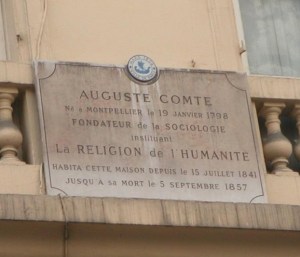
comte

The Western Academy, especially in its social science and humanities wings, incorporates as a priestly caste. Perhaps Kant is the first high priest of this caste when he argues for the Aufklärer to become a corporate entity equivalent to the hierocracy and nobility but exceptional in its duty to provide a truly public service of reasoning. The psalm of this priestly caste is “have the courage to use your own understanding”, its catechism: to singularly possess and hold aloft the flame of revelation, known as science, or, nowadays, the modern episteme. Even Marx holds the flame aloft when he takes Hegel’s Philosopher, who breathes world spirit, and makes him inhabit the skin of the Communist.

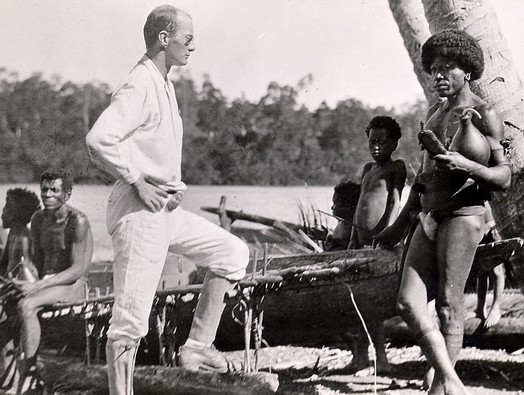
This priestly caste, as it founds the church of modernity, is instantly and integrally involved in founding a broader colonial division of labour.  These new priests conjure up the traditional/modern divide by the use of history –  differentiating old and new European Western societies – and by the use of anthropology (later, sociology too), by differentiating the colonized from the colonized. The living knowledge traditions of the colonized are pronounced dead on arrival in the present. And their cosmologies, philosophies, social practices – are entombed into opaque “cultures” the contents of which can only be clearly illuminated by the keepers of the flame. 

19_malinowski

Ultimately this mapping of difference works through race, gender and class coordinates so that even the “poor” living in the West, as well as un-mastered women and single mothers intersect with (post-)colonized subjects to become part of this opacity. The episteme of the Western Academy thus differentiates between the knowers and the known.

In this respect, the modern episteme is as seminal as gunboats to the maintenance of colonial difference. Key to this difference is not just the attribution of extra-ordinary exploitation, oppression and dispossession to colonized peoples but also their epistemic erasure, i.e., the outlawing of the possibility and desirability of intentional self-determining community amongst the colonized and their post-colonized descendents. It is in the colonial world and not Europe where Europeans develop the art of objectifying peoples into populations such that the basic competency of the colonized to self-define is deemed absent by the instruments and mores of European sanctioned international law. Postcolonial populations have only been able to become peoples under very specific conditionalities; and many who make the transition become the new police of colonial difference. Those who fall between or prefer a third way become the ungoverned, or ungovernable.

Continue reading

The Queer Art of Whistle Blowing

What should we make of the fact that Bradley Manning has become Chelsea, that Glenn Greenwald is gay, that David Miranda loves a man enough to submit to the harassment incurred by his partner’s work, that Greenwald’s detractors sought to tarnish him by association with—of all things—a porn company? Possibly nothing generalisable, except that gender is doing work here.

There has been no shortage of voices denying a straightforward connection between sexual orientation, gender identity, and patriotism. (Part of the reason I feel compelled to write about this is that there isn’t one.) San Francisco Pride Board notoriously repudiated Manning’s election as a Grand Marshall in the 2013 Pride in that city, declaring: ‘even the hint of support for actions which placed in harms [sic] way the lives of our men and women in uniform—and countless others, military and civilian alike—will not be tolerated by the leadership of San Francisco Pride.’ That statement has not been retracted, notwithstanding its now patent inaccuracy in light of the prosecution’s inability to cite any evidence that Manning’s leaks led to any deaths and the court’s decision finding her not guilty of the charge of ‘aiding the enemy’. Kristin (formerly Chris) Beck, ex-US Navy Seal who recently announced her gender transition, has been harsher in her condemnation of Manning: ‘For this person, whether male or female to use gender identity to act “BADLY” is a slap in the face to me and everyone who does not fit the “Binary Gender Norm.” It is not an excuse for anything illegal or unjust.’ Pablo K is right to point out the dangers of the temptation, for those who see a link between sex/gender and truth-telling, to make the reverse move—’to relegate Beck to a minority report, and so to re-inscribe the hierarchy of authenticity, this time with Manning as the actual face of resistance, and Beck the mere puppet of militarism’—while pointing out, also, that the gap between these contrasting appropriations is constitutive of the space of contemporary politics. So let’s talk politics.

Continue reading

Secrecy and Spectacle in the Overthrow of Mossadegh

Chris Emery LargeA guest post from Christian Emery, Lecturer in International Relations at the University of Plymouth. Chris completed his PhD at the University of Birmingham and has held teaching positions at the University of Warwick and the University of Nottingham. Between 2010 and 2013 he was a Fellow in the Department of International Relations at the London School of Economics. His research covers several areas but is primarily situated at the intersection of International Relations, Diplomatic History, and Foreign Policy Analysis. He is interested in all aspects of post-war US foreign policy, with specific expertise in US policy in Iran. His latest book is US Foreign Policy and the Iranian Revolution (Palgrave Macmillan, coming this October) and he is also the author of pieces in Cold War History, The Iran-Iraq War (Routledge, 2013) and commentary in The Guardian. His next journal article will appear in Diplomacy and Statecraft.


This week an organisation dedicated to expanding public access to US government information, and publishing its former secrets, released documents proving the CIA’s involvement in an illegal covert action. Sound familiar? In this case, however, the authors had no fear of landing themselves in solitary, a foreign embassy, or (worse still) a Russian airport. The organisation lifting the lid was the National Security Archive (I will not indulge in the ironic use of acronyms) which, despite the official sounding name, receives no government funding. The NSA (ok, just once) fights for greater transparency and accountability in US foreign policy within a legal framework. Its primary weapon in fighting for open government is the Freedom of Information Act, and its bluntness may be part of the reason why others have taken more drastic action. I will return to the prescient topic of government secrecy later on, but first a few words on the content of these documents.

The documents are significant for a number of reasons, but the headline news is this: ‘CIA Admits It Was Behind Iran’s Coup.’ The most significant line taken from these documents is from a CIA internal history from the mid-1970s: “the military coup that overthrew Mossadeq and his National Front cabinet was carried out under CIA direction as an act of US foreign policy, conceived and approved of at the highest levels of government.”

A legitimate response is:

Nicholas Cage You Don't Say

Quick historical recap. In August 1953 the CIA (working with MI6) orchestrated the overthrow of Iran’s democratically elected leader Mohammad Mossadegh and installed Muhammad Reza Shah Pahlavi in his place. The specific motivation for the coup (codenamed TPAJAX) was that Mossadegh was attempting to nationalise Iranian oil. The more pressing fear was that his government was unstable and Cold War thinking dictated that this made Iran vulnerable to Soviet influence. This anxiety was heightened by Iran’s huge oil resources, geographic proximity to the Soviet Union, and the existence of a large and well established Iranian communist party (the Tudeh). The plot to topple Mossadegh initially failed, spooking the Shah into premature exile, but a few days later US and UK agents managed through a variety of nefarious tactics to put a decisive number of pro-Shah supporters onto the streets. Mossadegh’s supporters were rounded up and the great man himself was sentenced to death (the sentence was never carried out – he died in Tehran in 1967). After the coup, Iran’s concession to Western oil companies was renegotiated and for the first time American petroleum companies were granted access to draw Iranian oil.

Continue reading

Pacific Redemption Songs

Te Hau

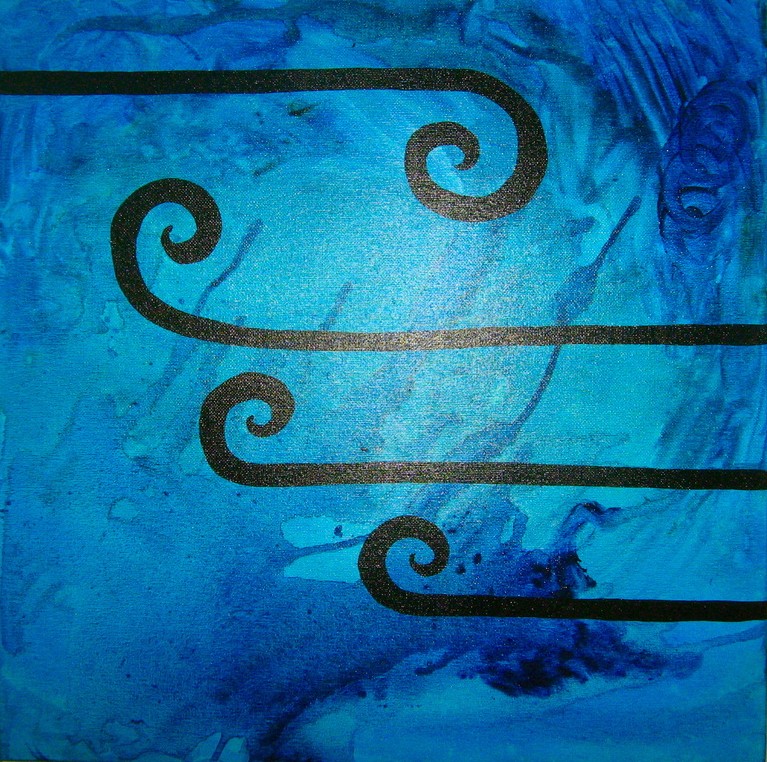
“Te Hau” by Abby Wendy

A few years ago I was reasoning with members of Ras Messengers, a reggae-jazz band who had in 1979 toured Aotearoa New Zealand. The Rastafari musicians recollected their experiences with various Māori communities. Occasionally female Māori elders (kuia), in introducing themselves to the band, would connect their genealogies back to Africa. The kuia did this as part of an indigenous practice called whakapapa, which literally means to “make ground”. It is a practice that allows diverse peoples who might never have met to find a genealogical route through which they are already personally related.

Chauncey Huntley from Ras Messengers showing the Rakau (traditional sticks) that he was gifted thirty years previously

Rastafari also have a practice called “grounding”, which is to collectively reason on the meaning and challenges of contemporary life. Over– or inner- standing (instead of under- standing) is cultivated through the guidance of natural laws and – often with the help of drums, fire and holy herb – the intuition provided by spiritual agencies (Irits) that allows ones to pierce the veil of deathly inequality, oppression and dehumanization so as to redeem living energies and relationships that might help with healing in the present. When I think of Irits I also think of a key concept of Māori cosmology called hau. Overstood by Māori Marsdenhau is the breath or wind of spirit which is infused into the process of birth to animate life and associated with the intention to bind peoples together in righteous living.

A key stone of the Rastafari faith is that adherents collectively redeem their African genealogy so as to breathe life back into their suffering condition and leave behind the death of enslavement and its contemporary legacies. So when I heard of this story of the kuia and Ras Messengers, I imagined how this practice might have given strength to the Ras. After all, in those days (and perhaps still today), peoples of various African heritages were often forced (directly or indirectly) to disavow those connections themselves.

Whakapapa is an art practised collectively. Yet it is not free play, nor is it the manufacturing of fiction. It is a creative retrieval. It could even be a redemptive act.

Keskidee 13

Keskidee perform in New Zealand

This was certainly the intention of those who organized the tour of Ras Messengers alongisde the Black British theatre group, Keskidee (the name of a Guianese bird known for its resilience). The organizers were a group of New Zealand activists that came together under the banner Keskidee Aroha (Aroha being the Māori word for love, sympathy, nurturing affection etc). Their intention was to learn from and work with the artistic tropes of Black Power and Rastafari so as to catalyse a cultural revolution and renaissance amongst young Māori and Pasifika peoples thereby strengthening them in their confrontation with a racist post-settler society.

Continue reading

Notes on Ex-Yu Justice, Part II

Following Part I, and in advance of Part III.


The court is political  

The smartass response goes something likes this: “Of course it’s political; what’s not political? Haven’t you read the ICTY’s website? It says clearly that the tribunal was established for explicitly political reasons, too, by the UNSC, which is political by definition.” But the smartass response is a rude interruption. The above assertive prefaces monologue, not dialogue. The monologue is a story about world politics as a dog-eat-dog contest in which the strong always devour the weak with a focus on the origins of the ICTY. “Of course an international judicial institution cannot be created on the basis of an UNSC resolution alone. Of course Chapter VII of the UN Charter does not specify the conditions under which war crimes tribunals can be set up. Of course the ICTY quickly discovered that it could not bother with the question of own legality. But when have great powers ever cared about law and institutions? Might makes right, right? The ICTY is based on the consent of states – big states, not our banana republics.”

This story varies in terms of breadth and depth, but its modal conclusion is that the tribunal cannot represent anything but “victor’s justice” and/or Western and specifically American oppression of those living on the periphery. As for the motive, the supposedly aggressive prosecution of Bosno-Serbo-Croat baddies practiced by the ICTY is a function of the desire for retribution for every case of ex-Yu insolence in recent history, starting with the Trieste crisis of 1945. As discipline and punishment at once, trials are also meant to serve as a warning to the rest of the peripheral and semi-peripheral world. This type of theorizing could be described as a cross between pop-realism and pop-Marxism with a whiff of the crudest forms of pop-anti-Americanism and some other, far less respectable prejudices. While it is not exactly a closed loop, for every new newstory indexing Western and specifically American double standards and double visions in international law, the theory gains strength. Who in the former Yugoslavia doesn’t have an informed opinion on the “Hague Invasion Act”?
imgfrontisThe two accounts of the origins of the ICTY that I have on my shelf make something of an opposite case. Pierre Hazan’s book, subtitled ‘The True Story Behind the ICTY’, suggests that the weak (international justice activists) outfoxed the strong (realist diplomats and state-centric lawyers) and, against all odds, managed to turn the tribunal into such a revolutionary achievement (more on this below). Hazan is no theorist of norms and transnational advocacy networks, but there are more than a few parallels with this literature. The second account is Rachel Kerr’s 2004 book, which begins and ends with the thorny issue of “politicization,” including the issue of “prosecutorial discretion” as its special subset. Kerr has the ICTY walking on a tightrope. Sidle up too closely to justice, and you alienate those who rule the world; let politics in, even to manipulate it for judicial ends, and you lose credibility. While infinitely more nuanced than Hazan’s, Kerr’s framework for analyzing politics (it, too, chimes with 1990s IR theory, namely the “bringing international law back in” literature) follows the same binary – let me personify it a little as a contest between “realists” versus “legalists” – and it reaches the same conclusion. And judging by both the quotidian operation of the court as well as its key decisions up to 2002-3, Kerr finds, “legalists” had the upper hand.

I am not sure what stock-taking exercises based on the realist vs. legalist framework look like today (again, this post is my attempt to reconnect with the literature I stopped following years ago), but what struck me in my conversations is how adamant my interlocutors were in rejecting even the most carefully drawn legalist claims. It’s simple, the typical response goes, the ICTY is subject to constant political pressures and it shouldn’t be surprising to see so much judicial malpractice. Lest one is keen to dismiss this as “typical” ex-communist (and transitionalist) disdain for the notion that law serves to ensure that valuable social goods are distributed in ways that protect equal respect for everyone, note that some of the most critical arguments about the “hopelessly political court” are drawn from the texts left behind by bona fide ICTY insiders like Antonio Cassese (he of  those great international law textbooks), Gabrielle Kirk McDonald, Louise Arbour, Graham Blewitt, Carla Del Ponte, Serge Brammerz, and Florence Hartmann (more below). Anyone can cherry-pick a few memorable lines from a few memoirs and journalistic accounts (Hartmann, if I recall correctly: “the ICTY was formed so that war criminals could negotiate on the level of their innocence”), but what I find interesting is that these types of arguments have gained more and more adherents over the years.

Continue reading