The EU Referendum: Brexit’s Imperial Delusions

This is a post in our EU referendum forum. Click here for the introduction with links to all the contributions.


haastrupOur next guest contributor is Toni Haastrup. Toni is Lecturer in International Security and a Deputy Director of the Global Europe Centre at the University of Kent. Her current research focuses on: the gendered dynamics of institutional transformation within regional security institutions especially in Europe and Africa; feminist approaches to IR; and the politics of knowledge production about the subaltern. She is author of Charting Transformation through Security: Contemporary EU-Africa Relations (Palgrave Macmillan, 2013) and coeditor, with Yong-Soo Eun, of Regionalizing Global Crises (Palgrave Macmillan, 2014).


One key aspect of the EU referendum debate has been the rise of competing narratives about Britain’s role in the world inside and outside of the EU. On the Brexit side, campaigners argue that escaping the EU would revive Britain’s standing, allowing it to reconfigure relations with Europe, strengthen existing non-European partnerships, and forge new ones. These claims rest on a series of self-delusions about Britain’s capacity to unilaterally set the terms of its international partnerships. Brexiteers willfully ignore those prospective partners who say that a post-Brexit UK would be a less attractive partner. Their narrative seems to rest more on imperial delusions than solid ground – and it is hardly a narrative appropriate for a truly democratic, internationalist country.

A Part of Europe, Apart from the EU: What is Possible?

Pro-Brexit campaigners often suggest that if the UK were to leave the EU, it could fashion a new kind of relationship with Europe similar to the one Norway enjoys. Norway is viewed as a country that has maintained its sovereignty while remaining a close partner of the EU.

But of course, Norway is different. It is a thriving smaller country that is dependent on oil reserves that are much larger than the UK’s. Further, Norway negotiated a very specific entry into the European Economic Association (EEA) and the European Free Trade Association (EFTA). If the UK was to depart, a relationship with the rest of western Europe especially in the context of EFTA is possible, but it is not automatic. Further, a relationship between the UK and other countries that currently exists only in the context of a regional EU relationship will have to be renegotiated, with no guarantee that the UK will indeed be better off outside the EU.

Those in favour of staying within the EU, or Bremain, thus rightly question this narrative as one that is based on uncertainty and the UK’s self-imagining, rather than the realities of the international environment. The idea that Britain would regain its sovereignty way from the EU is a myth whose consequence even the Norwegians warn against.


Continue reading

The Dissonance of Things #6: Logistics – Violence, Empire and Resistance

EXODUS-IV-Hong-Kong-China-2010
Source: Marcus Lyon

This May, The Dissonance of Things switches out British accents for those of the vaguely North American variety, as I serve as host for our sixth podcast on the topic of logistics and its role in the making of military, capitalist, and imperial relations. I’m joined by our very own Laleh Khalili of the School of Oriental and African Studies, and the wonderful Deborah Cowen of the University of Toronto. Together, we take a look at the increasing ubiquity and prominence of logistics as a mode for organizing social and spatial life. We discuss how this seemingly banal concern with the movement of goods is actually foundational to contemporary global capitalism and imperialism, reshaping patterns of inequality, undermining labor power, and transforming strategies of governance. We also ask: what might a counter-logistical project look like? What role does logistics play in anti-colonial and anti-capitalist struggles across the globe?

Listen via iTunes or through the Soundcloud player below.

As always, listen, enjoy, argue, share, and leave us your thoughts below the line. You can also follow our past and future casts on soundcloud.


Further reading:
– Deborah Cowen’s The Deadly Life of Logistics
– Laleh’s blog on maritime logistics, The Gamming

Canada and the Anglo World—the Brexit Edition

Mother, stepmother, perfidious Albion—whatever metaphor one prefers to employ, Britain has always been important to Canada. But what is Canada to Britain? It depends on whom you ask.

This post originally appeared on Open Canada.

Continue reading

On Statues

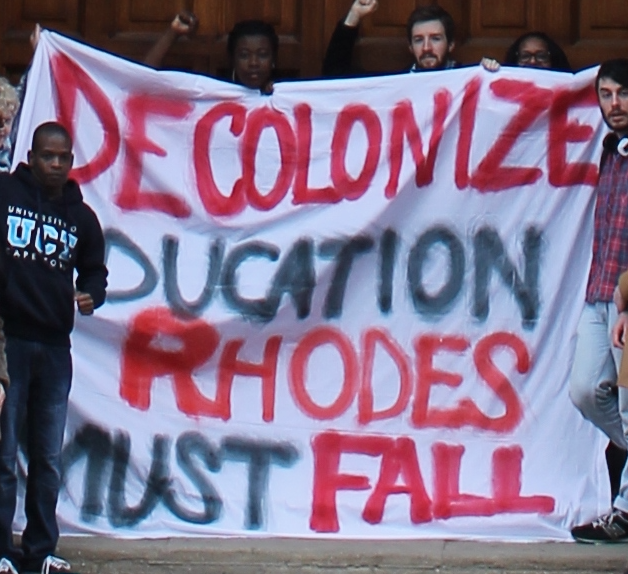
Even commentators sympathetic to the aims of Rhodes Must Fall in Oxford (RMFO) have been at pains to point out that the removal of the statue of Cecil Rhodes on the facade of Oriel College is not the most significant element of the campaign’s platform. Amia Srinivasan observes that ‘Neither the Cape Town nor the Oxford campaign has ever been just about statues.’ Amit Chaudhuri laments that ‘it would be…sad if Rhodes Must Fall in Oxford became identified with the statue in Oriel College alone’ because its ambition beyond the removal of the statue, namely that of decolonising education, is more significant. David Olusoga worries that by building their manifestos around calls for the taking down of statues, the more complex and worthy ideas around decolonisation raised by these campaigns have been ‘distorted into a simple right-wrong, yes-no statue debate’. I don’t disagree (much) with these views and indeed, if you want a right-wrong, yes-no answer, this essay will disappoint. But they beg the question of what statues mean and why we keep putting them up if they are so easily relegated to an epiphenomenal register of political discourse.

It’s worth remembering that RMFO itself has never downplayed the significance of the statue in the way that some of those writing in solidarity with it have done. It describes its mission as that of decolonising ‘the institutional structures and physical space in Oxford and beyond’ (emphasis mine) and lists as its first aim the intention to tackle ‘the plague of colonial iconography (in the form of statues, plaques and paintings) that seeks to whitewash and distort history’. In addition, it aims to reform the Eurocentric curricula to which university students continue to be subject and to address the under-representation and lack of welfare provision for black and minority ethnic staff and students at Oxford. One way to think about the place of the statue in this debate is to see it as a means to an end: as Srinivasan rightly notes, ‘complaints of structural racism and calls for curriculum reform don’t draw public attention like the toppling of a statue, and the RMF leaders know this.’ But while clarifying that its campaign is indeed ‘about more than a statue’, RMFO nonetheless insists that

statues and symbols matter; they are a means through which communities express their values. The normalised glorification of a man who for so many is a symbol of their historical oppression is a tacit admission that – as it stands – Oxford does not consider their history to be important. This is incompatible with a community that posits itself as progressive, enlightened and intellectually honest.

Without wanting to suggest that the success of RMFO should be judged by whether the statue falls or endures (it shouldn’t), I want to think with RMFO about what the expressive function of statues entails. Writing in a very different context, Judith Butler has famously worried that the relegation of injustices to the realm of the ‘merely cultural’ effectively downgrades the urgency with which they demand redress. For ‘merely cultural’ read ‘merely symbolic’, and the risk of disappearance of the demand for iconographic decolonisation (exactly what Oriel College might wish for) becomes obvious: if RMFO is about more than ‘just’ a statue and if we all agree that the statue is ‘merely symbolic’, then we might as well get beyond, behind, and beneath the symbol to address its putative ‘real’ while leaving the symbol itself intact. Meanwhile the possibility that the ‘merely symbolic’ has material consequences remains unexplored.

rhodes oxford

***

Continue reading

Churchill’s “Iron Curtain” Speech (A Black History Month Perspective)

Truman and Churchill in Missouri

Churchill’s Westminster College audience, March 5, 1946 (Life/Getty Images)

This year is the seventieth anniversary of Winston Churchill’s “Iron Curtain” speech, a.k.a. “Sinews of Peace,” a.k.a., the Fulton address, which means that we will soon be hearing all about it once again. The speech is central to the iconography of the Cold War, of anti-communism, and of Anglo-American specialness. Countless historians, biographers and rhetoreticians have examined almost every aspect of it: when and where it was written, whether it was pre-approved by others, including President Truman, and, indeed, how it was received. On the last point, we know that the speech was met with a mixture of cheers and boos. The reactions tended to be politically and ideologically determined. Conservative politicians and the media praised the speech for its realism about the nature of the postwar settlement: at last someone had the courage to publicly say that the victor nations could not forever be friends.  In contrast, most liberals, socialists, and communists condemned the speech as inflammatory. With so many hopes pinned to the newly created United Nations Organization (UNO), the last thing the world needed was geopolitical tension between the Western powers and the Soviet Union, they argued. But that was not all. Some leftists went further still. Churchill’s notion the Anglo-American “special relationship” and “fraternal association” constituted the ultimate sinew of world peace smacked of racial supremacism, they said.

Continue reading

The Dissonance Of Things #5: Decolonising the Academy

decolonize

In this month’s podcast I’m joined Dalia Gebrial from Rhodes Must Fall Oxford and two stalwarts of TDOT, Meera and Robbie, to discuss ‘Decolonising the Academy’. We take a look at the Rhodes Must Fall campaign and its implications for understanding the relationship between higher education, coloniality and ‘race’. We also ask why is my curriculum white?  What can be done change the way in which knowledge is produced and taught in universities? Finally, we explore how decolonising the academy might relate to anti-colonial and anti-racist struggles taking place outside of the university.

Listen via iTunes or through the Soundcloud player below.

Continue reading

Economy of Force: A Reply

In which Patricia Owens responds to our four commentaries (on patriarchy, colonial counterinsurgency, biopolitics and social theory) on her Economy of Force.


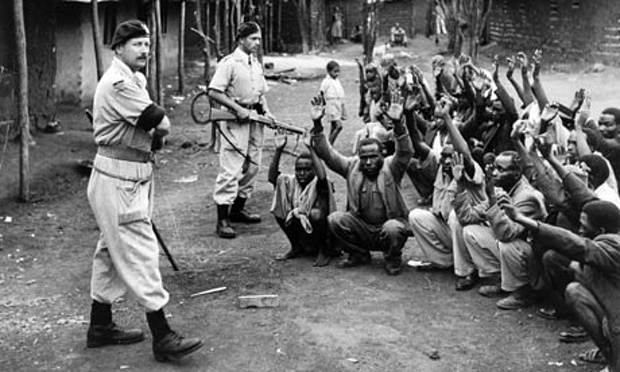
I’m extremely grateful to Pablo K, Elke Schwarz, Jairus Grove, and Andrew Davenport for their serious engagements with Economy of ForceAs noted in the original post, the book is a new history and theory of counterinsurgency with what I think are significant implications for social, political and international thought. It is based on a study of late-colonial British military campaigns in Malaya and Kenya; the US war on Vietnam; and US-led campaigns in Afghanistan and Iraq against the background of the high colonial wars in the American Philippines and nineteenth-century French campaigns in Tonkin, Morocco and Algeria. Probably the emblematic case for the book is Britain’s colonial state terror against Kenya’s Land and Freedom Army and civilians in the 1950s, a campaign that was closer to annihilation than ‘rehabilitation’. Although the so-called ‘hearts and minds’ campaign in Malaya is held up by generations of counterinsurgents as the model for emulation, the assault on Kikuyu civilians shows the real face of Britain’s late-colonial wars. It also points to some profound truths about the so-called ‘population-centric’ character of more recent campaigns in Afghanistan and Iraq. Though offering new readings of some better-known counterinsurgency cases, Jairus Grove suggests that this choice perpetuates an erasure of America’s ‘Indian Wars’.

Mau-Mau

Researching Economy of Force, I certainly became aware of the general significance of these wars, including through Andrew J. Birtle’s and Laleh Khalili’s histories of counterinsurgency. However, Grove draws attention to something more relevant to Economy of Force than appreciated before: “one of the first federal bureaucracies with jurisdiction over the home and social issues”, he writes, “was created by and administered by the War Department”. Decades before the distinctly ‘social’ engineering during the Philippines campaign (1899-1902), the Bureau of Indian Affairs was administering indigenous populations on the mainland. In focusing on overseas imperial wars, Economy of Force surely neglects settler colonialism, its genocides, and how “warfare, pacification, and progressivism were an assemblage in the US context from the outset”. While the book was not centrally focussed on US state making, I’m grateful to Grove for insisting that settler colonialism is necessarily a form of counterinsurgency. To be sure, the Philippines campaign was examined not as the founding moment of American counterinsurgency, but because it was explicitly conceived by contemporaries as a form of overseas housekeeping; to problematize progressive social policy; and to challenge the effort to separate good (domestic) social engineering at home from bad social engineering (overseas). I would hesitate to wholly assimilate the Progressive Era (1890s-1920s) into earlier Indian Wars, though its ‘social reforms’ shaped indigenous administration. But these are quibbles. Grove is right that I have neglected something of significance in the ‘historical trajectory from Thanksgiving to Waziristan’. I hope to be able to rectify this in future work.

Continue reading

All Means, No End? Economies of Life Management

The fourth piece in our forum on Patricia Owens’ Economy of Force. One more to follow before Patricia’s rejoinder this weekend.


Economy of Force provides an insightful and provocative re-reading of Anglo-American imperialism and counterinsurgency. Unlike conventional accounts, which for the most part remain trapped within the hermeneutic limits of political theory, Owens undertakes a historical sociology of ‘the social’ itself, tracing out its attendant mechanisms of political rule over time. Central to her account is the notion of ‘the household’, which, she suggests, functions as a dominant form of administration and rule within both modern and contemporary imperialisms. ‘Despotism’, ‘governance’, ‘ruler-ship’, ‘sovereignty’, ‘administration’, ‘life processes’, ‘violence’, ‘hierarchy’, ‘patriarchy’, ‘pacification’, ‘domestication’, ‘domesticity’ – this language of household rule is crucial in order to better understand the politics that underpin different forms of imperial practice. For this, we must also understand that it is the oikos, and not politics, that stands at the heart of imperial and counter-insurgency campaigns. Indeed, for Owens, such campaigns are best grasped as “armed social work”.

One clear target of this argument is mainstream IR, which all too often works with an ahistorical conception of society. Owens firmly rejects this approach by identifying: (1) the origins of ‘the social’ in a concept of household rule; (2) the transformation of household rule over time; and (3) the historically-specific influence that different forms of household rule exert over political practices in the present. In so doing she also rejects the folk wisdom that household rule and management has been eliminated or pushed to the margins of politics through various processes of modernisation. Rather, she argues, household rule is sozialpolitik rendered as politics, and that IR scholars would do well to engage with the changing logics of household rule if they want any purchase on the political world.

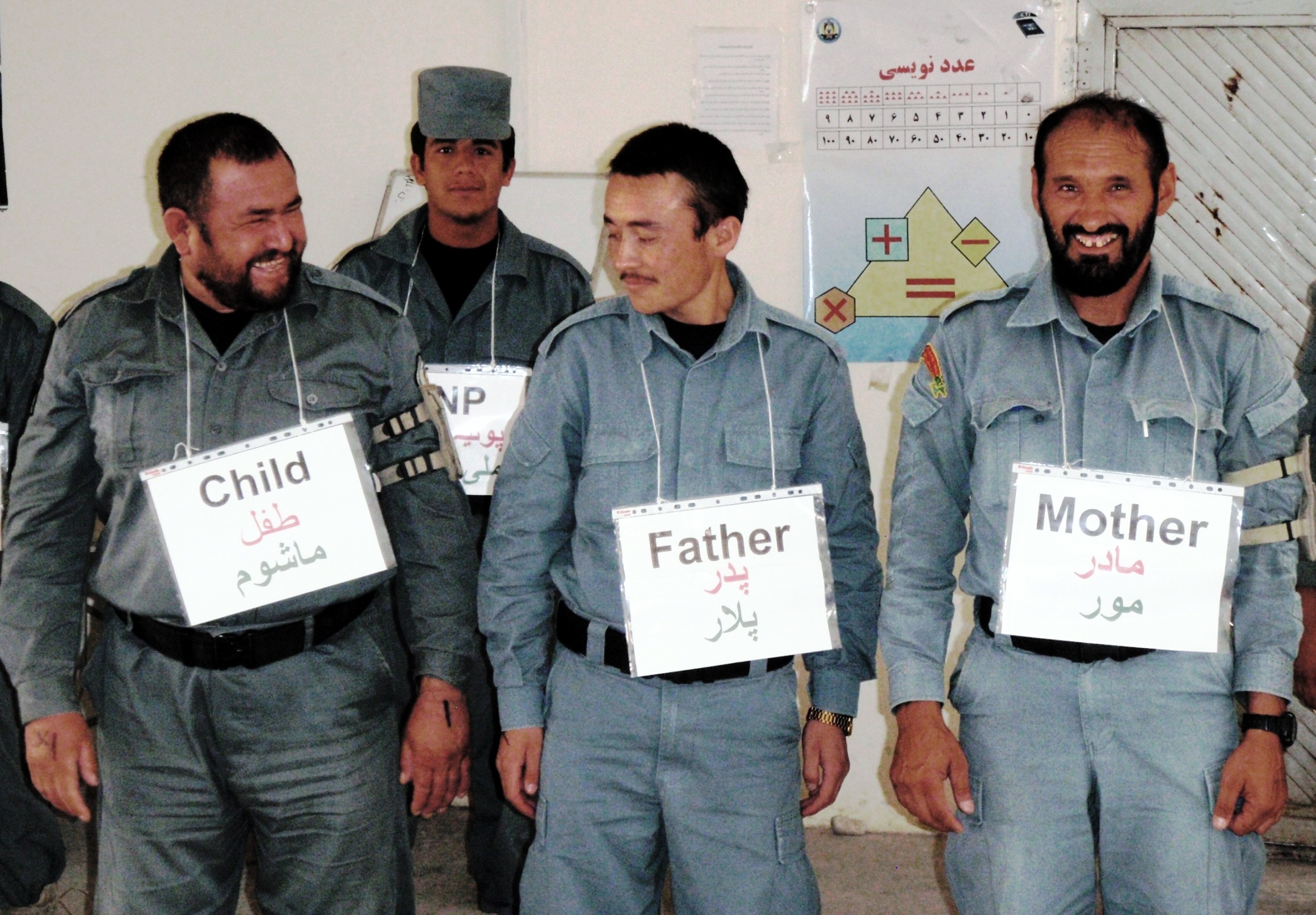
Afghan National Policemen participating in an interactive exercise during Counter Insurgency Training

Afghan National Policemen participating in an interactive exercise during Counter Insurgency Training

Owens grounds this bold claim in the close relation between the social and an ancient modality of household rule: oikonomia. This is an important move and I, for one, am convinced that an engagement with household management can provide a powerful lens through which to understand the entwinement of the social and the international. Such a lens resonates with Hannah Arendt’s insight that, in modernity, “we see the body of peoples and political communities in the image of a family whose everyday affairs have to be taken care of by a gigantic, nation-wide administration of housekeeping” (The Human Condition, p.28). And for Arendt too, ‘the social’ is infused with the logic of household management, turning modern ‘society’ into a mode of government based on specific and historically situated relations of reproduction. In fact, I would argue that Arendt’s proto-biopolitical argument has much to offer to Owens’ project.

Continue reading

The Stories We Tell About Killing

The third piece in our forum on Economy of Force (following Patricia’s opening and Pablo’s piece on patriarchy), and the first contribution to The Disorder of Things from Jairus.


Narrative: The central mechanism, expressed in story form, through which ideologies are expressed and absorbed.

– Glossary, U.S. Army Field Manual 3-24

Patricia Owens Economy of Force is, to date, the most important book that has been written on counter-insurgency. To put it another way, Economy of Force is the first book written with the sobriety of distance from the necessary but often polemical responses to Human Terrain and the high-profile ‘anthropologists’ of war in Iraq and Afghanistan.

The shortcoming of these earlier responses was the tendency to treat contemporary efforts in Afghanistan and Iraq as somehow new. Lost in the flurry of shock over academic involvement in warfare was the understanding that social theory has, in some sense, always been at war. It is this last point that Owens’ book really excels at theorizing. Unlike other explorations of counter-insurgency that emphasize the ‘weaponization’ of social theory and anthropology, Owens locates counter-insurgency as an outgrowth of liberalism and its governance of the social, specifically the domestic. This difference is vitally important. In the work of Roberto Gonzalez and others, we are left with a sense that anthropology and social work could be demilitarized. However, the genealogy of ‘home economics’ given to us by Owens’ suggests that the very concept of the social is rife with the desire for order, which is often established by violent means.

HTT 12
This places the first part of Owens book alongside Michel Foucault’s three biopolitics lectures, in particular Security, Territory and Population, as well as Domenico Losurdo’s Liberalism: A Counter-History. In their own way these works attempt to reconstruct the philosophical and political history of liberalism as beginning with the violence of racial and economic ordering, rather than seeing liberalism as having fallen from grace as a result of the temptation and corrosive effects of empire. Owens, Foucault, and Losurdo all find liberalism’s logic of governance to be in the form of what Foucault famously called ‘war by other means.’ What distinguishes Owens’ work from Foucault and Losurdo is that she follows this line of logic through to the particular formation of a liberal way of war called counter-insurgency. Owens’ foregrounding of counter-insurgency is a much needed corrective to Foucault’s conclusion in Security, Territory, and Population, where he argues that external relations in the state system of Europe were characterized by balance of power politics. Entirely absent in Foucault’s development of the concept of race war in Society Must be Defended and Security, Territory, and Population is the particularities of European imperial and then colonial enterprise. This becomes even more apparent in the final lectures The Birth of Biopolitics, in which the brilliant and prescient account of the rise of neoliberalism in the U.S. leaves out entirely the anti-black racism that animated the war on the welfare state. Owens’ more internationally situated account does not ameliorate all of these shortcomings, but does put us on the road to doing so. In fact, her genealogy of the domestic is not about refining our understanding of the social in social theory, but about showing how essential and under-theorized the domestic is in the field of International Relations, which relies essentially on the difference between the foreign and domestic.

Continue reading

Home-ology; Being a Comment On Patriarchs and Patriarchy in Economy of Force

This is the second contribution to a forum on Patricia Owens’ Economy of Force. More to follow in the coming days.


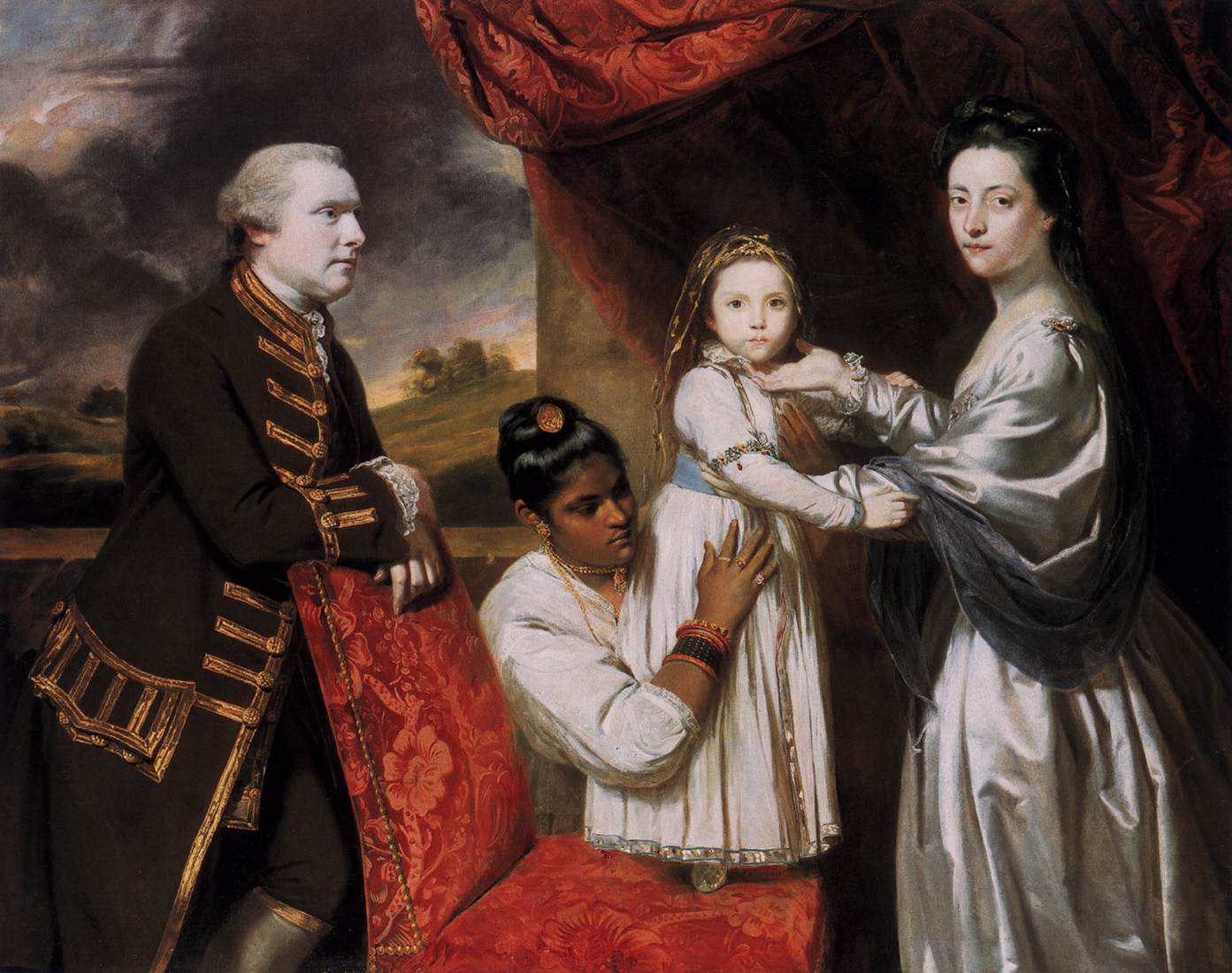
Joshua Reynold's portrait of Clive of India, director of the East India Company, c. 1765

Joshua Reynold’s portrait of Clive of India, director of the East India Company, c. 1765

What to say about Economy of Force, Patricia Owens’ wildly ambitious contribution to international political theory?[1] A book that threatens to overwhelm, whether with the vast literature it marshals or in its brazen assault on (almost all) social theory. A book that consistently degrades the “intellectual crutch” of sociality, offers an arresting agenda for historical and political analysis, and then delivers a revisionist account of late colonial and ‘post-colonial’ counterinsurgency of its own. Amidst the parade of detail and argument, a book in which you will also discover a nascent theory of patriarchy. Arguably more, Economy of Force presages nothing less than the groundwork for a unification of feminist and international political theory.

As we have already seen, Owens’ critique of ‘the social’ as a category of thought and practice involves reviving the alternative to it: oikonomia, economy in its original sense. More precisely, Economy of Force dispenses with the usual distinction between a time when the family household was the primary site of power (feudal, certainly pre-modern, personalist, and status-based) and the contemporary distribution of political, economy and civil power in something we call ‘society’ (properly modern, bureaucratic or networked, and contract-based). Instead of telling stories in which the household is overcome by society, we should, on this account, recognise that ‘the social’ is a historical transformation of the household form. The change in the form of household governance is real, but the stories told about the change are fictions. The current hegemonic story – social theory itself – has as its effect the obscuring of power as domestication. In other words, our conventional narrative of how the household disappeared provides ideological cover for the fact that the household is still very much with us.

Oikonomia, or household governance, is rule characterised by a father figure (paterfamilias) whose power is more or less that of a despot. Since despot means ‘master of the house’, you might expect International Relations scholars to have noticed, or to be alert to their own repeated tendency to name as ‘domestic’ whatever is not part of global politics proper. Instead, these threads must be uncovered, recovered, constructed and mapped anew.

Continue reading