A Kind Of Blank Spot

[M]y wife and I realized you cannot pay attention to everything, so I said to myself “one continent that I am going to leave aside is Africa.” I preferred to concentrate on Europe and China. I did a pretty good deal of work on China because I saw it ripe to become one of the most important parts of the world of which I knew nothing. So, I proceeded to do a lot of work on China in order to know something about it. But Africa is kind of a blank spot for me, apart from casual observation. Even though, I would say that the whole notion of anarchy applies very well to Africa.

In fact, a criticism people used to make to me was that Africa was clearly an anarchic arena, and yet African states did not fight much among themselves. How, then, would a Realist like myself explain that? Well, I did by invoking Turney-High’s book in anthropology, which was published—I believe—in the 1920s. There, he made the very valid point that countries have to obtain a certain level of self-consciousness as being a political entity, and a certain level of competence before they are able to fight one another. Turney-High’s illustration was very clear with his study of the peoples he referred to as the “Californians,” who were such a primitive people that they did not have the ability to form groups or fight as a group. A consciousness and competence at a certain level is needed before a group is able to systematically impose on another group—whether in the form of warfare or in other ways. I think that, for a long time, Africa was in that condition, and that, as it proceeds away from that condition, African countries will be able to fight wars against one another. In a historical sense, though, that is an implication of advancement.

Kenneth N. Waltz, ‘Theory Talks #40: The Physiocrat Of International Politics’, 3 June 2011

On Torture: Engraving Power

…(cymbal crash)… We have a new Author of Disorder (or is that Disordered Author?). Please welcome, in your virtual way, Elke Schwarz, a PhD student at the LSE working with Kim Hutchings on Hannah Arendt, Michel Foucault, Walter Benjamin, biopolitics and political violence.


‘How does one man assert his power over another, Winston?’. Winston thought. ‘By making him suffer,’ he said. ‘Exactly. By making him suffer. Obedience is not enough’

George Orwell, Nineteen Eighty-Four (1948)

The killing of Bin Laden last month has given new fuel to the claim that torture, as a tool in the securitization tool kit of a neo-conservative US government, actually has its place and validity in a liberal society. How absurd this artificial claim is has been highlighted in many a news source but incidents like this keep the so-called Torture Debate alive and well, as the normalising process unfolds. The practice of torture has become much more widely seen as a ‘necessary evil’ available to a liberal State in the pursuit of the protection of its population, if not humanity at large. A recent study conducted by the Red Cross has shown that as many as 59% of the American teenagers surveyed and 51% of adults accept torture as a means to garner information. When tyrannies torture, however, it continues to be a widely condemned affair and the international community shows no shortage of outrage.

Torture as a practice of and within otherwise liberal societies can only enter the realm of the morally permissible if it is detached from its illiberal roots and the discourses and practices allow societal norms to be such that a violation of the human bodies of some serves as a means to ensure the survival and proliferation of others in the pursuit of information finding. And it is precisely this clinical mask of the instrumental dimension of torture as an means of truth-gathering that the torturer’s power can be understood in terms of their insecurities and vulnerabilities. Facilitated by the display of the fiction of power, the ultimate objective of torture is one of domination in times where political power is challenged and status disputed.

It is perhaps not surprising that torture should emerge as a radical example of routines of illegal acts enacted in the most corporeal sense for the alleged securitisation and greater good for the greatest number of ‘good’ people whose sanctity of life has become precarious. In the wake of 9/11 this increased precariousness of American life has served as a warrant for the now infamous ‘gloves off’ approach instituted by Bush Junior’s neo-conservative posse. The problem is: the gloves have stayed off, even with Obama in command.

Continue reading

The Patriarchal Dividend At War

Thursday’s Masculinity/Violence Symposium was lovely, thanks for asking. Lots of people came, which was heartening, and they all had great stuff to say, which was exciting. It bodes well for the International Feminist Journal of Politics special issue (*hint*). Here’s more or less what I said on the day, incorporating a splash of revisions and a dollop of answers and critiques provided by the audience. The day itself deserves some kind of report of its own, and I hope to make some time for it, or perhaps just extract some highlights from the papers presented.


Being part of something potent and comprehensible amid chaos, witnessing death and destruction as a participant and testing yourself in the masculine ritual of war remain elemental to the formation of soldierly identity. To tour as a soldier is to become a male exemplar, to take the chance of looking upon horror from the inside, to attempt to neutralize its voyeuristic allure through becoming its agent…The performance of soldiering is plastic and infinitely variable, shifting through the cautious cadences of the defense phase to the aggressive, rolling bounds of the ‘advance to contact’, always to end in ‘the fight-through’. ‘Fighting-through’ is the end of the dance, the culmination point where the dancers become the dance, where the fighting body achieves a sensuous unity with grenades, bullets and the bayonet.

Shane Brighton, ‘The Embodiment of War: Reflections on the Tour of Duty’ (2004)

War is not simply a breakdown in a particular system, but a way of creating an alternative system of profit, power and even protection.

David Keen, The Economic Functions of Violence in Civil Wars (1998)

From prehistoric times to the present, I believe, rape has played a critical function. It is nothing more or less than a conscious process of intimidation by which all men keep all women in a state of fear.

Susan Brownmiller, Against Our Will: Men, Women & Rape (1975)
Conceptualising masculinity in terms of relations of hegemony and subordination and marginalisation and authorisation, Raewyn Connell proposed that men receive rewards as participants in male gender orders, and that this takes the form of status, command and material assets. This is the patriarchal dividend. Inequality on the scale observable in contemporary societies is, in Connell’s words, “hard to imagine without violence”, which is taken to have an important enforcement role both in terms of maintaining men’s power over women through acts like rape and in setting patterns among men. Extending this reasoning to the practice of war, it is plausible to see violence in general, and extreme acts like rape in particular, as an instrument of this enforcement, protecting or extending the patriarchal dividend. Soldiers in this sense become the frontline troops for the collective of men, just as domestic violence, street-level intimidation and rape fulfil the same functions outside of the war system.

Evidence from Chris Coulter’s work in Sierra Leone exemplifies how such a process may work. She reports that the majority of those abducted as ‘bush wives’ by the Rebel United Front (RUF) appear to have been raped. The creation of RUF rebel villages where commanders lived and the abducted were taken reflected the sociological structure of ‘peacetime’ arrangements: a pseudo-family structure with commanders at the head of a number of ‘bush wives’, subordinate males and occasionally elderly residents. The forms of labour assigned to women also followed the patriarchal imperatives of reproduction: fetching water and firewood, cleaning, and preparing food. Traditional roles like the ‘mamy queen’, who would look after young girls and prepare them for marriage, were also replicated within the camp structure. These arrangements were stable, to the extent that hierarchies among bush wives also manifested themselves, with the favoured wives of powerful commanders themselves taking on responsibilities for distributing arms and ammunition and holding power over other wives and children within camps.

In the context of masculinities, I take this kind of perspective to suggest that there are what we might call enforcer masculinities at work in war. This is to say that there are patterns of behaviour, representations and identities which, in the practice of violence, secure benefits for patriarchy as a system. A Debt Paid in Coin and Sweat.

Continue reading

What We (Should Have) Talked About at ISA: Poststructural and Postcolonial Thought

…(drumroll)… We are collectively joyous at being able to introduce a new contributor to The Disorder Of Things: Robbie Shilliam, currently at the Victoria University of Wellington and author of a slightly staggering array of critical texts (on the impact of German intellectuals on IR; the Black Atlantic in modernity; the Haitian Revolution; race and sovereignty; and the imperatives of decolonial thinking, among others). Cross-posted at Fanon/Deleuze.


At the recent ISA conference in Montreal, I participated in a lively, weighty and difficult roundtable on postcolonial and poststructural approaches to International Relations. Alina Sajed had supplied the panellists with a provocation by way of refuting Dipesh Chakrabarty’s famous injunction that Europe was the inadequate and indispensible to frame the epistemological constellations of “modernity”. Sajed challenged the panellists to debate whether Europe was in fact dispensable as well as inadequate. There was certainly a spectrum of opinions given and positions taken on the function, possibility and desirability of the relationship between poststructural and postcolonial approaches. As a form of reflection I would like to lay out some thoughts by way of clarifying for myself what the stakes at play are in this discussion and where it might productively lead.

For myself I do not read the Europe that Chakrabarty considers in terms of the historical expansion and exercise of material colonial power. I read it in terms of a fantasy that captures the imagination. At stake is a conception of the whys, hows and shoulds of people suffering, surviving, accommodating, avoiding, resisting and diverting the colonial relation and its many neo- and post- articulations. In this particular respect, I take Frantz Fanon’s position and agree with Sajed: “Europe” must be dispensed with. In any case, as Ashis Nandy has shown, the monopolisation of the meaning of Europe by a fascistic figure (rational, male, hyper-patriarchal, white, civilized, propertied) has required the re-scripting of the pasts of peoples in Europe and a concomitant distillation of the traditions of European thought themselves so as to accord to this fantasy figure. Europe is a fantasy through and through, but one that damages different peoples with different intensities. And those who look in a mirror and experience no significant cognitive dissonance when they proclaim “European” can still count themselves, to different degrees, as being a thoughtful protagonist in a contested human drama. For others, there is only the promise of living this drama vicariously through the thought of others. That is why “Europe” is dispensable, even though for some peoples Europe has never been indispensible; regardless, it must be dispensed with.

Let me explain a little more what I mean by all of this. Europe is first and foremost a sense of being that constructs its empathy and outreach in terms of a self whereby all who cannot intuitively be considered of European heritage are categorized into two entities. First, they might be the “other” – foils to the understanding of the self. Their emptied presence is to be filled as the verso to the internal constitution of the European self. If they are lucky, they are given a kind of non-speaking part in the drama. In fact, they usually are lucky. Much critical European thought – and certainly almost all of canonized European thought – speaks volumes about the ”other” but only so as to fill in the European “self” with greater clarity.

Second, they might be the “abject” – the entity that is impossible for the self to bear a relationship to, although even this impossibility will be instructive to the inquiring European self. Abjects, under the European gaze, are reduced to a primal fear out of which an intensity of feeling is engendered that wills the drama of human (European) civilization. Defined in excess to the other/abject, the internal life of the European self can substitute itself for humanity at large in all times and spaces, and develop itself as a richly contradictory being that overflows its meaning and significance.

I do not know whether other colonialisms predating and contemporaneous to the European project matched this audacity. And in a significant sense, it really does not – and should not – matter. After all, the lure of making comparison is the precise methodology through which the European self overflows to define all others by a lack. I do though want to hazard a particular claim at this point, which might or might not bear up to scrutiny: the prime “others” of European colonialism were the indigenous peoples of the Americas. And while we owe much to Kristeva’s work on the term, the prime “abjects” of European colonialism were the enslaved Africans bought over to the Americas.

Continue reading

What We Talked About At ISA: Critique in Anti-Colonial Thought: Fanon and Cabral as Philosophers of Being, knowledge and ethics

I saw folk die of hunger in Cape Verde and I saw folk die from flogging in Guiné (with beatings, kicks, forced labour), you understand? This is the entire reason for my revolt.”.[1]


I sincerely believe that a subjective experience can be understood by others; and it would give me no pleasure to announce that the black problem is my problem and mine alone and that it is up to me to study it…Physically and affectively. I have not wished to be objective. Besides, that would be dishonest: It is not possible for me to be objective.”.[2]

For some time, I have been preoccupied by the connections between the ways in which we see, analyse and interpret the world, and the forms of political action to which this gives rise. In general, for critical social theory, the challenge is how to think about the world such as to understand and overcome structures of injustice or violence in it.  As a particular instance of this, the anti-colonial movement of the middle part of the twentieth century provides much food for thought, not least when so many point to patterns of colonialism and imperialism in world politics today.

In the paper I presented to the International Studies Association conference a few weeks ago, I offer a particular reading of Frantz Fanon and Amílcar Cabral as philosophers of being, knowledge and ethics.  Commonly, but not exclusively, these two figures are understood as having important things to say about revolt and resistance – Cabral is portrayed as the arch-pragmatist who emphasises the need for political unity and realistic objectives, whereas Fanon is frequently engaged for his affirmative treatment of violence in an anti-colonial context.  In this sense, they are largely approached as political thinkers and activists rather than philosophers per se.

Yet, their systems of thought stem from distinctive, and in important ways shared, philosophical commitments on the nature of being (ontology), ways of constructing knowledge (epistemology) and the ethical foundations of engagement (um, ethics). These foundations are strong, coherent and compelling points of departure and important in terms of understanding what kind of future order they envisaged.  What are these, and how do they support an anti-colonial political programme? What is the relevance of this intellectual legacy today? Continue reading

The Offshore World

In amongst a typically judicious review of Treasure Islands and Winner-Take-All Politics, David Runciman draws a suggestive comparison between the contemporary politics of financial ‘mobility’ and the legacy of colonialism.

Shaxson’s book explains how and why London became the centre of what he calls a ‘spider’s web’ of offshore activities (and in the process such a comfortable home for the likes of Saif Gaddafi). It is because offshore is the offshoot of an empire in decline. It perfectly suited a country with the appearance of grandeur and traditionally high standards, but underneath it all a reek of desperation and the pressing need for more cash.

As Shaxson shows, many of the world’s most successful tax havens are former or current British imperial outposts…What such places offer are limited or non-existent tax regimes, extremely lax regulation, weak local politics, but plenty of the trappings of respectability and democratic accountability. Depositors are happiest putting their money in locations that have the feel of a major jurisdiction like Britain without actually being subject to British rules and regulations (or British tax rates)…

…The other thing most of these places have in common is that they are islands. Islands make good tax havens, and not simply because they can cut themselves off from the demands of mainland politics. It is also because they are often tight-knit communities, in which everyone knows what’s going on but no one wants to speak out for fear of ostracism. These ‘goldfish bowls’, as Shaxson calls them, suit the offshore mindset, because they are seemingly transparent: you can see all the way through – it’s just that when you look there’s nothing there.

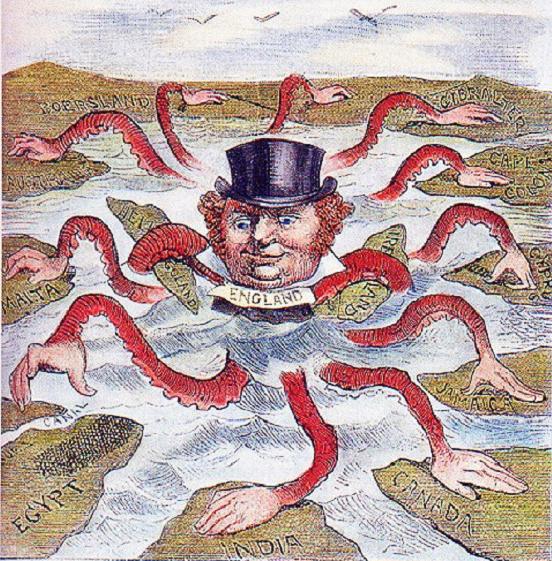
In some senses this confirms an established story. Imperialism 101. For others, it will unsettle the idea of globalisation and inter-dependence as essentially the negation of great power politics.

Continue reading

Libya and the Temptations of Geo-Political Reason

While Libya quakes, an assorted commentariat tussles over the legacy of the new military humanism and its possible revival. That such statements are now tempered with a caution absent for Kosovo and its successors mitigates matters somewhat, but not much. Despite the disavowal and dissimulation, the conclusions reached are much the same. Something must still be done. There is an obscenity about this rush to engage in geo-political reason, to pronounce on real and illusory national interests, to play soldier by speculating on where to move the battalions on the great chess board of high politics. In periods of less emergency, we might speak of a complex weaving of beliefs and interests, of competition between economic, military and political logics, or of international statecraft as a particular and peculiar kind of practice. But in the face of NFZ+, RPGs and UNSCRs, such vulgar and academic maneuvers appear to be surplus to requirements, for the cheer-leaders as much as for the poo-poo-ers.

But the advocates and the critics are closer now too. Both want the revolution to succeed. Both are wary or hostile to the rationales of power. Both see the possibility of a sub-optimal partition or stalemate. And both are engaging in some wishful thinking, whether by assuming that the authorisation of the UN or the absence of explicit lies will limit the reach of militarism or in simply asserting that the Revolution is on the verge of seizing the state without (faux) internationalism. Which isn’t to say that there aren’t some fairly compelling assessments available.

All of this opens up a space for further discursive refinements. We might do well to talk about the confusion between ad bellum and in bello concerns, or about the wisdom of replacing a concern with the consequences of intervention with a folk-psychological assessment of the true intentions of its instigators, as if the legacy of ‘muscular liberalism’ mattered more than the fate of those with some rather more pressing concerns.

But what of the sudden convergence around a statist geopolitics?  Continue reading

What We Talked About At ISA: The Monstrous Masculine: War Rape, Race/Gender, and the Figure of the Rapacious African Warrior

If there is something in these utterances more than youthful inexperience, more than a lack of factual knowledge, what is it? Quite simply it is the desire – one might indeed say the need – in Western psychology to set Africa up as a foil to Europe, a place of negations at once remote and vaguely familiar in comparison with which Europe’s own state of spiritual grace will be manifest.

Chinua Achebe, ‘An Image of Africa’ (1978)

Sometimes it seems that we’re merely Constructions made out of yarn, paper & wood with threads rising from our toes and fingertips. We pretend to talk and act as though we were alive but actually we don’t have any choice in the matter. Some secret power directs us.

Evan S. Connell, The Diary Of A Rapist (1966)

1. Rape, Ultra-Violence and Beethoven

When we speak of men in feminism, we might speak generally or specifically, of properties of maleness and masculinity or of things done by particular men (and usually some combination of the two). What is at stake is the distinction between masculinity as a set of internal properties and as a set of relational, and hence contingent, ones. Although this can be taken as denying any substance at all to that category ‘man’, it is perhaps just as well to say that we all build our own subdivided orders of maleness – from men we know, knew, or think we are; from our salient models of true and false and ambiguous masculinity; from the postures and poses we take as appropriate towards them; and from the frames we adopt for dealing with variety, with all the space for the exemplar, the exception, the masquerade and the average that they bring.

The monstrous masculine is one such model, or rather a set of models united by family resemblance. An object of horror, the monstrous masculine is a repository for tropes that identify the hideous excesses and obscene pleasures of maleness. Channelling Barbara Creed (and some Sjoberg and Gentry), it is a set of tropes and themes in our imaginaries of social action, frequently evoking, among others, ideas of a limitless and aggressive sexuality, a cold and calculating self-regard and/or a submerged, if frequently actualised, hatred of women and Woman that borders on the instinctual. In accounts of wartime sexual violence, this figure of the rapacious warrior (usually African) comes to be represented in terms of the calculating soldier-strategist (who chooses rape as a hyper-efficient means to an accumulatory end); the angry soldier-rapist (expressing a deep desire and sexuality); or the habitual soldier-ritualist (enacting the memes and symbolic imperatives of a community, culture or even race).

Think of the figure of the unreason-laced psychopath rapist, whether in the version Joanna Bourke examines as the ‘rapacious degenerate’ or that which Susan Brownmiller addresses as the ‘police-blotter rapist’: “[t]he typical American perpetrator of forcible rape…little more than an aggressive, hostile youth who chooses to do violence to women”. Such protagonists are common in popular representations of rape. In A Clockwork Orange, Alex and his droogs prowl the streets and lanes of town and country, opportunistically submitting the unlucky to attacks driven by a relentless juvenile machismo. And in the scandalous Irréversible, rape is also the product of a subterranean drive. ‘Le Tenia’ does not even search his victim for money as an afterthought – his priorities are only to enact his spontaneous lust and be called ‘daddy’ as he does so.

The monstrous masculine unites conceptions and intimations of masculinity as pathology. This is the Real of a “terrifying dimension, as the primordial abyss which swallows everything, dissolving all identities”. Put otherwise, it embodies in its most psychoanalytic inflection the idea (following Nick Cave) that the desire to possess her is a wound.

Continue reading

Egypt and the Failure of Realism

Update (19/05/11): A revised and expanded version of this post has been published in The Journal of Critical Globalisation Studies (Volume 4), which you can access for free here.

I’ve hesitated to comment on events unfolding in Egypt (and in the wider region, from Tunisia to Yemen). Not only do I lack any special knowledge of events but many others have said all that I would say with greater skill and clarity. Yet, a sense of solidarity with protesters and my frustration with the commentary on events leads me to offer a few thoughts on the ambiguous role that appeals to “realism” are playing in the response to the actions of the protestors and the government in Egypt.

As the protestors and Mubarak’s goons wait it out in Tahrir Square, the rebellion against the president has entered a key phase. Will the threat of continued violence give Mubarak the space he needs to solidify his power till next year, and in the process avoid the thorough changes the Egyptian people are demanding? As protestors face violence, exhaustion and deprivation the prospect of compromise must seem more desirable than before. The time seems ripe for expressions of support from key states and leaders.  The protestors need our support; it’s much easier for Mubarak to play for time from the presidential palace than for protesters in the streets, but the men and women able to make a difference do not use their voices to share in democracy’s street-choir. And these moral midgets are attended to by their Lilliputian advisors, who counsel patience, restrain and reform that preserves stability.

When Keeping It Real Goes Wrong

Barak Obama has clearly mastered the dark art of evasive support, leaving no doubt that he’s all for Egyptian democracy that doesn’t change too much, too fast, and, most importantly, doesn’t compromise the key strategic interests of the US.

The administration’s restraint is also driven by the fact that, for the United States, dealing with an Egypt without Mr. Mubarak would be difficult at best, and downright scary at worst. For 30 years, his government has been a pillar of American foreign policy in a volatile region, not least because of Egypt’s peace treaty with Israel. American officials fear that a new government — particularly one dominated by the Muslim Brotherhood or other Islamist groups — may not honor the treaty signed in 1979 by Mr. Mubarak’s predecessor, Anwar el-Sadat. (NY Times)

Predictably, Joe Biden made the point with less tact, but perhaps more truth, when he expressed his insensibility to the crimes of Mubarak against his own people.

Asked if he would characterize Mubarak as a dictator Biden responded: “Mubarak has been an ally of ours in a number of things. And he’s been very responsible on, relative to geopolitical interest in the region, the Middle East peace efforts; the actions Egypt has taken relative to normalizing relationship with – with Israel. … I would not refer to him as a dictator.”

Continue reading

Martin Luther King as an international thinker?

Monday 17 January marked the official US holiday honoring Martin Luther King, Jr. While watching Monday’s Democracy Now! program, featuring substantive excerpts from King’s speeches,  the clarity with which he connected the domestic fight for equality to international politics, in particular poverty and war, struck me. The international aspects of King’s thinking, I believe, are important for two reasons.

King’s Radicalism

First, it challenges the interpretation of King as an insufficiently radical leader offered by some critics, and the co-option of King’s legacy not only by “moderate” liberals but also by conservative political figures in the US. King has become a symbol in the public consciousness of a safe reformism and a favorite icon for the type of liberal who abhors radicalism above any other political sin. As Michael Eric Dyson says, “Thus King becomes a convenient icon shaped in our own distorted political images. He is fashioned to deflect our fears and fulfill our fantasies. King has been made into a metaphor of our hunger for heroes who cheer us up more than they challenge or change us.”

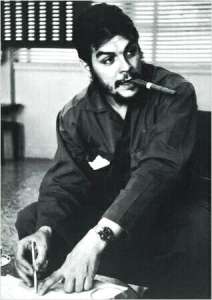
A personal anecdote to illustrate the point: a couple of years ago while handing over the editorship of Millennium to the incoming editorial team, one of the new editors commented on the large poster of Che Guevara that hangs on the Millennium office door. The Che poster, so far as I know, predates most of us currently associated with the journal, therefore I suggested it should stay. I then asked why Che should go. My colleague suggested that Che’s participation in revolutionary violence made him an inappropriate icon – in many academic disciplines this might be a rather devastating point, but International Relations is full of characters far more violent and less admirable than Comrade Che – see Paul’s post on Kissinger, for example.

When asked who might better grace the walls of the office my colleague suggested Martin King or Mohandas Gandhi (a political figure subject to a similar post-hoc liberal deification), with their key qualification as acceptable iconography being that they had not participated in political violence. While I have a great deal of sympathy for non-violence, my own introduction to both King and Gandhi came through the study of non-violence political strategy, the liberal (and I think my colleague would gladly accept that identification) embrace of King or Gandhi, paired with the repudiation of Che, is (unintentionally?) disingenuous.

It’s a disingenuous embrace because it insists that the first rule of acceptable political action is a renunciation of physical violence, while at the same time turning a blind eye to the violence institutionalized in the state through everyday police brutality and legalized/legitimized imperial warfare, as well as the structural violence inherent to global capitalism. This misses the radical content of non-violence as practiced by King and obscures the link that exists between non-violent agitation and armed resistance. The political commitments and motivations of King and Che are remarkably similar, even as their fundamental orientations (Marxism vs. Christianity) and tactics (non-violent direct action vs. guerrilla insurgency) diverged. Continue reading