Washington, DC: a human rights city?

Below are some initial reflections on the work I’ve been doing in Washington DC on the human right to housing. They are not terribly substantive and serve as much as a tribute and thank you to those who hosted me as disquisition on the topic. But I wanted to post the piece for those who might be interested in my broader project, or what’s going on in Washington DC. Enjoy.

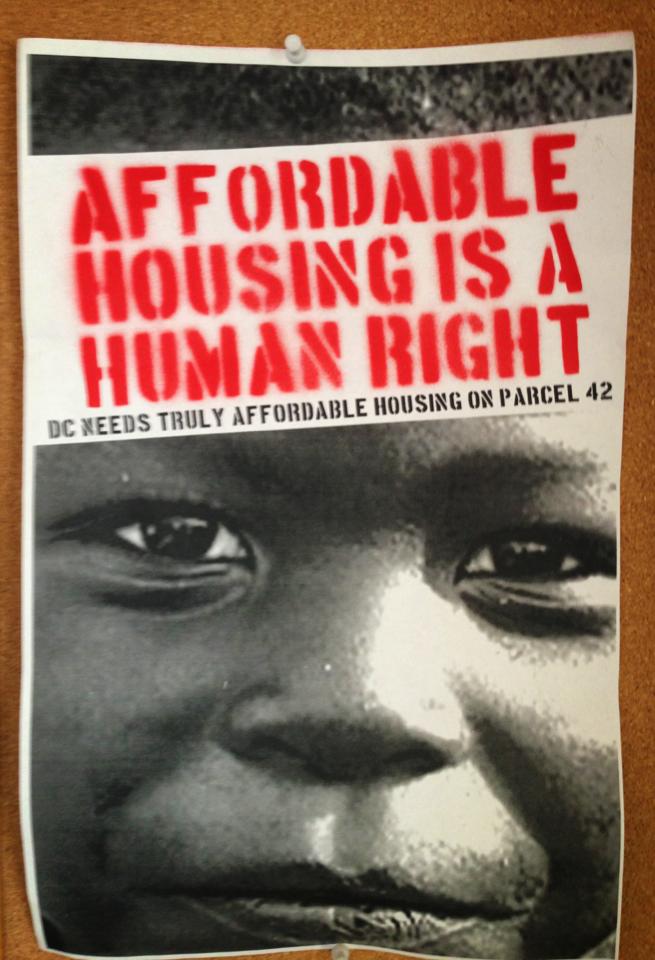
In December 2008 Washington DC was declared a human rights city. The DC City Council passed the resolution, pushed for by the American Friends Service Committee. While this is a lovely idea, it leaves one wondering what does it mean to be a human rights city. In particular, what does it mean in a city defined by inequality, where more than 15,000 citizens do not have homes, where 20% of the population lives in poverty, where housing is more unaffordable than anywhere in the United States, and where public and affordable housing is under constant threat. Perhaps the declaration of DC as a human rights city would seem less cynical if the DC City Council or the Federal Government had shown themselves committed to protecting the human rights of residents of the District, particularly the right to housing.

Housing is a Human Right

Human rights promise us many things. The right to housing, however, is perhaps the most fundamental. What do our rights mean if we do not have a place to call home? Article 25 of the Universal Declaration of Human Rights promises that

Everyone has the right to a standard of living adequate for the health and well-being of himself and of his family, including food, clothing, housing and medical care and necessary social services, and the right to security in the event of unemployment, sickness, disability, widowhood, old age or other lack of livelihood in circumstances beyond his control.

The right to housing is fundamental because it is in our homes that we find the space to rest, to pursue wellness, to find love, to raise families, and build communities, to collect our energy and thoughts so that we can participate in democratic politics, and it is where we find the safety, security and privacy that make a dignified life possible. Continue reading

Constructing National Security: U.S. Relations With India and China

Jarrod HayesA guest post from Jarrod Hayes on his forthcoming book. Jarrod is an Assistant Professor of International Relations at the Georgia Institute of Technology. In 2003 he received his Bachelor of Arts degree from the University of Colorado at Boulder in astrophysics and political science. He completed his Ph.D. in Politics and International Relations at the University of Southern California in 2009. Prior to joining the Georgia Tech faculty, he was the ConocoPhillips Assistant Professor of International Relations at the University of Oklahoma. His areas of scholarly and teaching interest focus on the role of social orders in shaping international security practice. His scholarship appears in the European Journal of International Relations, German Studies Review, International Organization, and International Studies Quarterly.


Srdjan originally approached me about doing this guest post six months ago. So my thanks to Srdjan and the gang for their patience and for giving me an opportunity to discuss my forthcoming book Constructing National Security: U.S. Relations With India and China, set to come out with Cambridge University Press in September (available on Amazon for a discount). What I would like to do is discuss a bit of the background of the book project before addressing the substance of the book and conclude with some of the implications and questions raised by the work.

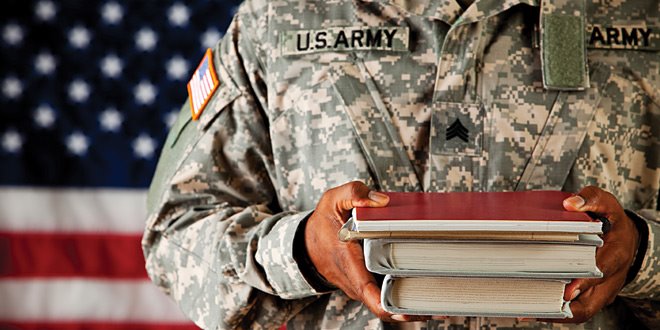
The book initially started as a project on the democratic peace. When I was in graduate school, I was captivated in my very first semester (Introduction to IR theory with Robert English) by the law-like regularity of the phenomenon—loads of papers and books demonstrate that democracies do not fight each other (see among others my 2012 article in the European Journal of International Relations, also Harald Müller and Jonas Wolff’s ‘Many Data, Little Explanation’ in Democratic Wars: Looking at the Dark Side of Democratic Peace and Ungerer’s 2012 review in International Studies Review). In part owing to how the subject has been investigated (more on that below), academics have lost perspective on the significance of the phenomenon. Security seems to be everywhere, and applied to almost everything. The initial impetus for the highway system in the United States was national security. President Dwight Eisenhower’s avowed purpose for building the massive transit network was to facilitate the movement of U.S. military forces in the event of a land invasion. Two years later security was used to justify education policy in the form of the 1958 National Defense Education Act. The list goes on. Almost any topic one might think of has probably been included under the rubric of security. The democratic peace, however, points to a notable exception. As reams of evidence indicate, democracies have been consistently unwilling to label their peers as security threats. The puzzle is obvious: how is it that democracies have avoided constructing each other as threats while so many other subjects have been labeled as such.

US Army Books

The significance of the democratic peace is self-evident in my opinion. As I read more of the democratic peace (DP) literature, however, I became increasingly dissatisfied with the collective effort to identify the forces that generate the phenomenon. Methodologically, regression-based studies dominate the field. While these studies have been invaluable in establishing the claim that the democratic peace phenomenon exists, by their very nature they are able to demonstrate only correlation, not causation. Not surprisingly, what effort these studies do make towards understanding and explaining the democratic peace focuses on causes — norms and institutions — that could be quantified, sometimes through tenuous proxies. Yet, because the quantitative nature of the studies does not enable access to causal forces, the mechanisms behind the democratic peace remain shrouded in shadow. Perhaps surprisingly given my educational background, I was particularly dissatisfied with the theories and causal assumptions that underlie them in the literature (for the sake of brevity and focus, I will not go into this critique in depth, but interested readers can find it in my 2012 article in the European Journal of International Relations). My dissatisfaction with the literature, specifically with its tendency to brush by the big questions of how the democratic peace is possible, led me to begin pursuing my own theory of the democratic peace.  The book is the result, although it has since grown into an effort to understand how identity shapes security outcomes in democracies.

Continue reading

The Manning Trial, Truth-Telling, and The Precariousness of Democractic Society

The following is a piece written as part of an interview I did at City University on the political and ethical significance of the Bradley Manning trial currently ongoing (links to potentially embarrassing video to follow).

I think that the most important thing that the Bradley Manning trial shows us is the gap that opens up between our legal institutions and our sense of right and wrong, between the law and morality. Many people around the world are shocked by Manning’s imprisonment. People are shocked partly because he has been held under conditions that the UN said violated his human rights, but also because Manning is being tried for exposing the actions of US soldiers and diplomats, including evidence of many potential and confirmed human rights violations. Manning’s supporters are incredulous and view the proceedings now taking place at Fort Meade as illegitimate.Bradley Manning War Crimes

I understand this incredulity and on a level I share it. What I want to suggest, however, is that what we are seeing in the trial of this young man is even more troubling than the corruption of the law by politics – it reveals that the law is always suffused with politics. The law is a technical code. Yes, it is also a normative system that is supposed to determine right and wrong, guilt and innocence. But it is vital that we do not forget that it is a technical code first and foremost, a code that political authorities use to justify their power. Therefore, those with the capacity to influence and manipulate the legal code will always be at an advantage, will always be able to shape that code not towards the pursuit of justice but towards their own interests. This is what Finnish legal scholar Martti Koskenniemi calls this the gap between apology and utopia. The law has its utopian moments and this is especially true of human rights law – for example, Manning supporters see him as a hero who has exposed the grievous crimes of the US government and its military, particularly in Iraq and Afghanistan. They appeal to human rights standards that are quintessential moral claims, but which sadly lack the force of political authority and so are not reliably protected. This is important, but the law also has its moment of apology, where it serves the interests of established authorities, of powerful actors like the US government.

Continue reading

What We Talked About At ISA 2013: The Practice Turn and Global Ethics

We're talking about practice!

I want to address the use of practice theory in global ethics rather than International Relations or social science broadly. I am neither a social scientist nor a social theorist. My interests are in political and ethical theory, in asking questions about the good in political life. Nonetheless, questions of ethics are an important part of the turn to practice theory because such a reorientation has much to add to how we think about questions of global ethics. I also hope that my reflections on, and uses of, practice theory may be of interest to those who see themselves as social scientists.

In global ethics there is a constant concern with the issue of justification, with determining how we know what is right or good – and especially how we know that what we know is really right or good. What is surprising is how little time is spent considering the details of what is right or good in specific situations. This question it seems is already known, either because we can deduce it through some rational rule or distill it from some social tradition. This is a crude map, but hopefully adequate to place ourselves.

Even among more dissident scholars the focus is on how justifications fail, or how our justifications reproduce undesirable social consequences – the exclusion of the other, the marginalization of women – and these are absolutely vital insights. However, what remains under-examined is what we take to be right or wrong, good or bad, the substantive and at times contradictory content of our ethics. Along with this there is a lack of concern with how we think when we are being ethical, with what social role ethical claims have and with how social institutions and traditions depend upon ethical claims.

Continue reading

Swami Vivekananda: An Outsider’s Ramblings

swamiEarlier this month I visited New Delhi’s Ramakrishna Ashram for the first time.  What drew me there was the exhibition on the life of Swami Vivekananda (a.k.a., Narendra Dutta, 1863-1902). The exhibition, inaugurated a few months ago by the Dalai Lama, celebrates the 150th birth anniversary of the saffron-clad monk who is India’s Great Man -“second only to Ghandi,” as I was told more than once.  Compared to most other historical exhibitions I have seen in this country, “Vivekananda: A Prophet of Harmony” is tip-top, as measured by functioning A/C and lighting fixtures, savvy graphics panels, contemporary wallpaper posters, new dioramas, and an interactive exit quiz intended for schoolchildren.  Plus it’s relatively crowded. Over the course of an hour or two I spent there on a Saturday morning I counted a couple of university students (probably taking a short study break from the nearby library), a few senior citizens, half-dozen sadhus (among them, two Europeans and an Indonesian), and one large middle class family visiting the capital city from Tamil Nadu.  “You must see the film,” said the moustached paterfamilias to me.

His reference was to “9/11: The Awakening,” a 15-minute computer-animated piece on a speech Vivekananda gave on 11 September 1893 at the World Parliament of Religion in Chicago, which was held in conjunction with the World’s Columbian Exposition.  Starting with a scene straight out of The Titanic, the film depicts the monk’s transoceanic crossing, and how he bowed to Saraswati, the goddess of learning, before taking the podium.  “Sisters and brothers of America,” Vivekanada’s opening line, is known to every educated Indian person, but “the speech” in the short film appears to take from multiple speeches the monk gave in Chicago, including the second (“Why We Disagree,” September 15) and the third (“Paper on Hinduism,” September 19) are the richest.  By all accounts, Vivekananda’s discourses on religious tolerance and unity, mutual recognition, India, and Hinduism were a big hit (it suffices to consider the tumultuous applause he received multiple times from the audience of 4,000 – or 7,000 if you include the overflow halls of the Art Institute).  Chicago treasures these memories today.  A stretch of the Michigan Ave (at Adams St) is now the honorary Swami Vivekananda Way and a statue of the saint, taller than the one at Delhi’s RK Ashram metro station, adorns Chicagoland’s premier Hindu temple in Lemont.

According to the standard historical narrative, Vivekananda was the first Indian/Hindu thinker to introduce Hinduism and the Indian/Hindu understandings of tolerance, peace, and justice to Anglo-America and the European continent – ideas that would “conquer the world,” as he would put it (“It is my ambition to conquer the world by Hindu thought – to see Hindus from the North Pole to the South Pole”, 1897). The Chicago speeches and other overseas interventions carried by the swamiji established a number of inter-civilization bridges, both big (the global spread of Vedanta philosophy and yoga) and small (Nikola Tesla’s vegetarianism, celibacy, and a possible re-consideration of the mind-body problem). Vivekananda’s speeches and writings, the narrative goes, “awoke” India from its slumber (“For the next fifty years let Mother India be your God. Serve your country as you would serve God, and India will awaken”, 1897).  His “modernized” version of the Indian/Hindu thought inspired “social reform” at home, while helping raise awareness about India’s anti-colonial struggle abroad.  No less important, he founded the Ramakrishna Mission (now the main publisher of his writings) and the Vedanta Societies [1], which continue to spread his teachings to this day.

Continue reading

American Vignettes (II): The Spirit’s Agenda

Most of our day we are unaware of what we are thinking, but it is not our thoughtlessness that is disconcerting, it is our lack of awareness of our thoughtlessness.

It is rare to be in a space uncluttered by social messages, but you suddenly find even your modern sensibilities assaulted as you make your way through contemporary America. There are the expected advertisements, but they cover more of the physical surface of the world than you remember. There are the expected automated announcements, but they pierce the air and reverberate more loudly than you remember. You watch as everyone else moves through this cloud of demands, warnings, enticements, and you wonder: “does their head spin as mine does?”

IMG_0135

Advertisement on escalator railing.

The cab you take across Manhattan has a television screen constantly playing commercials – you can silence it but you cannot turn off the scrolling images. The roads you drive down in New York, Chicago and Denver have their negative space filled by an uncountable number of signs, billboards, words – every surface a text. Even tucked away from the public stream of communication, in your home or in your car, the words and pictures crash over you: television is ubiquitous and its light flashes on you wherever you go, the radio blares at you in the coffee shop and the eye doctor’s waiting room, the ads flash on your computer screen as you write emails to friends, and the messages and updates ding and chime on your phone as you sit down to eat a family meal.

The frenetic quality of the day only appears once you are lying in an unfamiliar bed, in a quiet dark room, when you can hear your parents breathing as they sleep down the hall from you, when you can hear the geese who have come south from Canada honking in the distance, when your mind stops receiving, blocking, dodging, collecting words and is able to put its own thoughts together. Being out of place and out of rhythm, you feel the importance of this moment. Slowness. Quiet. Rest. Continue reading

Allow his prophetic voice to be heard…

I was thinking of writing on Dr King’s legacy (again) to mark MLK Day this past Monday, but it turns out that Dr Cornel West has already said what needs to be said.


Obama’s Ohio Report

My Ohioans did it again.  In every election since 1964 (and almost every time since 1904), the winner of this state ended up taking the presidency – hence the clichés “America’s bellwether” and “as Ohio goes, so goes America”.  Having spent six years of my life studying politics at The Ohio State University not so long ago, I can’t help but identify and sympathize with Buckeye voters, a group of people that every four years gets to decide the fate of the U.S. and, some might add, the world. This is a heavy burden for many reasons, including being exposed to the fanfare of presidential candidate fly-ins (82 of them this time), thousands of attack-counterattack TV ads (that typically target only “undecideds” and/or “independents”), as well as dozens of phone calls and door knocks reminding you to get out and vote for the right person (in the final week of the 2008 campaign, Team Obama said it knocked on a million Ohio doors per day).

The phrase “key battleground state” that every news outlet likes to attach to Ohio refers to its electoral-college vote clout (the 2010 Census reapportionment gives it 18 votes until 2020) as well as its recent record in presidential elections, which is marked by small margin-of-victory numbers (4.6 percentage points in 2008, 2 in 2004, etc.). The state has a remarkable red-blue balance overall; since 1998, the state voted for three Democratic and three Republican candidates each). Also remarkable were the results of pre-election state polling in October, which showed a tied (or at least tightening) race between President Barack Obama and his GOP challenger Mitt Romney (see, for example, the discussion of the RCP poll of polls from 30 October).

To be sure, electoral pathologists – those friends of yours obsessing about assorted ‘paths to presidency’ – had probably explained to you that each candidate could have won an electoral majority without Ohio (e.g. Obama would have had to grab one or two bigger states considered tossups plus all reliably blue states, and Romney would have had to hold onto all normally red states while pulling off multiple upsets elsewhere). This type of electoral math is both fun and fantastic, but reason tends to swiftly restore the status quo ante: it’s all about “Ohio, Ohio, Ohio!

Tuesday’s drama ended right after 11 pm Eastern Time, when the news organizations called Ohio for Obama; less than two hours later, Romney conceded the race.  To examine this outcome, let us begin with two issues identified by the media as key to this election: the auto and coal industries, and the thousands of jobs each of them provides to the state. (Compare, The Globe and Mail’s Ohio postcard of 25 October or The Economist of 27 October to the endorsement editorials in The Columbus Dispatch [Romney], The Cincinnati Enquirer [Romney], The Plain Dealer [Obama], or my favourite OH newspaper, The Blade [Obama]). In a nutshell, while some Ohioans liked what the president did with the former (that 2009 bailout of GM and Chrysler helped the manufacturing sector in the northern part of the state), others hated what he did with the latter. (Being viewed as too green on energy was expected to hobble Obama’s re-election chances in the coal-mining counties of the Appalachian part of the state).
Whatever the explanatory merits of simple storylines like these, unofficial returns bear this one out. The website of Ohio Secretary of State’s office has Obama winning by about 2 percentage points, which is lower than in 2008. The president indeed carried the populous Cuyahoga County (centered on Cleveland) plus a string of smaller counties in the northeast by sufficiently large margins, while Romney won large parts of the coal country.  What went on elsewhere in the state was more important, however. Though Romney ran strong in most traditionally Republican rural areas, he severely underperformed in the remaining half dozen big urban counties, which account for almost 40% of the statewide vote. Even Hamilton County (Cincinnati), historically a GOP bastion, went to Obama by about 20,000 votes again. (For the county-by-county comparisons over time, see Rich Exner’s page at The Plain Dealer; U.S. politics junkies might also consult a map of the 2008 precinct-by-precinct results provided by Stanford’s Spatial Social Science Lab).

Demographically, Obama probably carried the state in the same manner as he did four years ago.  How many Ohioans voted will not be known until late-arriving absentee ballots and provisional ballots are counted, but the turnout (about 68%) can safely be described as well above average. This surely helped the president: by getting its base to register and ballot (including via early in-person voting), the Obama campaign succeeded in maximizing Ohio’s Democratic potential once again (against a stream of ‘voter fraud’ legislation targeting qualified minority voters). What exit polls seem to be suggesting is that the president bested his challenger among female, young, college-educated as well as minority voters.  And what of Ohio’s white working class males (those without a university degree), who sit at the center of any “annoying, all-purpose pet theory” of U.S. presidential elections? Here, it appears that the president succeeded in avoiding a large margin of defeat, and it will be interesting to see why. The success in capitalizing on Romney’s casino capitalism sounds like a plausible hypothesis (and a nice extension of the auto bail-out storyline); but let’s recall that in 2008 Obama won 56% of votes from union households, which was lower than the national average.

What about the role played by ‘non-fundamentals’, specifically Obama’s race? Estimating this particular effect is challenging at any level of analysis, but both survey-based and non-survey-based studies have suggested that in 2008 Obama lost about 5 percentage points of the national popular vote due to racial intolerance on the part of some voters. A meaningful decline in this number would be my candidate for a feel-good story of the 2012 election.


Note: Cross-posted at the CIPS Blog, and meant to be read in conjunction with “Pre-Election Facebook Rants, #652

A Foolish Discipline?

This is the third post in a symposium on John M. Hobson’s new book, The Eurocentric Conception of World Politics. The series began with a post by the author summarising the argument of the book, followed by Meera’s response. In the next few weeks, we will have a posts from Brett Bowden, followed by a reply from John.

Update: Brett’s response is now up.


Interest in the history of International Theory has grown, but the academic study of its origins has received relatively little attention to date.  The reasons are multiple: the complexity of the subject, a powerful commonplace view that ‘disciplinary history’ equates scholasticism and navel-gazing, and, I would hasten to add, a collective unwillingness to deal with racism that often pops up in the writings of mythicized fathers of international theory.  John M. Hobson is not hindered by any of these obstacles.  What he does in The Eurocentric Conception of World Politics is tell a story that begins in 1760 and ends in 2010, assessing hundreds of international theorists past and present, from Adam Smith to Anne-Marie Slaughter.

This wide-ranging, authoritative book is a continuation of the author’s previous achievement of note, The Eastern Origins of Western Civilisation. There, Hobson argued, echoing Edward Said, that nineteenth century European imperialism was symbiotic with Europe’s “racist identity.”  This symbiosis has had many implications, but none as big as this: “had racism not existed and had the West viewed the Eastern peoples as equal human beings, imperialism might never have occurred” (2004: 241).  This meta-point is now revisited in a major way:

international theory is to this book what Western literature is to Edward Said’s Orientalism….given Said’s claim that Eurocentrism has a clear link with international politics – in this case imperialism – then international theory should logically constitute the ultimate litmus test for revealing this discourse in Western academic thought (p.2; all subsequent in-text references are to this book, unless otherwise indicated). Continue reading

Feminist Notes, part I

By including what violates women under civil and human rights law, the meaning of “citizen” and “human” begins to have a woman’s face. As women’s actual conditions are recognized as inhuman, those conditions are being changed by requiring that they meet a standard of citizenship and humanity that previously did not apply because they were women. In other words, women both change the standard as we come under it and change the reality it governs by having it applied to us. This democratic process describes not only the common law when it works but also a cardinal tenet of feminist analysis: women are entitled to access to things as they are and also to change them into something worth our having.

Thus women are transforming the definition of equality not by making ourselves the same as men, entitled to violate and silence, or by reifying women’s so-called differences, but by insisting that equal citizenship must encompass what women need to be human, including a right not be sexually violated and silenced. This was done in the Bosnian case by recognizing ethnic particularity, not by denying it. Adapting the words of the philosopher Richard Rorty, we are making the word “woman” a “name of a way of being human.” We are challenging and changing the process of knowing and the practice of power at the same time.

-Catharine MacKinnon, “Postmodernism and Human Rights,” Are Women Human?