The Citadel Has Been Blown Up. Hurray! Next? A Response to Hobson

This is the second post in a symposium on John M. Hobson’s new book, The Eurocentric Conception of World Politics. The series began with a post by the author summarising the argument of the book and laying out some provocations for sympathetic readers. In the next few weeks, we will have further posts from Srjdan and Brett Bowden, followed by a reply from John.

Update: Srdjan’s post and Brett’s post are now up.


I was at an IR event last year where the speaker jovially declared that they just did not care about being, and being accused of being, Eurocentric. At the time, I found it both a little shocking and depressing that they could see fit to dispense with that fig leaf of serious acknowledgement that often accompanies discussions of Eurocentrism.  And indeed I thought, glumly, that it perhaps reflected many scholars’ underlying attitudes to the issue – a tokenistic practice of acknowledgement underpinning a wider apathy or disconnection. What only struck me later was also the possibility that the speaker also didn’t really understand the issue which was batted away so carelessly. Indeed, it is unclear that many ‘mainstream’ IR scholars truly understand the problem of Eurocentrism, given the mythologised twin deaths of colonialism and scientific racism in 1945 (or so).

Seriously?

So, Hobson is knocking at the door more loudly, with a bigger stick, and much more paperwork.  Continue reading

Re-visioning Eurocentrism: A Symposium

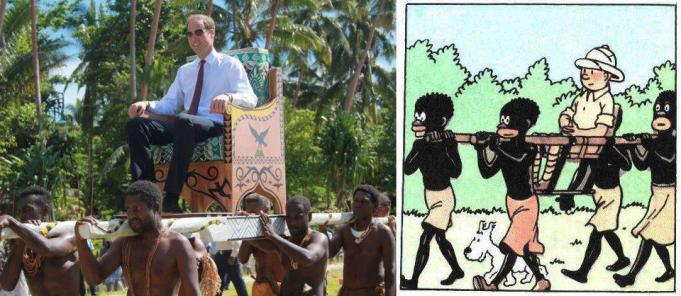
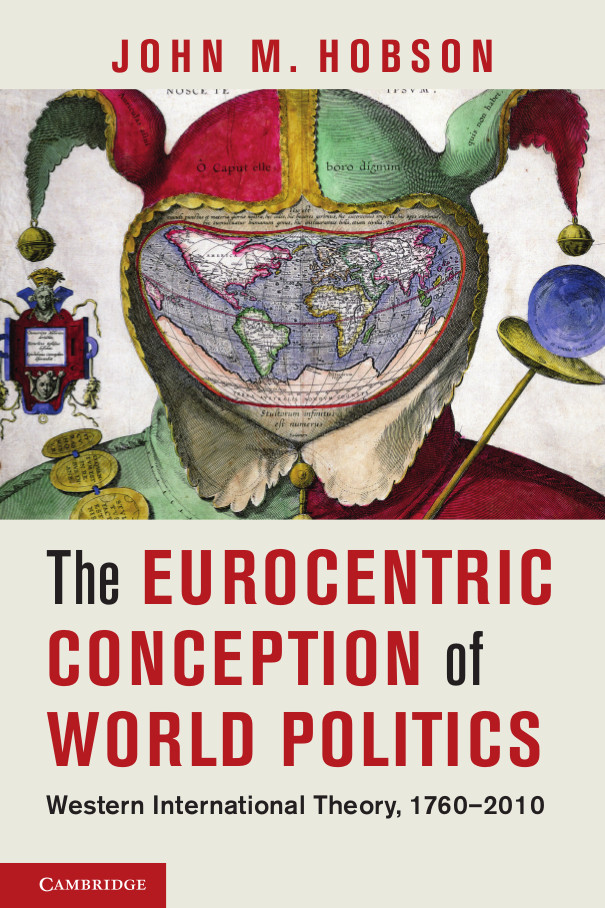
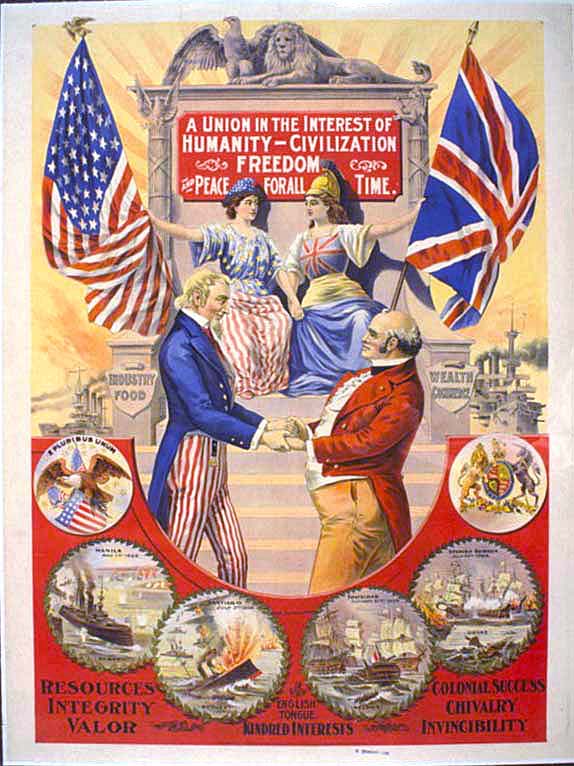
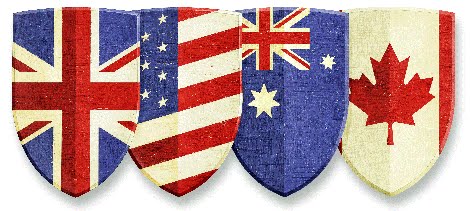
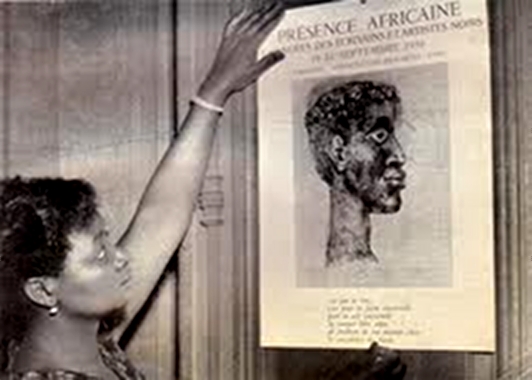
The Disorder of Things is delighted to welcome a post from John M. Hobson, which kicks off a blog symposium on his new book The Eurocentric Conception of World Politics: Western International Theory, 1760-2010. Over the next few weeks there will be a series of replies from TDOT’s Meera and Srdjan, as well as special guest participant Brett Bowden, followed finally by a response from John himself. [Images by Meera]

Update: Meera’s response, Srjdan’s response and Brett’s response are now up. 


Introduction

As I explain in the introduction to The Eurocentric Conception of World Politics, my book produces a twin-revisionist narrative of Eurocentrism and international theory.[i] The first narrative sets out to rethink the concept of Eurocentrism – or what Edward Said famously called ‘Orientalism’ – not so much to critique this founding concept of postcolonial studies but rather to extend its reach into conceptual areas that it has hitherto failed to shed light upon.[ii] My central sympathetic-critique of Said’s conception is that it is reductive, failing to perceive the anti-imperialist face of Eurocentrism on the one hand while failing to differentiate Eurocentric institutionalism or cultural Eurocentrism from scientific racism on the other hand. As such, this narrative is one that is relevant to the many scholars who are located throughout the social sciences and who are interested in exploring the discursive terrain of ‘Eurocentrism’. These, then, would include those who are located in International Relations of course but also those in Politics/Political theory, Political Economy/IPE, political geography, sociology, literary studies, and last but not least, anthropology.

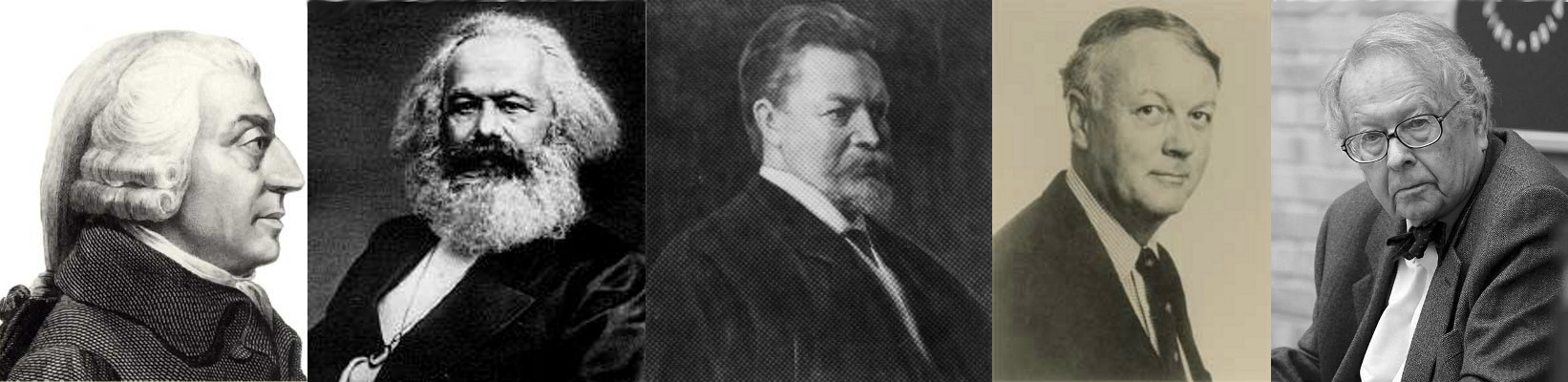
The second narrative rethinks international theory as it has developed across a range of disciplines. It stems back to the work of Adam Smith in the 1760s and then moves forwards down to 1945 through the liberals such as Kant, Cobden/Bright, Marx, Angell and J.A. Hobson, Zimmern, Murray and Wilson, onto the Marxists such as Marx and Engels, Lenin, Bukharin, and Luxemburg, and culminating with the realists who include Mahan and Mackinder, Giddings and Powers, Ratzel, Kjellén ,Spykman, von Bernhardi, von Treitschke and, not least, Hitler. After 1945 I include chapters on neo-Marxism (specifically neo-Gramscianism and world-systems theory), neo-liberalism (the English School and neoliberal institutionalism) and realism (classical-realism, hegemonic stability theory and Waltzian neorealism). This takes the story upto 1989. I then have two chapters on the post-Cold War era which examine what I call ‘Western-realism’ and ‘Western-liberalism’. The final chapter provides an overview of the changing discursive architecture of Eurocentrism and scientific racism, while also revealing how international theory has, in various ways, always conceived of the international system as hierarchic rather than anarchic. Although this is clearly a highly controversial and certainly counter-intuitive claim, it nonetheless in effect constitutes the litmus test for the main claim of the book: that international theory for the most part rests on various ‘Eurocentric/racist’ metanarratives. And ultimately my grand claim posits that international theory in the last quarter millennium has not so much explained international politics in an objective, positivist and universalist manner but has sought, rather, to parochially celebrate and defend or promote the West as the pro-active subject of, and as the highest or ideal normative referent in, world politics.

Continue reading

How Many Buddhists Are There in Northern Ireland?

Danny Boyle’s Olympics opening extravaganza was many things, but one thing it was not was a history lesson. If you were looking for any acknowledgement of the place of empire in the British national narrative, you would have had to concentrate quite ferociously during the hauntingly beautiful Abide With Me section, sung by Emeli Sandé, to see Akram Khan’s dance troupe mime the whipping of slaves (1:21:04 into the BBC’s coverage of the event). It’s possible that I simply imagined this because I was looking so hard. Anachronistically, moments before, Empire Windrush had arrived on stage, without context, like a Caribbean cruise ship blown off course (Columbus revenge). Two moments that you would have missed if you’d blinked, leaving you mystified about how the opening ceremony, Team GB, and indeed Britain itself had become such a multiracial spectacle.

In the reams of mostly laudatory commentary that has followed the ceremony, some have suggested that it might not have been appropriate to stage imperial conquest and plunder on an occasion that was meant to welcome the world to London. The insinuation that opening ceremonies should be mind-numbingly ‘fun’ is belied precisely by what made this one meaningful. Boyle deserves credit for trying to do history—any history at all, however potted—and indeed what makes his exclusions telling and problematic was precisely the emotional depth and maturity with which he was able to stage historical trauma (the Industrial Revolution, the World Wars, 7/7) and individual vulnerability (children in hospital, the references to children’s literature evoking the darkness of growing up) without detracting from the spirit of celebration. Yet some traumas are clearly easier to commemorate, some dead easier to remember, than others. Boyle’s history was curiously blinkered, resolutely domestic, almost wilfully blind to anything that happened outside this ‘green and pleasant land’. (An alternative potted history entitled ‘How to Keep Your Land Green and Pleasant’ might read ‘Step 1: export surplus population, preferably of the lower orders, preferably to places quite far away; Step 2: export dirty industries; Step 3: repeat step 2 for as long as you are able to.) The problem may have begun with the title—Isles of Wonder—that foreshadowed the geographically circumscribed view of history with which we were presented. Indeed the extraordinary, infuriating and continuing dilemma of British identity is that only the cultural right does geographical justice to Britain’s role in forging the modern world, albeit in registers of racism and supremacism. If Boyle’s historical imagination is anything to go by, the left, it would seem, prefers amnesia.

Continue reading

Flag-waving And Drowning: On The New Branding Policy Of UKaid

They say that discretion is the better part of valour. But DfID, or at least its boss, has decided otherwise. It was announced last month that “Aid from Britain will now be badged with a Union Flag when it is sent overseas, as a clear symbol that it comes from the United Kingdom.” In these times of urgently, relentlessly celebrating Britishness in all possible ways, this little ‘tweak’ to development policy may have slipped under the radar.

The ministerial statement in the press release is worth quoting in full, because it is both strange and revealing of a particular – and, I think, regressive – political turn in international development policy:

“For too long, Britain has not received the credit it deserves for the amazing results we achieve in tackling global poverty. Some in the development community have been reluctant to ‘badge’ our aid with the Union Flag.

“I disagree: I believe it is important that aid funded by the British people should be easily and clearly identified as coming from the UK. It is right that people in villages, towns and cities around the world can see by whom aid is provided.

“British aid is achieving results of which everyone in the United Kingdom can be proud. And I am determined that, from now on, Britain will not shy away from celebrating and taking credit for them.” Continue reading

The Anglosphere, Part Two: Of Liberal Leviathans and Global Turns

Viewed from the perspective of liberal IR, Britain’s globe-spanning empire can be described as “Liberal Internationalism 1.0.” According to G. John Ikenberry, the “liberal ascendancy” had everything to do with the “growth and sheer geopolitical heft of the world’s liberal democracies.” The British may have been the first to harmonize national interest with the stability, openness and rule-following in the international systems, but it was the Americans who “fused” them. “If the liberal order was built after World War II primarily within the West, the end of the Cold War turned that order into a sprawling global system” [1].

The question that has always fascinated me is how we got from Liberal Internationalism 1.0 to Liberal Internationalism 2.0, or how, to freely borrow from Ikenberry, power shifted between two liberal Leviathans, Britain and the U.S. What is puzzling here is the absence of the Wars of Anglophone Succession. Instead of fighting each other at least once or twice, the two empires first found ways to cooperate and coordinate their imperial activities around the globe, then engaged in what can be described as a pacted transition, even as a corporate merger. Here’s one verdict, taken from “The imperialism of decolonizationpiece by Wm Roger Louis and Ronald Robinson:

The British were welcoming the Americans back into the British family of nations and, informally at least, into the Commonwealth . . . [the post-war empire operated] as part of the Anglo- American coalition . . . like a multinational company.

Putting aside the historiography debates about its scope, timing and sequencing, this historical process was no doubt of momentous importance for the evolution of the liberal order, both in terms of the accumulation of hegemonic power, and in terms of social and institutional learning. The Anglosphere, in other words, begins here. So how do we explain it? Strategic calculus and/or a putatively liberal predilection for cooperation, compromise, and conciliation (last word Churchill’s) are only parts of this story, as Charles Kupchan notes in his How Enemies Become Friends:

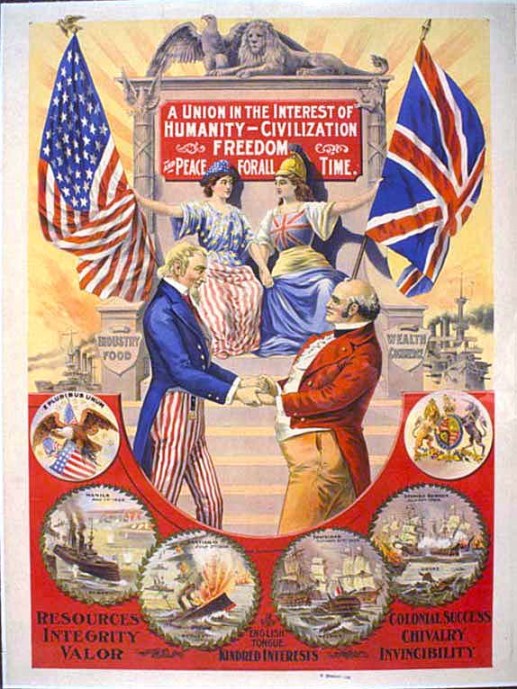
British appeasement of the United States and the practice of reciprocal restraint that followed cleared the way for rapprochement. But it was the emergence of a new discourse on both sides of the Atlantic – one that propagated notions such as a “shared Anglo-Saxon race” and an “Anglo-American family” – that produced a compatible identity, consolidated stable peace, and laid the foundations for the strategic partnership that exists to this day.

I could not agree more. Racialized identities operate as social structures of power, and this was a time when they explicitly authorized unity and superiority for Us against Them in ways that had profound consequences for the evolution of the so-called liberal international order. Anglo-Saxonism enabled the U.S. and Britain – or their elites – not only to position themselves favourably vis-à-vis each other at the turn of the twentieth century, but also with respect to the rest of the world and in a longer term. The Anglo-American rapprochement was no “global turn” of the sort that Kupchan talks about in his latest book, but it arguably comes close to it in macro-historical term. For one, the paths, pace and outcomes of the 1945-1951 international institution-building spree – that foundation of Liberal Internationalism 2.0 –followed the patterns of UK-U.S. cooperation first established during the colonial wars and near-wars in the 1890s. The much-disclaimed “special relationship” has its origins in this period – something to keep in mind next time we hear that U.S.-hugging remains in someone’s national interest, as General Sir David Richards, the head of Britain’s armed forces, argued last week.

This story I wish to tell can be expanded and contracted empirically (Anglo-Saxonism is dead today, but its effects can be found everywhere from university scholarships to contemporary military alliances) and theoretically (through, say, an account of core-periphery relations that made global capitalism possible), but the main substantive point remains the same, and that is that we cannot fully understand the “liberal ascendancy” without pausing (as Siba Grovogui might say) over the pervasiveness and power of racialized identities that connected Liberal Internationalism 1.0 and 2.0 [2]. Continue reading

The Anglosphere, Part One: What’s in a Name?

What do you get when you intersect indices that rank top two dozen nations of the world by political freedoms, GDP per capita, productivity, literacy, and patent applications in late 2000s? The answer is you get some kind of an “Anglosphere” – usually the quartet of Australia, Canada, the UK, and the U.S., but also, depending on the underlying measures and thresholds, New Zealand, Ireland, Singapore and so on.

Using data from the World Development Indicators, The Economist Intelligence Unit, and International Labour Organisation, among others sources, I’ve played this game in my research methods classes quite a bit. No methods textbook endorses such mindless empiricism, but students, from what I can tell, tend to appreciate the loose structure of the exercise. This is because the objective – familiarizing students with comparison, measurement, scaling, and so on – almost always shifts onto the “why?” questions, at which point everyone (ok, not everyone) tries to come up with his/her social scientific narrative on what makes this or that grouping “interesting,” “different,” or “special.”

Joel Kotkin, one of America’s premier demographers, and his nine collaborators have shown me how this game can be played at an infinitely more sophisticated level. Their argument – developed primarily in a collection of the Legatum Institute papers entitled “The New World Order”, but also in two shorter pieces penned by Kotkin and Shashi Parulekar at NewGeography.com and in City Journal – is that globalized economy by and large operates in and through three large “tribal groupings” or “spheres”: the Indosphere, the Sinosphere, and the Anglosphere [1]. As the authors note, their narrative can claim a formidable intellectual pedigree: “we have followed the great Arab historian Ibn Khaldun’s notion that ethnic and cultural ties are more important than geographic patterns or levels of economic development.”

Kotkin et al offer no shortage of interesting and novel observations and analytical points, but one of the project’s key punchlines is in the title of the Anglosphere section in the New World Order: “We are not dead yet.” The project’s foil, in other words, is the current wave of American declinism:

The era of unipolar domination by the United States and its key allies — which dates from the fall of the Soviet Union — has come to an end. Yet despite this, the core Anglosphere remains by far the largest cohesive economic bloc in the world. Overall it accounts for more than 18 trillion dollars, one quarter of the world’s GDP, far more than any other cohesive global grouping.

Continue reading

The Crisis of Europe and Colonial Amnesia

Recent commentary on the Eurozone crisis has started to pick up the grammar of colonial rule. The centre for Research on Finance and Money at SOAS, for example, has published an influential report wherein northern Europe (Germany especially) is framed as the core and southern Europe (especially Greece) as the periphery. Meanwhile, Ulrich Beck, European cosmopolitan par excellence, wonders whether the European Union will become “a European Empire with a German stamp”. Beck notes that Merkel’s sense of power “conforms to the imperial difference between lender and borrower countries.” At stake, agree many prominent European intellectuals in the pages of The Guardian, Eurozine and Der Spiegel, is no less than the promise of freedom and democracy immanent to the European project itself. All variously agree that, against the imperial sclerosis spread by capitalist and bureaucratic functionaries at the highest levels of governance, what is needed is a rejuvenation of meaningful democracy at a grass-roots level.

Faced with a dismantling of democracy Jürgen Habermas mounts a plea to save the old “biotope of Europe”. The constitutive components of this threatened ecosystem are freedom and democratisation, and its genesis lies in the Second World War and the fight against fascism and “internal” barbarism. The president of the European Central Bank has himself proclaimed that Europe now faces its “most difficult situation since the Second World War”. Alternatively, for many social democratic and leftist commentators, the danger of the situation lies in the loss of the “internal” struggle of labour and capital that defined the Cold War landscape. In the new context of EU institutional “empire” and its neoliberal tentacles, the defeat of labour quickens the erosion of social democracy, thus deciding the fate of the European project.

Europe, then, is perceived to be “colonizing” itself and in the process destroying freedoms and democratic structures that had been hard fought for by the general populace against political oppression and economic exploitation. But this angst-ridden imaginary of European crisis has very little to say about the substantive historical and global dimensions of European colonialism. Does cosmopolitan and social democratic angst cover these legacies and contemporary effects? In fact, in most recent treatises on the crisis the struggle for decolonization is given no integral status, even though these particular struggles were inseparable to and spanned the formative time period of the European project – the Second World War (and the Cold War). Some do mention current issues of migration and xenophobia. Nevertheless the implication, in general, is that colonial legacies are derivative of, or additional to, the core struggle for democracy and freedom in Europe. Fascism, Cold War, class struggle: yes; colonization, imperialism, decolonization and liberation struggle: not really.

Not all intellectuals suffer from this colonial amnesia. A number of scholars including Robert Young, Pal Ahluwalia, Paige Arthur and Alina Sajed have argued that in some key strands of post-War French thought, the issue of colonialism and decolonization was integral to discussions of European re-democratization and humanist concerns. This engagement reached a peak in the Algerian war of independence in the late 50s before falling into abeyance. And this was precisely the same time, we should note, as the Treaty of Rome, which bound European countries together in a tighter economic union simultaneoulsy sought to re-bind (post-)colonial African polities, peoples and resources into this union.

More generally, there has accumulated a significant amount of scholarship that reveals the colonial influences that shaped and were woven into quintessentially “European” intellectual/political movements such as Enlightenment and modernity. Continue reading

What We Talked About At ISA: Researching Sexuality in ‘Difficult’ Contexts

In September 2009, Ugandan Parliamentarian David Bahati introduced a draft ‘Anti Homosexuality Bill’ that proposed enhancing existing punishments for homosexual conduct in the Ugandan Penal Code, introducing new ‘related offences’ including ‘aiding and abetting’ homosexuality, ‘conspiracy to engage’ in homosexuality, the ‘promotion of homosexuality’, or ‘failure to disclose the offence’ of homosexuality to authorities within 24 hours, and mandating the death penalty for a select class of offences categorized as ‘aggravated homosexuality’. The bill remained bottled up in parliamentary committees for the duration of the 8th Parliament, thanks in large part to a sophisticated local campaign that sought to bring international pressure to bear on the government of President Yoweri Museveni, but has since been reintroduced in the current 9th Parliament and therefore remains a live concern. In August 2010, I travelled to Uganda to interview a range of actors associated with ongoing debates over sexuality in the country. Rather than commenting on the urgent and pressing substantive concerns at issue in these debates, at an ISA panel entitled ‘Researching sexuality in difficult contexts’, I chose to reflect on some of the methodological dilemmas I encountered in the field, for which my training in international relations had left me unprepared. Emboldened by recent ISA panels on storytelling and auto-ethnography (and utterly bored by what passes for mainstream IR), these reflections take the form of excerpts from my diary (italicized), interspersed with the more censorious, academic voice that I trotted out at ISA. (I make no apology for not writing about the more ‘serious’ issues at stake—on this occasion—because it occurs to me that where sexuality is concerned, the pursuit of fun can raise deadly serious questions, making distinctions between the trivial and the serious difficult to sustain.)

Uganda, August 2010: I am here to do interviews and I spend most of my day setting them up, preparing for them, travelling to or from them, or conducting them. The rest of the time I hang out, people watch, trying to piece together a picture of how life outside heteronormativity survives in a climate that seems—on the surface at least—as inhospitable as Uganda is supposed to be. On Friday, Al (name changed, and this account provided with permission) invited me to a strip-tease. This was going to be a straight strip-tease, but one that some of the gay men went to so that they could watch the straight men getting off on watching the women strip. It sounded convoluted, but unmissable. Plus, I’d never been to a straight strip-tease, so it seemed important to plug this gaping orifice in my sexual history. We entered a dimly lit hall and took seats at the back in a group near the bar. I think I was the only brown man there. There was also one white man in the whole place, in our group. He had evidently been to the place before, and because he came with the same motivations as Al, he had been traumatized on a previous occasion by the way the women flocked to him (money?). So Al was instructed to tell the emcee (a short guy dressed in a white track suit) to make sure that the women didn’t come to our corner. The real attraction, from the point of view of the gay guys, was that the women sometimes got the straight guys to get on stage and strip. Al told the emcee to do his best to encourage this possibility. Call it Straight Guy for the Queer Eye. I was impressed by the brazenness with which Al communicated all this to the emcee. As for the show, let’s just say it took the ‘tease’ out of strip-tease. The first woman (girl? all the performers looked like they were in their 30s, but they could have been younger and prematurely aged by their work) danced to some vaguely familiar Western pop number. She was followed by another woman with bigger hips. Somebody in the group, setting himself up as my informant, tells me that she is ‘a real African woman’. She danced to Shania Twain’s ‘From this Moment On’ (a song I played to my last (and final, I think) girlfriend on the first day I met her, after a year-long correspondence). Just when Shania reached the second verse, the woman dropped her panties. None of the performers took off their bras. ‘African men aren’t interested in breasts’, my self-appointed informant intones. The next half-hour is a blur of female anatomy. So here I am, in a country that people have been calling ‘conservative’ and that American evangelist Rick Warren has decided is ripe for transformation into the world’s first ‘purpose driven’ nation, looking at more naked women in ten minutes than I have seen in ten years, to the soundtrack of my failed romantic history.

Continue reading

Whitewashing History


The Morning Post, 1913 – on the violence of the suffragette movement:

Early yesterday morning some women succeeded in burning a valuable house near Trowbridge. In the night of Monday to Tuesday ROUGH’S boathouse on the river at Oxford, near the Long Bridges, was seen to be on fire. It was impossible to save the building or the boats which it contained. Nailed to the bridge near was found a card with the words “Votes for women. No peace till we get the vote.” The presumption is that the boathouse was set on fire, the KING’S horse was stopped, and the Trowbridge mansion was destroyed by some of the females who are discontented with the structure of society. Whether that be the case or not – it is quite possible that the truth may not be ascertained – the action is typical of much that has happened lately and deserves thinking about. Indeed, if we are to believe the leaders of the “movement”, the purpose with which these things are done is to make men think. The question is, What are we to think? The planned and deliberate destruction of property is intelligible as an expression of anger against the owner. But as the wellbeing of society depends upon the security of persons and property against wilful attacks, such attacks are regarded as crimes, and one of the principal purpose for which society is organised is to prevent such acts and to punish those who commit them. But in the class or cases which we are considering there is not motive or animosity against the particular person whose property is destroyed. Those who do them have not the personal hatred which usually explains such doings. If this were an isolated case, if it were found that a house had been wilfully set on fire by a young lady well brought up and accustomed in other respects to behave herself well, a jury would probably come to the conclusion that she was not in her right mind, and the Court order that she should be taken care of until she was restored to complete sanity. But the present case is not isolated. There is an epidemic of the state of mind which produced it; it is but one of a large number of similar cases. This frame of mind cannot possibly be considered healthy. The acts which it produces constitute a war, not only upon society as at present constituted but upon any conceivable state of society because it is impossible to imagine any community of human beings not based upon laws for preserving the security of property as well as of life and society, the propounds of the most astounding schemes for the reconstruction of the community, have ever propounded a plan which would not guarantee the work of and man’s hands against wanton and wilful destruction. The women who go about setting fire to houses seem, therefore to have their thoughts out of gear. In most respects apparently their minds work as other people’s do, but the epidemic of arson appears to be a form of monomania. This quality of the minds concerned noes not disappear under an examination of the alleged motive. These ladies say that women ought to have the same political rights as men, and in particular the Parliamentary franchise, and they assert that women are qualified to be members of the body polite. But it is unthinkable that a person who refuses to recognise the fundamental condition upon which every society is founded can be qualified for membership in that society. The person whose mind works in that way is inaccessible to reasonable arguments.

**********

Mahatma Gandhi – on violence:

I do believe that, where there is only a choice between cowardice and violence, I would advise violence… I would rather have India resort to arms in order to defend her honour than that she should, in a cowardly manner, become or remain a helpless witness to her own dishonor.

Continue reading

Dr Sabaratnam, I Presume?

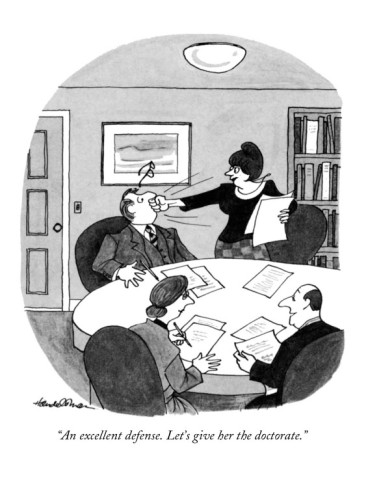
Hot on Roberto’s heels, and the third of us to achieve doctorhood since the inception of The Disorder Of Things, our very own Meera today survived the critical questioning of Robbie Shilliam and Christopher Cramer. She is henceforth Dr Sabaratnam, certified by virtue of her thesis: Re-Thinking the Liberal Peace: Anti-Colonial Thought and Post-War Intervention in Mozambique. For the record, I’m assured that any violence inflicted was purely intellectual.