Deciphering ‘The International’ in History and Theory

The final post in our symposium in our symposium on Alex Anievas’ Capital, the State, and War: Class Conflict and Geopolitics in Thirty Years’ Crisis, 1914-1945, in which Alex himself replies to his critics and interlocutors.


It brings me great pleasure to be invited to respond to such thoughtful and challenging critiques of my book Capital, the State, and War (CSW). On the (meta-)theoretical front, Mark Rupert and Kamran Matin question my use of uneven and combined development (UCD) as a transhistorical ‘general abstraction’ to be incorporated into a historical materialist framework. On the more historical/historiographical front, Campbell Craig challenges my interpretation of Woodrow Wilson’s foreign policies during and after the First World War, arguing that I rely too heavily on the extant historiographical literature, specifically N. Gordon Levin’s 1968 New Left ‘revisionist’ critique Woodrow Wilson and World Politics. Craig further criticizes my theoretical approach for being overly structuralist and consequently ‘devoid of agency or praexeology’, while pushing me to consider the relevance of UCD to contemporary world politics.

While disagreeing with some of my interlocutors interpretations of what I was trying to do in CSW, it is a breath of fresh air that they have all offered substantive engagements with my work in ways dealing with genuine theoretical disagreements; though, as I hope to demonstrate, in the case of Matin and possibly Rupert, these theoretical disagreements may be less serious than they first appear. So I would be remiss not to express my deep gratitude to Rupert, Matin and Craig for their highly stimulating critiques. In what follows, I engage with the precise standing of UCD and ‘general abstractions’ in filling out of a distinctly historical materialist theory of ‘the international’ before turning to the more specific historical-theoretical issues raised by Craig.

I. Method, Abstraction and Historicity in Marxist Theory

While being ‘largely convinced’ by the ‘relational, historical, and dialectical conceptual apparatus’ I deploy in explaining the interstate conflicts of the Thirty Years’ Crisis of 1914-1945, Rupert remains sceptical of my conceptualization of UCD as a ‘general abstraction’. He raises the question: “In a world where a great deal of epistemological and actual violence is done by universalizing abstractions, why create another as the basis for a theory whose basic impulse is de-reification, re-contextualization, and re-historicization in the interest of opening potentially emancipatory horizons?”. As such, Rupert is ‘unpersuaded’ by my argument that UCD is best understood as a transhistorical phenomenon which can be employed as a ‘general abstraction’.

Kamran Matin, by contrast, argues that I have not realized the full potentials of deploying UCD as a transhistorical abstraction, Continue reading

Capital, the State, and War: Reflections of a Codger

A guest post from Mark Rupert, the second reply in our symposium discussing Alex Anievas’ Capital, the State, and War: Class Conflict and Geopolitics in Thirty Years’ Crisis, 1914-1945. Mark is Professor of Political Science at Syracuse University and the author of three books: Producing Hegemony: The Politics of Mass Production and American Global Power (1995), Ideologies of Globalization: Contending Visions of a New World Order (2000) and Globalization and International Political Economy (2006, with Scott Solomon). His recent papers focus principally on the politics of the far right.


I’ve been following Alex Anievas’ project for a while. Now that it’s come to fruition in this book, I find myself both delighted and saddened. I’m delighted to see that Alex has produced such a superb book, perhaps as close as any I’ve seen to realizing the potential of an historical materialist approach to IR. I’m also saddened that the book arrives in an intellectual context – some thirty years after the project of critical IR was launched – in which critical approaches to IR-IPE have been largely neutered or marginalized, at least in the US academic community where I work. I congratulate Alex on his achievement. I thank him for all I have learned from his work. But I fear that the role of IR theory as ideology, and the sociology of knowledge so powerfully operative within the still-dominant US wing of the profession, mean that this book might have the ability to convince but it will not win (if I may appropriate and invert the courageous words of Miguel de Unamuno).

This book takes direct aim at the very foundations of IR theory, laid down in attempts to understand the great crises of the early twentieth century. Much of our intellectual discipline, as well as the 20th century world, was constructed in this epic conjuncture. Deploying a theory of uneven and combined development, Alex re-narrates it well. The intersection of various temporalities of capitalist development – the “whip of external necessity,” the “privilege of historical backwardness,” and the “contradictions of sociological amalgamation” – play crucial roles in his analyses of 1914, Wilsonian statecraft, the rise of Nazi Germany, and the so-called policy of “appeasement”. His command of the relevant bodies of scholarship is deeply impressive (the bibliography alone would make this book worth buying). And at the end of the book I find myself largely convinced that this formative era cannot be understood without a relational, historical, and dialectical conceptual apparatus such as the one Alex deploys, and that a quest for parsimonious covering laws based on hyper-abstracted “levels of analysis” is an analytical trap that has radically decontextualized and dehistoricized prevailing modes of IR scholarship.

Continue reading

Capital, The State and War: Rethinking the Geopolitics of Capitalist Modernity in the Era of the Two World Wars

A guest post from Alex Anievas to inaugurate a brief symposium on his book anievasCapital, the State, and War: Class Conflict and Geopolitics in Thirty Years’ Crisis, 1914-1945 (Michigan University Press, 2014), which will unfold over the next few days. Alex is a Leverhume Early Career Researcher at the Department of Politics and International Studies at the University of Cambridge. He is editor or co-editor of numerous books (including Race and Racism in International Relations and The Longue Durée of the Far-Right, both of which have previously previewed at The Disorder). His work has also appeared in the European Journal of International Relations, the Cambridge Review of International Affairs, Millennium and the Review of International Studies.

The manuscript that would become Capital, the State, and War: Class Conflicts and Geopolitics in the Thirty Years’ Crisis, 1914-1945 developed, like so many first books, out of my PhD thesis[1] In its final form, Capital, the State, and War endeavours to offer nothing less than a systematic and radical reinterpretation and historical sociological reconceptualisation of some of the main geopolitical and socioeconomic fault-lines of the 1914-1945 period. It does so through the theoretical prism of uneven and combined development, demonstrating in the process the various problems with extant historiographical interpretations and IR theorisations of this crucial epoch in the development and remaking of modern world politics. But given the rather substantial differences between what I had originally envisioned the PhD thesis to be and what it became, it’s worth briefly discussing the origins of the project and how it changed in the process of researching and writing it.

I. Origins

My PhD project was originally conceived as an intervention into the contemporary debates on the ‘resurgence’ of US imperialism in the wake of the wars in Afghanistan and Iraq – very much a radicalising moment in my own intellectual and political trajectory – and the concomitant return to Marxist theories of imperialism and empire. My aim then was to essentially rethink and ‘update’ the classical Marxist theories of imperialism and, in particular, Lenin and Bukharin’s theory of inter-imperial rivalry which, whatever its faults, still captured an essential aspect of contemporary imperialism. I was then heavily influenced by a number recent Marxist works on imperialism, particularly David Harvey’s 2003 The New Imperialism (along with his earlier, more theoretically sophisticated The Limits to Capital) and Alex Callinicos’ The New Mandarins of American Power.

Both studies, in their different ways, sought to retain the fundamental insights of the classical Marxist theories of imperialism (e.g. the persistence of historically-differentiated forms of inter-imperial rivalries rooted within the inherently competitive dynamics of capital accumulation), whilst dispensing with their more economically determinist and instrumentalist features. They did so, in particular, by reconceptualising imperialism as the intersection of two analytically distinct, but historically interconnected, ‘capitalist’ and ‘territorial’ logics of economic and geopolitical competition. While critical of certain aspects of this kind of approach – particularly, Harvey and Callinicos’ relatively undigested incorporation of a ‘proto-realist’ conception of ‘the international’ – my initial thought was that, if rooted in a stronger conception of the spatio-temporal dynamics of capitalist development and expansion that produced the somewhat porous but nonetheless identifiable ‘territorial logic of power’ – regionality – inherently arising out of the processes of capital accumulation in space and time, this perspective could provide a more adequate historical materialist theory of geopolitics.[2] At this stage in the development of the project, this is how I originally envisaged the role of Trotsky’s concept of ‘uneven and combined development’ – a kind of supplementary theory that could be employed in capturing the spatio-temporal dynamics of capitalist development in reconstructing a modified Marxist theory of imperialism. Add in a more attentive focus to the relations between capitalists and state managers and the role of ideology in structuring foreign policymaking processes and I thought this would do.

Continue reading

Landlessness and the Life of Seamen

This post is Part 3 in a series of dispatches posted from a 130, 000 ton container ship. More here.


OLYMPUS DIGITAL CAMERA

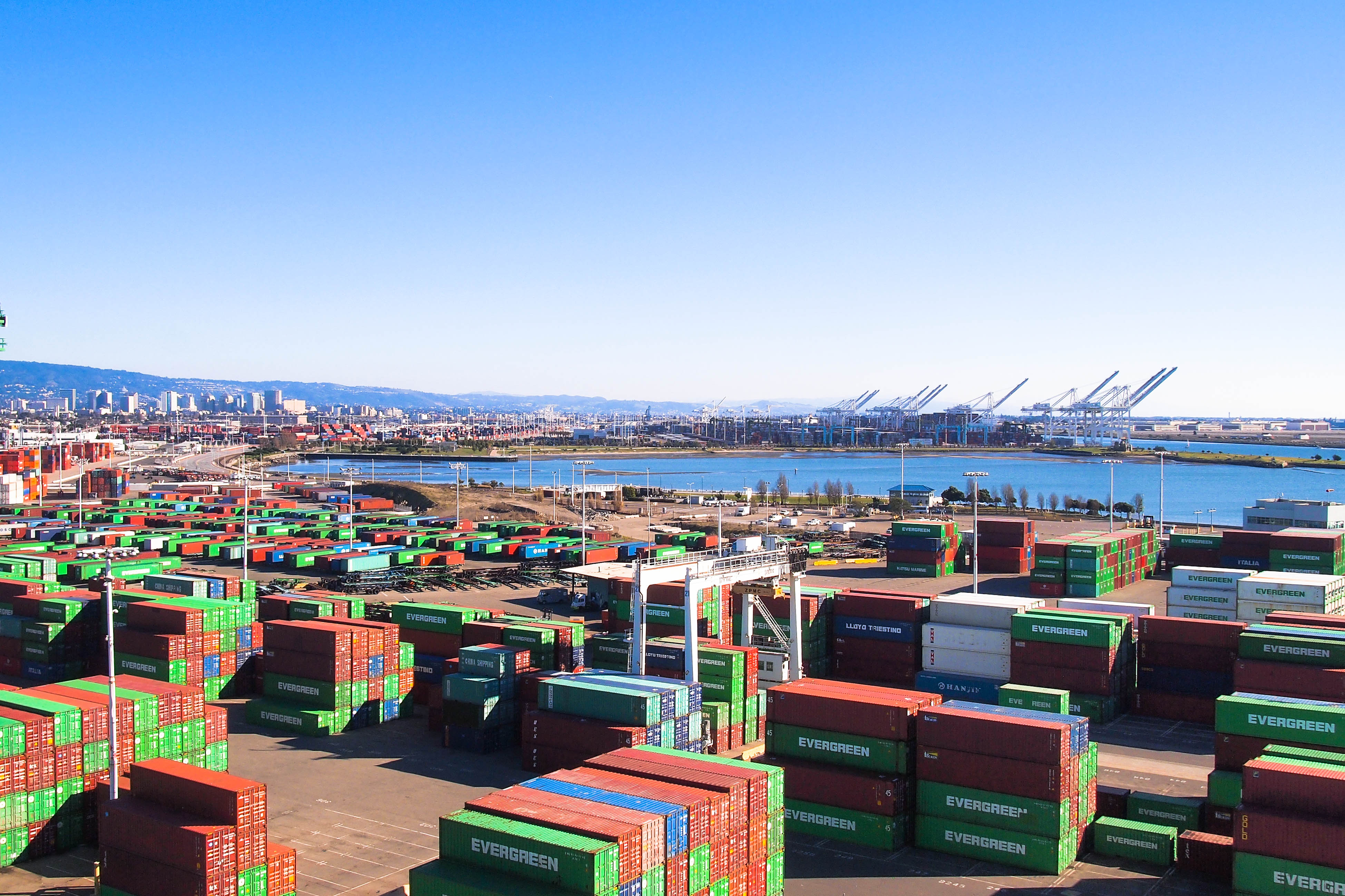
The bow of the ship is the only place on the Ever Cthulhu that affords a modicum of silence. To get there, you walk down the length of the narrow grey deck, flanked on one side by containers crowded into towering stacks that scrape and creak against each other as the ship cuts through the waves, and on the other by the powerful sweep of a wind so strong that you have to fight not to be blown backwards. At the foremost tip of the ship, you climb a few steps onto a large open deck painted grey and surrounded by giant chains and fat coils of synthetic rope, and suddenly, the mechanical roar of the ship falls away.

Having finally wended our way out of the US ports, the Ever Cthulhu has been traveling across the massive pacific ocean for more than a week now. Yesterday, we cleared the frigid Kamchatka Peninsula. The snow and ice beating against the ship for the past week has melted away, and the deck crew that has been trapped inside cleaning the walls and floors of the accommodations are now back to work on the endless task of the seaman: fighting against perpetual rust. “You know Sissyphus?”, The captain asks one day as we take a walk around the deck. “Working on a ship, it’s like that. You are fighting forever against the saltwater eating away at your vessel. The biggest enemy of the ship is not pirates, it’s corrosion.” Today, the ship has been awash in the sounds of grinding, scraping, hammering and drilling, scraping rust off and painting over it in an endless cycle that repeats itself every two months. All of this is set to the background soundtrack of an endlessly roaring engine that suffuses the air and shakes the accommodations with a throbbing, pulsating, machinic hum.

But on the bow, penned in from the wind and rage by the Ever Cthulhu’s bulwark, you can look outward onto an endless, unbroken horizon of ocean in near quiet, and almost think that the ship is barely moving. A quick step up onto a grilled ladder quickly dismisses this fantasy of a softly drifting ship: peering over the edge of the ship’s prow towards the churning waters below reveals the ship’s bulberous bow, a 1,000 ton snout-like protrusion of pure aerodynamic steel that cuts through the ocean, almost heaving the liquid blue upwards before pushing it back powerfully against the hull, where the waves churn themselves into a cerulean blue froth and then crest outwards in a diagonal wake. I can’t judge how far we are from the ocean’s surface, so I spit into the sea – crude, really – and count the seconds it takes to hit the waves. Seven. By the time it reaches the sea below, my ball of spit has already flown several meters behind me. We are forging ahead at a speed (18 knots per hour) beyond my bodily comprehension of motion. When you are surrounded by nothing but this limitless, shifting, liquid expanse, stretching in all directions for days before hitting land, all distance becomes incalculable.

Continue reading

The Quiet Port is Logistics’ Nightmare

Dispatch #2 from Charmaine’s ethnography of a container ship comes to us from the port of Tacoma, where the ship is currently experiencing severe delays. Continue to follow the Ever Cthulhu with the tag ‘Slow Boat to China’.


Source: author

Source: author

It is 3am on a Wednesday when we pick up the Port Angeles pilot who will take the ship through the Puget Sound. All day, we have been sailing through a fog that has hung so thickly around the ship that it has seemed we are drifting through clouds. The fog has delayed our pilot by four hours: sailing through the Puget Sound’s narrow channel is already a formidable task, made Herculean by the fact that no one can see past the ship’s nose. Take that, multiply it by the fact that the port of Tacoma is situated in a tight bottleneck of an inlet, that an unusual volume of vessels are docked in anchorages clogging passage to the port, and that the captain is being hounded by the charterer to get us to berth on time, and you get the shipper’s molotov cocktail. Short of risking navigating by radar, avoiding ships via yellow blips on a screen, waiting the fog out is the best option. At dinner, the captain sighs. “Fog, congestion, work slowdowns: at this rate, we will never get to China.”

There is a massive traffic jam on the ocean, and the Ever Cthulhu is stuck in the thick of it. Already, we have been delayed for almost two weeks: the ship stayed for five days longer than the forecasted two in both Oakland and Los Angeles, and is expected to be in Tacoma for ten. Regularity, it turns out, can no longer be expected in the logistics industry, and my 26-day trip on the Ever Cthulhu is turning into a 40-day one. All along the West Coast, ports and berths have been choked with vessels in every terminal, and waiting ships have crowded into anchorages for days in far higher numbers than the captain has ever seen. Imagine the ripple effects of all this congestion: if a single ship takes six days longer than the usual 2.5 to be unloaded at berth, and ships that have been waiting experience those same delays when their turn at berth arrives, those backlogs reverberate outward in unfathomable ways, affecting ships’ travel times to other ports around the world, trucking rates inland, air freight pricing, rail service delays across the U.S., and the availability of empty containers in China.

The reasons for this coast-wide congestion are unclear. In July, when the current International Longshore and Warehouse Union (ILWU) contract ran out, more than 70 multinational maritime companies and ocean carriers represented by the Pacific Maritime Association (PMA) began to negotiate a new contract with the ILWU for the 29 U.S. West Coast ports in its jurisdiction. The process soon turned ugly. The PMA blamed the increasing port congestion on an organised work slowdown by the union, alleging that the ILWU was deliberately not dispatching enough gangs to the waterfront. The union vehemently denied this, and countered that the PMA was deliberately mounting a smear campaign against them by cutting the number of workers at terminals and cancelling critical night shifts that would speed the cargo operations. The media, of course, lapped this all up, blaming rotten agricultural productions, anchored ships, and delayed shipment arrivals on the ILWU, one outlet going so far as to ask whether longshoremen were “spoiling Christmas”.

Continue reading

The Slow Boat to China

The following post is the first in a series of oceanic dispatches from Disorder member Charmaine Chua. She is currently on a 46-day journey on board a 100,000 ton Evergreen container ship starting in Los Angeles, going across the Pacific Ocean and ending in Taipei. Follow her ethnographic adventures with the tag ‘Slow Boat to China’.


“In civilizations without boats, dreams dry up, espionage takes the place of adventure, and the police take the place of pirates.”

– Foucault, Of Other Spaces

cc_EPL2_IMG_0666

Source: Author

There is uncanny beauty in the monstrous. This, at least, is the feeling that seizes me as I stand under the colossal Ever Cthulhu[1] berthed in the Port of Los Angeles. The ship’s hull alone rises eight stories into the air; even from a distance, I am unable to capture its full length or height within a single camera frame. In describing the ship to my friends and my family, I have sought to make adequate comparisons between its size and more familiar objects: The Ever Cthulhu is 333 meters (1,100 ft) long, 43 meters (141 ft) across, and 70 meters (230 ft) high. It is taller than an eighteen-story building, the Arc De Triomphe, or Niagara Falls. It as long as a line of seventy cars, the Eiffel Tower tipped on its side, two Roman Colosseums, four New York City blocks, or six and half White Houses. I’ve had a lot of practice picturing this ship. Even so, when I am finally at the foot of its immense mass, I can scarcely believe that this monstrosity will be my home for the next 36 days.

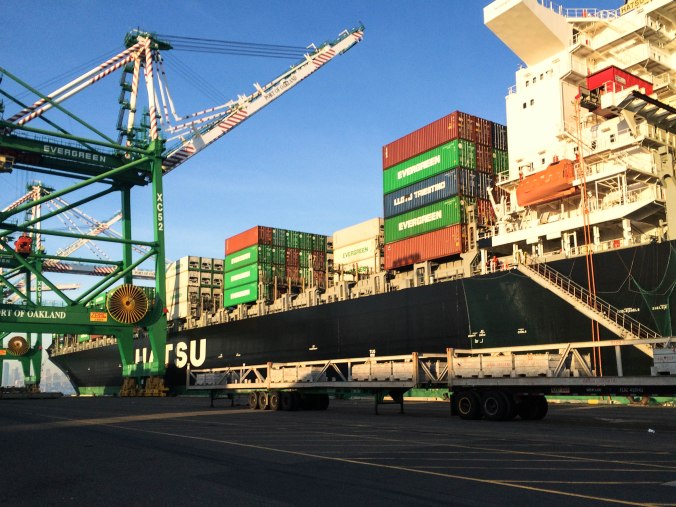
I have entered the port’s gateway with very little fuss. As a Singaporean who has lived in the US for the last ten years, I am well acquainted with long lines, laborious checkpoints, and stern homeland security agents who scrutinize my passport with wary questions. This time, I banter with two female security guards at the Evergreen terminal in the port of Los Angeles whose only suspicion is why anyone would want to take the journey I’m on, and board a shuttle bus that drives down a lane flanked by multi-colored containers stacked four high and scores deep, forming long passages along which trucks and cranes stop to pick up their loads. We pass forklifts, spreaders, and trucks with empty chassis, which sweep past in well-oiled synchrony. Less than a 2-minute drive later, I am deposited at the foot of the ship, and I still haven’t shown anyone a passport. Staring up at the vessel, feeling dwarfed by the legs of the gantry cranes that loom far above us, I am directed to a steep and narrow metal gangway ascending seven stories to the deck – the only connection between the ship and land – which shakes and bounces as I drag my suitcase up its 59 steps.

Continue reading

The Politics of the UK HE Marking Boycott

Academics in pre-1992 universities who are members of the University and College Union (UCU) will tomorrow be commencing a marking boycott in response to a planned attack by employers on our USS pension scheme.

By any reasonable measure, and despite losses suffered during the global financial crisis (GFC), USS is in good financial health, persistently taking in much more in contributions than it pays out to retirees. However, the arbitrary valuation method favoured by the UK Pensions Regulator – which has an interest in a highly conservative approach, to avoid employers running schemes down then leaving the regulator to carry the can – perversely shows the scheme in deficit. The ridiculous nature of the assumptions behind this valuation have been well explained elsewhere, as has the mendacity of Universities UK, the employers’ association, in using data misleadingly. Put simply, the claim that USS is unsustainable is based on the scenario of all contributing universities simultaneously ceasing to pay into the scheme, e.g. as a result of bankruptcy. By any reasonable measure, the scheme is not in serious difficulty in the short to medium term. Nonetheless, the employers have seized on the valuation to demand radical changes to USS, which will result in a cut in pensions of up to 27%. This follows changes imposed by the employers in 2011, which closed the final salary scheme to new entrants, put new staff onto a vastly inferior ‘career average’ scheme (which was even worse than the Teachers Pension Scheme (TPS), which is used in secondary, further and post-1992 higher education institutions), and shifted the burden of contributions from the employers to employees. It also follows years of minimal or zero pay increases, such that in the years since 2009, real pay has fallen by about 13% nationally and 17% in London.

Given this context, it is obvious that employers are seizing the opportunity of the perverse USS valuation to further cut staff costs. Insofar as the scheme faces difficulties because of the GFC, this represents yet another shunting of the costs inflicted by hyper-capitalism onto workers. And insofar as universities are trying to cut staff costs because of vast reductions in the public subsidy to higher education, it represents yet another indirect effect of austerity, which is again about socialising the costs of bailing out Britain’s financial institutions.

At stake in this industrial action is not just the fate of our pensions, but of our trade union. The marking boycott is just the latest in a recurrent spate of industrial action over pay and conditions, including on pensions in 2011 and pay in 2013/14. This time around, 78% voted for strike action and 87% for action short of a strike, on a 45% turnout – the highest since UCU’s formation in 2006, though still disappointingly low, given the stakes. However, each period of industrial strife was  botched by UCU’s national leadership, leaving the union progressively weaker. The earlier action on pensions was lost: despite some minor concessions from employers, they successfully rammed through changes to USS. The UCU Left grouping rightly warned that accepting this would only encourage the employers to come back for more later – as they are now doing. On pay, UCU itself declared that the principle of national collective bargaining – the union’s main raison d’etre – was at risk: UCU’s rejection of miserly annual pay offers had repeatedly been ignored, and employers were increasingly departing from the national pay scale and trying to tempt UCU branches into local-level settlements.

Yet, a comprehensive strategy on escalating industrial action, democratically determined by the union’s Higher Education conference, was simply ignored by the leadership. Continue reading

Post-Capitalism Will Be Post-Industrial

[Text of a short talk presented at Socialism and Deindustrialisation event put on by Spring. See Michael Roberts’ write-up of his talk here.]

“In fact, the realm of freedom actually begins only where labour which is determined by necessity and mundane considerations ceases; thus in the very nature of things it lies beyond the sphere of actual material production.”

-Karl Marx

I want to argue today that only deindustrialisation can lead us beyond capitalism, or in other words, that post-capitalism will necessarily be post-industrial. [1] This means that rather than bemoan the loss of manufacturing jobs, or struggle to lure them back, deindustrialisation should instead be applauded as an important and irreversible achievement. Historically speaking, it is akin to the move away from agriculture-based economies. Just as the mechanisation of agriculture freed people from reliance on working the land, the deindustrialisation process has the potential to free people from the drudgery of most productive work. Yet an immediate consequence of claiming that deindustrialisation is necessary for post-capitalism means we must reimagine what the transition between economies might be like.

The traditional story of moving beyond capitalism is fairly straightforward. To be sure, this story has been complicated and critiqued throughout the 20th century, yet its general framework still underpins a number of assumptions about how to transcend capitalism. In broad strokes, the story begins with a shift away from agriculture-based economy which had been built around a large peasantry. In its place emerges rapid industrialisation – exemplified by the textile, steel, and eventually automobile industries in the 19th and 20th centuries. The social effects of this industrialisation were particularly important for understanding how post-capitalism was supposed to come about. Industrialisation involved a move from rural populations to increasing urban populations, along with a transformation of the peasantry into the proletariat, involving primitive accumulation and the dispossession of common land. The result of this was a new urban working class who had only their labour power to sell. But this transition also led to the development of a strong working class. Factories meant that workers were increasingly centralised in the workplace – they worked together, creating social connections and community. Moreover, the tendencies of capitalism were supposed to increasingly homogenise the working class. The result of all this was that the working class came to share the same material interests – things like better working conditions, higher wages, and shorter working weeks. In other words, with industrialisation there was the material basis for a strong working class identity. (It’s worth noting here, that despite this material basis, the industrial working class was always a minority of the working population. Even at the height of manufacturing in the most industrialised countries, employment in manufacturing only involved about 40% of the population.[2]) On the basis of their political strength though, the working class was supposed to become the vanguard of the population, leading us away from capitalism and towards something better. With the growing power of the working class, and the socialisation of production, it was thought that workers could simply take over the means of production and run them democratically and for the greater good.

Of course, this didn’t happen, and the best example we have of this proposal was the miserable Soviet experience. What occurred in that experiment was a glorification of productivity at the expense of freedom. Just as in capitalist societies, work was the ultimate imperative, and it was no surprise to see Taylorism, Fordism, and other productivity-enhancing techniques being forced upon the workers of the USSR. In the capitalist countries, by contrast, the industrial sectors declined and the basis for a strong working class has been systematically attacked. Yet if we look at developing countries, the traditional story finds little traction as well. Even developing countries are increasingly deindustrialised. This can be seen in two broad facts: first, newly industrialising economies are not industrialising to the same degree as past economies (measured in terms of manufacturing employment as percentage of population). Rather than 30-40% employment, the numbers are closer to 15-20%. Secondly, these economies are also reaching the point of deindustrialisation at a quicker pace. Measured in terms of per capita income levels, these economies reach their peak industrialisation at a much earlier point than previous countries did.[3] This is the so-called problem of “premature deindustrialisation”. The conclusion to draw from the experience of the 20th century is that the promise of the traditional narrative – the industrial working class leading a revolution to democratic control over the means of production – has not been fulfilled and seems to now be obsolete. We no longer live in an industrial world, and classic images of the transition to socialism need to be updated.

Deindustrialisation

So what is the alternative? Continue reading

The Far-Right: Pathology of Capital

A guest post from Rick Saull, who is Senior Lecturer in International Politics at Queen Mary, University of London. He has written on a range of topics from the international relations of revolutions to the Cold War and the geopolitical consequences of the 2008 global economic crisis. More recently he has focused on the international political dimensions of the far-right, co-editing The Longue Durée of the Far-Right (Routledge, 2014) which has just been published, and on which this post draws. He can be contacted here.


The politics of the far-right are unlikely to disappear any time soon. Unlike its historical foe on the left – social democratic or otherwise – which has continued to be characterised by a combination of disintegration and disorientation as it continues to implement neoliberalism, the far-right persists through exercising a toxic but powerful influence on political debate across mature capitalist democracies (and beyond). How are we to make sense of the persistence of the far-right and explain its recent reinvigoration? What analytical framework offers the best, way of explaining the distinct trajectories of far-right currents of politics across different historical periods? This blog post will try to address these questions through outlining an understanding of the contemporary far-right as a pathology of capital best explained through a framework based on an international historical sociology (IHS). Before I do that it makes sense to mention what the main alternative frameworks on the far-right tells us.

The academic discussion of the far-right is dominated by approaches grounded within the mainstream assumptions of bourgeois social science. Thus, it is the methodological nationalism of comparative politics combined with the literature on the history of ideas that are intellectually hegemonic. In the former, the far-right is assessed and compared across different states according to a quantitative grid of electoral performance, voter shares, opinion poll data and definitional attributes centred on ‘Europhobia’, anti-immigration hysteria and ‘welfare nativism’. In the latter, the fetish of definitional taxonomies prevails through the gradations of ‘neo-fascism’, the ‘extreme’, ‘far’, ‘radical’, populist’ and/or ‘reactionary’ right that are dissected via an examination of speeches and pronouncements to gauge the ideological coherence of said party or movement usually related to the core criteria of fascism.

This has resulted in an endless search for an ‘objective’ or ‘minimal’ definition of the far-right – an academic cottage industry in itself – which serves to freeze and simplify the far-right instead of viewing it as an evolving socio-political movement. Further, in spite of the need to treat ideas seriously it has resulted in analytical contortions to the effect that the far-right – in its fascist incarnation at least – can be seen as ‘revolutionary’ phenomena comparable to communism. This can be seen in the way in which the doyens of political science in organizations such as the ‘Extremism and Democracy’ Standing Group of the European Consortium on Political Research appear to mimic the assumptions of Cold War liberalism’s use of the concept of ‘totalitarianism’ by treating the ‘extremist threats to democracy’ from the far-left and far-right as part of the same analytical exercise thus blurring their distinct and antagonist dynamics.

Continue reading

The Marking Boycott And Its Aftermath

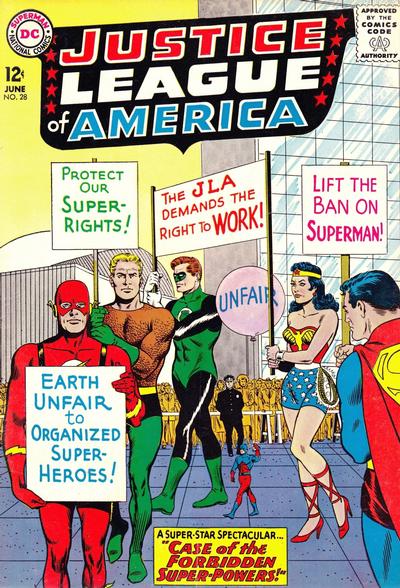
Justice League Super Hero Strike

In the face of a UK higher education marking boycott due to start in 11 days time, universities have come forth with a new pay offer. Having unilaterally imposed a 1% rise (read: real terms cut) for 2013/14, they are now proposing 2% for 2014/15, with a small bonus for those on the lowest band to bring them up to a living wage level (at Sussex, that’s an increase on the existing annual pay of £13,621). A consultative ballot is open to union members, and the boycott is delayed. It seems likely that there will be appetite for the deal, given the general tone of despondency and how drained staff are by repeated small scale actions and by mounting work pressures. There had, after all, been doubts that a boycott could compete with aggressive tactics from management (including threats to deduct full pay from anyone who participated in the boycott).

We might be emboldened by this concession from UCEA (the employers’ association). It shows, as more ‘militant’ elements had predicted, that greater returns would be achieved with the threat of a marking boycott than with all the 2-hour and single day strikes put together.[1] A first offer, before the boycott has even begun. Could we not win more than these peanuts (only just a real terms increase, following five cuts in a row, going by Consumer Price Index)?

Sort of.

Continue reading