The Offshore World

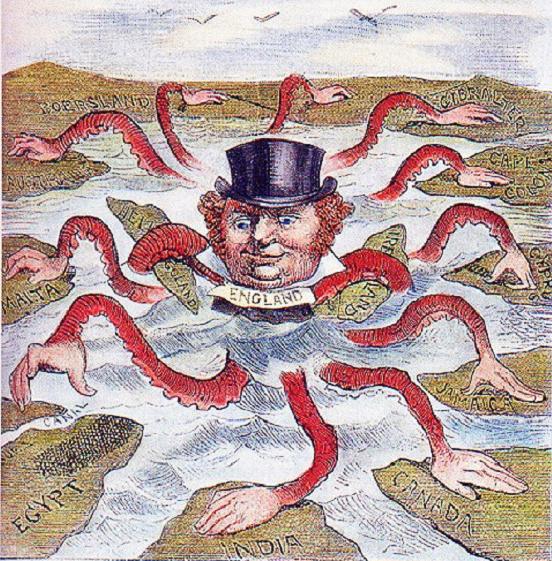
In amongst a typically judicious review of Treasure Islands and Winner-Take-All Politics, David Runciman draws a suggestive comparison between the contemporary politics of financial ‘mobility’ and the legacy of colonialism.

Shaxson’s book explains how and why London became the centre of what he calls a ‘spider’s web’ of offshore activities (and in the process such a comfortable home for the likes of Saif Gaddafi). It is because offshore is the offshoot of an empire in decline. It perfectly suited a country with the appearance of grandeur and traditionally high standards, but underneath it all a reek of desperation and the pressing need for more cash.

As Shaxson shows, many of the world’s most successful tax havens are former or current British imperial outposts…What such places offer are limited or non-existent tax regimes, extremely lax regulation, weak local politics, but plenty of the trappings of respectability and democratic accountability. Depositors are happiest putting their money in locations that have the feel of a major jurisdiction like Britain without actually being subject to British rules and regulations (or British tax rates)…

…The other thing most of these places have in common is that they are islands. Islands make good tax havens, and not simply because they can cut themselves off from the demands of mainland politics. It is also because they are often tight-knit communities, in which everyone knows what’s going on but no one wants to speak out for fear of ostracism. These ‘goldfish bowls’, as Shaxson calls them, suit the offshore mindset, because they are seemingly transparent: you can see all the way through – it’s just that when you look there’s nothing there.

In some senses this confirms an established story. Imperialism 101. For others, it will unsettle the idea of globalisation and inter-dependence as essentially the negation of great power politics.

Continue reading

The Qaddafi Controversy

Saif Gaddafi (PhD, LSE, 2008) has lost a lot of friends recently. Even Mariah Carey is embarrassed by him now. The institution to which I have some personal and professional attachment is implicated in a number of intellectual crimes and misdemeanours, as may be a swathe of research on democracy itself. Investigations are under way, by bodies both official and unofficial. All of this now feels faintly old-hat (how much has happened in the last month?), even rather distasteful given the high politics and national destinies currently in the balance. So let the defence be pre-emptive: the academy has political uses, and those with some stake in it need feel no shame in discussing that. If crises are to be opportunities, let us at least attempt to respond to them with clarity and coherence. After all, our efforts are much more likely to matter here than in self-serving postures as the shapers of global destiny.

Saif’s academic predicament is both a substantive issue in its own right and a symptom. As substance, there is now a conversation of sorts around complicity and blame. Over the last weeks, David Held has appealed for calm and attempted a fuller justification of his mentorship (Held was not the thesis supervisor and Saif was not even a research student in his Department at the time, although he, um, “met with him every two or three months, sometimes more frequently, as I would with any PhD student who came to me for advice”). Most fundamentally, it was not naivety but a cautious realism based on material evidence that led a pre-eminent theorist of democracy to enter into what we could not unreasonably call ‘constructive engagement’. [1]

Held characterises the resistance of Fred Halliday to all this as reflecting his view that “in essence, [Saif] was always just a Gaddafi”, which of course makes him sound like someone in thrall to a geneticist theory of dictatorship. The actual objection was somewhat more measured, and, if only ‘in retrospect’, entirely astute:

Continue reading

The AHRC Writes Back (Kind Of)

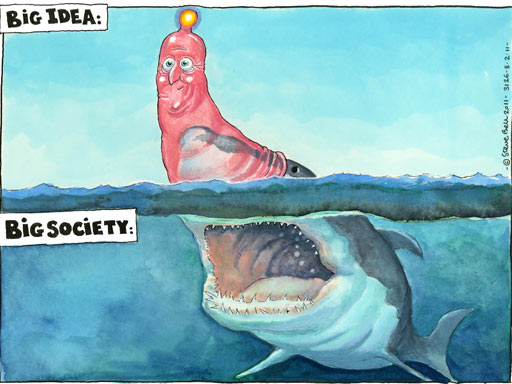
Today the Arts & Humanities Research Council responded to yesterday’s piece in The Observer claiming that the government had readjusted the rules (specifically The Haldane Principle) to increase their control over the direction of research in the UK within the state’s ‘national priorities’. Shorter version: the Tories didn’t pressure us, we’re completely independent and the funding to ‘The Big Society’ is coincedental.

Iain Pears is on the case. As he notes, it’s simply not convincing that the approved language suddenly appeared in the relevant documents unconnected with the political agenda of the governing party. The pressure may have been implicit, and the relationship might have been more informal and complicit than hierarchical, but the consequences for research are much the same.

But the AHRC not only wants to defend itself from these specific charges but also to maintain the legitimacy of the government setting overall priorities. Once again, the exact mechanics are expected to be taken on trust. Indeed, in 2009 a Commons Select Committee (Innovation,  Universities, Science and Skills, since you asked) addressed this exact point. While agreeing ‘in theory’ that the government had a role in setting overarching strategy, the relevant MPs (hardly a selection of Parliamentary rebels) put their collective figure on the aspects of policy that still concern us most:

Continue reading

The Meaning of David Willetts: The Future University Between State & Market

One of the principle battle-cries of the education movement has been that the coalition’s plans amount to a privatisation of the university system. This conclusion is arrived at by a focus on the withdrawal of teaching funding and the increased role given to ‘good relations’ with the private sector. These criticisms stand, but they repeat a common misunderstanding of the neo-liberal project as merely removing the state (call it the laissez-faire fallacy), rather than reorientating the state in a particular way to benefit certain sections and classes of society. The government is obviously complicit in promoting such tropes, which reinforce its narrative of supporting the grassroots and entrepreneurs and civil society and volunteers and champagne and candy for everyone. Hence their frankly playgroup standards of messaging. The Big Society is yellow and smiley-face! The Big Government is red and angry-sad-face!

But we now learn that the government has settled on a rather interventionist approach to all the lovely knowledge we are tasked to produce. ‘Two-minds’ Willetts has decided that the Arts & Humanities Research Council will be allowed to distribute £100 million in research monies each year, but only on condition that it accepts a ‘revision’ of the Haldane Principle (“that decisions on individual research proposals are best taken by researchers themselves through peer review”) and so spends a ‘significant’ amount of that money on research into the Big Society. Under the new ‘understanding’, the government continues to ‘value’ and ‘recognise’ the importance of academic independence, but wishes only to propose the merest of commonsensical adjustments:

At the other end of the spectrum there are decisions that ultimately must be for Ministers, albeit informed by external advice; these include the overall size of the funding for science and research and its distribution between the Research Councils, the National Academies and Higher Education research funding. In addition, every Government will have some key national strategic priorities such as addressing the challenges of an ageing population, energy supply or climate change. The research base has an important role to play in addressing such priorities and the Research Councils, with the support of independent advice, have proposed research programmes to tackle them. It is also appropriate for Ministers to ask Research Councils to consider how best they can contribute to these priorities, without crowding out other areas of their missions. But it is for the Research Councils to decide on the specific projects and people to fund within these priorities, free from Ministerial interference. Similarly, Ministers have a legitimate role in decisions that involve long term and large scale commitments of national significance.

The overall mood is civil-service vague, but elements of the language are importantly precise. Continue reading

Beware the Academic Troll-Master!

But I see motivating students, passing on enthusiasm, as the first and most important task of a teacher. (Which isn’t to say that one has to blindly encourage everything a student says or writes; far from it.) That’s why I would say that one of the most despicable figures in the academic bestiary is the Troll-Master: the figure who feeds on the crushed enthusiasm of belittled students. The easiest way to win a cheap kind of respect is by adopting a nothing-can-impress-me hyper-critical stance, doused in cool weltweltschmerz, finding fault everywhere, handing out praise and encouragement only very rarely; it’s a transparent tactic, but one that works surprisingly well, and not only on jejune students, but also on very accomplished people, even those who have written a number of books. Often, the Troll-Master’s own intellectual project will be mediocre and/or suspended – it’s clear that all their libidinal energy is tied up in enslaving students into neurotic servitude. Troll-Masters can permanently insinuate themselves into students’ heads, but usually their power depends upon the hothouse claustrophobia of the university department – they are village despots, whose charismatic tyranny seldom works outside their own turf. If they have a long-term effect, it is only to produce more grey vampires.

K-Punk, ‘Break Through in Grey Lair’

One temptation is the patronizing attempt to over-identify with the imperative “not to learn” supposedly possessed by students. We could call this the “slacker” temptation – of course all students want to do is smoke dope and play Playstation! This model of teaching presupposes two intellectual classes: those who (contingently) want to learn (the lecturer him- or herself) and those who do not (most students, and by extension, most everybody). This approach is a kind of mastery, disavowed in this case and all the more pernicious for it – I know enough to tell you that you do not need to know. It is the supercilious attitude of the newspaper columnist who chucks in references to Marx, postmodernism, etc. before airily informing the less-informed reader that he or she doesn’t need to bother finding out anything about them for him- or herself. Equality of intelligence is here smothered by the laziness, not of the students, but of the teacher, who churns out information without really believing that the audience will be interested in receiving it. As Rancière puts it, “explication is the work of laziness”. The fear masked here, both by assuming student apathy and by preserving the knowledge you yourself possess, is the idea that actually there is nothing “special” about your capacity to learn…

…We must acknowledge a changed landscape: not exclusion, straightforwardly, but a peculiar form of staggered expansion. The supposedly elite institutions are still there at the top, the old-boys and girls networks still churning out elite fodder for the same kinds of jobs – politics, diplomacy, high-end culture industry work, etc. At the same time, the expansion of higher education and the re-branding of ex-Polytechnics as universities in the UK has created a situation in which no one need be excluded. It is no longer a question of keeping them out, but of ensuring they go where they are supposed to. A further change comes at the economic level. As noted, fees have created a kind of split-subject of the university: the “client” who pays for a service and yet is still a subject “supposed to be criticized” or even failed. Endless feedback forms, along the lines of customer satisfaction surveys, entail that students are supposed to know how well that which they don’t yet know is being conveyed.

Nina Power, ‘Axiomatic Equality: Rancière and the Politics of Contemporary Education’

The University, Limited.

The double assault of the Browne Report and Wednesday’s Comprehensive Spending Review have understandably led to despair and anger among academics in the humanities and social sciences. The reasons are manifold: the apparent belief by Cable and Willetts that only science matters, an insidious privatisation of public institutions, further debt for those least able to pay, massive cuts in teaching budgets, and education as a source of funds for bank bail-outs, not to mention rank hypocrisy from men educated for free and now pulling up the ladder while telling the rest of us that their schemes are not only fair, but progressive too.

This knot of anxiety deserves some dissection. The necessity, in the midst of a storm, for calm and sober reflection. Such is my rhetorical mode today. The main strand of existing critique centres on the implications for inequality. Higher fees, under such an account, can only increase the unwillingness of the poorest to attend universities, and so transform them into bastions of privilege.

But this isn’t quite right. Continue reading

The Nu-Bureaucratic Zombie Academy

Whither UK academia? Last month scientists blossomed with anger when Vince Cable, a man of advanced learning no less, wildly misrepresented the state of research excellence. Such a transparently false ’empirical’ case for cuts depends heavily on the trope of pointless, money-sucking academics [1], as if billions in state rescue packages had been precipitated by feckless spending on the Large Hadron Collider. Although social science and humanities is a sideshow [2], the claims are just as misleading for those of us working in politics, since 72% of the stuff we pump out is ‘world leading’ or ‘internationally recognised’.

The travesty of the RAE is what provides the commonsensical gloss for this redoubling of efforts to ‘magnitise’ investment, realise profit and ‘link to’ (read: subsidise) business. All of which conforms wonderfully to k-punk‘s diagnosis of capitalist realism, business ontology and nu-bureaucracy:

…the drive to assess the performance of workers and to measure forms of labour which, by their nature, are resistant to quantification, has inevitably required additional layers of management and bureaucracy. What we have is not a direct comparison of workers’ performance or output, but a comparison between the audited representation of that performance and output. Inevitably, a short-circuiting occurs, and work becomes geared towards the generation and massaging of representations rather than to the official goals of work itself. Continue reading