More Groundings

The final piece, and rejoinder, in The Disorder Of Things forum on The Black Pacific.


I have to say, I really didn’t know what to expect from my interlocutors. Perhaps that’s because I have little idea what kind of response to expect from the book and who its readership might be. In any case, these varied and passionate responses are a joy to engage with.

Heloise, you not only provide a lucid introduction to some of the key themes and provocations of my book; you also usefully connect its arguments to broader intellectual and political currents in the world of development, especially regarding indigenous struggles in and over the Americas. Olivia, you provide a striking engagement with the politics of intellectual investment, one that in many ways exceeds the strictures of my book to become a general mediation upon ethics and method. Ajay, you poetically and critically reflect on solidarity building across/besides territory and culture, and in so doing you begin to ask pertinent questions about “groundings” with reference to Turtle Island. Krishna, yours unfolds as a forceful defence of the urgency to focus intellectually upon the materiality of dispossession.

I’m going to engage with your response, Krishna, at some length. But firstly, I want to call attention to and amplify some of the questions that Olivia and Ajay ask.
18379_488175720248_5710406_n

Continue reading

Comforting Discomfort of Rebel Music: Some Diaspora Legba/Pākehā Reflections on Robbie Shilliam’s ‘The Black Pacific’

author pic RutazibwaOur fourth commentary on The Black Pacific. Olivia U. Rutazibwa is Lecturer in European and International Development Studies at the University of Portsmouth, UK. Currently she is a Postdoctoral Fellow at the Käte Hamburg Kolleg/ Centre for Global Cooperation Research, Duisburg in Germany where she looks into ways to decolonise the scholarship on sovereignty and self-determination, drawing from philosophies and practices of autonomous recovery in Somaliland, Agaciro in Rwanda and Black Power in the US. She is the former Africa desk editor and journalist at the Brussels based quarterly MO* Magazine and continues to write monthly op-eds for them.


When I first started reading Robbie Shilliam’s The Black Pacific last April, I was only a couple of pages in when I shot him the following email: “Sitting on a sunny terras [sic] by the waterfront in Antwerp and reading your book. It is not often that I feel deeply comforted, healing, cared for and utterly inspired reading an academic text… At some point I’ll hopefully have more eloquent ways to share my thoughts with you on your book, for now it’s just feelings…J

Today, more than half a year later, the point of ‘more eloquence’ has supposedly arrived, but I doubt that I will ever truly reach it when it comes to this remarkable book.

In what follows I will share some preliminary thoughts on The Black Pacific, rather than venture into a full on book review. The book challenges our traditional (read: colonial) ways of doing research so convincingly and profoundly, that a conventional review would not do it justice. Too many of our research ways continue to be concerned with the generalizable and the linear. Divisive categorisations still play an important role and we end up with consumable knowledge at the service of the (oppressive) control of reality and peoples. Too often then, academic conversations, ideally conceived as open spaces for dialogue, exchange and creation, ossify into zones of judgementality, oxygenised by a misguided belief that there are indeed some absolute truths out there. The Black Pacific speaks a radically different language.

To me, it sang like Rebel Music at the heart of the (IR) academy and as such, it was a source of comforting discomfort. More on that later.

Continue reading

‘We Nah Want No Devil Philosophy’: A Note on the Decolonial Science of ‘The Black Pacific’

The third commentary in our forum on Robbie’s The Black Pacific, this time from Ajay Parasram. Ajay is a lecturer and Doctoral Candidate at Carleton University in Ottawa, unceded Algonquin Territory. His dissertation considers the gradual de-politicization of the colonial norm of “total territorial rule” emerging out of the collision of local and European ontologies of territory in mid-19th century Ceylon (Sri Lanka). One or two more posts to come before Robbie’s rejoinder.


I read The Black Pacific while walking through Coast Salish territories on Turtle Island, known in colonial vernacular as Washington State, USA, and the Lower Mainland of British Columbia, Canada. Attesting to the wide reaching applicability of the ideas advanced within this book, I engage it by drawing examples from Turtle Island, where I live.

The Black Pacific asks readers to reconnect with our shared humanity through cultivating a decolonial science of “deep relation.” This starkly contrasts with the prevailing “colonial science” of categorical separation and developmental hierarchy that is essential to ‘uni-versal’ modernity. To understand the distinction between “deep relation” and “categorical separation,” Shilliam says “We must start by acknowledging that the manifest world is a broadly (post)colonial one, structured through imperial hierarchies that encourage the one-way transmission of political authority, social relations and knowledge from the centres outwards” (20). Colonial science depends on the rigid separation of manifest and spiritual domains, as well as the separation of people into categories such as “enslaved, indentured, native, free, poor and masters. None can relate sideways to each other. They are fixated by the gaze of Britannica, the master” (23).

The Black Pacific is a nuanced, multifaceted call to abandon the science of separation that renders “profane” the myriad knowledges that people cultivate globally. The distinction offered between knowledge production/consumption vs. knowledge cultivation makes a valuable methodological contribution to decolonial research by treating the past (as opposed to History) as something in need of oxygenation:

Unlike knowledge production/consumption (a subaltern under-taking), knowledge cultivation turns matter around and folds it back on itself so as to rebind and encourage growth. This circulatory process of oxygenation necessarily interacts with a wider biotope, enfolding matter from diverse cultivations. (128-129)

Continue reading

Of Uncolonized, Spiritual Hinterlands

The second commentary in our forum on Robbie Shilliam’s The Black Pacific. Sankaran Krishna teaches politics at the University of Hawai`i at Manoa and can be reached at this email. He would like to thank Jairus Grove, Jonathan Goldberg-Hiller and Akta Kaushal for their comments; the usual disclaimers apply.


Robbie Shilliam’s The Black Pacific: Anti-Colonial Struggles and Oceanic Connections is an unusual work in many ways. Not too many, if any at all, in the field of international relations have a sentence like this one as their impetus: “Let the hungry be fed, the naked clothed, the sick nourished, the ancients protected and the infants cared for” (p. 185). Shilliam centers colonialism – the legacy of Columbus and Cook- as the event that broke the world. In a sentence of startling brevity and insight, he demolishes the self-contained history of European rise to dominance as he notes, “The whakapapa (a Maori word which can be glossed here as ‘genealogy’- SK) of global capital starts with colonialism – a plantation on expropriated land next to a provision ground – and not in a factory next to an enclosure” (p. 185). The making of the west, of industrialization, capitalism, modernity, science and rationality, is coeval with – or more accurately, is preceded and produced by- the unmaking of the rest of the world through colonial conquest: Africa and Oceania, Natives and Negroes, Shem and Ham, Maui (a god within Hawaiian and Oceanic mythic history) and Legba (from West African Fon cosmologies).

This fractured and alienated world of ours is produced and reproduced through what Shilliam describes as a ‘colonial science’ that cuts, divides, opposes and exploits. It’s a world in which the modal being is one who runs for cover when it begins to rain without sparing a thought for others who may be getting drenched. To this epistemology of colonial science, Shilliam posits an alternative, ‘decolonial science’ that emerges from the deep solidarities that always have and continue to bind together those who were colonized, and the many victims of the rapacious drive of global capital.

Continue reading

Anti-Colonial Struggles and Oceanic Connections

The first commentary in our forum on Robbie’s The Black Pacific. Heloise Weber is Senior Lecturer in International Relations and Development Studies at the University of Queensland. Her main research interests are in the Global Politics of Development/Critical Development Studies and Global/International Political Economy (GPE/IPE), and relations of inequality. Heloise is the author most recently of Rethinking the Third World: International Development and World Politics, with Mark T. Berger (Palgrave, 2014) and ‘Reproducing Inequalities through Development: The MDGs and the Politics of Method’ in Globalizations.


The prophet therefore channels the binding skills of Tāne/Māui and Legba so that colonized History can give way to decolonial pasts. And key among these skills is the use of voice. (p. 135)

Robbie Shilliam presents more than a beautiful and inspiring account of how through ‘grounding’ with the world we can cultivate deep relations that heal colonial wounds and further a ‘project of restitutive justice’. The Black Pacific is itself a whakapapa (a groundation of deep relation) for mana motuhake (self-determination) with the project of restitutive justice at its core.

As the sub-title suggests The Black Pacific is about rendering anticolonial struggles and/through oceanic connections. In this sense, it is a decolonial project that

seeks to bind the manifest colonized world back to uncolonized spiritual hinterlands, the colonized present back to decolonial pasts, (post) colonized peoples to other (post)colonized peoples, and the children of Legba to the children of Tāne/Māui. (p. 30)

More specifically, it is about how through deep relations – spiritual and material– indigenous peoples of Aotearoa NZ have been connecting – with ‘more multiple and diverse peoples than European Settlers’ (p.31).  Shilliam retrieves

the deep relation between the descendants of Africa  and Oceania as part of the broader politics and narrative of the pan-Maori anti-colonial struggle for mana motuhake, a struggle that must involve tātou tātou– I and I. (p. 31)

Continue reading

The Black Pacific: Thinking Besides the Subaltern

The first in a forum on Robbie’s recently released The Black Pacific: Anti-Colonial Struggles and Oceanic Connections (Bloomsbury, 2015). A number of commentaries will follow in the coming week.


May 1979. A Black theatre troupe from London called Keskidee, along with a RasTafari band called Ras Messengers, land at Auckland airport, Aotearoa New Zealand. They have been invited by activists to undertake a consciousness-raising arts tour of predominantly Māori and Pasifika communities. They are driven almost immediately to the very tip of the North Island. There, at a small hamlet called Te Hāpua, Keskidee and Ras Messengers are greeted by Ngati Kuri, the local people of the land. blk1An elder introduces his guests to the significance of the place where they now stand. Cape Reinga is nearby, where departing souls leap into the waters to find their way back to Hawaiki, the sublime homeland. The elder wants to explain to the visitors that, although they hold an auspicious provenance – the Queen of England lives amongst them in London – Ngāti Kuri live at ‘the spiritual departure place throughout the world’. The elder concludes with the traditional greeting of tātou tātou – ‘everyone being one people’. Rufus Collins, director of Keskidee, then responds on behalf of the visitors:

You talked of your ancestors, how they had taken part in our meeting, and I do agree with you because if it was not for them you would not be here. You talked of our ancestors, taking part and making a meeting some place and somewhere; the ancestors are meeting because we have met. I do agree with you.

But Collins also recalls the association made betweenblk2 the visitors and English royalty, and there he begs to differ: ‘we are here despite the Queen’. Then the Ras Messengers begin the chant that reroutes their provenance from the halls of Buckingham Palace to the highlands of Ethiopia: “Rastafari come from Mount Zion.”

This meeting is emblematic of the story that I tell of The Black Pacific wherein Maori and Pasifika struggles against land dispossession, settler colonialism and racism enfold within them the struggles of African peoples against slavery, (settler) colonialism and racism. Sociologically, historically and geographically speaking, these connections between colonized and postcolonized peoples appear to be extremely thin, almost ephemeral. But those who cultivate these connections know otherwise. How do they know?

Continue reading

The Weight of a Man’s Shoe

The third and final piece in a short series on naming and disciplinary representation. Marysia Zalewski is Professor in the School of Social Science at the University of Aberdeen, where she was previously Head of School and Director of Research. Marysia is the author of many text, most recently Feminist International Relations: Exquisite Corpse (Routledge, 2013), and before that Feminism After Postmodernism: Theorising Through Practice (Routledge, 2000) and (edited with Jane Parpart) The “Man” Question in International Relations (Westview, 1998) and Re-thinking the Man Question: Sex, Gender and Violence in International Relations (Zed Press, 2008).


I don’t usually work with definitions of feminism as they so often wrap feminism up too tightly. But this one offers a lot of openings: ‘Feminist theory is one of the ways in which feminism tries to challenge misogyny’s history and refuse its inheritance’ (Morris 1987: 176). I know misogyny isn’t a very comfortable word and not used much contemporarily, but there is something about the idea of challenging work (thinking, ideas, beliefs) which nurture misogyny and its close relations (e.g. sexism), and perhaps more, refusing its inheritance, the trails of which we so consistently witness personally, intellectually, emotionally and politically.

Refusing damaging historical, philosophical and disciplinary inheritances is something that was at the heart of the disquiet at an event planned for the EISA conference in Sicily in September 2015. What was planned was the naming of some of the panel rooms (attaching name plates to doors) after scholars deemed fundamentally important to the founding of the discipline: 18 names in total. All white, all men, all dead. The absence of women in such a list proffers symbolic injury of course; as delegates trooped in and out of panel rooms, constantly being reminded, if subtly, like a ‘casual reminder’ (el Malik, 2015) that the ‘world of international studies’ still belongs to (white) men, even the dead ones. And it’s not as if the spectre of ‘all white/male line-ups’ hadn’t been of serious concern in the year previous to the EISA conference in two of the other professional organisations associated with academic theorising of the international. This was detailed in a letter prepared to send to the EISA organising committee by a group of students and scholars to protest the planned ‘naming event’:

  • The February 2015 International Studies Association annual convention was criticised for the almost complete absence of non-white scholars, and the scarcity of female scholars in its Sapphire Series meant to showcase contemporary International Relations.
  • The April 2015 Political Studies Association annual conference starred an all-male keynote speaker line-up. The Association has since decided to ensure their 2016 conference would have an all-female keynote speaker line-up.

It seems it is still far too easy to readily remember and showcase the already and always remembered, revered and honoured, as Saara Särmä’s ‘All-Male Panels’ tumblr strikingly and creatively illustrates.

Continue reading

“Mansplaining to the Max” or “Know Your Place!”: On How Disciplines Discipline and Police

The second post in a short series on naming and representation in IR spaces. Here Saara Särmä and Cai Wilkinson respond to Knud Erik Jørgensen. Saara is a feminist, scholar and artist. She is the co-founder of the Feminist think tank Hattu and the creator of “Congrats, you have an all male panel!“, “Congrats, you have an all white panel!“, and “Congrats, you did not cite any feminists!“. Cai is Senior Lecturer in International Relations at Deakin University, and has written widely on securitization, international politics in Central Asia and the use of interpretive ethnographic methods in Critical Security Studies. Both Saara and Cai have contributed to The Disorder before.


Knud Erik Jørgensen’s post responding to criticism of the naming of rooms at the EISA conference in September and explaining his rationale does not exactly invite engagement. Indeed, it seems designed to dismiss and silence, the implicit message being that we should know our place in IR and defer to our elders and (by mainstream standards, at least) betters. Feminists, it turns out, might occasionally be seen, but should still not be heard. Nevertheless, we felt that a response is in order.

Our criticism of the all male room decision is, indeed, about issues that are of much more significance than 18 of 32 meeting rooms in Sicily. We share a concern with Jørgensen about the future of IR; we all want to make IR a better place. Why on Earth would we have stayed in IR in the first place, if we didn’t? That’s why we expect more and urge all of us to do better. No-one is perfect and fuck-ups are inevitable. However, this should not prevent us from speaking out when things go wrong. It is axiomatic that we should seek to learn from our mistakes, but this can only happen if we are able to take in criticism and admit responsibility in ways that are productive and open for further engagement, rather than reacting defensively. This is rarely easy.

As the former president of EISA who decided to name the 18 rooms, Jørgensen writes from a position of power. Yet rather than acknowledging his role, he misrepresents what happened by leaving out crucial details about the issue. He purports to be responding to only Särmä and Wilkinson, omitting the fact that there was a letter from BISA Gendering International Relations Working Group, signed by 77 people sent to the EISA board, and that an official reply from the new Executive Committee of EISA acknowledged that the decision to name the rooms was a mistake and lay responsibility in Jørgensen’s hands.

Continue reading

What’s In A Name?

A guest post from Knud Erik Jørgensen. Knud Erik is Professor of Political Science at Aarhus University and the author of many works on European foreign policy, the European Union and European IR theory. He is also former Chair of the ECPR Standing Group on International Relations (2010-2013) and current President of the Governing Council of the European International Studies Association (EISA). This is the first in a short series on naming, representation and power in the discipline of IR.


In a Duck of Minerva blogpost about the 9th Pan-European Conference on International Relations, Cai Wilkinson got most things wrong and three things right. Regarding the latter, the conference and section chairs did indeed manage to produce the probably most diverse programme in the world and they have rightly been highly praised for this accomplishment. I can therefore imagine it took Saara Särmä, the Tumblr artist/activist and admirer of David Hasselhoff a really long search to find something to admonish but then, finally, in a moment of triumph, she spotted 18 of the 32 meeting rooms. Second, greater diversity in organisational structures does not necessarily result in a different politics. This is probably correct but does not demonstrate much insight into policy-making processes within associations or address the issue why one would expect that greater diversity in governance structures would produce a politics that is favoured by Wilkinson. Third, diversity does not just exist along a single axis and the naming of rooms in Sicily illustrates neatly how multiple axes of diversity produce numerous encounters and compete for attention and space.


Wilkinson got most things wrong and therefore claims injury and insult. The rooms in question were not renamed but named. If Wilkinson had asked the organizing committee or for that matter attended the conference she could have learned that 18 converted guest rooms had numbers but got names. Room 5115 became Zimmern and room 5114 became Wolfers, etc. During the conference some panel rooms were unofficially renamed.

Continue reading

Economy of Force: A Reply

In which Patricia Owens responds to our four commentaries (on patriarchy, colonial counterinsurgency, biopolitics and social theory) on her Economy of Force.


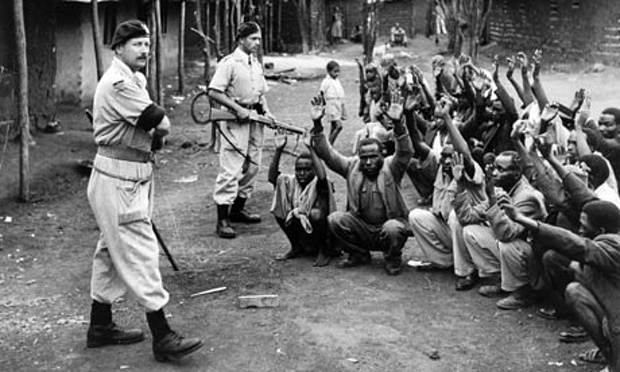
I’m extremely grateful to Pablo K, Elke Schwarz, Jairus Grove, and Andrew Davenport for their serious engagements with Economy of ForceAs noted in the original post, the book is a new history and theory of counterinsurgency with what I think are significant implications for social, political and international thought. It is based on a study of late-colonial British military campaigns in Malaya and Kenya; the US war on Vietnam; and US-led campaigns in Afghanistan and Iraq against the background of the high colonial wars in the American Philippines and nineteenth-century French campaigns in Tonkin, Morocco and Algeria. Probably the emblematic case for the book is Britain’s colonial state terror against Kenya’s Land and Freedom Army and civilians in the 1950s, a campaign that was closer to annihilation than ‘rehabilitation’. Although the so-called ‘hearts and minds’ campaign in Malaya is held up by generations of counterinsurgents as the model for emulation, the assault on Kikuyu civilians shows the real face of Britain’s late-colonial wars. It also points to some profound truths about the so-called ‘population-centric’ character of more recent campaigns in Afghanistan and Iraq. Though offering new readings of some better-known counterinsurgency cases, Jairus Grove suggests that this choice perpetuates an erasure of America’s ‘Indian Wars’.

Mau-Mau

Researching Economy of Force, I certainly became aware of the general significance of these wars, including through Andrew J. Birtle’s and Laleh Khalili’s histories of counterinsurgency. However, Grove draws attention to something more relevant to Economy of Force than appreciated before: “one of the first federal bureaucracies with jurisdiction over the home and social issues”, he writes, “was created by and administered by the War Department”. Decades before the distinctly ‘social’ engineering during the Philippines campaign (1899-1902), the Bureau of Indian Affairs was administering indigenous populations on the mainland. In focusing on overseas imperial wars, Economy of Force surely neglects settler colonialism, its genocides, and how “warfare, pacification, and progressivism were an assemblage in the US context from the outset”. While the book was not centrally focussed on US state making, I’m grateful to Grove for insisting that settler colonialism is necessarily a form of counterinsurgency. To be sure, the Philippines campaign was examined not as the founding moment of American counterinsurgency, but because it was explicitly conceived by contemporaries as a form of overseas housekeeping; to problematize progressive social policy; and to challenge the effort to separate good (domestic) social engineering at home from bad social engineering (overseas). I would hesitate to wholly assimilate the Progressive Era (1890s-1920s) into earlier Indian Wars, though its ‘social reforms’ shaped indigenous administration. But these are quibbles. Grove is right that I have neglected something of significance in the ‘historical trajectory from Thanksgiving to Waziristan’. I hope to be able to rectify this in future work.

Continue reading