What We Talked About At ISA: The God Complex – Biopolitical Ethics

The paper I presented at the ISA is part of a larger project in which I look at the ways in which ethics, in the context of certain political practices, is saturated with biopolitical rationalities. The (re)surfacing and framing of hitherto morally prohibited practices – torture, extraordinary rendition, extrajudicial assassinations – as justifiable, legitimate and even necessary acts of violence, paired with rapidly advancing and increasingly autonomous military technologies that facilitate these practices, has opened new dimensions and demands for considering just what kind of ethics is used to justify these violent modalities. I’m specifically frustrated by the emerging narrative of the use of drones for targeted killing practices in the interminable fight against terror as a ‘wise’ and ‘ethical’ weapon of warfare. The prevalence of utility, instrumentality and necessity in this consideration of ethics strikes me as dubious and worthy of a closer look. This keeps leading me again and again to the perhaps foolhardy, but inevitable question: what, actually, IS ethics? And more specifically: what is ethics in a biopolitically informed socio-political (post)modern context? My quest for an answer begins with the growing divergence in scholarship and philosophical inquiry of the ethicality of ethics, or meta-ethics on one hand, and practical conceptions of ethics, applied ethics, on the other.

It has been noted by philosophers and scholars across geographical and disciplinary divides, that, in recent years, there has been a growing focus in philosophical and political thought on the application of moral and ethical principles rather than the “ethicality” of ethics itself. This trend is particularly widespread in Anglo-American philosophy, and manifests itself in the striking surge of applied ethics as a subfield of ethics, which considers the chief role of ethics to be that of providing a practical guide for moral agents, based on rational analysis, scientific inquiry and technological expertise. In other words, considerations of ethics have become preoccupied with establishing practicalities and ways of application. While the practical side of ethics should, of course, not be dismissed, the domineering focus on ethics’ practicality over considerations of meta-ethics, or the ethicality of ethics, occludes any deeper engagement with what ethics actually is, how moral content is established and how we can understand ethics in modernity as something beyond a mere set of context specific norms and legal regulations, as something other than laws and codes. To make sense of this preoccupation with ethics’ practicalities, it is worthwhile to consider how ethics might, in fact, be determined by the characteristics of a specific form of society. This brings me back to the biopolitical rationalities with which (post)modern societies are infused. Continue reading

American Vignettes (I): Totalitarian Undercurrents

The airport is a totalitarian space; sometimes the truth is hyperbolic.

You re-enter the United States, land of your birth, as part of the stream of arriving passengers. It is an everyday experience. You leave the airplane slowly, on stiff limbs, trickling with the mass of travellers into Newark airport.

The imperatives are issued as soon as you enter the terminal building. No smoking. No cell phones. Stand in line. Fill in your declaration form. Foreigner here. Citizen there. Wait behind the red line till you are called. The armed immigration officer checks your papers, holding the power to pronounce your worthiness to enter this sanctified space.

Border Control

With the imperatives come the questions. Where are you coming from? Where are you going? As if the answers are clear. As if these are simple questions. The man with the gun, holding your passport, asks, “Where are you flying next?” But he already knows and he answers for you, “Chicago, on Friday.” This is a test.

“What were you doing in London?” You answer but the officer is not interested, he looks at you with an unarticulated accusation, why would you leave your homeland? Your suspect status is confirmed when he asks, “How long are you staying?” Until you please the armed man with your answers everyone is a foreigner no matter where they were born. Continue reading

Female Terrain Systems: Engagement Officers, Militarism, and Lady Flows

One of the more interesting interventions made at Friday’s Gender, Militarism and Violence roundtable came from Vron Ware on the topic of a photo exhibit about the British Army’s Female Engagement Officers. The exhibit is funded by the Poppy Appeal, which was itself subject to some debate as a sentimental memorialism allocating funds in the service of a imperial-nostalgic self-image. The pictures, collected by a female former RAF Sergeant, are presumably understood by military and civilian leaders to be a significant public relations resource in illustrating the flexibility, equity and decentness of Anglo-American-Western ‘involvement’ in Afghanistan. Manifestations of cultural sensitivity, postfeminist integration and armies as state-building reconciliation services. And yet someone decided, both on the Army website and Twitter account, that the best image to lead with was that of knickers on a washing line. A puerile social media engagement.

The rest of the images, and the media coverage of them, focus heavily on assorted ‘personal’ issues experienced by the women. Gaze on their beauty products! See how they control their lustrous hair! Peak in on their need for mementos of home! Marks of difference indeed, although none of the coverage I have seen broaches the possibility that men too might stash deodorant in their tents, or manage their body hair to maintain professional standards, or display reminders of loved ones waiting at home. Instead, as any gender-sensitive observer might expect, the specially femininity of these troops displaces all other dimensions of war/peace/development/security (an impression encouraged by some of the subjects themselves). The BBC even recently juxtaposed the death of a female army medic with an image of another woman coming out of the shower tent. A soft voyeurism on military women as leaky bodies and as somehow out of place. But not just that. The juvenilia comes packaged together with the idea of the Female Engagement Officers as crucial to a kind of military effectiveness:

Captain Crossly told the London Evening Standard that one of the highlights of the tour was ‘seeing the absolute fascination of women in the compound when I removed my helmet and protective glasses to speak to them in their own language’.

She added: ‘Women are known throughout the world to bring people together, to focus on family and community. Just by being female, even in military uniform, you are seen to promote such things and are therefore more accepted.’

Lieutenant French said: ‘The photographs demonstrate the more feminine traits of female soldiers can be used as a strength on operations.’

Continue reading

Fratriarchy, Homoeroticism and Military Culture

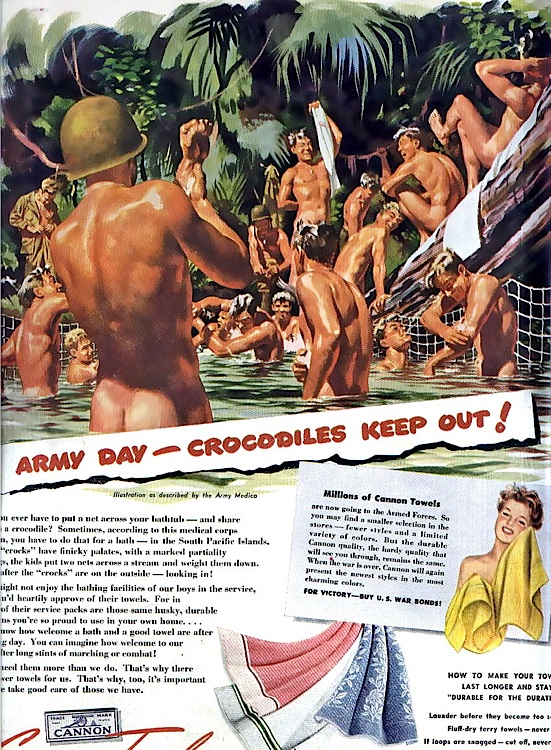
The ever-excellent Sociological Images offers up this 1940s advert, and others like it, as an example of how images previously taken to be innocent consumer bait for stereotypical homemakers now appear to us as dripping with homoeroticism. They may have added too that this half-ironic, half-nostalgic distance is what endears us to such images, which we then enjoy as vintage objects, for all that we know about the true historical context in which they were produced.

One common idea, which relates nicely to military bathing aesthetics (cannon towels? really?) is that many bonding behaviours in nominally heterosexual, male-dominated groups are in fact homosexual, but in a disavowed or repressed way. The scrum, the shared shower, the bunk-beds, the exclusion of women not only from the fields of play and war, but also from the various celebrations and carnivals that follow, all seem to indicate a desire for intimacy that cannot be named as such.

In the excellent Bring Me Men (which deserves its own dedicated review), Aaron Belkin identifies a more complex relation. In becoming military men, there is a need not only to disavow femininity, but also to become intimate with the ‘unmasculine’ and the ‘queer’. Rather than identifying a direct alignment of the masculine with the military, or seeing gender norms as accidental in their intersection with the military, there is instead a constitutive tension between the masculine and the unmasculine (or, we might say, between the strongly heteronormative and the homosexual). Basic training relies on a traumatic ambiguity, continually casting initiates as by turns masculine and unmasculine, so that no soldier can ever be sure that they were sufficiently on the ‘right side’ of the line. As one Marine put it: “The opposite of feminine? No. To me, what is masculine? I don’t know. [pause] And I’ve worked so hard at being it”. The continual ambiguity – what Belkin calls discipline as collapse – interacts with surveillance and punishment to produce the soldier-subject.

More brutally: Continue reading

The Anglosphere, Part Two: Of Liberal Leviathans and Global Turns

Viewed from the perspective of liberal IR, Britain’s globe-spanning empire can be described as “Liberal Internationalism 1.0.” According to G. John Ikenberry, the “liberal ascendancy” had everything to do with the “growth and sheer geopolitical heft of the world’s liberal democracies.” The British may have been the first to harmonize national interest with the stability, openness and rule-following in the international systems, but it was the Americans who “fused” them. “If the liberal order was built after World War II primarily within the West, the end of the Cold War turned that order into a sprawling global system” [1].

The question that has always fascinated me is how we got from Liberal Internationalism 1.0 to Liberal Internationalism 2.0, or how, to freely borrow from Ikenberry, power shifted between two liberal Leviathans, Britain and the U.S. What is puzzling here is the absence of the Wars of Anglophone Succession. Instead of fighting each other at least once or twice, the two empires first found ways to cooperate and coordinate their imperial activities around the globe, then engaged in what can be described as a pacted transition, even as a corporate merger. Here’s one verdict, taken from “The imperialism of decolonizationpiece by Wm Roger Louis and Ronald Robinson:

The British were welcoming the Americans back into the British family of nations and, informally at least, into the Commonwealth . . . [the post-war empire operated] as part of the Anglo- American coalition . . . like a multinational company.

Putting aside the historiography debates about its scope, timing and sequencing, this historical process was no doubt of momentous importance for the evolution of the liberal order, both in terms of the accumulation of hegemonic power, and in terms of social and institutional learning. The Anglosphere, in other words, begins here. So how do we explain it? Strategic calculus and/or a putatively liberal predilection for cooperation, compromise, and conciliation (last word Churchill’s) are only parts of this story, as Charles Kupchan notes in his How Enemies Become Friends:

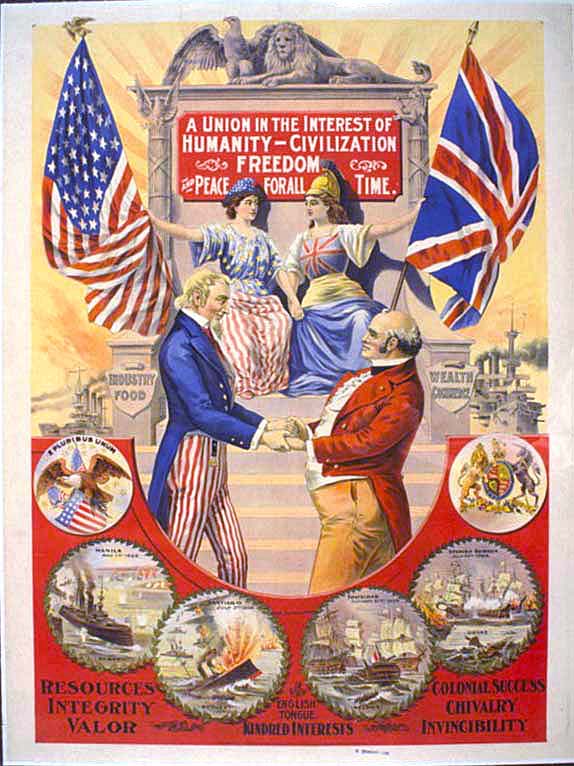
British appeasement of the United States and the practice of reciprocal restraint that followed cleared the way for rapprochement. But it was the emergence of a new discourse on both sides of the Atlantic – one that propagated notions such as a “shared Anglo-Saxon race” and an “Anglo-American family” – that produced a compatible identity, consolidated stable peace, and laid the foundations for the strategic partnership that exists to this day.

I could not agree more. Racialized identities operate as social structures of power, and this was a time when they explicitly authorized unity and superiority for Us against Them in ways that had profound consequences for the evolution of the so-called liberal international order. Anglo-Saxonism enabled the U.S. and Britain – or their elites – not only to position themselves favourably vis-à-vis each other at the turn of the twentieth century, but also with respect to the rest of the world and in a longer term. The Anglo-American rapprochement was no “global turn” of the sort that Kupchan talks about in his latest book, but it arguably comes close to it in macro-historical term. For one, the paths, pace and outcomes of the 1945-1951 international institution-building spree – that foundation of Liberal Internationalism 2.0 –followed the patterns of UK-U.S. cooperation first established during the colonial wars and near-wars in the 1890s. The much-disclaimed “special relationship” has its origins in this period – something to keep in mind next time we hear that U.S.-hugging remains in someone’s national interest, as General Sir David Richards, the head of Britain’s armed forces, argued last week.

This story I wish to tell can be expanded and contracted empirically (Anglo-Saxonism is dead today, but its effects can be found everywhere from university scholarships to contemporary military alliances) and theoretically (through, say, an account of core-periphery relations that made global capitalism possible), but the main substantive point remains the same, and that is that we cannot fully understand the “liberal ascendancy” without pausing (as Siba Grovogui might say) over the pervasiveness and power of racialized identities that connected Liberal Internationalism 1.0 and 2.0 [2]. Continue reading

The Anglosphere, Part One: What’s in a Name?

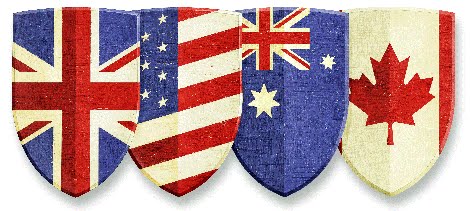
What do you get when you intersect indices that rank top two dozen nations of the world by political freedoms, GDP per capita, productivity, literacy, and patent applications in late 2000s? The answer is you get some kind of an “Anglosphere” – usually the quartet of Australia, Canada, the UK, and the U.S., but also, depending on the underlying measures and thresholds, New Zealand, Ireland, Singapore and so on.

Using data from the World Development Indicators, The Economist Intelligence Unit, and International Labour Organisation, among others sources, I’ve played this game in my research methods classes quite a bit. No methods textbook endorses such mindless empiricism, but students, from what I can tell, tend to appreciate the loose structure of the exercise. This is because the objective – familiarizing students with comparison, measurement, scaling, and so on – almost always shifts onto the “why?” questions, at which point everyone (ok, not everyone) tries to come up with his/her social scientific narrative on what makes this or that grouping “interesting,” “different,” or “special.”

Joel Kotkin, one of America’s premier demographers, and his nine collaborators have shown me how this game can be played at an infinitely more sophisticated level. Their argument – developed primarily in a collection of the Legatum Institute papers entitled “The New World Order”, but also in two shorter pieces penned by Kotkin and Shashi Parulekar at NewGeography.com and in City Journal – is that globalized economy by and large operates in and through three large “tribal groupings” or “spheres”: the Indosphere, the Sinosphere, and the Anglosphere [1]. As the authors note, their narrative can claim a formidable intellectual pedigree: “we have followed the great Arab historian Ibn Khaldun’s notion that ethnic and cultural ties are more important than geographic patterns or levels of economic development.”

Kotkin et al offer no shortage of interesting and novel observations and analytical points, but one of the project’s key punchlines is in the title of the Anglosphere section in the New World Order: “We are not dead yet.” The project’s foil, in other words, is the current wave of American declinism:

The era of unipolar domination by the United States and its key allies — which dates from the fall of the Soviet Union — has come to an end. Yet despite this, the core Anglosphere remains by far the largest cohesive economic bloc in the world. Overall it accounts for more than 18 trillion dollars, one quarter of the world’s GDP, far more than any other cohesive global grouping.

Continue reading

‘Our Retrospective Abhorrence’; Or, ‘Jerry Building’ (1994)

Jonathan Meades‘ incisive, irreverent, sweeping, often hilarious and somehow majestic account of the forms of Nazism (architectural, political, libidinal), criminally unavailable on DVD. Presented here in full lo-fi glory. One of the best docu-arguments ever committed to celluloid. You’re very welcome.

Colouring Lessons: Race Is A Structure Of Oppression, And Is Alive And Well

Race is a structure of oppression. So long as the structure remains, so does race. However, while there is plenty of talk about ethnicity and social cohesion, pathological cultures, and broken communities, race is usually mentioned only in its disavowal. And racism? Few would profess to that habit; most would comfortably label racism as a reactionary attitude. But to what imaginary golden mean? It is a privilege to believe that racism is a reaction rather than a catalysing agent of oppression. Meanwhile, all of us are variously implicated in this structure of oppression called race.

Even on the left, race is seen to be somewhat passé, and happily so now that the next world crisis in capital accumulation has arrived and we can all finally re-focus on the real thing: class. But what is the difference between race and class? Is it the difference between superstructure and base? Race does involve identification, both in order to oppress and in order to redeem. Yet in this respect, it is no more or less an identity than class. With the exception of Black Marxism, what the left has historically been unable or unwilling to consider is that, as a structure of oppression, race runs deeper than class.

Marx’s masterful hermeneutic shift from contract to class involved leaving behind the realm of exchange – wherein all things were of equivalent value and all transactions were equitable – and entering into the realm of production – wherein value was consistently expropriated and relations were exploitative. Nevertheless, in the colonial world, Marxism was more often used as a weapon for struggle and less so as a faith to guide contemplation. One reason for this engagement is that class exploitation never quite explained the reality of oppression experienced under the colonial exigencies of the world market.

In truth, Marx did not shift his hermeneutic far enough from liberalism and its obsession with civil society. Continue reading

Affect! Biopolitics! Technology! Ecology!: A Call for Papers

A brief pre-holiday announcement of the next Millennium annual conference, to be convened on the theme of Materialism and World Politics. Full details below the fold. The range of suggested topics looks both fascinating and much-needed, and I am assured by well-placed sources that there will also be some stellar speakers, for those who are tempted by such things. As always, papers submitted in the wake of the conference which survive the rigours of peer review will be published in a resulting special issue (Vol. 41, No. 3). Also, don’t forget about the Northedge Essay Competition (deadline 30 January 2012).

Continue reading

Body Politics: Corporeal Suffering, Memes and Power/Resistance, with Special Reference to #Occupy, Tahrir Square, ‘Hunger’ (2008) and Rage Against The Machine

*some extremely disturbing images ahead* (and some humorous deployments of Impressionism and Leonardo DiCaprio).


Two weeks ago, Karin Fierke presented a paper at our theory workshop on self-immolation as speech act (part of a forthcoming book entitled The Warden’s Dilemma: Self-Sacrifice, Agency and Emotion in Global Politics with Cambridge University Press). She focused principally on Thich Quang Duc, the South Vietnamese Buddhist monk who set himself alight and burned to death, silent and still, in Saigon in June of 1963, and on Norman Morrison, an American Quaker who copied Duc’s example in November 1965 by combusting his own flesh outside the Pentagon office of Robert McNamara, then the United States Secretary of Defence implementing Operation Rolling Thunder, the rain of fire which infamously unleashed a greater tonnage of bombs on Vietnams North and South than the total dispatched during the entirety of the Second World War.

This mimesis, an affinity not only of form but also of sacrificial politics, was cited as a mechanism for rupturing the symbolic order. Both Duc and Morrison engaged in a corporeal self-violence so forceful that it not only offended senses, but in fact extended a certain community. An act, substituting for speech, argument or manifesto, which forced itself on high politics and forged an international sensibility until that point lacking. One more contemporary dimension of that imitation and repetition is that many must have encountered the image the same way I did, which was via the front cover of Rage Against The Machine’s pugnacious, convulsively political eponymous debut in 1992. And not just the image, but a vague sense of the story imparted by sleeve notes (and lyrics today associated both with opposition to the media grip of Simon Cowell and with visions of the riotous encounter).

Self-immolation persists in a certain tradition of struggle, but the relevance of these themes – the body, sacrifice, the edifice of politics and protest, the circulation of images – has coalesced potently in the wake of recent events (on which more in a moment). Continue reading