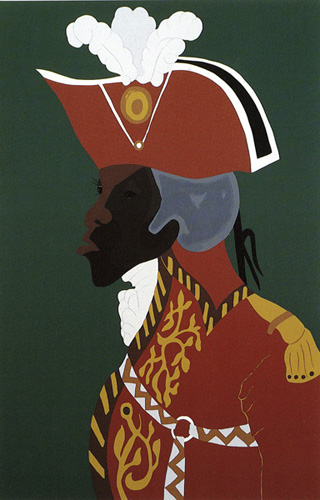
All of the authors take account of the ambiguous history of human rights, in which they can be said to have inspired the Haitian, American and French revolutions, while also justifying the counterrevolutionary post-Cold War order dominated by the United States. Yet recognising this ambiguity without also acknowledging the distinctive reconstruction of contemporary human rights that makes them part of a neo-liberal international order and the unequal power that makes such a quasi-imperial order possible would be irresponsible. A primary contribution made collectively by these texts is that they clearly diagnose the way human rights have been used to consolidate a particular form of political and economic order while undercutting the need for, much less justification of, revolutionary violence. Williams says of Amnesty International’s prisoners of conscience, who serve as archetypal victims of human rights abuse,
the prisoner of conscience, through its restrictive conditions, performs a critical diminution of what constitutes “the political.” The concept not only works to banish from recognition those who resort to or advocate violence, but at the same time it works to efface the very historical conditions that might come to serve as justifications – political and moral – for the taking up of arms.
Human rights, then, are for the civilised victims of the world, those abused by excessive state power, by anomalous states that have not been liberalised – they are not for dangerous radicals seeking to upset the social order.
This post (presented in two parts) is drawn from a review article that will be forthcoming in The Journal of Intervention and Statebuilding, which looks at a recent set of critical writings on human rights in order to consider the profound limitations and evocative possibilities of the contested idea and politics of human rights.
The central tension of human rights is that they propagate a universal and singular human identity in a fragmented political world. No one writing about human rights ignores this tension, but the most important question we face in judging the value of human rights is how to understand this tension and the divisions it creates. The expected divisions between good and evil, between moral universalists and dangerous relativist, between dignified interventionists and cowardly apologists, have long given shape to human rights, as both an ideal and a political project. Seeing the problems of (and for) human rights in these habituated ways has dulled our capacity for critical judgment, as few want to defend evil or violent particularisms or advocate passivity in the face of suffering. Even among serious and determined critics our inherited divisions are problematic (and increasingly over rehearsed), whether we think of human rights as the imposition of Western cultural values, or in terms of capitalist ideology serving the interests of neo-liberal elites, or as an expression of exceptional sovereign power at the domestic and global levels. The ways that these divisions deal with the tension at the heart of human rights misses the ambiguity of those rights in significant ways.
Rather than trying to contain the tensions between singularity and pluralism, between commonality and difference, in a clear and definitive accounting, the authors of the texts reviewed here allow them to proliferate. Rather than trying to resolve the problem of human rights, they attempt to understand human rights in their indeterminate dissonance while exploring what they might become. To create and invoke the idea of humanity is not a political activity that is unique (either now or in the past) to the ‘West’. The people most dramatically injured by global capitalism sometimes fight their oppression by innovating and using the language and institutions of human rights. Political exceptions – the exclusion of outsiders, humanitarian wars and imperialist conceits – are certainly enabled by the same sovereign power that grants rights to its subjects, which is a metaphorical drama all too easily supported by human rights, but it is only a partial telling of the tale, a telling that leaves out how human rights can reshape political authority and enable struggles in unexpected ways. The work of these authors pushes us to reject the familiar divisions we use to understand the irresolvable tension at the centre of human rights and see the productive possibilities of that tension. If human rights will always be invoked in a politically divided world, and will also always create further divisions with each declaration and act that realises an ideal universalism, then our focus should be on who assumes (and who can assume) the authority to define humanity, the consequences for those subject to such power, and the ends toward which such authority is directed. Continue reading →
It took at least 200 years for the novel to emerge as an expressive form after the invention of the printing press.
So said Bob Stein in an interesting roundtable on the digital university from back in April 2010. His point being that the radical transformations in human knowledge and communication practices wrought by the internet remain in their infancy. Our learning curves may be steeper but we haven’t yet begun to grapple with what the collapsing of old forms of social space means. We tweak and vary the models that we’re used to, but are generally cloistered in the paradigms of print.
When it comes to the university, and to the journal system, this has a particular resonance. Academics find themselves in a strange and contradictory position. They are highly valued for their research outputs in the sense that this is what determines their reputation and secures their jobs (although this is increasingly the value of the faux-market and the half-assed quality metric). This academic authority, won by publications, is also, to some extent, what makes students want to work with them and what makes them attractive as experts for government, media and civil society. They are also highly valued in a straight-forward economic sense by private publishing houses, who generate profit from the ability to sell on the product of their labour (books and articles) at virtually no direct remuneration, either for the authors or for those peer reviewers who guarantee a work’s intellectual quality. And yet all (OK, most) also agree that virtually nobody reads this work and that peer review is hugely time-consuming, despite being very complicated in its effects. When conjoined with the mass noise of information overload and the extension and commercialisation of higher education over the last decades, our practices of research, dissemination and quality control begin to take on a ludicrous hue. As Clifford Lynch nicely puts it, “peer review is becoming a bottomless pit for human effort”.
This is an attempt to explore in more detail what the potentialities and limits are for academic journals in the age of digital reproduction. Once we bracket out the sedimented control of current publishers, and think of the liveliness of intellectual exchange encountered through blogs and other social media, a certain hope bubbles up. Why not see opportunity here? Perhaps the time is indeed ripe for the rebirth of the university press, as Martin Weller argues:
the almost wholesale shift to online journals has now seen a realignment with university skills and functions. We do run websites and universities are the places people look to for information (or better, they do it through syndicated repositories). The experience the higher education sector has built up through OER, software development and website maintenance, now aligns nicely with the skills we’ve always had of editing, reviewing, writing and managing journals. Universities are the ideal place now for journals to reside.
“In his dreadful lassitude and objectless rage, Cobain seemed to give wearied voice to the despondency of the generation that had come after history, whose every move was anticipated, tracked, bought and sold before it had even happened. Cobain knew that he was just another piece of spectacle, that nothing runs better on MTV than a protest against MTV; knew that his every move was a cliché scripted in advance, knew that even realizing it is a cliche”. (p. 15)
This is as concise and accurate a summary of the dead-end of Nirvana’s nihilism as one could ask for – but as an illustration of the wider impotence of cultural and artistic expression to push beyond a dominant social vision of neo-liberal capitalism it’s not wholly convincing.
Fisher is right about Cobain, but his observation begs the obvious question: is Nirvana the wrong listening choice? If we turn to artistic expression for exemplars of how to begin anew, to think beyond our current moment, to escape the scripted thoughts, words and movements that structure our lives, this is actually a vital question.
Who should we be listening to?
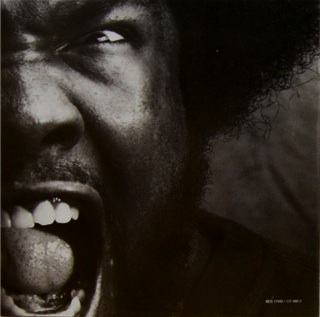
This is a question that overflows beautifully, but here I want to explore the significance of one group – The Roots. This is partly an expression of personal love, but it’s also borne out of two less subjective impulses: (1) The Roots are insufficiently appreciated as an artistic and intellectual resource – they are artists in need of critics and journalists equal to their own insight and intensity; and (2) while I appreciate the efforts of those studying politics in an academic setting to bring in cultural resources, I don’t identify with International Relations’ obsession with Science Fiction (even as I appreciate the significance genre fiction can achieve), nor do I get much out of Political Theory’s tendency to appeal to classicdramas, and themultidisciplinaryuseofcinema, while fascinating, rarely leaves me inspired – so, returning to what one knows and finds inspiring – I want to argue it’s well worth listening to The Roots (and hip hop music) to understand the world and find profound insights.
A simple proposition: The Roots are the most important artists in popular music today – not bigger than Jesus, or the only band that matters – but possibly the best hip-hop group ever and a creative and intellectual force the quality of which is rare in music, especially music that maintains a popular orientation. This proposition matters because understanding and appreciating The Roots’ work over the past thirteen years takes the listener into an artistic world that expresses a very particular experience of the first decade of the 21st century (black, urban and American) through profound musical originality and penetrating intelligence, this experience provides a very different vision that has the potential to disrupt the exhausted and nihilistic sense of inevitability that Fisher so rightly identifies.
“I’m kinda like W.E.B. Du Bois meets Heavy D and the Boyz”
– Dice Raw, “Get Busy”, Rising Down (2008)
W.E.B. Du Bois‘ idea of double-consciousness provides a way of appreciating the importance of The Roots. Double-consciousness is defined by a “sense of always looking at one’s self through the eyes of others, of measuring one’s soul by the tape of a world that looks on in amused contempt and pity.” While this burden threatens to overwhelm a positive sense of self-awareness and confidence, it also enables a second-sight in women and men systematically repressed and whose experiences are devalued, allowing a sharper vision of social violence and providing substantial resources for struggle and emancipation. The Roots carry over this sense of double-consciousness, but rendered more positive and confident by decades of growing black self-awareness, increasing social strength and important political victories in the US and more widely, such that they render the potential psychological weakness of double-consciousness into an incisive and positive vision, one wholly at odds with Cobain’s musical and cultural legacy of frustrated exhaustion.
Speaking of traditions of black music in America, Du Bois says,
“Little of beauty has America given the world save the rude grandeur God himself stamped on her bosom; the human spirit in this new world has expressed itself in vigor and ingenuity rather than in beauty. And so by fateful chance the Negro folk-song—the rhythmic cry of the slave—stands to-day not simply as the sole American music, but as the most beautiful expression of human experience born this side the seas. It has been neglected, it has been, and is, half despised, and above all it has been persistently mistaken and misunderstood; but notwithstanding, it still remains as the singular spiritual heritage of the nation and the greatest gift of the Negro people.”
Black culture in America provides an alternative reservoir of tradition (in the form of hip-hop culture, black musical traditions, political radicalism and distinctive forms of socially engaged religious practice) that not only nourishes the social imagination but is resistant to co-option. Hip-hop music is received by the dominant culture as a threat that must be commodified and tamed, but the refusal of a hip-hop artist to acquiesce to their own commodification need not reduce to an empty and ironic refusal nor solipsistic underground fetishism. The Roots, among others, maintain both a lucrative musical career and a challenging artistic output, at least in part, because of their capacity to occupy multiple subject positions – knowing that the music business is a business, intentionally challenging young, black, urban identities normally associated with hip hop, exploiting the fear of black assertiveness in mainstream culture in the US and working as “working musicians” who write, perform, produce, arrange for multiple artists, across generations and genres. But they are not simply polymaths too nimble to succumb to commodification – they are also self conscious creators of their own musical and intellectual space, shared in common, tied to tradition, and pushing relentlessly outward and forward. It is this quality, so essential to beginnings, that I focus on here.
Over a series of posts I want to consider the visions contained in The Roots music, with a particular focus on the political importance of their work – running from their groundbreaking 1999 album, Things Fall Apart, to their 2011 concept album, undun, I pull out a central theme from each album, which hardly defines the limits of their significance, but rather focuses on some of the insights they offer up with abundance.
Beginning are difficult – this is a simple truth that is particularly pertinent to anyone who feels pressed in by the world as it has been given, who struggles to find fractures in the world that might be expanded far enough to stand up to their full height. Partly this is a struggle to give expression to the discontent one feels – it’s not enough to know, as the early Roots’ records insistently documented, that one’s culture has been distorted, co-opted, defiled and weakened by its basest impulses – we need an analysis, an account of the dynamics that make’s our present condition combustible material for making new worlds.
A brief pre-holiday announcement of the next Millennium annual conference, to be convened on the theme of Materialism and World Politics. Full details below the fold. The range of suggested topics looks both fascinating and much-needed, and I am assured by well-placed sources that there will also be some stellar speakers, for those who are tempted by such things. As always, papers submitted in the wake of the conference which survive the rigours of peer review will be published in a resulting special issue (Vol. 41, No. 3). Also, don’t forget about the Northedge Essay Competition (deadline 30 January 2012).
A small cascade of Millennium-related news and IR from Elsewhere. First, our very own Nick was recently elected as Co-Editor (with Edmund H. Arghand and Maria Fotou) to oversee the journal for Volume 41 (2012-2013) on the basis of a conference proposal on ‘Materialism and World Politics’ (full CfP details forthcoming soon). Second, the Millennium blog has had a facelift (ongoing tweaks to be made to its façade), so go have a look.
Third, and perhaps most importantly, the Northedge Essay Competition is now open. So if you’re a post-graduate student (PhD or advanced Masters) in IR or cognate fields, and you have some exceptional work lying fallow, spruce it up and submit. The deadline is 30 January 2012, and the winning essay will appear in Millennium 41(1). Previous winners have been verygoodindeed.
Fifth, the journal’s social media tentacles are growing, so do the following thing on Twitter and the liking thing on Facebook, if you are of that bent. Finally, a reminder that Millennium‘s weekly Editorial Board meetings are open to all LSE postgraduates (MSc and PhD) who are engaged and interested. If you fit that description and for some reason aren’t already involved, do email the Editors for details.
Born like this
Into this
As the chalk faces smile
As Mrs. Death laughs
As the elevators break
As political landscapes dissolve
As the supermarket bag boy holds a college degree
As the oily fish spit out their oily prey
As the sun is masked
We are
Born like this
Into this
Into these carefully mad wars
Into the sight of broken factory windows of emptiness
Into bars where people no longer speak to each other
Into fist fights that end as shootings and knifings
Continue reading →
austerity |ôˈsteritē| noun – sternness or severity of manner or attitude
It was possible, therefore, to commit a sin without knowing that you committed it, without wanting to commit it, and without being able to avoid it. Sin was not necessarily something that you did: it might be something that happened to you.
– George Orwell, “Such, Such Were the Joys”
Why what have you thought of yourself?
Is it you then that thought yourself less?
Is it you that thought the President greater than you?
Or the rich better off than you? or the educated wiser than you?
I do not affirm that what you see beyond is futile, I do not advise that you stop,
I do not say leadings you thought great are not great,
But I say that none lead to greater than these lead to.
– Walt Whitman, “A Song for Occupations,” Leaves of Grass
The Politics of Austerity – Part I
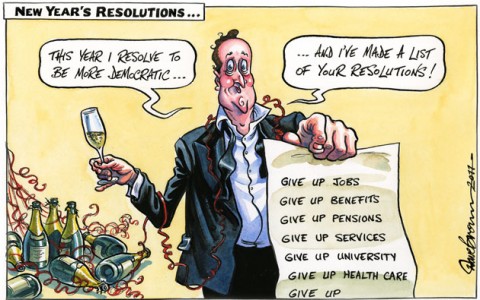
This is the first in a series of posts that look at the political implications of the ongoing global economic crisis. I begin by examining the way that crisis is being used to attack the very idea of democracy through an assertion of the political imperatives of “the market” and the violation, bending and re-writing of the law by capitalist elites. I conclude by laying out how understanding the economic crisis in political terms shapes our ability to respond to it.
In the second post I’ll look at the ethos of austerity, which justifies the pain inflicted on largely innocent people, while suggesting that an affirmative democratic response to the economic crisis must begin with its own ethos, which I suggest should be an ethos of care for the world – which can provide orientation and inspiration for political struggles seeking to address the deeper causes of our current crisis. In the third post, I turn to the structures of the economy and of politics that define the current crisis, looking at the banking crisis, the bailouts, the politics of recovery/austerity and also reflecting of the structural imperatives of capitalism that led us to crisis. This, then, leads to the question of how to respond to the politics of austerity, and of what alternative actions are available to us, which is where the fourth and final post will pick up – with an affirmation of a caring ethos that supports a radically democratic economic vision.
Emergency Economics
In a previous post I briefly highlighted Bonnie Honig’s work, Emergency Politics, to examine the way that the ethical case for austerity is made; most basically, the existence of a supreme emergency, in this case economic, justifies actions that would normally be considered unacceptable. Honig’s work looks at how the appeal to emergency is used to reassert the exceptional political power of the sovereign over and against the law, with a focus on the reassertion of sovereignty witnessed over the past ten years in response to the threat of terrorist attack in the US and Europe.
Rather than accepting the necessarily intractable conflict between the power of the sovereign and the power of the law, Honig attempts to deflate this paradox by turning her attention to the always ongoing contestation that defines democratic politics, a contest over both the content of the law and the institutional embodiment of sovereign power. She suggests, then, that attending to the ambiguities of the “people”, who are both the democratic sovereign and a diffuse multitude, as well as the political element in the law – as new laws come into being through political action – enables us to avoid thinking about emergencies as moments of exception in which the rule of law is lost to the play of political power, while also acknowledging the limits of established law in moments of profound crisis. By undermining the exceptional nature of crises and emergencies Honig alters the challenge we face when circumstances force us to make choices or carry out actions we know are harmful and wrong by asking what we (democratic publics and citizens) can do to survive an emergency with our integrity in tact.
What do we need to do to ensure our continuity as selves and/or our survival as a democracy with integrity? Our survival depends very much on how we handle ourselves in the aftermath of a wrong. We will not recover from some kinds of tragic conflict. But when faced with such situations, we must act and we must inhabit the aftermath of the situation in ways that promote our survival as a democracy.
I continue to find this a useful way to understand our current economic crisis. Appeals to austerity depend upon the exceptional state created by crisis in order to justify the pain inflicted upon masses of people and the priority given to private interests (the markets, investors and bankers) over democratic publics. So, as democratically enacted laws must bow before the sovereign power threatened by exceptional attacks, so economic justice and democratic equality must bow before the commands of market forces, of economic inevitability, in this time of crisis.
The economic version of this argument is stronger still. While the space of political contestation that remains open when we accept the framing of emergency politics is limited, it does exist in the clashing of opposing sovereigns. The prospect of a substantive alternative to neoliberal economic ideology is dim, a light flickering weakly on antiquated appeals for a return to Keynesianism or watered down triangulations of the moderate-middle that sell off dreams of a just economy bit by bit – capitalist realism in action.
Honig awakens us to an important aspects of our current crisis: that “the market” is not in fact supremely sovereign, and the move to re-establish and further neoliberal policies and push through austerity measures requires an engagement in democratic politics – albeit one that undermines the notion of the public itself and seeks to use the power of the law to subvert democracy. Recognising the current crisis in these terms not only challenges us to consider how to survive our current troubles without giving up democratic virtues, it also reinvigorates and clarifies the political challenge we face. Emergency economics – with its assertion of debtocracy over democracy – is not an inevitable response to the crisis, it is a political one that we can, and should, fight against.
Obviously, consciousness-raising for men is necessary in all kinds of ways, and will be for at least as long as supposedly intelligent discussions continue to be dominated by pernicious cop-outs and questionable analysis. Any funding and attention to rape prevention is to be encouraged and supported. Let’s take that as read. But these campaigns are intended to be tools for advancing rape awareness and anti-rape politics, which makes it worth asking what kinds of awareness and politics they promote. How is it that they seek to recast ideas of appropriate manliness?
Yes, this is more comment on the New College, a.k.a. Grayling Hall, a.k.a. Grayling’s Folly, a.k.a. North Oxford in Bedford Square (NOBS), a.k.a. The Ultimate Scab University.
It won’t have escaped your notice that there has been aflurry of disgust, disbelief, protest and rage at the announcement of the New College of the Humanities (an aside: ‘of the’ Humanities? Why not ‘for the’ Humanities?). There have also been a number of responses that pretty much add up to ‘meh’: to wit, there are some bad things, but also some good things about Grayling’s Folly. And then there has been some welcoming of this project, and its ‘chutzpah’. Since we are in a downward vortex of vanishing funding and academic status, why not expand where we can? And why damn the entrepreneurial? As Brian Leiter puts it:
NCH is just the natural continuation of the elimination of 75% of government funding for higher education and 800% increases in tuition in the space of a few years. If the Brits can’t even keep the Tories out of office, and if their party of the Left is now in bed with the Neoliberals, it’s really hard to see why one should think “petitioning” the government for more government funding for higher ed will produce any results. The battle to be won is at the polls, and NCH is just a symptom of the battle already lost.
All this makes me think it’s worth clarifying the case against, and the potential mitigating factors. Continue reading →





 The Disorder Of Things