The Dissonance Of Things #1: Sexism in Academia

1920 Woman with Radio

Broadcasting from the bowels of disorder, The Dissonance of Things is a new monthly podcast bringing you interviews, discussions and programmes on international relations, political theory, radical and subaltern politics, cultural analysis, and the academy (ivory and otherwise). Casts will be collected for your convenience in a dedicated page (see the menu bar above), or under this category.

In this inaugural cast, Meera, Nivi, Pablo and Maia Pal (who you may remember from this guest post) join host Kerem to discuss sexism in academia – from the everyday to the institutional – and what can be done about it. Building on a number of disciplinary and extra-disciplinary interventions (from the ‘everyday sexism’ panel at ISA 2015 to the global surge of interest in our colleague Saara Särmä’s ‘All Male Panels’ tumblr), we hope this forms part of the ongoing discussion on sexism in academia. So please do carry on the conversation in the comments section below. We promise to read below the line (offenders will be disemvowelled).


Further reading, including articles and websites mentioned in the cast:

Size Matters: Reflecting on Perspective, Positionality and Critique After #ISA2015

… so I tweeted on the last day of the 56th Annual Convention of the International Studies Association. I was exhausted by that point, numbed and overwhelmed at the sheer volume of thoughts I had asked my poor brain to process over the previous four days. I was ready to crawl into bed and sleep for a week, but I still had to get home, back to Sydney from whence I came, which I duly did, over the course of the next 37 hours.

I stared blindly out of the aeroplane window as we circled around Sydney, thinking about nothing much at all, noticing the Opera House and the Sydney Harbour Bridge and how tiny they looked, how much like models, how insignificant. And in the taxi on the way home (and yes, I am acknowledging my privilege as I write this, that is kind of the point of this blog, I think…), I asked the driver to please take the bridge, not the tunnel. There is something about the view from the Eastern Distributor, which brackets Circular Quay with the Harbour Bridge on one side and the Opera House on the other, that feels to me like coming home.

photo of sydney opera house

Sydney Opera House. Photo by LJS.

As we drove, and the iconic structures came into view, I thought, somewhat mindlessly, how much bigger they seemed close up. Like I said, I was exhausted, not able to conjure much more than this rather banal observation. Objects in the rear view mirror may be closer than they appear, but objects on the ground, when you’re close up, feel much more significant. Continue reading

What We Talked About At ISA: Political Speech in Fantastical Worlds

Game of Thrones - Race as a Floating Signifier

Four years ago, I tried to capture a discomfit with the new embrace of the pop-cultural within IR. The focus then was on the way putatively mainstream categories were put to use in the interpretation of science and speculative fiction. This year at ISA (see passim), I extended and nuanced that view, to account both for the great rise in pedagogical uses for the pop-cultural, and to push more forcefully at ‘critical’ approaches to the same.[1]

Like others, I am hostile to the success of zombies (or, to be frank, Dan Drezner’s version of zombies) as a useful way to stimulate reflection on world politics in all its variety. For zombie-IR, elements of the speculative and the fantastical are recruited to make sense of world politics not because they trouble or undermine or reimagine it, but because they replicate it in a way that is taken to be more easily digestible than speaking directly of world politics itself. Such simplification has come under challenge (here, here, and here, for example) and so cannot be said to characterise all approaches to the speculative. But the trend – what I term the speculative as descriptive analogy – certainly appears to be the most popular one. Let us call this Drezner’s Law: the more directly an ‘analysis’ of pop culture reflects dominant categories and concerns, the more broadly that analysis will be consumed.

Despite a single footnote on the zombie as metaphor, and a small gesture towards them as expressions of capitalist consumerism, the main accomplishment of Theories of International Politics and Zombies is to reify monolithic theories, which are taken to be no less than ‘paradigms’. In a feat of definitional feat, those dominant ‘paradigms’ (Realism, Liberalism, Constructivism, Neo-Conservatism, Role Theory) in turn hold the key truths to world politics “whether researchers admit it or not” (really?). It seems churlish to deny the usefulness of pedagogical lubricant, but it also becomes hard to avoid the sense of scholars bored to tears by the delivery of paint-by-number theory courses and the yearly task of boiling down paradigms and lineages into the simplest distinctions (Realists think states matter, liberals are interested in cooperation, constructivists believe in, well, social construction). Articulating these ideas through a new universe alleviates the boredom, however fleetingly, and raises a wry smile at the comparisons. The popular appeal of shows like Battlestar Galactica or Game of Thrones also makes it possible to generate interest in more complex themes through blog and social media ‘outreach’, as if mobilising cultural artefacts to recruit students or prove that scholars are somehow ‘in touch’. The human face of political science.

Continue reading

Between Innocence and Deconstruction: Rethinking Political Solidarity

The third and final post in our short resilience and solidarity forum, this time from Chris Rossdale. Chris lectures in International Relations at Royal Holloway, University of London. His research focuses on anti-militarist social movements and radical political theory. He has also recently edited a special issue of Globalizations on radical political subjectivities, his own contribution exploring the relationship between Emma Goldman and Friedrich Nietzsche through the concept of dance. He can be reached by email thusly.


The ethos of solidarity remains one of the left’s most powerful and enduring ideas, a clarion call for collective struggle in the face of international borders and neoliberal individualism. At the time of writing, my social media feeds are awash with calls for solidarity with Ferguson; thousands also turned out to a solidarity protest at the US embassy. Last week I attended a solidarity fundraiser for the Kurdish Red Crescent, took part in an action organised to coincide with UN International Day of Solidarity with the Palestinian People, and circulated a petition in solidarity with students who experienced police violence at the University of Warwick. Rarely a day passes at present without some fresh discussion about the particular politics involved in different forms of solidarity with those suffering from the outbreak of Ebola. Across different modes, the practice of solidarity is a part of our everyday political conduct.

Rossdale_pic1

Protestors march after gathering outside the American Embassy in London November 26, 2014, to show solidarity with the family of black teenager Michael Brown who was shot and killed by a police officer in August in Missouri. REUTERS/Paul Hackett

On the one hand, this is clearly a good thing, enabling common political, financial and emotional resources to be shared in important and useful ways. Distance, whether spatial or cultural, can be an alienating force, and practices of solidarity can serve as a powerful redress to such alienation, asserting collectivity and community in the face of division. In this piece, however, my intention is to outline a critique of much of what passes for solidarity, and suggest that more radical or deconstructive understandings are needed if we wish to produce more substantive challenges to political domination.

The particular practices of solidarity I have in mind are those which occur in those contexts (which are many) in which the imbalance of power directly privileges, at least in some forms, one party over another – whether this is in the context of cis-male solidarity in feminist projects, citizen solidarity in migrant and refugee struggles, or, the particular case study I discuss below, Jewish-Israeli solidarity with Palestinians. Continue reading

For the Joy It Brings: Hashtag Activism and Little Wins

I do it for the joy it brings
because I’m a joyful girl
because the world owes me nothing
and we owe each other the world

Ani Difranco, ‘Joyful Girl

So unless you were unplugged last week (and it’s fine if you were, I’m not judging), you would have seen the hashtag #takedownjulienblanc trending on Twitter. Julien Blanc, to whom the hashtag refers, is a self-styled ‘Pick Up Artist’ who charges actual money – between one thousand and three thousand dollars, by all accounts – for the privilege of listening to his advice on how to ‘pick up’ women. For the privilege of listening to his white, male, privilege, actually, given that the (TW) video that caught the attention of the activist community showed Blanc assaulting Japanese women in a highly sexualised way and commenting that ‘when you go to Tokyo, when you’re a white male, you can do what you want’.

Blanc was clearly paying attention in class when they studied Peggy McIntosh’s ‘invisible backpack’; the trouble is, he thought it was a primer rather than a cautionary tale. This is not the only time Blanc has confused genres in this way. Earlier this year, he tweeted a chart mapping out various abusive relationship dynamics, from intimidation to coercion and threats, with the caption ‘May as well be a checklist’ (though the image has since been taken down, along with Blanc’s entire Twitter account). Blanc’s website actively encourages men to use ‘male privilege, isolation and emotional abuse’ to attract women.

The hashtag was started by ‘shitty artist, intersectional feminist’ Jennifer Li.

Li has explained why she started the hashtag, saying that she was moved to start the hashtag because Blanc is actively perpetuating ‘toxic masculinity’, sexism and racism through his website, social media usage, and ‘Real Social Dynamics’ seminars. The hashtag existed, as all hashtags do, to catch the attention of Twitter users, to make explicit Li’s critique of Blanc and to encourage other Twitter users to do their own research into Blanc and his vile misogyny so that they might support efforts to get Blanc’s seminars shut down.

Dear readers, it worked. Continue reading

Post-Capitalism Will Be Post-Industrial

[Text of a short talk presented at Socialism and Deindustrialisation event put on by Spring. See Michael Roberts’ write-up of his talk here.]

“In fact, the realm of freedom actually begins only where labour which is determined by necessity and mundane considerations ceases; thus in the very nature of things it lies beyond the sphere of actual material production.”

-Karl Marx

I want to argue today that only deindustrialisation can lead us beyond capitalism, or in other words, that post-capitalism will necessarily be post-industrial. [1] This means that rather than bemoan the loss of manufacturing jobs, or struggle to lure them back, deindustrialisation should instead be applauded as an important and irreversible achievement. Historically speaking, it is akin to the move away from agriculture-based economies. Just as the mechanisation of agriculture freed people from reliance on working the land, the deindustrialisation process has the potential to free people from the drudgery of most productive work. Yet an immediate consequence of claiming that deindustrialisation is necessary for post-capitalism means we must reimagine what the transition between economies might be like.

The traditional story of moving beyond capitalism is fairly straightforward. To be sure, this story has been complicated and critiqued throughout the 20th century, yet its general framework still underpins a number of assumptions about how to transcend capitalism. In broad strokes, the story begins with a shift away from agriculture-based economy which had been built around a large peasantry. In its place emerges rapid industrialisation – exemplified by the textile, steel, and eventually automobile industries in the 19th and 20th centuries. The social effects of this industrialisation were particularly important for understanding how post-capitalism was supposed to come about. Industrialisation involved a move from rural populations to increasing urban populations, along with a transformation of the peasantry into the proletariat, involving primitive accumulation and the dispossession of common land. The result of this was a new urban working class who had only their labour power to sell. But this transition also led to the development of a strong working class. Factories meant that workers were increasingly centralised in the workplace – they worked together, creating social connections and community. Moreover, the tendencies of capitalism were supposed to increasingly homogenise the working class. The result of all this was that the working class came to share the same material interests – things like better working conditions, higher wages, and shorter working weeks. In other words, with industrialisation there was the material basis for a strong working class identity. (It’s worth noting here, that despite this material basis, the industrial working class was always a minority of the working population. Even at the height of manufacturing in the most industrialised countries, employment in manufacturing only involved about 40% of the population.[2]) On the basis of their political strength though, the working class was supposed to become the vanguard of the population, leading us away from capitalism and towards something better. With the growing power of the working class, and the socialisation of production, it was thought that workers could simply take over the means of production and run them democratically and for the greater good.

Of course, this didn’t happen, and the best example we have of this proposal was the miserable Soviet experience. What occurred in that experiment was a glorification of productivity at the expense of freedom. Just as in capitalist societies, work was the ultimate imperative, and it was no surprise to see Taylorism, Fordism, and other productivity-enhancing techniques being forced upon the workers of the USSR. In the capitalist countries, by contrast, the industrial sectors declined and the basis for a strong working class has been systematically attacked. Yet if we look at developing countries, the traditional story finds little traction as well. Even developing countries are increasingly deindustrialised. This can be seen in two broad facts: first, newly industrialising economies are not industrialising to the same degree as past economies (measured in terms of manufacturing employment as percentage of population). Rather than 30-40% employment, the numbers are closer to 15-20%. Secondly, these economies are also reaching the point of deindustrialisation at a quicker pace. Measured in terms of per capita income levels, these economies reach their peak industrialisation at a much earlier point than previous countries did.[3] This is the so-called problem of “premature deindustrialisation”. The conclusion to draw from the experience of the 20th century is that the promise of the traditional narrative – the industrial working class leading a revolution to democratic control over the means of production – has not been fulfilled and seems to now be obsolete. We no longer live in an industrial world, and classic images of the transition to socialism need to be updated.

Deindustrialisation

So what is the alternative? Continue reading

Kobani: What’s In A Name?

Kamran MatinA guest post from Kamran Matin. Kamran is a senior lecturer in International Relations at the University of Sussex, where he teaches modern history of the Middle East and international theory. He is the author of Recasting Iranian Modernity: International Relations and Social Change (Routledge, 2013), and recently of ‘Redeeming the Universal: Postcolonialism and the Inner-Life of Eurocentrism’ in the European Journal of International Relations (2013). Kamran is also the incoming co-convenor of the BISA Historical Sociology Working Group, and a management committee member at Sussex’s Centre for Advanced International Theory. He is currently working on a paper on the origins of the current crisis in the Middle East, and a larger project on the international history of the Kurdish national liberation movement.


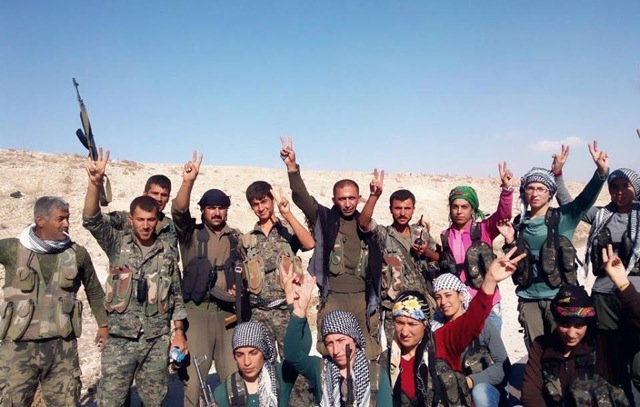
Kobani Fighters

The city of Kobani’s epic resistance against the genocidal assault of the Islamic State (IS) has entered its thirtieth day. So far the response of the western left has been generally one of solidarity. However, the left seems divided on the best way to support Kobani. Invoking anti-imperialist and anti-war principles a considerable part of the left has been shying away from demanding military and logistical support for the main defending force of the city, i.e. People’s Protection Units (YPG) and Women Protection Unites (YPJ), the armed wings of Democratic Union Party (PYD), by the US led anti-IS coalition. Moreover, with some exceptions such as David Graeber, many western leftists have neglected the historical significance and transformative political potentials of the success of Kobani’s resistance.

In what follows I argue that pressuring western powers to provide arms and logistical support to YPG/YPJ is legitimate and justifiable, and that in the battle for Kobani the left has a unique opportunity to contribute to an important shift in the regional balance of power in favour of a radical democratic and egalitarian project with transformative ramifications for the entire Middle East.

Kobani, the Kurds, and the West

With regards to the discomfort of the left with the idea of western military support for YPG/YPJ the important preliminary point to be made is that the Kurds have repeatedly claimed that they do not want or need direct military intervention by either coalition forces or Turkey. They’ve repeatedly said that they only need anti-tank weapons, ammunition and the opening of a corridor for fighters, food and medicine to reach Kobani. This request has been echoed by the UN Special Envoy for Syria, Staffan de Mistura, who warned of a repetition of the fate of Srebrenica in Kobani if such a humanitarian corridor is not established.

In its demand for a limited tactical western military support for YPG/YPJ the left by no means loses sight of the fact that at its root Islamic State is the fascistic faeces of western imperial metabolism, a direct product of the American conquest of Iraq, the deliberate manipulation of sectarian differences, and the destruction of the social fabric of Iraqi society. But surely, none of these should obviate the recognition of the vital significance of protecting an actually existing and functioning radical left experience at the heart of the Middle East from eradication, notwithstanding its unavoidable flaws and limitations.

Continue reading

Metrics: An Addendum on RAE / REF

Not everything that counts can be counted, and not everything that can be counted counts...

We have had overwhelming support from a wide range of academics for our paper on why metrics are inappropriate for assessing research quality (200+ as of June 22nd). However, some have also posed interesting follow-up questions on the blog and by email which are worth addressing in more depth. These are more REF-specific on the whole and relate to the relationship between the flaws in the current system and the flaws in the proposed system. In my view the latter still greatly outweigh the former but it is useful to reflect on them both.

Current REF assessment processes are unaccountable and subjective; aren’t metrics a more transparent, public and objective way of assessing research?

The current REF involves, as the poser of the question pointed out, small groups of people deliberating behind closed doors and destroying all evidence of their deliberations. The point about the non-transparency and unaccountability of this process is an important one to keep in mind.

The question is then posed, are metrics more transparent, public and objective? On a surface level, metrics are more ‘transparent’ because they are literally visible (public) and given a number, making them easily rankable. But what they represent, as we argued in our paper, is fundamentally non-transparent given the wide variety of reasons there might be for citing work, and more besides those we cited. In fact, it is the very simulation of transparency in the use of a numerical marker that becomes threatening to the act of actually reading work for assessment purposes. Continue reading

Open Access, Institutionalised?: Or, Another Reason Why International Relations Is Failing As An Intellectual Project

Soc Sci Tweet

The American Sociological Association (ASA) has announced that it will launch an (as-yet unnamed) open access general sociology journal as soon as possible (this year, maybe next). Its proposed features are a mix of traditional and new: there will be start-up cash and a stipend for Editors, peer-review is to be on the standard, appropriately ‘prestigious’ model (but expedited and light on style corrections), a traditional publisher (SAGE) is involved, authors will retain copyright, there will be no hard copies and therefore no limit on how much can be published in any given time period, all articles (accepted or not) will be subject to a $25 processing fee, and a variable tariff of Article Processing Charges (APCs) will be implemented, from free for scholars from “non-competitive” countries to $100-150 for students and $700 for non-members (for the first 12 months, APCs can also be waived, no questions asked).

The editors at Sociological Science (one of whom we interviewed last month) have noticed that this borrows heavily from their own initiative. Sniping aside, this is surely all to the good. An indication that major academic institutions are, at last, taking open access seriously. Not quite overhauling their systems, but adopting publishing platforms considerably more reasonable than the $3,000 APCs and business-as-usual structure previously threatened. This is an important point, since it supports the claim of some OA advocates that APCs may be financially better for the academy than historical subscription rates (I leave exacting comparisons of costs and the burden of double-dipping during any transition to one side). The problem has always been that the prestige economy (and therefore the social reproduction of universities) is not venue-blind. Low cost APCs in marginal journals are therefore of little help for those still seeking the (shrinking) securities of a formal academic post. But when the reputational power of learned societies is applied, it becomes much easier to envision a world of reputable (and hopefully high quality) open access journals charging APCs at a lower net cost than we currently pay through library subscription models.

The ASA is a powerhouse in these terms, and enjoys more market influence than the International Studies Association (boasting 13,000 members to our 7,000). It is all but inevitable that the mainstreaming of open access in this way will put the squeeze on the smaller open access journals, very many of which are labours of love, and some of which seem to actively treasure their reputation as insurgents or irrelevancies. If we want more material (and particularly the kind of material that carries value in an academic market) to be open access, imitation is the right kind of problem to have. Cultural Anthropology is another example of that shift (we got the gossip from them too last year), funding an open access conversion through the largest section of the 12,000 member American Anthropological Association.

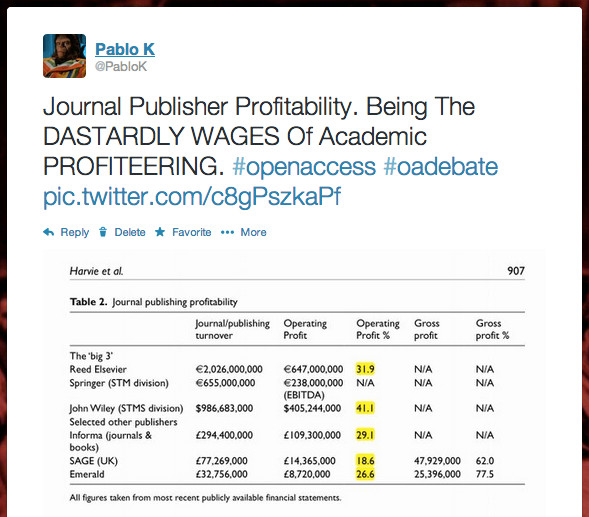
Journal Profits

Profitability data from Harvie et al., 2012.

And yet this scenario is once again an embarrassing one for International Relations, which otherwise likes to imagine itself the most engaged and relevant of disciplines (state power! trade rounds! war and peace!). Continue reading

The Marking Boycott And Its Aftermath

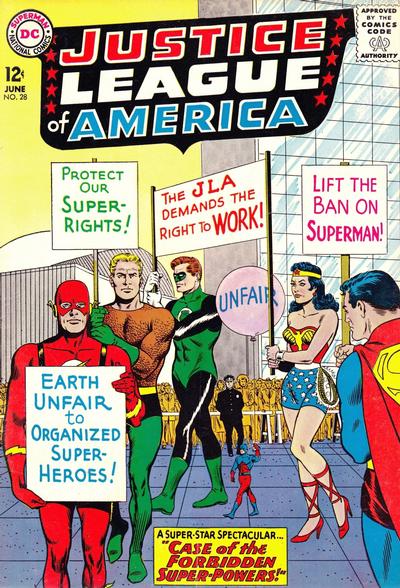
Justice League Super Hero Strike

In the face of a UK higher education marking boycott due to start in 11 days time, universities have come forth with a new pay offer. Having unilaterally imposed a 1% rise (read: real terms cut) for 2013/14, they are now proposing 2% for 2014/15, with a small bonus for those on the lowest band to bring them up to a living wage level (at Sussex, that’s an increase on the existing annual pay of £13,621). A consultative ballot is open to union members, and the boycott is delayed. It seems likely that there will be appetite for the deal, given the general tone of despondency and how drained staff are by repeated small scale actions and by mounting work pressures. There had, after all, been doubts that a boycott could compete with aggressive tactics from management (including threats to deduct full pay from anyone who participated in the boycott).

We might be emboldened by this concession from UCEA (the employers’ association). It shows, as more ‘militant’ elements had predicted, that greater returns would be achieved with the threat of a marking boycott than with all the 2-hour and single day strikes put together.[1] A first offer, before the boycott has even begun. Could we not win more than these peanuts (only just a real terms increase, following five cuts in a row, going by Consumer Price Index)?

Sort of.

Continue reading