Reading across the ‘Colour Line’: Texts, Traditions, and Academic Solidarity

ShowFullImageA guest post by Prof Gurminder K Bhambra, University of Warwick

Four incidents in the last week have caused me to check the calendar and confirm that I hadn’t accidentally time-travelled back a generation. Debates on which I had believed there to have been some (positive) movement over the last couple of decades seem to have made such little impact on many colleagues that it was as if the earlier debates had never happened. I outline the first three incidents briefly before going on to discuss the fourth in greater detail; I do so in order to reflect on their implications and consequences for academic work and engagement.

**********************************

bebop-2014-flyer-names-low-resA community statement was circulated by colleagues in Germany protesting against the development of an academic programme of Black Studies that did not include Black scholars or thinkers or engage with Black scholarship. It seems astonishing, in 2015, to have to rehearse the arguments, again, about why setting up a programme addressing the distinct experiences of a particular group of people and not including people – academics, activists, and others – who have had such experiences and have produced scholarship articulating that experience is problematic. Just so that people don’t misunderstand me here: I am NOT saying that only people with the experience can ever study or talk about such experiences. However, I am saying that to set up a programme for study without the participation of people whose experiences and writing are putatively central to it is problematic. There has been so much discussion on this topic that to repeat the mistakes of earlier times seems deliberately willful and it is this willfulness that requires to be addressed.

Since starting to write this piece, the director of the programme has disbanded it, apparently temporarily, in favour of an open debate about how to move forward in light of the criticisms being raised. Instead of disbanding, why not restructure on the basis of the criticisms and by taking them into account? They are not new.

**********************************

europeislamSecondly, the professional association that I consider to be my academic ‘home’ has advertised its forthcoming annual conference theme as ‘Fragmented Societies: Migrating Peoples’. As another colleague suggested, why not just call it ‘Migrating Peoples Fragmenting Societies’ and do away with the niceties and apparent distance created through the use of the colon. Thus far, there has been no response from the professional association to the suggestion that the wording of the conference theme be changed to avoid it sounding like a UKIP-sponsored conference.

**********************************

The third incident involves the setting up of expert panels at an international conference where all the experts chosen are from north America. There is not a single all-male panel; but all the panelists on all four panels are white. When concern about this was expressed on social media, one response was:

“Moronic tokenism, mk 2. Not satisfied with gender equality on panels at XXX? Rant about people’s skin colour instead”
Continue reading

Metrics: An Addendum on RAE / REF

Not everything that counts can be counted, and not everything that can be counted counts...

We have had overwhelming support from a wide range of academics for our paper on why metrics are inappropriate for assessing research quality (200+ as of June 22nd). However, some have also posed interesting follow-up questions on the blog and by email which are worth addressing in more depth. These are more REF-specific on the whole and relate to the relationship between the flaws in the current system and the flaws in the proposed system. In my view the latter still greatly outweigh the former but it is useful to reflect on them both.

Current REF assessment processes are unaccountable and subjective; aren’t metrics a more transparent, public and objective way of assessing research?

The current REF involves, as the poser of the question pointed out, small groups of people deliberating behind closed doors and destroying all evidence of their deliberations. The point about the non-transparency and unaccountability of this process is an important one to keep in mind.

The question is then posed, are metrics more transparent, public and objective? On a surface level, metrics are more ‘transparent’ because they are literally visible (public) and given a number, making them easily rankable. But what they represent, as we argued in our paper, is fundamentally non-transparent given the wide variety of reasons there might be for citing work, and more besides those we cited. In fact, it is the very simulation of transparency in the use of a numerical marker that becomes threatening to the act of actually reading work for assessment purposes. Continue reading

Why Metrics Cannot Measure Research Quality: A Response to the HEFCE Consultation

Pacioli Euclid Measurement

Update 24th June: 7,500+ views, 100s of shares, 200+ signatories! And a new post with some responses to further issues raised.

The Higher Education Funding Council for England are reviewing the idea of using metrics (or citation counts) in research assessment. We think using metrics to measure research quality is a terrible idea, and we’ll be sending the response to them below explaining why. The deadline for receiving responses is 12pm on Monday 30th June (to metrics@hefce.ac.uk). If you want to add an endorsement to this paper to be added to what we send to HEFCE, please write your name, role and institutional affiliation below in the comments, or email either ms140[at]soas.ac.uk or p.c.kirby[at]sussex.ac.uk before Saturday 28th June. If you want to write your own response, please feel free to borrow as you like from the ideas below, or append the PDF version of our paper available here.


Response to the Independent Review of the Role of Metrics in Research Assessment
June 2014

Authored by:
Dr Meera Sabaratnam, Lecturer in International Relations, SOAS, University of London
Dr Paul Kirby, Lecturer in International Security, University of Sussex

Summary

Whilst metrics may capture some partial dimensions of research ‘impact’, they cannot be used as any kind of proxy for measuring research ‘quality’. Not only is there no logical connection between citation counts and the quality of academic research, but the adoption of such a system could systematically discriminate against less established scholars and against work by women and ethnic minorities. Moreover, as we know, citation counts are highly vulnerable to gaming and manipulation. The overall effects of using citations as a substantive proxy for either ‘impact’ or ‘quality’ could be extremely deleterious to the standing and quality of UK academic research as a whole.

Why metrics? Why now? Continue reading

What We Talked About At ISA: Rhythm, Time and History

With thanks to Elisabetta Brighi and Xavier Guillaume for putting together the Rhythms of the International roundtable and their inspiring contributions, to Robbie Shilliam for his song, and Kyle Grayson for his spirited and thoughtful engagement. And by no means least, to the pleasingly sizeable and lively crowd who gave the last panel of the last day such a buzz.

Below is a write-up of my contribution to the roundtable, in which I reflected on the relationship of rhythm and history, and drew out some of the potential disruptions that a different rhythmic sensibility might have on our conception of history.


What is rhythm?

To my shame, colleagues, and partly out of curiosity, I looked it up in the dictionary. Shame, because if you are looking something up in a dictionary before giving a talk on it, you probably shouldn’t be giving a talk on it. Curiosity, because I wanted to know how they would define ‘rhythm’ in words rather than in noises.

The dictionary answers were not particularly edifying. One definition spoke of ‘repeated, regular beats’, another of a ‘regulated succession’ of beats. Thud, thud, thud. Boom, boom, boom. Boom, thud, boom, thud. These definitions felt flat, and rather forbidding. But I suppose this is because they were the generic definitions of all kinds of ‘rhythm’, and not just the samba playing in my head.

Using some thinking developed earlier in some work on music and politics, I started again, with a different question:

What is the relationship of rhythm and time?

This yielded a much more direct answer: it is the production of rhythm that makes time itself knowable. In the making of music, rhythm generates movement and flow, and makes it possible for sounds to synchronise and arrange themselves. Continue reading

What We Talked About At ISA: Abstraction, Authenticity, Objection

Our traditional post-conference binge series returns, with posts on talks given at the International Studies Association conference (this one was in Toronto, in March 2014).


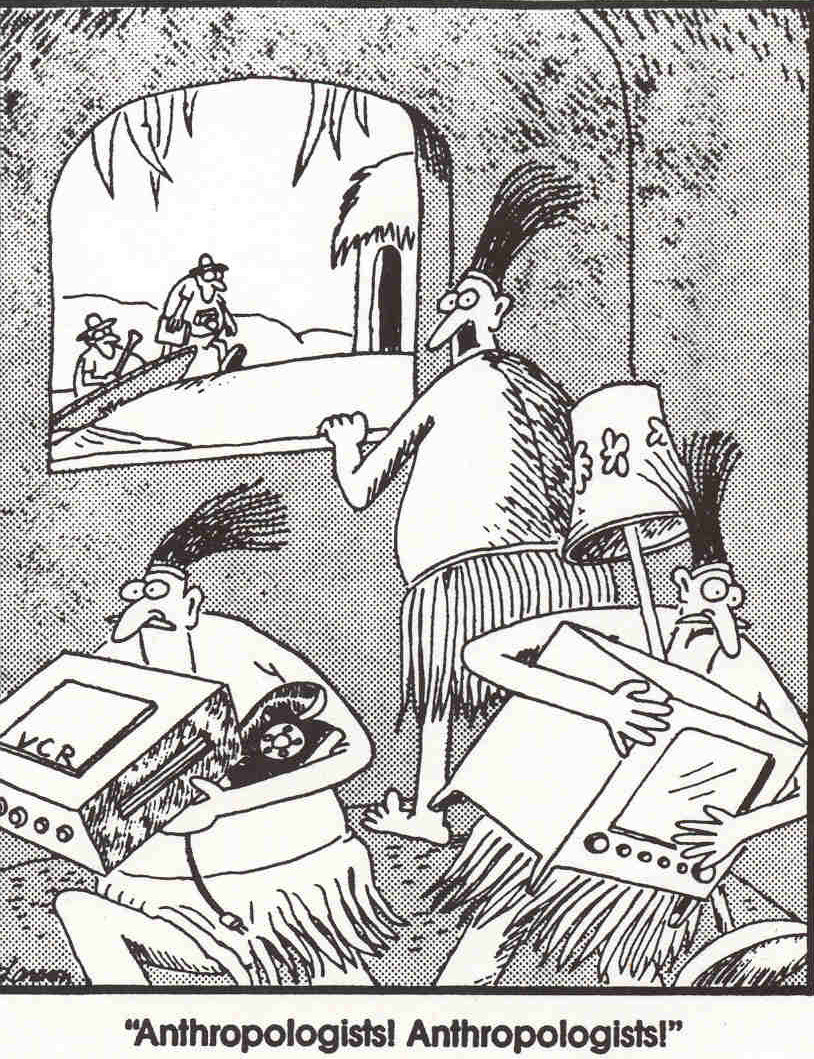
Far Side Anthropologists

0. Prelude

Since our theme is accidental fieldwork, I will begin with an account of my accident. In the course of a PhD thesis mainly on concepts, theories and narratives of wartime sexual violence, I spent three and a half weeks in the Eastern Democratic Republic of Congo. That time barely deserves the term ‘fieldwork’, but it wasn’t desk work, and it wasn’t familiar. Working partly for an NGO, I spoke principally to agents of the humanitarian international, from ActionAid to various branches of the UN. I was partly working for others, and partly scoping out a more in-depth period of fieldwork, one that never materialised. I socialised in the same bars as those internationals, and sat by the same hotel pools. But I did not then seek to interrogate their peculiar brand of international practice. Nor have I returned to it since.

Perhaps this accounts for why my over-riding sense was one of discomfort. At some level I expected that my time away would enrich the thesis by locating my abstractions in concrete situations and real persons. Perhaps I would experience what so many seem to, and fall for the location itself, returning again and again, and slowly acquiring language, cultural cues, a taste for the food and the air. Instead I felt strangely detached, and implicated in performances not of my choosing (the expert, the knowing colleague, the route to international support, the disaster tourist). I returned more attached to conceptual inquiry, and more suspicious (I was already quite suspicious) of appeals to ‘the real world’ and its informants. My disconnection (from other ‘internationals’, from locals, from Goma itself) became clearer sometime later, sitting in a hotel suite at an ISA panel, listening to others talk about the same place, and some of the same buildings, in terms of their own discomfort and dislocation.

1. Narrative Is A Metacode

Not all representations of the field are alike. Let us distinguish three. Continue reading

Living Knowledge Traditions and the Priestly Caste of the Western Academy

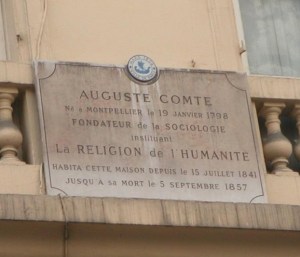
comte

The Western Academy, especially in its social science and humanities wings, incorporates as a priestly caste. Perhaps Kant is the first high priest of this caste when he argues for the Aufklärer to become a corporate entity equivalent to the hierocracy and nobility but exceptional in its duty to provide a truly public service of reasoning. The psalm of this priestly caste is “have the courage to use your own understanding”, its catechism: to singularly possess and hold aloft the flame of revelation, known as science, or, nowadays, the modern episteme. Even Marx holds the flame aloft when he takes Hegel’s Philosopher, who breathes world spirit, and makes him inhabit the skin of the Communist.

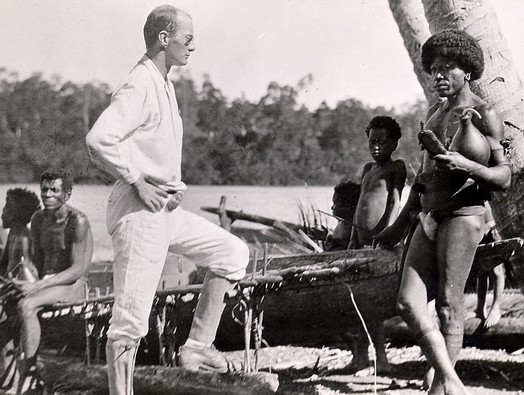
This priestly caste, as it founds the church of modernity, is instantly and integrally involved in founding a broader colonial division of labour.  These new priests conjure up the traditional/modern divide by the use of history –  differentiating old and new European Western societies – and by the use of anthropology (later, sociology too), by differentiating the colonized from the colonized. The living knowledge traditions of the colonized are pronounced dead on arrival in the present. And their cosmologies, philosophies, social practices – are entombed into opaque “cultures” the contents of which can only be clearly illuminated by the keepers of the flame. 

19_malinowski

Ultimately this mapping of difference works through race, gender and class coordinates so that even the “poor” living in the West, as well as un-mastered women and single mothers intersect with (post-)colonized subjects to become part of this opacity. The episteme of the Western Academy thus differentiates between the knowers and the known.

In this respect, the modern episteme is as seminal as gunboats to the maintenance of colonial difference. Key to this difference is not just the attribution of extra-ordinary exploitation, oppression and dispossession to colonized peoples but also their epistemic erasure, i.e., the outlawing of the possibility and desirability of intentional self-determining community amongst the colonized and their post-colonized descendents. It is in the colonial world and not Europe where Europeans develop the art of objectifying peoples into populations such that the basic competency of the colonized to self-define is deemed absent by the instruments and mores of European sanctioned international law. Postcolonial populations have only been able to become peoples under very specific conditionalities; and many who make the transition become the new police of colonial difference. Those who fall between or prefer a third way become the ungoverned, or ungovernable.

Continue reading

What We Talked About At ISA: Critical Pedagogies?

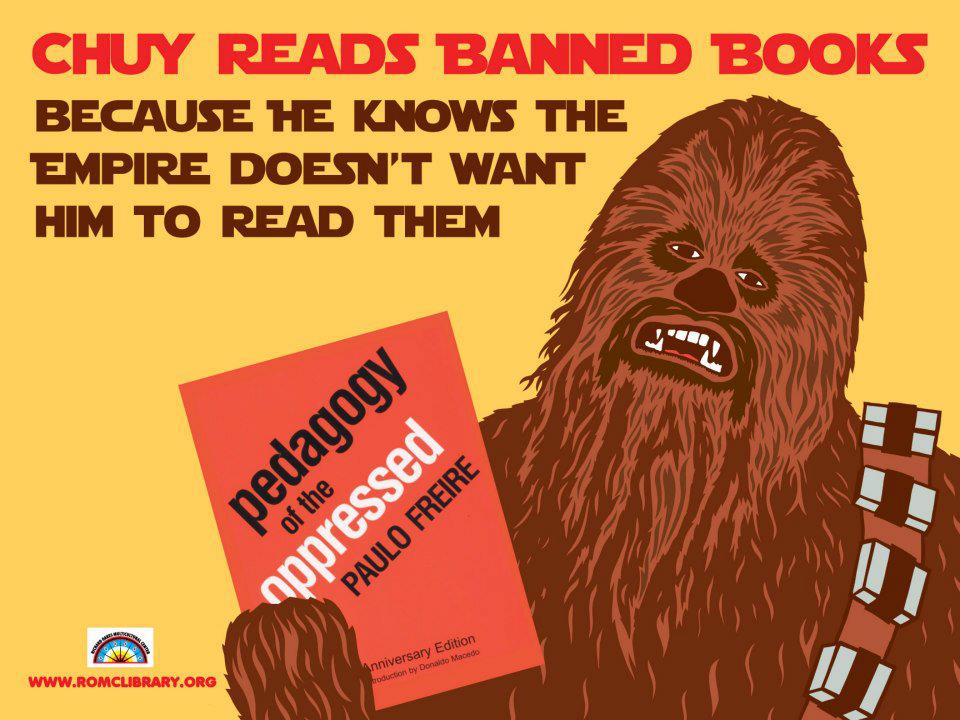
Chuy Pedagogy Of The Oppressed

There is something seductive about the idea of critical pedagogies. In an age where the figure of academic is beset on all sides by voracious spectres – the Taxpayer, the Minister, the Entrepreneur, the Curious Public, the Student-Consumer, the Management Consultant – it offers the idea that what happens in the classroom may still matter. More than matter: might in some way emancipate. This promise is perhaps particularly strong in academic International Relations, where those of various ‘marginal’ persuasions might argue that teaching against the grain undoes the destructive commonsense of global politics. That critical pedagogies help us bring back in the human, the ethical, the powerful, those daily experiences shot through with international politics, although our students don’t always see it. Even the titles hint at grand transformation: Pedagogy of the Oppressed!

Don’t get me wrong. I want to be seduced. More than that, I am all too ready to concur with many who also sat on the panel (‘What Do We Teach? How Do We Teach It?: Critical Pedagogies and World Politics’) convened by Meera in San Francisco (they were: Naeem Inayatullah, Laura J. Shepherd, David Blaney, Andrea Paras, Daniel Bendix and Chandra Danielzik). To agree that, since so much mainstream International Relations speaks the discourse of power, it is necessary to reveal its fictions and silences. To agree that narratives and memoirs have their place, alongside such ‘political’ terms as racism, patriarchy and class. To agree that it is better to start with Todorov and The Conquest of  America than it is to begin from a world of ahistorical self-help states. To agree with programmes for interventionist anti-racist education.

But I am also somewhat cautious. Some of that might be read as a spur to critical pedagogy by another name, and some as a delineating of criticality’s limit, at least insofar as that term is often discussed. Call these somewhat speculative micro-interventions the unapologetic curriculum, marginal resistance and real academic politics (always with the rule of three).

Continue reading

Obama’s Ohio Report

My Ohioans did it again.  In every election since 1964 (and almost every time since 1904), the winner of this state ended up taking the presidency – hence the clichés “America’s bellwether” and “as Ohio goes, so goes America”.  Having spent six years of my life studying politics at The Ohio State University not so long ago, I can’t help but identify and sympathize with Buckeye voters, a group of people that every four years gets to decide the fate of the U.S. and, some might add, the world. This is a heavy burden for many reasons, including being exposed to the fanfare of presidential candidate fly-ins (82 of them this time), thousands of attack-counterattack TV ads (that typically target only “undecideds” and/or “independents”), as well as dozens of phone calls and door knocks reminding you to get out and vote for the right person (in the final week of the 2008 campaign, Team Obama said it knocked on a million Ohio doors per day).

The phrase “key battleground state” that every news outlet likes to attach to Ohio refers to its electoral-college vote clout (the 2010 Census reapportionment gives it 18 votes until 2020) as well as its recent record in presidential elections, which is marked by small margin-of-victory numbers (4.6 percentage points in 2008, 2 in 2004, etc.). The state has a remarkable red-blue balance overall; since 1998, the state voted for three Democratic and three Republican candidates each). Also remarkable were the results of pre-election state polling in October, which showed a tied (or at least tightening) race between President Barack Obama and his GOP challenger Mitt Romney (see, for example, the discussion of the RCP poll of polls from 30 October).

To be sure, electoral pathologists – those friends of yours obsessing about assorted ‘paths to presidency’ – had probably explained to you that each candidate could have won an electoral majority without Ohio (e.g. Obama would have had to grab one or two bigger states considered tossups plus all reliably blue states, and Romney would have had to hold onto all normally red states while pulling off multiple upsets elsewhere). This type of electoral math is both fun and fantastic, but reason tends to swiftly restore the status quo ante: it’s all about “Ohio, Ohio, Ohio!

Tuesday’s drama ended right after 11 pm Eastern Time, when the news organizations called Ohio for Obama; less than two hours later, Romney conceded the race.  To examine this outcome, let us begin with two issues identified by the media as key to this election: the auto and coal industries, and the thousands of jobs each of them provides to the state. (Compare, The Globe and Mail’s Ohio postcard of 25 October or The Economist of 27 October to the endorsement editorials in The Columbus Dispatch [Romney], The Cincinnati Enquirer [Romney], The Plain Dealer [Obama], or my favourite OH newspaper, The Blade [Obama]). In a nutshell, while some Ohioans liked what the president did with the former (that 2009 bailout of GM and Chrysler helped the manufacturing sector in the northern part of the state), others hated what he did with the latter. (Being viewed as too green on energy was expected to hobble Obama’s re-election chances in the coal-mining counties of the Appalachian part of the state).

Whatever the explanatory merits of simple storylines like these, unofficial returns bear this one out. The website of Ohio Secretary of State’s office has Obama winning by about 2 percentage points, which is lower than in 2008. The president indeed carried the populous Cuyahoga County (centered on Cleveland) plus a string of smaller counties in the northeast by sufficiently large margins, while Romney won large parts of the coal country.  What went on elsewhere in the state was more important, however. Though Romney ran strong in most traditionally Republican rural areas, he severely underperformed in the remaining half dozen big urban counties, which account for almost 40% of the statewide vote. Even Hamilton County (Cincinnati), historically a GOP bastion, went to Obama by about 20,000 votes again. (For the county-by-county comparisons over time, see Rich Exner’s page at The Plain Dealer; U.S. politics junkies might also consult a map of the 2008 precinct-by-precinct results provided by Stanford’s Spatial Social Science Lab).

Demographically, Obama probably carried the state in the same manner as he did four years ago.  How many Ohioans voted will not be known until late-arriving absentee ballots and provisional ballots are counted, but the turnout (about 68%) can safely be described as well above average. This surely helped the president: by getting its base to register and ballot (including via early in-person voting), the Obama campaign succeeded in maximizing Ohio’s Democratic potential once again (against a stream of ‘voter fraud’ legislation targeting qualified minority voters). What exit polls seem to be suggesting is that the president bested his challenger among female, young, college-educated as well as minority voters.  And what of Ohio’s white working class males (those without a university degree), who sit at the center of any “annoying, all-purpose pet theory” of U.S. presidential elections? Here, it appears that the president succeeded in avoiding a large margin of defeat, and it will be interesting to see why. The success in capitalizing on Romney’s casino capitalism sounds like a plausible hypothesis (and a nice extension of the auto bail-out storyline); but let’s recall that in 2008 Obama won 56% of votes from union households, which was lower than the national average.

What about the role played by ‘non-fundamentals’, specifically Obama’s race? Estimating this particular effect is challenging at any level of analysis, but both survey-based and non-survey-based studies have suggested that in 2008 Obama lost about 5 percentage points of the national popular vote due to racial intolerance on the part of some voters. A meaningful decline in this number would be my candidate for a feel-good story of the 2012 election.


Note: Cross-posted at the CIPS Blog, and meant to be read in conjunction with “Pre-Election Facebook Rants, #652

The Cursory Pedant: War Rape, the Human Security Report and the Calculation of Violence

“Cursory and pedantic”. So says IntLawGrrls’ Fionnuala Ní Aoláin of the just released Human Security Report 2012 (hereafter HSR). You may recall the team behind the HSR from their last intervention, which upset the applecart over the estimate of 5.4 million excess deaths in Congo (DRC) since 1998 and which also claimed a six decade decline in global organised violence. The target this time round is a series of putative myths about wartime sexual violence (those myths being: that extreme sexual violence is the norm in conflict; that sexual violence in conflict is increasing; that strategic rape is the most common – and growing – form of sexual violence in conflict; that domestic sexual violence isn’t an issue; and that only males perpetrate rape and only females are raped), each of which the authors claim to overturn through a more rigorous approach to available evidence. Along the way an account is also given of the source of such myths, which is said to be NGO and international agency funding needs, which lead them to highlight the worst cases and so to perpetuate a commonsense view of war rape that is “both partial and misleading”.

Megan MacKenzie isn’t impressed either, especially by HSR’s take on those who currently study sexual violence:

[HSR’s view is] insulting because it assumes that those who work on sexual violence – like me – those who have sat in a room of women, where over 75% of the women have experienced rape – as I have – listening to story after story of rape, forced marriage, and raising children born as a result of rape, it assumes that we are thinking about what would make the best headline, not what are the facts, and not what would help the survivors of sexual violence.

Laura Shepherd (who like Ní Aoláin and Megan has written at some length on these issues) took a slightly different approach: “It makes not one jot of difference whether rates of [incidents of conflict-related sexual violence] are increasing, decreasing or holding entirely steady: as long as there are still incidents of war rape then the issue demands serious scholarly attention rather than soundbites”. Activists are concerned less by what the report says than by how it will be interpreted and the effects this will have on victims and survivors of rape (the danger, in Megan’s words, that “painting rape as random is another means to detach it from politics”). By contrast, Laura Seay (who has previously addressed similar issues in relation to Congo) is very supportive: “it’s hard to find grounds on which to dispute most of these claims. The evidence is solid”. Andrew Mack (who directs the HSR) similarly replied that the data supports HSR’s claims and that, despite criticisms, it had been checked rigorously.

So what is going on here?

Continue reading

Eurocentrism, Racism: What’s In A Word?: A Response to Bowden, Sabaratnam and Vucetic

The fifth and final post in our symposium on John M. Hobson’s The Eurocentric Conception of World Politics: a reply from John himself, responding to the commentaries from Meera, Srdjan and Brett. John’s original summary post is, of course, still available too.


Introduction: All for one and one for all?

I would like to begin by thanking most sincerely my three blog interlocutors for having gone to the trouble of reading my new book, never mind taking the time to write up their extremely thoughtful and interesting blog responses. Of course, the cynic reading all of this might be forgiven for thinking that such a blog forum is hardly a ‘testing environment’ for Hobson’s book, given that his interlocutors are either postcolonialists or at least influenced by postcolonialism and have presumably, therefore, been “cherry-picked” for their potentially sympathetic tendencies. Even the titles that they have chosen, so the cynic might think, would appear to be symptomatic of this, with Meera Sabaratnam’s piece proclaiming – extremely generously I must concede – that my book has succeeded in ‘blowing up the disciplinary citadel of International Relations’, while Srdjan Vucetic’s title projects even further the meaning of the front cover of my book to that which I had intended, suggesting that IR is a ‘foolish discipline’ given his resounding agreement that it suffers from a pervading Eurocentrism. In this vein it might be thought that Brett Bowden’s title – ‘Eurocentrism and More’ – chimes in with yet another wholehearted rendition of the now familiar chorus of ‘IR is a Eurocentric discipline’. So why the fuss about all this and is there much point in reading on? For it would seem that we’re all agreed and there’s nothing to debate, right?

Well no, not quite all for one and one for all. Continue reading