The Pay Strike And Its Discontents

Breaking Bad Pay Teachers More Money

The ballots are out, the wheels are in motion. Union members have until Thursday 10 October to vote on strike action over the latest derisory pay offer of 1% (if you haven’t received a ballot, go here). The justness of the cause seems clear enough. Since 2009, every pay award has been several percentage points below inflation, leading to a consistent real terms drop in pay. And some of those paltry increases were only attained after negotiations. Yet, despite the protests from above (and excepting a brief dip in student numbers), British higher education is in fine financial health. The overall wage bill is decreasing at the same time that surpluses are growing. And for “growing” read “more than doubling”, from £488 million in 2007/8 to £1.1 billion in 2011/2012. Managers are reaping their rewards accordingly, and a significant portion of Vice-Chancellors are seeing their pay go up by 10-20%. At Sussex, for example, Michael Farthing is now paid £280,000 (including pensions contributions), as compared to £178,000 in 2007 (that’ll be a 57% increase then).

And yet there is a foreboding. Fear is a factor, nondescript anxiety another. Perhaps an awkward sense that any level of action is somehow at odds with the academic code.

Articulated objections come in two stripes. First, the we-haven’t-got-it-so-bad defence. Beyond the usual ‘all in it together’ austerity ideology, there are pay increments (which most permanent academic staff get automatically). Real wages aren’t declining so hard if you move up a pay step each year. This is on its own a pretty restricted ambition, since it amounts to a kind of career “progression” that leaves you standing still. It is also, for all the talk of solidarity with lower-paid workers, a selfish analysis.

In the last 5 years, the pay for new lecturers and tutors has dropped 13% in real terms. Following the USS pension saga, they (we) have each had tens of thousands of pounds taken from them over the course of their careers, while staff that retained their old rights are paying more every month into a scheme that was, let us recall, nowhere near crisis. There are fewer scholarships and research grants than before, and an increase in teaching-heavy posts. Consumer-driven logics are set to make that worse. On the horizon, just over there, is a US-style expansion based on precarity, a prestige elite, and debt bubbles. Some at the top are already breaking from the national pay spine, inaugurating a two-tier system. Consider this trend alongside the state of university finances. What is it to look at this and say things aren’t so bad? I put it to you that such a position is detached, complacent, and irresponsible.

Second, there is the strikes-change-nothing complaint. This has better justification. Local actions over the last years have not reversed policies. Pensions were stripped down anyway. And there is something peculiar, isn’t there, about the idea of day-long walkouts and picket lines in a sector so based on relatively scattered student-teacher interactions. There is no machinery to fall silent, no buzzing shop floors to stand empty. Just a day of saved wages for management and probably a whole stack of reorganised lectures, academics not really being the types to withhold knowledge (or, rather, unwilling to see knowledge as labour). There is a sense that the old tactics are dead, and should be left in their graves.

On the one hand, this is an argument for more radical action. If employers can handle strike days, we need more. Or, alternatively, forms of action that do not fetishise the picket line. Something that will make VCs pay attention, like a marking boycott or withholding final grades. In a customer-orientated culture this is the pressure point, especially if action begins to alter the results of the National Student Survey, that Big Other of the academic scene (what do students really want?). The complaint goes up that the national union lacks the imagination to instigate these actions, and that we should therefore turn to more vibrant kinds of opposition. But new forms of resistance nevertheless confront established modes of punishment. When full pay is withheld day on day, when even partial performance leads to the forfeit of full wages, how quickly will we really buckle? We know something has to break the pattern, but we’re not sure we’re capable of it, or that the sacrifice is worth it. In other words, we find ourselves a little too close to text-book academic bitching: something more fundamental needs doing, but we’re not likely to be the ones to do it.

On the other hand, the fear and the paralysis can be found closer to home. Complaints about the union form do not produce their alternative ex nihilo. There are possible replacements, but no actually-existing ones. Nor does the appetite for creating one seem to exist. And for good reason. The paradoxical character of academic subjectivity is both to consider ourselves in a position of real epistemic and social privilege and to be so despondent about our influence on things as to merely absorb the changes thrust upon us (working conditions, impact agendas, research restrictions). The legal protections of strike action have no parallel, truncated as they are. Creative alternatives have raised energy, and served as political classrooms in their own right, but they haven’t actually stymied ‘reforms’ (whether on fees, outsourcing or investment portfolios). And, strange as it may sound, universities are probably happier taking draconian action against their workers than their students. A faculty occupation, if we could even imagine such a thing, would not end well.

None of that is to say that we (there’s that intangible collective again) should walk zombie-like to the picket. Fersure, let the rejuvenation of academic democracy proceed apace. In the meantime, we have to ask ourselves seriously what the consequence is of another pliant year. There are murmurings that a failure to win this ballot will endanger collective bargaining itself. If we cannot muster the resolve to deliver a strong yes on action short of a strike, and a strong yes on strike – if we cannot even deliver a serious turnout – that’s probably as much as we deserve.

Why I’ll Miss Jean Bethke Elshtain

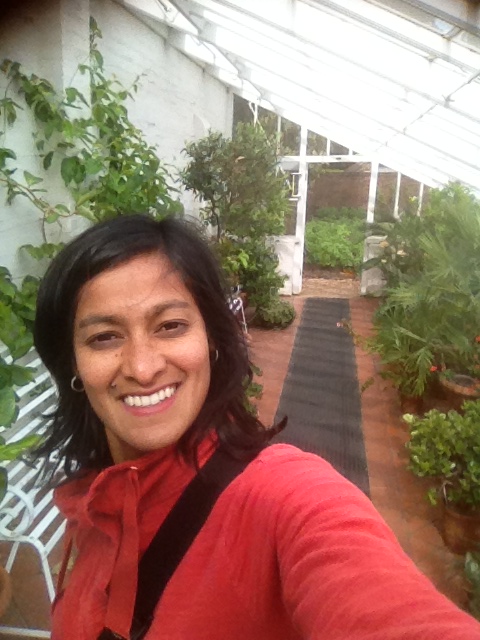
A short version of a tribute to Jean Bethke Elshtain, who died last Sunday, from Christine Sylvester, Professor of Political Science at the University of Connecticut.


Jean Bethke Elshtain

She was embraced by feminists for her books on Women and War and Public Man/Private Woman, and then ostracised by the sisterhood for her disapproval of gay marriage and approval of “just” wars in Afghanistan and Iraq. She would become anathema to peace researchers and sandpaper to scholars of critical IR. Those who liked her early writings in a secular vein would be disappointed when she began to argue from a base in religious philosophies. Jean Bethke Elshtain encapsulated the best hopes of feminists to effect change in core topics of “men’s studies” –International Relations and Religious Studies –and ended up instead on the wrong side of several issues. That’s clear. So let’s ignore her recent death, shall we? Possibly celebrate her end?

Not me. I met Jean at a series of feminist IR conferences held between 1989 and 1993 in the USA, and then shared many a panel with her at the International Studies Association for a few years. Without equivocation, had I not met Jean and found favour in her eyes, I wouldn’t have produced publishable work in my own voice. Jean pulled me aside at one conference, sat me down, and told me to maintain and further develop what she called my “maverick tendencies.” The good Coloradan that she was warned against following the herd as it raced along toward…possibly nothing. My graduate school mentors had been excellent and very encouraging, especially Karen Mingst. I learned much from them, but also resisted some of their good advice once I was out on my own, stubbornly insisting on writing about Zimbabwe and feminist IR –two very different specialisations, both approached in slightly off-centre ways. To Jean, that was the way to go. Permission granted. Years later, in 2001, when she was on an ISA panel discussing my work, along with Cynthia Enloe, Steve Smith, and Dipesh Chakrabarty, she gave me a hard time over what she called my “postmodern avoidances;” by then, Jean was a solid believer in truth. She gave an audience member an even harder time, though, for wilfully misrepresenting my arguments.

Jean the scholar I admired very much. Jean the person behind the scholar astounded me. Her story, of course, appears in an early chapter in Women and War (1987), a book that came out decades before IR recent “new” interest in auto-ethnography. Jean depicts herself as a smart-ass tomboy, a shoot-em-up leader of the cavalry of kids, clearly smarter than everyone around her. But she was decidedly in the pack of youngsters who contracted polio before the vaccine, and who had to suffer the neanderthal treatments available at the time (my cousin was similarly afflicted and spent months in a hideous Iron Lung.) Thereafter, Jean walked with a noticeable limp. I remember the two of us racing like maniacs down the streets of the University of Southern California to get to where we were to speak. That pronounced limp on a shortened leg could not be ignored: I suggested we go slower. She wouldn’t have it. “I can do this,” she said, “not happily or easily, but I can do it.”

Continue reading

HEFCE, the REF, Open Access and Journals in Politics, IR and Political Theory

UPDATE (8 September 2014): Lee originally wrote this as a guest post – providing some much needed concrete detail on journal open access policies – but is now with us for good.


Following the launch of HEFCE’s consultation on Open Access for any post-2014 REF, and the generally positive reaction to it here, I examined the potential implications of HEFCE’s proposals for journal publishing in Politics, IR and Political Theory. I wanted to know whether the serious threat in HEFCE’s earlier proposals – notably the rush for ‘gold’ OA and associated Article Processing Charges (APCs) – had been eliminated by a downgrading of the proposals to permit ‘green’ OA, by depositing a ‘final accepted version’ (FAV, i.e. post-peer review, but pre-type setting) into an institutional repository. I also wanted to see what embargoes journals placed on FAVs (i.e. how long after the ‘Version of Record’ (VoR) is published in the journal the FAV can be made public); what re-use was permitted (what sort of licensing); and also to compare this route with the ‘gold’ access favoured by the Finch Report and the RCUK policy. I also wanted to gather information that could be used as part of a ‘soft boycott’ of OA-resistant outlets.

To do this I selected 57 journals that broadly represent the ‘top’ journals in the three subfields. I used composite rankings from Google Scholar, the ISI Citations Index, and surveys of scholars where available, and got feedback on an initial draft. The list isn’t intended to be definitive, just to give us a better sense of where the ‘big journals’ in which many scholars aspire to publish actually stand on OA.

It is not easy to get this information. Policies can vary by journal, not merely by publisher, and their websites are often opaque on the issue of self-archiving, particularly in terms of licensing. This may change if, as seems likely, HEFCE forges ahead on OA; but publishers also need to be pushed to display clearer information. The exaggerated nature of the Finch Report’s estimate of UK HE’s market power to change publishing models is underscored by the fact that US journals tend not to provide the information I was looking for (my thanks to Sarah Molloy for help with this).

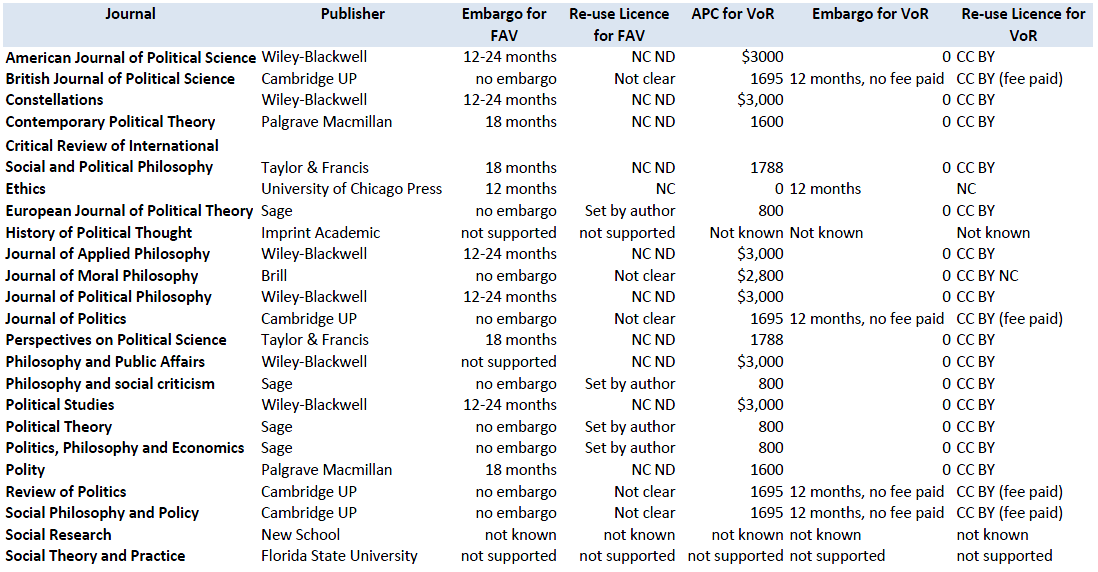
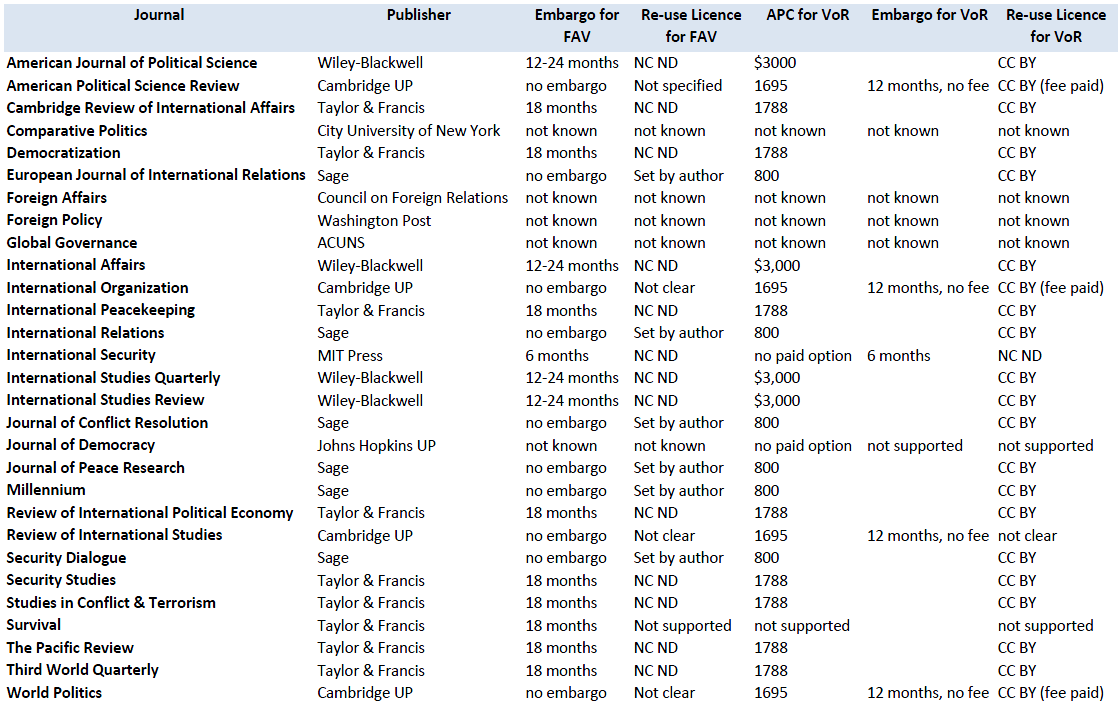
The results are presented below for Politics, IR and Political Theory (click to enlarge each image). There are a lot of complexities with various journals which are shown in the full spreadsheet of results which you can see here; the spreadsheet also lets you reorder the information by different criteria.

OA - IR

Journal Open Access Policies for International Relations.

Journal Open Access Policies for Politics.

Journal Open Access Policies for Politics.

Journal Open Access Policies for Political Theory.

Journal Open Access Policies for Political Theory.

Several conclusions can be drawn.

(1) Most importantly, Pablo and Meera were basically right: the threat of HEFCE rushing to a ‘pay to say’ approach with hugely detrimental financial consequences for universities and the potential for internal rationing of APCs, has been defeated, for now (although RCUK’s policies remain intact). Some journals, particularly in the US, don’t seem to support green FAV self-archiving, or have gold APC routes – this is a problem because they would be non-compliant with HEFCE’s proposals; so we will need to push for exemptions on this score. However, by and large, where they allow FAV self-archiving, none of the journals appear to charge a fee; HEFCE’s current proposals now intend to compel more researchers to do what they are already entitled to do. So long as this does not change, HEFCE’s proposals should not involve ruinous costs or lead to APC rationing.

Continue reading

What Does It Mean To Edit An Open Access Journal?

Yet another post on open access, but this time featuring a non-Disorder voice. I recently exchanged emails with Dr Eva Erman of Uppsala University on the possibilities and constraints of open access publishing. Eva is the Chief Editor of Ethics & Global Politics, a fully open journal that not only attracts authors of note in normative international political theory (Zygmunt Bauman, Saskia Sassen, Bruno Latour, John Agnew, R.B.J. Walker, Heikki Patomäki, Lea Ypi, Catherine Lu, and our own Rahul Rao!), but has also achieved an Impact Factor above that of many well-known and ‘closed’ journals (0.808, putting it 20th in Ethics and 53rd in Political Science).[1] As we have already discussed, fully open journals of this kind (what might be termed ‘No APC Gold’ journals) can face serious resource constraints, so it is worth understanding what might be possible. My exchange with Eva is book-ended with some thoughts on what it all means.


Ethics and Global Politics

1. Who began the journal, and why?

I got the opportunity to start the journal in 2007. A woman from a newly established publishing company, Anne Bindslev who runs Co-Action Publishing, who knew about my work, asked if I thought there was a subfield/niche within political science that was lacking among prominent journals. And I thought that back then, journals in ethics were not very good at publishing articles in political philosophy and, more specifically, on international political theory and global politics; and journals in international affairs, such as Ethics & International Affairs, were not very theoretically impressive. So, this is why I said yes to launch Ethics & Global Politics. Another reason was that I became interested in open access (OA) as a publishing model, and also for normative reasons thought that a journal that publishes in global ethics, global justice and so on, should do so open access to all people.

2. How is the journal funded? Are Editors or their assistants paid? 

Together with Co-Action publishing (who now run more than 25 OA journals in natural and social sciences), I have managed to get funding for OA publication from two different Swedish funders, the Swedish Research Council and FAS. The last year, FAS has been replaced by funding from Uppsala university, where the journal is editorially based. Of course, this is an insecure situation, economically, since I have to apply for renewed funding every year, which is always a bit uncertain.

The exact budget for 2013 consists of 165,000 Swedish crona (from the Swedish Research Council) and 70,000 Swedish crona from Uppsala university. This is in total an annual cost of around £23,500 or $36,000.

Pretty much everything goes to Co-Action Publishing, who are responsible for production management, webpage, copyediting and type-setting, as well as getting everything out on professional proof reading. Co-Action Publishing do not make any profit from running OA journals. Of course, the voluntary or almost voluntary work on the editorial side, by me mostly, is more difficult to measure.

3. How do you organise, and pay for, your online presence?

Continue reading

Seven Propositions on Open Access

Also Tumblr’d.


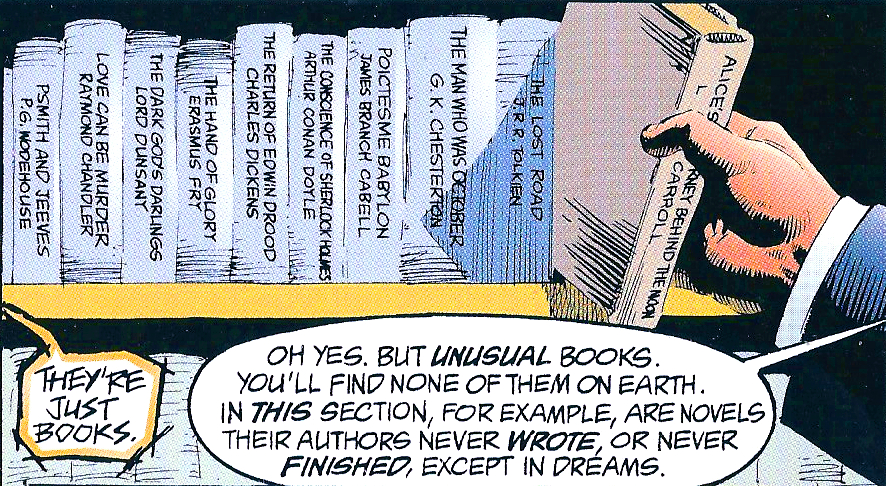
Library of Dream Lucien and Books

1. The embargo distinction between STEM (Science, Technology, Engineering and Mathematics) and AHSS (Arts, Humanities and Social Science) is arbitrary and unjustifiable: if there must be embargoes, let them be 6 months for all;

2. Set learned societies free! They can choose not to be open access if it would drain too much from their coffers. Their prestige (and the prestige of publishing with them even if that means not being returnable to research assessment exercises) should sustain them;

3. Moreover, learned societies are not an unqualified good. Some of them may need to, might even usefully, disappear;

4. Open access is a public good, but it doesn’t require that justification. The inequalities of the global academy, and the division of access to knowledge within it, are plentiful reason enough;

5. Any arbitrary barrier to access, however small, should be resisted. Having to sign up to a repository to access research, or click a special request button, or navigate a series of log-in pages, disrupts access. Articles must be as easy to reach as commentariat opinion pieces. Otherwise you get closed access by nudge theory;

6. Access is a big battle, but not the whole battle. The form of research, the mode of its dissemination, the barriers of disciplinarity, and the legitimacy of ‘academics’ and ‘intellectuals’ in public debate are all also crucial, and currently under-interrogated;

7. ‘Knowledge’, likewise, is up for contestation. Who produces it, what gets excluded by the fetishisation of peer review, what the conditions of academic labour are today (and will become in the next decade), how academics represent the authority or sanctity of their work to civilians: all that needs to remain present as the horizon of possibility.

Getting Somewhere: HEFCE Proposals on Open Access for a Post-2014 Research Excellence Framework

zimbabwe-press

This week, the UK’s Higher Education Funding Council for England (HEFCE) published their formal proposals for including an open access requirement in any post-2014 Research Excellence Framework (REF). Responses to this will be accepted until 30th October 2013. These proposals follow a pre-consultation letter and set of responses which were submitted earlier in the year (link to University of Cambridge response).

Following up our concerns about the policy raised over the last few months (here and here, further posts here) the present iteration represents a decent outcome on some of the details, not least because it defers quite a few of them. That these issues have been deferred does not mean that they do not matter; rather it means that the battles on them will be fought elsewhere – with universities, with journal boards, with learned societies, with publishers and their lawyers and so on. Moreover, there is no cause for complacency around the broader political economy of scholarly publishing, which remains wasteful, restrictive and inequitable on many fronts. And of course, the pernicious REF exercise itself, which this government signalled it would review, must be itself vigorously contested (more on this to come).

The Requirements

The proposals are to require that any REF-submitted journal article or conference proceeding published after 2016 must be made available in the final post-peer reviewed version from an institutional repository at the point of acceptance (or publication). This in line with the previous agenda of RCUK and others, and maintains journal exclusivity by accepting substantial embargo times on truly open (read: public) viewing of these deposited versions. So a paper “immediately” placed in an institutional repository may still not be viewable for up to 24 months in the Arts, Humanities and Social Sciences (recall that this length of permissible embargo was extended in the face of publisher lobbying), although it may be possible to request papers directly from the author on an individual basis. This version of mandated open access is applicable only if the address line of the author is a UK HEI at the time of publication, and cases for exceptions can be made. HEFCE’s assessment that this should be broadly achievable under current provisions is reasonable, and represents a good path for opening up access to research under present conditions. From the perspective of maximising green OA, Stevan Harnad’s response is as ever highly incisive. Below are some reflections on the present state of play.

What Has Been Won and Deferred

First, the old green/gold battle is now (nearly) over, and with it the concerns that academics would routinely pay exorbitant author fees to have their research published. Continue reading

On Rejecting Journals

Kertesz - Man and Abandoned Books

Any excuse for an André Kertész image.

Yesterday, in an act of minimal defiance, I declined a request for peer review on the grounds that the journal was owned by Taylor and Francis, and therefore charges authors £1,788 per piece for open access, or imposes an 18 month restriction on repository versions. In the wake of the OA debate, this situation seems increasingly ludicrous: for the short term at least, an increase in journal profit streams, made possible by the sanctity of unpaid academic input. The principle (saying no to closed journal peer review) is not inviolable, but a reluctance to subsidise shareholders with free labour seemed an appropriate response to the current balance of forces.

So far so good, you might think, but there is a lingering issue of ethics. It was suggested, following a previous act of review rejection, that some hypocrisy might be at work. Am I not proposing the withdrawal of a service that others would perform for me without complaint? Since the infrastructure of the academy rests on the provision of reviews, and since academics benefit from having their published work certified, submission to any closed journal, without providing reviews to the same, is tantamount to parasitism. A use of colleagues’ labour without returning the favour, all easily accomplished in an accounting system that positively celebrates the anonymity of authors and reviewers.

The most forceful of open access advocates would point out at this stage that the answer to this dilemma is pretty straightforward: don’t review for closes access journals and don’t publish in them. Simply move your labour – writing, reviewing, editorial board-ing – as quickly as possible to the more open journals. The more of us who do that, the quicker the transition to proper open access will be. This is true, but it won’t quite do. For two reasons.

First, whatever is to be wished for, the Arts, Humanities and Social Sciences currently lack open access journals prestigious enough to make submission to them a low cost option in the economy of reputation. This is a corollary of the market dominance enjoyed by closed journals: scholars are penalised if they step outside of this reputational system. This point that has been raised before, and clearly depends considerably on the exact field, and the national context. On the UK scene, even where academics stress that they themselves would never pre-judge a piece by publication venue, they usually hold that someone else (the Big Other of the REF, policy makers, ranking systems, managers) will, and so they are driven to conform in any case, thus becoming entangled in a chronic game of second-guessing. More clearly still, this disproportionately affects junior and precarious scholars, who have most to lose by moving outside a system still primarily functioning according to logics that precede them.

Second, and more crucially, journals are not just empty vessels, and are not interchangeable in content, editorial policy or audience. Continue reading

Ten Reasons Not To Write Your Master’s Dissertation on Sexual Violence in War

Marsha Henry

A guest post, following on from some previous reflections on gender and teaching and the politics of pedagogy, from Marsha Henry. Marsha is Lecturer in Gender, Development and Globalisation at the LSE Gender Institute, where she teaches, amongst other things, a course on gender and militarism. Her most recent research is into sexual exploitation in peacekeeping missions and peacekeeper labour hierarchies, and she is also, with Paul Higate, author of Insecure Spaces: Peacekeeping, Power and Performance in Haiti, Kosovo and Liberia (Zed, 2009). With Pablo, she recently co-edited a special issue of International Feminist Journal of Politics on ‘Rethinking Masculinity and Practices of Violence’. This post is based on a presentation given in San Francisco at the International Studies Association in April 2013.


It’s the first day of Lent term and the students are nervously gathered in a small stuffy classroom.  When I walk in and head towards the front of the room, the group falls silent. I introduce myself and we start a round of introductions and I ask students to speak briefly about their interest in the course. The first student tells me, and the class, that she’s in IR (International Relations), and is keen to take the course because she’s interested in studying sexual violence in war.  Another student turns to her, incredulous because she too is interested in that exact subject, and that furthermore she has worked for 3 months in the Democratic Republic of Congo (DRC) and has ‘seen a lot’. A few more students echo similar interests and I’m trying hard not to stereotype these students. But it’s difficult. A mythical figure is beginning to crystallise in my head and I can’t stop it. This figure is young, female and possibly middle-class, sometimes Scandinavian. She’s studying IR, Human Rights or Gender Studies. A few male students also indicate an interest. Some indicate interest in other topics, but there is a numbers problem from the outset. I feel uncomfortable as this is the third year that I’ve taught this course, each time allotting only one lecture week to the subject of sexual violence in war, and subsuming it under the larger heading of ‘gender, sexualised violence and work in militarised contexts’. Each year students have asked for more time to be devoted to the subject, for the lecture week to be moved up, and for their to be less focus on diversity in the armed forces. When students come to me during office hours to discuss the scope of their dissertations on the subject I fidget. After a few conversations with colleagues, I decide I need to start compiling a list – of compelling reasons why students should not write on the subject of sexual violence in war. But what would I do with this list? Can it be shared? And what of my responsibility not to teach on the subject?

10: Writing About ‘It’ Narrows The Political Focus

As a committed feminist, I’m all for drawing significant attention to the ways in which women experience conflict in distinctive ways. But the concentration of interest on sexual violence in wartime often leads to a neglect of the ways in which women experience violence (labelled as sexual or not) in peacetime. This noticeable singular focus on the topic also narrows the possibility of dislodging categories and subject positions. It is often assumed in class conversations, essays and subsequently dissertations that women are the victims and men are the perpetrators of this form of violence. This assumption appears in written work in a way that both masks the possibility of other positionings within the perpetrator-victim continuum, as well as the structurally embedded way in which sexualised violence occurs and is experienced by individuals and communities. This failure to explain the pervasiveness of sexualised violence against women tends to reinforce the binaries and provides a rather fixed aperture for analysing sexual violence in war and its consequences.

9: Researching The Topic Inspires Voyeurism

I’m squirming in my seat as one of the students smiles widely while she explains her interest in working on the topic of sexual violence as a weapon of war. She could be nervous explaining herself in front of her peers and her professor. She could be feeling awkward about the subject matter. She could be conforming to gendered expectations of women in the classroom where female students who express themselves confidently or through feminist rhetoric are categorised as aggressive. If feminist critique is pleasurable, how do we ‘do’ our analysis of sexual violence in wartime, paying attention to experience, trauma, and moral responsibility? There is a tendency, in making visible the ‘horror’ of it all, that students sensationalise the subject by focussing on the minutiae, the details and the thick descriptions. Honing in on the bodily experience of rape, for example, can remove rape in war from the wider social, cultural, economic and political context in which it always takes place. It can be an abstraction of the total experience. The affective impact is that readers of these dissertations distance themselves from subjects in the studies. Those who are victims and/or survivors and end up consciously or unconsciously performing what Donna Haraway referred to as a god-trick.

Continue reading

Call for Participants: Critical War Studies

Advance Wars

Critical War Studies: Emerging Field, Developing Agendas
A one-day workshop to be held at the University of Sussex
11 September 2013

What is left out when critical reflection on armed conflict is conducted under the sign of ‘security’? What are the forms of contemporary militarism? How can the discourses and practices of fighting, transition to ‘peace’, war preparation and military and strategic thought be engaged reflexively? How might militaries be understood as sites of subaltern labour, resistance and critique? How can attentiveness to experiences of war generate critical resources within international relations, sociology, geography, anthropology, history and other disciplines?

Multi-disciplinary proposals are invited for a one-day workshop convened by the University of Sussex Centre for Conflict and Security Research. The organisers welcome contributions engaging the idea of Critical War Studies, the themes outlined above and below, or suggesting other appropriate topics. It is envisaged that this will be the first of several events leading to opportunities for peer-reviewed publication.

Draft workshop structure:

Panel 1: What is ‘Critical War Studies’?

  • What’s in a name? ‘War’, ‘security’ and the analytical status of fighting
  • Critical approaches within strategic theory: who is strategy ‘for’?
  • Theory and the experience of war
  • War in/and society

Panel 2: Political Sociologies of Fighting

  • Technologies, transformations of war, transformations of self
  • Subaltern military labour and military history in Europe and beyond
  • Battle narrative and identity
  • Gendering war
  • ‘Normality’ and ‘extremity’ in fighting and dying

Panel 3: Contemporary Militarisms, Contemporary Militaries

  • Ideology contra experience: reflections on the policy/ practice disconnect in the war on terror
  • Beyond the strategic studies/ peace studies divide: continuity and change in militarism after the Cold War
  • The social construction of weapons
  • Military orientalisms and the representation of violence

Deadline for Proposals: 7 June

Proposals and any queries should be directed to: Joanna Wood (scsr [at] sussex.ac.uk)