What Is It Like To Be Lebanese And To Work On China?

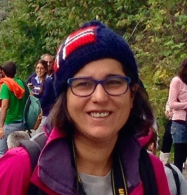
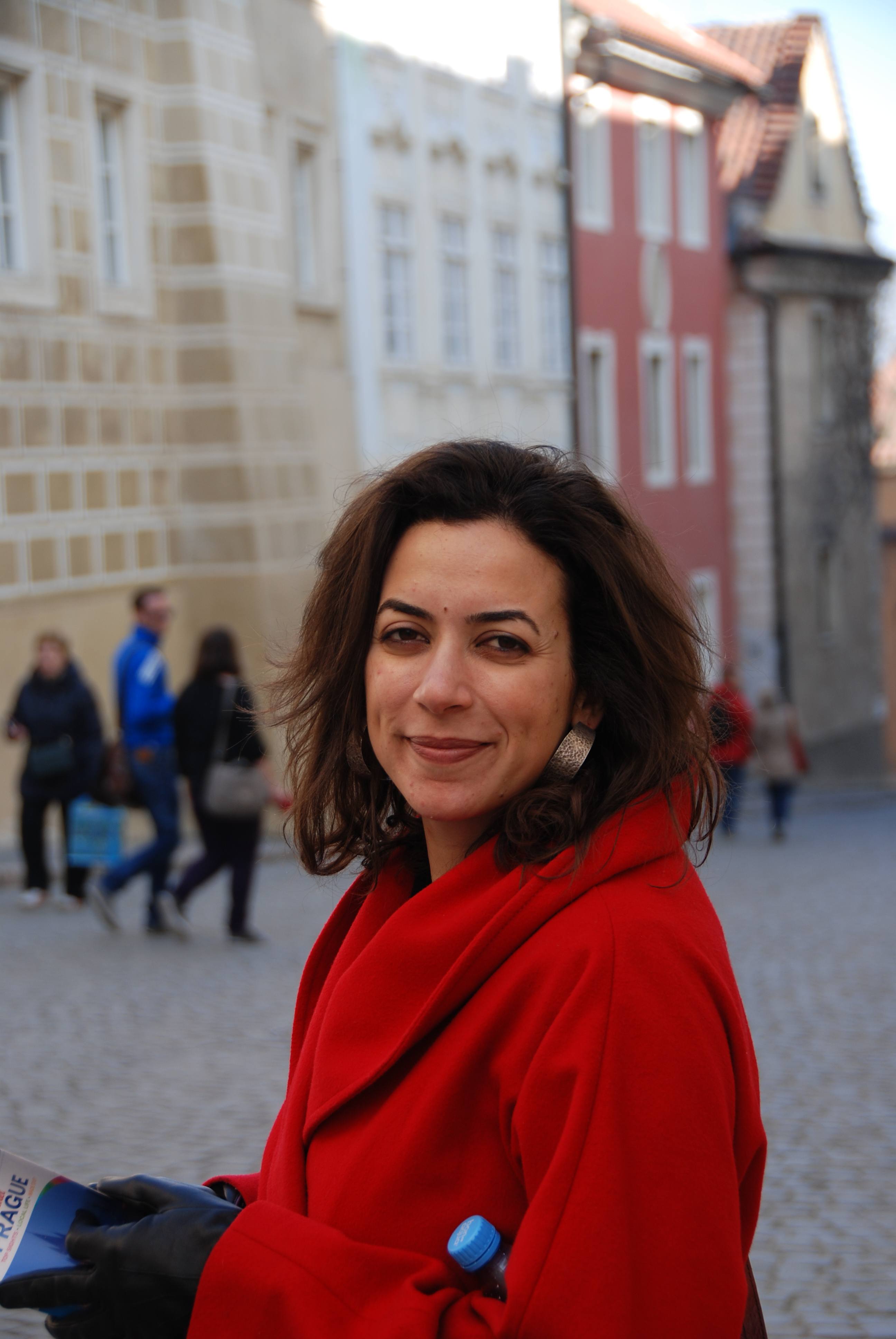
elamineredA guest post from Loubna El Amine. Loubna teaches political theory, with a particular focus on early Chinese political thought at the Department of Government, Georgetown University (her teaching was mentioned on this blog last year).  Before Georgetown, Loubna was a postdoctoral fellow at the Whitney Humanities Center at Yale University. She holds a PhD in Politics from Princeton University and a BA in Political Studies from the American University of Beirut.  Classical Confucian Political Thought: A New Interpretation (Princeton University Press, 2015) is her freshly pressed first book.


elaminebook

I recently wrote a book. Its cover is (very) red and features an ornate golden doorknob shaped like the face of a lion. I have always dreamt of writing a book. The experience of seeing one with my name on it fills me with a combination of delight and incredulity. I am sure all first-time authors experience a similar feeling. In my case, however, the feeling is heightened by the sense that I wrote a book that, for the first two-thirds of my life, I could never have even conceived of writing.

The book is on early Confucianism in China, and I did not know anything about China until I was twenty. China was so foreign to the intellectual, political, and cultural world in which I grew up that the two ways in which it was usually mentioned were the proverb, often attributed to the prophet Muhammad, which says “Seek knowledge, even in China” and the description of anything that sounded incomprehensible as Chinese (the Arabic equivalent of the American “It’s Greek to me.”). More mundanely, there was only one Chinese restaurant in Beirut when I was growing up, a small, family-owned place called Rice and Spice (today there are many more, with names ranging from Chopsticks to Wok Wok).
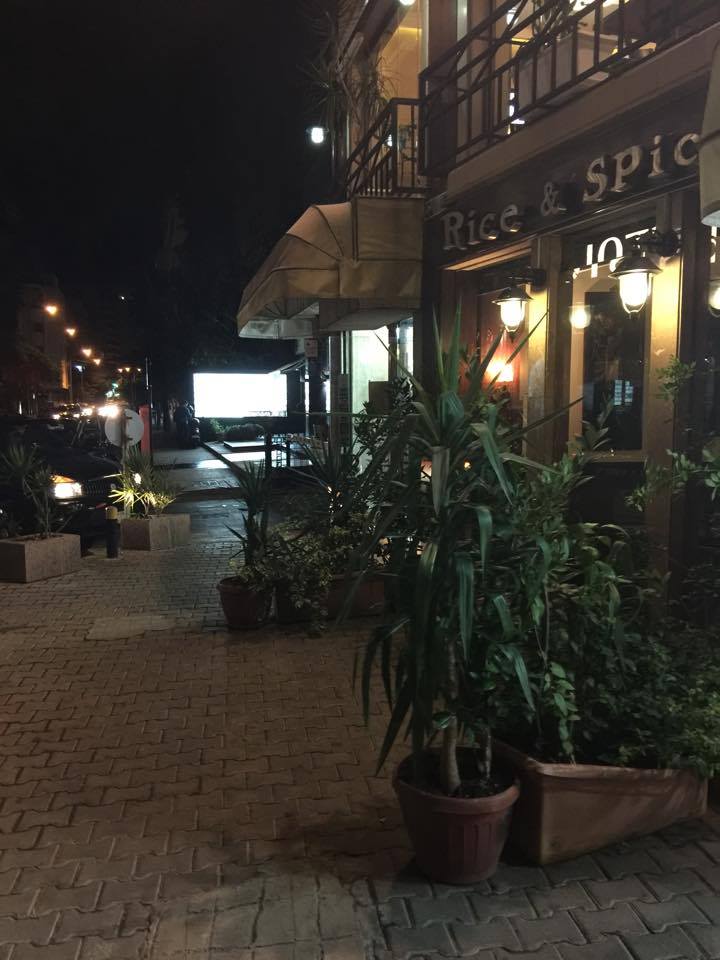
riceandspiceAlthough I studied political science as an undergraduate at the American University of Beirut, the curriculum rarely covered areas beyond the Middle East, and when it did, it only reached as far as Europe. It was only because of one professor, Yahya Sadowski, that I discovered China. He taught courses on global political economy and on development in the Arab world, and frequently cited both East and Southeast Asian countries as case studies. When I started graduate school in the US, I decided to explore East Asia further. This exploration took a few twists and turns, and I finally landed, having foregone empirical for philosophical pursuits, in the intellectual world of 3rd century BCE China.

Every once in a while, someone describes what I do as “contrarian,” “crazy,” or “looney.” I never know quite how to react. The description is, in some ways, true. I studied Confucianism because it spoke to me and because I was intrigued by it, but I also sometimes wonder whether I studied it because I did not want to study the Middle East. I sensed that it was expected of me that, as a non-Westerner, I study my own region. This expectation bothered me. When people now call what I do “contrarian,” this only reminds me that the expectation is still at play. Not that I think that there is anything wrong with someone from the Middle East working on the Middle East, just as there is nothing wrong with someone from the US studying the US. The problem is simply that no one thinks it is contrarian or crazy when Americans or Europeans choose to study societies other than their own.  In other words, my worry is that the surprised reactions I get about my work point to the existence of an unconscious bias, generated and maintained by the current make-up of academia, against the ability of non-Westerners to produce knowledge that is not about ourselves. We cannot transcend, like our European and American counterparts can, our own world. We are our own case studies, so to speak. This means that if we are successful at studying our own regions, the success is likely to be attributed to our “inside knowledge,” rather than the work itself. It also means that when we do happen to study a topic that is seen as “Western,” say European philosophy, the default assumption is that we do so from the standpoint of our colonial experience. And finally it means that studying another non-Western region is simply “contrarian.”
statue

Though it has not happened to me personally, friends of mine from Lebanon have reported being encouraged, even if gently, to focus their doctoral work on Lebanon, the Arab world, or Islam. Other friends who have chosen to work on the Middle East have complained about their work being mislabeled to the same effect, its theoretical import downplayed in favor of its ‘regional flavor’. I have also heard of new professors being encouraged to teach courses on topics that they do not necessarily work on (who else is going to teach Islamic philosophy but the new Iranian professor?!). And my suspicion is that this arrangement also likely guides decisions on admission to US and European PhD programs in the humanities and social sciences: if you are from a non-Western country, you are more likely to get accepted if your work is directly related to the geographic area where you are from.

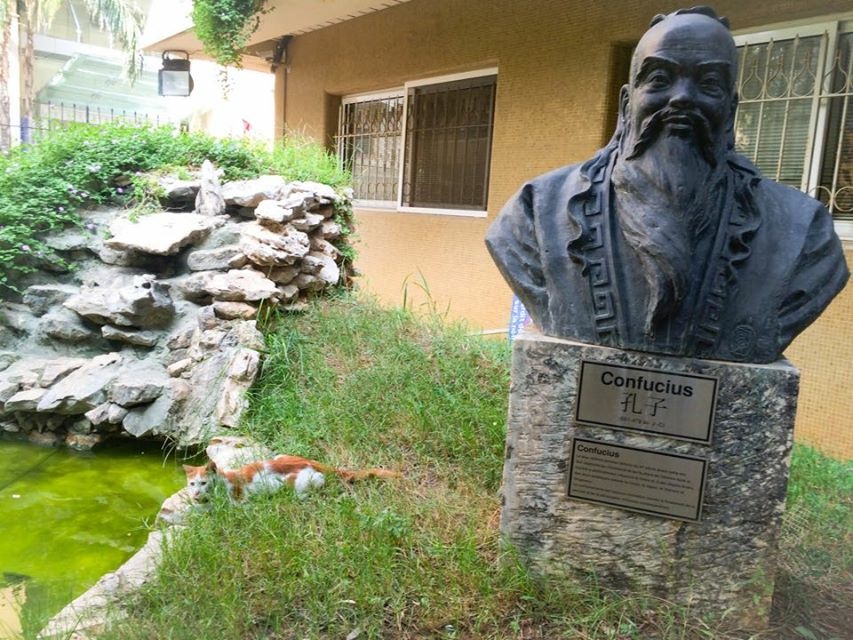
This expectation also feeds into the way in which academic institutions in non-Western countries are framed and present themselves. When I inquired some years ago about what it would take to be hired at the American University of Beirut, I was told clearly that I would need to shift my work toward Islamic thought. Middle Eastern and Islamic studies are, after all, AUB’s claim to fame, the primary reason it is able to place graduate students in American and European institutions and to attract foreign MA students. It was also telling that, when in Seoul this past summer, my work was described by a couple of people I met as the “Islamic view of Confucianism.” The equivalent here would be to describe American and European work on China as representing “the Christian view.” But while this sounds as odd as it is problematic, it is actually not much different from the charge of contrarianism: both descriptions belie the need to place me back into the world in which I grew up. I absolutely love the world in which I grew up, but I would like to think that, like my Western colleagues, my intellectual horizons are not limited by my place of birth.
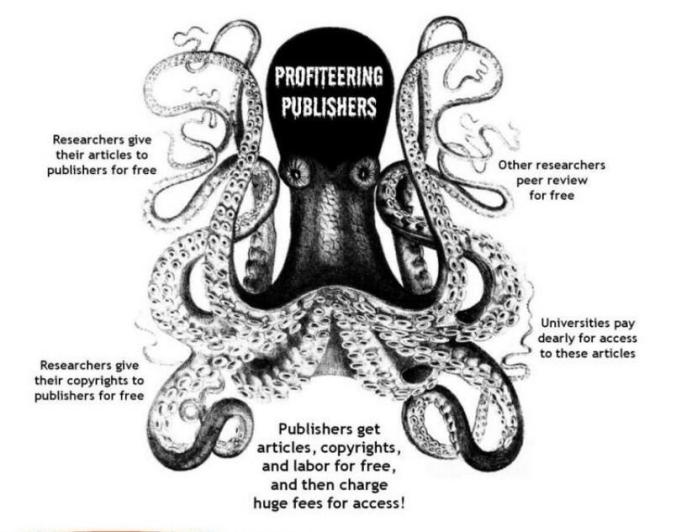
Twilight of the Journal Vampire Squid

This was in someone's open access slide show someplace, but the name, and therefore the credit, escapes me.

This was in someone’s open access slide show someplace, but the name, and therefore the credit, escapes me.

I have a piece up at e-IR today returning to the question of open access. It is partly an introduction to the issues, partly a manifesto on why academics should take the digital commons more seriously. But it is mainly intended as a provocation for the discipline (proto-discipline, non-discipline, borg-discipline, what you will) of IR, and a challenge to the in my view excessive resistance to open access that characterises its upper echelons. To wit:

What is IR’s contribution to the open access movement? Almost nothing, arguable less than nothing. There is no IR equivalent of ArXiV  – the hugely successful online repository favoured by physicists and mathematicians. Nor of PLOS  – the gigantic open access mega-journal suite favoured by hard scientists, which sustains itself on low relative processing charges. Nor of Cultural Anthropology – a learned society journal gone fully open access. No experiment like the Open Library of the Humanities – a new platform-cum-mega-journal funded by a conglomerate of libraries. No appetite for something like Sociological Science – an open access journal with quick review times and low, means-tested article publishing costs. There are a handful of open access IR journals, like Ethics & Global Politics (not to be confused with Ethics & International Affairs), the Journal of Critical Globalisation Studies, and the Journal of Narrative Politics, run largely on goodwill, but they are sadly lacking a disciplinary presence. Publishing in them will not make a career, and is unlikely to impress hiring committees which have an eye to bankrupt measures of quality like the journal impact factor.

Worse still, the discipline of IR has missed opportunities to make itself more open and relevant, all the while fretting over its introversion and lack of relevance. Some of our responses to the open access movement have been sadly conservative and dismissive. New journals like the European Journal of International Security and the Journal of Global Security Studies are run on the standard closed model. Neither the leadership of the British International Studies Association nor the International Studies Association have followed the innovations carved out by colleagues in anthropology, sociology or STEM subjects. And young journals that position themselves as disrupting orthodoxy (such as Critical Studies on Security) have nevertheless emerged under the imprint of familiar publishing houses. While Editorial Boards in other disciplines are considering resignation and boycott to force change on the system, IR scholars are joining an ever-growing list of titles that promote business as usual. Closed journal publishing has become common sense: unquestioned despite its manifest failings.

Continue reading

Humble/Brag

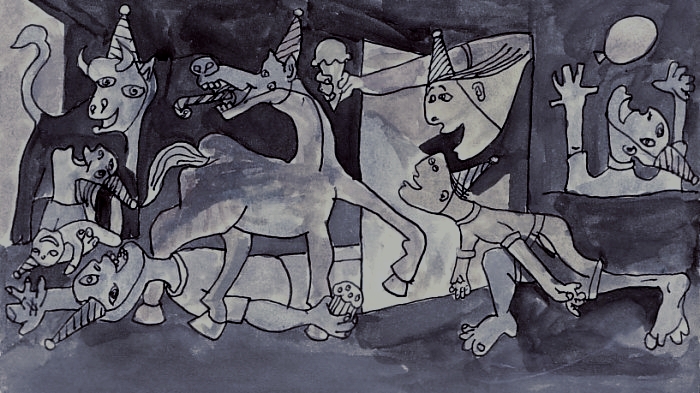
'Make A Sad Painting Happy', by Karl Habegger,

‘Make A Sad Painting Happy’, by Karl Habegger.

The Disorder Of Things is five. Five years old. Very almost 780,000 views from over 326,000 visitors. 12,000-odd email subscribers (surely some of whom are not bots). Two plastic ducks. An accelerating series of book symposia, the new aural assault of podcasts, a gang of regular contributors (finger-clicking their way, West Side Story-like, through a conference corridor near you), 81 guest spots, and even some official and really real academic products. Along with all our, ya know, blog posts. Popular ones on tele-fantasy politics, bullshit jobs, left solidarity, open access, and bad dissertations. Lesser read ones on Blairite exculpation, humane indexing, and Barry O in Ohio. Everything in between. But then we’re also established cynics on the possibility of capturing the ephemera of quality with the crude tools of quantity, so take that all with a fist of salt.

Blogs are dead, yet we persist, zombie-like, refusing to just let it go. We’ll be eating jelly and ice cream until we throw up to celebrate. Maybe you should too.

The European Gaze and the EISA Asylum Seekers Campaign

Gulsah

Gulsah

ayse

Ayse

A reply to Federica’s recent post on the asylum crisis by Zeynep Gülşah Çapan from Bilkent University and Ayşe Zarakol at the University of Cambridge. Gulsah is a Post-Doctoral researcher at Bilkent University. Her research focuses on Eurocentrism in international relations theory and postcolonial and decolonial thought. Ayşe is a Lecturer in International Relations at the University of Cambridge. Her research focuses on social hierarchies in world politics. Her first book After Defeat: How the East Learned to Live with the West explored the responses of defeated non-Western powers to stigmatisation.


The increasing attention to the European refugee crisis in Western media has also galvanized the IR academic community into thinking about possible ways to address the issue. There have been blog posts and Twitter discussions (On Doing ‘Something’ as AcademicsWant to Help the Refugees? Teach Migration as part of IRHow to Speak Out As An Academic Community? Help Needed!) about possible actions, especially with respect to the EISA conference that will be held in Sicily in two weeks. On September 11th, EISA section chairs received an email urging them 1) to sign and circulate an open letter to EU policy makers penned in the name of “the academic community”, 2) to bring up the issue in EISA panels and 3) to wear black ribbons/armbands as a sign of mourning and protest.

We applaud the motivations that led to this effort and agree that EU countries could be doing much more to help refugees. We also concur that European scholars could do much more to raise awareness about the complicity of their own governments in various global political crises. Nevertheless, for the reasons detailed below, we have some reservations about both the desire to frame this effort as an EISA effort involving section chairs and the claim to speak in the name of the entire “academic community”. In the blog post Ivory Towers and Sleeping Beauties that discusses these efforts the author urges the “academic community” to do two things; to check their privilege and make themselves feel uncomfortable. These are suggestions that we completely agree with and this post is an effort to continue the dialogue on how we might think of issues in the international system in a way that checks our privileges and makes us feel uncomfortable.

To begin with, the refugee crisis is not new and it is not primarily a European problem that can be solved by some small gesture from the EU. Most refugees from the Syrian War, for instance, are hosted in non-European countries. According to Amnesty International, more than 95% of the refugees (4 million) are in five countries: Turkey (1.9 million), Lebanon (1.2 million), Jordan (650000), Egypt (249,463), Iraq (132,375). Another region hosting huge numbers of refugees is East Africa – based on UNHCR’s latest numbers, Chad hosts about 450000 refugees, Ethiopia hosts 650000 and Kenya has 550000. In fact, almost every world region except Europe is hosting hundreds of thousands to millions of refugees and has been doing so for far longer than Western newspapers have been covering “the refugee crisis”. By most estimates, there are sixty million refugees in the world at the moment.

We understand why European colleagues may want to pressure their own governments to change policy and we wholeheartedly support their individual and/or collective efforts to do so. But to organise a professional effort only now (and without providing any of the larger context) in the name of the entire “academic community”  may actually reinforce the Western public misperception that this is a recent or a uniquely European problem or that European countries that have agreed to take comparatively small numbers of refugees are doing something unusually selfless. Continue reading

Ivory Towers and Sleeping Beauties: On the Importance of Political Activism in Academia at EISA 2015

FCasoA guest post from Federica Caso on the recently created petition from academics to EU decision makers on the ongoing refugee/migrant crisis (you can see it and sign it), which has also been subject to discussion by Federica and Tiina Vaittinen over at the Feminist Academic Collective. Federica is a doctoral candidate in International Relations at the University of Queensland, where she is working on embodiment and the aesthetics of militarism in the context of the militarisation of society. Her research is informed by feminism and queer theory.


What can we do as academics and political subjects in face of the humanitarian crisis that is unfolding in Europe? Probably not much, but I would like to take the time and energy to tell why I think signing the petition by IR academics and community to address the EU to open safe channels of entry and mobility for asylum seekers is important, and suggest what can be done to mobilise at EISA.

So, does it take a picture of a dead boy on the shore of Turkey to awaken political consciousness? These days, tons of memes about Aylan Kardi circulate on the internet. Even those who oppose what has been called ‘trauma porn’ of sharing pictures of dead bodies cannot do anything but see these images on their social networks feeds. Megan Mackenzie, Annick Wibben, and Tiina Vaittinen have provided some insights into the debate surrounding the ethics of sharing these pictures. Most importantly, they all have raised important issues about what academics and scholars can and must do. As has been rightly pointed out in the context of images of refugees, we need to understand how they shape our emotional and ethical attitude, we need more insights, but we also need more political action. When considering the political impact that an image can have, Tiina Vaittinen says “To share an image of a dead child’s body on your Facebook page! It is truly immoral – while simultaneously it may also be the most moral act to do”, to the extent that it is the act that starts the much needed political mobilisation.

Academia and the discipline of IR have long been accused of being at loss with political action, or better, with the ability to speak to real world problems in a timely and effective way, which I see as academia’s political action. The gap debate in the discipline of IR is quite well known to all of us. Academia provides for a comfortable Ivory Tower from which the academic speaks, and this voice feeds the clouds rather than address an actual audience. Continue reading

Fragments from a Critical Geography Conference: ICCG Ramallah, July 2015

A guest post from Lisa Tilley. Lisa is a GEM Doctoral Fellow at Warwick and ULB. Her research has taken place in sites of extraction (urban slums and rural settlements) in Indonesia and draws on political ecology and political economy, as well as postcolonial and decolonial thought. An earlier version of this post is also available at the wonderful new resource that is Global Social Theory.


If this farm had not been ravaged
I could have become an olive tree
or a geography teacher
or an expert of the kingdom of ants
or a guardian of echoes

– From Mahmoud Darwish’s The Dice Player (visual version here)

Writing/Speaking/Thinking the Global Palestine

The settler colonial condition can be fully understood only by those who live it. But the rest of us can at least bear witness in the place (Palestine) where it is most legible.

Since the Nakba (catastrophe) of 1948 when 800,000 Palestinians were expelled and 536 towns and villages were deleted from the map the fast and slow erasure of Palestine has continued as an active political project.[1] Zionist leader Chaim Weizmann encapsulated the unrelenting strategy of everyday dispossession in the phrase: “another goat and another acre”.[2] This has been paralleled too by fast and slow memoricide, the deleting of the artistic, historical and cultural existence of Palestine.[3] Tahrir Hamdi calls these the “two movements” of erasure, the cultural and the material.[4] Two movements working not towards the goal of Palestine no longer is but towards the goal of Palestine never was.

Doing a geography conference (ICCG) in Ramallah was therefore an organised act of defiance against Palestinian erasure (“Welcome to Palestine […] its geography lives”).[5] Continue reading

The Perpetual Financial Crisis of UK Higher Education

Higher Education in Britain – particularly in England – is now clearly in perpetual financial crisis. This may seem an odd claim, since universities appear to have higher incomes than ever, and are sitting on vast cash reserves. But this superficially calm macro-level picture obscures the broiling chaos at the micro level. Universities, and particularly their individual departments, have been deliberately exposed to enormous year-on-year fluctuations in their incomes – potential and actual – that vitiates any attempt at rational planning and leaves financially strapped units particularly vulnerable to savage, short-term cuts designed to rebalance the books.

The latest move in this direction comes in a remarkable missive from the Higher Education Funding Council for England (HEFCE) which, on instruction from the government, is cutting £150m in funding to English universities — not just in future financial years, but the present academic year (2014-15) and the next (2015-16). That means universities will not receive the funding they anticipated, and planned for, even for the year to September, let alone for the following year.

Continue reading

Can Metrics Be Used Responsibly? Why Structural Conditions Push Against This

Not waving, exactly, but...

Not waving, exactly, but…

Today, the long-awaited ‘Metric Tide’ report from the Independent Review of the Role of Metrics in Research Assessment and Management was published, along with appendices detailing its literature review and correlation studies. The main take-away is: IF you’re going to use metrics, you should use them responsibly (NB NOT: You should use metrics and use them responsibly). The findings and ethos are covered in the Times Higher and summarised in Nature by the Review Chair James Wilsdon, and further comments from Stephen Curry (Review team) and Steven Hill (HEFCE) are published. I highly recommend this response to the findings by David Colquhoun. You can also follow #HEFCEMetrics on Twitter for more snippets of the day. Comments by Cambridge lab head Professor Ottoline Leyser were a particular highlight.

I was asked to give a response to the report at today’s launch event, following up on the significance of mine and Pablo’s widely endorsed submission to the review. I am told that the event was recorded by video and audio so I will add links to that when they show up. But before then, a short summary record of the main points I made: Continue reading

The Dissonance Of Things #1: Sexism in Academia

1920 Woman with Radio

Broadcasting from the bowels of disorder, The Dissonance of Things is a new monthly podcast bringing you interviews, discussions and programmes on international relations, political theory, radical and subaltern politics, cultural analysis, and the academy (ivory and otherwise). Casts will be collected for your convenience in a dedicated page (see the menu bar above), or under this category.

In this inaugural cast, Meera, Nivi, Pablo and Maia Pal (who you may remember from this guest post) join host Kerem to discuss sexism in academia – from the everyday to the institutional – and what can be done about it. Building on a number of disciplinary and extra-disciplinary interventions (from the ‘everyday sexism’ panel at ISA 2015 to the global surge of interest in our colleague Saara Särmä’s ‘All Male Panels’ tumblr), we hope this forms part of the ongoing discussion on sexism in academia. So please do carry on the conversation in the comments section below. We promise to read below the line (offenders will be disemvowelled).


Further reading, including articles and websites mentioned in the cast:

Steal This Conference

A guest post from the Ray Hudson Posse.


If you were to ask a handful of early career scholars for their impressions of the recent British International Studies Association (BISA) conference in London they would probably say: “I wasn’t there”. The reason for the dearth in young attendees is that the conference (like all conferences) was prohibitively priced. Its four days costs a whopping £120 for early birds and £150 otherwise. For undergrads and postgrads the fee is £100 (early bird) and £130 (late). Membership to BISA is compulsory, which costs another £30 a year. It’s a hell of an entry fee into the Ivory Tower.

The way in which the structures of academia are chewing up and spitting out the next generation of scholars-with-no-future is most clearly expressed in the ‘conference trap’, characterised by a double-fuckery – those most in need of attending are precisely those most priced out. While for established academics conferences are little more than an opportunity to blow research budgets on a piss-up with the lads, for aspiring researchers these events are crucial to bolstering the CV and (*shudder*) networking. That is, they are crucial to obtaining a job that will provide them with the means – a proper wage, research budgets, time off teaching etcetera – needed to go to conferences! (And, also, to live).

But it is precisely early career scholars in fractional, contract or zero-hours employment that have limited/ no research budgets and therefore struggle to attend. It is precisely early career scholars that are underpaid and thus unable to pay out of their own pocket. These structural constraints tend to be ratcheted up if you’re a person of colour, not-male, working class, and/or from the global south. On the one hand we can’t afford to go; on the other hand we can’t afford not to go. We need a job to go; we need to go to get a job. Something has to give.

We went to BISA. We didn’t pay. We stole this conference. You can too. Here’s how.
Continue reading