Every now and again, I come across films, music or books and wonder how, in a world where so many talented people fail to make the grade, it can be possible to create, develop, sanction and, ultimately, sell products that are so banal. Often, the answer is simple – money. Perhaps that is the case here too. But I have a feeling that something else is involved in this book as well – Drezner, and plenty of others, seem to think that the connection between zombies and IR theory is uproariously, hilariously, side-splittingly funny. Judging by much of the commentary on the book – and listening via podcast to the guffaws of the audience at a panel devoted to the book at the 2011 International Studies Association Convention – many people clearly share Drezner’s sense of humour. So perhaps I am the curmudgeon here. Because I found this book diverting only in a way popularised by a recent headline in The Onion: ‘Time Between Thing Being Amusing, Extremely Irritating Down To 4 Minutes’. I lasted about half that long with Theories of International Politics and Zombies.
Why is it that so much hoo-hah has been made about this book (10,000 copies sold within six months of publication)?
A guest post by Nathan Coombs, a doctoral student in Politics and International Relations at Royal Holloway. Nathan’s work focuses on the relationship between metaphysics and political ideology. Nathan is the author of ‘The Political Theology of Red Toryism’, published in the Journal of Political Ideologies, 16(1), February 2011, as well as a number of other papers. He is an also an Editor of the Journal of Critical Globalisation Studies, an open-access peer-reviewed academic journal which should be a stimulus to us all. Images by Pablo.
If there is a point of unity for strong (non-Keynesian) critics of neoclassical economics it is their shared rejection of modelling. This is not to say such authors shun all use of abstraction, idealisation, and quantisation in favour of just qualitative, empirical efforts at explanation. Rather, modelling is held out as a practice whereby mathematical attempts to grasp economic laws become unhinged from reality; where abstraction begets abstraction for its own sake. For example, in his famous methodological treatise, Economics and Reality, Tony Lawson firmly demarcates the form of abstraction he recommends for economics from the practice of modelling – placing stress on the point where: “it seems vital that I indicate why the procedure to which I refer does not at all reduce to the activities of the ‘modelling’ project in question.” (Lawson 1997, 227)
For different reasons converging to the same end, advocates of the most active strand of Marxian economics, working from the Temporal Single System Interpretation (or TSSI), are equally averse to modelling, associating it with simultaneous, equilibrium interpretations of Marx’s labour theory of value, diverging from the correct representation of the theory. Inside the pages of Andrew Kliman’s recent book, Reclaiming Marx’s “Capital”, the word ‘model’ only occurs negatively in association with what he argues are flawed abstractions of the theory from Okishio’s theorem through much political economy in the 20th century (Kliman 2007, 44, 48, 66, 101, 176). The idea that Marx’s Capital might itself be considered a theoretical model of the economy is out of the question.
What explains this resistance to modelling for critics of the status quo in economics?
But what’s so wrong with textbooks anyway? It’s not so much the simplification itself. All theory (including some much-lauded high theory) does that. Nor is it any particular problem with the qualifications of the authors (the contributors to Baylis, Smith and Owens, for example, are pretty well the dominant names in their respective sub-fields).
Still, textbooks do seem to take on a strange epistemic authority, at least in undergraduate study. Confused by the relationship between ethics and self-interest in Morgenthau? Settle it with some bullet-points! IR is a young discipline, and none of its canonical texts approach the difficulty of, say, political, social or cultural theory proper. Any competence is going to come from understanding those texts, so why not do it sooner rather than later? Moreover, the relentless simplifications of the ‘paradigms’ debates (can we drop the mutilation of Kuhn yet?) provide an easy tool for obliterating complexity. This is not unrelated to a patronising attitude towards students, gently shepherded through the early years before being told harsher truths.
Textbooks, especially ones recommended at the start of courses as the intellectual crutches of choice, reinforce those dynamics. But it gets worse. Textbooks also lie.
David, my erstwhile ‘parasitic overlord’ from when I was co-editingMillennium, points me to some posts by Kent Anderson of the Society for Scholarly Publishing, who defends the industry on a number of grounds from Monbiot’s polemic against the journal racket. The comments threads on both pieces are populated by academics who agree with Monbiot and by publishing industry colleagues who agree with Anderson (and who alternate between dismissing and being personally offended by the original Monbiot column). The core counter-argument is that this anti-corporate, out of touch, ‘wannabe-academic’ day dreaming is old hat, and stands up no better now than it did when it was demolished at some unspecified point in the past.
Most crucially, Monbiot’s central exhibit (that companies consistently make 30-40% margins on the distribution of work already paid for by the public purse) is almost entirely passed over. Anderson coyly suggests that maybe publisher margins are that high, but maybe they’re not. Despite working rather closer to the heart of matters financial than do the rest of us, he provides no settling of accounts either way. In any case, however much it costs, and however much publishers make, it’s good value, apparently by definitional fiat. Since libraries keep paying the money, and since academics keep submitting papers, it is ‘idealism’ (remember that?) to complain about the current balance of power.
This is the familiar circular logic of neoliberal reason: privatised arrangements are beneficial because they will make the system more efficient and less costly. But if the rate of profit does not fall in line with the expectations of open competition, then it must mean that the rates charged are true equilibrium prices. Nevertheless, complainants citing high margins are referred to the benefits of privatised arrangements and assured that competition will bring prices down. Even though £200 million each year, or 10% of all research funding distributed by HEFCE (the academic funding council for England), ends up being spent on journal and database access by academic libraries. [1]
1. Any time someone puts a lock on something that belongs to you, and doesn’t give you a key, the lock is not there for your benefit;
2. It’s hard to monetise fame, but it’s impossible to monetise obscurity;
3. Information doesn’t want to be free. People do.
Despite the focus on the artist and her output, Cory Doctorow’s three propositions for understanding copyright against creativity also speak to the products of the university (and both videos are worth watching). In short, the addition of copyright ‘protection’ to your work acts to restrict it, doesn’t actually drive higher resources to artists, and can’t really work in practice, thus requiring extending circles of criminalisation and monitoring. Contemporary copyright is a way of creating an obstacle course, one where the people who put in the work of limiting access are also the ones who you pay down the line for the access. In short, “they have created a problem that they know how to solve, and it works for them”.
In July, Aaron Swartz was charged under US federal hacking laws for downloading more than a few academic articles via MIT. It was about 4.8 million papers, since you ask. Wired reports that the penalty for this may amount to 35 years in prison and a $1 million fine. Worse, there is some evidence that the prosecution is being driven by the state rather than JSTOR alone. He’s due in court this Thursday. After some germination, both George Monbiot and Ben Goldacre have entered the fray with astute and biting pieces on the profitable stupidity of these arrangements and their detrimental impact on the free exchange of knowledge, scientific progress, the public good, etcetera.
The problems of intellectual property and who gets to profit from it are general, but the scandal is in the specificity of different productive spheres. After all, an artist is not like a university lecturer.
I do feel somewhat sorry for A.C. Grayling. Following his sudden exit from the Birkbeck scene, former colleagues sent a short but apt letter to The Guardian, expressing appropriate levels of dismay and resistance to the innovation of the New College ofthe Humanities. They raised basically two objections. First, that the New College is for-profit, substituting the business of teaching in place of the vocation of research. And second, that it is in the ‘vanguard’ of efforts to link education to wealth, partly via a leaching of public resources.
Although many prominent names were used to unveil New College, few seem in sight now that it is under sustained attack (Peter Singer, where are you?). And Grayling, somewhat to his credit, keeps replying to the antiquated nay-sayers desperately clinging to the sinking ship of public provision. Perhaps the fullest public defence has come in response to the Birkbeck letter. Although garlanded by academic niceties (“with respect”; “I would be very grateful”), the ultimate conclusion is that his critics lack some basic faculties of reason: “I have seen only an emotional case for scapegoating our project”.
Surely, then, there are firm responses to the proliferating critiques? Grayling’s fuller case for New College turns primarily on the idea that students are being under-charged rather than over-charged. The relevant comparisons? That an MSc in Finance at LSE for an overseas student costs almost £26,000 (with many other programmes charging in the £15-21,000 range) and that a DPhil in cardiovascular medicine at Oxford will set you back nearly £27,000 if you’re not from the EU. The point being that high fees for some already subsidise lower fees for others. Now, you’ll notice what has been done here: £18,000 for an undergraduate degree for all students is being justified on the grounds that you can find a handful of prominent programmes elsewhere that charge more than this for masters programmes for non-EU students.
As an argument for justice it has some merits (Why the disparity here? What are the ‘real’ costs of educating a doctor or financial specialist?). But as a defence of New College as prosaic rather than parasitic it doesn’t stand up to much. And I’m sure there’s a latin term for this kind of fallacy. A direct comparison with liberal arts funding in the US would have offered us more, but that would have required admitting that there is something new about the New College in the UK setting. You’ll recall that, before people starting off letting flares at Grayling’s talks, this was very much the selling point of New College. Its online welcome still announces: “New College of the Humanities is a new concept in university-level education”.
Lots of the new then, which makes it worth thinking through some of the older ideas of the university, as Steve Fuller did so wonderfully back in February. But there is something yet more damning in Grayling’s reply. He says that his project can’t be vanguardist. In a repeat of the AHRC debacle, apparently bright people conclude that you can’t be complicit if the Minister didn’t call you directly and tell you to do something. Grayling clarifies that he is under no compulsion of Government and has no love for the current reconstitution of UK higher education, as if that matters. Moreover, “we cannot be in the vanguard of what has long been happening”. This is the crux of a claim made before: that New College is simultaneously following an economic pathway outside of its control and that it will have no detrimental impact outside of its own halls.
Other engaged in privatised education do happen to think that the New College will accelerate some market openings. But notice that Grayling can’t have it both ways. His argument against allegations of vanguardism is that New College is too small and insignificant for anyone to follow its lead. But his argument for an £18,000 fee compares New College to comparatively small and unrepresentative courses which charge more than he intends to (about 80 people take that MSc in Finance at LSE). An accidentally immanent critique, this mode of argument illustrates exactly how a vanguardist framing works, and has worked over the last years. Find an institution that charges more than you do and has a good reputation. Point out that you could do more, and do it better, if you had their money. Campaign for that outcome while ignoring or dismissing arguments for higher levels of public investment. Repeat. Change the discursive and economic landscape in a series of comparative expansions.
Grayling suggests high fees elsewhere as justification for his high fees, but then expects us to believe that his high fees (which are much more clearly comparable with undergraduate provision than are the courses he cites) won’t be used by anyone anywhere to militate for a further uncapping or greater move to student debt and ‘consumer-led’ education over equal access and public goods. It is hard to see the logic in such a position, not least when it already provides indications of how such an appeal by others would run:
Note one thing: the deafening silence of the vice-chancellors in the controversy over our college project. Why? Because as the individuals most acutely involved in battling with impossible arithmetic, they understand the realities.
Please.
Andrew McGettigan’s excellent and much circulated analysis points out that marketisation requires the softening up of older providers via the introduction of one or more exemplars of new learning: 1) independent, non-profit providers like the University of Buckingham; 2) private, for-profit providers like BPP and now NCH (perhaps owned by people like Apollo); 3) Edexcel in relation with colleges; 4) Cameron’s planned ‘Big Society University’; and 5) globalised multi-nationals. New College has to be viewed in this context and not, as Grayling wants, as some minor footnote. Here’s McGettigan:
The new market conditions must first be created. A significant amount of intervention is required to bring about a ‘level playing field’ in which new, more commercial, operations can compete successfully to drive down costs. The first steps here have already been achieved. First, the complete removal of central funding to arts, humanities and social science degrees exposes the established provision to potential competition in a manner that gives the lie to Willetts’s claim that the cuts have been ‘scrupulously neutral’. (No new provider is currently planning to offer STEM degrees, which are expensive to run and require large overhead and start-up costs.) Second, students at private establishments have already been granted access to the student loans and grants…Third, when viewed in conjunction with the new visa restrictions on overseas students (a political decision affecting an otherwise independent and substantial income stream) and the cuts just announced from HEFCE for the 2011/12 budget, we can conclude that universities are being softened up. Prior to a major reorganization of higher education these cuts are punitive and part of a concerted effort to destabilize the sector for the entry of new agents… What is proposed does not simply benefit small, niche operations but creates the conditions for ‘creative chaos’ similar to that to be unleashed on the National Health Service.
Yes, this is more comment on the New College, a.k.a. Grayling Hall, a.k.a. Grayling’s Folly, a.k.a. North Oxford in Bedford Square (NOBS), a.k.a. The Ultimate Scab University.
It won’t have escaped your notice that there has been aflurry of disgust, disbelief, protest and rage at the announcement of the New College of the Humanities (an aside: ‘of the’ Humanities? Why not ‘for the’ Humanities?). There have also been a number of responses that pretty much add up to ‘meh’: to wit, there are some bad things, but also some good things about Grayling’s Folly. And then there has been some welcoming of this project, and its ‘chutzpah’. Since we are in a downward vortex of vanishing funding and academic status, why not expand where we can? And why damn the entrepreneurial? As Brian Leiter puts it:
NCH is just the natural continuation of the elimination of 75% of government funding for higher education and 800% increases in tuition in the space of a few years. If the Brits can’t even keep the Tories out of office, and if their party of the Left is now in bed with the Neoliberals, it’s really hard to see why one should think “petitioning” the government for more government funding for higher ed will produce any results. The battle to be won is at the polls, and NCH is just a symptom of the battle already lost.
All this makes me think it’s worth clarifying the case against, and the potential mitigating factors. Continue reading →
In 1919, John Dewey and others founded The New School for Social Research, intended to offer a democratic and general education for those excluded by existing structures. On the faculty side, this meant a staunch defence of academic freedom in the face of increasing censorship and a climate of intellectual fear. For students, it meant evening classes, an open structure of instruction and the ability to engage in inquiry despite exclusion from the other universities of the time. A fascinatinglegacy even before it became a refuge for forces of critique fleeing Fascist Europe.
Now there is a new New School. A New College in fact. A.C. Grayling, Richard Dawkins, Ronald Dworkin and Peter Singer (yes, Peter Singer), amongst others, have inaugurated this new space for privatised inquiry. Tuition fees will be £18,000 a year. While the original New School aimed for “an unbiased understanding of the existing order, its genesis, growth and present working”, the New College gives you the skills “needed for success in this complex and competitive world”. There will be courses in how to do slick presentations and on effective working-with-others. Ironically enough, there will also be instruction in ‘applied ethics’ and ‘critical thinking’ (will education and the public good be topics of study I wonder?). The TV-friendly, rent-a-theory Professoriate glistens, although it seems unlikely that many classes will actually be taken by Niall Ferguson and Steven Pinker (visiting Professors only). Many other stars already hold other posts. And a closer look indeed reveals that ‘conveners and other teaching staff’ might bear somewhat more of the teaching load than advertised.
Four heads of major private schools sit on the Advisory Board. Intriguingly, the formal academic entry requirements seem rather low. Some funds are available for those from more deprived backgrounds (news reports suggest around 20% of entrants will get some kind of ‘assisted place’), but otherwise there is just some loose talk about ‘using a tuition fee loan’, although I assume this won’t be on the preferential rates and deferral plans available through the more antiquated public institutions. As Martin McQuillan intimated, it also seems that Grayling et al. have some inside info on the forthcoming White Paper, at least enough to calculate that their fees-and-hand-outs combination will not be penalised by standards on access and equality for degree-granting institutions (since it also seems that qualifications from the New College will count as endorsed by the University of London).
Which is all by way of saying that New College represents a new stage in business ontology. Today the public provision of humanities is framed again and again as unsustainable, unproductive and antiquated. London Met, which educates more black and ethnic minority students than the whole Russell Group combined, is facing the closure of 70% of its undergraduate courses, predominantly drawn from its humanities and arts provision, all overseen by a political elite who received their free educations in cognate subjects. UK higher education is systematically and chronically under-funded thanks to a governing class that has been spending less on schooling and free inquiry than any of its ‘competitors’ for several decades now. There is nothing natural about the emergence of a market which will bear the dubious pricing of Grayling’s project, and no objective need for the fresh sources of private investment that he cites as somewhere in support of the endeavour. We do indeed need ‘a new model’, but not this one.
Like Ryan Giggs, the University of Nottingham is by now learning something of the Streisand Effect, where attempting to hide information and silence critics inadvertently leads to much greater levels of discussion and critique than would otherwise have been the case. Recall that Dr Rod Thornton was suspended in early May for a paper he wrote for the BISA conference (an academic gathering for those working on all matters ‘international’, from foreign policy to anti-globalisation). But the story isn’t going away and now the paper itself is available at Scribd (or in pdf if you prefer). It’s 112 pages of description and analysis which, among other things, charges named senior staff at the University of Nottingham as implicated in breaches of law and good conduct.
Particularly of interest is the disclosure in the paper that much of the documentation drawn on to build Thornton’s case is already in the public domain, having been the subject of a series of Freedom of Information (FoI) requests in the years since the arrests. Much of the most damning material comes from a comparison of emails, reports and other documentation that has been released under FoI, or which is linked to written documents that Thornton says he possesses, and so which could be easily checked in a court of law. There is reference to meetings, but even here quotes are linked to transcripts. All of which rather puts into question Nottingham’s contention that defamation was a serious threat. Moreover, Thornton makes a good defence of naming names on other grounds – which is precisely that he is not seeking to bring the University into disrepute, but to single out those most responsible for a calumnious series of events.
It turns out, for example, that Thornton has been subjected to a series of investigations since 2008, apparently of increasing triviality. At one point he was charged with providing faulty reading lists on the grounds that he did not add his office hours to the front page and included too many essays on a module guide. The fallout for Hicham Yezza and Rizwaan Sabir has been somewhat more serious – in addition to continual stops-and-searches after the incident, both have been listed on Home Office documents enumerating ‘major Islamist plots’ against the UK.
But what of the trigger for the arrests in the first place? We might assume an innocent misunderstanding occurred, with regrettable consequences. But:
what were these three documents that had ‘no valid reason whatsoever…to exist’ [as the University Registrar described them to the police]; documents which were ‘utterly indefensible’ for Yezza (and, later, for Sabir) to have, and documents which count not be sent via the university’s computer system? Well, two were articles from the journals Foreign Affairs and the Middle East Policy Council Journal, while the other was a publicly available document downloaded from the United States Department of Justice (US DoJ) website.
It’s hard to say anything positive about anyone who thinks work published in Foreign Policy is illegal. Criminal in some slighlty different sense, perhaps, but not illegal. As Thornton dryly comments, you can buy it in airports. Sadly, it gets worse: Continue reading →
UPDATE (31 May):Crooked Timber have picked up the issue too. And MacShane has replied (in the comments at openDemocracy). His riposte is aptly characterised by Michael Otsuka as a “simulacrum of a genuine apology”. In short, having called into question the intellectual faculties of an LSE Professor and described her views as poisonous drivel (not that they were her views you’ll remember), MacShane now claims he meant no offence. Having taken words out of context, mis-attributed intentions and views to Phillips and not considered the conditions in which the question was posed, MacShane now complains that he is taken out of context, that the complainants don’t understand his views and that they haven’t considered the conditions in which his question was posed. Yes, really. Readers can surely decide for themselves, although we should not think too highly of a rear-guard ‘apology’ which begins “Gosh, well it makes a change from the BNP and Europhobes having a go” and ends “I just wish I was 100 per cent certain that…there is not a scintilla of concern out there in academistan that rather than posit an either/or argument a stand might be taken”. Yes, academistan. And in case you’re puzzled by what the ‘scintilla of concern’ refers to, it’s not the academic freedom issues raised by the Association for Political Thought and it’s not about elected Members trawling reading lists for cod-incriminating questions with which to verbally bash named academics. Instead what is meant is that by protesting his error, we supposedly signal that we’re not that bothered about the wrongs of sex trafficking and prostitution. What to say about such logic? Concerned members of the Association for Political Thought can apparently add their names to the statement by contacting Elizabeth Frazer (Oxford): elizabeth.frazer@new.ox.ac.uk.
UPDATE (30 May): Happy to see that this issue has been picked up by Liberal Conspiracy, openDemocracy, Feminist Philosophers and others. There’s now a statement with signatures from members of the Association for Political Thought condemning Denis MacShane in appropriately harsh terms (although I think it’s a tad hard on Fiona Mactaggart who, after all, was responding off the cuff to an unsolicited intervention, and did somewhat trim her comments by talking about ‘sufficient challenge’ to all views). People certainly keep following links here, more than a week on. I’m not aware of any response from MacShane himself, although I know from several readers that his office has been contacted about this matter. He certainly hasn’t tweeted about it. Perhaps these new developments might convince him of the need to correct some of his own views.
Mr MacShane: My hon. Friend mentioned the London School of Economics. Is she aware of its feminist political theory course, taught by Professor Anne Phillips? In week 8 of the course, students study prostitution. The briefing says:
“If we consider it legitimate for women to hire themselves out as low-paid and often badly treated cleaners, why is it not also legitimate for them to hire themselves out as prostitutes?”
If a professor at the London School of Economics cannot make the distinction between a cleaning woman and a prostituted woman, we are filling the minds of our young students with the most poisonous drivel.
Fiona Mactaggart: I share my right hon. Friend’s view about those attitudes. I hope that the LSE provides sufficient contest to Professor Phillips’s frankly nauseating views on that issue.
Quentin Letts of The Daily Mail, a patronising faux-wit at the best of times, has now picked up the scent and is ready to draw the appropriate conclusions:
Legitimate academic inquiry? Or evidence of drift towards the position of seeing prostitutes as ‘sex workers’? (They’ll want membership of the British Chambers of Commerce next.)…Phillips, a past associate of David Miliband, bores for Britain on the global feminism circuit. I am told she has the hide of an elk. But why, at a time of university cuts, do we need a Gender Institute?
And so ignorance compounds ignorance. MacShane, and by extension Letts, deal in both misrepresentation and in condescending intellectual proscription. Continue reading →

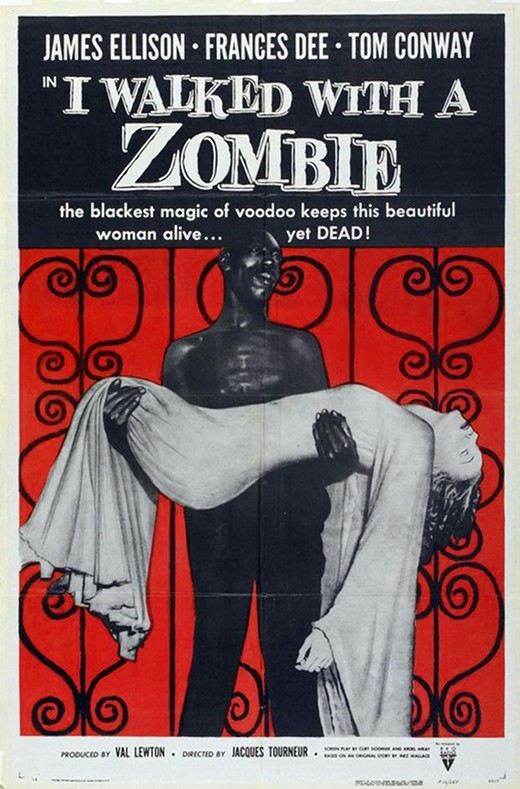 Daniel Drezner is no fool. This is a scholar who produces major publications, who teaches at a major institution, and who contributes to a major International Relations blog. So you have to wonder why he wrote Theories of International Politics and Zombies. Because this is, by any criteria I can come up with, a very foolish book.






 The Disorder Of Things
