The Citadel Has Been Blown Up. Hurray! Next? A Response to Hobson

This is the second post in a symposium on John M. Hobson’s new book, The Eurocentric Conception of World Politics. The series began with a post by the author summarising the argument of the book and laying out some provocations for sympathetic readers. In the next few weeks, we will have further posts from Srjdan and Brett Bowden, followed by a reply from John.

Update: Srdjan’s post and Brett’s post are now up.


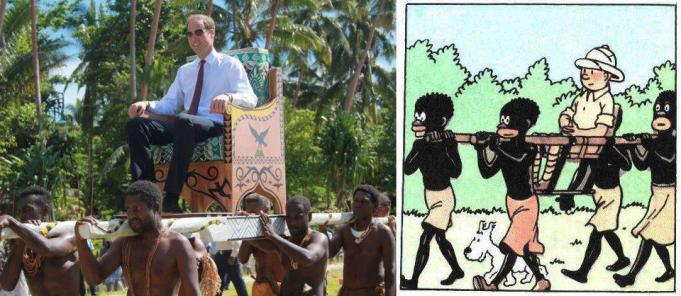
I was at an IR event last year where the speaker jovially declared that they just did not care about being, and being accused of being, Eurocentric. At the time, I found it both a little shocking and depressing that they could see fit to dispense with that fig leaf of serious acknowledgement that often accompanies discussions of Eurocentrism.  And indeed I thought, glumly, that it perhaps reflected many scholars’ underlying attitudes to the issue – a tokenistic practice of acknowledgement underpinning a wider apathy or disconnection. What only struck me later was also the possibility that the speaker also didn’t really understand the issue which was batted away so carelessly. Indeed, it is unclear that many ‘mainstream’ IR scholars truly understand the problem of Eurocentrism, given the mythologised twin deaths of colonialism and scientific racism in 1945 (or so).

Seriously?

So, Hobson is knocking at the door more loudly, with a bigger stick, and much more paperwork.  Continue reading

Flag-waving And Drowning: On The New Branding Policy Of UKaid

They say that discretion is the better part of valour. But DfID, or at least its boss, has decided otherwise. It was announced last month that “Aid from Britain will now be badged with a Union Flag when it is sent overseas, as a clear symbol that it comes from the United Kingdom.” In these times of urgently, relentlessly celebrating Britishness in all possible ways, this little ‘tweak’ to development policy may have slipped under the radar.

The ministerial statement in the press release is worth quoting in full, because it is both strange and revealing of a particular – and, I think, regressive – political turn in international development policy:

“For too long, Britain has not received the credit it deserves for the amazing results we achieve in tackling global poverty. Some in the development community have been reluctant to ‘badge’ our aid with the Union Flag.

“I disagree: I believe it is important that aid funded by the British people should be easily and clearly identified as coming from the UK. It is right that people in villages, towns and cities around the world can see by whom aid is provided.

“British aid is achieving results of which everyone in the United Kingdom can be proud. And I am determined that, from now on, Britain will not shy away from celebrating and taking credit for them.” Continue reading

What We Talked About At ISA 2012: How Music Brings Meaning to Politics

At this year’s ISA conference, I presented on the panel ‘The Social Technologies of Protest’, with George Lawson, Eric Selbin, Robbie Shilliam and our discussant Patrick Jackson. The full text of the draft paper is available here. Thanks go to the panel and audience for some fascinating questions and discussions.


Music is a world within itself
With a language we all understand
With an equal opportunity
For all to sing, dance and clap their hands
But just because a record has a groove
Don’t make it in the groove
But you can tell right away at letter A
When the people start to move

–          ­‘Sir Duke’, Stevie Wonder, Songs in the Key of Life (1976)

Music is an old and effective technology of politics. This was highly visible in both the recent uprisings and the attempts at counter-revolution; whilst from the beginning Tunisian activists sang their national anthem in the street in anti-regime protest, Assad blasted the Syrian anthem into the cities as a reminder of his position. Rappers and older musicians shared platforms in Tahrir Square, and DJs parodically remixed Gaddafi’s final public speeches into technotronic nonsense. Whilst not all political music is sung of course, songs and the act of singing are particularly powerful in political situations as means and symbols of mobilisation and unification.  Moreover, songs tend to linger in the brain.

But there are at least two ways of thinking about the relationship between politics and music. The question which is perhaps most often asked and answered is: how, when and where is music political? So, why did the Tunisian protesters sing the national anthem in front of the courthouse, how did music support the anti-apartheid struggle, and why did the Haitian revolutionaries sing the Marseillaise? How did the musical character of these expressions facilitate a particular kind of political act? Lots of excellent writers, both scholarly and otherwise, have turned their attentions to the nature of political music, and especially protest music, in a variety of times and places.

However, the question that I want to focus on mainly here though is slightly different: how, when and where is politics musical? This question was stimulated by the general observation that when we try to make sense of politics, we often use metaphors related to music. A common phrase is that a political statement or value ‘struck a chord’ with an audience, or that protesters are ‘banging a drum’. Politicians may or may not be ‘in tune’ with publics, and relations may be ‘harmonious’ or not. Coups will be ‘orchestrated’.

Perhaps surprisingly, in moving from vernacular to scholarly modes of understanding politics, the metaphors of music are no less important. In fact, in some cases they seem to be more important. The genre-defining work of the historical sociologist Charles Tilly in the study of contentious politics is a revealing and fascinating case in point.

Continue reading

Book launch: A Liberal Peace?

Tuesday 14th February 2012, 5.30pm-7.00pm

Westminster Forum, 5th Floor, Department of Politics and International Relations, University of Westminster, 32-38 Wells Street, London W1 (nearest tube Oxford Circus)

Panel with Editors David Chandler and Meera Sabaratnam, followed by publisher’s reception

All welcome

The 1990s was a weird decade for all kinds of reasons. The dice that were thrown into the air as the Soviet Union retreated landed in a particularly intriguing configuration for those politicians, public functionaries and academics from wealthy countries and institutions concerned with ‘peace’ and ‘development’. Their missions, marginalised for decades under concerns for national (i.e. military) security, were quite suddenly elevated as symbols of the new world order and installed as defining foreign policy priorities of wealthy states. Continue reading

Reading violence: what’s political about the London riots(?)

To reiterate somewhat, there is a politics to these riots. Panicking, political leaders and many others, have queued up to deny this, labelling it “pure violence,” “criminality, pure and simple“, or “mindless violence“. Over and over again, the distance between the rioters and the ‘community’ or ‘Londoners’ has been set up and reinforced. This is not without some public backing. After all, many Londoners are, rightly, angry, frightened, upset, frustrated, shocked and saddened by the sight of homes and businesses not just smashed but burning voraciously into the night whilst looters showed off their new gear. We were a world away, it seemed, from the specific, dignified, coherent demands for justice being made by Mark Duggan’s family and their supporters. Many asked themselves: what do they want? The answer seemed to be: trainers. What could be political about stealing from Foot Locker?

First things first. This post is not about constructing a narrative of social apologia via moral determinism – i.e. the idea that people couldn’t help themselves, or were bound to do it by their economic status etc. Between this and the ‘mindless violence’ line of argument, there are plenty of fools (sadly many, powerful, wealthy, and in charge of your country) trading in pretty stupid accounts of human behaviour and social causation. Continue reading

What We Talked About At ISA: Critique in Anti-Colonial Thought: Fanon and Cabral as Philosophers of Being, knowledge and ethics

I saw folk die of hunger in Cape Verde and I saw folk die from flogging in Guiné (with beatings, kicks, forced labour), you understand? This is the entire reason for my revolt.”.[1]


I sincerely believe that a subjective experience can be understood by others; and it would give me no pleasure to announce that the black problem is my problem and mine alone and that it is up to me to study it…Physically and affectively. I have not wished to be objective. Besides, that would be dishonest: It is not possible for me to be objective.”.[2]

For some time, I have been preoccupied by the connections between the ways in which we see, analyse and interpret the world, and the forms of political action to which this gives rise. In general, for critical social theory, the challenge is how to think about the world such as to understand and overcome structures of injustice or violence in it.  As a particular instance of this, the anti-colonial movement of the middle part of the twentieth century provides much food for thought, not least when so many point to patterns of colonialism and imperialism in world politics today.

In the paper I presented to the International Studies Association conference a few weeks ago, I offer a particular reading of Frantz Fanon and Amílcar Cabral as philosophers of being, knowledge and ethics.  Commonly, but not exclusively, these two figures are understood as having important things to say about revolt and resistance – Cabral is portrayed as the arch-pragmatist who emphasises the need for political unity and realistic objectives, whereas Fanon is frequently engaged for his affirmative treatment of violence in an anti-colonial context.  In this sense, they are largely approached as political thinkers and activists rather than philosophers per se.

Yet, their systems of thought stem from distinctive, and in important ways shared, philosophical commitments on the nature of being (ontology), ways of constructing knowledge (epistemology) and the ethical foundations of engagement (um, ethics). These foundations are strong, coherent and compelling points of departure and important in terms of understanding what kind of future order they envisaged.  What are these, and how do they support an anti-colonial political programme? What is the relevance of this intellectual legacy today? Continue reading

Libyan cash and the LSE: a deeper problem

As Qaddafigate rolls on, and its luminaries publicly distance themselves or fall on their swords, a repeated line marks the public justification: there was no influence over research, there was no influence over research, there was no influence over research.  This is, as far as anyone can see, true – there is no evidence, even in the most scathing denunciations, to suggest that there was any attempt to influence the outcomes of the research programme. Even so, the School have rapidly appointed an investigation into this very issue.

Whilst many have been relieved by this, I find myself more deeply disturbed. Why is it that the regime of an eccentric and violent autocrat can slide into bed so easily with a research programme on governance and democratisation? Continue reading

Of Consensus and Controversy: The Matrix Reloaded

This is the fourth and final post in a series of responses to Patrick Thaddeus Jackson’s recent book The Conduct of Inquiry in International Relations. Paul began the discussion with comments on the problems of boundary setting, Joe followed up with an interrogation of the nature of Jackson’s pluralism, and Nick most recently gave an exposition of a missing methodological position in the typology.  We look forward to a reply from PTJ himself in the near future.


In this post, with the pleasure and pain of coming last in a hitherto excellent series, I want to tease out several issues that struck me in the reading of Jackson’s Conduct of Inquiry, which specifically relate to the success of the central typology, a possible alternative and the ‘science’ debate in this context.

I confess to having begun my reading of this work very sceptically – although not because of any doubt about the author or importance of the subject matter. Rather, like Joe, I doubted whether there would be much of interest for me as one whose work does not have too much invested in the ‘science’ claim as it stands in the mainstream IR debates. Whilst, along with my colleagues, and as I will discuss below, I remain unconvinced about the use of the term ‘science’ amongst other things, I found the book engrossing, stimulating, erudite and brilliantly argued.  The marketing people are free to recommend it particularly for graduate students, although my own view is that it contains very important intellectual challenges for the whole field at all levels. It is no small achievement that it reaches Jackson’s stated ambition to provide a platform for a much better philosophical conversation about inquiry than we have had thus far.

Perhaps controversially, however, I cannot pretend to have emerged from the book wholeheartedly sharing Jackson’s enthusiasm for the kind of pluralism in the field of IR that he aims to promote. I respect the sentiment and the generosity of spirit in which it is made, and I do recognise that it is essential for keeping important conversations on track, and that this is the best way forward for a less introspective discipline. Yet I feel myself torn, as perhaps critical pluralists are fated to be, between a desire to fight false dogmas and respect reasonable differences.  In some senses, it is Jackson’s own critical reading of different positions that subversively feeds this tension.

I. Of knowing and being: some questions

I was struck in the early set-up of the book by the distinction between scientific and philosophical ontologies upon which the central typology is built. Briefly, according to Jackson, scientific ontologies specify the catalogue of objects of investigation – states, individuals, classes etc. – whilst philosophical ontologies relate to the ‘hook-up’ between mind and world. Jackson presents this in a 2×2 matrix, with which I am sure readers are by now familiar:

Jackson’s key claim is that as researchers our methodologies flow logically from where we sit on these philosophical-ontological issues, and as such should not all be evaluated on neopositivist claims of how valid ‘science’ proceeds. Whilst I accept the broad point, what I want to pursue in more detail is whether this typology does in fact get to the heart of the core wagers that underpin each ontological position in the matrix. Continue reading

Protest: the legality of the Emergency Budget’s gender impact, Monday 6th December

Even a top line assessment of the budget measures show 72 per cent of cuts will be met from women’s income as opposed to 28 per cent from men’s. This is because many of the cuts are to the benefits that more women than men rely on, and the changes to the tax system will benefit far more men than women.

Support Fawcett’s bid for a judicial review of the budget

**JOIN US TO PROTEST OUTSIDE THE HIGH COURT**

12.30 pm – 2pm, Monday 6th December, Royal Courts of Justice, the Strand, London WC2A 2LL

Continue reading

Policing as protesting by other means?

In the discussions of the ‘evenements’ of November so far, many have rightly focused on the significance of the student protest for politics, on which there are excellent discussions here and here. But what are the police up to? And what might their participation in this spectacle tell us? Continue reading