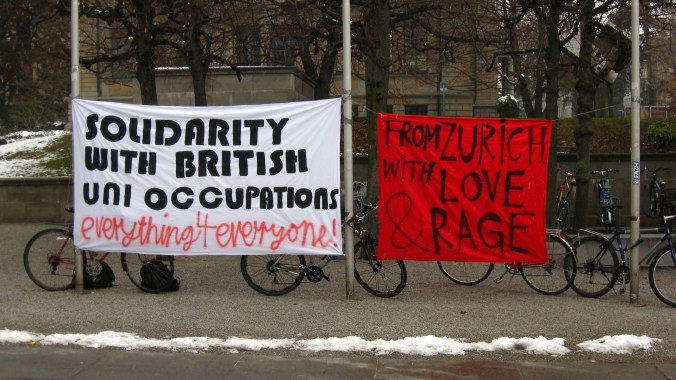
Everything 4 Everyone! From Zurich, with Love and Rage
“You ain’t never been no virgin, kid, you were fucked from the start.”
-Titus Andronicus, “A Pot in Which to Piss“

Police protect Vodafone store from the threat of public exposure of truth.
And you have to wonder what it will take for serious people to realize that punishing the populace for the bankers’ sins is worse than a crime; it’s a mistake.
Of obedience, faith, adhesiveness;
As I stand aloof and look there is to me something profoundly
affecting in large masses of men following the lead of those who
do not believe in men.
-Walt Whitman, “Thought”
Hypothesis
The winter air has turned cold enough, has pressed in with its full weight, so that there is no more space for lies. The truth of crisis is that the powerful and the wealthy do not take responsibility, they assign it; they do not suffer their follies or their sins, they pay their penance in the currency of our lives.
We’ve spent the last few years living with the anxiety of impending doom, spurred on by hustlers of panic, addled prophets of economic Reformation, and Janus-faced managers of public interest.
Yet, despite the prolonged disaster-foreplay, the consummation of this crisis was always going to be “us against them” and never “we’re all in it together.” Continue reading
Sometimes I have the impression that all intellectuals have become cosmopolitans. But there is an increasing gap between what intellectuals think and preach and what the ordinary people feel. There is a growing divergence between the demos and the elites, especially concerning the perception and the treatment that should be reserved to the “diverse”: immigrants, minorities, gays and so on are more and more perceived as a threat. When xenophobia is rising, the intellectuals have a responsibility to help to distinguish between the real and apparent reasons, even at the price to become isolated from great parts of the population.
– Daniele Archibugi
In this post I want to both feature and expand upon an upcoming special issue (Volume 12, Issue 1) of Human Rights Review, which I guest edited with my colleague and friend Marta Iñiguez de Heredia. The special issue focuses on human rights as an ideal and practical politics, opening some initial space to consider why the interaction between moral ideals and practical politics is important, and provoking discussion of how the clear divide between them is unsustainable.
To set the stage, we find Daniele Archibugi and Seyla Benhabib discussing Cosmopolitanism at Open Democracy. For both authors the place of universal rights in cosmopolitan politics is central, but the moral principle expressed through universal human rights works in a very particular way. This approach to human rights prioritizes what, in the paper, we call the “philosopher’s” understanding of rights, which begins from rational moral principles already known before political action is taken.
It is no accident that American pragmatism once again rises to the surface of North Atlantic intellectual life at the present moment. For its major themes of evading epistemology-centered philosophy, accenting human powers, and transforming antiquated modes of social hierarchies in light of religious and/or ethical ideals make it relevant and attractive. The distinctive appeal of American pragmatism in our postmodern moment is its unashamedly moral emphasis and its unequivocally ameliorative impulse. In this world-weary period of pervasive cynicisms, nihilisms, terrorisms, and possible extermination, there is a longing for norms and values that can make a difference, a yearning for principled resistance and struggle that can change our desperate plight.
Prophetic pragmatism worships at no ideological altars. It condemns oppression anywhere and everywhere, be it the brutal butchery of thirdworld dictators, the regimentation and repression of peoples in the Soviet Union and Soviet-bloc countries, or the racism, patriarchy, homophobia, and economic injustice in the first-world capitalist nations. In this way, the precious ideals of individuality and democracy of prophetic pragmatism oppose all those power structures that lack public accountability, be they headed by military generals, bureaucratic party bosses, or corporate tycoons. Nor is prophetic pragmatism confined to any preordained historical agent, such as the working class, black people, or women. Rather, it invites all people of goodwill both here and abroad to fight for an Emersonian culture of creative democracy in which the plight of the wretched of the earth is alleviated.
– Cornel West, The American Evasion of Philosophy: A Genealogy of Pragmatism
Today I was re-reading a piece by Kevin Dunn, “Never mind the bollocks: the punk rock politics of global communication,” and it lead me to wonder how far one’s route into the study of world politics affects how one perceives the “object” of inquiry. Dunn starts out by stating:
I am increasingly concerned about the ways that International Relations (IR) as a discipline seems unable to communicate to everyday citizens about issues of tremendous importance. I am repeatedly struck by our inability to speak to the people whose lives are affected daily by the issues we are supposed to be studying. More importantly, I am struck by how irrelevant we and our work can seem to the world’s population.
In 2003, I grappled quite openly and vocally with this alienation. The annual International Studies Association (ISA) Conference was being held in Portland, Oregon that year. Throughout the hallowed halls of the soul-numbing conference hotel, the discipline of IR was displaying its strengths and weaknesses. The US and its ‘ coalition of the willing’ were on the verge of invading Iraq. But within the ISA, there was little attempt to grapple with what this meant. My few attempts to stage some form of protest and intellectual outrage proved heart-warming but ineffectual. Then, at the end of the week, I went to a punk club a few blocks from the hotel to see a Joe Strummer tribute show. Joe Strummer, the frontman for the Clash, had died suddenly a few months before, and now over twenty bands from all over the region were coming together to play a benefit show. Each band performed two or three Clash songs; one band getting up after the other, sharing amps and a drum set. On stage, the bands were using the songs to make sense of the dangerous world we all found ourselves in. The in-between song banter reflected this – comments about President George W. Bush, remarks about American fascism, concerns about the impending war on Iraq, and pleas to register to vote. The kids in the club were using the Clash and punk rock, much as I did years before, to help them understand the world they were inheriting. While the discipline of IR pontificated down the street to itself about world affairs, I swirled in the mosh pit wondering: what relevance did I and the ISA have to these kids? Sadly, it seemed to me that we as a discipline were doing a poor job communicating with most of the people outside that conference hotel.
Leaving aside Dunn’s very interesting analysis of punk rock’s role as a form of counter-hegemonic global communication and subversive political message, the opening lines resonated in a profound way for me, as I share Dunn’s experience of punk music providing a frame for engaging with world politics. This leads me to the question: how does our route into the study of world politics affect our work? Continue reading
There’s always a surprising disconnect between experience and public reality when you attend an event that goes on to become an “event.” On such occasions, I find myself wondering how my experience can run so counter to the public narratives that emerge. Yesterday’s (10 Nov.) protest march in London is no different.
Here are some media images that reflect the protest I attended:

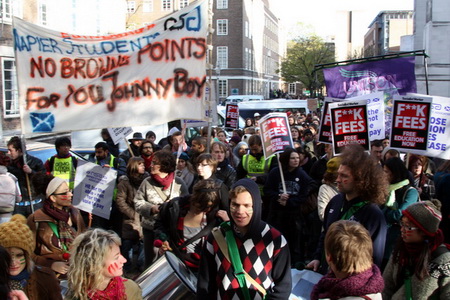
But the images that defined the “event” were slightly different. We’ve all seen them on the TV, in the papers, and on the web.


What I don’t want to do is engage in hand wringing over a protest hijacked by violent fringe elements, or tut at those smashing up the office building or gathered outside to watch. Instead, I want to do the opposite, I want to imagine myself as the one who failed, failed to fully grasp that it wasn’t just a sunny afternoon of political play acting. Continue reading
Recently, I saw an excellent documentary on the US military’s ongoing efforts to train and equip the Afghan National Army; the film, Camp Victory, Afghanistan, left me reflecting on my own thinking about this ongoing war. Despite the recent attention to the conflict, which seems to have returned to prominence, I have yet to read anything that helped clarify my thought – in particular the nagging question of what “we” owe Afghanistan.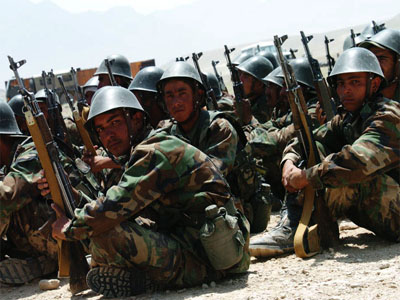
There’s much to pick apart there: who does “we” refer to? Why would we owe Afghanistan anything? And what does it mean to talk of Afghanistan as a subject to whom we have duties? I’ll try to address these questions in working out why I’m troubled by the idea that we owe something to the people of Afghanistan. Continue reading
Today, the Con-Lib Coalition announces their full plan for spending cuts. Although many bits have been leaked, this will be the first chance we have to take the full measure of what is to come. Much has been and will be written about how these cuts are necessary, and even that they don’t go far enough.
And while much has been said about the economic arguments for and against the cuts proposed by Mr. Osborne, what is not talked about enough, or with sufficient care, is the ethics of austerity. By this I mean the ethical claims that have been made to prepare the ground for the austerity measures announced today. To borrow a phrase from the political theorist Bonnie Honig, we are seeing the culmination of a discourse of emergency politics.
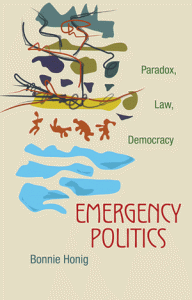
While Honig uses the idea of emergency politics to get at how the threat of emergency is deployed to reassert the sovereignty of the state over the democratic sovereignty of the people as the source of law and legitimate political power, I want to suggest that the financial crises has resulted in a similar discourse, which claims we are in a state of emergency economics.
What the claim of emergency economics does, by framing our current experience in terms of emergency, is reaffirm the sovereignty of the capitalist markets over democratic society by presenting us with a catastrophic choice. We must accept the radical restructuring of public life out of necessity; there is no alternative but catastrophe. To discuss solutions is to waste time; to insist on the imperative of democratic values is to court disaster; to oppose the hasty reform of fundamental elements of the social order is to be a dangerous ideologue. Emergency economics are hardly unique to the UK, but today we are witnessing a clear expression of its consequences.

 The Disorder Of Things