It’s Really Kicking Off In Quebec

Despite some news coverage and discussions on Twitter, we’ve seen little on the continuing educational and political crisis in Quebec. Hence, a guest post from our friend and colleague Philippe Fournier. Philippe teaches political thought and International Relations at the Université de Montréal and the Université du Québec à Montréal. He has published research on Foucault and International Relations, Governmentality in the contemporary United States and Violence and Responsibility. He is currently working on the government of security in the US and on the theoretical conflation of sovereign power and government in Foucault. His other research interests include critical cultural theory and political economy.


A little background info and some thoughts on the student crisis in Quebec, which has been going on for 101 days now and shows no signs of waning in the face of the government’s disturbing intransigence. The recent adoption of Bill 78, which circumvents the right to protest without prior notice and gives the police the right to change a demonstration’s itinerary, among other things, has shocked and angered many Quebecers and made the news worldwide. On Tuesday May 22, over 250 000 people expressed their discontent with the current government and it was quite a sight.

Ever since the ‘quiet revolution’ in the early 1960s, which saw the institution of important social provisions and the attribution of several socio-economic entitlements to the francophone majority, Quebec has been holding fast to its social-democratic heritage. Jean Charest’s liberal party, in power since 2003, is determined to fight off the modern-day antichrist of debt and rationalise state activity. The Charest government’s attack on hard fought social entitlements, including accessible post-secondary education (Quebec has the lowest tuition fees in Canada), has been going steady since 2003 but has intensified since 2008. Quebecers were told that it was no longer reasonable to expect affordable public services and that it was high time that we join the pay as you go party.

What is at play in this conflict is no less than the fate of social-democratic expectations in Quebec. These expectations are actively discouraged and discredited by the current political elite. The demands for a tuition freeze by sizeable portions of Quebec’s students are considered unreasonable in many quarters, and seen as a plane expression of bad faith and overindulgence by a majority of Canadians, seemingly stuck in a Stephen Harper induced stupor. The words ‘pragmatic’, ‘realistic’ and ‘rational’ have been duly appropriated by the partisans of deregulation, free-enterprise and individual responsibility. Any suggestions that the latter orientations are based on an ideological choice are ridiculed; they simply express a sounder and more logical way to manage society.

Up to now, there seemed to be a dour resignation to the decimation of our social programs. This young generation of Quebecers, which many had touted as completely apathetic and apolitical, has taken a resolute stand against restricting access to a public good, against the further commodification of knowledge and against the uncompromising law and order approach of an arrogant and irresponsible government. Those that have taken to the streets day after day and sacrificed their terms and put their professional lives on hold for the students that will come after them, have shown extraordinary resilience and bravery. It came as a surprise to many, because they did it on their own, with little or no help from their political science professors, who have long abandoned critical thinking for functionalist replications of reality sanctioned by government money.

Continue reading

Colouring Lessons: Reflections On The Self-Regulation Of Racism

A guest post, following Srdjan’s and Robbie’s contributions on the meaning and structure of contemporary racism, by Elizabeth Dauphinee. Elizabeth is Associate Professor in the Department of Political Science at York University in Toronto. She is the author of The Ethics of Researching War: Looking for Bosnia and co-editor of The Logics of Biopower and the War on Terror: Living, Dying, Surviving. Her work has appeared in Security Dialogue, Dialectical Anthropology, Review of International Studies and Millennium. Her current research interests involve autoethnographic and narrative approaches to international relations, Levinasian ethics and international relations theory, and the philosophy of religion.


The idea promulgated by Bet 115 that racism can and will meet its demise in a few short decades is based on the assumption that humans are self-regulating creatures, capable of recognizing and assessing their beliefs in an objective way and making appropriate corrections as needed. In order to explore this assumption, we need to inquire into the relationship between the self as an individual entity, capable of navigating and responding to the external world in an objective, disinterested way, and the social sphere, which may so entirely constitute us that we are incapable of thinking beyond the ‘texts’ (or scripts) of our socio-cultural milieus. In simpler terms, the question is: do we create the world, or does the world create us? 

In order to rightly consider this question, it is important to understand the implications of the answers one might be tempted to choose. It is also important to realise that each of us has a personal investment in the answer we might make. If we are individuals capable of willfully altering the world, then it makes sense to say that we can overcome racism (yet one is left with a lingering sense of bewilderment over why we have not done so). If we are fundamentally shaped and inextricably bound by the social sphere in which our ideas are formed, then we might lack the agency to escape the racism that seems to form a cornerstone of the institutions of our historico-political condition. Of course, there are few who would accept that our ability to self-regulate is an either/or proposition.  Rather, it is probably better to understand it as a ‘both/and’ state of affairs. In short, we shape and are shaped by the worlds we occupy. How, exactly, this is so is difficult to pick apart and navigate despite all of social science’s failed attempts to sharpen the distinction between the self and the worlds the self occupies. It inevitably flattens the complexity of social relations, and often ignores the tensions and contradictions that animate people’s views and beliefs. By way of example, let us consider the question with which we began: are we, or are we not, self-regulating creatures? The very structure of the question assumes that one will make answer either one way or the other. It leaves little room to suggest that both propositions are true, but in different ways and with different implications.

Continue reading

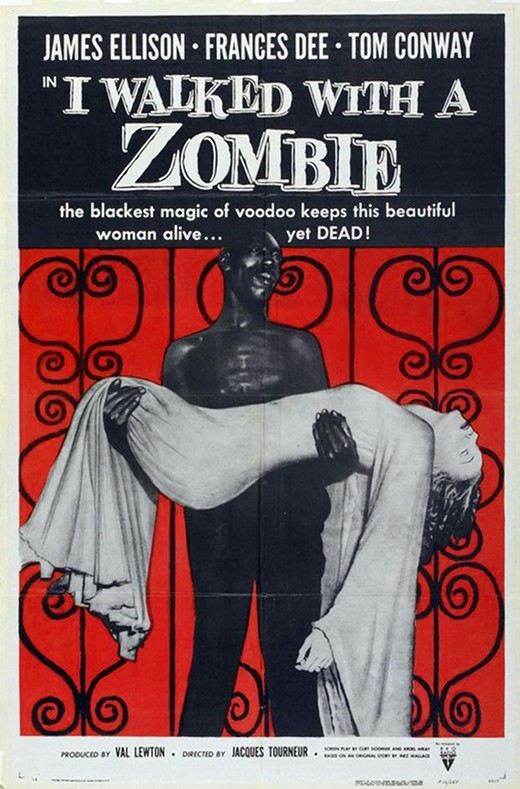
The Living Dead: On the Strange Persistence of Zombie International Relations

A guest post by George Lawson, Lecturer in International Relations at the London School of Economics & Political Science. He is the author of Negotiated Revolutions: The Czech Republic, South Africa and Chile, Co-Editor of The Global 1989: Continuity and Change in World Politics and has written a number of articles on historical sociology, revolution and world order. He is currently a Co-Editor of Review of International Studies and a Convener of the BISA Working Group on Historical Sociology and International Relations. He is currently working on a monograph on the anatomy of revolutions. Images by Pablo.


Daniel Drezner is no fool. This is a scholar who produces major publications, who teaches at a major institution, and who contributes to a major International Relations blog. So you have to wonder why he wrote Theories of International Politics and Zombies. Because this is, by any criteria I can come up with, a very foolish book.

Every now and again, I come across films, music or books and wonder how, in a world where so many talented people fail to make the grade, it can be possible to create, develop, sanction and, ultimately, sell products that are so banal. Often, the answer is simple – money. Perhaps that is the case here too. But I have a feeling that something else is involved in this book as well – Drezner, and plenty of others, seem to think that the connection between zombies and IR theory is uproariously, hilariously, side-splittingly funny. Judging by much of the commentary on the book – and listening via podcast to the guffaws of the audience at a panel devoted to the book at the 2011 International Studies Association Convention – many people clearly share Drezner’s sense of humour. So perhaps I am the curmudgeon here. Because I found this book diverting only in a way popularised by a recent headline in The Onion: ‘Time Between Thing Being Amusing, Extremely Irritating Down To 4 Minutes’. I lasted about half that long with Theories of International Politics and Zombies.

Why is it that so much hoo-hah has been made about this book (10,000 copies sold within six months of publication)?

Continue reading

Who’s Afraid Of Economic Models?

A guest post by Nathan Coombs, a doctoral student in Politics and International Relations at Royal Holloway. Nathan’s work focuses on the relationship between metaphysics and political ideology. Nathan is the author of ‘The Political Theology of Red Toryism’, published in the Journal of Political Ideologies, 16(1), February 2011, as well as a number of other papers. He is an also an Editor of the Journal of Critical Globalisation Studies, an open-access peer-reviewed academic journal which should be a stimulus to us all. Images by Pablo.


If there is a point of unity for strong (non-Keynesian) critics of neoclassical economics it is their shared rejection of modelling. This is not to say such authors shun all use of abstraction, idealisation, and quantisation in favour of just qualitative, empirical efforts at explanation. Rather, modelling is held out as a practice whereby mathematical attempts to grasp economic laws become unhinged from reality; where abstraction begets abstraction for its own sake. For example, in his famous methodological treatise, Economics and Reality, Tony Lawson firmly demarcates the form of abstraction he recommends for economics from the practice of modelling – placing stress on the point where: “it seems vital that I indicate why the procedure to which I refer does not at all reduce to the activities of the ‘modelling’ project in question.” (Lawson 1997, 227)

For different reasons converging to the same end, advocates of the most active strand of Marxian economics, working from the Temporal Single System Interpretation (or TSSI), are equally averse to modelling, associating it with simultaneous, equilibrium interpretations of Marx’s labour theory of value, diverging from the correct representation of the theory. Inside the pages of Andrew Kliman’s recent book, Reclaiming Marx’s “Capital”, the word ‘model’ only occurs negatively in association with what he argues are flawed abstractions of the theory from Okishio’s theorem through much political economy in the 20th century (Kliman 2007, 44, 48, 66, 101, 176). The idea that Marx’s Capital might itself be considered a theoretical model of the economy is out of the question.

What explains this resistance to modelling for critics of the status quo in economics?

Continue reading

Looking Beyond Spring for the Season: Echoes of Time Before Tahrir Square

This is the fifth and last part in a series of posts from Siba Grovogui, Professor of International Relations and Political Theory at John Hopkins University. The first part is here; the second here; the third here; the fourth here. The series considers the character and dimensions of the tension between the African Union and ‘the West’ over interventions in Africa. As before, responsibility for visuals adheres solely to Pablo K.


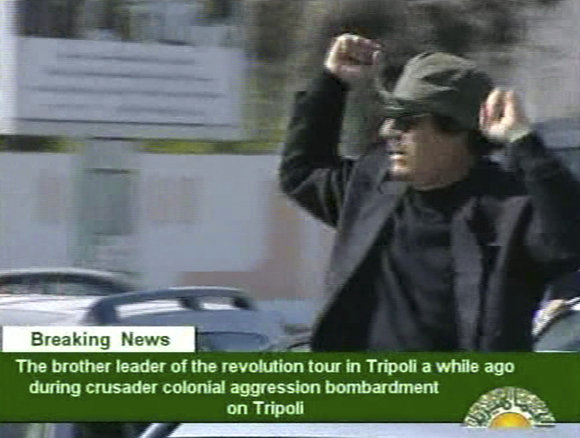
It would be disingenuous to relate events in North Africa and the Middle East (or MENA) today without reference to the media. Here too, there are many possible angles to examine. I will focus on the institutional support that the media provide in shaping consensus in support of foreign policy. In this regard, so-called mainstream Western media and networks (BBC, CNN, Fox, RFI and the like) have played a significant role in generating domestic support for the Libyan campaign. The media find themselves in the contradictory positions of both providing sustenance to foreign policy rationales and reporting on government actions. In this role the media either wittingly or unwittingly assumed the position of justifying contradictory Western foreign policy aims while trying to satisfy the needs of their audiences (especially domestic constituencies and home governments) for information from the front. Consistently, the media often generate sympathy for foreign actors or entities that either support Western interests or have affinities for Western values.

This role is not without a cost, especially when foreign policy actions, including wars, fail to attain their objectives. When the outcome of foreign policy proves disastrous, Western media also have an inexhaustible capacity to either ignore their prior support for the underlying causes or to reposition themselves as mere commentators on events over which they had no control or could not prevent. Increasingly, these tendencies have spread around the world as evidenced in the techniques and styles that have propelled the Qatari-based Al Jazeera into prominence as key contender in the emergent game of production, circulation, and consumption of foreign policy-concordant images for their affective and ideological effects.

So it is not surprising that the backdrop and background scenarios for most reporting on the 2011 revolts in MENA are dimensions of Orientalism, of which they are many. But the most constant is one of autocratic ‘barbarism’. In this regard, the discourses and media techniques for creating and supporting sympathetic figures are just as constant (or invariable) as Western states rationales for intervention. The media-hyped stories of Oriental despotism that preceded Operation Desert Storm, when the US expelled Iraq from Kuwait, have provided the template. During that event, for instance, media feted their viewers with stories of invading Iraqi hordes storming through hospital only to disconnect incubators and let helpless infants die a slow death. These and many stories of heroic bids by US soldiers to prevent such barbarism were later discredited but not the other horrific stories which convinced US citizens of the need to wage war on Saddam Hussein’s occupying army. In the Libyan case today, one of the earlier images of the aura of impunity created by Gaddafi was that of a Libyan female lawyer who was allegedly raped by Gaddafi’s forces. There was also a reported event of military takeover of a hospital.

Continue reading

Looking Beyond Spring for the Season: Democratic and Non-Democratic Cultures

This is the fourth part in a series of five posts from Siba Grovogui, Professor of International Relations and Political Theory at John Hopkins University. The first part is here; the second here; the third here. The series considers the character and dimensions of the tension between the African Union and ‘the West’ over interventions in Africa. As before, responsibility for visuals adheres solely to Pablo K.


It is not accurate to say that the African Union has been indifferent to the conflict in Libya. If there has been silence in Africa, it has to do with the extent to which the ‘maverick’ Colonel (Gaddafi) has angered some of his peers over the years by interfering in the affairs of such states as Nigeria, Liberia, Burkina Faso, Sierra Leone and others, with disastrous effects. Even when, as in Sudan and Uganda, officeholders have welcomed his entreaties, large segments of the populations have not appreciated them. Yet, regardless of their personal views of Gaddafi and their political differences with him, African elites and populations have yearned for a more positive, conciliatory, and participatory solution to outright regime change or the removal of Gaddafi preferred by the West. This variance, I surmise, comes from a positive understanding of postcoloniality that include forgiveness, solidarity, and democracy and justice, as exhibited in post-apartheid South Africa and post-conflict Liberia, Angola, Mozambique, and the like.

In opting for negotiated mediation and a new constitutional compact, therefore, the African Union (or AU) aimed to foster a different kind of politics in Libya – admittedly one that has escaped many of the states endorsing that position. As articulated by Jean Ping, the Secretary General of the AU, the Libyan crisis offered an opportunity “to enhance a self-nourishing relationship between authority, accountability and responsibility” in order to “reconstitute African politics from being a zero sum to a positive sum game” toward one “characterized by reciprocal behavior and legitimate relations between the governors and the governed.” Mr. Ping added two other dimensions to his vision. The first is an acknowledgement that events in Libya point to the fact that all Africans “yearn for liberty and equality’ and this yearning is “something more consequential than big and strong men.” The second is that Africa’s destiny should be shaped by Africans themselves based on an actualized “sense of common identity based, not on the narrow lenses of state, race or religion, but constructed on Africa’s belief in democracy, good governance and unity as the most viable option to mediate, reconcile and accommodate our individual and collective interests.”

Coming from a politician, these words may read like slogans. But the uniform refusal of the AU to endorse Western intervention tells another story. Continue reading

Looking Beyond Spring for the Season: The West, The African Union, and International Community

This is the third part in a series of five posts from Siba Grovogui, Professor of International Relations and Political Theory at John Hopkins University. The first part is here; the second here. The series considers the character and dimensions of the tension between the African Union and ‘the West’ over interventions in Africa. As before, responsibility for visuals adheres solely to Pablo K.


The oblivion of commentators to these possible African objections has been less than helpful to understanding the actualized Western intervention itself; emergent African ideas on democracy and security; and the actual place of international morality in international affairs. Underlying the African apprehension to military intervention is a long-standing tension between international organizations that represent Africa, on one hand, and self-identified representatives of the West, on the other, over the meaning of international community as well as the source, nature, and proper means of implementation of the collective will. The dispute over the meaning of international community and the collective will has been particularly salient in Africa because, as a political space, Africa has been more subject to military interventions than any other geopolitical space in the modern era. These interventions have reflected contemporaneous relations of power, permissible morality, and objects of desire: from proselytism to fortune-seeking, trade, extraction of raw material, and the strategic pursuit of hegemony. Indeed, it is hard to remember a time since the onset of the slave trade when there was no open conflict between the majority of its states and the West over some dimensions of global governance that implicated the notion of the commons or international community.

The postcolonial era has not brought about any change to this situation. Since the end of World War II and the institution of the United Nations system, the plurality of African political entities have confronted self-appointed representatives of the West over the ethos of UN procedures (involving transparency and open access to the channels of decision-making) and the mechanisms of dispute mediation (including the determination of the principles and applicability of humanitarian interventions in a number of cases). One need only recall the political, legal, and military confrontations between African states and former Western colonial powers over Apartheid South Africa’s mandate over South West (which involved the legality and morality of colonial trusteeship); the French war on Algeria (which involved the legality and legitimacy of settler colonialism); the wars of decolonization in the former Portuguese colonies of Angola, Guinea Bissau, and Mozambique (which involved the principles of majority rule through open elections which communists might win); the unilateral declaration of independence by the white minority in Southern Rhodesia (which involved the principle of white-minority rule in postcolonial Africa); and the legality and morality of apartheid (which involved the principle of self-determination and majority rule). The underlying antagonisms contaminated deliberations throughout the UN system (particularly General Assembly proceedings) and involved all major issues from the Palestine Question to the Law of the Sea to other matters of trade and intellectual property. They reached a climax at the time of exit of the US and Great Britain from UNESCO, which was then directed by Ahmadou Mathar Mbow, a Senegalese diplomat and statesman.

These and other contests have shared a few singular features. One is a Western insistence on representing the essential core and therefore will of something called international community. In any case, the label of international community has often been reserved for Western entities in relations to others, who remain the object of intervention on behalf of the international community. This is to say that the term ‘international community’ has had political functionality in relations of power and domination in which Europe (and later The West) subordinated ‘Africa’. The relevant tradition can be traced back to the opening moments of the modern era, particularly during the ascension of The West to global hegemony. While it has undergone changes over time, the embedded imaginary of international community and its will have been built around artificially fixed identities and politically potent interests. Accordingly, the identity of the West, and therefore the international community, flows from a theology of predestination, formally enunciated as the Monroe doctrine in the US or the Mission Civilizatrice in France.

Continue reading

Looking Beyond Spring for the Season: Common and Uncommon Grounds

This is the second part in a series of five posts from Siba Grovogui, Professor of International Relations and Political Theory at John Hopkins University. The first part is here. The series will consider the character and dimensions of the tension between the African Union and ‘the West’ over interventions in Africa. Responsibility for visuals adheres solely to Pablo K.


As I indicated in my last post, the decision by the African Union (or AU) to not endorse the current military campaign in Libya has been mistaken by many observers and commentators alternatively as a sign of African leaders’ antipathy to political freedom and civil liberties; a reflexive hostility to former colonial powers, particularly France and Great Britain; a suspicion of the motives of the United States; and more. The related speculations have led to the equally mistaken conclusion that the African Union is out of step with the spirit of freedom sweeping across the Middle East and North Africa (or MENA). The absurdity of the claim is that the only entity that imposed any outline of solution agreeable to Gaddafi has been the African Union and this is that Gaddafi himself would not be part of any future leadership of the country. But the AU has insisted on an inclusive negotiated settlement. The purpose of this series of essays is not therefore to examine the meaning and implications of the absence of ‘Africa’ on the battlefield of Libya, but to point to the larger geopolitical implications of the intervention for international order, global democratic governance, and the promotion of democratic ideals and political pluralism in the region undergoing revolution and beyond.

To begin, it is not just ‘Africa’, ‘African indecision’, and ‘African non-Normativity’ that are at stake in the characterization of African actions or inactions. Much of what is construed as ‘lack’ or ‘absence’ in Africa is also intended to give sustenance to the idea of the indispensability of the West – composed on this occasion by France, Great Britain, the United States, and tangentially Canada – to the realization of the central ends of the MENA Spring. The myth of the centrality of the West to the imaginary of freedom everywhere is inscribed in the name given to the events under description. In the US at least, the Arab Spring evokes many other ‘Springs’ all located in the West (including the 1968 Prague Spring or the 1989 collapse of the Soviet Union and its satellite states). Likewise, ‘Jasmine’, the emblem of the Tunisian revolt has been advanced as evocative of the Ukrainian ‘Orange’ and other colour-coded European events. These allusions have justifications but they are seldom evoked comparatively to elucidate the originality and specificity of the MENA revolutions. In this latter regard, even the suggestion of an Arab Spring assumes that the majorities in the countries involved are Arab. This is not always the case in North Africa but Orientalism obliges!

The fact is that the ongoing revolutions in MENA are at once specific and universal in their own ways. Continue reading

Looking Beyond Spring for the Season: An African Perspective on the World Order after the Arab Revolt

The first of a series of posts by Siba Grovogui, Professor of International Relations and Political Theory at John Hopkins University (followed by a second, third, fourth and fifth installment). He is the author of Sovereigns, Quasi-Sovereigns and Africans: Race and Self-Determination in International Law and of Beyond Eurocentrism and Anarchy: Memories of International Orders and Institutions, as well as a number of articles on race, sovereignty, postcoloniality and human rights and what the history of slavery tells us about the contemporary discourse of international politics. Reposted from The Contemporary Condition. Images by Pablo.


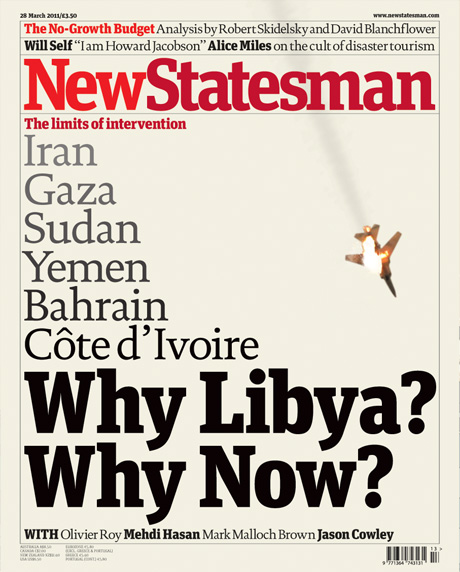
There is much misunderstanding today about the decision of African Union (AU) to not endorse the military intervention in Libya undertaken by France, Great Britain, and the United States in conjunction with a few Arab States. Speculations abound as to whether the uniform decision coming out of Africa indicates that the African Union is out of step with the spirit of freedom sweeping across North Africa and the Arab World; or whether the absence of Africa in the battlefield of Libya merely suggest military ineptitude and political bankruptcy. In fact, it is not accurate that the African Union has been indifferent to the conflict in Libya. The AU opted for mediation and negotiated constitutional compact, with the aim of fostering a different kind of politics. The uniform refusal of the AU to endorse Western intervention has two main explanations. The first is the practice of consensus in decision-making which has long history within Africa. The other is profound unease on the continent about the form and foundation of the intervention itself.

I suggest that there is continent-wide scepticism in Africa about Western leadership in the eras of global governance, the rule of (international) law, the status of international morality, and the future of global democracy. This development is the result of continental experiences with the modes of enactment and execution interventions in Africa. The African position arises therefore from doubt that the coalition of Western powers leading the military effort in Libya today can be trusted to not abuse legitimate anti-Gaddafi sentiments; to not instrumentalize international law and morality; and to not subvert UN procedures and the mechanisms of global governance in order to advance hegemonic agendas and parochial ‘strategic’ interests. In short, underlying the African objection to military intervention is a long-standing tension between international organizations that represent Africa and the self-identified ‘West’ around the representations of the will of the international community, the resulting global democratic deficit in times of intervention, and their effects on international morality, including the principles of humanitarianism.

In relating this conflict, I do not wish to speak for a uniformly-defined ‘Africa’ and/or for all African entities. Continue reading

Neoliberalism Strikes Back, or Is This Really a Crisis?

A post from Roberto Roccu.


Of course it is. Yet, Colin Hay hits the right note when he points out that if crises are conceived as moments of radical questioning and change of existing paradigms, then what we see today is not a crisis, but rather a “catastrophic equilibrium”. Indeed, now that the reverberations of the rhetoric of London’s G20 in April 2009 have faded, it appears that the measures adopted both on a national and on the global scale are concerned with shoring up the old growth model based on flexible accumulation, in the attempt to restore its economic profitability, regardless of its social unsustainability.

Rather than downplaying the magnitude of the economic problems we face, Hay’s aim is to show how in a period when all the material conditions for speaking in terms of a crisis are present, with all the potential implications for a radical reconfiguration of our economic policies and political economies, the ideational discourse is still dominated by the very paradigm that created such material conditions. This fits well with Hay’s account of the genesis of neoliberalism, which emerged as the solution to a discursively-boosted epochal crisis of Keynesianism in times where material conditions were far from being as severe as the ones we face today.

It would be easy to dismiss Hay for “being too academic”, particularly in a context where what he calls the pathologies of the neoliberal paradigm have infected all of the developed world with very real consequences for those individuals and groups that have lost their jobs and are experiencing a dramatic increase in their social insecurity. Still, identifying the distinction between existing material conditions and the missing narrative for linking those conditions and framing a coherent and credible political project is extremely fruitful. This is the hiatus where capitalist realism as an ideology and a practice has prospered. In this respect, the regained profitability of the capital accumulation regime has brought about two seemingly parallel yet interrelated trends, that are most visible in the developed country struck hardest by the crisis, the US.

On the one hand, the rise of the Tea Party movement. The mainstream press has set its focus on the populist, anti-intellectual and anti-establishment aspects of the phenomenon. Yet, their fundamentalist neoliberalism – best expressed in the call to “return to the principles of Austrian economics” – has largely gone unnoticed. On the other hand, the ever clearer and stronger political position taken by Murdoch’s media empire against the Obama administration and more generally against any kind of state intervention in the economy is equally relevant. The daily space granted to Glenn Beck on Fox appears to me as the most evident trait d’union between these two trends.

On this side of the Atlantic, dismissing these phenomena as something alien would be misleading and dangerous. And not only because Murdoch’s empire extends well within Europe, and he is even now launching an offensive on the British media. Most importantly from a social standpoint, is the other trend – the rise of populist, worryingly xenophobic yet economically conventional movements – which is manifesting itself with a surprising regularity, even in countries like Sweden, that our diehard clichés still like to characterise as “welfare paradises”.

The analysis of what is happening in the European space is rendered more complex by the presence of a further level of decision-making, located on a larger spatial scale than the state. Now, all of us have become accustomed to hear about the democratic deficit within the EU. One of its major consequences is that the struggle for influence does not follow institutionalised forms, and lobbying is by and large the name of the game. Within this context, the effective mobility and mobilisation of capital and of its allies on the EU scale (and beyond) confronts a mobility of labour that remains mostly on paper, as the bulk of the jobs that are neither highly skilled nor unskilled are still largely allocated on a national basis. As a consequence, it has proven incredibly hard to mobilise working forces beyond the national scale.

Even the rampant xenophobia – exemplified by the rise of parties such as the Northern League in Italy, the Freedom Party in the Netherlands, the Swedish Democrats in Sweden, and the list could go on to include at the least fifteen of the EU’s twenty-seven members – must be seen as a fragment that begs for relations with the whole. And in the Europe of the four freedoms of movement (people, goods, services, capital), where the mobilisation of capital is effectively globalised and the mobilisation of labour is still limited by national boundaries, it comes as no surprise that the genuine anger of the working class(es) is channelled towards an attack of the only one freedom that can credibly be limited by national authorities: the movement of people.

And yet, there would be plenty of material to start from in the direction of some Europe-wide coordination. From the Spanish general strike to the recent demonstrations in the Netherlands to industrial action on the London Underground to the French general strike of this Tuesday. Unfortunately, very little has been happening on the European scale. And as long as capital is more powerful to begin with and better organised on a larger scale whereas labour is weaker and sometimes divided also on the national scale, the prospects for resisting, reversing and subverting the current neoliberal offensive appear to be dire indeed.