Fear and Honesty: On Reconciling Theory and Voice, in Two Parts

Kate DaleyThe second post in our guest series on critical methodology and narrative, this time from Kate M. Daley. Kate is a PhD candidate in the Department of Political Science at York University in Toronto, Ontario. Her doctoral research in feminist political theory explores responses to privilege in the context of feminist relationships and her current research interests include narrative research methods, social science education, indigenous methodologies, and anti-oppression knowledges and discourses. She lives in Waterloo, Ontario, where she advocates for projects and policies that support transportation choice, environmental protection, and vibrant public spaces.


Part I: Fear

I am lucky in this room, among my colleagues. I am working in feminist political theory, not international relations, and my discipline has been advocating for and responding to feminist work that is in one’s own voice and that tells one’s own story for decades. Still, I feel a sense of paralysis. I am 27 years old. I have passed my qualifying exams. I have written dozens of graduate papers. My work is starting to get published. I am now starting to stare down my dissertation. And I am not sure that my work has ever been truly honest.

It was my Master’s supervisor who graciously began to break my training. She encouraged me to write in the first person. In her class, I had argued passionately with some of my more conventional colleagues. I had defended the overt positionality of narrative political theory, and valorized those who had the courage to write in their own voice. And yet I most often continued to write as though I was not there at all.

So I started to use first-person pronouns in my academic writing. Sometimes I even included a personal anecdote to make my writing more compelling, more convincing. I believe firmly in the importance of personal narrative for political theory, and for social sciences scholarship. I have thrown in the occasional story to illustrate a point. But I have never really, truly, made myself visible and vulnerable in my theory.

I am afraid. I have come to a place where I can no longer only speak an I that serves as nothing more than a grammatical device between abstract ideas, or a persuasive tactic to convince others of a conclusion I have already drawn. But I cannot wholeheartedly embrace autoethnography and my own narrative, either. I am afraid.

I fear that I will learn that I can write as a faceless academic, but not as a whole person. Continue reading

Critical Methodological and Narrative Developments in IR: A Forum

Elizabeth Dauphinee 2Some months ago, Elizabeth Dauphinee (York) asked if we would be interested in hosting a series of posts resulting from a workshop on recent critical methodological and narrative developments in International Relations. We said yes. Said workshop was funded by the Social Sciences and Humanities Research Council of Canada (SSHRC) and happened in October of last year at the York Centre for International and Security Studies. It considered how narrative writing, including storytelling, autoethnography, and other forms of creative expression are currently altering the provenance of IR knowledge. Over the next week and a bit we will feature posts from many of the contributors. In this introductory post Elizabeth (who previously guest-posted on racism and the self) sets out the trajectory and stakes of the forum.


The ways in which academics and practitioners think about international politics are shaped invariably by the ways in which they produce and access information. In IR, as in all social science disciplines, there exists an established professional language that privileges the initiated, reproduces adherents through highly specialized training practices, and ignores or rebuffs intellectual ‘outsiders’. These languages sanitize academic writing and they strategically deploy their interlocutors in a style of adversarial debate that is often stagnant and exclusionary. In addition, virtually all theories of IR seek replicable truths and are deeply ill-at-ease with results that are unclear or open-ended or with projects that reveal ambiguity and ambivalence. Scholars deploying various critical methodologies have been arguing for decades that knowledge can only be partial and situated. However, this has not led to a change in the way mainstream scholarship is developed and disseminated, and even scholars who consider themselves to be critical typically operate with specialized theoretical languages and narrow intellectual coda that are often impenetrable even for the most diligent and invested student.

In recent years, these dilemmas have led to a new line of academic inquiry that may be fundamentally altering the landscape of IR. These approaches are based in autoethnography and narrative writing, and involve storytelling, explicit use of the ‘I’ as a narrating subject, and deep exploration of the interface between writers and their subject matter. Scholars who work with these approaches are showing that the form writing takes shapes its content, plots its own boundaries, and pre-determines who can comprise its audience. They are showing that researchers are always personally present in their writing, that narratives – both written and oral – are knowledge-producing activities, and that the claim to scientific objectivity is not only impossible but also, critically, undesirable. They are also showing that critical theory written in scholarly language alienates and excludes the very communities that many IR scholars are trying to reach: students, policymakers and practitioners, institutions of governance, international organizations, the reading public, to name just a few.

As this form of writing is growing exponentially in volume and scope, the workshop organizers and participants determined that the time was ripe for a sustained discussion to identify the successes and challenges facing narrative and autoethnographic approaches. Without a careful and systematic exploration of these novel methods by those who are already working with them – and also by those who are unsure of their value – narrative IR may emerge in ways that are misguided and destructive. They may emerge as an exercise in self-indulgence, or as disconnected forays into the personal and confessional without a sustained political motif. Additionally, ethical questions surrounding the disclosure of both self and other are uniquely important for narrative IR scholars, who do not purport to ‘interview’ their subjects in a formal way. And, concerns about epistemic privilege emerge in the context of approaches that do not claim to situate knowledge in any established theory or philosophical tradition.

Continue reading

The Student Movement in Quebec: Of Small Victories and Big Disappointments

A guest post by Philippe Fournier, following up on his analysis of the Quebec student movement in May last year. Philippe is Postdoctoral Fellow at the Canada Research Chair in Globalisation, Citizenship and Democracy (Chaire MDC) at Université du Québec à Montréal’s Sociology Department, and works primarily on Michel Foucault in global politics.


A Quebec student march route

A Quebec student march route

Quebec’s protracted student crisis, which laid heavy on voters’ minds, has been fixed, at least for now. In early September, the Parti Québécois (PQ) was ushered in as a minority government. The PQ campaigned on a tuition freeze, higher taxes for society’s upper echelons and a fairly ambitious environmental agenda. These aspirations notwithstanding, popular discontent with the Liberal’s handling of the student crisis, widespread accusations of corruption (see the ongoing Commission Charbonneau) and a collective displeasure with Premier Jean Charest’s smug ways, all contributed to the previous government’s demise. All things considered, the Liberals did very well, taking 31% of the vote. The PQ took a mere 32%, hardly a glowing endorsement from the general public. Most analysts believe that it was also a clear message to the incoming rulers that Quebecers had no interest in one of the more fundamental objectives of the PQ’s platform, that is sovereignty.

There are several dimensions and consequences to the PQ’s election, most of which provide an example of things-that-are or of things-that-will-be in western countries facing economic woe.

Students and Protests

The majority of students see the electoral results as a victory and feel vindicated for their continued efforts. A minority of students, many of whom are affiliated or sympathetic to the now recently defunct CLASSE (now the ASSÉ), which was set up especially for the strike, are less enthused and sense that this is only a reprieve in the long and arduous fight for free education.

The PQ has called for a summit on higher education, which will take place sometime in February and is meant to involve a wide-ranging consultation between state officials, student representatives, chancellors and business leaders. The likely outcome will be an indexation of tuition fees to the cost of living and new innovative means to cut costs in University management. Opposition parties are already accusing the PQ of having bowed down to the vociferous demands of ‘the street’ and have warned that this blank cheque would have consequences on the allocation of funds to other social programs. The ASSÉ is predictably sceptical of such proceedings and is not yet sure whether it will participate. After being told by the government that they had to cut a further 120 million before the negotiations even started, University chancellors are ticked off.

Insofar as the student crisis was widely heralded as a social movement and not just a sectorial claim, it is important to assess its overall effect on Quebec’s current political landscape. Continue reading

The Best Things In Life Are Free?: Open Access Publishing and Academic Precarity

The fifth post this week on open access and its impact on IR (amongst other social sciences) from previous guest poster Nathan Coombs (follow the blue underlines for the first, second, thirdfourth and sixth posts). Nathan is completing a PhD in politics and philosophy in the Department of Politics and International Relations, Royal Holloway, University of London. He is co-founder and co-editor of the transdisciplinary, open-access journal, the Journal of Critical Globalisation Studies. He has a book forthcoming in 2013: The British Ideology. Images by Pablo.


When my colleagues and I established the open-access journal, the Journal of Critical Globalisation Studies in 2009, to us open-access publishing meant placing an academic journal online which would be free for both our contributors and our readers. We took inspiration from open-access journals in critical philosophy such as Parrhesia and Cosmos and History, the efforts of the Open Humanities Press, and the Australian book publisher Re.Press, who make PDFs of their releases available online simultaneously with their distribution to bookstores.

Since this time, however, the term open-access seems to have become increasingly polyvalent. As discussed in contributions to this series of reflections by Pablo, Colin Wight and David Mainwaring, open-access publishing is now endorsed by government and publishers. Yet the price of this move into the mainstream has unfortunately been a watering down of the term. In the ‘gold’ open-access publishing scheme proposed by the Finch report, for instance, universal access to academic publications is secured, but only by preserving the existing journal subscription system and by introducing Article Processing Charges (APCs) for authors.

Whether these pseudo open-access schemes will prove to be unstable transitional forms or lasting models only time will tell. In any event, for my contribution I want to focus on open-access in its fully fledged form: ‘full open-access’ we will call it. The model of full open-access, as operated by the JCGS, does not permit any persistent role for the private (profit motivated) sector within academic journal publishing. Full open-access journals are housed on independent or University affiliated websites, freely available to everyone in the world within an internet connection, and provide a free anonymous peer-review service for contributors.

Let us imagine a world where academic journal publishing turned over completely to this approach. Journal subscription fees would be swept away. Academics would take control over their publishing arrangements. The profits of corporate publishers would dwindle to zero. An enticing scenario for anyone exasperated with the current status quo.

As with all things that sound too good to be true, though, caution is required. Continue reading

One Size Fits All?: Social Science and Open Access

The third post in our small series on open access, publication shifts on the horizon and how it all matters to IR and social science, this time by David Mainwaring  (Pablo’s post was firstthen Colin Wight’s, and following David came Nivi Manchanda, Nathan Coombs and our own Meera). David is a Senior Editor at SAGE with responsibility for journals in politics and international studies. So he oversees journals like Millennium and European Journal of International Relations amongst others (which is how we know him), and can thus offer a close reading of movements within the academic publishing industry. Images by Pablo.


Open Access is the talk of the academic town. The removal of barriers to the online access and re-use of scholarly research is being driven by a cluster of technological, financial, moral and commercial imperatives, and the message from governments and funding agencies is clear: the future is open. What is much less clear is exactly what sort of open future social scientists would benefit from, let alone what steps need to be taken in order to transition away from the existing arrangements of scholarly communication and validation. Here the conversation is in its relative infancy, characterised at this point by a great deal of curiosity, anticipation, confusion, and the shock of the new. What it needs to move towards is a recognition and coordinated response to the fact that although social science may share the same open access goal as the STEM disciplines, the motivations for travelling down that path are not identical, and the context – especially in terms of research funding – is significantly different. The roundtable discussion at the Millennium conference at the LSE on 20th October was an attempt to explore these issues specifically from an IR perspective; further such events (such as those being run by the AcSS and LSE this autumn) are to be warmly welcomed as a means of building broader understanding of the issues among social scientists and facilitating strategic thinking.

Social Science and the Open Access Debate

The long-running debate about how scholarly research communication should be funded and transmitted has been, and remains, a discussion conducted primarily by those working in STEM. Most of the blogosphere’s best-known voices on open access, the likes of Mike Taylor, Michael Eisen, Peter Murray-Rust, Björn Brembs, Cameron Neylon, Kent Anderson, Stephen Curry and Tim Gowers, have backgrounds in STEM research or publishing. (Notable exceptions are the philosopher Peter Suber, who heads the Harvard Open Access Project, and self-archiving advocate Stevan Harnad, a cognitive scientist). To dip into the often heated debates on open access can leave you with the strong impression that, despite the occasional nod to social science and the humanities, the frame of reference is proper, rigorous, natural scientific research, the kind carried out in a laboratory that leads to medical advances and the development of new technologies.

By and large social scientists – and arts and humanities scholars, to whom many of the points raised in this piece apply equally – have had a back seat in this conversation, and the development of open access awareness and capabilities has been slow. Many leading social science journals continue to be distributed in print form due to subscriber demand well over a decade after the launch of their online editions. The American Political Science Association’s 2009 book Publishing Political Science devotes just two out of over 250 pages to open access, and fewer than 10% of the nearly 13,000 signatories of the ‘Cost of Knowledge‘ boycott of Elsevier were social scientists, despite the company’s position as one of the world’s leading publishers of social science journals. That’s not to say that there is nothing going on: the Social Science Research Network has acted as a site for open paper sharing since 1994; there are active ‘open’ movements in disciplines including IR and economics; and the Directory of Open Access Journals lists more than 1,600 social science titles. To date, however, very few of the latter have been able to break into the higher echelons of profile or reputation within their fields.

Social Science and Open Access Mandates

Over the last eighteen months a series of events, including George Monbiot’s polemic in The Guardian and the defeat in the US of the Research Works Act, stirred for the first time a significant consciousness among social scientists about open access. This awareness increased dramatically – in the UK at least – with the publication in June 2012 of the final report of a committee set up by the Government to examine access to published research findings. Continue reading

Open Access Publishing: Potential Unintended Consequences of the Finch Proposals

The second in our series on open access in IR and social science (first post here, third here, fourth here, fifth here, sixth here), this time from Colin Wight. Colin is a Professor in the Department of Government and International Relations at the University of Sydney (having previously been based at Aberystwyth) and is also Editor-in-Chief of the European Journal of International Relations. His work has primarily been in the philosophy of social science (and particularly critical and scientific realism) as applied to IR, and he is currently writing on terrorism, violence and the state. He is the author of Agents, Structures and International Relations Theory: Politics as Ontology and very many articles, including ‘MetaCampbell: The Epistemological Problematics of Perspectivism’‘The Agent-Structure Problem and Institutional Racism’ and ‘A Manifesto for Scientific Realism in IR: Assuming the Can-Opener Won’t Work!’.


The recommendations of Dame Janet Finch in relation to ‘open access’ (OA), seem to represent the first steps in what looks to be an inexorable trend towards a major reform of academic publishing. The OA movement has been gathering momentum and the academic boycott of major Dutch publisher Elsevier, was simply the latest in a series of initiatives aimed at forcing governments, academics and publishers to rethink, not only how research outputs are handled, but also how they are funded.

That the UK Education Secretary, David Willetts, moved so quickly to implementation after the publication of the Finch report, suggests that advocates of OA were knocking at an open door. Most academics are in favour of OA. It makes sense. After all, why should government funded research not be publically available and why should commercial publishers be allowed to fill the coffers of their shareholders on the back of taxpayer funded research?

As a journal editor, I’m also aware of the slow pace of the publishing world in terms of getting pieces to the point of publication after submission. Most journal editors do what they can to speed this process up, but does the publishing system itself, structurally imped the swift publication of research, and if so will OA help speed up this process?

I too am a strong supporter of OA, but the Finch proposals do not deal with all the issues and may, in fact, create more problems than they solve. The swift move to implement the Finch proposals leaves means that there has been a surprising lack of debate between governments, academics and publishers over the potential consequences.

Continue reading

Eurocentrism, Racism: What’s In A Word?: A Response to Bowden, Sabaratnam and Vucetic

The fifth and final post in our symposium on John M. Hobson’s The Eurocentric Conception of World Politics: a reply from John himself, responding to the commentaries from Meera, Srdjan and Brett. John’s original summary post is, of course, still available too.


Introduction: All for one and one for all?

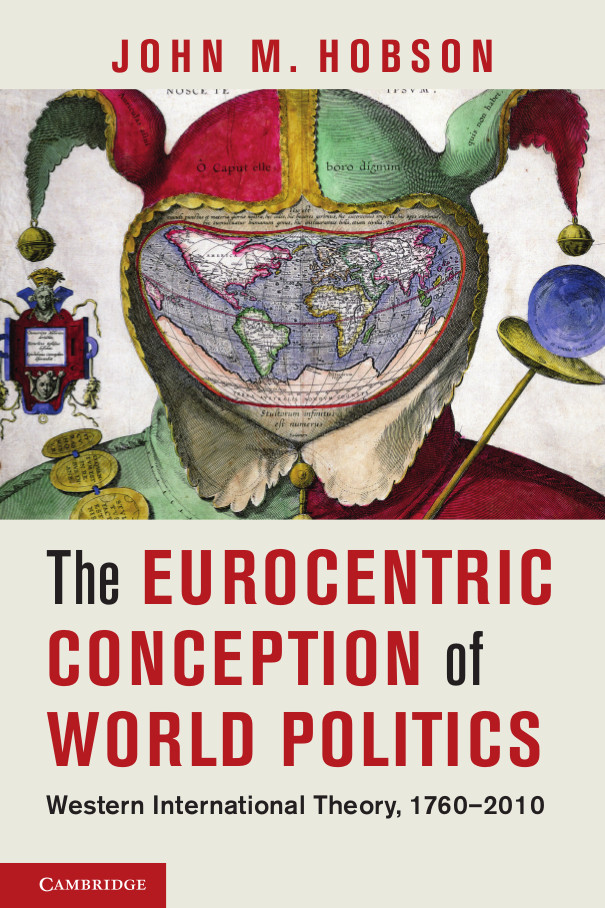
I would like to begin by thanking most sincerely my three blog interlocutors for having gone to the trouble of reading my new book, never mind taking the time to write up their extremely thoughtful and interesting blog responses. Of course, the cynic reading all of this might be forgiven for thinking that such a blog forum is hardly a ‘testing environment’ for Hobson’s book, given that his interlocutors are either postcolonialists or at least influenced by postcolonialism and have presumably, therefore, been “cherry-picked” for their potentially sympathetic tendencies. Even the titles that they have chosen, so the cynic might think, would appear to be symptomatic of this, with Meera Sabaratnam’s piece proclaiming – extremely generously I must concede – that my book has succeeded in ‘blowing up the disciplinary citadel of International Relations’, while Srdjan Vucetic’s title projects even further the meaning of the front cover of my book to that which I had intended, suggesting that IR is a ‘foolish discipline’ given his resounding agreement that it suffers from a pervading Eurocentrism. In this vein it might be thought that Brett Bowden’s title – ‘Eurocentrism and More’ – chimes in with yet another wholehearted rendition of the now familiar chorus of ‘IR is a Eurocentric discipline’. So why the fuss about all this and is there much point in reading on? For it would seem that we’re all agreed and there’s nothing to debate, right?

Well no, not quite all for one and one for all. Continue reading

Eurocentrism and More

For this fourth post in our symposium on John M. Hobson’s The Eurocentric Conception of World Politics, TDOT is delighted to welcome a response from Brett Bowden, Associate Professor of History and Political Thought at the University of Western Sydney.  The first three posts included an introduction from the author, and responses by TDOT’s Meera and Srdjan. In the next few days we look forward to a response from the author.


Let me begin by stating what will soon become obvious: this is not a book review of John Hobson’s The Eurocentric Conception of World Politics. The earlier posts from Meera and Srdjan have done an admirable job of engaging with the book in greater depth than I intend to here. Given that this is a blog, I will lay my cards on the table upfront – I’m a fan of John Hobson’s work. And I’m a big fan of The Eurocentric Conception of World Politics, which probably comes as no surprise to anyone remotely familiar with my own Empire of Civilization (all three of you). More specifically, I largely agree with the general tone and thrust of John’s book and the larger points he seeks to make about Eurocentrism. I don’t always agree with the details or finer points, but I too don’t want to split hairs. For instance, as John notes, I am not so kind to Kant, as I think his Lectures on Geography cast a doubt on some of his cosmopolitan claims and anti-imperialist credentials. But this is a minor difference of opinion that has no real bearing on the larger points being made about Eurocentrism and the study of world politics, or more specifically, international theory, for there is a difference.

As noted in an earlier posting, similar observations could be made about the humanities and social and behavioural sciences more generally, which is where, as an undergrad, I was first struck by Eurocentrism, albeit probably without knowing it by name. I can’t recall all of the details, but it was in a small seminar (only three students and a lecturer) on political philosophy where something we were reading and some comments on it struck me as rather odd; I made a point of raising my objections, which were dismissed by my three interlocutors, and I recall thinking to myself: ‘Wow, people still think like that’ – and well-educated people at that. Yes, Eurocentrism, along with a few other accompanying -centrisms are alive and well. This book won’t be the death of Eurocentrism, but hopefully it will shine a light in to some of the darker corners of the discipline and help to open the eyes and ears of a new generation of students and scholars. Which brings me to my purpose here; given that I’ve said I’m not exactly reviewing the book.  The Eurocentric Conception of World Politics and some of John’s earlier work has done a great service in bringing contentious issues to the fore where they can be debated openly – and now that John has opened up the can of worms, I’m going to jump on the bandwagon, get on my soapbox and ride on his coattails. Continue reading

Re-visioning Eurocentrism: A Symposium

The Disorder of Things is delighted to welcome a post from John M. Hobson, which kicks off a blog symposium on his new book The Eurocentric Conception of World Politics: Western International Theory, 1760-2010. Over the next few weeks there will be a series of replies from TDOT’s Meera and Srdjan, as well as special guest participant Brett Bowden, followed finally by a response from John himself. [Images by Meera]

Update: Meera’s response, Srjdan’s response and Brett’s response are now up. 


Introduction

As I explain in the introduction to The Eurocentric Conception of World Politics, my book produces a twin-revisionist narrative of Eurocentrism and international theory.[i] The first narrative sets out to rethink the concept of Eurocentrism – or what Edward Said famously called ‘Orientalism’ – not so much to critique this founding concept of postcolonial studies but rather to extend its reach into conceptual areas that it has hitherto failed to shed light upon.[ii] My central sympathetic-critique of Said’s conception is that it is reductive, failing to perceive the anti-imperialist face of Eurocentrism on the one hand while failing to differentiate Eurocentric institutionalism or cultural Eurocentrism from scientific racism on the other hand. As such, this narrative is one that is relevant to the many scholars who are located throughout the social sciences and who are interested in exploring the discursive terrain of ‘Eurocentrism’. These, then, would include those who are located in International Relations of course but also those in Politics/Political theory, Political Economy/IPE, political geography, sociology, literary studies, and last but not least, anthropology.

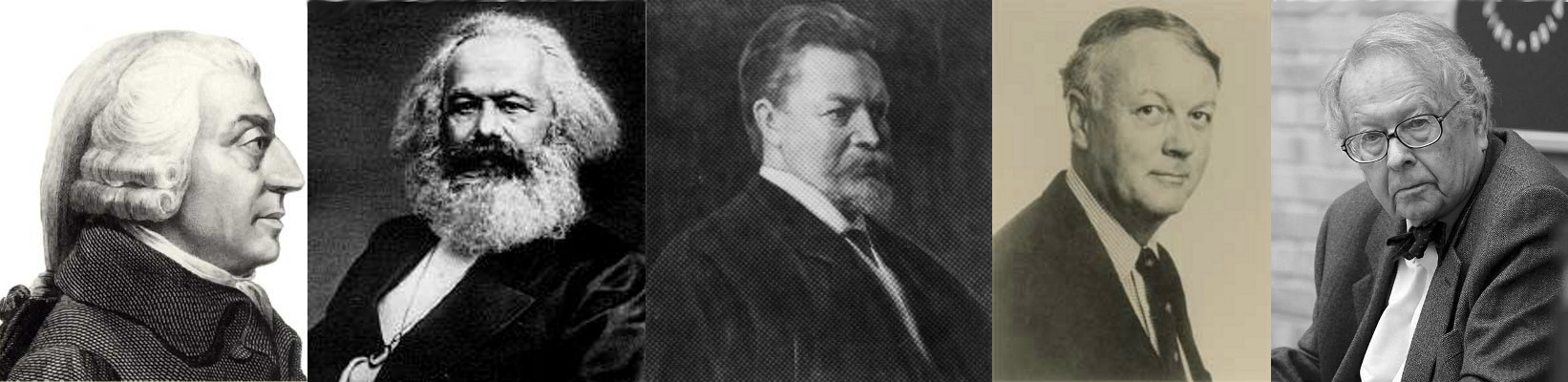
The second narrative rethinks international theory as it has developed across a range of disciplines. It stems back to the work of Adam Smith in the 1760s and then moves forwards down to 1945 through the liberals such as Kant, Cobden/Bright, Marx, Angell and J.A. Hobson, Zimmern, Murray and Wilson, onto the Marxists such as Marx and Engels, Lenin, Bukharin, and Luxemburg, and culminating with the realists who include Mahan and Mackinder, Giddings and Powers, Ratzel, Kjellén ,Spykman, von Bernhardi, von Treitschke and, not least, Hitler. After 1945 I include chapters on neo-Marxism (specifically neo-Gramscianism and world-systems theory), neo-liberalism (the English School and neoliberal institutionalism) and realism (classical-realism, hegemonic stability theory and Waltzian neorealism). This takes the story upto 1989. I then have two chapters on the post-Cold War era which examine what I call ‘Western-realism’ and ‘Western-liberalism’. The final chapter provides an overview of the changing discursive architecture of Eurocentrism and scientific racism, while also revealing how international theory has, in various ways, always conceived of the international system as hierarchic rather than anarchic. Although this is clearly a highly controversial and certainly counter-intuitive claim, it nonetheless in effect constitutes the litmus test for the main claim of the book: that international theory for the most part rests on various ‘Eurocentric/racist’ metanarratives. And ultimately my grand claim posits that international theory in the last quarter millennium has not so much explained international politics in an objective, positivist and universalist manner but has sought, rather, to parochially celebrate and defend or promote the West as the pro-active subject of, and as the highest or ideal normative referent in, world politics.

Continue reading

The End Of IR Theory As We Know It…

A guest post on the state of International Relations from Felix Berenskoetter. Felix is Lecturer in International Relations at SOAS, University of London. He holds a PhD from the LSE and works on theories and concepts in IR; politics of space and time; critical approaches to European Security, and dynamics of friendship and estrangement in transatlantic relations. Felix has published articles in various journals, is a former editor of Millennium and co-editor of Power in World Politics (Routledge, 2007). He is also co-founder and current chair of the ISA Theory Section.


In case you missed it, recent ISA and BISA conferences saw panels contemplating whether ‘IR Theory’ has come to an end. This question, posed by the editors of EJIR, was discussed by a range of distinguished scholars whose answers ranged from ‘yes’ to ‘no’, in the process reflecting on the meaning of ‘theory’ and ‘end’. While state of the art exercises can be tiring, the contributions will be worth reading when they appear in an EJIR special issue later this year.

Yet I could not help wondering what the answers would have been had the panels featured not established professors, but junior scholars at the start of their career. Indeed, would it not be more adequate to have the latter group engage this question? After all, they tend to be the ones teaching introductory IR courses, which are expected to give an overview of theoretical arguments and debates. And they enter the profession with a significant research project under their belt (the PhD), which informs their first wave of publications and likely influences future projects that will shape the field. So what does that generation think of ‘IR Theory’? What theories and what kind of theorizing is prevalent in their teaching and writing? Continue reading