
The next contribution to our symposium on Governing the Feminist Peace comes from Helen Berents. Helen is Senior Lecturer in International Relations in the School of Government and International Relations at Griffiths University. Helen is a feminist scholar centrally concerned with both representations of young people in contexts of crises and conflict, and with engagements with the lived experience of violence-affected communities. Helen’s work sits in international relations, particularly peace studies and critical security studies but is interdisciplinary in drawing from anthropology, feminist theory and sociology. Earlier posts in the symposium can be found here, here and here.
I have always been a gardener; I hold a love of the bright green of new shoots, the petrichor smell of soil after rain (or here in Australia, after an early morning watering before the heat sets in), the uncertainty of success as I bury tiny seeds, the never-ending weeding, and the joy of the harvest. As I’ve gardened in my backyard over the years, my eye has become more attuned to what is present: it is not just that ‘a bee’ is visiting my patch, but a flock of tiny native stingless honeybees, or my favourite, the gorgeous blue banded bee. Their purpose, as they duck in and out of the flowers in search of pollen, is very different to mine as I weed and plant and prune, but we both share a desire for the ecosystem of my backyard vegetable patch to thrive.
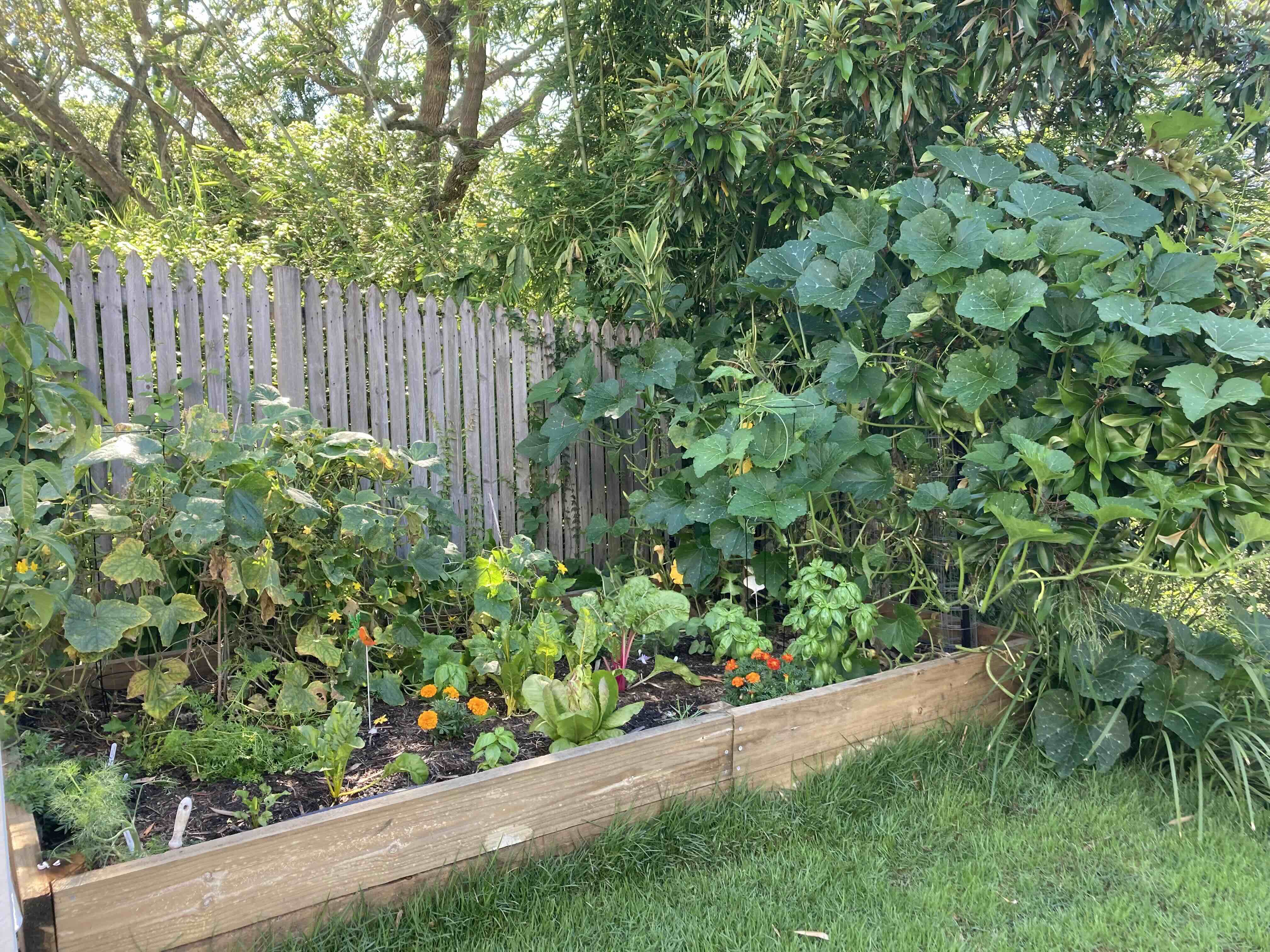
I kept thinking of my garden as I read Kirby and Shepherd’s rich and brilliant book. The authors encourage us to think about WPS as a policy ‘ecosystem’ and the while a garden and ecosystem are not true synonyms, garden metaphors seem easy to reach for. Kirby and Shepherd stress in the book, and more explicitly in their earlier article (2000), that an ecosystem model is not meant to imply naturalist tendencies of evolution or teleological design. Rather an ecosystem approach enables an emphasis on relationality, reproduction, and plurality as constitutive features of a policy ecosystem such as WPS.
In Governing the Feminist Peace, Kirby and Shepherd draw on decades of individual and joint work on, around, and in ‘the WPS agenda’; their eyes more attuned than many to what is present in its specificity and diversity. In this way, it is a pleasure to be guided by these two authors-slash-policy-ecologists through an environment we might think we are familiar with in our own relational encounters with the actors and artifacts of the agenda, yet be taken down paths, into unexpected clearings, and to be directed to pause and notice what we might otherwise walk past.
It is a monumental task that Kirby and Shepherd have set themselves, and one they execute compellingly. Convincingly demonstrating the limitations of understanding WPS as a norm, they instead invite us along as they become ‘policy ecologists’ to account for the myriad complexities, contradictions, tensions, and co- or parallel- trajectories of all that lies within what gets called ‘WPS’. The ‘bricolage’ approach they adopt enables them to move between the macro and micro of the ecosystem, highlighting moments, events, and lineages as offering lessons on the vitality and failure of actors’ efforts within the policy ecosystem. This results in brilliant accounts, such as that of the WPS resolution that ‘never was’, nuanced consideration of the potential and antagonisms of the favoured WPS policy vehicle of National Action Plans, and the historic and contemporary tensions of diverse actors in the ecosystem such as NATO and WILPF. These explorations demonstrate the success of the bricolage approach of mapping a policy ecosystem, working to make visible the wandering paths of the WPS ecosystem rather than the highway of WPS-as-norm/s.
In selecting just a few paths to wander down here, I offer three reflections: two short observations on the ephemeral nature of feminist peace in the book and on what gets (perhaps necessarily) missed by a focus on and through the documents of the WPS agenda, and a more meandering reflection on the generative potential of the fecundity of borderlands.
The authors tell us they understand WPS as a ‘feminist peace project’ (p13), framed as such to decentre the UNSC and make links to histories and parallel stories of ‘feminist entanglements’. Yet, even as Kirby and Shepherd critique the monolithic way WPS is approached, at times the agenda and the idea of the feminist peace are—if not conflated, then slip, or overlap. Kirby and Shepherd are motivated to “bring questions of feminist peace back into conversations about, and with WPS” (p5), yet the complex and multiple dimensions of the feminist peace itself, as feminists have long grappled with, are not actually unpacked. Can the multiplicity and reach of the WPS agenda be a “testament to its success, and the energies devoted to the feminist peace” (p6, emphasis added) if WPS has in some form fallen out of conversation with the ideas (plural) of the feminist peace?
Alongside this, I was struck by the fact that despite Kirby and Shepherd’s desire to ‘forget’ WPS, and to emphasise the relational, multiple, complex entanglements, their analysis returns us to formal institutional processes and actors in the WPS ecosystem repeatedly through the book. By focusing on the documents of the formal agenda, other growth in the ecosystem is overlooked. In part this is an unfair critique, as Kirby and Shepherd note the framing and limitations of their focus through and via the documentation of the agenda. However, these efforts within the ecosystem are not separate from the practices of governance (in its multiple invocations, p21-22). Where are the activists who in horizontal, transnational, collaborative ways continue to push for a ‘feminist peace’ both within and beyond the bounds of WPS? How do more recent calls towards abolitionist notions of feminist peace (Wright and Achilleos-Sarll 2024), or the articulation of Indigenous knowledge as non-co-optable by feminist governance (Russ-Smith 2022), for example, disrupt or exceed the accounts of WPS within the book?
From these questions, my reflections extend, down the paths and byways of the ecosystem approach to find the edges. Proximate ecosystems are vital for mutual flourishing; they provide cross-pollination and fertilisation and share a reliance on sources of clean water and air. It is here that I find Kirby and Shepherd’s book a possibility-enabling endeavour.
Despite the hegemonic position of WPS in peacebuilding governance landscape, it is not alone in its ambitions for a more inclusive, responsive peace. The question of the porousness of the edges—or ‘borderlands’ as Kirby and Shepherd name them in Chapter 7—is an exciting one. If the criteria to belong to the WPS ecosystem requires saying you are a WPS actor, how do we account for actors that work (‘garden?’) both in WPS and other proximate ecosystems at the same time?
In the scientific discipline of ecology itself, the sites where ecosystems encounter each other and overlap are known evocatively as ‘ecotones’, and studies have shown that species richness and abundance often peak in ecotonal spaces (Kark 2024). In an analogous way, for me, it is in fact these ‘borderlands’ which offer the most exciting moments for the vitality of the agenda, even as the chances of failure may also be higher.
One ecotonal space are those of practitioners and scholars interested in queering peace and security agendas who have grappled with the tensions of expanding existing agendas without just “adding sexual and gender minorities as another ‘variable’ to the analysis” but through approaches that “destabilise and interrogate normative understandings, practices, and institutions related to sexuality, sex and gender” (Edenborg 2021: 50). This work has nuanced conversations in important ways in relation to WPS (Hagen 2016), but also to other dominant agendas like atrocity prevention (Gifkins and Cooper Cunningham 2023) as well as emerging agendas like ‘Youth, Peace and Security’ (YPS) (Leclerc and Bohémier 2025).
We can learn from the generative potential of this scholarship and advocacy as mutual fertilisation and flourishing of not only proximate ecosystems but their ‘ecotonal’ overlaps. I’m prompted to this question of accounting for both the work of borderlands and the distinctive work within different ecosystems here by my own work on youth-inclusive peacebuilding, and the implications of the emergent Youth, Peace and Security (YPS) agenda; described by one of my own interviewees as merely seen as the ‘little sister of WPS’ (Berents, 2022). Many YPS actors are also engaged in the mechanisms of WPS policy and more expansive efforts towards visions of feminist peace (OGIP 2019; Berents and Mollica 2022). Advocates as well as UNSC resolutions position the agendas as entangled. In an expansive vision, this holds the potential of opening possibilities of a youth-ed feminist peace. This is not just to think about age within WPS (as scholars like Lee-Koo and Pruitt have done wonderfully, eg 2020), but to take age seriously alongside more established intersections such as that of gender and race which Kirby and Shepherd tackle directly and to great effect in the book.
A perhaps simplistic but revealing starting point for this thinking lies in Kirby and Shepherd’s codebook for their policy ecosystem analysis (Appendix 3, p251). Among a long list of terms, the codebook includes seven variations of actual search terms to capture ‘LGBTQIA+’ and nine terms across ‘colonialism’ and ‘race’. Yet for the concept of ‘age’ the only actual search term used was ‘elderly’. For me, this is telling of a gap in the analysis (and even what is seen as needing to be accounted for at all), but also more strikingly, it is an opportunity to adopt the authors’ recognition of failure as “a motivating lack and a powerful rhetorical resource” (following Halberstam) (p12). The failure of WPS actors and researchers to meaningfully grapple with the implications and imbrications of age both within the policy ecosystem and as a proximate ecosystem is an opportunity for new vitality.
As noted above, the book’s focus on the enormous dataset of formal documents of the WPS agenda results in less attention on the informal activities and broader advocacy for the agenda, and this focus might also mislead here. Even with a more fulsome range of relevant search terms for ‘age’, the absence of age in the documents does not mean an absence of engagements with age in the larger ecosystem. In my garden, my blue banded bee friends do not simply stay within the fences of my backyard, but they travel out and come back, bringing pollen, offering new vitality to my own ecosystem, just as the flourishing of my vegetable patch offers cross-pollination to others, whether I notice them or not. Beyond efforts to ‘graft’ other ambitions onto WPS, what Kirby and Shepherd show us is that the plurality of WPS offers us ways of leveraging the spaces (and the plural is important to the argument of the book) created by feminist advocacy for inclusive peace and security.
Early in Governing the Feminist Peace Kirby and Shepherd tell us the vitality of WPS is due to its function as “a locus for marshalling energies” (p6). In their call to ‘forget WPS’ as a conclusion, I wonder how that energy continues to be marshalled, particularly in the world we currently face—a danger to ecosystems both real and metaphorical. Although Kirby and Shepherd rely on the ephemeral promise of ‘feminist peace’ in the conclusion, Governing the Feminist Peace leaves me cautiously hopeful that the multivocality, relationality and transfer of the many manifestations of the agenda offers spaces in the ecotones—the borderlands—for the flourishing of persistent and connected efforts to create a more just and peaceful future for all.
References
Berents, H. (2022) ‘Power, Partnership, and Youth as Norm Entrepreneurs: Getting to UN Security Council Resolution 2250 on Youth, Peace, and Security’, Global Studies Quarterly, 2(3), p. ksac038.
Berents, H. and Mollica, C. (2022) ‘Reciprocal institutional visibility: Youth, peace and security and “inclusive” agendas at the United Nations’, Cooperation and Conflict, 57(1), pp. 65–83.
Edenborg, E (2021) ‘Queer Theories of Peace and Security’, in T. Väyrynen et al. (eds) Routledge Handbook of Feminist Peace Research. Oxford, UNITED KINGDOM: Taylor & Francis Group, pp. 50–59.
Gifkins, J. and Cooper-Cunningham, D. (2023) ‘Queering the Responsibility to Protect’, International Affairs, 99(5), pp. 2057–2078.
Hagen, J.J. (2016) ‘Queering women, peace and security’, International Affairs, 92(2), pp. 313–332.
Russ-Smith, J (2021) ‘Giyira: Indigenous Women’s Knowing, Being and Doing as a Way to End War on Country’, in Megan MacKenzie and Nicole Wegner (eds) Feminist Solutions to Ending War. Pluto Press.
Kark, S. (2024) ‘Effects of Ecotones on Biodiversity’, in S.M. Scheiner (ed.) Encyclopedia of Biodiversity (Third Edition). Oxford: Academic Press, pp. 263–271.
Kirby, P. and Shepherd, L.J. (2020) ‘Women, Peace, and Security: Mapping the (Re)Production of a Policy Ecosystem’, Journal of Global Security Studies.
Leclerc, K and Bohémier, A. (2025) No Peace without Pride: Integrating LGBTQI+ Perspectives into Youth, Peace and Security. Canadian Coalition for Youth, Peace and Security, p. https://www.canadayps.org/no-peace-without-pride
Lee-Koo, K. and Pruitt, L. (eds) (2020) Young Women and Leadership. 1st edn. Routledge.
Our Generation for Inclusive Peace, (2019) Inclusive Peace, Inclusive Futures: Exploring the Urgent Need to Further the Women, Peace and Security and the Youth, Peace and Security Agendas. 1. UK. Available at: https://cdn.sanity.io/files/oj41ninc/production/fa5fb7bdd9a677b13e88a15a21f63e6cb1652c94.pdf.
Wright, H. and Achilleos-Sarll, C. (2024) ‘Towards an abolitionist feminist peace: State violence, anti-militarism, and the Women, Peace and Security agenda’, Review of International Studies, pp. 1–19.

 The Disorder Of Things
Pingback: Women, Peace, and Security as Argument and Tension | The Disorder Of Things
Pingback: Feminist Peace In Question | The Disorder Of Things