The final post in our symposium on Decolonising Intervention. A massive thanks to Lee for organising and editing; errors in this final part are mine. If tweeting, please use #DecolonisingIntervention. The earlier posts can be seen here: my introduction, Marta’s response, Lee’s response, Amy’s response and Megan’s response. The whole book is available for free Open Access download here.
My sincere thanks to all the contributors to this symposium for reading the book and responding with such thoughtfulness, seriousness and robustness. I respect them all enormously as scholars and have learned a great deal from their own work – a learning process which continues through this symposium as well. Moreover, the space for deep reading, critical feedback, intellectual argument and reflection is something that the structures of the neoliberal academy increasingly accumulate against; my pleasure and gratitude is deepened by the knowledge that the contributors have all actively managed to hold the door open in spite of this.
My response to their contributions will principally focus on the questions they raise and points of contestation. However, I was happy to see that the basic argument and conclusion of the book – that intervention is intimately structured by relations of colonial difference – is one with which they appear to agree and find compelling as an explanation for the continuation of failure. A primary hope of mine in writing this up was that one could not read this book and look at intervention in post-conflict or ‘fragile’ states, and its various ‘implementation problems’, without this understanding in mind. Having done this work, I find it now very difficult to read assessments of post-conflict state-building or development practice that continue to reproduce various forms of technocratic fantasy about how exactly it is that institutions, polities and economies are ‘built’ or ‘improved’.
This conclusion and the analysis supporting it has been reached through an engagement with the experiences and perspectives of intervention’s targets in Mozambique. Thus, the book is also concerned with how we study what we study in the field of International Relations – specifically how we cultivate what Niang deftly describes as the ‘value of uncanonical insights of subjects whose absence would otherwise give an incomplete account of the game of intervention’. The contributors had different reactions to this proposition and the way it was taken forward in the book, which I will look at below. Notwithstanding the challenges and complexities of this, I feel that if we are to practice a scholarship which is both more ‘scientific’ and more democratic, this kind of epistemic and methodological re-positioning of scholars vis-à-vis structures of power is absolutely critical. Continue reading
 Megan Mackenzie is an Associate Professor in the Department of Government and International Relations at the University of Sydney. Her research is broadly- and humbly- aimed at reducing and, eventually ending war; it bridges feminist theory, critical security studies, and critical/post development studies. Megan has contributed research on topics including sexual violence in war, truth and reconciliation commissions, military culture, images and international relations, and women in combat.
 Amy Niang is Senior Lecturer in International Relations at the University of the Witwatersrand, Johannesburg. Her research is informed by a broad interest in the history of state formation, peace and conflict, and Africa’s international relations. Her work has been published in Alternatives, Politics, African Studies, Journal of Ritual Studies, African Economic History, Afrique contemporaine and many edited collections. Her forthcoming publications include “Rehistoricising the sovereignty principle with reference to Africa: stature, decline, and anxieties of a foundational norm”, in Zubairu Wai and Marta Iniguez de Heredia (eds.) Bringing Africa “Back In”: World Politics and Theories of Africa’s Nonfulfillment (Palgrave Macmillan).
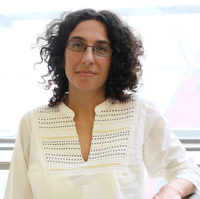 Marta Iñiguez de Heredia is a Marie-Sklodowska Curie Fellow at the Institute Barcelonaof International Studies. She holds a PhD from the London School of Economics and Political Science (LSE). She has taught at the University of Cambridge, the LSE, Rouen Business School, Deakin University and La Trobe University. Her research concentrates on the historical sociology of peacebuilding processes, with a focus on the relationship between order, violence, state-making and resistance, and on Africa in particular. She draws on historical sociology, critical Africanist and practice literatures, as well as on extensive fieldwork. Current research is focused on EU’s peacebuilding policies, the militarisation of peacebuilding and political transitions through the emergence of African social movements.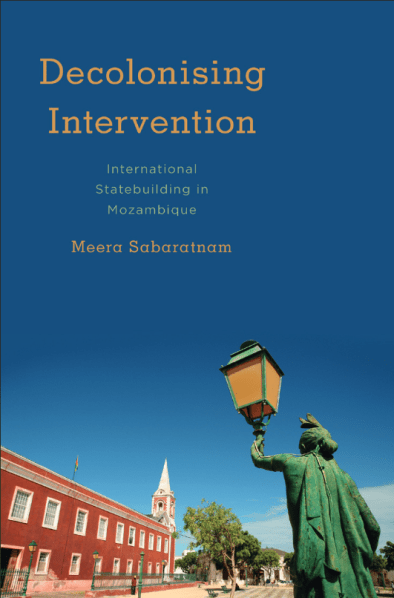

 The Disorder Of Things