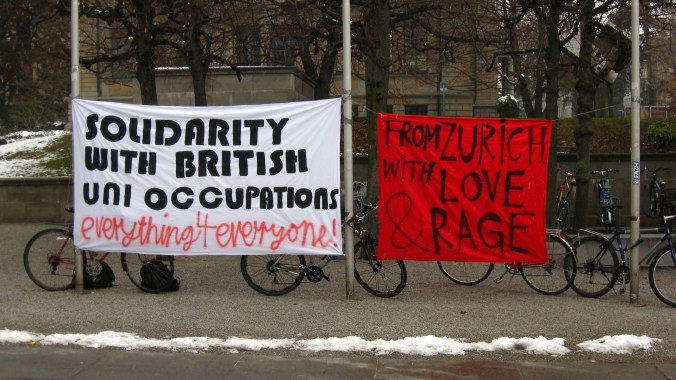
Everything 4 Everyone! From Zurich, with Love and Rage
Even a top line assessment of the budget measures show 72 per cent of cuts will be met from women’s income as opposed to 28 per cent from men’s. This is because many of the cuts are to the benefits that more women than men rely on, and the changes to the tax system will benefit far more men than women.
Support Fawcett’s bid for a judicial review of the budget
**JOIN US TO PROTEST OUTSIDE THE HIGH COURT**
12.30 pm – 2pm, Monday 6th December, Royal Courts of Justice, the Strand, London WC2A 2LL
“You ain’t never been no virgin, kid, you were fucked from the start.”
-Titus Andronicus, “A Pot in Which to Piss“

Police protect Vodafone store from the threat of public exposure of truth.
And you have to wonder what it will take for serious people to realize that punishing the populace for the bankers’ sins is worse than a crime; it’s a mistake.
Of obedience, faith, adhesiveness;
As I stand aloof and look there is to me something profoundly
affecting in large masses of men following the lead of those who
do not believe in men.
-Walt Whitman, “Thought”
Hypothesis
The winter air has turned cold enough, has pressed in with its full weight, so that there is no more space for lies. The truth of crisis is that the powerful and the wealthy do not take responsibility, they assign it; they do not suffer their follies or their sins, they pay their penance in the currency of our lives.
We’ve spent the last few years living with the anxiety of impending doom, spurred on by hustlers of panic, addled prophets of economic Reformation, and Janus-faced managers of public interest.
Yet, despite the prolonged disaster-foreplay, the consummation of this crisis was always going to be “us against them” and never “we’re all in it together.” Continue reading

It certainly feels as if things are moving quickly in the fight over the thorough-going recomposition of UK higher education. The scale of occupation and student-led resistance has caught many by surprise. The interpretive battle over ‘violence’ may have performed familiar rituals, but the frequency and militancy of what is going on is new and invigorating. The number of occupations is now considerable, and the leadership of the NUS has been forced into support for tactics and strategy they had previously treated as marginalia. How different it looked in the immediate aftermath of the 10 November actions. The early denunciations of militant protest then seemed to foreshadow the enactment of a reformist middle ground. Aaron Porter gave at least one speech in which he appeared to accept that fees were going to be introduced as planned, and sought to move his energies into getting as much included in the £9,000 fee as possible. He mooted such bold objectives as an end to printing costs and a new universities watchdog to ensure value for money. As if to say, ‘we’ve made our point, now let’s go home’.
Last week’s much smaller protest, and its predictable, petty, kettle, seems to have made all the difference. More walk-outs are planned for today, and doubtless more occupations will follow. This has spooked Clegg to new levels of hysteria, warning that opposition to the cuts will themselves scare off the young, and the poor, and those without sufficient sense to make some back-of-the-envelope calculations as to their eventual debt burden. Obviously, this is true in a rather degraded sense of the word, since without sustained action directed at the proposals, many would not realise the scale of changes until they had already been passed. Verily, ignorance is bliss. Meanwhile, ermine-cloaked colleagues in the blue corner are reduced to crying traitor while the imperatives of civic order require ever more draconian shows of strength.
But where are the academics? Continue reading

In the discussions of the ‘evenements’ of November so far, many have rightly focused on the significance of the student protest for politics, on which there are excellent discussions here and here. But what are the police up to? And what might their participation in this spectacle tell us? Continue reading
The sequel.
Sometimes I have the impression that all intellectuals have become cosmopolitans. But there is an increasing gap between what intellectuals think and preach and what the ordinary people feel. There is a growing divergence between the demos and the elites, especially concerning the perception and the treatment that should be reserved to the “diverse”: immigrants, minorities, gays and so on are more and more perceived as a threat. When xenophobia is rising, the intellectuals have a responsibility to help to distinguish between the real and apparent reasons, even at the price to become isolated from great parts of the population.
– Daniele Archibugi
In this post I want to both feature and expand upon an upcoming special issue (Volume 12, Issue 1) of Human Rights Review, which I guest edited with my colleague and friend Marta Iñiguez de Heredia. The special issue focuses on human rights as an ideal and practical politics, opening some initial space to consider why the interaction between moral ideals and practical politics is important, and provoking discussion of how the clear divide between them is unsustainable.
To set the stage, we find Daniele Archibugi and Seyla Benhabib discussing Cosmopolitanism at Open Democracy. For both authors the place of universal rights in cosmopolitan politics is central, but the moral principle expressed through universal human rights works in a very particular way. This approach to human rights prioritizes what, in the paper, we call the “philosopher’s” understanding of rights, which begins from rational moral principles already known before political action is taken.
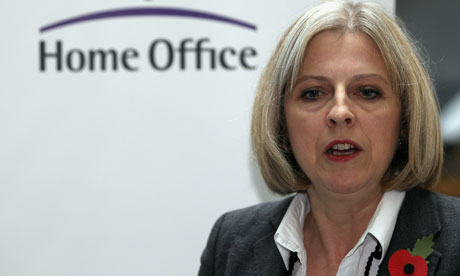
Last week’s speech by Home Secretary Theresa May on the government’s intention to repeal some recent equality legislation was ironically and comprehensively overshadowed by the media frenzy about the impending lavish nuptials of the future King of the Realm to a Lowly Commoner. This may help to explain a little why the vacuous, fallacious and bizarre reasoning at the heart of it has been largely unremarked upon.
Overall, the speech sought to justify the repeal of the clause of the 2010 Equality Act which required public bodies to consider how they might address relevant socioeconomic disadvantages when making strategic decisions. My interest in this post is not to make the political case for this clause or not – rather it is to explore the reasoning offered by May in the speech that seeks to banish it into a category unrelated to inequalities of gender, race, religion, physical ability and so on.
The core tension emerges because throughout the speech May is desperate to present herself as a champion for gender-, age-, race- and sexual-orientation-based equality (ps nice U-turn, T), whilst trying to deny any place to socioeconomic aspects of equality. This is right at the heart of the New Conservative ideology that Cameron wants to promote – a socially enlightened politics of ‘fairness’ in a Big Society of ‘individuals’, that hugs hoodies whilst denying that socioeconomic disadvantage should be something that the government seeks to address. Continue reading


