The ‘Affectual’ Jockeys of Havana

The fourth post in our mini-forum on Megan’s From Cuba With Love.


Megan Daigle’s from Cuba with Love: sex and money in the 21st century is a crisply written treatise on what is often narrowly understood as “sex work” and “sex tourism” in contemporary Cuba. Set largely against the backdrop of the Malecon in Havana, Megan explores the complex practice of jineterismo in From Cuba. Jineterismo or “jockeying” is “the practice of pursuing relationships with foreign tourists” that has resulted in the creation of what Megan calls a “sexual-affective economy” in Cuba in the post Cold War era, specifically in light of the US economic embargo.

Megan’s interactions with the young Cubans she interviews and speaks with at length, highlight the abject failure of labels such as “sex work” and “prostitution” to capture the myriad and variegated bonds that these Cubans form with their Western benefactors, or more aptly, partners. She grants them agency as actors and decision-makers who get into relationships with foreign men for reasons that include and transcend material gain.

With equal sensitivity and nuance, Megan also maps the raced, gendered and classed dimensions of the reactions which reactions? these relationships engender, focusing in particular on the multiple levels at which these young women are subject to violence; most notably meted out by the socialist state and its affiliated institutions. The state’s disparaging dismissal of this economy of love, if you like, is both predictable and curious. On the one hand, jineterismo is construed as a consumerist impulse that must be crushed in order for the citizens of Cuba to remain true to the ideals of the revolution. On the other, the relative sexual freedom young Cubans enjoy is something of an anomaly that is owed at least partially, to the propagation of women’s rights through the (admittedly problematic) Federation of Cuban Women (FMC).

Continue reading

Love, Discomfort and the Language of the Tribe

This is the third post in our forum on Megan’s new book. We are delighted to welcome Dunja Fehimovic, a doctoral student at the University of Cambridge working on the relationship of film to national identity in Cuba in the 21st century. Dunja is author of a number of investigations of those themes in Journal of Latin American Cultural Studies and Bulletin of Latin American Research, as well as forthcoming in Cuban Cinema Inside Out and The Routledge Companion to World Cinema.


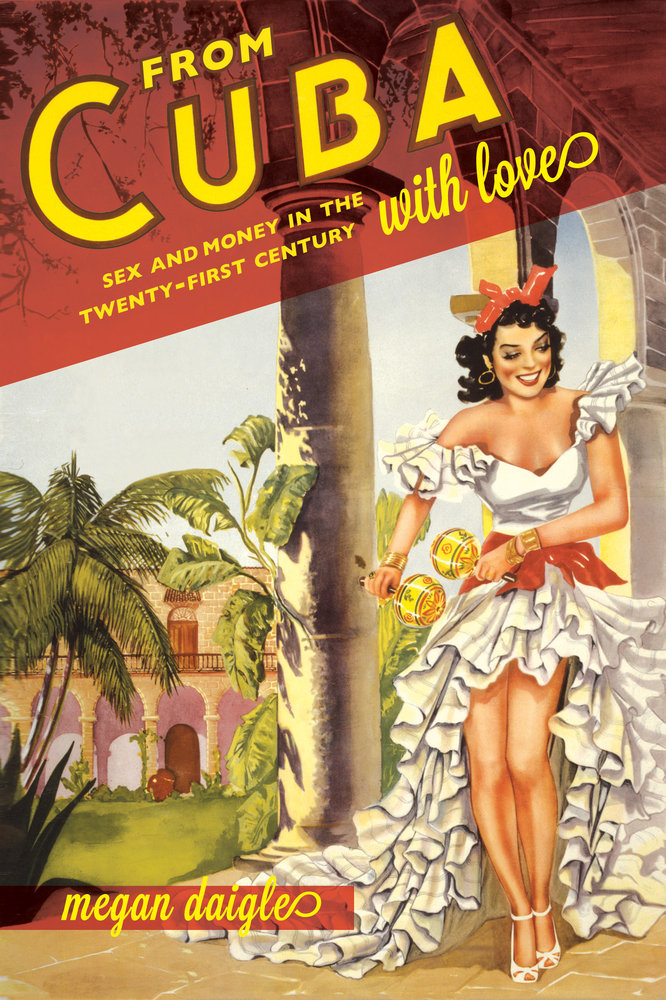
When From Cuba with Love arrived in the post, my first thought was, ‘What a beautiful book.’ It was the kind of book that drew me in – the kind of book, in fact, that might catch the eye of anyone browsing the shelves of their local bookshop. Its cover illustration reminded me of the endlessly-proliferating coffee table books about Cuba, including one I myself own about pre-Revolutionary Cuban advertising and design. It appealed to the vague, pervasive nostalgia for the ‘good old days’, roughly associated with the 1930-50s, that seems to be doing the rounds of late – all cupcakes, vintage posters, Cath Kidston and red lipstick.

From Cuba - Red Cover

But like the señorita in the picture, whose skirt is slashed to show a titillating amount of thigh, this had added appeal. The added sex appeal of Cuba, that is. As reactions to my topic of study have confirmed over time, Cuba is a sexy subject. Sex in Cuba is a very sexy subject. Daigle’s book, then, immediately evokes all of the stereotypical, exotic or erotic associations that we reveal or conceal through our reactions to Cuba as a place and subject of study. From its front cover onwards, it triggered uncomfortable reflections on my own contradictory, complex fascination with the country – a fascination that evolved, tellingly, from a love of salsa music and dancing through to a touristic experience during my undergraduate years and to the present day, as I move towards the completion of my thesis on contemporary Cuban cinema and national identity. In her introduction, Daigle warns that this is not a comfort text. True enough.

When I started reading From Cuba with Love, I got in touch with Megan to say that I had a feeling that this was going to be one of those books I wish I had written. And at certain points, I felt as though I had. The atmosphere and situations she so eloquently describes, particularly in the introduction and conclusion, were all too familiar to me as someone who has also spent time doing research in Cuba. I, too, lived near the Callejón de Hamel, and spent many afternoons pushing through the crowds, fascinated and frustrated in almost equal measure. As the rumba music picks up, Megan tells us, ‘the divide between dancers and onlookers blurs’. Crucially, though, the divide between foreigners and Cubans never does. I’ve never been sure how much of this is caused by my own self-consciousness, and how much is ‘objectively’ evident in the behaviour of people around me. Most likely it’s another case of the chicken and the egg, a self-perpetuating cycle of self-alienation and othering from both sides.

Continue reading

Love in the Time of El Período Especial

This is the second in a series of posts on Megan Daigle’s From Cuba with Love: Sex and Money in the Twenty-First Century. You can read Megan’s inaugural post here. More responses will follow from Pablo, Nivi and guest poster Dunja over the next few days.


If you key in the terms ‘Havana Malecón’ and allow your cursor to linger indecisively in a Google search engine box, you are urged to look for ‘prostitutes, pictures, hotels, gay, jineteras’. The Malecón is Havana’s seaside esplanade, and it is this cluster of connotations associated with it that Megan sets out to explore in her book From Cuba with Love: Sex and Money in the Twenty-First Century, in which the figure of the ‘jinetera’ assumes centre stage. Jineterismo, meaning ‘jockeying’, refers to the practice of Cubans pursuing relationships with foreign tourists as part of a broader set of black- and grey-market activities that have become widespread in the wake of the economic hardship of the so-called ‘Special Period’ engendered by Soviet collapse and US embargo. Taking her cue from many of her respondents, Megan is categorical that the term ‘sex worker’ fails as a description of jineteras, given that their relationships are not purely transactional. Indeed, even the term ‘jinetera’ with its more positive, even emancipatory, connotations and its valorisation of the struggles of young Cuban women, is rejected by many of those whose stories Megan sets out to tell. Rather than providing an authoritative account of jineterismo and jineteras, the book seeks to explore practices of categorisation: what does the category ‘jinetera’ imply? What is its genealogy? Who is presumed to fit within it? What are the consequences of doing so?

Continue reading

From Cuba with Love: Sex and Money in the 21st Century

9780520282988

Five years ago, I spent six months living and working in Cuba – a fact that, in casual conversation, generally provokes expressions of envy and eye rolling about mojitos, salsa music, and academics who don’t really do any work. Cuba is as much a fantasy as a real place. It is totally invested with the romantic and ideological dreams of wildly disparate constituencies: armchair socialists and campus lefties, right-wing US politicians and Cuban émigrés, cocktail-swilling package holiday tourists, and adventure-seeking backpackers, amongst others. Cuba is a steamy and exotic Caribbean island, with rumba dancing and free-flowing rum. Cuba is a repressive and secretive regime. Cuba is a test workshop for socialist ambitions the world over. Cuba is a fantasy.

It was ideas like these about Cuba, Cuban politics, and Cuban people that drew me there in the first place, and the resulting book – built on those months of ethnographic research and on the doctoral dissertation that followed – has recently been released under the title From Cuba with Love: Sex and Money in the Twenty-First Century (University of California Press 2015). Rahul, Nivi, guest poster Dunja, and Pablo will be commenting on it over the next few days, followed by a rejoinder from yours truly.

Continue reading

The Dissonance Of Things #2: What the Hell is Going On in Turkey?

In this month’s podcast, I’m joined by Kamran Matin and Fred Weber to discuss recent events in Turkey. We cover the apparent sea change in the AKP’s foreign and domestic policy in the aftermath of the 7th June elections. We also unravel the intricacies of Kurdish politics and examine the contradictory interests of NATO. In short, we ask: what the hell is going on in Turkey and what are the implications of Turkey’s actions for the geopolitics of the Middle East?

If you have any thoughts, comments or criticisms on this cast, please do comment below the line. And follow us on Soundcloud!


Continue reading

Why Syriza Failed

The following was originally posted on The Current Moment, a blog exploring contemporary politics and political economy in the West. Especially for those concerned with the Eurozone crisis and the impending British referendum on European Union membership, it is a must read!

*    *    *

Recent events in Greece have baffled many observers. At the end of June, Prime Minister Alexis Tsipras walked out of talks with Greece’s creditors, calling a snap referendum on their proposals. It appeared to be crunch time. Tspiras denounced the EU’s ‘blackmail-ultimatum’, urging ‘the Hellenic people’ to defend their ‘sovereignty’ and ‘democracy’, while EU figures warned a ‘no’ vote would mean Greece leaving the Euro. Yet, even during the referendum campaign, while ostensibly pushing for a ‘no’ vote, Tsipras offered to accept the EU’s terms with but a few minor tweaks. And no sooner had the Greek people apparently rejected EU-enforced austerity than their government swiftly agreed to pursue harsher austerity measures than they had just rejected, merely in exchange for more negotiations on debt relief. This bizarre sequence of events can only be understood as a colossal political failure by Syriza. Elected in January to end austerity, they will now preside over more privatisation, welfare cuts and tax hikes.

When nai means yes

How can we explain this failure? I argue three factors were key. First, the terrible ‘good Euro’ strategy pursued by Syriza, the weakness of which should have been apparent from the outset. The second factor, which shaped the first, is the overwhelmingly pro-EU sentiment among Greek citizens and elites, which created a strong barrier to ‘Grexit’ in the absence of political leadership towards independence. Third, the failure of the pro-Grexit left, including within Syriza, to win Syriza and the public over to a pro-Grexit position.

Continue reading

Three Theses on ISIS: The Universal, the Millenarian, and the Philistine

Nimer SultanyA warm welcome to Nimer Sultany who brings us a guest post on thinking about ISIS. Nimer is Lecturer in Public Law, School of Law, SOAS, University of London. He holds an SJD from Harvard Law School. He practiced human rights law in Israel/Palestine, and was the director of the Political Monitoring Project at Mada al-Carmel – The Arab Research Center for Applied Social Research. His recent publications include: “The State of Progressive Constitutional Theory: The Paradox of Constitutional Democracy and the Project of Political Justification” in the Harvard Civil Rights – Civil Liberties Law Review and “Religion and Constitutionalism: Lessons from American and Islamic Constitutionalism” in the Emory International Law Review.


The ruthless brutality of the Islamic State in Iraq and Syria (ISIS or ISIL) unfolds before our eyes on the screens. As commentators struggle to explain and understand it, it becomes convenient to revive old Orientalist tropes. Beyond the spectacular brutality, the reason that ISIS invites attention (both fascination and fear) is that it seems easy to fit in confrontational narratives of Islam (us v. them, anti-American, etc.). Muslims are clearly angry at something. In his infamous article “The Roots of Muslim Outrage”, Bernard Lewis simplistically explained that Muslims are envious of, and angry at, Western modernity and secularism. The U.S. magazine Newsweek illustrated this knee jerk reaction, and recourse to run of the mill thinking patterns, in a Muslim Rage cover in September 2012.

o-NEWSWEEK-MUSLIM-COVER-facebook

In his book “Covering Islam” (1981) Edward Said has effectively critiqued these binary simplifications that dominate not only journalistic discourse about “Islam”, but also expert-talk about Islam. For Said, all attempts to conceptualise other cultures are a value-laden interpretive exercise. He showed the deficiencies of orthodox writings on—and views of—Islam, and called for “antithetical knowledge” to challenge the orthodoxy’s claims of value-free objectivity.

It seems little has changed, however, since Said wrote his book in the wake of the Iranian revolution. In this brief commentary I want to examine three attempts to understand ISIS. These are long treatments in respected liberal media outlets. To use Said’s phrase, these are treatments that fit in different “communities of interpretation.” These three essays are all aware of the need to provide “context” for ISIS. However, their contextualisation differs. The success of this contextualisation in shedding a light on ISIS varies. Let me call these interpretive techniques: universalization; Millenarian confrontation; and intellectual bewilderment. These three attempts operate mostly on the ideational/ cultural domain.

Continue reading

The Corbyn Effect

Moderate Militant-Free Labour Conservative Poster

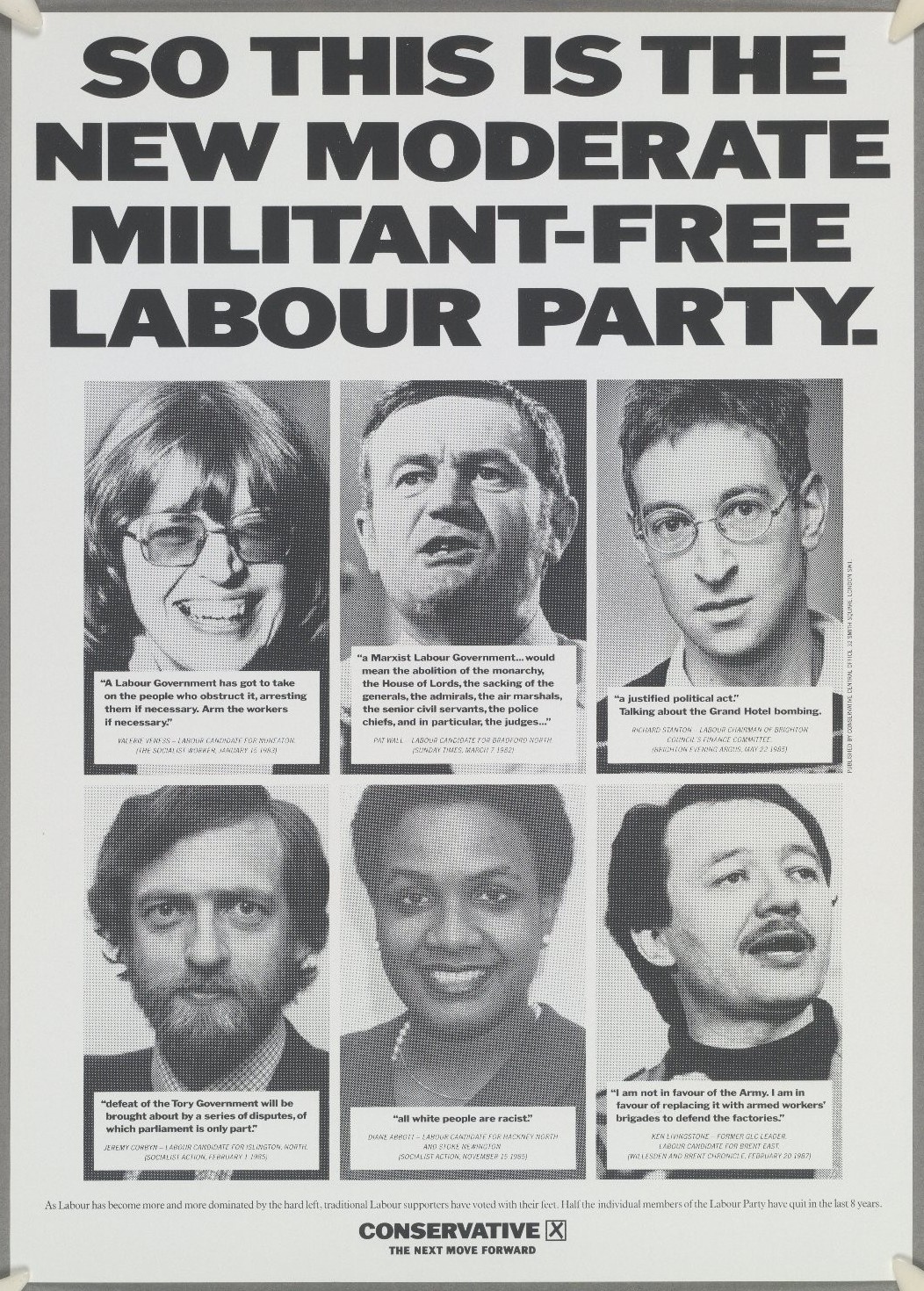
In the last days, the Labour mainstream has not so much fallen as fully leapt into a fit of apoplexy. The cause an opinion poll – by no means solid, by no means a guarantee of future stock value – placing Jeremy Corbyn as the likely winner of the party’s leadership contest. Labour MPs, some now publicly flagellating themselves, nominated Corbyn for a ‘balanced debate’, but apparently couldn’t countenance that it might actually lead anyone to, you know, debate. Corbyn’s moment of popularity is thus sketched as, among other things, “the emotional spasm…an apocalyptic tendency”. John McTernan – a prime mover in the utter implosion of Labour in Scotland – was invited to hold forth on national TV as an oracle nevertheless, where he showed off his great talent in persuasion by calling Labour supporters “morons”. John Rentoul, that other great passé hack, thought recognising the left-wing appeal of the SNP as a factor in Labour’s defeat was like believing in space lizard conspiracy theories.

There was an equal portion of patronising bullshit to go with the name-calling. “Do some research” before you dare to a preference, chided Anne Perkins. Don’t be a “petulant child”, admonished Chuka Umunna. Sunny Hundal came at logic with customary cack-handedness, transforming the clear articulation of principles into a pathology. These are some of the same people who bemoan the detachment of politicians from real people, the decline in party membership, and so on, only to rise up as vengeful furies when a candidate dares to stir energies. All down to an unsavoury populism, natch. This, says Helen Lewis, is ‘purity leftism’, nothing like the necessary compromises of opposition, where you have to be bold enough to endorse 2% defence spending (something “the public” indeed likes, although hardly top of their polled priorities). Blair, of course, can only relate in the terms of triangulation, regurgitating the 1990s whilst pretending to the terrain of the future.

It doesn’t matter that Corbyn’s record is one of social democracy (remember that?). It doesn’t matter that there are trends in his favour. It doesn’t matter that his economic policies are comparatively bold and redistributive. It doesn’t even matter that many of Corbyn’s policies are popular. One line of Blair’s intervention was widely cited: “I wouldn’t want to win on an old fashioned leftist platform”. Few completed the quote: “…even if it was the route to victory“. This is not political argument, nor even Machiavellian electoral planning, but the tantrum-jitters of the self-appointed aristocracy. Having passed out lectures on loyalty and collective responsibility on Monday during the second reading of the Welfare Bill, the dauphins were by Thursday pre-declaring a coup should Corbyn win and practically spitting on their own activists besides. They saw no contradiction. Labour’s experts advocate not political communication but political manipulation, impersonating the enemy to take their place in our collective consciousness.

And so it will go on if any of the appeasement candidates win. Continue reading

The Perpetual Financial Crisis of UK Higher Education

Higher Education in Britain – particularly in England – is now clearly in perpetual financial crisis. This may seem an odd claim, since universities appear to have higher incomes than ever, and are sitting on vast cash reserves. But this superficially calm macro-level picture obscures the broiling chaos at the micro level. Universities, and particularly their individual departments, have been deliberately exposed to enormous year-on-year fluctuations in their incomes – potential and actual – that vitiates any attempt at rational planning and leaves financially strapped units particularly vulnerable to savage, short-term cuts designed to rebalance the books.

The latest move in this direction comes in a remarkable missive from the Higher Education Funding Council for England (HEFCE) which, on instruction from the government, is cutting £150m in funding to English universities — not just in future financial years, but the present academic year (2014-15) and the next (2015-16). That means universities will not receive the funding they anticipated, and planned for, even for the year to September, let alone for the following year.

Continue reading

Theorizing Embodiment and Making Bodies ‘Matter’

Bringing to a close our symposium on Bodies of Violence is Lauren’s rejoinder to all our contributors, Kevin McSorley, Ali Howell, Pablo and Antoine.


First, a huge thank you to the (Dis)order of Things and especially Antoine for organizing this forum and to each of the contributors. It’s been a huge honor to have my work read so carefully and responded to so thoughtfully and I welcome the opportunity to try to clarify some of my work and acknowledge where the contributors have pointed out helpful areas for future research.

As Pablo K and others noticed, Bodies of Violence it is not meant to be a general theory of embodiment in IR (I’m not sure such a project is feasible or politically desirable in any event).  It is a more specific intervention with a different ambition: both to speak to ‘mainstream’ concerns about theorizing violence, particularly forms of political violence associated with the ‘war on terror’ and to make not only a theoretical argument about how we might or should theorize embodiment and violence, but also to show that understanding these different ‘modes of violence’ necessitates such an understanding of the relationship between bodies, subjects and violence.  My rationale for using feminist theory to think about the relationship between bodies, subjects and violence in IR was not meant to be exclusive: certainly (other) people working with concepts of biopolitics as well as anti-colonial/anti-racist theorists, disability theorists, phenomenologists and more also have much to say on this topic, some insights of which have been very important in my analysis, if not as fully fleshed out (if you will) as my engagement with feminist theory is.[i] For me, it was a particular reading of feminist theories of embodiment, not solely based on Butler, but on a particular feminist problematic in which women, as a category of those constituted, as Pablo K put it, the “improperly bodied”, are politically disenfranchised and generally excluded from their status as a fully human subject that served as a starting point, but far from an ‘ending’ for thinking about the subject of embodiment.  Rather, it is, as Kevin noted, “the specific tradition of trying to think through women’s subordination in terms of the relationship between bodies, subjects and power” that feminist theory entails that I wanted to use to think about violence and embodiment in ways that I hope will speak not only to feminists in IR but also to other critical and the more pluralistically and trans-disciplinarily minded scholars in IR and beyond as well.

Continue reading