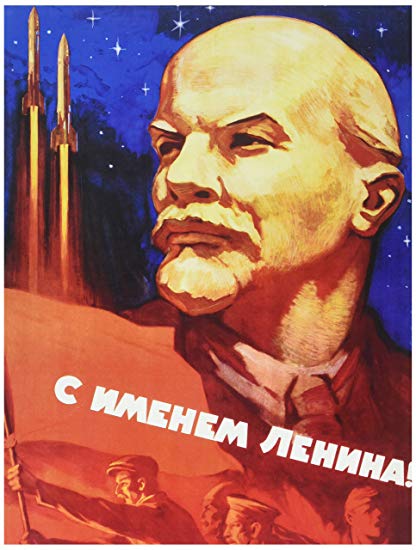
Lenin Lives! A Disorders Forum: Author’s Response

This post wraps up our forum on Philip Cunliffe’s Lenin Lives! Reimagining the Russian Revolution, 1917-2007 (Zero Books, 2017). See here for the introduction and responses from Jamie Allinson and Alex Sutton.


I am delighted not only by Jamie Allinson’s and Alex Sutton’s intellectual generosity, but also their careful attention to the detail of the inverted counter-factualism. Both Allinson and Sutton take me to task in seeking to create a Marxist ‘social science fiction’, Allinson for the lack of ‘verisimilitude’. Sutton takes these criticisms further. He enjoins me not only to identify what we might call the Singularity of the Left – that point at which things went decisively wrong – but also criticises me for not agonising in sufficient detail over the political problems of my counter-factual world as well the actually existing world. Sutton asks, for example, which specific institutional body would be responsible for deciding to annihilate a fictional puppet-state of West Germany ensconced in the post-war Rhineland by a counter-revolutionary League of Nations that I portray in the book.

Yet I explicitly set myself against any attempt to construct the ‘verisimilitude’ of a counter-factual history in every precise detail. This was partly a stylistic choice, heeding Ken Macleod’s warning against the tedious introverted detail that preoccupies ‘alt history’ Internet chat forums. More than this, though, it was also an intellectual choice, chosen in opposition to that notorious, barren search for the single moment at which things definitively ‘went wrong’. As Slavoj Žižek has said, this is one of the most insidious traps for the left. Loren Goldner’s summing up of these debates cannot be bested, and is worth quoting at length:

Into the mid-1970’s, the ‘Russian question’ and its implications was the inesca­pable ‘paradigm’ of political perspective on the left, in Europe and the US, and yet 15 years later seems like such ancient history. This was a political milieu where the minute study of the month-to-month history of the Russian revolution and the Comintern from 1917 to 1928 seemed the key to the universe as a whole. If someone said they believed that the Russian Revol­ution had been defeated in 1919, 1921, 1923, 1927, or 1936, or 1953, one had a pretty good sense of what they would think on just about every other political question in the world: the nature of the Soviet Union, of China, the nature of the world communist parties, the nature of Social Democracy, the nature of trade unions, the United Front, the Popular Front, national liberation movements, aesthetics and philosophy, the relationship of party and class, the significance of soviets and workers’ councils, and whether Luxemburg or Bukharin was right about imperialism.

Continue reading

Lenin Lives! A Disorders Forum: Brave Old World

This is part three in a forum on Philip Cunliffe’s Lenin Lives! Reimagining the Russian Revolution, 1917-2017 (Zero Books, 2017). For the rest of the forum, click here.


Alex Sutton is a Lecturer in Political Economy at Oxford Brookes University. He has previously worked at the Universities of Warwick, St Andrews, Kingston and Chichester. His research focuses on International Political Economy and British imperial history, considering how imperial policy derives from the fractious nature of capitalist social relations.


Philip Cunliffe’s Lenin Lives! is a fascinating, and diverting, journey into a counter-factual world of utopian wish-fulfilment. Here, Cunliffe draws on counter-factual history as a ‘critical tool for political action’ (35) to develop an alternative story of human development: what if the socialist revolutions of the early twentieth century had lived up to their promise?

The book makes a disclaimer early on that its goal is to be ‘indicative, demonstrative, and provocative’ (22), as such any criticisms – I hope – are to be taken with a pinch of salt. My fear, however, is that Lenin Lives! has fallen into a trap in fetishizing a past possibility for a future that could not happen. Indeed, Cunliffe describes the book as a ‘future of the past rather than a future of ours’ (34) and distinguishes between the ‘historical world’ – our timeline – and the ‘better world’ that might have been. Lenin Lives! is, in this sense, far too enamoured with saving the promise of the Soviet Union that it does not adequately account for the inherent problems of this vision and its execution. This is not to single out Cunliffe but rather to say that Lenin Lives! unproblematically articulates a view of social change that has been much-debated within radical thought.

Continue reading

Lenin Lives! A Disorders Forum: Let’s Take a Look at What You Could Have Won!

This is the second part of a Disorders forum on Lenin Lives! Reimagining the Russian Revolution, 1917-2007 (Zero Books, 2017). For the rest of the forum, click here.


How far might Marxism be considered a genre of science – or rather ‘speculative’ – fiction? Speculative fiction, to borrow Judith Merril’s concise definition, refers to that form of writing ‘which makes use of the traditional “scientific method” (observation, hypothesis, experiment) to examine some postulated approximation of reality, by introducing a given set of changes – imaginary or inventive – into the common background of “known facts.”’ Or, to put it another way, people make history but not in circumstances of their own choosing: what might happen if the circumstances, or the choices, were different? For all those who cleave to the idea of October 1917 as the highest point yet reached of human emancipation, and not the genesis of the grey tyrannies that took the Russian revolution as their founding myth, the mode of speculative fiction is indispensable. The main reason for studying the degeneration of the Russian revolution is to imagine how it could have been different. It is for this reason, perhaps, that the best centennial treatment of the Revolution has come not from a historian or political scientist but a Speculative Fiction author: China Miéville’s magisterial October. Shorter in length, and necessarily narrower in scope, Philip Cunliffe’s Lenin Lives: Reimagining the Russian Revolution 1917-2017 is nonetheless to be commended for tackling the speculative mode dead on.

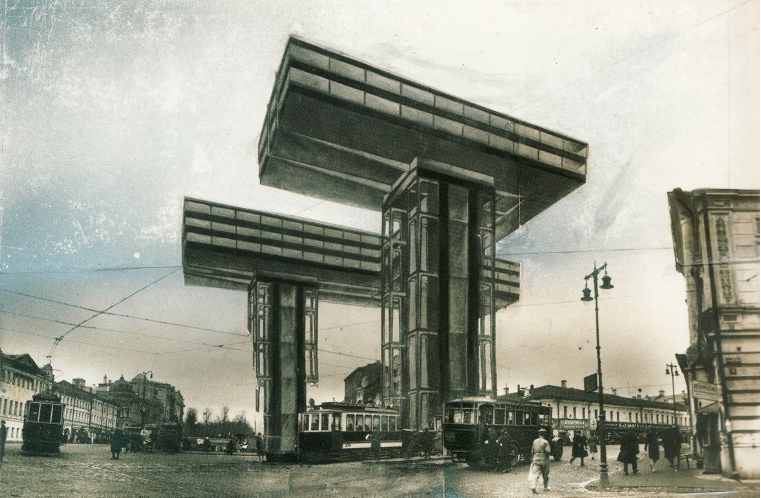
Lissitsky’s ‘Cloud Irons’, from the Architectural Review

Seizing counterfactual history back from the blimpish fantasies of the right, Cunliffe draws out the inherent speculative premise of any anti-Stalinist Left: the bad timeline hypothesis. As in Ray Bradbury’s ‘A Sound of Thunder’, and Robert Zemeckis’ Back to the Future II, we live in the bad timeline of modernity. At some point in the past things went badly wrong, skewing us into a world in which words such as ‘class’, ‘revolution’ or ‘justice’ have lost all meaning ‘ [p.6], ‘progress’ has become a taboo, and even capitalists have forgotten how to do their job of accumulation [p.12]. The point of divergence between our post-dystopian timeline and the world that should have been born, Cunliffe identifies as the failure of the Russian revolution in its early years to spread beyond its beyonds to the Western European core of the capitalist system.

Continue reading

Lenin Lives! A Disorders Forum: Introduction

This post kicks off a short forum on Philip Cunliffe’s book, Lenin Lives! Reimagining the Russian Revolution 1917-2017 (Zero Books, 2017). After an introduction from Philip, we have reactions from Disorderite Jamie Allinson and guest author Alex Sutton, followed by a response from the author. You can see all the posts here.


Philip Cunliffe is Senior Lecturer in Politics and International Relations at the University of Kent, and editor-in-chief of the journal International Peacekeeping.  He is the author of Legions of Peace: UN Peacekeepers from the Global South (Hurst, 2013) and is currently working on a new book entitled The Twenty Years’ Crisis in the Twenty First Century.


Over a hundred years after the October Revolution in Russia, and a hundred years after the November Revolution in Germany – the failure of which would condemn Russian socialism to isolation and bloody involution – both revolutions are remarkably absent from public debate. While this absence became itself a matter of public debate, it was just as remarkable and much less justifiable that the field of IR/international studies largely let the centenaries of the Russian and German Revolutions pass with such little note.

Of course, historically speaking, in the discipline of IR the Russian Revolution was largely dealt with the through the prism of the Cold War. The October Revolution was the event that supposedly set in motion an ideologically-charged, geopolitical confrontation and nuclear stalemate that itself is now long since in the past. The German Revolution tends to be even more overlooked in IR, even though its consequences were no less momentous: Paul Mason reminds us that it was the German revolutionaries, not the diplomats at Versailles, who brought the Great War to an end. Yet the German Revolution was also indissolubly linked to the Russian Revolution – for it was the Bolsheviks’ withdrawal of Russia from the war that removed the rationale for the German war effort. Given that the German ruling class had won the labour movement to the war effort with the justification of countering a Tsarist invasion of Germany, the withdrawal of Russia from the war kicked away the justification for class compromise and civil peace – the infamous Burgfrieden – in Germany.

Continue reading

The Right to Maim: A Reply

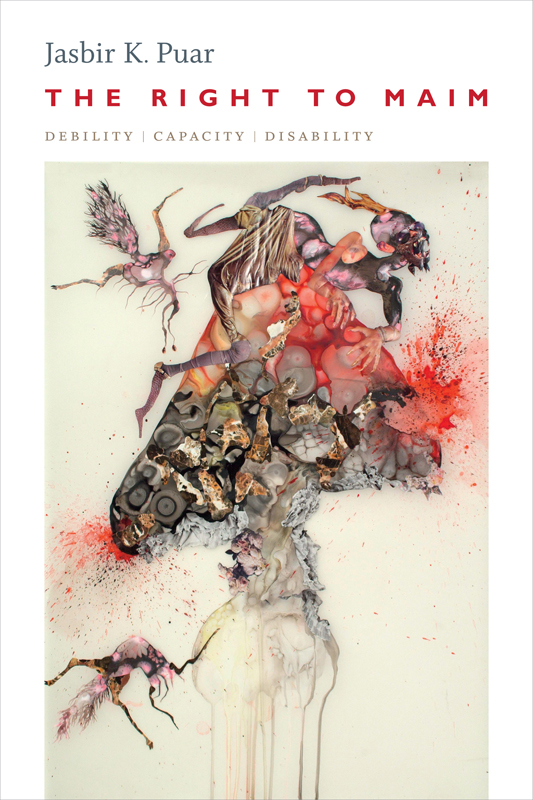
In the concluding post in our symposium on The Right to Maim: Debility, Capacity, Disability,  a reply from Jasbir K. Puar who is Professor and Graduate Director of Women’s and Gender Studies at Rutgers University. The Right to Maim received the Alison Pipemeier best book award in feminist disability studies from the National Women’s Studies Association. Puar is also the author of award-winning Terrorist Assemblages: Homonationalism in Queer Times (2007), which has been translated into Spanish and French and was expanded and re-issued for its 10th anniversary (2017).


Thank you for this opportunity to dialogue with International Relations scholars and for taking the time to read The Right to Maim. It is always an enormous privilege to engage new and unexpected audiences and I am grateful to Nivi Manchanda, Cynthia Weber, Darcy Leigh, Rahul Rao, Isis Nusair, and Sankaran Krishna for their thoughtful responses. Special thanks to Ali Howell for curating this forum in The Disorder of Things, and for organizing a roundtable on the book at the recent Journal of Millennium Studies conference that took place at the London School of Economics in October 2018. These scholars raise so many points of discussion that it would be impossible to be exhaustive so I will address the most salient points. To begin, while the responses have focused largely on the material that makes up about the last third of the book on Palestine/Israel, The Right to Maim is first and foremost about American empire, and therefore continues the inquiry about the violent global effects of U.S. exceptionalisms that I began in Terrorist Assemblages. In linking Palestine to a broader thesis about U.S. empire, I contend that it is impossible to address contemporary manifestations of U.S. exceptionalism without examining the ideological and material legitimization that Israel provides for U.S settler colonialism. It is therefore crucial that Palestine is neither produced as an external object to the United States nor exceptionalized as a site disconnected from other locations of settler colonialism and biopolitical population management more generally. While The Right to Maim could be read as intellectual solidarity scholarship, I prefer to situate it as a form of accountability to the field of American Studies.

Continue reading

Maiming, debility and the proliferation of the ‘pariah’

TDOT’s Rahul delivers the fifth post in our symposium on Jasbir Puar’s The Right to Maim. Previous posts in the symposium can be found here.


Over the past few months, I have been intrigued by media reports of the imminent arrival of something called ‘Day Zero’ in the city of Cape Town. The term refers to the day when water in the city’s reservoirs is projected to fall below 13.5% of capacity, as a result of three successive years of poor rainfall. On this day, the city’s municipal taps will be switched off, forcing its four million inhabitants to line up for a daily water ration of twenty five litres at designated collection points. As rain has fallen, the day has been pushed back, from April to May to June to July, and now to 2019. Global media interest in this story has been suffused with a kind of horrified fascination with Cape Town’s predicament as a harbinger of ‘our’ collective future. While it is possible that the discourse of municipal emergency has engendered a consciousness of the finitude of water and a culture of conservation among Capetonians, there is something vaguely troubling about the register of exceptionalism in which the story has been reported and about the very framing of Day Zero as spectre of an unprecedented apocalyptic future. Even at the height of the crisis, this second whitest of South African cities has enjoyed something that many cities in the global South do not: a round the clock supply of domestic water. For millions of inhabitants of the world’s slums, where a single tap may be shared by thousands of people and where life itself is temporally organised around the vagaries of an erratic municipal water supply, many days are already Day Zero.

cape town

credit: Rodger Bosch/AFP

Continue reading

Settler Colonial Sovereignty: Some implications of Jasbir Puar’s conception of the sovereign right to maim

The fourth contribution to our symposium on Jasbir Puar’s The Right to Maim comes from Darcy Leigh and Cynthia Weber. Dr Darcy Leigh currently teaches decolonial and queer legal perspectives, as well as interdisciplinary ‘widening access’ programming, at the University of Sussex Law School. She has previously been a Teaching Fellow and/or Research Assistant at the universities of Edinburgh, Ottawa and Alberta. Dr Leigh has also worked as a facilitator, researcher and/or consultant with decolonial higher education projects Dechinta Centre for Research and Learning and the Akitsiraq Law School, as well as in the equalities and policy sectors in School, as well as in the equalities and policy sectors in Scotland. Cynthia Weber is Professor of International Relations at the University of Sussex.  She has written extensively on sovereignty, intervention, and US foreign policy, as well as on feminist, gendered and sexualized understandings and organizations of international relations.


State sovereignty, as a central analytical category in the field of International Relations (IR), has been too often uncontested (Walker, 1993). In spite of a wave of critical sovereignty studies in the 1990s (Ashley, 1988; Bartelson, 1995; Weber, 1995; Biersteker and Weber, 1996; Walker, 1993), with few exceptions those debates largely skirted or ignored altogether how state claims to sovereignty are woven through and require specific relationship to race and sexuality (Doty, 1996; Peterson, 1999; Weber, 1999). Only very recently have IR scholars come to recognize the centrality of sexuality and race in sovereign state formation (Anievas, Manchanda & Shilliam, 2015; Agathangelou et al 2008; Inayatullah & Blaney, 2004; Leigh, 2017; Manchanda, 2015; Rao, 2012, 2014; Richter-Montpetit, 2007, 2015, 2016; Sabaratnam, 2017; Shilliam, 2015; Weber, 2016). More recently still, IR scholars are beginning to recognize the centrality not just of sexuality and race, but also of settler colonialism and disability (Beier, 2005, 2009; Crawford, 1994, 2007; Howell, 2011, 2018; Leigh, 2015; Shaw, 2008).

Jasbir Puar’s challenging and provocative new book, The Right to Maim, pushes these discussions further, demonstrating the inextricability of state sovereignty from settler colonialism as configured through racialized and sexualized relations of debility, capacity and disability. In so doing, Puar contests the function and meaning not only of sovereign statecraft, but also of settler colonialism.

In this short piece, we focus on the implications of Puar’s reworking of sovereignty and settler colonialism.

Continue reading

The right to maim: the interstitial existence between biopolitics and necropolitics

This is the third post in our symposium on Jasbir Puar’s The Right to Maim, by TDOT’s very own Nivi. Previous posts in the symposium can be found here.


I came to Jasbir Puar’s The Right to Maim: Debility| Capacity| Disability just as I was wrapping my head around Afro-pessimism, and specifically the claim by some of its proponents (see for instance this interview with Frank Wilderson) that any meaningful comparison (and by extension abiding solidarity) between Palestinians and black populations is – at its crux – misguided. This comes from the belief that the “regime of violence that subsumes Black bodies is different from the regime of violence that subsumes hyper-exploited colonial subalterns, exploited workers and other oppressed peoples.” I found this provocative, but also deeply unsettling: does the condition of ‘blackness’ preclude worthwhile parallels from being drawn with those suffering under a brutal settler colonial occupation with no respite in sight? Indeed, does the mass incarceration of black bodies in the US not face its equal in Gaza – the world’s largest open-air prison, as the common refrain is wont to remind us – or is ‘blackness’ antithetical to humanity whilst ‘indigeneity’ can still be, albeit conditionally, enfolded within humanity?

Continue reading

Spectrums of Debility and Resistance

The second post in our symposium on Jasbir Puar’s Right to Maim is by Isis Nusair, who is Associate Professor of Women’s and Gender Studies and International Studies at Denison University. She is the co-editor with Rhoda Kanaaneh of Displaced at Home: Ethnicity and Gender among Palestinians in Israel, and translator of Ramy Al-Asheq’s book of poetic prose Ever Since I Did Not Die. She is the writer and director with Laila Farah of Weaving the Maps: Tales of Survival and Resistance; a one-woman show based on research with Iraqi, Palestinian and Syrian refugee women.  Her upcoming book is titled Permanent Transients: Iraqi Women Refugees in Jordan and the USA. She is currently conducting research on the narratives of crossing of Syrian refugees into Germany. Isis previously served as a researcher at the Women’s Rights Division of Human Rights Watch and the Euro-Mediterranean Human Rights Network.

Jasbir Puar’s The Right to Maim: Debility, Capacity, Disability makes an important contribution to our thinking about the connection between debility, capacity and disability. The book challenges binary thinking and offers a continuum when thinking about dis/ability. Puar argues that “capacity, debility and disability exist in mutually reinforcing constellation and are often overlapping or coexistent, and that debilitation is a necessary component that both exposes and sutures the non-disabled/disabled binary” (Puar, xv).

Continue reading

Anarchy, Security, Hierarchy: Reading IR with Jasbir Puar

The first post in our symposium on Jasbir Puar’s The Right to Maim is by Sankaran Krishna who teaches politics at the University of Hawai`i at Manoa. His latest essay (“Manhunt Presidency: Obama, Race and the Third World”) will be published in the journal Third World Quarterly in 2019.


Jasbir Puar’s The Right to Maim: Debility, Capacity, Disability (Duke, 2017) sensitizes us to how binary categories organize our thinking and our disciplines –and often do so in ways that obscure important ethical issues. In this brief essay, I first adumbrate Puar’s thesis in her remarkable book and then take a critical look at the role that a certain binary – anarchy/security – plays in constructing the discipline of IR in specific ways, and end with some speculations on what the introduction of a third term, hierarchy, does to re-center issues of inequality, domination, racism and violence in the study of our world.

To peremptorily summarize Puar, she argues that the western discourse of disability rights is a quintessentially “white” political, economic, social, cultural and racial formation. Disability rights are fought for by and accrue primarily to affluent or middle-class citizens of western, developed societies even as these societies are themselves –through their military, economic, political, social and other interventions- responsible for much of human and planetary pain.

Continue reading