Shipboard Travels: A conversation between Charmaine Chua and Laleh Khalili (Part I)

Following previous series on Charmaine’s slow boat to China, and introducing Laleh’s first contribution to The Disorder, the first of two posts (the second is here) on what it is to study the labour, politics and infrastructure of oceanic logistics.


DSC00108

Laleh Khalili (LK): Charmaine, both you and I have taken a containership trip in the last few months, you from the West Coast of the US across the Pacific to China and Taiwan, I from Malta through Suez Canal and around the Arabian Peninsula to Jabal Ali, Dubai.  There are lots of things we can talk about: shipboard labour, the politics of the ports, being women in overwhelmingly masculine spaces, etc.  And we both want to know different things about aspects of the other’s searoute which were not similar to our own.

So here is my first question:  What struck you the most about the daily routine of the ship?

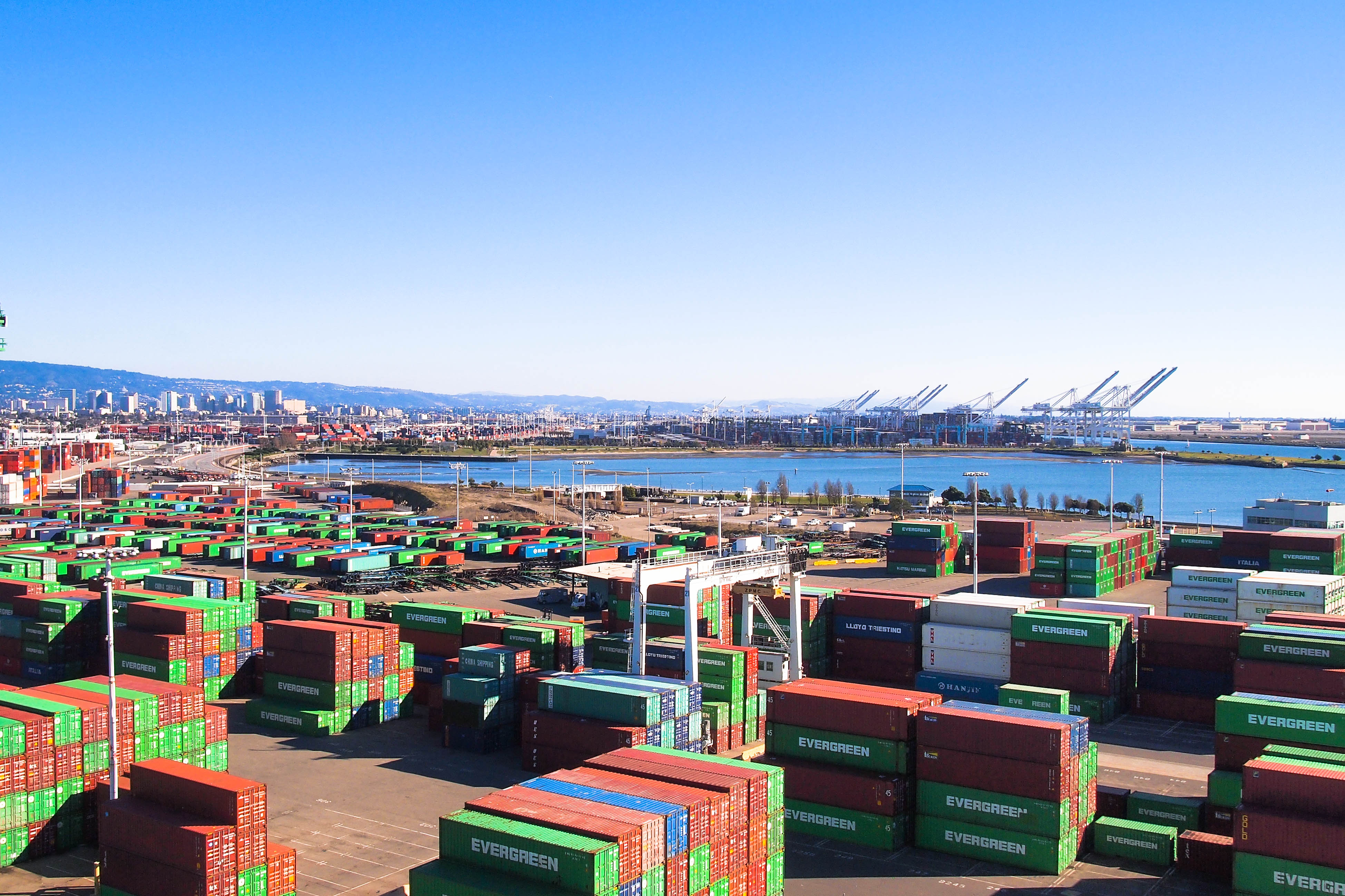
Charmaine Chua (CC): I’m thrilled to begin this conversation, Laleh. I want to answer your first question in twenty different ways, but the first thing that comes to mind is the regimentation of everyday life, and the boredom it elicited: breakfast at 0630, work orders doled out at 0700, a coffee break at 1000, lunch at 1130, coffee again at 1500, dinner at 1730. On the days when I would do manual jobs with the crew, we agonizingly counted the mind-numbing hours to the next break. The hours were long, the jobs physically demanding, dangerous and intensive. There is so much repetitiveness to the work that the crew often fought over which of the less-boring jobs they would be assigned to – spraying the deck down with a hose was better than mopping it, taking soundings was better than cutting rags. For those who are watch keepers on the bridge, their work four hours on, four off, then four on again. Not only is sleep was hard to come by because of the shift structure, but shore leave has also become a thing of the past, since there is never enough time to get on land before having to be back for your next duties. When asked, most of the crew describe their jobs with these words: “maintenance, just maintenance. Just following orders.”

I’ve since been wondering about the implications of naming maintenance as the primary form of seafaring work. Ships are easy to romanticize: they remind us of adventure, our smallness, our finitude. But if the most important tasks on the ship are not the technical ones of circumnavigation and exploration (those romantic jobs that gesture to the ocean as an endless horizon of opportunity and freedom) but maintenance, then the primary task of the seafarer is prolong the durability of already existing value. Ships break in halfsinktip over, and are constantly threatened to be compromised by rust and corrosion; in order to continue the mundane task of commerce and transportation, they must appear as if they are running perfectly in order to protect the value already invested in them.

Continue reading

Ethical Encounters – Taming of the Infinite: Applying Ethics for Political Violence – A Brief Critique

This is the third post in a series reflecting on contemporary global ethics that was originally organised as the Ethical Encounters in a Changing World panel for the 2015 ISA convention in New Orleans. Myriam’s post can be found here, Joe’s is here, Jillian’s here and Diego’s here. Kim’s discussion post is here.


The relationship between ethics and politics is complex; in theory, as in practice. Against a contemporary background where hitherto morally prohibited acts, such as assassinations by drones strikes in non-military zones, are instituted as legitimate and justifiable practices, it becomes vital to understand anew the relationship between politics, violence and ethics, and its limits, particularly when such acts are underwritten by innovative military technologies that open new horizons for ethical considerations in international politics.

Ethics, in the context of politics – including international politics – is presently predominantly conceived in terms of applied ethics and chiefly concerned with the search for an ethical theory that can be arrived at through abstraction and applied to real world ethical dilemmas. While burgeoning poststructuralist scholarship in the late 1990s sought to address ethics in terms that consider aspects of contingency, alterity and potentiality, the events unfolding in the aftermath of 9/11 appear to have given way to a more practically oriented approach to thinking about ethics in international politics, giving priority to the application of ethical principles of warring. Such practical approaches often mirror scientific processes, or algorithmic logics in trying to find ‘correct’ outcomes.

While just war traditions of ethics in war have always had a close relationship with the analytical procedures and structures of international law, the practical turn in contemporary political ethics means that concerns addressed in the international and global context are primarily framed in terms of finding and applying appropriate principles, codes and rules in trying to resolve ‘real moral problems’. Problem solving through rational procedures, and scientific rationales thus stands at the heart of practical considerations of the ethics of political violence and war. This is exemplified in the IF/THEN logic of current discourses on the ethics of war or in the structures of target selections for lethal drone strikes. Among others, Seth Lazar’s recent work on the morality of war, presented at a philosophy workshop at the LSE in 2013 for example, considers approaches to moral decision making in uncertainty in the following terms: “one plausible approach to decision-making under uncertainty is to determine the expected moral value (EV) of the outcomes available to me, and to choose the best one. So, I am permitted to ƒ if and only if EV(ƒ) ³ EV(¬ƒ)”. Similarly, Bradley Strawser’s defence of the ethical obligation to use drones as a weapon of choice relies on a selection of variables (X, Y, G) and principles (principle of unnecessary risk – PUR) that, combined, serve to confirm the hypothesis, namely that using drones is an ethical obligation. This procedural algorithmic logic speaks to a technoscientific-subjectivity with which ethical outcomes are ascertained, problems solved. Ethics becomes a technical matter that can be solved through procedures and thus has natural limits. It is only able to assess, whether an outcome was achieved through the correct logical theoretical trajectory, not through the particularities of the moment.

Stuart Kinlough/Getty Images

Stuart Kinlough/Getty Images

Continue reading

What We Talked About At ISA: Weaponising Geography and the Global Striations of Military Targeting

In the context of a panel I put together on “Turning Ploughshares into Swords: Weapons and Weaponizations”, the ISA’s annual conference was the occasion for me to present some of the research I have undertaken as part of my long term project into the logistics of military perception. The central aim of that project is to uncover the genealogy and operation of the functional constituents of contemporary targeting practices as they increasingly span the globe. I submit that we can outline three distinct, if profoundly intertwined, functions of sensing, imaging and mapping that respectively gather sensorial information, visually represent and disseminate it, and relate it to geospatial frameworks. It is the last of these operations that was the focus of my paper, with particular attention paid to the way in which the planet has increasingly been enframed within systems of geographic coordinates permitting the geolocation and thereby targeting of any entity caught within their mesh.

While the role of cartography in European colonial expansion from the fifteenth century on is well-known, my main interest here lies in the even more intimate relationship between the histories of weapons targeting and techniques of geospatialisation. From the outset, the development of artillery in the early modern era was closely bound up with that of surveying techniques for the measurement of distances by visual means. Indeed, the range-finding exercises of gunners relied on the same trigonometric methods that underpinned the rise of modern cartography.

Continue reading

Landlessness and the Life of Seamen

This post is Part 3 in a series of dispatches posted from a 130, 000 ton container ship. More here.


OLYMPUS DIGITAL CAMERA

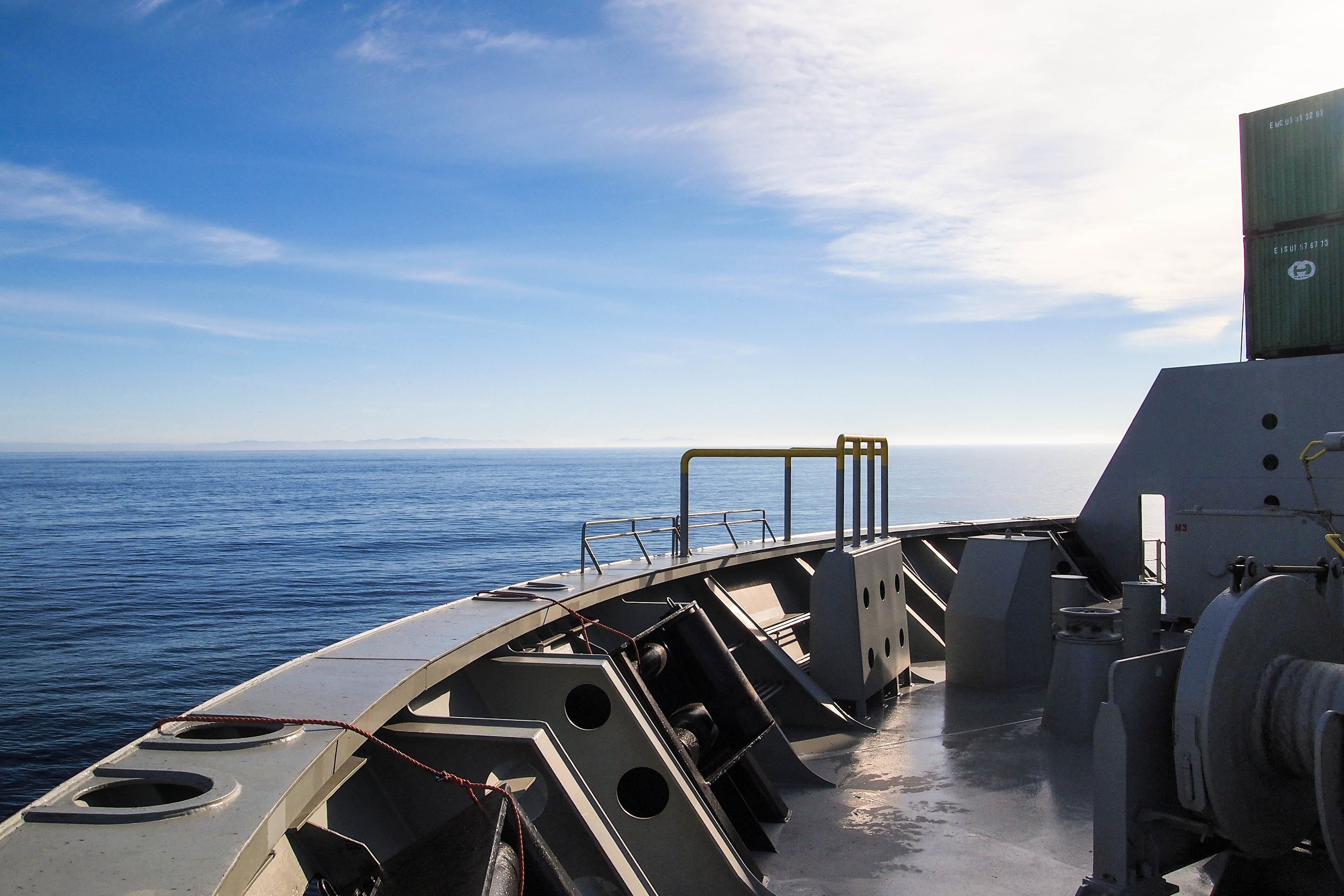
The bow of the ship is the only place on the Ever Cthulhu that affords a modicum of silence. To get there, you walk down the length of the narrow grey deck, flanked on one side by containers crowded into towering stacks that scrape and creak against each other as the ship cuts through the waves, and on the other by the powerful sweep of a wind so strong that you have to fight not to be blown backwards. At the foremost tip of the ship, you climb a few steps onto a large open deck painted grey and surrounded by giant chains and fat coils of synthetic rope, and suddenly, the mechanical roar of the ship falls away.

Having finally wended our way out of the US ports, the Ever Cthulhu has been traveling across the massive pacific ocean for more than a week now. Yesterday, we cleared the frigid Kamchatka Peninsula. The snow and ice beating against the ship for the past week has melted away, and the deck crew that has been trapped inside cleaning the walls and floors of the accommodations are now back to work on the endless task of the seaman: fighting against perpetual rust. “You know Sissyphus?”, The captain asks one day as we take a walk around the deck. “Working on a ship, it’s like that. You are fighting forever against the saltwater eating away at your vessel. The biggest enemy of the ship is not pirates, it’s corrosion.” Today, the ship has been awash in the sounds of grinding, scraping, hammering and drilling, scraping rust off and painting over it in an endless cycle that repeats itself every two months. All of this is set to the background soundtrack of an endlessly roaring engine that suffuses the air and shakes the accommodations with a throbbing, pulsating, machinic hum.

But on the bow, penned in from the wind and rage by the Ever Cthulhu’s bulwark, you can look outward onto an endless, unbroken horizon of ocean in near quiet, and almost think that the ship is barely moving. A quick step up onto a grilled ladder quickly dismisses this fantasy of a softly drifting ship: peering over the edge of the ship’s prow towards the churning waters below reveals the ship’s bulberous bow, a 1,000 ton snout-like protrusion of pure aerodynamic steel that cuts through the ocean, almost heaving the liquid blue upwards before pushing it back powerfully against the hull, where the waves churn themselves into a cerulean blue froth and then crest outwards in a diagonal wake. I can’t judge how far we are from the ocean’s surface, so I spit into the sea – crude, really – and count the seconds it takes to hit the waves. Seven. By the time it reaches the sea below, my ball of spit has already flown several meters behind me. We are forging ahead at a speed (18 knots per hour) beyond my bodily comprehension of motion. When you are surrounded by nothing but this limitless, shifting, liquid expanse, stretching in all directions for days before hitting land, all distance becomes incalculable.

Continue reading

The Quiet Port is Logistics’ Nightmare

Dispatch #2 from Charmaine’s ethnography of a container ship comes to us from the port of Tacoma, where the ship is currently experiencing severe delays. Continue to follow the Ever Cthulhu with the tag ‘Slow Boat to China’.


Source: author

Source: author

It is 3am on a Wednesday when we pick up the Port Angeles pilot who will take the ship through the Puget Sound. All day, we have been sailing through a fog that has hung so thickly around the ship that it has seemed we are drifting through clouds. The fog has delayed our pilot by four hours: sailing through the Puget Sound’s narrow channel is already a formidable task, made Herculean by the fact that no one can see past the ship’s nose. Take that, multiply it by the fact that the port of Tacoma is situated in a tight bottleneck of an inlet, that an unusual volume of vessels are docked in anchorages clogging passage to the port, and that the captain is being hounded by the charterer to get us to berth on time, and you get the shipper’s molotov cocktail. Short of risking navigating by radar, avoiding ships via yellow blips on a screen, waiting the fog out is the best option. At dinner, the captain sighs. “Fog, congestion, work slowdowns: at this rate, we will never get to China.”

There is a massive traffic jam on the ocean, and the Ever Cthulhu is stuck in the thick of it. Already, we have been delayed for almost two weeks: the ship stayed for five days longer than the forecasted two in both Oakland and Los Angeles, and is expected to be in Tacoma for ten. Regularity, it turns out, can no longer be expected in the logistics industry, and my 26-day trip on the Ever Cthulhu is turning into a 40-day one. All along the West Coast, ports and berths have been choked with vessels in every terminal, and waiting ships have crowded into anchorages for days in far higher numbers than the captain has ever seen. Imagine the ripple effects of all this congestion: if a single ship takes six days longer than the usual 2.5 to be unloaded at berth, and ships that have been waiting experience those same delays when their turn at berth arrives, those backlogs reverberate outward in unfathomable ways, affecting ships’ travel times to other ports around the world, trucking rates inland, air freight pricing, rail service delays across the U.S., and the availability of empty containers in China.

The reasons for this coast-wide congestion are unclear. In July, when the current International Longshore and Warehouse Union (ILWU) contract ran out, more than 70 multinational maritime companies and ocean carriers represented by the Pacific Maritime Association (PMA) began to negotiate a new contract with the ILWU for the 29 U.S. West Coast ports in its jurisdiction. The process soon turned ugly. The PMA blamed the increasing port congestion on an organised work slowdown by the union, alleging that the ILWU was deliberately not dispatching enough gangs to the waterfront. The union vehemently denied this, and countered that the PMA was deliberately mounting a smear campaign against them by cutting the number of workers at terminals and cancelling critical night shifts that would speed the cargo operations. The media, of course, lapped this all up, blaming rotten agricultural productions, anchored ships, and delayed shipment arrivals on the ILWU, one outlet going so far as to ask whether longshoremen were “spoiling Christmas”.

Continue reading

Terra-forming Islands in the South China Sea, or the Future of International Law in the Age of Anthropocene

As per our disciplinary formations, IR scholars often indoctrinate instruct their students with the assumption that anarchy is a constant in international relations. The use of the term, however, generally assumes that there are natural/material constants within the international that transcend central concepts of sovereignty, power, and choice/preference. In other words, the assumption is that anarchy has (material) limits. Even those subscribing to the discursive turn would/might agree that there are material constraints that limit ‘meaning construction.’ We base a number of international laws, norms and regulations on this assumption; there are certain constants that cannot be changed through human actions. Our aspirations, capabilities, hopes, preferences, do not change these constants. What if – and this is a big ‘what if’ – for the time being, we are increasingly wrong about this assumption? What if human ability to transform the earth’s eco-systems has reached a level where this basic assumption no longer holds valid, or as valid as it used to be?

its-not-colonialism-its-terraforming

A number of geologists, environmental scientists, and futurists alike have already picked up on this trend. Looking at climate change in particular, they claimed that the earth has entered a new epoch in its life cycle. “We now live in the age of Anthropocene!” these scholars claim. Anthropocene, in this context, refers to the humans’ distinct ability to affect earth’s ecosystems. This claim is disputed, yet many see merit in it. To understand, or reflect, on the implication of the fact that we, as humans, are not the only ‘things’ that matter in this world of ours, you can also look at this amazing post by Audra Mitchell on Posthuman Security.

700x500_slide4-mr_1

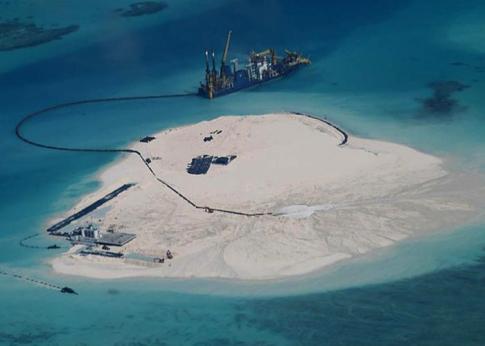
While in the future we might see the effects of other types of terra-forming and/or bio-engineering in international relations and international law, this post will only look at the United Nations Convention on the Law of the Sea and the effects of the Chinese pursuits in the South China Sea on the said law. The BBC ran an excellent exposé back in September on the People’s Republic of China’s (PRC) pursuit of building man-made islands on the South China Sea and its (intended) effects on the territorial water disputes between the countries of the region. Aside from the amazing medium through which the BBC editors and reporters managed to convey the message, the story itself is equally worth reflecting on for all things international.

Continue reading

Post-Capitalism Will Be Post-Industrial

[Text of a short talk presented at Socialism and Deindustrialisation event put on by Spring. See Michael Roberts’ write-up of his talk here.]

“In fact, the realm of freedom actually begins only where labour which is determined by necessity and mundane considerations ceases; thus in the very nature of things it lies beyond the sphere of actual material production.”

-Karl Marx

I want to argue today that only deindustrialisation can lead us beyond capitalism, or in other words, that post-capitalism will necessarily be post-industrial. [1] This means that rather than bemoan the loss of manufacturing jobs, or struggle to lure them back, deindustrialisation should instead be applauded as an important and irreversible achievement. Historically speaking, it is akin to the move away from agriculture-based economies. Just as the mechanisation of agriculture freed people from reliance on working the land, the deindustrialisation process has the potential to free people from the drudgery of most productive work. Yet an immediate consequence of claiming that deindustrialisation is necessary for post-capitalism means we must reimagine what the transition between economies might be like.

The traditional story of moving beyond capitalism is fairly straightforward. To be sure, this story has been complicated and critiqued throughout the 20th century, yet its general framework still underpins a number of assumptions about how to transcend capitalism. In broad strokes, the story begins with a shift away from agriculture-based economy which had been built around a large peasantry. In its place emerges rapid industrialisation – exemplified by the textile, steel, and eventually automobile industries in the 19th and 20th centuries. The social effects of this industrialisation were particularly important for understanding how post-capitalism was supposed to come about. Industrialisation involved a move from rural populations to increasing urban populations, along with a transformation of the peasantry into the proletariat, involving primitive accumulation and the dispossession of common land. The result of this was a new urban working class who had only their labour power to sell. But this transition also led to the development of a strong working class. Factories meant that workers were increasingly centralised in the workplace – they worked together, creating social connections and community. Moreover, the tendencies of capitalism were supposed to increasingly homogenise the working class. The result of all this was that the working class came to share the same material interests – things like better working conditions, higher wages, and shorter working weeks. In other words, with industrialisation there was the material basis for a strong working class identity. (It’s worth noting here, that despite this material basis, the industrial working class was always a minority of the working population. Even at the height of manufacturing in the most industrialised countries, employment in manufacturing only involved about 40% of the population.[2]) On the basis of their political strength though, the working class was supposed to become the vanguard of the population, leading us away from capitalism and towards something better. With the growing power of the working class, and the socialisation of production, it was thought that workers could simply take over the means of production and run them democratically and for the greater good.

Of course, this didn’t happen, and the best example we have of this proposal was the miserable Soviet experience. What occurred in that experiment was a glorification of productivity at the expense of freedom. Just as in capitalist societies, work was the ultimate imperative, and it was no surprise to see Taylorism, Fordism, and other productivity-enhancing techniques being forced upon the workers of the USSR. In the capitalist countries, by contrast, the industrial sectors declined and the basis for a strong working class has been systematically attacked. Yet if we look at developing countries, the traditional story finds little traction as well. Even developing countries are increasingly deindustrialised. This can be seen in two broad facts: first, newly industrialising economies are not industrialising to the same degree as past economies (measured in terms of manufacturing employment as percentage of population). Rather than 30-40% employment, the numbers are closer to 15-20%. Secondly, these economies are also reaching the point of deindustrialisation at a quicker pace. Measured in terms of per capita income levels, these economies reach their peak industrialisation at a much earlier point than previous countries did.[3] This is the so-called problem of “premature deindustrialisation”. The conclusion to draw from the experience of the 20th century is that the promise of the traditional narrative – the industrial working class leading a revolution to democratic control over the means of production – has not been fulfilled and seems to now be obsolete. We no longer live in an industrial world, and classic images of the transition to socialism need to be updated.

Deindustrialisation

So what is the alternative? Continue reading

Modelling Worlds: The Politics of Simulation

A guest post from Nathan Coombs who is an incoming Leverhulme Early Career Research Fellow at the University of Edinburgh. He edits the Journal of Critical Globalisation Studies, and is the author of the forthcoming book, Politics of the Event: From Marxism to Contemporary French Theory (Edinburgh University Press, 2015). His current research interests are in financial algorithms and financial regulation. He can be contacted at n.coombs (at) fastmail.co.uk


hft

Over the last decade, scholars have become increasingly interested in what we do when we make use of models and simulations. An emerging consensus – often legitimated through reference to Bruno Latour’s Actor-Network Theory – is that mathematical models and computer simulations are not passive tools but rather a material force in their own right. Agents may employ such technologies in order to achieve pre-determined ends, but the technologies themselves have an effectivity that exceeds their users’ intentions, and set in place path-dependencies that serve to proscribe the range of political and economic possibility.

This concern with the politics of technology cuts across multiple disciplines including Sociology, Communication Studies, International Relations, International Political Economy, and Management Studies. However, the Social Studies of Finance (SSF) has perhaps gone furthest in exploring the practical implications of modelling and simulation technologies. Applying Austinian and Barnesian notions of performativity, researchers in this field have sought to grasp the way in which economic models shape markets, and to dig into the mathematical and technical details that underpin this process.

Donald MacKenzie’s book An Engine, Not a Camera (2008) is exemplary of this approach, and a common point of reference for scholars in SSF and all the aforementioned disciplines. In his analysis of the development and uptake of the Black-Scholes option-pricing model in the 1970s, MacKenzie aims to show how the model’s employment of the efficient market hypothesis – where stock prices are considered to accurately reflect their risk – led to a period in which the pricing of options came to reflect that predicted by the model. The point of MacKenzie’s analysis is not to endorse the neoclassical economic assumptions codified in the model. Rather, it is to point out how models serve to socially facilitate evaluation practices in the face of complexity, uncertainty, and epistemological opacity. On this basis a model can also contribute to financial instability when it is both widely employed and based on assumptions that are confounded by ‘real world’ contingencies.

Continue reading

Aircraft Stories: The F-35 Joint Strike Fighter (Part II)

This is the second part of a single post about the F-35 as actor-network. The first part is here 

wbbuca 013

Strike

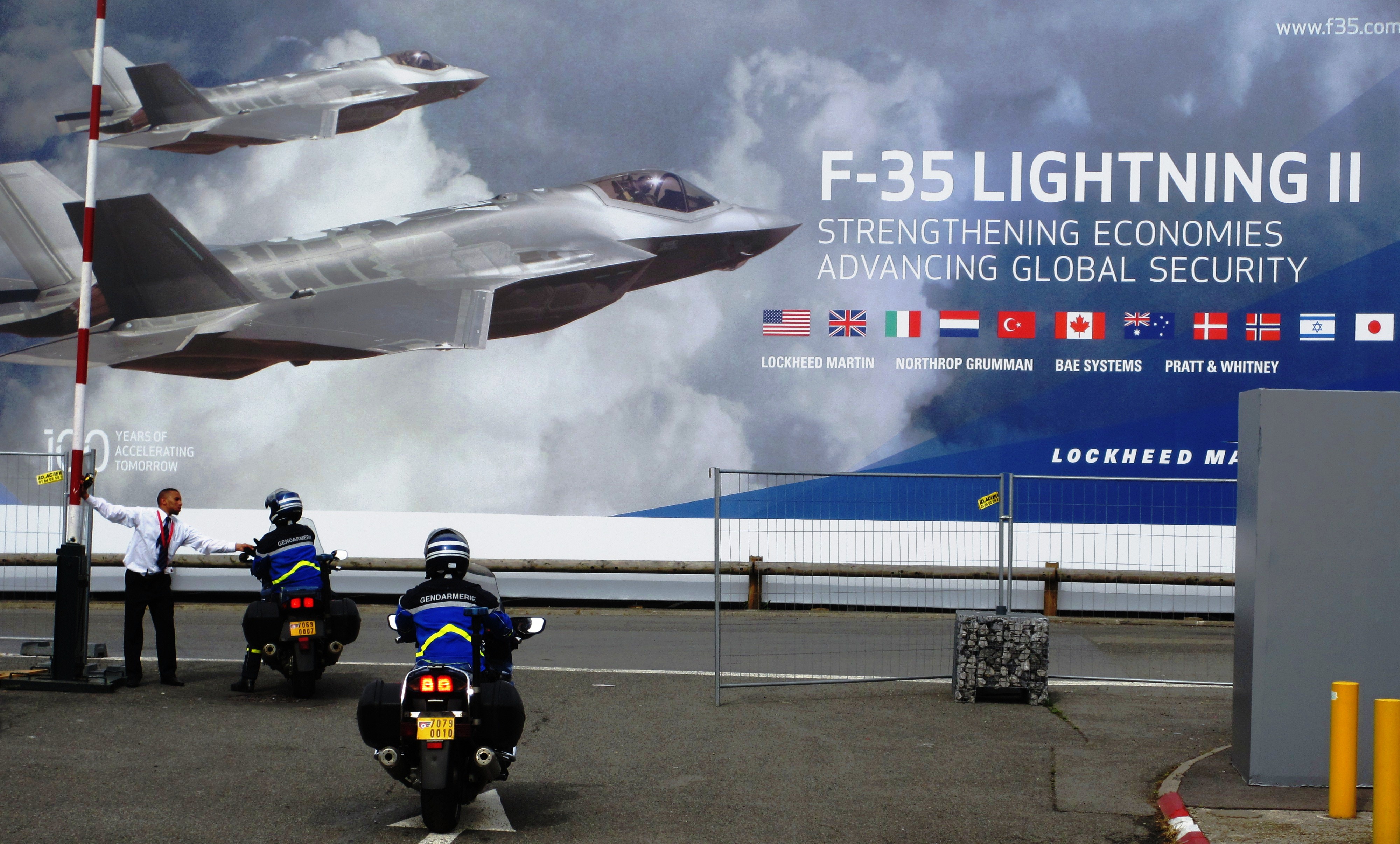
This word is meant to convey the F-35’s identity as a proper multirole fighter, a machine rigged to conduct both air superiority and strike missions, the latter defined as tactical attacks on a ground or naval target with a particular focus on “initial blow” or “first day of attack” operations.  All three variants of the F-35 fighter family hold this capability: the conventional A version designed for use by the U.S. Air Force and allied air forces; the Short Take-Off, Vertical Landing (STOVL) or B variant for the U.S. Marines Corps as well as the UK’s Royal Navy, as well as the conventional carrier-based edition for the U.S. Navy, the F-35C.

Airstrike, or strike for short, shapes, and is shaped by, the evolving structure of international politics in important ways.  Pax Americana, defined in terms of successive hegemonic or hierarchical international and regional orders centered on Washington, D.C., can be regarded as an assemblage made possible by the so-called global strike, among other smaller assemblages.  Since the middle years of the twentieth century warplanes have transformed themselves into multirole, fighter-bomber machines capable of ever-greater lethality and survivability.  What makes U.S. strike aircraft especially formidable is the surrounding stuff—assets like ballistic and cruise missiles plus countless “force enablers” such as ground bases, aircraft carrier groups, logistics depots, a large tanker force and aerial refueling know-how, interlinked information and communication systems, the ability to generate and sustain the use-of-airspace deals on relatively short notice and so on.

Continue reading

Aircraft Stories: The F-35 Joint Strike Fighter (Part I)

bourget

How big is the F-35 Joint Strike Fighter? By one set of measures, it is three times bigger than the Eisenhower Interstate Highway System, ten times bigger than either the Apollo Project or the International Space Station or Hurricane Katrina, or one hundred times bigger than the Panama Canal. These comparisons are only moderately outlandish. US$1.45 trillion is the Pentagon’s own December 2010 estimate of lifetime operating and supporting costs for the 2,443 copies of the F-35 currently on order by the United States government, which we can then compare to the known price tags, in 2007 dollars, of these five projects.[i] Costs—also variously prefaced as procurement, actual, sunk, fly-away, upgrade, true and so on—and their contestations are central to a discourse of accountancy that surrounds all projects that require large-scale mobilization of public power. But enormous as they are, these numbers still cannot capture the size of this particular weapons program. To understand just how big the F-35 is, I wish to suggest in this two-part post, we ought to conceive it as a proper assemblage—a heterogeneous association of human and nonhuman elements that is at once split, processual, emergent, and, most importantly, constitutive of the modern international.

Continue reading