The Marking Boycott And Its Aftermath

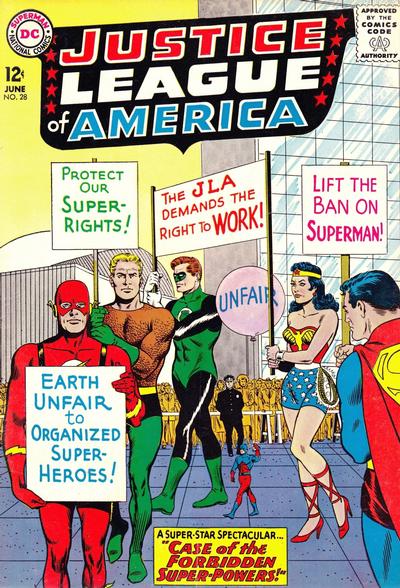
Justice League Super Hero Strike

In the face of a UK higher education marking boycott due to start in 11 days time, universities have come forth with a new pay offer. Having unilaterally imposed a 1% rise (read: real terms cut) for 2013/14, they are now proposing 2% for 2014/15, with a small bonus for those on the lowest band to bring them up to a living wage level (at Sussex, that’s an increase on the existing annual pay of £13,621). A consultative ballot is open to union members, and the boycott is delayed. It seems likely that there will be appetite for the deal, given the general tone of despondency and how drained staff are by repeated small scale actions and by mounting work pressures. There had, after all, been doubts that a boycott could compete with aggressive tactics from management (including threats to deduct full pay from anyone who participated in the boycott).

We might be emboldened by this concession from UCEA (the employers’ association). It shows, as more ‘militant’ elements had predicted, that greater returns would be achieved with the threat of a marking boycott than with all the 2-hour and single day strikes put together.[1] A first offer, before the boycott has even begun. Could we not win more than these peanuts (only just a real terms increase, following five cuts in a row, going by Consumer Price Index)?

Sort of.

Continue reading

Living Knowledge Traditions and the Priestly Caste of the Western Academy

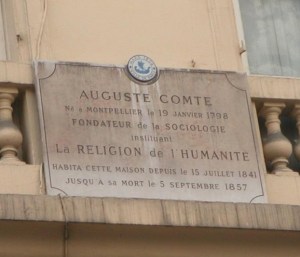
comte

The Western Academy, especially in its social science and humanities wings, incorporates as a priestly caste. Perhaps Kant is the first high priest of this caste when he argues for the Aufklärer to become a corporate entity equivalent to the hierocracy and nobility but exceptional in its duty to provide a truly public service of reasoning. The psalm of this priestly caste is “have the courage to use your own understanding”, its catechism: to singularly possess and hold aloft the flame of revelation, known as science, or, nowadays, the modern episteme. Even Marx holds the flame aloft when he takes Hegel’s Philosopher, who breathes world spirit, and makes him inhabit the skin of the Communist.

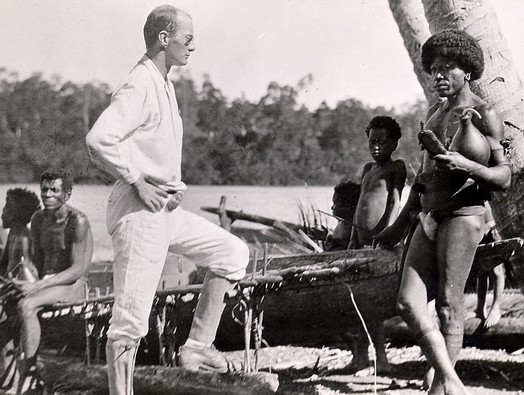
This priestly caste, as it founds the church of modernity, is instantly and integrally involved in founding a broader colonial division of labour.  These new priests conjure up the traditional/modern divide by the use of history –  differentiating old and new European Western societies – and by the use of anthropology (later, sociology too), by differentiating the colonized from the colonized. The living knowledge traditions of the colonized are pronounced dead on arrival in the present. And their cosmologies, philosophies, social practices – are entombed into opaque “cultures” the contents of which can only be clearly illuminated by the keepers of the flame. 

19_malinowski

Ultimately this mapping of difference works through race, gender and class coordinates so that even the “poor” living in the West, as well as un-mastered women and single mothers intersect with (post-)colonized subjects to become part of this opacity. The episteme of the Western Academy thus differentiates between the knowers and the known.

In this respect, the modern episteme is as seminal as gunboats to the maintenance of colonial difference. Key to this difference is not just the attribution of extra-ordinary exploitation, oppression and dispossession to colonized peoples but also their epistemic erasure, i.e., the outlawing of the possibility and desirability of intentional self-determining community amongst the colonized and their post-colonized descendents. It is in the colonial world and not Europe where Europeans develop the art of objectifying peoples into populations such that the basic competency of the colonized to self-define is deemed absent by the instruments and mores of European sanctioned international law. Postcolonial populations have only been able to become peoples under very specific conditionalities; and many who make the transition become the new police of colonial difference. Those who fall between or prefer a third way become the ungoverned, or ungovernable.

Continue reading

The Pay Strike And Its Discontents

Breaking Bad Pay Teachers More Money

The ballots are out, the wheels are in motion. Union members have until Thursday 10 October to vote on strike action over the latest derisory pay offer of 1% (if you haven’t received a ballot, go here). The justness of the cause seems clear enough. Since 2009, every pay award has been several percentage points below inflation, leading to a consistent real terms drop in pay. And some of those paltry increases were only attained after negotiations. Yet, despite the protests from above (and excepting a brief dip in student numbers), British higher education is in fine financial health. The overall wage bill is decreasing at the same time that surpluses are growing. And for “growing” read “more than doubling”, from £488 million in 2007/8 to £1.1 billion in 2011/2012. Managers are reaping their rewards accordingly, and a significant portion of Vice-Chancellors are seeing their pay go up by 10-20%. At Sussex, for example, Michael Farthing is now paid £280,000 (including pensions contributions), as compared to £178,000 in 2007 (that’ll be a 57% increase then).

And yet there is a foreboding. Fear is a factor, nondescript anxiety another. Perhaps an awkward sense that any level of action is somehow at odds with the academic code.

Articulated objections come in two stripes. First, the we-haven’t-got-it-so-bad defence. Beyond the usual ‘all in it together’ austerity ideology, there are pay increments (which most permanent academic staff get automatically). Real wages aren’t declining so hard if you move up a pay step each year. This is on its own a pretty restricted ambition, since it amounts to a kind of career “progression” that leaves you standing still. It is also, for all the talk of solidarity with lower-paid workers, a selfish analysis.

In the last 5 years, the pay for new lecturers and tutors has dropped 13% in real terms. Following the USS pension saga, they (we) have each had tens of thousands of pounds taken from them over the course of their careers, while staff that retained their old rights are paying more every month into a scheme that was, let us recall, nowhere near crisis. There are fewer scholarships and research grants than before, and an increase in teaching-heavy posts. Consumer-driven logics are set to make that worse. On the horizon, just over there, is a US-style expansion based on precarity, a prestige elite, and debt bubbles. Some at the top are already breaking from the national pay spine, inaugurating a two-tier system. Consider this trend alongside the state of university finances. What is it to look at this and say things aren’t so bad? I put it to you that such a position is detached, complacent, and irresponsible.

Second, there is the strikes-change-nothing complaint. This has better justification. Local actions over the last years have not reversed policies. Pensions were stripped down anyway. And there is something peculiar, isn’t there, about the idea of day-long walkouts and picket lines in a sector so based on relatively scattered student-teacher interactions. There is no machinery to fall silent, no buzzing shop floors to stand empty. Just a day of saved wages for management and probably a whole stack of reorganised lectures, academics not really being the types to withhold knowledge (or, rather, unwilling to see knowledge as labour). There is a sense that the old tactics are dead, and should be left in their graves.

On the one hand, this is an argument for more radical action. If employers can handle strike days, we need more. Or, alternatively, forms of action that do not fetishise the picket line. Something that will make VCs pay attention, like a marking boycott or withholding final grades. In a customer-orientated culture this is the pressure point, especially if action begins to alter the results of the National Student Survey, that Big Other of the academic scene (what do students really want?). The complaint goes up that the national union lacks the imagination to instigate these actions, and that we should therefore turn to more vibrant kinds of opposition. But new forms of resistance nevertheless confront established modes of punishment. When full pay is withheld day on day, when even partial performance leads to the forfeit of full wages, how quickly will we really buckle? We know something has to break the pattern, but we’re not sure we’re capable of it, or that the sacrifice is worth it. In other words, we find ourselves a little too close to text-book academic bitching: something more fundamental needs doing, but we’re not likely to be the ones to do it.

On the other hand, the fear and the paralysis can be found closer to home. Complaints about the union form do not produce their alternative ex nihilo. There are possible replacements, but no actually-existing ones. Nor does the appetite for creating one seem to exist. And for good reason. The paradoxical character of academic subjectivity is both to consider ourselves in a position of real epistemic and social privilege and to be so despondent about our influence on things as to merely absorb the changes thrust upon us (working conditions, impact agendas, research restrictions). The legal protections of strike action have no parallel, truncated as they are. Creative alternatives have raised energy, and served as political classrooms in their own right, but they haven’t actually stymied ‘reforms’ (whether on fees, outsourcing or investment portfolios). And, strange as it may sound, universities are probably happier taking draconian action against their workers than their students. A faculty occupation, if we could even imagine such a thing, would not end well.

None of that is to say that we (there’s that intangible collective again) should walk zombie-like to the picket. Fersure, let the rejuvenation of academic democracy proceed apace. In the meantime, we have to ask ourselves seriously what the consequence is of another pliant year. There are murmurings that a failure to win this ballot will endanger collective bargaining itself. If we cannot muster the resolve to deliver a strong yes on action short of a strike, and a strong yes on strike – if we cannot even deliver a serious turnout – that’s probably as much as we deserve.
Stop and Search: Race and the Politics of Suspicion

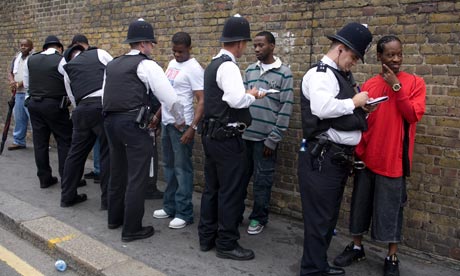
banksy-searchStop and search at Notting Hill carnival

BETWEEN me and the other world there is ever an unasked question: unasked by some through feelings of delicacy; by others through the difficulty of rightly framing it. All, nevertheless, flutter round it. They approach me in a half-hesitant sort of way, eye me curiously or compassionately, and then, instead of saying directly, How does it feel to be a problem? they say, I know an excellent colored man in my town; or, I fought at Mechanicsville; or, Do not these Southern outrages make your blood boil? At these I smile, or am interested, or reduce the boiling to a simmer, as the occasion may require. To the real question, How does it feel to be a problem? I answer seldom a word.

– W. E. B. Du Bois, The Souls of Black Folk, (1905)

Video from excellent activist group Stop-Watch.

The political pause over Stop and Search

The riots of 2011, and the research that was conducted afterwards, have had multiple political effects. Of these, one of the most important has been a clearer public exposure of the deep animosities generated by police use of stop and search powers against young people and especially those of black and Asian backgrounds. Whilst the idea that stop and search causes animosity is not news to anyone interested in British race relations or human rights, it has unusually become the focus of increasing political attention. For many years the Independent Police Complaints Commission has warned that the use of stop and search powers may be being exercised in a discriminatory and unaccountable way, and the Equalities and Human Rights Commission have been investigating police forces on this front.  Yet it was only following the riots that the Metropolitan Police Commissioner Sir Bernard Hogan-Howe began a large overhaul of the use of the power in London in 2012. Following this, parliamentary briefings were issued which pointed to the broader ineffectiveness and abuse of the powers, and the Home Office has launched a consultation into the use of stop and search. In launching this consultation, equality-sceptic Home Secretary Theresa May acknowledged, in very measly terms, the discriminatory ways in which these powers had been exercised:

The official statistics show that, if someone is from a black or minority ethnic background, they are up to seven times more likely to be stopped and searched by the police than if they are white. Now we should not rush to conclusions about those statistics, but everybody involved in policing has a duty to make sure that nobody is ever stopped just on the basis of their skin colour or ethnicity. The law is clear that in normal circumstances, stop and search should only ever be used where there is a reasonable suspicion of criminality—and that is how it should be. I am sure we have all been told stories by constituents and members of the public about what it is like to be a young, law-abiding black man who has been stopped and searched by the police on more than one occasion. If anybody thinks it is sustainable to allow that to continue, with all its consequences for public confidence in the police, they need to think again.

House of Commons Debate, 2 July 2013 Continue reading

Rushed thoughts on political theory…

I am not sure I have proper post here, but I am pursuing some thoughts and it seems they might benefit from publicity. In the midst of “fieldwork” – a word I hate… Let’s scratch that – in the midst of a learning experience, in which I have been granted the opportunity to share in the struggle of some very brave people in Washington DC’s Shaw neighbourhood, I have stumbled over what seems a vital point about political theory. So vital in fact that it seems obvious now.

I spent yesterday in the Shaw neighbourhood of DC. Shaw is a historically black area, with a cultural and intellectual history that rivals Harlem or Bronzeville (in Chicago). It is also a neighbourhood in the midst of “gentrification”… wait, that’s the wrong word too. It is a neighbourhood in the midst of a campaign of displacement, moving long terms residents (mostly poor and Black – though also Latino and Asian) out of their homes and community. These people are being displaced to make way for “development” and “urban renewal” – which is a polite way of saying they are being moved for profit, because the investors and the city of Washington DC have found a way to make money off their homes and community.

Walking around the area you can see the transformation in process, as the old and new visions of the area meet like ocean currents. I sat in a park and while a young white woman jogged with her dog, a young and destitute black man watching from a nearby bench complained to himself that her dog needed to run free, not be stuck on a leash, and that the woman should have stayed in the suburbs rather than moving into his neighbourhood. And in Shaw, the writing is literally on the wall, as I walk past a former public housing complex that is now being advertised as a luxury apartment complex by a new owner keen to move out the current residence, renovate the building and move in new more profitable tenants.

I was fortunate to meet a group of local long time residents, mostly black women, who are trying to protect their homes and their place in the Shaw community. I won’t provide details here, but I will say that these people are incredibly brave and they face an absolutely monumental task. To oppose their own displacement requires them to fight against powerful adversaries using a system and a set of rules that is balanced against them. And this is where I started thinking about political theory… Continue reading

Pacific Redemption Songs

Te Hau

“Te Hau” by Abby Wendy

A few years ago I was reasoning with members of Ras Messengers, a reggae-jazz band who had in 1979 toured Aotearoa New Zealand. The Rastafari musicians recollected their experiences with various Māori communities. Occasionally female Māori elders (kuia), in introducing themselves to the band, would connect their genealogies back to Africa. The kuia did this as part of an indigenous practice called whakapapa, which literally means to “make ground”. It is a practice that allows diverse peoples who might never have met to find a genealogical route through which they are already personally related.

Chauncey Huntley from Ras Messengers showing the Rakau (traditional sticks) that he was gifted thirty years previously

Rastafari also have a practice called “grounding”, which is to collectively reason on the meaning and challenges of contemporary life. Over– or inner- standing (instead of under- standing) is cultivated through the guidance of natural laws and – often with the help of drums, fire and holy herb – the intuition provided by spiritual agencies (Irits) that allows ones to pierce the veil of deathly inequality, oppression and dehumanization so as to redeem living energies and relationships that might help with healing in the present. When I think of Irits I also think of a key concept of Māori cosmology called hau. Overstood by Māori Marsdenhau is the breath or wind of spirit which is infused into the process of birth to animate life and associated with the intention to bind peoples together in righteous living.

A key stone of the Rastafari faith is that adherents collectively redeem their African genealogy so as to breathe life back into their suffering condition and leave behind the death of enslavement and its contemporary legacies. So when I heard of this story of the kuia and Ras Messengers, I imagined how this practice might have given strength to the Ras. After all, in those days (and perhaps still today), peoples of various African heritages were often forced (directly or indirectly) to disavow those connections themselves.

Whakapapa is an art practised collectively. Yet it is not free play, nor is it the manufacturing of fiction. It is a creative retrieval. It could even be a redemptive act.

Keskidee 13

Keskidee perform in New Zealand

This was certainly the intention of those who organized the tour of Ras Messengers alongisde the Black British theatre group, Keskidee (the name of a Guianese bird known for its resilience). The organizers were a group of New Zealand activists that came together under the banner Keskidee Aroha (Aroha being the Māori word for love, sympathy, nurturing affection etc). Their intention was to learn from and work with the artistic tropes of Black Power and Rastafari so as to catalyse a cultural revolution and renaissance amongst young Māori and Pasifika peoples thereby strengthening them in their confrontation with a racist post-settler society.

Continue reading

Work and the Politics of Refusal

A World Beyond Work

At the heart of recent discussions on work lies an enduring tension. We can sense that modern work isn’t working anymore, but we don’t know how to let go of it. The disintegration and degradation of wage labor through technological “progress,” increasing commodification and devaluation of reproductive work, steadily rising unemployment and precarious employment, and sustained attacks on the last bastion of permanent employment (the public sector) together with our desperate attempts to resurrect a corporatist corpse that won’t return, all point to the fact that modern employment “exists less and less to provide a living, let alone a life.” Marxist outliers (Andre Gorz, Ivan Illich, Antonio Negri, Zerowork) have been announcing a crisis of work for some time now, remarking how automation both reduces necessary labor time and degrades work without, however, releasing us from the obligation to earn money for a living. Today work persists in a zombie state despite the disintegration of working class culture and organizations and a continuous process of proletarianization. These conversations have returned in full force in recent years with the publication of Kathi Weeks’ groundbreaking The Problem with Work: Marxism, Feminism, Antiwork Politics and Postwork Imaginaries and a sustained interest in these matters in the Jacobin and even mainstream media.

In these debates, however, there remains an unreconciled tension between the obligation (of any self-respecting socialist) to celebrate work as a source of collective power and personal pride and the more futuristic desire to overcome work and even our self-understanding as workers for a more multivalent understanding of life. This is effectively the tension between Marx and his son-in-law Lafargue, between laborists and anarchists, between a politics of equality and one of autonomy. Of course, there can never be a satisfying answer to this problem because the dichotomy itself is a sectarian caricature. Much more interesting would be to stick with this tension as a provocation for a politics whose form and direction has yet to be decided.

How do we, at once, celebrate the types of cooperation, organization, and identities born out of wage labor and recognize that these are inadequate and insufficient modern inventions that have run their course? How can we advance the cause of wage laborers and fight for people to one day stop functioning as workers? An impossible (and scandalous) proposition such as this is the “refusal of work,” the Italian autonomist theory/practice, which claims that workers are able to produce and sustain value independent of capitalist relations of production and centralized power.

Continue reading

UNESCO and Research Agendas Concerning Race

Antigua was settled by human rubbish from Europe, who used enslaved but noble and exalted human beings from Africa (all masters of every stripe are rubbish, and all slaves of every stripe are noble and exalted; there can be no question about this) to satisfy their desire for wealth and power, to feel better about their own miserable existence, so that they could be less lonely and empty – a European disease … Of course, the whole thing is, once you cease to be a master … you are no longer human rubbish, you are just a human being, and all the things that adds up to. So, too, with the slaves. Once they are no longer slaves, once they are free, they are no longer noble and exalted; they are just human beings.

Jamaica Kincaid suggests that abolition and emancipation are bitter-sweet affairs. For the enslaved, freedom furnishes them with a human being that nevertheless awaits a meaningful personhood. Out of slavery the master fares better, redeeming his human being from being human rubbish. Kincaid’s suggestion is insightful. After all, abolition had a vibrant nineteenth century afterlife. White abolitionists enthusiastically allowed their humanitarianism to colonize Africa so that God’s chosen could sanctify themselves through the act of saving the natives from their selves. Meanwhile, William Wilberforce et al, convinced that slaves were human biologically yet lacked the social and cultural competencies of humanity, looked on fascinated at the experiment of self-government in Haiti. From this point onwards all future failings would be attributed to the epidermis, not the colonial relation. Presently, argues Kincaid, the landscapes of the old Caribbean plantations have been consumed by a white tourist gaze that has once again disavowed the living legacies of enslavement and colonization and denied meaningful personhood to its peoples. What remains of these places and peoples is only an “unreal”, picture-book beauty.

What are our narratives of race and racism? Whom do we follow in order to tell the tale: the masters or the enslaved – the humanitarians or the “sufferers”? Which tale confesses the episteme –the scientifically valid study – of race?

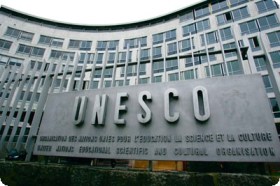
The 1950-51 UNESCO “statements on race” answered such questions in favour of the master’s narrative. Announcing a new era in human understanding after the terrors of war and irrationalities of genocide, the main purpose of the statements was to separate the “biological fact” of race from its “social myth”. The biological fact in and of itself was rendered harmless, pertaining only to “physical and physiological” classifications. Thus genetic inheritance, it was affirmed, could have no bearing on mental or cultural competencies and capabilities. Conversely, the social myth of race was considered extremely dangerous in that it rendered cultural difference as biological thus sundering the “unity of mankind”. This myth had to be dispensed with; hence ethnicity – as a social/cultural classifier – was proposed as a preferable classificatory regime to that of race. Ethnicity, after all, had not been tainted with supremacist hierarchy and could signify instead non-hierarchical diversity.

Although the scientists who collectively produced the statements on race were by no means all white, the majority hailed from Western academies. And the particular kind of anti-racism evident in UNESCO’s statements had already been formulated by famous Western anthropologists such as Franz Boas. They had sought to undermine scientific racism on its own grounds, i.e. by proving the un-scientific nature of the social myth of race. And this endeavour required debunking racialized identity – that which confessed their legal and natural inequality – as myth not fact. However, as part of this manoeuvre these identities had to be subsumed under a harmless social science of ethnic categorization. While this move redeemed white identities, it de-politicized the meanings of the sufferers’ cultural complexes and complexions, extricated them from inherited hierarchies of power, and thus segregated them from the inherited and living struggles against (post-/neo-)masters. In short, as Alana Lentin puts it, the effect of the statements was to separate race from politics.

Continue reading

Oxygen: Impressions from the Workshop ‘Critical Methodologies: Narrative Voice and the Writing of the Political – The Limits of Language’

Oded LowenheimPost seven in our ongoing mini-forum on methodology and narrative in (critical) IR. This time it’s the turn of Oded Löwenheim, who is Senior Lecturer at the Department of International Relations, The Hebrew University of Jerusalem.  His interests lie in the field of emotions and politics, autoethnography and IR, and investigating the peculiarities of power, so to speak, in various issue areas and fields. He is the author of Predators and Parasites: Persistent Agents of Transnational Harm and Great Power Authority (The University of Michigan Press, 2007), and The Politics of the Trail: Reflexive Mountain Biking along the Frontier of Jerusalem (The University of Michigan Press, forthcoming in 2014). His articles appeared in International Studies Quarterly, Security Dialogue, Security Studies, International Political Sociology and the Review of International Studies. At the Hebrew University he teaches courses on science fiction and on politics and autoethnography and IR.


The two days of the workshop were very intensive for me, in terms of both the many talks and conversations we heard and had, and in terms of the emotional weight I felt during these discussions. Some of the talks we heard were not easy to hear: people told about their personal experiences of places such as the “highway of tears” in British Columbia, Hawaii as a colonized space, or escape from worn-torn Eritrea. Other stories dealt with personal loss and the political meanings of grief; or, of opening up to the inner world of what I, and many other in the West, call “suicide bombers,” while they consider themselves as martyr soldiers; or, of the pain of Inuit people in Canada. But despite the sometimes difficult stories and realities, I felt I am full lungs breathing. I felt that the stories and the responses to them fill me with oxygen, almost literally.

We talked about the way stories and narratives can bridge gaps between people and enable us to reach out to the humanity of others. Yes, stories can be fabricated, manipulated, or exploited to reproduce hegemonic or dominating orders, some of the colleagues in the workshop reminded the participants. Stories can also serve a claim for authenticity, by virtue of the author/teller “being there,” while in many manners, there cannot be such a “there” from the outset. But stories, nonetheless, can create a strong sense of community, I felt. The more I heard the various talks, I realized that we live in a world that values distance and objectivity, but these values also contribute to human loneliness and atomization of societies. Narrativistic research not only challenges the traditional methods of writing in order to highlight various power structures that these methods ignore or do not capture fully. It can also have the potential to restore and to rebuild some sense of community among authors and their readers. By community, I do not mean only a professional community of academicians, which is often a small and closed one, but also a larger human community. Narrativistic writing, I felt during the workshop, can help people resist this institutionally – and structurally – imposed loneliness that is so characteristic of our times, both in academia and in broader society. Lonely people are easier to govern than people with a strong sense of belonging, connection, and community.

One of the most interesting conclusions I took from this workshop was Jenny Edkins’ comment (I hope that was indeed what she meant …) that while the state’s sovereign narrative is about completeness and continuity, a linear story in which there is a clear beginning and a path along which history continues, a path which the state – and I may add in a Foucauldian manner, its admirers/reproducers in academia – purport to know, in many political and historical situations reality is wounded and full of gaps and crevices. Narativistic writing acknowledges these gaps and irregularities, disrupts the linear narrative, but at the same time offers some comfort by engaging in a process of writing about the wound and, no less important: letting the wound write us back.

Indeed, writing about my own wounds and letting them write me back is an essential part of my autoethnographic work. Continue reading

In Praise of Question Marks: Reflections on ‘Critical Methodologies: Narrative Voice and the Writing of the Political – The Limits of Language’

Jennifer RigganThe sixth post on critical methodologies and narrative, by Jennifer Riggan. Jennifer is an Assistant Professor of International Studies in the Department of Historical and Political Studies at Arcadia University, where she began teaching in 2007.  She holds a Ph.D. from the Education, Culture and Society program at the University of Pennsylvania, where she received training in political and educational anthropology and African Studies. Her ethnographic research addresses a variety of issues including nationalism, citizenship, state formation, militarism, development, and education. She has published on the changing relationship between citizenship and nationalism and on the de-coupling of the nation and the state. She is currently working on a project entitled The Teacher State: Militarization and the Reeducation of the Nation in Eritrea which explores the role of teachers in state-making in the east African nation of EritreaThis research has been funded by a Fulbright research fellowship, a Social Science Research Council International Dissertation Field Research Fellowship and a Spencer/National Academy of Education Postdoctoral Fellowship. Dr. Riggan earned a B.A. in English from Trinity College in 1992 and served as a Peace Corps volunteer in Eritrea from 1995 to 1997.


Alienation

I show up at the workshop on October 26th, not quite sure what to expect. I have gone through the ritual preparations for a conference. I have crafted a carefully cultivated appearance—professional, but not formal attire. Light makeup, hair blown dry, hopefully neat but not overly coifed. Glancing around the room, I’d say many of us have made the same preparations. This is a conference. We all know how to perform ourselves for this venue. The ritual is familiar to us. Notebooks at the ready. Cups of coffee in our grips. A firm handshake of greeting when we meet someone. A socially acceptable hug or kiss if we know someone well. Small talk about our institutions, our research, our teaching. Occasionally our children make a brief appearance in the conversation. When we sit down to introduce ourselves, my voice emerges from my mouth, confident and assertive. I hear myself speak and I don’t recognise the sound, even less the tone. How certain this person sounds, I think, I could be convinced by this person.

For me, the ritual is essential to make me believe in the performance. After all, I have no idea why I’m here and I assume, as usual, that some mistake was made when they invited me. Do they really know who I am? The preparatory rituals, the carefully calibrated appearance, the performance of being academic acts as a talisman against someone pointing the finger at you and crying, “imposter!” I say it to myself all the time. But in an odd form of ritual alchemy, I become what I perform. I fake it until I make it and then I actually believe in this ‘I’ that I barely recognized a moment before. I have become the performance. But when I get lost in my performance, where have I actually gone?

Question Marks

We are here to talk about stories. Some of us tell stories. Some of us make arguments about stories. Stories, like academic rituals, are performances. Are they any less alienating than the ritualization of self? The most honest of us raise questions about stories or tell stories that ask questions. Himadeep Muppidi’s poignant and simple assertion, “empire tells amazing stories,” has stayed with me since that day like a song whose words you can’t get out of your head. We are all penetrated by the empire’s stories. They make us cry and fill us with pride or righteous indignation. They have answers. But how do we tell stories that perform less and question more? This is hard to do in a world, and a profession, that prefers periods or exclamation points to question marks. Our language limits us. What is the point of a question without an answer? What do we become in the absence of our performances of certainty?

Continue reading