(Dis)Embodied Methodology in International Political Economy

Nicki Smith

Following some previous discussion on similar themes, a guest post by Nicola Smith. Nicki is Senior Lecturer in Political Science at the University of Birmingham and has published on a diversity of issues surrounding globalisation and social justice. She is currently writing a monograph on Queer Sexual Economies for Palgrave and has published articles in Sexualities, Third World Quarterly and the British Journal of Politics and International Relations. Other related publications include Body/State and Queer Sex Work. The following piece has been developed as part of a book project on methods in critical International Political Economy, edited by Johnna Montgomerie, and a version of it was recently presented at the semi-plenary session on ‘The body in/and international relations’ at the 8th Pan-European Conference on International Relations in Warsaw.


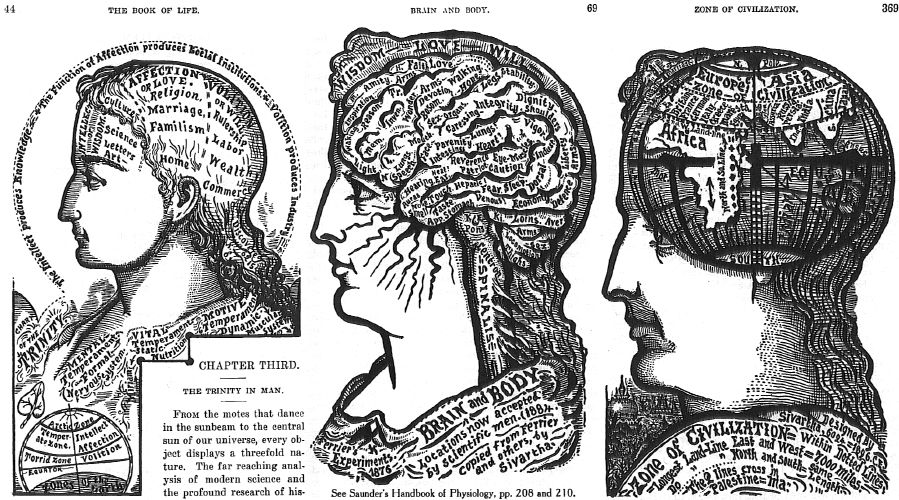
The Book of Life - Brain and Body - Zone of Civilization

There was a time when I understood International Political Economy (IPE) to mean ‘bodies of thought’ (realism, liberalism, Marxism, etc.) and so, not knowing which body to have, I tried each of them on for size. Realism didn’t fit (too tight); liberalism felt wrong (unethically-sourced materials); Marxism looked good (but I lacked the discipline to maintain it). Social constructivism suited my friends and felt pretty comfortable, so this was the body I decided to have. As a social constructivist, I did a lot of work on ideas (‘discourse’) and thought a lot about other bodies of thought. But what I didn’t do was to engage in thought about bodies. Bodies didn’t seem to happen in IPE; they appeared to exist somewhere else entirely, to be accessed only via metaphor (as in the above description) but always somewhere ‘over there’, never as the living, breathing stuff of the discipline. Bodies – or so I assumed – were off the cards.

In other contexts, though, I was thinking a lot about bodies: from the personal (‘will my body be able to produce another body, a child?’) to the professional (‘do I under-perform in job interviews because I gesticulate wildly when nervous?’) and the political, too (‘the government should de-criminalise the sale of sexual services’). Indeed, while I was writing a PhD and then monograph about states and markets – globalisation, economic development and social justice in the Irish Republic – it was bodies that I loved talking, reading, arguing about. I just didn’t see them as ‘IPE’.

In fact, bodies had been there all along; I hadn’t seen them because I hadn’t been looking.

Continue reading

The Queer Art of Whistle Blowing

What should we make of the fact that Bradley Manning has become Chelsea, that Glenn Greenwald is gay, that David Miranda loves a man enough to submit to the harassment incurred by his partner’s work, that Greenwald’s detractors sought to tarnish him by association with—of all things—a porn company? Possibly nothing generalisable, except that gender is doing work here.

There has been no shortage of voices denying a straightforward connection between sexual orientation, gender identity, and patriotism. (Part of the reason I feel compelled to write about this is that there isn’t one.) San Francisco Pride Board notoriously repudiated Manning’s election as a Grand Marshall in the 2013 Pride in that city, declaring: ‘even the hint of support for actions which placed in harms [sic] way the lives of our men and women in uniform—and countless others, military and civilian alike—will not be tolerated by the leadership of San Francisco Pride.’ That statement has not been retracted, notwithstanding its now patent inaccuracy in light of the prosecution’s inability to cite any evidence that Manning’s leaks led to any deaths and the court’s decision finding her not guilty of the charge of ‘aiding the enemy’. Kristin (formerly Chris) Beck, ex-US Navy Seal who recently announced her gender transition, has been harsher in her condemnation of Manning: ‘For this person, whether male or female to use gender identity to act “BADLY” is a slap in the face to me and everyone who does not fit the “Binary Gender Norm.” It is not an excuse for anything illegal or unjust.’ Pablo K is right to point out the dangers of the temptation, for those who see a link between sex/gender and truth-telling, to make the reverse move—’to relegate Beck to a minority report, and so to re-inscribe the hierarchy of authenticity, this time with Manning as the actual face of resistance, and Beck the mere puppet of militarism’—while pointing out, also, that the gap between these contrasting appropriations is constitutive of the space of contemporary politics. So let’s talk politics.

Continue reading

Un-Manning; Or, Queering Bradley

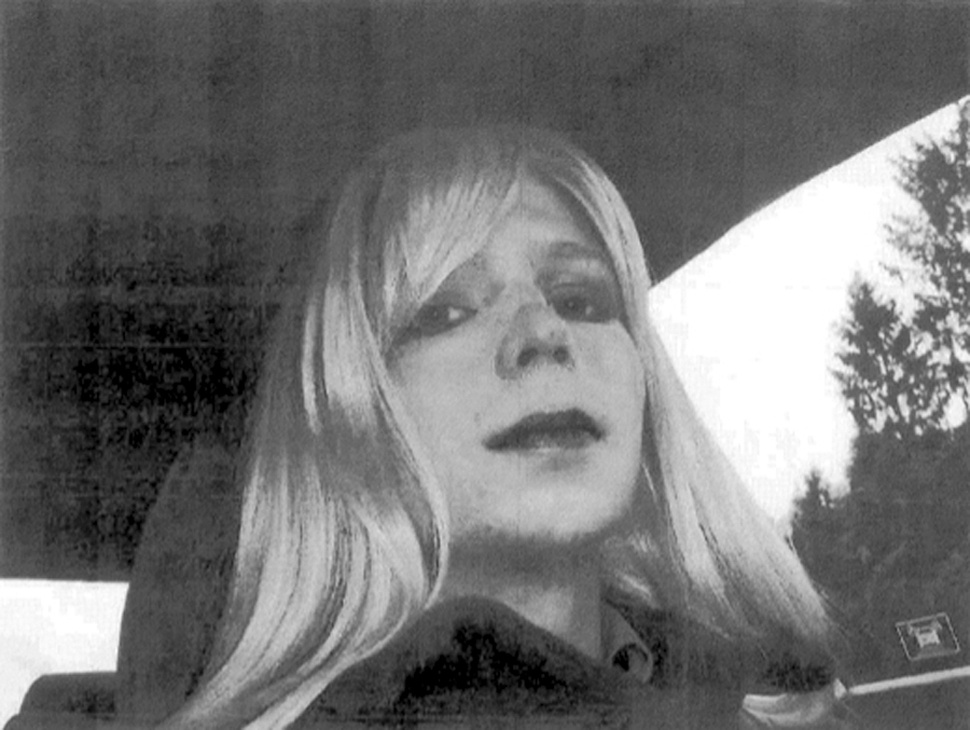
Bradley Manning Trans Wig

Private First Class Chelsea (formerly Bradley) E. Manning has serious gender issues. Or so goes the story of the moment. In the wake of her statement, the question of identity (and language) has somewhat displaced that of the conviction and sentence. Another dimension in the smearing of whistleblowers, perchance. A way to denigrate and emasculate her still further, and so to reinforce the patriarchal entitlement of that shining city on the hill. Except that Manning’s sexual personhood is more contested than that.[1]

Navy Captain and psychiatrist David Moulton, according to CBC, testified that Manning’s ‘gender disorder’, amongst other things, “caused him to conclude he could change the world by leaking classified information”. But Moulton was a defence witness. Captain Steven Lim, Manning’s brigade commander, also pointed towards gender trouble, and revealed the existence of the now much-seen photo of Manning in a wig to the Fort Meade court. Again, a defence witness. Manning’s lawyers were forbidden from seeing much of the (non-)evidence against him, thanks to techniques of classification, and this surely influenced their strategy. Since they could not openly contest claims of the most traitorous harm (claims that were in the end unsubstantiated), why not try and reduce the sentence with whatever biographical resources were available? Where gender identity sometimes served as justification for the leaks, at others it was made irrelevant (to wit: “It was never an excuse because that’s not what drove his actions. What drove his actions was a strong moral compass.”). Interviewed today, David Coombs (Manning’s lawyer) again juggled his client’s personhood somewhat unsuccessfully, maintaining both that “we weren’t offering it as an excuse” but also that Manning’s gender explorations were relevant because they “happened at the same time [as the leaks and therefore] that provides context”.

Paradoxically enough, it is at times Republicans who have had to point out the shamefulness of this strategy:

Now that he prepares to stand trial, he has shown himself to be willing to sacrifice honorable gay and lesbian servicemembers to avoid responsibility. Lawyers for Manning are claiming that his struggle with his sexual orientation contributed to emotional problems that should have precluded him from working in a classified environment. This shameful defense is an offense to the tens of thousands of gay servicemembers who served honorably under “don’t ask, don’t tell.” We all served under the same law, with the same challenges and struggles. We did not commit treason because of it.

Despite the appeal to homonationalism, there is here an actual defence of LGBTQ identity against perpetual fears of a deviance that cannot be trusted with full equality. Fairly obviously, framings of ‘disorder’ put trans* and genderqueer back in the realm of medical pathology from which they have only just begun to escape. And yet this is not a one-sided story of medical bio-politics. Continue reading

Russia’s Anti-Gay Laws: The Politics and Consequences of a Moral Panic

A guest post from Cai Wilkinson on recent LGBTQ developments in Russia. Cai is a Lecturer in International Relations in the School of Humanities and Social Sciences at Deakin University, Australia. Her research interests include critical approaches to security, fieldwork-based securitization studies, norm contestation and resistance, and genders and sexualities in International Relations. Her geographic focus is on the former Soviet Union, and she is currently working on projects about LGBT rights and human rights norms in Kyrgyzstan and Russia. She received her PhD from the University of Birmingham, UK, in 2009 for a thesis entitled Interpreting Security: Grounding the Copenhagen School in Kyrgyzstan, which drew upon seven months of fieldwork conducted in Bishkek and Osh in the aftermath of the 2005 overthrow of the Akaev regime. Her work has been published in Security Dialogue, Central Asian Survey and Europe-Asia Studies, and she has contributed chapters to volumes on securitization theory, statehood in Central Asia, and fieldwork-based research methods. Cai is also Chair of the International Studies Association LGBTQA Caucus.


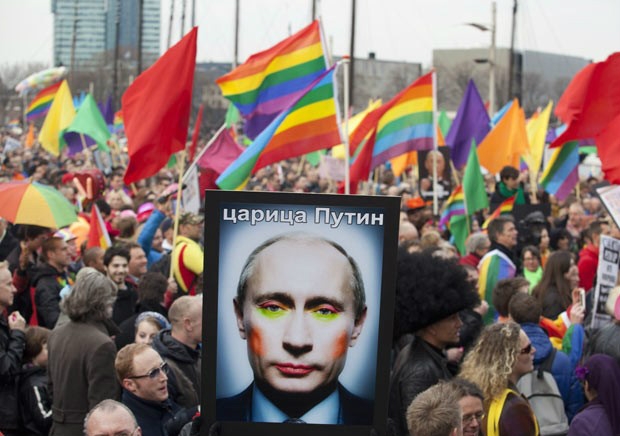
Russia Gay Pride Putin

The issue of LGBT rights in Russia first properly came to mainstream international attention in March 2012, when the St Petersburg Duma passed a law prohibiting “public acts aimed at the propaganda of sodomy, lesbianism, bisexualism and transgenderism amongst minors“. The law provoked an international outcry, including calls for tourists to boycott St Petersburg, sister-cities to consider cut off ties with Russia’s “window on Europe”, and condemnation from the EU, with the European Parliament passing a resolution noting that it was “gravely concerned by developments which restrict freedom of expression and assembly on the basis of misconceptions about homosexuality and transgenderism” and calling on Russia and other countries considering the adoption of similar legislation to “demonstrate, and ensure respect for, the principle of non-discrimination”.

In actual fact, this was not the first “anti-gay” law to be passed in Russia; Ryazan Oblast’s Duma adopted an amendment to local legislation to outlaw the “propaganda of homosexualism” in May 2006, and Arkhangelsk and Kostroma Oblasts followed suit in 2011. Yet the passing of the St Petersburg law proved to be a catalyst for other administrations to introduce similar laws, with a further six subsequently adopting similar legislation and others considering it (so far only the Moscow Regional Duma has rejected legislation). Most significantly, these laws paved the way for consideration of a federal bill outlawing the “propaganda of non-traditional sexual relations to minors”, which the Russian Duma passed on June 11 despite continuing international condemnation and the fierce opposition of local LGBTQ activists and their supporters, who frequently endured physical attacks and arrests while protesting against the law.

Despite being a long-time Russia-watcher, the swiftness at which anti-gay laws have spread and at the ferocity of both popular and state homophobia has been striking. This is not, I should add, simply the result of not paying close enough attention. As a queer undergraduate student studying Russian with a compulsory year abroad to plan for, I was extremely conscious of attitudes towards homosexuality and queerness and the stigma and dangers that local LGBTQ people faced (Laurie Essig’s Queer in Russia was an essential primer), and was extremely careful not to out myself to anyone who wasn’t definitely queer-friendly while living with families first in Krasnoyarsk and then Voronezh in 2001-2002.

At the same time, it appeared until the mid-2000s that slowly but surely Russia was becoming more tolerant. Homosexuality was decriminalised in 1993 without any notable opposition, declassified as a mental illness in 1999, and the percentage of survey respondents advocating for the “liquidation” of homosexuals fell from 31% in 1989 to 22% in 1994 and all of 5% in 2013 (although inevitably survey results are heavily contingent on the phrasing of questions and, as Alexander Kondakov demonstrates, attitudes to homosexuality are no exception). Attempts to recriminalise homosexual relationships between men failed in 2002, 2003 and 2004.

Popular culture in the first half of the 2000s appeared to offer further evidence of the trend: Continue reading

What We Talked About At ISA: ‘Afghan Masculinities’: The Construction of the Taliban as Sexually Deviant

Taliban 1

The paper I presented earlier this month at the International Studies Annual Conference held in San Francisco looks at how Afghan masculinities have been represented in and by Anglo-American media. The words ‘Afghan man’ conjure up a certain image, a pathologised figure that is now associated with most males in Afghanistan. The paper analyses this figure of the ‘militant’ Afghan man, most strikingly captured by descriptions of the Taliban and juxtaposes it with the less popular, though still familiar trope of the ‘damned’ Afghan man, embodied in the figure of the Afghan President, Hamid Karzai. But here I focus on a particular construction of the Taliban as sexually deviant, (improperly) homosexual men.

Jasbir Puar, in her trenchant appraisal of today’s war machine and the politics of knowledge that sustains it argues that the depictions of masculinity most widely disseminated in the post 9/11 world are terrorist masculinities:

failed and perverse, these emasculated bodies always have femininity as their reference point of malfunction and are metonymically tied to all sorts of pathologies of the mind and the body – homosexuality, incest, pedophilia, madness and disease.

Whilst representations of al-­Qaeda as pathologically perverse have permeated the Western mainstream, the Taliban because of its historically low international profile has escaped that level of media frenzy. The attention it does get, however, is almost always mired in Orientalist fantasies of Eastern men as pathologically disturbed sodomisers. The ‘high jack this fags’ scrawled on a bomb attached to the wing of an attack plane bound for Afghanistan by a USS Enterprise Navy officer, while in no way ubiquitous, is certainly an edifying example of our image of the Taliban as perverse and not quite “normal”.

This perversity of the Taliban has been largely attributed to their madrassa upbringing, an all-­male environment and their concomitant attitude towards women. Continue reading

Rethinking Masculinity and Practices of Violence

The modified text of an introduction written with Marsha Henry for our special issue of International Feminist Journal of Politics on ‘Rethinking Masculinity and Practices of Violence in Conflict Settings’ (trailed here), which came out in December 2012. The full text of the issue is currently freely available. I don’t know for how long, so get to it!


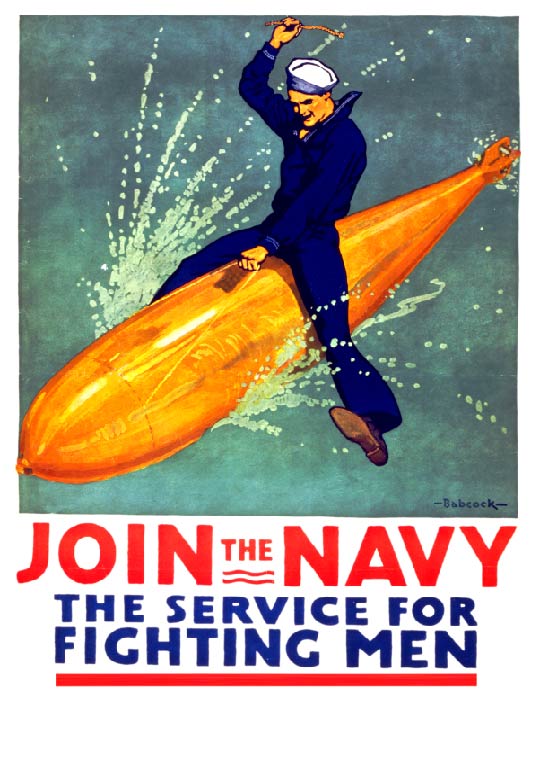
Join the Navy - The Service for Fighting Men

Why rethink masculinity and conflict? After all, the connection of men and masculinities to organised (and seemingly unorganised) violence has been subject to considerable academic scrutiny over the last decades, not least as part of the feminist critique of disciplinary International Relations. It is now increasingly common to both note the unequal character of gendered violence (it is predominantly men who do the killing and the maiming) and to stress the contingent and sometimes paradoxical status of this situation (women kill and maim too, and the content of ‘man’ and ‘woman’ varies significantly over time, space and context). The analysis of gender within global politics has also moved beyond the level of the state and war to interrogate the full spectrum of social life, from popular culture to political economy. And yet elite institutions still prove stubbornly resistant to teaching gender, feminism and sexuality within ‘the international’, despite introductory texts which increasingly offer such insights to the curious student.

Although you wouldn’t know it from some of the caricatures in circulation, feminist and gender scholars write often of multiplicity in masculinities, of varied and shifting constructions of gendered agency, and of representations of violence as themselves constitutive of gender, rather than merely reflective of a pre-existing distribution of essences. Some, like Melanie McCarry, have become rather sceptical of this situation, warning that the actions and power of men themselves are obscured in the consensus that there are many masculinities. In other words that multiplicity, discourse and construction are not advances in theory, but ways of displacing responsibility away from concrete male perpetrators. At the same time as they direct attention to the material practices of men such criticisms also tend to gloss over rich and situated examples of critical theorising along exactly those lines. A different brand of critic has sometimes suggested that feminism may be incapable of properly analysing the variety of gendered experiences in conflict. But here too, a comprehensive history of the field instead reveals many close and nuanced considerations of men and women at war.

Nevertheless, ambiguities do persist in the way feminist and gender scholars describe and account for masculinity. Against this background, a number of problems come into sharper focus. First, how are masculinities and violences connected in specific locations of power? Second, how do these connections play out internationally, in the interactions between political communities, however understood? Third, just how related are gendered identities to fighting, killing and dying in conflict settings? And fourth, how do the complexities of violence situated in this way reflect back onto theorising about gendered hierarchy and difference?

Some of these questions are more familiar than others, but the collection of articles presented in our special issue of International Feminist Journal of Politics substantially addresses them all (I know, get us, right?). Continue reading

Sour Lips: A Review

Anyone who followed the controversy over the fictitious Gay Girl in Damascus blog, created by Edinburgh-based US graduate student Tom MacMaster writing as Amina Arraf, might have despaired of the prospects of subalterns speaking for themselves. Female, lesbian, Arab, and an anti-Assad protester, MacMaster’s Amina quickly became a posterchild of the Arab Spring for a wide swath of the liberal media and activist blogosphere. For those cognizant of contemporary critiques of homonationalism against the backdrop of pervasive homophobia, Amina’s dispatches from the frontline seemed a perfect embodiment of left liberal fantasies about the possibilities for progressive sexual politics in a time of revolution. Yet if critics such as Joseph Massad have been accused of dismissing subjects who don’t conform to their theoretical predilections, the Amina hoax gestured at an opposite, if no less insidious, temptation: that of desperately seeking subjects who confirmed theoretical utopia.

Continue reading

Love, Sex, Money and Meaning

UPDATE (8 September 2014): Megan originally wrote this as a guest post, but is now with us more permanently.

This post is based on stories about sex, love, tourism and identity relayed in Cuba in 2010, and is (loosely) based on, and at times excerpted from, an article of the same name just published in Alternatives: Global, Local, Political. All names, many locations, and some additional identifying details have been changed in accordance with the interviewees’ wishes.


Havana's Malecón, or seawall, close to Calle 23 and not far from where I interviewed Yakelín.

Havana’s Malecón, or seawall, close to Calle 23 and not far from where I interviewed Yakelín.

Yakelín comes to the Hotel St. John nearly every day around two o’clock in the afternoon. Most days, Jean-Claude is already there, ensconced on the terrace with a glass of dark rum, chatting amiably with the staff, or pensively smoking a cigar as he waits. When she arrives, she kisses him discreetly before settling down for a drink on the terrace. The hotel is rather unassuming, but it sits just steps from the busy east end of Calle 23, known as La Rampa, and blocks from the historic University of Havana, and as such Hotel St. John has become a haven for tourists and foreign students who come here for strong coffee and cold beer. After an hour or so, Yakelín and Jean-Claude walk away together, hand in hand.

This same routine has been going on for more than two years now, since the day that Yakelín first met Jean-Claude, walking along Calle 23 with a friend. She was 21 years old, living in a small flat with her mother, father, brother, two sisters, aunt, uncle, two cousins and her grandmother. After spending her teenage years at a boarding school in the countryside, she had elected not to continue to university and was back in Havana with her family. Like so many others, her family worked hard to make ends meet, and Yakelín was looking for ways to lighten the burden. Not long after they met, Jean-Claude made her a proposition.

He suggested that, since I was en la lucha [struggling to get by], you know, he suggested that I no longer be in the streets [looking for leads on work, food, clothes] and that he was going to help me resolver mis problemas [solve my problems]. And since then, he’s my boyfriend.

Jean-Claude is married, but Yakelín says that in spite of that they have a “formal relationship” – she lives in a comfortable casa particular, for which he pays, and they spend every afternoon together. As a retiree, Claude lives more or less permanently in Cuba, leaving only to attend to his affairs in France and returning laden with gifts including clothing, jewellery, and even a television. He provides her with spending money and helps to support her family as well. She says she loves the independence he has given her, even though she readily acknowledges the implied contradiction – she has found her freedom in total dependence on him. Yakelín has no official work at present, because she feels that the meagre salary is simply not worth the trouble.

Continue reading

Symptoms Worse Than Death

The “daughter of India” died in a hospital in Singapore yesterday, causing shockwaves around the globe and placing India on the verge of a violent implosion. Whilst rape had become a matter that women were told that they had to contend with in their everyday lives, that they must make it safer for themselves by not being alone after dark, by not dressing provocatively, and by not drinking or acting in a manner that is ‘lewd’ and ‘unladylike’, especially in North India, something about this case has led to a national uprising of unprecedented proportions. People have taken to the streets, New Year eves’ parties have turned into mass commemoration events, and the Internet is positively ablaze with news, blogs, and posts about this nameless woman whose impact on Indian politics today cannot be exaggerated.

India has had the distinction of being labelled the worst country in the world for women and Delhi is often called India’s ‘rape capital’, so perhaps it is not surprising that a 23-year old woman was gang-raped on a bus by six men on the way home after watching The Life of Pi with her boyfriend. It is perhaps also not surprising that the rape was brutal, that a metal rod was shoved into her vagina, that the men took turns at “having a go” and finally got rid of both her and her male friend by throwing them out of the window of the moving bus. What is surprising, however, is the reaction. Why has an event that may even be classified as mundane garnered so much attention and prominence?

Many on the so-called Left in India have proclaimed that the case has been given such importance only because the woman was (ostensibly) middle-class and it is always a shock when it happens to “us”, not least when it happens in a manner this horrific. Most of the mobilized youth claim that this was the last straw in what has been a devastatingly protracted chain of brutalities against women. The cynics argue that reactions such as these are tokenistic gesture that will change nothing but help those protesting come together in a moment of collective catharsis, share in a feeling of shame and sorrow not unlike that experienced when Pakistan defeats India in a cricket match. For me, the answer to the question posed above is ultimately immaterial. Yes, the woman was not a Dalit or Adivasi, and crimes against the poor in India vastly exceed those against the rich. And yes, the injustices perpetrated against the rich, powerful or established have historically been at the forefront of media reporting and government agendas, as was most blatantly obvious in the case of the Mumbai attacks in 2008. And indeed, it is unlikely that there will be any overwhelming change in either attitudes or policy towards women in the immediate aftermath of this insurrection.

In light of this, should we just lull ourselves into a state of callous complacency and churn out platitudes about the state of our society? Those who want to are welcome to squander away both hope and perspective. For those who recognise that the path to any significant change is thorny but may yet render itself navigable, some acknowledgement of the conditions that have made gender-based violence possible and continue to make it possible, even run-of-the-mill, is in order. An awareness of how we ourselves, albeit unwittingly, reproduce these conditions and help engender systemic violence that is both symbolic and ‘real’ is also urgently needed. We must be cognisant of the fact that India is a deeply conservative society and the ‘opening-up’ of the economy since 1991 has witnessed a patriarchal backlash in the face of rising inequity, the collapse of the extended family and the disappearance of any social welfare. Those who have placed the blame singularly on “Indian men” and our “backward culture” – and who think revenge in the form of capital punishment and castration is the only solution – fail to take into account how deeply embedded they are in this patriarchal order and how readily they are partaking of a discourse that is both misogynistic and short-sighted.

The calls for castration are symptomatic of an acutely phallocentric order – where a man’s ‘masculinity’ is considered his greatest pride, and the source of this masculinity is none other than his reproductive organs. Similarly, the widespread proclamation that “rape is a crime worse than murder” and must be punished accordingly has a patently sinister side to it. Is a woman (or man for that matter) who has been raped not entitled to a life? Is she “worse than murdered”? Is it the “defilement”, the snatching away the “honour” and “purity” of a woman that so bothers us? It is worth remembering that the woman who died yesterday, who the Indian government in yet another meaningless and flippant gesture has called a “martyr” and “Delhi’s braveheart”, desperately wanted to live. She had been “violated” by six men in an ordeal that lasted over an hour, was on life-support, but not, in her own opinion, worse than dead. She was only (worse than) dead after she died.

The protests in Delhi and around India contain within themselves a latent emancipatory potential. But in order for this to amount to anything, even something as pedestrian as allowing women to negotiate public spaces in Delhi without constant threat of harassment, we must think about how our subjectivity as women, men, and citizens is (re)produced. This is the only way we can build up some resistance to the “common-sense” we are invariably brought up with. We need to start problematising the taken for granted assumptions that our heteronormative order inflicts upon us everyday, most importantly the implicit belief that women are “less equal” than men. The contours and manifestations of this tacit hierarchy may be different in the West from those in the global South, but the substance remains largely the same. As always, the words of anthropologist Barbara Diane Miller resonate deeply: “We must not forget that human gender hierarchies are one of the most persistent, pervasive and pernicious forms of inequality”. Change will not come easy.

(Im)Possibly Queer International Feminisms

Wehrmacht DragWe’ve previously mentioned the 2013 International Feminist Journal of Politics annual conference – on the topic of ‘(Im)Possibly Queer International Feminisms’. It turns out that there is extra reason to trumpet its existence: our very own Rahul Rao (author these excellent posts) will be one of the conference keynotes, alongside such others as Lisa Duggan (NYU), Jon Binnie (Manchester Met), Vivienne Jabri (Kings), V. Spike Peterson (Arizona), Laura Sjoberg (Florida), Rosalind GaltAkshay Khanna, and Louiza Odysseos (all Sussex)! A lot of other exciting papers will be on display, some of which I’ll be associated with. And there’s also a pre-conference workshop on Queer, Feminist and Social Media Praxis. Clearly not an occasion to miss.

The full call is as follows:

(Im)possibly Queer International Feminisms

The 2nd Annual IFjP Conference
May 17-19, 2013
University of Sussex, Brighton, England

The aim of this conference is to serve as a forum for developing and discussing papers that IFjP hopes to publish.  These can be on the conference theme or on any other feminist IR-related questions.

Feminists taught us that the personal is political.  International Relations feminists taught us that the personal is international.  And contemporary Queer Scholars are teaching us that the international is queer.  While sometimes considered in isolation, these insights are connected in complex and sometimes contradictory ways. This conference seeks to bring together scholars and practitioners to critically consider the limits and possibilities of thinking, doing, and being in relation to various assemblages composed of queer(s), international(s), and feminism(s).

Questions we hope to consider include:  Who or what is/are (im)possibly queer, (im)possibly international, (im)possibly feminist, separately and in combination?  What makes assemblages of queer(s), international(s) and feminism(s) possible or impossible?  Are such assemblages desirable – for whom and for what reasons?  What might these assemblages make possible or impossible, especially for the theory and practice of global politics?

We are interested in papers and panels that explore these questions through theoretical and/or practical perspectives, be they interdisciplinary or located within the discipline of International Relations.

Sub-themes include (Im)Possibly Queer/International/Feminist:

  • Heteronormativities/Homonormativities/Homonationalisms
  • Embodiments/Occupations/Economies/Circulations
  • Temporalities/‘Successes’/‘Failures’
  • Emotions/Desires/Psycho-socialities
  • Technologies/Methodologies/Knowledges/Epistemologies
  • Spaces/Places/Borders/(Trans)positionings
  • States/Sovereignties/Subjectivities
  • Crossings/Migrations/Trans(gressions)
  • (In)Securities

We invite submissions for individual papers or pre-constituted panels on any topic pertaining to the conference theme and sub-themes. We also welcome papers and panels that consider any other feminist IR-related questions.

Any inquiries should be addressed to the conference coordinator, Joanna Wood, at cait@sussex.ac.uk

Abstracts should be no more than 250 words.

Deadline for submissions: January 31, 2013

We will, however, confirm acceptance of submissions before the deadline if we receive abstracts early.  Early submission is therefore recommended.

Please submit your abstract here.